Australian building-integrated PV (BIPV) specialist ClearVue Technologies has announced a manufacturing breakthrough that allows its energy-generating Gen 3 glass units to accept high-performance soft low-emissivity (Low-E) coatings using the same established systems as conventional commercial glazing. Perth-headquartered ClearVue’s Gen3 solar vision glass product features PV cells integrated into a laminated glass unit designed to generate electricity while maintaining glass transparency. The company said its units can generate more than 50 W of energy per square metre while maintaining up to 80% visible light transmittance. In a boost to the commercial opportunities for the technology, ClearVue said its glass units can now be coated via a “magnetron sputter-coating process” after the PV cells have been laminated and processed, allowing a Low-E coating to be applied to the finished solar glass units. These coatings help control the amount of solar heat entering a building and are commonly specified across commercial façade projects worldwide. “This removes a practical barrier for the industry,” ClearVue Chief Executive Officer Doug Hunt said. “It means energy-generating glass can be considered alongside conventional façade products, rather than requiring an entirely separate design or manufacturing process.” “This is an important step in moving energy-generating façades from a specialist product towards standard commercial practice.” According to ClearVue, the manufacturing capability allows the coating to be applied on surface 4, the room-facing side of the double-glazed unit, where it provides the greatest reduction in solar heat gain. ClearVue believes it is currently the only BIPV supplier able to offer this capability while also generating renewable energy from the same glazing unit. The company said other BIPV products typically apply the coating on surface 5 of a triple-glazed unit, where thermal performance is reduced. Hunt said the manufacturing breakthrough makes it easier for the façade industry to adopt energy-generating glazing without changing the way projects are already designed and delivered. “For energy-generating glass to become widely used, it needs to fit within the systems the industry already understands and trusts,” he said. “Architects and engineers can continue specifying the performance they need, while glass processors can use their existing production infrastructure. The difference is that the glass can now also generate clean energy for the building.” ClearVue said it validated the new capability at glass manufacturer AGC Interpane’s facility in Germany, where the Gen 3 Vision Glass units were cleaned, coated and tested using the same production line and settings as conventional float glass, with no changes required to the coating process. The manufacturing development is part of a series of recent commercial and technical milestones for ClearVue, including securing major international certifications for its Gen 3 Solar Vision Glass and its thermal management junction box. The company’s ClearVue-Helios rooftop solar panel has also recently been added to the Clean Energy Council’s approved products list, ensuring it can connect to the grid and is eligible for all government grant and subsidy programs. This content is protected by copyright and may not be reused. If you want to cooperate with us and would like to reuse some of our content, please contact: [email protected]. Comments Please login to comment Thursday, October 7, 2026 11:00 am – 12:30 pm CEST, Berlin, Paris, Madrid
Global investment in renewable energy reached $457 billion (USD 327.5 billion) in the first half of 2026, virtually unchanged from the previous six months but 21% below the record set in the second half of 2024. Data from BloombergNEF (BNEF) show that renewable energy deployment remains on track despite regulatory changes in key markets, including the United States and China. Investment, however, is increasingly shifting toward assets that offer greater flexibility in managing revenues. Financing for standalone utility-scale solar fell more sharply than investment in onshore wind. Investment in standalone solar PV declined 20% year on year to $105.2 billion (USD 75.4 billion), its lowest level since the solar investment boom began in 2021. Growing revenue uncertainty, driven by solar price cannibalisation, curtailment and grid congestion, is pushing investors and developers toward more flexible project configurations. Against this backdrop, co-located solar-plus-storage projects attracted a record $34.88 billion (USD 25 billion) in investment in the first half of 2026. The figure was nearly double the total recorded in the second half of 2025 and three times the amount invested in the first half of that year. The United States and Australia led investment in the segment. The United States was the second-largest market for renewable energy investment, behind China but ahead of the European Union, recording 54% year-on-year growth. Developers accelerated project financing to meet tax credit deadlines and respond to surging electricity demand, driven in part by data centers. Solar investment rose 41% to a record $63.9 billion (USD 45.8 billion), while wind investment reached $19.26 billion (USD 13.8 billion), more than double the previous year’s figure. Projects that remain eligible for tax credits could sustain construction activity in the short term, with the final installations scheduled through 2030. Global wind investment totaled $128.8 billion (USD 92.3 billion), down 27% year on year. Offshore wind was particularly hard hit, with investment plunging 72% amid poor auction results, higher capital and financing costs and a shrinking pipeline of projects likely to reach financial close. Onshore wind investment declined by a more moderate 4% to $112.6 billion (USD 80.7 billion). Europe, however, bucked the trend, with Germany, Romania and Serbia all recording record investment levels following recent auctions. China accounted for just one-quarter of global investment, down from more than half in 2022, following reforms to its electricity market. By contrast, Vietnam quadrupled its investment, while investment across Southeast Asia surpassed $16.7 billion (USD 12 billion). Nigeria increased investment in distributed solar and storage, Central Asia maintained investment above $5.58 billion (USD 4 billion), and Brazil helped push global biofuel investment to $10.7 billion (USD 7.7 billion). BloombergNEF expects new renewable energy installations in 2026 to fall below 2025 levels, marking the first year-on-year decline in more than a decade. It expects growth to resume in 2027. From pv magazine Global This content is protected by copyright and may not be reused. If you want to cooperate with us and would like to reuse some of our content, please contact: [email protected]. Comments Please login to comment Thursday, October 7, 2026 11:00 am – 12:30 pm CEST, Berlin, Paris, Madrid
Success! Now Check Your Email To complete Subscribe, click the confirmation link in your inbox. If it doesn’t arrive within 3 minutes, check your spam folder.
120-megawatt project expected to be completed in late 2027
MOSES LAKE — A ceremonial groundbreaking earlier this month marked the construction start of a solar energy project by a private firm, Invenergy, in collaboration with the Grant County PUD, that is expected to produce 120 megawatts of clean, renewable power by the end of 2027. When the company “flips the switch,” the Quincy Solar Energy Center will generate enough electricity to serve the equivalent of 25,000 homes, said Mateo Gomez, Invenergy’s senior manager for development. Headquartered in Chicago, Invenergy initiated development in 2018 and reached a 20-year power purchase agreement with Grant PUD in 2025. Despite its name, the Quincy Solar site is located on a 670-acre tract in the 5000 block of Road 10-NE, about two miles northwest of the Grant County International Airport and Port of Moses Lake. Another separate solar farm, called Quincy Valley Solar, is under construction in the Beezley Hills area north of Winchester. The distinction led to some good-natured banter between state Sen. Judy Warnick of Moses Lake and state Rep. Alex Ybarra and Grant PUD commission president Larry Schaapman, both of Quincy, during Invenergy’s Aug. 18 groundbreaking ceremony. “It’s Moses Lake, actually,” said Warnick. Responded Ybarra, “I’m from Quincy; I love the name.” Warnick said she appreciated that the largely barren property was “in the middle of nowhere” and not taking farm ground out of production. Also in attendance for the event were Schaapman’s fellow PUD commissioners Nelson Cox, Tom Flint, Terry Pyle, and Judy Wilson, PUD general manager/CEO John Mertlich, and other utility district staff; Grant County commissioner Kevin Burgess and county Development Services director Jim Cook-Anderson and members of his planning staff. Mertlich and Schaapman said the Invenergy project helps Grant PUD move toward Washington state’s target of having 100% clean, renewable energy by 2045. Other attendees included representatives from Cupertino Electric, a privately owned electrical engineering and construction company headquartered in San Jose, California that is serving as general contractor and partner in the project. Also on hand were union personnel from Electrical Workers Local 191, Operating Engineers Local 302, and Laborers Local 348. “We’re excited to see construction underway and our members contributing to this important milestone,” said IBEW Local 191 board president Jeremy Chase. Gomez said upward of 200 jobs will be supported during peak construction, providing a boost to local businesses, and more than $27 million will be paid out “in economic benefits” over the life of the project through local taxes, land lease payments, and other expenditures. While he declined to disclose the project’s total construction cost at this time, Gomez said the facility will include solar panels, electrical collection systems, inverters, a project substation, access roads, operations building, and related infrastructure. When completed, it’s expected to be manned by two skilled full-time operations-and-maintenance personnel, he said. Invenergy, a privately held independent power producer, is leasing the property from landowners John and Alycia Gebbers of Brewster and financing the project through private investors. Grant PUD, which has an existing transmission line nearby, will be the sole customer and will deliver power through the regional grid. “We are happy to be takers of it,” said Schaapman. In recognition of that relationship, Invenergy donated $20,000 toward the PUD’s “Share the Light” program, which helps local individuals and families pay their electric bills during times of financial hardship.
Along with electrical generation, the facility will incorporate battery storage as part of a “secure, reliable grid,” which Gomez called “incredibly important.” “As Washington experiences growing electricity demand and increasing pressure on the grid from extreme weather conditions, projects like Quincy Solar help strengthen security and support a more resilient energy future,” he said in a press statement. In the long term, Grant PUD says it potentially needs to add approximately 800 megawatts of solar generation in the next two decades to meet state goals. Last October, the utility district similarly entered into a 20-year power purchase agreement with San Francisco-based Clearway Energy Group, which is developing the Royal Slope Energy Center for a 260-megawatt solar and 260-megawatt battery energy storage facility near Vantage. That project is also expected to be operational in late 2027. There are other proposed or developing solar projects in Grant County where the PUD is not the power purchaser, but the district may provide transmission services to connect to the regional grid, said Chuck Allen, the PUD’s senior manager of external affairs and communications. To supplement generation from its two hydroelectric dams on the Columbia River, Grant PUD is also among regional utilities researching other potential alternative energy sources including geothermal-turbine power, modular nuclear reactor technology, and in the short term, the use of natural gas generators during energy shortfalls such as prolonged cold or hot spells. Ybarra, a state legislator serving on the House Environment and Energy Committee, has repeatedly said there is a need for “firm energy” to ensure “a reliable grid” in the future. Referencing Washington’s target to have 100% clean energy by 2045, Ybarra said, “We’re not going to get there with just solar and wind.”
Success! Now Check Your Email To complete Subscribe, click the confirmation link in your inbox. If it doesn’t arrive within 3 minutes, check your spam folder. Get local news delivered to your inbox
ML System stock is supported by growing smart glass and photovoltaic demand, with recent financial figures highlighting revenue growth and profitability from its latest reported period. ML System (ISIN PLMOL0000012) is a Poland-based photovoltaic and smart glass specialist whose stock is underpinned by demand for integrated solar technologies in building and infrastructure projects as of August 31, 2026. The company focuses on building-integrated photovoltaics and advanced glass solutions that can turn facades, roofs, and other surfaces into energy-generating assets, giving it exposure to both construction and renewable energy cycles. In its most recent reported financial period, ML System disclosed revenue figures for the latest fiscal year or interim reporting window, highlighting year-over-year growth in sales from photovoltaic modules and smart glass products and showing a positive trend in profitability measures such as operating income and net profit for that period. Those latest figures indicated that revenue in the current reporting year increased versus the prior year, with a quantified percentage gain that reflected expanding demand for the company’s solutions and a corresponding rise in operating profit that signaled improved scale and cost efficiency. For investors, the combination of revenue growth and earnings expansion in the latest report suggests that ML System has been able to convert its product pipeline and project backlog into higher-margin sales, which can support the stock’s valuation in a competitive renewable energy landscape. Per the most recently available financial overview for ML System covering its latest fiscal year or interim period, the company reported a clear increase in sales compared with the previous comparable period, with revenue up by a double-digit percentage and a corresponding improvement in operating profit. In that report, ML System’s revenue for the current reporting period was higher than in the prior year, and the company also showed an increase in net profit, demonstrating that growth was not solely driven by top-line expansion but also by better profitability. The company’s operating margin in the latest period improved compared with the previous year, reflecting both scale effects as volumes increased and ongoing efficiency measures across production and project execution. ML System also reported healthy cash flow generation from operations in the latest reported year or interim period, giving it more flexibility to invest in new manufacturing capacity, research and development, and international expansion. Compared with historical figures from earlier fiscal years, the latest results show a clear upward trajectory in key metrics such as revenue, operating profit, and net earnings, reinforcing the narrative that the company has been growing into its niche in smart glass and building-integrated photovoltaics. Recent coverage of ML System emphasizes that the company’s technological positioning in smart glass and solar integration has led to a growing pipeline of projects, which in turn feeds into revenue visibility for upcoming quarters. Consensus expectations for ML System’s latest reported period were for continued revenue growth and stable or improving margins, and the company’s published figures broadly aligned with those expectations, supporting a steady view on the stock. From a balance sheet perspective, ML System has maintained a manageable level of debt relative to its equity and cash flow, which can be important for investors considering the capital-intensive nature of manufacturing and large-scale photovoltaic installations. Market observers also note that ML System’s exposure to both residential and commercial building projects provides diversification across different customer segments, reducing reliance on any single market. In addition, the company has been investing in research and development to maintain a technological edge in smart glass coatings, photovoltaic integration, and energy management systems, which can support future product differentiation and pricing power. ML System’s core business revolves around advanced glass products that integrate photovoltaic cells and other functional coatings, allowing windows, facades, and skylights to generate electricity while maintaining aesthetic and functional properties. These solutions are used in a variety of applications, from office buildings and public infrastructure to industrial facilities and transport projects, aligning with broader trends toward sustainable construction and energy efficiency. The company’s smart glass technologies can incorporate features such as adjustable light transmission, thermal insulation improvements, and integration with building management systems, providing both energy and comfort benefits. ML System also supplies more traditional photovoltaic modules and systems, complementing its smart glass portfolio and enabling it to offer comprehensive energy solutions to architects, developers, and end customers. As regulations and incentives continue to favor greener buildings and lower carbon footprints, ML System’s product range positions it to benefit from mandates and voluntary initiatives that encourage on-site renewable generation. As of August 31, 2026, ML System stock reflects investor expectations that the company can continue to grow its revenue and profit base off the latest reported period’s results while executing on new projects in smart glass and building-integrated photovoltaics. For shareholders, key variables to monitor over the coming quarters include the pace of new project awards, the evolution of operating margins as volumes scale further, and the company’s ability to maintain a solid balance sheet while investing in capacity and innovation. ML System remains a specialized player in the intersection of construction and renewable energy, and its recent financial performance provides a quantitative backdrop for evaluating how its stock may respond to future developments in regulation, technology, and demand. Investors who want to explore ML System’s latest detailed figures, project portfolio, and corporate presentations can review its investor materials. These documents typically include breakdowns of revenue by segment, margin trends, and strategic priorities for the next reporting periods. Further official information on ML System’s financial results, corporate governance, and strategy is available through its investor communications, which provide audited reports and updates on upcoming events such as earnings releases and shareholder meetings. One representative product category for ML System is its smart glass solutions that integrate photovoltaic cells directly into glazing, enabling energy generation without compromising the appearance or function of building envelopes. These products are designed to meet architects’ aesthetic requirements while delivering measurable energy output and contributing to building certification standards such as green building labels and energy efficiency ratings. By combining solar generation with advanced coatings and control systems, ML System’s smart glass offerings can reduce the need for separate solar panels and streamline the integration of renewable energy into building design. ML System stock, traded on its home market, reflects the company’s positioning in the growing field of smart glass and photovoltaics as of August 31, 2026, giving investors exposure to both renewable energy demand and construction trends. With its latest reported revenue and profit figures showing growth versus prior periods, the stock’s performance can be viewed against the broader backdrop of decarbonization efforts and increased interest in building-integrated energy solutions. Company: ML System ISIN: PLMOL0000012 Ticker: ML System Exchange: Home market listing Sector / Industry: Renewable energy and smart glass Index membership: Local market index
Posted By: Jan Larson McLaughlinAugust 31, 2026 By JAN McLAUGHLIN BG Independent News After lumbering along past their normal lifespan, the towering wind turbines west of Bowling Green are coming down. The iconic wind turbines put Bowling Green on the map for renewable energy in 2003, when the site became Ohio’s first commercial wind farm. Since then, the turbines have been a recognizable part of the Bowling Green landscape, piercing the flatness with their lofty limbs. But on Monday, crews gathered at the base of the turbine closest to U.S. 6 at the Wood County Landfill, beginning the preliminary work to remove the giants. The process won’t be easy and it won’t be cheap. The good news is the City of Bowling Green has been saving for this moment, and has budgeted revenue from rates over the last two decades to pay for its share of the $1.77 million demolition costs. “We knew it was going to be a large amount,” said Brian O’Connell, the city’s director of infrastructure and public utilities. Bowling Green will pay about half of the removal expenses, since the city has 51% of the project ownership. The other half will be split between the other nine communities that signed onto the wind project. The wind farm was developed by American Municipal Power Inc. as a joint venture of the City of Bowling Green and other Ohio municipalities on property owned by Wood County and leased for the project. So far, the crews have worked on removal of underground electrical infrastructure. Next will come the dismantling of the four turbines, one at a time. Large cranes will be used to lower the blades, nacelles (the white boxes on top that house the engines), and tower sections to the ground for disassembly and removal. Following removal of the above-ground portions of each turbine, crews will excavate and remove the underground foundations. The foundations extend approximately 33 feet below ground and will be removed through excavation without the use of blasting. Each site will then be backfilled, inspected and restored. By the end of the year, it is expected that the flat landscape will no longer be interrupted by the tall turbines. Materials from the turbines will not be disposed of at the Wood County Landfill. The contractor intends to maximize reuse and recycling throughout the decommissioning process, including recycling metals, wiring and concrete, recovering oils and fluids when possible, and evaluating major turbine components for potential resale or reuse. BG claim to fame The city’s previous utilities director, Daryl Stockburger, was the push behind the wind farm in the early 2000s “That was a one of a kind project,” O’Connell said. “In Ohio, nobody else had done that. Nobody.” The turbines became a trademark for the town. “Everybody recognized when you saw the turbines you were getting close to Bowling Green,” O’Connell said. O’Connell recalled seeing the towering turbines for the first time, when he came to Bowling Green in 2004 to interview for a job in the city’s engineering department. “I had never seen anything like that,” he said. “They were shiny and new.” But they are no longer shiny, the technology is ancient by today’s standards, and replacement parts became almost impossible to find. “It’s sad to see them coming down,” O’Connell said. “They were great while they lasted.” The original capacity of the project was 7.2MW – which was enough to supply electricity for approximately 2,500 residential customers. The energy production was cut to 5.4 megawatts in 2021 when one of the turbines was retired early due to the expense of repairs. The project has been a success for Bowling Green as a green energy source and a statement of the city’s values. “The wind turbines have been a landmark on our western horizon for two decades,” O’Connell said. After watching the turbines limp along for the last couple years, the city formally decommissioned them in 2025 after they reached the end of their 20-year operational life, and their maintenance contract was no longer renewable. Replacement parts were hard to find, the repairs were taking longer, and the turbine productivity suffered in the last few years. Plus repairs weren’t cheap. Failed gearboxes could cost up to $500,000 to replace. And arranging for a crane tall enough to make the repairs was time-consuming. AMP originally considered replacing the units, O’Connell said, but there were issues with the site. Most manufacturers want to put in bigger units, which would reduce the number of turbines that would fit on the site to two. To be profitable, more units would have to fit on the site. And the costs are steep. When the wind turbines were erected, they cost about $2 million a piece. In 2020, the cost to replace them with newer models was estimated at $8.8 million a piece. Looking to the sun Bowling Green is already partnering with AMP Ohio for the 20MW solar field east of the city on Carter Road. With the loss of the turbines, the city has plans for more investment in solar projects. To replace the green energy production lost with the turbines leaving, city officials initially considered a possible solar field on acreage the city already owned near the county landfill. However, that plan fell apart when Plain Township officials passed an ordinance banning solar fields, explained Jim Odneal, the city’s assistant utilities director. So the search began again, and this time some partners voiced interest in leasing farmland to the city for the project. Those partners are Bowling Green State University, which plans to lease 50 to 60 acres for a solar field southwest of the Newton Road dead end at Interstate 75, and an affiliate of Principle Business Enterprises, which may lease 20 acres at the southeast corner of Devil’s Hole Road and I-75. These properties are strategically located adjacent to the city’s electric distribution system, which helps minimize interconnection complexity and associated costs, Odneal said. BGSU and Principle Business Enterprises will continue to own the land. The developer will own and operate the solar arrays, which will be purchased locally from First Solar. And the City of Bowling Green will buy all the power generated at the two fields. The cost is expected to range between 5 cents and 7 cents per kilowatt hour, Odneal said. The new solar project is expected to help in managing system peak demand and reducing transmission and capacity costs, Odneal explained. And it is intended to replace the renewable energy previously supplied by the wind turbines, which accounted for approximately 4 MW of wind capacity prior to their retirement. “We’re very hopeful,” that the city can partner with BGSU and Principle Business Enterprises on their acreage, O’Connell said on Monday. As for the removal of the turbines, the overall project is expected to continue through December, with completion currently scheduled for mid-December. The schedule is subject to change, since portions of the dismantling work are weather dependent. The work will not impact public access to the Wood County Landfill. However, residents and motorists in the area may notice increased activity at the site, particularly as large cranes are assembled and used during turbine removal. Following removal, the property will not be reused for renewable energy generation because of the county’s future landfill needs and Plain Township’s zoning restrictions on solar development. Wood County Community, Community Opinion Government, Wood County Environment, Government August 31, 2026 August 31, 2026 August 30, 2026 August 30, 2026 August 29, 2026 Click typewriter to read opinions from readers or to learn how to submit one of your own. Interested in advertising here on the sidebar of BG IndependentNews, or in becoming an annual sponsor? Contact Elizabeth Roberts-Zibbel at elizabeth.lrz@gmail.com or click image below for the Advertise page, also accessible from the Main Menu heading above. published 11576 articles published 9154 articles All Content Copyright BG Independent News ALL RIGHTS RESERVED. Any use of materials on this website, including reproduction, modification, distribution or republication, without the prior written consent of BGIN, is strictly prohibited.
Fujiyama Power System’s board of directors has approved the addition of 1 GWh of lithium battery manufacturing capacity at its Ratlam plant in Madhya Pradesh, with an investment of INR 5 crore. The planned addition is in addition to the previously announced 2 GWh expansion at the same facility. The company currently operates 0.5 GWh of lithium battery manufacturing capacity at its Greater Noida plant in Uttar Pradesh, with capacity utilization of around 70%. Fujiyama Power expects to commission the proposed 1 GWh capacity and begin commercial operations by the second quarter of fiscal year 2026-27. The company said the capacity addition is aimed at strengthening its lithium battery manufacturing capabilities, enabling it to meet anticipated market demand and support its growth plans in the energy storage segment. Fujiyama Power’s Ratlam complex bring solar panels, power electronics and battery manufacturing under one manufacturing location. The company commissioned its 2 GW solar panel manufacturing facility at Ratlam during Q1 FY27. This was followed by the commissioning of the 2 GW power electronics manufacturing facility in August 2026. With these additions, the Company’s total solar panel and power electronics manufacturing capacities have increased to 3,568 MW and 4,180 MW, respectively. This content is protected by copyright and may not be reused. If you want to cooperate with us and would like to reuse some of our content, please contact: [email protected]. Comments Please login to comment Thursday, October 7, 2026 11:00 am – 12:30 pm CEST, Berlin, Paris, Madrid
Most popular browsers support the following keyboard shortcuts for increasing/decreasing the magnification level: Windows: Mac: Most popular browsers support the following keyboard shortcuts for increasing/decreasing the magnification level: Windows: Mac: Brookline.News Professional local journalism in Brookline MA
In Massachusetts, the average project time for a solar panel installation is 94 days. In Brookline, it’s 125 days. For longtime Brookline resident David Mendels, six months went by due to permitting delays before he was given the green light to install solar panels on his roof. An energy affordability omnibus bill in the Massachusetts state legislature could address permitting delays like Mendels’ for solar panel and battery installations by automating the permitting process. In addition to solar permitting, the bill, passed in the House and Senate and currently in inter-chamber negotiations, proposes strategies to reduce energy bills by reforming gas infrastructure spending, paring down energy efficiency programs, and modernizing the grid. After six months of delays, Mendels received his solar permit, but his installation ultimately failed due to a structural issue in his roof. He hopes automated permitting will help both residents and installers save time and money. “If the permitting process had been automated and clear and taken 24 hours, I’d be in the exact same position. The whole thing would have taken a day instead of six months, and everyone would have saved money, and they could have moved on to their next customer,” Mendels said. Two-year Brookline resident Alaina Kinol made the switch last December to solar, just under the wire to receive a 30% federal solar tax credit which expired under the Trump administration’s One Big Beautiful Bill Act. Due to permitting delays and electrical code issues, Kinol waited a full year before having her solar panels and battery installed. Like Mendels, Kinol wanted to reduce her family’s electricity bills and carbon footprint. In addition to preventing indoor air pollutants from using gas, she also wanted to reduce power outages in her home because her child’s medical equipment relies on electricity. Get our FREE newsletter in your inbox; now twice a week! All fields are required; you may unsubscribe at any time. We do not sell our email list. “We had one really scary day before the solar and battery were installed where the power went out and we weren’t sure we would be able to turn on his oxygen concentrator at night which was, at that point, essential for him,” Kinol said. Matthew McAllister, who leads an automated solar permitting software non-profit called Solar APP+, envisions shopping for solar panels under this new bill could become as easy as “going to Costco.” A customer could spend 30 minutes filling out their form Monday morning, receive a permit by Monday afternoon if their application passes building and electrical codes, and have solar panels installed by that week. By reducing permitting times, McAllister estimates automated permitting could reduce soft costs of solar panel installation by about $3,000. Soft costs include operating costs for warehouse storage, equipment, and marketing which ramp up as customers cancel installations due to long wait periods. Solar currently costs seven times more to install in the US than in places like Australia and Germany, according to non-profit research and advocacy group Permit Power. “We want to reduce those upfront soft costs, so that way residents can benefit from the long-term savings that solar provides them,” McAllister said. Kinol’s solar and battery installation ended up costing $60,000, a third of which was covered by federal credits. Now that her family no longer has to pay a monthly electricity bill, Kinol said this upfront cost was worth the peace of mind of the project paying for itself over time amid volatile energy prices. While the state bill is pending, one of several big pieces of legislation winding their way through late summer negotiations, Brookline officials offered varying perspectives. Brookline Sustainability and Natural Resources Director Alexandra Vecchio wrote to Brookline.News that automated permitting would “allow us to more easily meet our climate goals,” given that the software could reduce time and cost barriers to solar adoption in Brookline. There have been 11 installations in 2026 so far, according to recently-retired Building Commissioner Dan Bennett. But Bennett expressed skepticism toward automated permitting. The current permitting process involves one of five building inspectors manually reviewing applications that fall within their districts, according to Bennett. “It’s very difficult to do a one-size-fits-all because each city and town is different [in permitting codes],” he said. “[Permit applicants] are not going to get the permit in a day. We always have to review [permits].” The bill would also automate permitting for solar batteries which are regulated by the Fire Department, meaning permitting requires interfacing with multiple departments. Kinol recalled that one of the delays was due to town codes requiring her to move a solar meter from inside to outside of her house for easy inspection. After waiting two months for the issue to resolve, she took it upon herself to reach out to the Building Department. Ultimately, the town found fire hazards in her home’s electrical line which required renovations over the summer, though the panels were finally installed in December. Kinol says she’s grateful for the city’s electrical inspection, but still would like a more streamlined permitting process with proper oversight. Bennett said he would have more faith if local building inspectors were more in the loop, but so far, the state has not provided resources to Brookline regarding automated permitting. “In order for this to work properly and expedite the permitting process, they’re going to have to educate the building departments and electrical wiring inspectors,” Bennett said. According to McAllister, Solar APP+ was able to reduce failed inspections when adopted in Connecticut. “We are just as safe as traditional permitting,” he said. Similar bills have also been brought forth in Rhode Island and implemented in New Jersey and Virginia. Solar APP+ has increased solar adoption in Arizona municipalities by 140% from 2020 to 2023 compared to those that didn’t use Solar APP+, according to Nicole Gentile, advocacy director of Permit Power. McAllister noted that Solar APP+ would meet with local building officials to agree upon interpretations of permitting codes ahead of implementation to ensure the software is up to date. “We want to go right to the source of how the rules and standards set for what is safe in our community and have them sign off…that this tool is correctly interpreting every provision of the national codes and standards,” McAllister said. The fate of automated permitting in Massachusetts and Brookline rests on a conference committee which began meeting last month to negotiate the final version of the energy affordability omnibus bill which passed the House in February and Senate in July. On the heels of negotiations came a letter from Maura Healey asking for “swift action” to bring the final bill to her desk. For Kinol, an expedited permitting process would have brought much-needed benefits of solar much sooner. “We could have less energy that was coming from mixed sources like gas power plants…as well as the access to resilience to power outages which was important to us because of the medical needs that we had,” she said. “[That] was always in the back of my mind as we got delay after delay,” Kinol said. Correction: A previous version of this article misspelled the name of Matthew McAllister. The article has been updated. Hello! We’re an independent, nonpartisan news site and our coverage is powered by donations from readers like you. We hear from our donors that they value fact-based local coverage, a free press and believe that knowing what’s going on with local issues, people and businesses makes for a stronger community. If those resonate with you too, we invite you to join us by making a donation today.
With solar panels becoming cheap and ubiquitous, it's surprising that the automotive industry hasn't adopted them on a larger scale. Toyota has been among the pioneers, with the 2010 Prius featuring an integrated solar panel roof. It was mostly a gimmick, with the panel barely generating enough electricity to run the ventilation fan. Since then, several car models, including the Nissan Leaf, Fisker Ocean, and the Toyota bZ4X, have been offered with optional solar panels. While some of them have been capable enough to add some charge to the battery, they have not been very popular, mostly due to high costs. However, a leading automotive glass supplier claims that it has integrated photovoltaic cells in regular glass roofs popular with electric vehicles. Fuyao Glass is one of the largest glass producers in the world and is an OEM supplier for various carmakers, including BYD, Tesla, and Volkswagen. Fuyao Glass announced that it is ready to mass-produce the solar glass roofs at reasonable costs. The manufacturer managed to embed solar cells within laminated automotive glass, allowing sunlight to be converted into electricity. Although the company hasn't confirmed, several Chinese outlets wrote that the solar glass roof has been developed in partnership with BYD. According to Chinese media, customers buying a BYD Han or BYD Tang could opt for a solar roof for a price of 8,000 yuan (about $1,200). Reports claim that the roof could generate up to 720 watts of electricity with a conversion efficiency of 23.2%. Fuyao declined to comment, citing confidentiality reasons, but it just announced a new solar sunroof category in its product catalog.
This is a story of user error. I am the user who made the error, and I’m putting this out there so that you don’t make the same mistake. Here’s how I killed not one, but two small portable power stations before I charged a single device. The device in question is the Anker C300. This is a small portable power station with a capacity of 288 watts and enough power to charge phones, laptops, and small appliances. With a max output of 300 watts, it’s not of much use in the kitchen, but it’s the kind of power station that’s great for kids during an outage. It can charge their tablets, Nintendo handhelds, and nightlights. The Anker SOLIX C300 DC is a versatile and portable power station with a 288Wh capacity and 300W output. It features multiple charging ports, including two 140W two-way USB-C ports, and can be recharged via an AC outlet, solar panel, or car charger. This makes it perfect for outdoor adventures, travel, and emergency backup power. I like these stations because they are lightweight and easy to carry around. They’re the first ones I would grab in an outage for anything minor. They can power a lamp or let us watch TV for a few hours. They can recharge the Nebula portable smart projector we bought instead of a smart TV. They’re also small enough to toss in the trunk before a road trip in case we need to charge anything while we’re in the car that the car’s USB port can’t handle. These units are the exact opposite of the giant Anker F3800s we bought to power our home during an outage. That thing weighs over 130 pounds (around 60KG). I’ve written before about how I intend to buy one of Anker’s solar powered umbrellas when they come out later this year. This little power station is precisely the kind of thing I’d like to connect it to for passive power generation. The Anker C300 technically qualifies as a tiny solar generator, since it has an input for charging directly from solar panels. This is one of the primary ways I intended to charge my units. This model has a max input of 100 watts, but I was curious if a 200-watt panel would still work. After all, I also have the Anker C1000—that model has a max charging rating of 600 watts, but the fastest way to charge it is by using two of Anker’s 400-watt panels. I followed this advice when testing out how quickly I could charge my C1000. As you can see below, this worked as advertised. Solar panels rarely reach their maximum charging capability, so two 400 watt panels are more likely to produce closer to 600 watts than 800 watts. Still, these panels can produce over 600 watts of power, so the C1000 must apparently throttle what it takes in to 600 watts, since using two 400-watt panels is one of the ways Anker recommends charging the unit. That’s why it made sense to me that even though 200 watts is more than 100, a 200W panel would probably still work with my C300. So I pulled out my panels. I have both an Anker PS100 and a PS200. The PS100 is made of two solar panels, while the PS200 is made of four. When I plugged my 200W Anker PS200 panel into my first Anker C300, nothing happened. I tried pressing the power button. Nothing. I must have gotten a dud. I had ordered two power stations at the same time, but the second one arrived a few days later. This time I plugged the unit into a wall first to make sure it wasn’t also a dud. It came on! So I took it outside and plugged in the same panel. This time I heard a sizzling sound. I immediately unplugged the panel, but it was already too late. When I pressed the power button, nothing happened. It hasn’t come back on since. This was new to me. Like I said, I expected the power stations would probably only pull in the amount of energy they could safely handle. If they couldn’t do that, I expected some sort of message indicating that the power station is incompatible with these panels. After all, when I plug my Kia Niro EV in to the 11kW car charger we have at home, it only pulls in its max charging speed of 7.2kW despite the faster capabilities of the charger. When I plug a 65W charger into my Galaxy Z Fold 6, it only pulls in 25W. And like I mentioned before, when I plugged two 400W panels into my C1000, it continued to work. Solar panels and portable power stations apparently do not function like the other electronics in my life. After coming to the conclusion that I had fried both of my power stations, I started re-reading the manual to see if there was an explicit warning. It turns out the limitation about wattage wasn’t the main issue. Rather, it’s a limitation on voltage. It’s a digital manual, so I’ve taken a screenshot. There it is, in black and white. It seems obvious now. But at the time, I didn’t understand why exceeding 600 watts of input was fine for the C1000 but the C300 had a hard limit of 100 watts. The answer is in the voltage. The PS100 solar panels that Anker recommends using have an operating voltage of 24.5V and an open circuit voltage of 28.5V. This is within the supported range of 11V to 28V. The PS200 panels have double the operating voltage at 48V, with an open circuit voltage of 57.6V. As for the larger PS400 panels, which are also safe to plug into the C1000? Even though they produce twice the wattage of the PS200, they have the same 48V operating voltage and 57.6V open circuit voltage. It’s the difference in voltage, not the difference in wattage, that apparently led to the instant demise of my two C300s. I know there are people who understand electricity shaking their heads at me throughout this entire story. That’s valid. When you know, you know. When you don’t, well, it can cost you. Your rooftop solar will still shut down when you need it most. You might expect this to be covered under warranty. After all, I never got to charge a single thing with either unit. But this sits firmly in the camp of user error. Again, after reading the small print in the manual, I get it. Looking at the photo above, you can see the voltage limitation is even written on the front of the unit! Now that I understand what happened, my error seems obvious, but I would have appreciated much more explicit warnings. There is a difference between “not recommended” or “not compatible” and “will absolutely and instantaneously destroy your device.” I cover software for a living, and ignoring the recommended limitations is part of the job description. Likewise, while the wattage of the solar panels is obvious, the voltage isn’t. You have to know to look for that information. My assumption was that Anker panels probably all used the same voltage, and I didn’t think to check. It’s not something I’ve ever had to give thought to before, and that’s something to keep in mind when releasing products like this to people like me who aren’t used to high stakes when we plug stuff in. Stressful cable management for me involves plugging in a USB cable, flipping it over because it wasn’t faced the right way, then flipping it over again because it turns out I was right the first time. If I didn’t already have an Anker C1000 and PS200 panel lying around, I likely wouldn’t have made this mistake. I would have played it safe by ordering just a PS100 panel and been done with it. After all, I did order a PS100 to go with my C300. I was just curious and figured I’d give the more powerful panel a shot. They’re all Anker products. The ports are all the same. Surely they’ll communicate properly. The new Anker SOLIX C1000 is a compact yet powerful 1800W portable power station. It packs 11 different ports, 2400W AC power surge, built-in lighting, and more. Charge all your gear or be prepared for an emergency.
Turns out, there’s no communication involved. Just raw power delivery. This is one case where curiosity may not have killed the cat, but it sure killed two portable power stations. Now I know, and so do you. Don’t take this at all as an indictment of Anker products. I hope getting these units repaired doesn’t cost me an arm and a leg. I’ll probably order a couple more regardless. They’re great at what they do. Just, whatever you do, don’t plug in the wrong solar panel. We want to hear from you. Share your perspective in the comments below, and please keep the conversation respectful. Your comment has not been saved This space is open for discussion. Be the first to share your thoughts.
The best of How-To Geek, directly in your inbox. By subscribing, you agree to receive newsletter and marketing emails, and accept our Terms of Use and Privacy Policy. You can unsubscribe anytime.
Sign up for the wires and see archived wires Browse experts available to comment on breaking news Request an expert contact, get responses directly to your inbox Find an expert by topic in a comprehensive database Newswise — Osaka, Japan – Just as left and right hands are mirror images, some molecules come in two “handed” forms. This property, called chirality, can influence not only how molecules interact with light but also which electron spins they allow to pass. Researchers at the University of Osaka have developed novel chiral hole-transport materials that shed new light on this unusual effect while also improving the interfaces of perovskite solar cells.
The team built the materials around a chiral “bifacial” indacenodithiophene (IDT) structure, whose two faces carry different chemical groups. Thin films made from the two mirror-image forms showed strong chirality-induced spin selectivity, or CISS, with spin polarization reaching about 60%.
Most strikingly, molecular handedness consistently determined spin preference. The (S,S) form favored negative spin polarization, whereas the mirror-image (R,R) form favored positive polarization. The researchers found the same relationship in two classes of materials they had previously developed – conductive polymers and non-fullerene acceptors—providing a common pattern across three different types of organic electronic materials.
The molecules also produced an unexpected result. The homochiral (R,R) material transported positively charged “holes” nearly three times faster than the racemic and non-chiral counterparts. Whether this improvement is caused directly by CISS remains unclear, but the finding points to an intriguing connection between molecular handedness and charge transport.
When added as an ultrathin layer to perovskite solar cells, the new molecules helped suppress surface defects and promote hole extraction. Cells treated with the homochiral material reached a power conversion efficiency of 20.64%, compared with 19.48% for untreated control devices.
“We are excited to see a consistent relationship between molecular structure and spin preference across three different material classes,” says senior author Fumitaka Ishiwari. “The unexpected increase in hole mobility also raises new questions that we hope to answer.” ### The article, “Chiral Bifacial Indacenodithiophene-Based Hole-Transport Materials with Chirality-Induced Spin Selectivity: Chirality-Spin Polarity Correspondence and Perovskite Passivation,” was published in Small on August 8, 2026 at DOI: https://doi.org/10.1002/smll.75074
About The University of Osaka The University of Osaka was founded in 1931 as one of the seven imperial universities of Japan and is now one of Japan’s leading comprehensive universities with a broad disciplinary spectrum. This strength is coupled with a singular drive for innovation that extends throughout the scientific process, from fundamental research to the creation of applied technology with positive economic impacts. Its commitment to innovation has been recognized in Japan and around the world. Now, The University of Osaka is leveraging its role as a Designated National University Corporation selected by the Ministry of Education, Culture, Sports, Science and Technology to contribute to innovation for human welfare, sustainable development of society, and social transformation. Website: https://resou.osaka-u.ac.jp/en https://resou.osaka-u.ac.jp/en Journal Link: Small Small Connecting Research and Experts with Journalists Unlock Your Access to Newswise Research News including Embargoed News and Expert Pitches Used only to deliver research news. Unsubscribe anytime. Journalists use Newswise as a source for research news, experts, ready-to-use content and story ideas. Media relations professionals can connect with reporters and share their organization’s news with a wider audience. Public readers discover the latest research news in science, medicine, social sciences, environment, technology, factchecks and business news from the world’s most credible universities and research organizations. More than 7,000 email wires go to journalists from more than 2,400 media outlets around the globe. 2026 Newswise, Inc
CrossBoundary Energy says its solar PV and battery energy storage system (BESS) facility for Kamoa Copper S.A. has reached commercial operation and is now supplying 30 MW baseload power from the sun to Africa’s largest copper mining complex. Kamoa Copper S.A., a joint venture between Ivanhoe Mines, Zijin Mining Group and the DRC Government, signed the power purchase agreement with CrossBoundary Energy in April 2025. The energy system consists of a 233 MWp solar PV array and 123 MVA/526 MWh BESS to supply at least 30 MW of baseload power to the mine. Firm renewable electricity costs have fallen by around 50% in five years, making solar-plus-storage cheaper than conventional thermal baseload generation, according to CrossBoundary. The speed of delivery ensures that Kamoa-Kakula will receive cheaper and cleaner electrons years ahead of other power supply options. Gracia Munganga, Development Director for the DRC at CrossBoundary Energy, said: “Achieving this milestone with Kamoa Copper S.A. is a significant step to mainstreaming round-the-clock renewable power. It proves how quickly clean, stable energy can be deployed – and the great potential of renewable energy solutions to support the mining sector’s ambitious growth. We’re grateful to our public sector stakeholders for believing in the value of this project, including the Electricity Sector Regulatory Authority (ARE) through DG Soraya Aziz-Moto, the Government of Lualaba Province under H.E. Governor Fifi Masuka and the Ministry of Energy and Hydraulic Resources under H.E. Minister Aimé Sakombi Molendo.” Auguy Bakome, Project Manager at Kamoa Copper S.A., said: “The speed at which this project was delivered demonstrates how quickly renewable energy can be deployed at scale to support remote mining operations. It also reflects the strong partnership we have built with CrossBoundary Energy. “This project shows that solar and battery storage can deliver dependable, sustainable and cost-effective baseload power for large mining operations. We are confident that renewable energy will continue to play a critical role in supporting the growth of our operations and the mining sector more broadly.” Richard Stanford, Chief Technical Officer at CrossBoundary Energy, added: “An immense collaborative approach allowed us to overcome obstacles and build this project at an unprecedented pace, without compromising on quality. We’re grateful to all our partners on the project, including our client, investors, advisors, contractors and suppliers, for what we’ve achieved together. We’ve set a new benchmark for what is achievable for renewable energy deployment.” Early adopters of round-the-clock solar/BESS like Kamoa Copper S.A. stand to benefit from reduced diesel cost volatility and supply chain risk, whilst reducing carbon emissions significantly through clean power procurement. International Mining, Team Publishing Ltd 2 Claridge Court, Lower Kings Road, Berkhamsted, Hertfordshire, England HP4 2AF, UK
BarcelonaThe electricity bill has become more expensive by more than 19% this August, despite high sunshine, which has led to increased photovoltaic generation. The causes of the price increase should be sought in an increase in demand, due to continued heatwaves that have boosted air conditioning use, and the rising price of gas, as during hours without solar production, generation with combined gas cycles has soared. Read it all In fact, this is the most expensive summer on the electricity bill since 2022. At that time, the price of natural gas soared to historic highs as a consequence of the war in Ukraine. The increase in the price of electricity affects electricity-intensive companies and households that have variable prices according to the wholesale market or pool, basically those with the regulated tariff or PVPC (voluntary price for small consumers). Specifically, the electricity bill for an average user with the regulated tariff has shot up this August by 19.04% compared to the same month in 2025, reaching 88.81 euros, compared to the 74.04 euros it represented in the same period last year. For the user, this is 14 euros more compared to the same period last year. Compared to July, when the bill already registered a significant increase, the increase this August will be 3.65%, about 3.13 euros more. This price evolution corresponds to an average consumer with a contracted power of 4.4 kilowatts (kW) and an annual demand of 3,900 kilowatt hours (kWh), distributed across the different periods (peak, flat, and off-peak). To simulate the price, a consumption of 30% during peak hours, 20% during flat hours, and the remaining 50% during off-peak hours has been calculated. Of this total amount, the August bill would amount to 11.41 euros for the fixed term and 56.92 euros for the variable. The rest corresponds to taxes and tolls, according to data from the comparator of the National Commission of Markets and Competition (CNMC) consulted by Europa Press. Until June there was some relief in the electricity bill due to the measures of the royal decree that was approved in March to combat the impact of the war in the Middle East. However, since June 1st, the VAT reduction to 10% on electricity bills has expired, and returned to the usual 21%, as a consequence of the moderation that its evolution had registered in the consumer price index (CPI), which this month of August has again shot up to 4.3%. However, the second royal decree approved at the end of June in response to the Middle East crisis introduced the progressive reduction until its complete elimination of the tax on the value of electricity production (IVPEE), which went from 7% to 5% in 2026, to 3.5% in 2027, and to 0% in 2028. Likewise, faced with a possible unfavorable evolution of electricity and gas prices, a safeguard mechanism was established that allows measures to be reactivated if the situation so requires. These measures affect both the special tax on electricity and the VAT on energy products. If the specific CPI for electricity in one month exceeded that of the same month of the previous year by more than 15%, the measures approved in March would be reapplied. That is, in the case of VAT on electricity, natural gas, pellets, and firewood, the rate would be reduced again from 21% to 10%. On the other hand, the special tax on electricity would fall again from 5.1% to 0.5%. The price of natural gas, given the current uncertainty about supply routes from the Middle East, European reserves before winter, and this summer’s electricity demand, has also not stopped rising in August, leading to a quotation, in the case of the Spanish Mibgas, currently above 66 euros per megawatt hour (MWh). In this way, the price of the wholesale electricity market — the so-called pool— registered a daily average in August of more than 118 euros/MWh, the highest level since February 2023. Precisely this Monday, the National Commission of Markets and Competition (CNMC) announced that it has approved the modification of the operating rules for the daily and intraday electricity markets, as well as some electrical operation procedures, with the aim of boosting the continuous intraday market by introducing 96 trading rounds – one for each 15-minute interval –, as is done in the European electricity market. The CNMC has pointed out that this measure will boost the continuous intraday market by introducing more trading rounds and bringing its closing closer to real-time, will improve the integration of renewable energies and will reduce system deviations, by allowing producers, consumers and storage facilities to update their schedules closer to real-time. At the same time, it has indicated that it contributes to a more efficient operation of the electricity system, as more precise scheduling by the parties reduces the need for reserve activations and other system operation adjustment services. Market trading had traditionally been hourly since its origins in 1998. However, due to the high variability of renewable generation, the hourly breakdown no longer allowed this generation to schedule its production correctly, nor for the market price to adequately reflect the state of the system. In March 2025, trading in the intraday market, including the continuous market, evolved to a quarter-hourly product. Subsequently, in October of that same year, quarter-hourly trading was put into operation in the daily market. The new review approved by the CNMC will allow this evolutionary process towards a quarter-hourly electric world to be completed, with the introduction of 96 rounds in the continuous market, which continued to be 24, in line with the old hourly scheduling, even though the product traded was already quarter-hourly.
China’s leading solar manufacturers remained under heavy financial pressure in the first half of 2026, as persistent oversupply and weak prices continued to weigh on the polysilicon, wafer and module segments. Results from Longi, TCL Zhonghuan, GCL Technology, Daqo New Energy and Xinte Energy indicate that profitability has yet to recover materially across much of the upstream and integrated solar supply chain. Operating trends are beginning to diverge, however, with some companies reporting narrower losses, stronger cash flow, or growth in overseas and non-PV businesses. Longi reported first-half revenue of CNY 27.05 billion, down 17.6% year on year, while its net loss attributable to shareholders widened 43.4% to CNY 3.68 billion. Operating cash flow swung to an outflow of CNY 5.82 billion. The company shipped 48.91 GW of wafers, including 18.98 GW to external customers, and 29.93 GW of modules. Overseas module sales rose by more than 26%, with international markets accounting for more than 65% of module revenue. Longi attributed its losses to continued oversupply, low capacity utilization, higher silver costs and foreign exchange effects. It also signed more than 3 GWh of energy storage orders during the period. TCL Zhonghuan showed clearer signs of stabilization. Revenue increased 6.8% to CNY 14.31 billion, while its net loss narrowed 24.5% to CNY 3.20 billion. Operating cash flow remained positive at CNY 321 million. Wafer shipments reached 53.9 GW, while module shipments rose 29% year on year. Revenue from cells and modules increased by about 47% to CNY 5.29 billion, reflecting the company’s shift toward a more integrated product portfolio. Overseas markets accounted for around 25% of revenue. Upstream polysilicon producers remained under greater pressure. GCL Technology recorded revenue of CNY 5.78 billion, broadly flat year on year, while its attributable net loss widened 17.2% to CNY 2.08 billion. Its gross loss, however, narrowed 38.1% to CNY 434 million. The company had 480,000 metric tons of annual granular polysilicon production capacity at the end of June. Its average external selling price was CNY 31.97/kg, compared with an average cash production cost of CNY 25.23/kg. GCL is also diversifying into new materials, with a 200,000-metric-ton lithium iron phosphate cathode material plant starting production in June. Daqo New Energy reported the steepest revenue decline among the five companies. First-half revenue fell 57.6% to CNY 623 million, while its attributable net loss widened 39.1% to CNY 1.60 billion. Polysilicon production rose 71.3% to 87,077 metric tons, but sales fell 57.4% to 19,672 metric tons as Daqo restricted deliveries amid depressed prices. Its average selling price fell to CNY 30.63/kg, below its cash production cost of CNY 34.75/kg. The company booked around CNY 1.03 billion in inventory impairment charges but retained approximately CNY 10.42 billion in cash and cash-like assets, with no interest-bearing debt. Xinte Energy reported the strongest improvement among the five companies. Revenue rose 38.9% to CNY 10.15 billion, while its attributable net loss narrowed 17.3% to CNY 212 million. Gross margin increased to 13.13% from 9.14%, while operating cash flow turned positive at CNY 84 million. Polysilicon revenue nearly quadrupled to CNY 3.89 billion on higher sales volumes, while wind and solar project construction contributed CNY 3.40 billion. Revenue from electrical equipment, including energy storage systems, rose 8.9% to CNY 1.59 billion. Taken together, the results show that China’s solar manufacturing sector remains caught between excess production capacity and weak pricing. Longi, GCL Technology and Daqo remained deeply in the red, while TCL Zhonghuan and Xinte Energy showed clearer signs of stabilization. The results also point to a broader strategic shift, with leading manufacturers placing greater emphasis on cash flow, overseas sales, product mix and diversification rather than shipment growth alone. Although some operating indicators are improving, a broad recovery in profitability across China’s solar manufacturing sector has yet to materialize. This content is protected by copyright and may not be reused. If you want to cooperate with us and would like to reuse some of our content, please contact: [email protected]. This content is protected by copyright and may not be reused. If you want to cooperate with us and would like to reuse some of our content, please contact: [email protected]. Comments Please login to comment Monday, October 26, 2026 10:30 am – 11:30 am CEST, Berlin, Paris, Madrid Thursday, September 10, 2026 2:00 pm – 3:00 pm CEST, Berlin, Paris, Madrid Tuesday, September 15, 2026 5:00 pm – 6:00 pm CEST, Berlin, Paris, Madrid Our special edition for Intersolar South America 2026 is here! Discover the latest insights into the Brazilian solar market – in Portuguese. A two-day conference in Austin, Texas, bringing together leaders in US solar manufacturing, equipment specification, and factory execution. Saudi Arabia is accelerating its clean energy transition—join the SunRise Arabia Clean Energy Conference 2026 in Riyadh to explore how solar PV and energy storage are powering its digital economy. pv magazine USA hosts its multi-day virtual event on U.S. solar and energy storage, covering domestic manufacturing, distributed energy and the growing role of solar-plus-storage in meeting AI-driven power demand. Thursday, October 7, 2026 11:00 am – 12:30 pm CEST, Berlin, Paris, Madrid
HOUSTON, Texas (KTRK) — Stephanie Mace said after surveying AARP members on affordability and reliability of electricity, she was surprised to learn many of those members got solar panels. "There were mixed reviews," Mace, associate state director for advocacy and outreach at AARP Texas, said. "Some individuals loved it, felt like they had reduced their cost, increased their reliability, especially if they had medical equipment that was key to them, but there were others that had complaints." Mace said before the last legislative session, AARP started talking to lawmakers about the need for additional consumer protections when it comes to residential solar panels. Lawmakers ultimately passed a bill that requires solar retailers and salespeople to register with the state in order to operate in Texas. Registration opened on August 10 with enforcement originally set to begin on Tuesday. But the Texas Department of Licensing and Regulation is now giving salespeople and solar retailers an additional two months to comply. TDLR said the November 1 extension is to "give time for retailers to adjust to the new compliance requirements." Consumers interested in purchasing residential solar panels can check if someone is registered by going to the TDLR's website. Mace said the registration system promotes accountability for salespeople and retailers. "Individuals are now able to go to TDLR if they have any type of complaints around misleading sales practices, financing issues, any installation problems," Mace said. "It really gives residential customers a place to go to for concerns." TDLR told 13 Investigates 18 retailers and 500 salespeople have already registered with the state. On Monday, two residential solar retailers and 82 solar salespeople in Harris County were registered with the state, according to the TDLR website. There are no solar retailers registered and posted on TDLR's website in Fort Bend, Montgomery or Galveston counties so far. Galveston County also does not have any solar salespeople registered on TDLR's website as of Monday. In Fort Bend County, there are currently 22 solar salespeople registered, and in Montgomery County, there are eight solar salespeople registered, according to TDLR's website. RELATED: 13 Investigates: Solar contract canceled days after woman's death Last year, 13 Investigates spoke with several Houston-area residents who signed decades-long contracts for solar panels worth more than $100,000. 13 Investigates spoke with Delores Wigal and another solar customer, who would have had to live into their 100s to reach the end of their contracts. Wigal said she signed up with a door-to-door solar salesman to have panels installed on her home and to get a new roof. She said the salesman told her the solar panels would be free for seniors through a government program. Later, she said she learned she would owe $138,000 over the next 25 years or "you risk having a lien placed on your home," according to her contract. "Well, I figured they saw this 78-year-old-woman, gullible," Wigal told 13 Investigates last year. "They made a real sucker out of me." Wigal became terminally ill with cancer, and died two weeks after we interviewed her. She didn't live long enough to learn that the company canceled her contract after hearing from 13 Investigates, or to see the new state regulations take effect. The new regulations on residential solar panels are aimed at ensuring consumers have a full picture of who they're buying from and what they can expect with their solar panel contract. "It is also kind of protection from the high-pressure sales tactics," Mace said. "With these additional rules, I think there's an encouragement that these contractors need to do a better job of ensuring that they're being accurate, they're not deceptive and they're not exaggerating what they're what they're providing and what people will be receiving." The law also says if someone has a "no soliciting" sign on their home, solar salespeople cannot approach them. Violations can result in a fine, with a higher fine if the consumer is over 65 years old. Mace said the new protections also allow customers to cancel their contract and any associated loan within five business days with no penalty. TDLR has also created educational material and disclosures which salespeople are required to use to provide "consumers with more information upfront about what they're entering into," Mace said. "I think that's a huge win for consumers," Mace said. Have a tip? A problem to solve? Send a tip below. If you don't have a photo or document to include, just hit 'skip upload' and send the details. (On mobile? You can open our form by tapping here.)
Energies Media Every morning, a family of four in an urban apartment goes through their daily routine—showering, washing dishes, and making breakfast. Yet their household runs on a novel energy setup that quietly slashes electric bills without bulky equipment. For roughly half of city residents living in multi-family buildings, rooftop solar simply isn’t an option. With zero roof access and strict building rules, apartment dwellers are routinely excluded from the clean energy transition. But one family found a clever, unused surface wrapping their home: their balcony glass. For apartment residents, clean energy often feels like a perk reserved for suburban homeowners who install rooftop panels, claim tax credits, and watch utility bills drop. Meanwhile, apartment owners look up at shared roofs they cannot touch, remaining tethered to the electric grid. Plug-in balcony solar kits offered a partial solution. They are affordable, compact, and require no structural work. However, they suffer from a major timing mismatch: solar production peaks at midday, while household energy demand peaks during morning and evening hours. Without expensive batteries, much of that daytime electricity goes unused. A research team asked a fresh question: What if balcony windows generated power while a standard household appliance handled energy storage? The installation features eleven semi-transparent photovoltaic glass panels across an 85-square-foot, south-facing balcony. These windows feed direct current (DC) power directly into a standard 21-gallon electric water heater. Crucially, the system operates without an inverter or a single chemical battery in the circuit. Instead of storing electrons in lithium batteries, the water tank acts as thermal storage. Solar energy trickles in over daylight hours, warming the water gradually. By evening, the tank holds enough thermal energy to satisfy daily household needs. A smart controller manages handoffs. After sunset, if the water has not reached its setpoint, the system switches to grid power to bridge the gap. Otherwise, the solar loop runs off-grid. The panels deliver a measured peak of 499 watts directly into the heating element. The team monitored the setup across two consecutive 11-month test periods under real-world living conditions. In year one, the solar windows produced 446 kilowatt-hours, covering 46.7% of the household’s water-heating demand. In year two, they generated 462 kilowatt-hours, fulfilling 43.7% of hot water needs. Year after year, nearly half of the family’s hot water came straight from balcony glass. The physics behind this direct DC design is critical. Electric water heaters use resistive heating elements. Without an inverter, delivered power depends on how closely panel voltage matches element resistance. Wiring two conventional balcony solar modules (around 800 peak watts) directly to a standard water heater delivers only about 300 watts. Because voltage is too low, more than half the system’s potential capacity is wasted before heating even begins. Photovoltaic window glazing functions differently. By connecting smaller solar cells in series, the glass achieves higher DC voltage without active electronics, enabling the high 499-watt peak output. Before the retrofit, the household relied on central municipal hot water. Waiting five minutes for tap water to warm up wasted roughly 16,400 gallons of clean water annually. Local thermal storage eliminated that delay, supplying hot water almost instantly. Additionally, the semi-transparent solar glass blocks 85 square feet of solar radiation, reducing indoor heat gain by 40%. Computer modeling estimates this saves 433 to 481 kilowatt-hours of air conditioning electricity each summer. Most clean energy policies focus on traditional rooftops, leaving apartment residents behind. Yet urban building facades offer vast, untapped surface area ready to capture daily sunlight. This project demonstrates that effective solar storage does not require chemical batteries or complex grid ties. The ultimate takeaway—the core reveal—is how a Bucharest family turned their balcony windows into a “silent power plant” that heats their water every day without a single battery. By piping DC power straight from window glass into a water heater, urban dwellers can finally claim their share of the energy transition. Kelly is an experienced writer with 15 years of experience exploring the big stories that shape our world, from tech breakthroughs and space exploration to climate, energy, and the fascinating quirks of science. She has a talent for turning complex ideas into sharp, memorable insights that stay with readers long after they’ve finished reading. Kelly is an experienced writer with 15 years of experience exploring the big stories that shape our world, from tech breakthroughs and space exploration to climate, energy, and the fascinating quirks of science. She has a talent for turning complex ideas into sharp, memorable insights that stay with readers long after they’ve finished reading. Kelly is an experienced writer with 15 years of experience exploring the big stories that shape our world, from tech breakthroughs and space exploration to climate, energy, and the fascinating quirks of science. She has a talent for turning complex ideas into sharp, memorable insights that stay with readers long after they’ve finished reading.
The United States has spent the past three years building the industrial base for a domestic solar supply chain that, on paper, looks increasingly complete. Polysilicon refiners, wafer producers, cell fabricators and module assemblers have all announced facilities at a pace unmatched in the sector’s history. Yet the gap between announcements and operational capacity tells a more complicated story – one where segments closest to the end customer have advanced furthest, while the upstream segments critical for supply chain sovereignty remain most vulnerable.
Get Premium Subscription Over the next five days, we will release a series of five articles examining data from PV Tech Research’s new US Domestic Solar Tracker report, setting the stage as we approach PV CellTech USA in mid-October and assessing how the market will evolve through 2027. The series will examine five themes tracing the evolution and future of US solar manufacturing.
Day 1 compares announced capacity against operational reality across polysilicon, wafers, cells and modules, asking what will realistically be online by 2030. Day 2 maps the supply chain, from upstream to downstream, identifying where capacity is strongest, where critical gaps remain, and what this means for manufacturers and investors. Day 3 assesses which announced investments are progressing and which have stalled, explaining why project status matters more than headline gigawatts. Day 4 examines which cell technologies are being deployed and how these choices will shape cost and competitiveness through 2030. Day 5 presents the 2030 capacity forecast, highlighting growth inflexion points, import dependencies, and who stands to benefit.
The cut-off point for the data underpinning this and subsequent articles this week was Wednesday 26 August 2026. According to PV Tech Market Research’s latest manufacturing and shipment data, US polysilicon capacity stands at 36GW, but only 15.5GW is currently allocated to PV production. This gap exists because US polysilicon capacity is shared with semiconductor-grade production, meaning a significant portion of the 36GW ceiling is unavailable to solar from the outset. Even accounting for this split, polysilicon remains the segment to watch most closely: any increase in semiconductor demand for the same feedstock would further squeeze PV allocation and impose a harder ceiling on how much of the downstream supply chain can be sourced domestically without imported material. This constraint has become more critical as Section 232 aims to limit the entry of polysilicon and its derivatives into the US.
Wafer capacity is smaller in absolute terms but operates at higher utilisation rates: 5GW of solar-dedicated capacity against 3.2GW of production, which means a utilisation rate near 64%. While this figure appears modest, it reflects facilities still ramping up in 2026; from 2027 onward, utilisation is expected to exceed 70%. Wafer production remains the smallest segment of the domestic chain by volume and the most directly exposed to upstream polysilicon constraints.
Cell manufacturing shows the clearest split in the data. Including First Solar’s thin-film lines, capacity reaches 26.5GW, compared with 19.1GW of production — a 72% utilisation rate that reflects mature, largely cadmium telluride-driven operations. Strip the thin film out, and crystalline silicon cell capacity falls to 10GW with only 5.2MWp of production, roughly 52% utilization. This is the segment where the announced pipeline is most aggressive relative to existing capacity, making it the one to watch most closely over the next eighteen months.
Module assembly is, unsurprisingly, the most built-out link in the chain, given its lower capital intensity and shorter lead times. With thin film included, capacity stands at 77.3GW against 51.5 GW of production (67% utilisation); without it, 61GW of capacity produces 37.5 GW (61% utilisation). Module assembly was always going to scale first; the question this series will keep returning to is whether upstream segments can catch up before that headroom becomes a liability rather than an asset.
Notably, utilisation rates serve as principal indicators of market demand for additional capacity. No factory operates at 100%, but any facility or segment running above 70% is approaching its capacity ceiling, signalling very high demand for the product. Capacity announcements dominate industry headlines, but construction pipelines tell the real story. PV Tech Market Research’s tracking of credible projects currently underway reveals a fundamental imbalance: capital is flooding into downstream segments that already have headroom, whilst upstream bottlenecks remain underfunded.
Cell manufacturing dominates the current construction pipeline, with 55.90GW of credible capacity underway—by far the largest single build-out of any segment, and consistent with the crystalline silicon cell shortfall identified above. Module capacity under construction adds a further 41.36 GW. Behind both, wafer capacity under construction totals just 13.3GW, while combined polysilicon and ingot capacity reaches 22.1GW. The imbalance is stark: for every dollar of committed cell capacity, comparatively little capital flows to the wafer and polysilicon stages that must scale in parallel if that cell capacity is to rely on domestic rather than imported inputs.
The bulk of this build-out is timed for 2026 and 2027, and that timing is not incidental. Section 232’s polysilicon investigation, layered on top of the existing tariff and Foreign Entity of Concern (FEOC) compliance regimes, has pushed manufacturers across the chain to bring capacity onshore ahead of policy deadlines rather than in response to demand signals alone. That creates a genuine risk that the current wave of announcements reflects a rush to be compliant and eligible for support under the 45X, 45Y, and 48E credit structures, rather than a durable, demand-matched expansion.
The data on capacity scheduled beyond 2027 is where that risk becomes visible. Cell capacity under construction with a post-2027 timeline totals 13.5GW, whilst module capacity scheduled for the same window reaches 8.6GW—both meaningful, but a fraction of the pre-2027 surge. Polysilicon is the exception, and a telling one: 8.8GW of credible polysilicon capacity under construction is scheduled for after 2027, meaning almost all of the segment’s committed expansion sits outside the near-term wave reshaping the rest of the chain. Given that polysilicon and wafers are the most constrained parts of the value chain, a build-out concentrated in the latter half of the decade means the industry’s most constrained input will likely remain constrained for longer than the cell and module figures alone would suggest.
Three factors will determine how much of the announced pipeline converts into operational capacity by the end of the decade. First, whether polysilicon expansion, currently lagging in both PV availability and construction timing, can accelerate enough to feed the wafer and cell capacity being built ahead of it. Second, whether the crystalline silicon cell build-out, which accounts for the largest share of capacity currently under construction, avoids the kind of overbuild that outpaces both polysilicon supply and end-market demand. Third, whether the policy environment that triggered this wave of investment, Section 232, FEOC restrictions and the tax credit framework, remains stable enough that projects greenlit in 2025 and 2026 remain economically viable when they reach commissioning in 2027 and beyond.
The data reveals a supply chain being built out up the value chain: downstream capacity racing ahead whilst upstream bottlenecks persist, construction timelines clustering around policy deadlines rather than demand cycles, and headline announcements masking an imbalance that threatens to leave cell and module capacity starved of feedstock, markets, or both.
Tomorrow’s instalment maps the supply chain end-to-end, tracing how material flows from polysilicon through wafers, cells, and modules to identify where capacity is genuinely aligned, where critical mismatches create vulnerability, and what this means for manufacturers betting billions on domestic integration.
The US Domestic Solar Manufacturing Tracker report will be fully launched at our PV CellTech USA conference in San Francisco on 13-14 October. For details and booking, click here.
Solar farms are large areas of land with interconnected panels that harness the power of the sun and convert it into electricity. They’re often used to provide power to businesses and homes, which can be more sustainable versus fossil fuels. However, they are not without controversy. That is the case with a solar farm in the U.K. that bypassed local councils and went straight to the federal government for approval. It is common for large projects such as buildings and housing developments to go through local councils in the U.K. before being built. Yet the country’s second-largest solar farm, being built in Lincolnshire, was fast-tracked by the government where it was approved, having bypassed the local council. Approval was granted due to the solar farm being classified as a Nationally Significant Infrastructure Project (NSIP). It will reportedly generate enough energy to power 130,000 homes. However, the residents of these homes are not thrilled about the project. It’s the exact opposite of the unexpected effect Tibetan solar farms are having on local residents. Those who live near the U.K. solar farm have been actively campaigning against its construction. The Beacon Fen Energy Park solar farm being built in the U.K. has been approved despite concerns from residents. Those who live in the vicinity are upset at the prospect of being surrounded by giant solar panels instead of farmland. The farmer who owns the land leased it to the solar farm ahead of construction. The lack of a pretty view isn’t the only negative thing residents are dealing with, however. Like the unexpected effect AI data centers are having on campers, where camping capacity is reduced, residents living near this U.K. solar farm discussed the impact it would have on agriculture and the environment. Locals fear that solar farm production could take away access to land for food, as farmers use fields to grow crops and raise animals. A spokesperson for Low Carbon, the developer behind the solar farm, says that the land used for the Beacon Fen project has minimal impact on food production and resources, and that it is taking the local community’s viewpoints into consideration. In July 2023, the Washford solar park was shut down by locals from the the Somerset Council in rural England. However, less than one year afterward, the inspector responsible for planning overruled this decision and allowed the solar farm to be built. This drew public outrage from residents and leaders of the area that includes a national park, as the project was approved for construction across more than 14 fields. It sits on land within the Exmoor National Park and the Quantock Hills National Landscape. There have also been surveys showing that the region is classified as Best and Most Versatile (BMV) land. According to the government, large-scale non-agricultural development is prohibited on BMV land unless the Natural England agency is consulted beforehand. Though solar farms may not be well-liked by locals, they can provide energy sustainability, and there are agencies working to ensure the land can still be used for agricultural purposes, while avoiding interference with public recreation areas and farming needs. In the United States, solar farms are having an unexpected effect on the environment, in a positive way, as native plants and pollinators have been seen thriving.
This week on Projects Weekly, Sol Systems has made its second purchase of 2026, acquiring the Lumberton Solar Project in eastern Texas. Canadian solar firm PowerBank has reacquired a portfolio of two New York projects worth about $32.5 million, and Aspen Power has announced a tax capital commitment with two partners for its 30-project community solar portfolio. In New York, Northern Sun Energy has broken ground on two projects for Seaboard Solar and in California, the County of Ventura has teamed up with ForeFront Power for one of the largest solar canopies in the Golden State. North of the border, Luxembourgian energy firm Westbridge has entered into a sale agreement for its Alberta-based Red Willow Solar. Finally, in the Caribbean, Infinigen has closed a tax equity investment for its Yabucoa Solar Park in Puerto Rico. Keep reading for all the details!
PowerBank buys back New York portfolio worth $32.5 million in construction value
Canadian energy development firm PowerBank Corp. has executed repurchase agreements for the Gainesville and Highway 28 solar projects through its U.S.-based subsidiary Abundant Solar Power Inc. Located in New York, the two projects represent about 13.9 MW of solar energy and a construction value of about $32.5 million. Additionally, the projects account for $13 million in expected U.S. federal tax credits. “We are excited to be growing our independent power producer portfolio by reacquiring two distributed solar projects in New York State,” says PowerBank CEO Dr. Richard Lu. “These are projects we originated, developed and secured interconnection for, so we understand them thoroughly, and we know what it takes to bring them to commercial operation. “The acquisition of these projects supports our continued shift toward asset ownership, which builds recurring revenue. As Highway 28 is in advanced stages of development, we are looking forward to full onsite mobilization in the coming months.” Bright spot: Once complete, PowerBank will operate both projects as community solar sites. After turning the panels on, the company will send their solar energy to the local power grid, allowing potential hundreds of renters and homeowners to save money on their electricity bills each month. Representatives from PowerBank expect the Highway 28 and Gainesville projects to reach construction-ready status by Q3 2026 and during 2027, respectively.
Aspen Power and partners raise capital with 30-project community solar portfolio
Aspen Power, Basis Climate, and Excelsior Energy Capital have announced a tax capital commitment covering Investment Tax Credits generated by Aspen’s 2026-2027 community solar portfolio. Stretching across 30 projects in multiple different states, the portfolio aims to provide residential and commercial customers with affordable and reliable power, the company says. Aspen both owns and operates the projects, holding the assets throughout their lifespans and making predictable tax credit monetization “central to how the company funds construction.” “With over 300 MW of operating assets across 10 states and a robust development pipeline, Aspen is well positioned to serve the growing power needs of our customers. Tax credit monetization timing and certainty are important components of Aspen’s financial planning. Just as speed to power is important, so is the ability to convert tax credits to cash in an efficient manner,” says Michael Sheehan, CEO of Aspen Power. “Basis and Excelsior underwrote 30 projects on one timeline through a single process, which is the commercial discipline we look for in a capital partner.” Bright spot: The transaction is the first under the Basis Climate-Excelsior partnership, which has a financial target of $150 million in annual solar and storage investment. Aspen currently owns, operates, or is actively building nearly 400 MW of solar and storage assets as of August 2026. “Closing this first transaction validates the model we’ve built with Excelsior—speed, certainty, and value for developers,” says Erik Underwood, co-founder of Basis Climate. “Aspen brought a 30-project portfolio to our platform, and we were able to underwrite it quickly, match it with a qualified buyer, and close with integrated insurance—all through a single process. That’s exactly the kind of frictionless execution that leading distributed generation platforms like Aspen need to finance their businesses at scale.”
Sol Systems acquires Lumberton Solar Project
Renewable energy developer and independent power producer Sol Systems has acquired DESRI’s Lumberton Solar Project, a 200 MWac site in Hardin County, Texas, the firm announced Aug. 21. The deal is Sol Systems’ second project acquisition this year, the firm says, and “reflects the company’s disciplined approach to growing its IPP platform.” DESRI advanced the project through its development, permitting, and commercialization, leaving Sol Systems to manage the project throughout its construction and operational lifespan. “Lumberton is exactly the kind of high-quality project that strengthens our portfolio and advances Sol Systems’ strategy of pairing disciplined growth with long-term community value,” says Andrew Grin, senior VP of M&A and strategic partnerships at Sol Systems. “DESRI advanced a high-quality project in an important power market, and we are pleased to build on that work as we move Lumberton toward construction and long-term operation.” Bright spot: Officials expect the project to deliver economic benefits to Hardin County throughout its lifespan. Sol Systems representatives add that the project’s construction employment, long-term tax revenue, and local investment will financially bolster the surrounding community. Hy Martin, DESRI’s chief development officer, says the project reflects DESRI’s company-wide commitment to “developing high-quality clean power assets that deliver value for local communities, energy customers, and project stakeholders.” “After many years in development, our team is pleased to complete this transaction with Sol Systems, a respected industry partner,” he says, “and look forward to seeing the project advance toward construction and operation while supporting economic growth and clean energy generation in Hardin County, Texas.”
Westbridge sells Red Willow Solar project in Canada
Luxembourg-based Westbridge Renewable Energy S.A. has announced a definitive agreement for the sale of its Red Willow Solar Project, located in Alberta, Canada. As an advanced-stage, utility scale solar and storage project, Red Willow comprises a 225 MWac solar plant and a proposed 100 MW battery system. Nestled in central Alberta’s Stettler County No. 6, the project’s solar and storage systems have received power plant and substation approvals from the Alberta Utilities Commission (AUC). Additionally, the project already holds an interconnection position in the Alberta Electric System Operator (AESO) process. Westbridge expects the total receivables of the project’s sale to be about $26.7 million Canadian, or $19.2 million in U.S. dollars. Bright spot: The project is one of many in Westbridge’s Albertan project portfolio, the company says. The company has more than 1 GW of solar and battery projects in its ranks, making up about 8% of the province’s current system peak as of August 2026. “The sale of Red Willow represents another important validation of Westbridge’s development and monetization strategy,” says Westbridge CEO Stefano Romanin. “Since establishing our Alberta platform, we have focused on siting projects in favorable locations with strong renewable resources, transmission access and long-term strategic value. “Red Willow is an excellent example of that approach, and this transaction demonstrates continued demand for well-positioned renewable energy and energy storage assets. We remain focused on creating value by developing high-quality projects across our international portfolio.”
Northern Sun Energy installs 23 MW project for Seaboard Solar
Solar and storage EPC company Northern Sun Energy has broken ground on two new projects for developer Seaboard Solar in upstate New York. Located in Waterford and Boonville, the two projects are supported by grants from the New York State Energy Research and Development Authority (NYSERDA), according to officials. The two sites total 23 MWdc, and add to Northern Sun’s portfolio of utility-scale solar and battery storage assets. “Northern Sun Team members have built projects for us since 2017, and their approach to these sites shows why that relationship has lasted,” says Shawn Brazo, president of Seaboard Solar. “Neither site was straightforward, and the Northern Sun team brings deep experience and creative problem-solving to difficult terrains and extreme climates.” Bright spot: The two projects each presented a series of logistical challenges for the Northern Sun team, officials say. The company says the Waterford site was only accessible via a bridge with a 20-ton weight restriction. Perhaps more pressing, the Boonville site posed a challenge through its updated snow load requirements for the site, which rank among the highest in the U.S. “These two sites tested us in different ways,” says Chris Balogh, cofounder and VP of Northern Sun Energy. “Waterford’s bridge restrictions meant rethinking how we would get equipment onsite, and Boonville’s heavy snow load pushed our structural engineers to ensure that the system would remain productive and reliable throughout severe upstate New York winters.”
County of Ventura and ForeFront Power complete canopy project in California
The County of Ventura and ForeFront Power have partnered for a solar and storage expansion project at the Ventura County Government Center. The 7.7 MW project includes a 5.8 MW solar canopy, as well as a 1.9 MW battery storage component over the building’s parking lot, officials say. Officials estimate that the project will save Ventura County more than $21 million in electricity costs over its lifespan. “Every dollar we can save on operating costs helps us make the most of taxpayer funds,” says Thomas Hunt, director of the County of Ventura’s General Services Agency. “This project is a great example of making a smart, long-term investment that lowers our energy costs, gives us more predictable expenses, and provides lasting value to our residents.” Bright spot: The massive canopy makes this one of the largest project of its kind in the state of California, representatives say, with the new system expected to generate nearly 9 GWh of renewable energy every year. The project will provide enough power to offset over half of the facility’s total energy consumption, or the electricity usage of more than 1,500 homes in the region. Once complete, the system will offset about 5,000 tons of carbon emissions every year, equivalent to taking 1,060 gas-powered vehicles off the road for a year. “Public agencies shouldn’t feel stuck paying a premium for energy when they can save money and build resilience through on-site generation and storage,” says Ruben R. Fontes, CEO of ForeFront Power. “We manage the complexity of development so the County of Ventura can accelerate its transition to renewable energy without upfront cost or added administrative burden. The County gets affordable energy at a low, predictable price for 20 years, while we shoulder the risk of getting it built and keeping it running.”
Infinigen closes tax equity investment for Puerto Rican project
Puerto Rican independent power producer Infinigen has announced the closing of $33 million in tax equity investments courtesy of Foss & Co. for its solar project in Yabucoa. Complete with an additional $26 million commitment toward a future battery storage project near Yabucoa, the financing advances construction of the 42.6 MWdc Yabucoa Solar Park. The project will join Infinigen’s Horizon Solar Park and Oriana Solar Park, both already in operation, to supply 115 MWdc of solar energy to the island. Infinigen CEO Leslie Hufstetler says the project’s funding “represents an important milestone for Infinigen and, most importantly, for Puerto Rico’s energy future.” “By bringing together experienced partners and long-term investment capital, we are accelerating the deployment of critical renewable energy infrastructure that will help strengthen the island’s electric system,” he says. “Projects like Yabucoa demonstrate that Puerto Rico can attract sophisticated institutional investment while advancing a more reliable, resilient, and affordable energy future.” Bright spot: The project’s added battery storage is exactly the kind of renewable energy Puerto Rico’s energy grid needs right now, officials say. Bryen Alperin, partner and managing director at Foss & Co., says the dispatchable energy storage ready to go at a moment’s notice will greatly help islandic territories like Puerto Rico and Guam withstand grid outage events. “Infinigen understands the island’s energy challenges better than most, and these projects are a direct response to them,” he continues. “Between Puerto Rico, Guam and Hawaii, we’ve built deep expertise financing island energy infrastructure. This is the kind of deal that reflects what Foss & Company looks for: strong sponsors, real community impact, and continued momentum in a relationship we value.”
Technical advisory firm Intertek CEA has released its Q2 2026 PV Price Forecasting Report, projecting a strategic realignment across global solar manufacturing hubs. While Chinese suppliers push to restore profit margins following extended price compression, module pricing in the United States, India, and other major rest-of-world markets is expected to hold relatively flat through 2027. Annual global solar installations are forecast to remain constrained in the low-600 GW range in 2026 and 2027, down from roughly 650 GW in 2025. This slowdown is primarily driven by the stagnating domestic Chinese market, reinforced by the phase-out of demand-side subsidies, tighter energy consumption rules, and new efficiency standards, said the report. Chinese suppliers pivot to margin expansion Domestic policy in China is accelerating domestic price increases, which are expected to spill over into international markets, said the report. Major Chinese manufacturers are guiding toward reduced export volumes while actively pursuing higher-margin international sales. According to Intertek CEA’s regional cost modeling, integrated production costs globally show a massive spread. Fully integrated production costs for TOPCon modules in China remain the global floor at under $0.12/W. In Southeast Asia and India, regional manufacturing costs hover near $0.17/W for TOPCon technology. Meanwhile, unsubsidized all-in U.S. manufacturing costs for TOPCon modules using U.S. cells exceed $0.37/W prior to incentives. However, factoring in Section 45X Advanced Manufacturing Production Credits brings net U.S. TOPCon production costs down to approximately $0.21/W. The Section 45X subsidies effectively eliminate much of the historical cost penalty for domestic U.S. manufacturing, narrowing the net cost gap between U.S.-made modules and non-Chinese imports from Southeast Asia or India to just $0.01/W to $0.03/W. Trade policy and policy mandates dictate regional pricing U.S. module prices are projected to stay elevated as buyers await final clarity on the tariff structures emerging from the ongoing polysilicon Section 232 investigation. While operational cell capacity outside duty-subject nations remains tight, expanding non-duty ingot, wafer, and cell capacity throughout 2026 and 2027 is expected to alleviate acute procurement bottlenecks. In India, pricing dynamics are increasingly governed by domestic procurement mandates. The Approved List of Models and Manufacturers (ALMM) List-II, which requires domestic module makers to utilize domestic cells for public tenders, is officially in effect. While Indian module prices are expected to linger near $0.20/W due to grandfathered 2026 projects, developers face near-term cell supply shortages for late-2026 and 2027 deliveries. A secondary cost adjustment is anticipated in 2028 when ALMM List-III mandates the use of domestically produced wafers. Across all international sea lanes, elevated freight costs continue to compound baseline module pricing, said the report. Logistics disruptions tied to ongoing Middle East conflict and early peak-season surcharges have pushed ocean freight rates above $0.01/W, adding cost pressures to cross-border deliveries through 2027. This content is protected by copyright and may not be reused. If you want to cooperate with us and would like to reuse some of our content, please contact: [email protected]. Comments Please login to comment Monday, October 26, 2026 10:30 am – 11:30 am CEST, Berlin, Paris, Madrid Thursday, September 10, 2026 2:00 pm – 3:00 pm CEST, Berlin, Paris, Madrid Tuesday, September 15, 2026 5:00 pm – 6:00 pm CEST, Berlin, Paris, Madrid A two-day conference in Austin, Texas, bringing together leaders in US solar manufacturing, equipment specification, and factory execution. Entries open in seven categories: Modules, Inverters, BoS, BESS, Manufacturing, Sustainability, Projects. April 01 – August 31, 2026 Thursday, October 7, 2026 11:00 am – 12:30 pm CEST, Berlin, Paris, Madrid pv magazine USA hosts its multi-day virtual event on U.S. solar and energy storage, covering domestic manufacturing, distributed energy and the growing role of solar-plus-storage in meeting AI-driven power demand.
Fujiyama Power System’s board of directors has approved the addition of 1 GWh of lithium battery manufacturing capacity at its Ratlam plant in Madhya Pradesh, with an investment of INR 5 crore. The planned addition is in addition to the previously announced 2 GWh expansion at the same facility. The company currently operates 0.5 GWh of lithium battery manufacturing capacity at its Greater Noida plant in Uttar Pradesh, with capacity utilization of around 70%. Fujiyama Power expects to commission the proposed 1 GWh capacity and begin commercial operations by the second quarter of fiscal year 2026-27. The company said the capacity addition is aimed at strengthening its lithium battery manufacturing capabilities, enabling it to meet anticipated market demand and support its growth plans in the energy storage segment. Fujiyama Power’s Ratlam complex bring solar panels, power electronics and battery manufacturing under one manufacturing location. The company commissioned its 2 GW solar panel manufacturing facility at Ratlam during Q1 FY27. This was followed by the commissioning of the 2 GW power electronics manufacturing facility in August 2026. With these additions, the Company’s total solar panel and power electronics manufacturing capacities have increased to 3,568 MW and 4,180 MW, respectively. This content is protected by copyright and may not be reused. If you want to cooperate with us and would like to reuse some of our content, please contact: [email protected]. Comments Please login to comment Thursday, October 7, 2026 11:00 am – 12:30 pm CEST, Berlin, Paris, Madrid
This is read by an automated voice. Please report any issues or inconsistencies here. See more from the L.A. Times in Google Search. Set us as preferred The California Legislature just passed two bills that advocates say will greatly improve access to small-scale solar for renters, people in condos and others who don’t have access to their roofs or can’t afford a full rooftop array. On Sunday night, lawmakers approved Assembly Bill 1813, a third-time effort to force the California Public Utilities Commission to develop a more robust community solar program, in which residents sign up to participate in a small solar array near where they live and pay monthly at a discount on their electrical bills. “California’s clean energy transition should benefit everyone, not just those who can afford rooftop solar,” said Assemblymember Chris Ward (D-San Diego), the bill’s author. Last week, with Senate Bill 868, California’s Legislature also became the latest to legalize plug-in solar. Also known as “balcony solar,” these systems allow anyone — renter or owner — to set small panels on their patios or fences and plug them directly into wall outlets to lower bills without having to navigate utility permissions. “It’s an idea whose time has come,” said bill author Sen. Scott Wiener (D-San Francisco), who noted the devices can bring down bills by hundreds of dollars a year. “It’ll be very beneficial for people who are looking to lower their cost of living.” Climate & Environment Plug-in solar panels that can power refrigerators and other household appliances are getting more common. One California lawmaker is trying to make them legal in the state. The votes come after some difficult years for rooftop solar in California thanks to strong pushback from utility companies. The state had been a leader nationally on solar energy in the 2000s. But installation rates plummeted in 2022 after Gov. Gavin Newsom’s Public Utilities Commission sharply cut back incentives for customers. Utilities that lobbied for the change argued that compensating rooftop solar at a higher rate meant that people without solar panels were disproportionately paying the costs of maintaining the overhead lines that everyone uses. This year, utilities made similar arguments against both the community solar and balcony solar bills. Pacific Gas & Electric was successful in inserting an end date for Wiener’s SB 868 balcony solar bill, so, if it is signed into law, the Legislature will have to reauthorize it before 2030. “While the bill establishes additional guardrails, it also creates a period through 2030 during which plug-in solar devices not meeting key safety and certification requirements could be purchased and used in California,” PG&E spokeswoman Lynsey Paulo said. “We believe customers and emergency personnel deserve the protections that come from clear safety standards and established interconnection processes from the outset.” Both bills now go to the governor’s desk. If signed, the balcony solar bill will go into effect once systems have been certified as safe for use in the U.S. by a nationally recognized testing laboratory like UL Solutions. Balcony panels are already certified in Germany, where plug-in solar is popular. Advocates say U.S. certifications will come through soon. Community solar reform could have a harder time clearing Newsom’s desk, as the Public Utilities Commission, appointed by the governor, has previously opposed this type of program. Climate & Environment With days left in the legislative session, California lawmakers are considering several high-stakes energy and environment bills. All the state’s big investor-owned utilities lobbied against the community solar bill, AB 1813, which would require them to compensate community solar developers and customers at higher rates than those established under the Public Utilities Commission’s current program. That program, finalized this year, relies on canceled federal funding and incentives that developers say are too low for them to launch new projects. “We remain opposed to AB 1813 because it would shift significant costs to customers who do not participate in the program,” PG&E’s Paulo said. “This legislation is about profits for solar companies, not customer affordability.” The Public Advocates Office, the independent consumer advocate at the Public Utilities Commission, said recent amendments to the bill did not address its concerns about shifting costs from one group of ratepayers to another. “We support expanding community solar so renters and other Californians who cannot install rooftop solar can benefit from clean energy. But the savings for participants should not be financed by raising bills for everyone else,” said Mary Flannelly, a spokesperson for the Public Advocates Office. “Our analysis of AB 1813 estimates that it could shift about $1.5 billion a year onto customers who cannot participate — roughly $12 more per month on average — a sizeable cost.” Southern California Edison also has opposed the bill. SCE spokesperson David Eisenhauer said it would “expose customers to higher rates and unreasonable costs compared to more cost-effective clean energy sources.” But Ward disputes that any costs will be shifted to people who don’t have solar. He cited two recent studies that indicate all consumers will benefit from reduced costs when community solar is more available. One found if the state added 5.4 gigawatts of community solar and energy storage, all ratepayers could save $6.5 billion by reducing costs for gas generation, electricity imports and transmission. Ward and a coalition of environmental groups, solar developers and the Utility Reform Network, a ratepayer advocacy group, have tried for years to get the Public Utilities Commission to adopt their vision for a community solar program that would serve people who don’t own or don’t have access to their roofs. Several other states have them. The bill would compensate community solar developers and customers at a rate that advocates say more accurately accounts for the savings solar brings to the grid, especially on hot days when the system is stressed. Wiener said both bills are important for helping individuals and communities “to not be trapped in the monopoly utility model that is so expensive.” “We should empower people to generate their own electricity and to lower their electric bills,” he said. The Legislature also passed Senate Bill 913, which would allow batteries, electric vehicles, smart thermostats and other consumer-owned devices to be bundled together and counted as a reliable source of electricity for the state’s grid. Brandon Garcia, California director for Advanced Energy United, an association representing clean energy businesses, said it would help reduce strain on the grid and keep electricity costs in check while “giving customer-owned resources a fair opportunity to compete and deliver reliable energy at an affordable price.”
Get Boiling Point, our newsletter exploring climate change, energy and the environment, and become part of the conversation — and the solution. By continuing, you agree to our Terms of Service, which include arbitration and a class action waiver. You agree that we and our third-party vendors may collect and use your information, including through cookies, pixels and similar technologies, for the purposes set forth in our Privacy Policy such as personalizing your experience and ads. Follow Us Blanca Begert is a climate and energy reporter for the Los Angeles Times. Follow Us Ian James is a reporter who focuses on water and climate change in California and the West. Before joining the Los Angeles Times in 2021, he was an environment reporter at the Arizona Republic and the Desert Sun. He previously worked for the Associated Press as a correspondent in the Caribbean and as bureau chief in Venezuela. Follow him on Bluesky @ianjames.bsky.social and on X @ByIanJames. California California California The latest effort is coming from the L.A. County Board of Supervisors. They just announced a $3 million program in conjunction with some nonprofits groups to test and clean the soil at homes still standing in the areas impacted by the Eaton Fire. California once bet big on offshore wind to help power its clean-energy future, but the Trump administration is now paying developers billions to walk away from their projects. As California’s remaining offshore-wind leases hang in the balance, the state is fighting back in court. Subscribe for unlimited access Site Map Follow Us MORE FROM THE L.A. TIMES
When you hear the word Romania, what first springs to mind is probably medieval castles or the legendary Count Dracula. Now, you can add renewable energy to the list. According to Balkan Green Energy News, Romania will finally become home to the largest solar power project in the entire EU. Rezolv Energy, the company behind the project, got the green light from the Romanian Energy Regulatory Authority to move forward with constructing a massive solar site in Romania’s Arad province: the Dama Solar. Spain’s Iberian Peninsula solar panels already produced a surplus of energy in 2026, and England is investing heavily in solar farms. Now Europe has a new green energy haven, it seems. Valued at approximately 520 million euros, this single facility will take up over 2,400 acres of land in the northwest and will be powerful enough to deliver peak capacity of as many as 1.3 gigawatts. For reference, Germany’s Witznitz, currently the biggest facility in Europe, outputs “only” 650 megawatts at its peak. The Romanian project, once operational, will also dwarf Spain’s Escatrón-Chiprana-Samper farm, which has 17 units combined outputting 850 megawatts. Despite Romania lagging behind other EU countries on the green energy front, the Dama Solar plant still had a rocky road. In fact, it took several years for the project to gain regulatory clearance. The biggest hurdle? Environmental concerns raised by the Transylvanian Carpathia Society, which fought back against the project in court, citing the protection of fauna and wildlife in the region. This massive project is impressive, yet in the grand scheme of things, the 1.3 gigawatts seems minor when compared to nations in the East. China has a solar power surplus others can only dream of, and that won’t change any time soon. In 2025, the country’s solar plants routinely generated 1.17 million gigawatt-hours, over 50% more than the United States. In Europe, Germany is the undisputed leader in solar power, generating over 8,700 gigawatt-hours as of March 26. Yet, this accounts for only 21% of the country’s entire electricity generation. Hungary takes the cake on this front. Despite producing “just” 976 gigawatt-hours from solar, it’s number one in terms of the highest solar energy share during the same period. Romania, on the other hand, produced approximately 424 gigawatt-hours, but the country is quickly ramping up its endeavors, as Dama Solar is not the only project. Romania has also received funds from the European Investment Bank to open three new solar power plants in the southwest. These facilities will have a capacity of 190 megawatts and, when constructed, will power over 160,000 homes. Either way, Romania will undoubtedly climb in the EU green energy rankings once all these projects become something more than drawings on a piece of paper.
Iowa-headquartered photoelectrochemical technology company SunHydrogen has achieved solar-to-hydrogen (STH) conversion efficiencies of more than 10% with its 100 cm² hydrogen modules during preliminary testing at Sparc Hydrogen’s laboratories, according to a company statement. The latest performance follows earlier testing of SunHydrogen’s 100 cm² modules at the R&D facilities of Japanese automaker Honda, where the devices achieved an active-area STH efficiency of 10.8%. Honda and SunHydrogen have been working under a joint development agreement aimed at advancing the technology toward an installation-ready hydrogen panel and cost-effective commercial production. “SunHydrogen’s system is an integrated semiconductor-electrocatalyst architecture in which the light-absorbing semiconductor, purpose-designed contacts and water-splitting catalysts are engineered to operate together as a single hydrogen-generating module,” SunHydrogen Business Director Tor Erik Hoftun told pv magazine. “When sunlight is absorbed, the semiconductor generates electrons and holes. Purpose-designed contacts route these photogenerated charge carriers to integrated hydrogen- and oxygen-evolution catalysts. The electrons drive the production of hydrogen, while the holes drive the production of oxygen.” Unlike a conventional PV module, whose cell layout and electrical contacts are designed primarily to deliver power to an external circuit, such as a separate electrolyzer stack, SunHydrogen’s semiconductor module is engineered specifically for direct solar-to-hydrogen conversion. “In PV terms, the semiconductor’s current-voltage characteristics are matched to the electrochemical load so that the coupled module operates at a point that maximizes the conversion of incident solar energy into chemical energy stored in hydrogen,” Hoftun said. “The hydrogen-generating module operates inside a reactor housing that manages electrolyte circulation and the collection and handling of the hydrogen and oxygen produced,” he added. “Because the photovoltaic and electrochemical functions are directly coupled, the architecture does not require a separate electrolyzer stack and can avoid much of the power-conversion equipment normally used. At the pilot and system level, auxiliary balance-of-system components are still used for electrolyte circulation, gas handling, monitoring, controls and safety.” Following the recent test results, SunHydrogen entered into an agreement with Australia-based Sparc Hydrogen, which is developing a process that uses concentrated sunlight, water and a photocatalyst to produce hydrogen without an electrolyzer. The companies plan to assess the integration of SunHydrogen’s modules into Sparc Hydrogen’s reactors, with the aim of reducing hydrogen production costs. “Under the 24-month Sparc Hydrogen collaboration, laboratory testing under concentrated sunlight is expected to progress, subject to technical milestones, to on-sun testing at Sparc Hydrogen’s Sharp facility in South Australia and an assessment of levelized hydrogen cost, with a potential pathway to a module-supply or manufacturing-license agreement,” Hoftun said. He added that SunHydrogen is working with CTF Solar and other manufacturing partners to support the development of higher-efficiency products with Honda R&D. In addition to testing at the 100 cm² scale, SunHydrogen has achieved efficiencies approaching 9% with a 1.92 m², PV-sized development module in outdoor testing. “Subject to extension of the joint development program with Honda R&D, the next development phase is expected to advance the module architecture toward active-area solar-to-hydrogen efficiencies approaching 15%, with a focus on translating higher efficiency to larger, manufacturable modules,” Hoftun said.
This content is protected by copyright and may not be reused. If you want to cooperate with us and would like to reuse some of our content, please contact: [email protected]. This content is protected by copyright and may not be reused. If you want to cooperate with us and would like to reuse some of our content, please contact: [email protected]. Comments Please login to comment Monday, October 26, 2026 10:30 am – 11:30 am CEST, Berlin, Paris, Madrid Thursday, September 10, 2026 2:00 pm – 3:00 pm CEST, Berlin, Paris, Madrid Tuesday, September 15, 2026 5:00 pm – 6:00 pm CEST, Berlin, Paris, Madrid Our special edition for Intersolar South America 2026 is here! Discover the latest insights into the Brazilian solar market – in Portuguese. Entries open in seven categories: Modules, Inverters, BoS, BESS, Manufacturing, Sustainability, Projects. April 01 – August 31, 2026 A two-day conference in Austin, Texas, bringing together leaders in US solar manufacturing, equipment specification, and factory execution. Saudi Arabia is accelerating its clean energy transition—join the SunRise Arabia Clean Energy Conference 2026 in Riyadh to explore how solar PV and energy storage are powering its digital economy. pv magazine USA hosts its multi-day virtual event on U.S. solar and energy storage, covering domestic manufacturing, distributed energy and the growing role of solar-plus-storage in meeting AI-driven power demand. Thursday, October 7, 2026 11:00 am – 12:30 pm CEST, Berlin, Paris, Madrid
| Source: BCC Research LLCBCC Research LLC 50 Milk St. Ste 16 Boston, MA 02109, USA Boston, Aug. 31, 2026 (GLOBE NEWSWIRE) — Artificial intelligence is fundamentally transforming the solar energy sector — from manufacturing and site selection to grid integration and end-of-life asset management. As data center energy demand prepares to triple by 2028 and hyperscalers commit hundreds of billions in clean energy capital expenditure, the convergence of AI and solar is rapidly moving from experimental to essential. BCC Research’s latest analysis, AI Impact on Solar Energy Market – BCC Pulse Report, examines the investment landscape, emerging technologies, competitive dynamics, and strategic implications of this accelerating intersection. Key Findings • More than 50 potential AI applications have been identified across the energy sector, with over 100 vendors integrating AI into their products and solutions, driving $13 billion in cumulative investment, according to Indigo Advisory. This signals a sector-wide shift in how solar assets are designed, operated, and optimized. • APAC leads in both AI adoption and solar manufacturing capacity, creating a self-reinforcing innovation cycle. Notably, 26% of APAC companies invest between $400,000 and $500,000 in generative AI — outpacing North America (19%) and Europe (17%). Goldi Solar’s AI-powered manufacturing facility in Gujarat, unveiled in March 2025, exemplifies this leadership, with an annual capacity of 15.2 gigawatts and high-speed stringers producing up to 10,000 solar cells per hour. • Hyperscaler capital expenditure is a defining demand catalyst. Amazon, Microsoft, Meta, and Google are deploying long-term solar power purchase agreements to power data centers and achieve carbon neutrality. Hyperscalers are expected to spend approximately $700 billion on CapEx by end of 2026. In March 2025, Meta signed a long-term contract with AES for a 650-megawatt solar project spanning Texas and Kansas. • AI-driven efficiency gains are measurable and significant. LONGi’s AI-driven Jiaxing Lighthouse Factory achieved 43% higher product quality, an 84% reduction in production and delivery cycles, and 20% lower energy consumption per unit. Sector-wide, AI-advanced systems have the potential to increase yield by 40%, reduce operational costs by 30%, and cut human error by up to 95%. • Emerging technologies are redefining solar’s capabilities. Digital twins for solar farm management, AI-powered solar irradiance forecasting, AI-enabled Energy Management Systems, AI-based Virtual Power Plants, and perovskite solar cell technology are among the key innovations reshaping the competitive landscape. Tesla Energy’s Powerwall AI system, for instance, enables homeowners to reduce grid dependence by 20% to 30% through optimized charge cycles. • The competitive field spans established industrials and agile start-ups. Key players include Tesla Energy, ABB, Engie, LONGi, Jinko Solar, Tata Power, AutoGrid, Sonnen GmbH (a Shell Plc subsidiary), Solcast, Solargis, Aurora Solar, OpenSolar, Cosmos Innovation, Caelux, ThinkLabs AI, Rebellions, Solar AI Technologies, Edgecom Energy, and others, alongside hyperscalers Meta, Microsoft, Google, and Amazon. Strategic Implications The U.S. Department of Energy forecasts that data center energy demand could surge from 176 terawatt-hours in 2023 to more than 325 terawatt-hours by 2028 — a trajectory that makes AI-integrated solar and storage systems not merely attractive but operationally necessary. This demand pressure is translating directly into deal flow: Tem raised $75 million in Series B funding in February 2026 to develop an AI-based marketplace for renewable energy generation; ThinkLabs AI secured $28 million in Series A funding in March 2026 to modernize grid infrastructure for data center energy needs; and OpenSolar raised $20 million in equity funding in October 2025 to advance AI-driven solar tools globally. On the manufacturing side, AI is compressing quality control timelines and reducing defect rates at scale, while AI-driven GIS tools and digital twins are improving site selection accuracy and operational uptime. The EU AI Act and European renewable energy targets are further accelerating responsible AI adoption across critical energy infrastructure, adding regulatory structure that enhances project bankability and attracts institutional capital. However, challenges persist: solar intermittency, data scarcity constraining model performance, AI model generalization across diverse sites, and infrastructure gaps in South America and MEA remain headwinds that will require sustained technical and policy innovation to address. Investment Considerations For investors, the AI-solar convergence presents a multi-layered opportunity spanning hardware manufacturers, software platforms, energy storage integrators, and project developers. The hyperscaler PPA pipeline provides long-term revenue visibility for solar developers, while AI software vendors targeting operations and maintenance optimization are demonstrating measurable ROI — Tata Power’s collaboration with AutoGrid targeted 55,000 residential and 6,000 large commercial and industrial customers, with 75 MW of peak capacity reduction projected in the first six months. Early-stage bets in perovskite technology — evidenced by Cosmos Innovation’s $19.7 million Series A and Caelux’s $12 million raise — carry higher risk but potentially transformative upside if efficiency and durability targets are met. Companies best positioned are those integrating AI across the full solar value chain: from manufacturing quality control and irradiance forecasting to Virtual Power Plant orchestration and grid-scale energy management. About the Report AI Impact on Solar Energy Market – BCC Pulse Report provides a qualitative assessment of AI’s strategic impact on the solar energy sector, encompassing investment activity, emerging use cases, technology adoption trends, competitive intelligence, and regional dynamics across key global markets. About BCC Research BCC Research provides objective, unbiased measurement and assessment of market opportunities with detailed market research reports. Our experienced industry analysts assess growth trends, identify and evaluate new and changing market opportunities, and provide critical information and innovative decision support tools to help inform the strategic decision-making process. For media inquiries, email press@bccresearch.com or visit our media page for access to our market research library. Any data and analysis extracted from this press release must be accompanied by a statement identifying BCC Research LLC as the source and publisher. “Wireless charging could make powering an EV as seamless as parking it—an important step toward truly autonomous mobility.” “AI is bringing intelligence to a traditional building material, turning continuous manufacturing data into better quality and lower waste.”
Waaree Renewable Technologies Ltd has received a Letter of Award (LOA) to execute the engineering, procurement and construction (EPC) works for a 291 MWp ground-mounted solar PV project and 280 MWh battery energy storage system (BESS). The company said the project is awarded by one of India’s thermal power generating companies. The project is scheduled for completion during the financial year 2027-28. The latest award follows two other EPC orders secured by Waaree Renewable Technologies in August this year. These include a 124 MWp (88 MW AC) ground-mounted solar PV project from an Indian renewable energy solutions company and a 210 MWp (150 MW AC) grid-connected ground-mounted solar project from Solaris Horizon Energy, a step-down subsidiary of Waaree Energies Ltd. This content is protected by copyright and may not be reused. If you want to cooperate with us and would like to reuse some of our content, please contact: [email protected]. Comments Please login to comment Thursday, October 7, 2026 11:00 am – 12:30 pm CEST, Berlin, Paris, Madrid


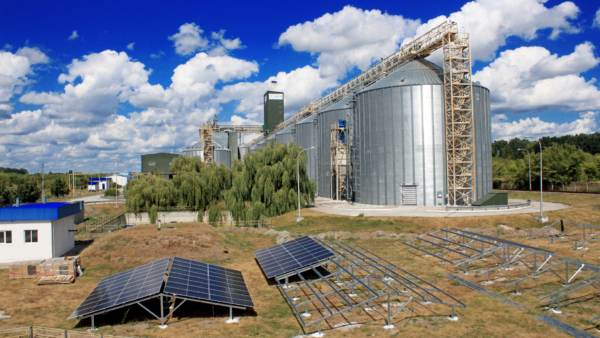


You must be logged in to post a comment.