We have a statutory two-tier board management structure. This structure separates the Supervisory Board from the Executive Board and the Management Board Banking. Each board has distinct responsibilities, ensuring a balance between oversight and execution.
It’s the parent of one main legal entity, ING Bank. ING Bank is the parent company of various Dutch and foreign banks.
In this section you will read how we adhere to laws, regulations, internal policies, and ethical standards relevant to its operations ensuring that we operate within legal and moral boundaries, safeguarding our integrity, reputation, and financial stability.
It’s our purpose
Our sustainability strategy spans climate, nature and social agendas.
At ING, our climate ambition is to play a leading role in accelerating the low carbon transition. We’re stepping up action on climate because it matters to the bank, our customers and society.
As a bank, the biggest impact we can make is through our financing. Through how we manage our business and work with our clients, we can make a positive contribution to society’s efforts to tackle climate change.
Rising to this global challenge demands system-level solutions. We’re eager to work with others, build partnerships and advocate publicly for the change that’s needed.
We monitor our progress and are committed to transparent disclosure. We are eager to share what we learn along the way while continuing to learn from others.
We aim to put sustainability at the heart of what we do.
This is the central hub for shareholders and investors to access key data about ING’s equity structure, performance, and distribution policies.
Read about our financial results and strategic progress.
Here’s a section with curated investor-facing materials that support transparency and strategic communication.
Here’s detailed information for debt investors and financial analysts about ING’s bond issuances and funding instruments.
Download the Comparative Quarters Note 1Q2026.
Download the Comparative Quarters Note 1Q2026.
Explore the latest news, press releases, and stories from ING – highlighting our strategy, performance, and impact.
Also check out our financial performance in the investors section.
1 November 2017
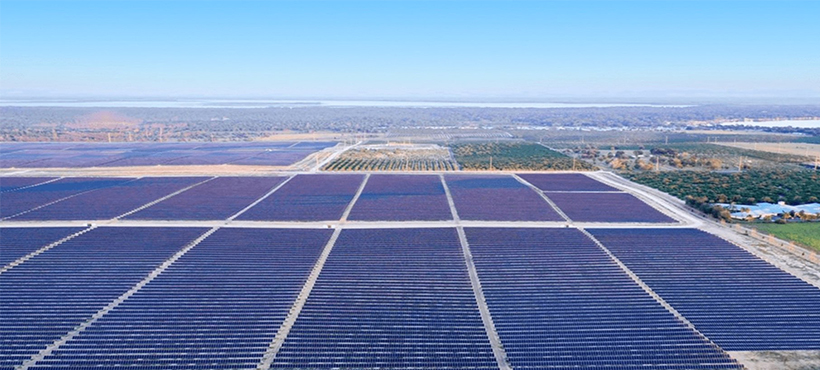
The Australian state of Queensland, known as the “sunshine state”, has set high ambitions regarding renewable energy. Some say it’s well underway to going from a “sunshine” state to a “solar” state. ING is pleased to take part in this transition.
How? As a participant to the banking syndication that is project financing the 100 MW Clare Solar Farm in North Queensland, one of Australia’s largest solar energy farms to date.
When completed later this year, it will generate enough electricity to power around 42,000 homes. The farm will help meet the Queensland government’s target of 50% renewable energy by 2030. It will also boost the local economy, creating up to 200 jobs during construction.
Why is ING involved in this project? Charles Ho, Head of Wholesale Banking Australia, explains.
“The energy sector is central to a sustainable future. ING has extensive experience supporting diverse renewable energy projects around the world, including solar, wind, geothermal and hydro. This transaction stresses our global experience in renewables and also marks our expansion in the Australian market.”
While this is our first solar project in Australia, we already lend to flagship wind farms there, including MacArthur (400MW wind farm), one of the largest operating wind farms in the southern hemisphere, and Bald Hills (106MW wind farm). Our dedicated Utilities, Power & Renewable team has been present in Australia since 2013.
The Clare Solar Farm doesn’t produce greenhouse gas emissions when generating electricity and uses less water. It helps meet the region’s energy needs and contributes to the development of the Australian clean energy industry.
Other participants in the project include Lighthouse Infrastructure, an increasingly active fund in the infrastructure and renewables sectors in Australia; DIF, a specialist infrastructure fund and one of ING’s key global clients, based in the Netherlands; and Fotowatio Renewable Ventures (FRV), a leading global utility scale solar PV.
The Clare Solar Farm project utilises photovoltaic (PV) modules similar to those used on rooftops. It has a tracking system, where the panels move to track the sun, optimising electricity generation. It’s one of the largest solar farms with a tracking system in Australia and the Asia Pacific region.
The project is also significant because it is the first large-scale solar project in Australia to obtain funding without government subsidy through a “power purchase agreement” with Australian energy company Origin Energy.
While 84% of Australia’s electricity output comes from burning coal and gas, there is growing demand for clean energy.
The government has set an renewable energy target to increase the amount of electricity generated from ecologically sustainable renewable sources.
The target is to generate 33,000 GWh of electricity from renewable sources by 2020.
The falling cost of developing solar energy is also building investors’ confidence. Accreditation of new large-scale renewable energy power stations is accelerating, with solar joining wind in the mix.
Contact
ING at a glance
ING in your area
Subscribe to press releases
Economic and financial analysis – ING Think
ING Wholesale Banking
LinkedIn
YouTube
ING on social media
ING funds its first solar farm deal in Australia – ING.com
Posted in Renewables
Leave a comment
Chile Solar PV Generation Hits 2,141 GWh With 28.7% Share in March 2026 – News and Statistics – IndexBox
We use cookies to improve your experience and for marketing. Read our cookie policy or manage cookies.
Search across reports, market insights, and blog stories.
Generadoras de Chile’s latest report underscores the ongoing growth of battery storage systems paired with solar farms, noting over 2.5 GW currently operational and another 6.3 GW being built, as renewable energy curtailment rises and transmission bottlenecks persist in southern Chile.
In March 2026, solar photovoltaic generation in Chile’s National Electric System (SEN) totaled 2,141 GWh, making up 28.7% of the month’s electricity output, per the industry group representing power producers. Solar output hit an instantaneous record of 75.1% of the grid mix at midday on March 14.
By the end of March, operational solar capacity reached 11,999 MW, with an extra 10,203 MW of renewable capacity—mostly solar and storage—under development. The SEN’s total installed capacity stood at 38,005 MW, of which 26,553 MW (69.9%) came from renewable sources. Solar PV led among renewables, followed by wind at 5,965 MW and run-of-river hydro at 4,005 MW.
Renewables supplied 62% of the SEN’s monthly generation, exceeding 50% on every day of March. At 2:00 PM on March 1, renewables peaked at 92.6% of instantaneous output.
Regionally, Antofagasta accounted for 35% of solar generation, Atacama for 22%, and the Metropolitan Region for 7%.
According to Generadoras de Chile, 10,474 MW is under construction in the SEN, comprising 2,753 MW of solar PV and 6,358 MW of battery energy storage systems (BESS), including both standalone and hybrid solar-storage projects. Renewable projects represent 97.4% of all capacity being built.
Energy storage expansion continues alongside solar. Chile now operates 2,529 MW / 8,786 MWh of storage, with 6,361 MW / 22,479 MWh under construction and 10,560 MW / 52,833 MWh undergoing environmental review. A large share of operational systems are BESS units integrated with solar plants, intended to move solar output to evening hours and limit curtailment.
In the environmental assessment queue, 14,587 MW of renewable capacity is pending, including 10,366 MW of solar PV (57.5% of the total), 4,005 MW of BESS, and 1,957 MW of hybrid solar-wind installations.
The report also points to operational difficulties from high renewable penetration. In March, curtailment totaled 595.8 GWh, or 20% of combined solar and wind generation, with 430.3 GWh from solar and 165.5 GWh from wind. Generadoras de Chile links the curtailment mainly to grid security issues and transmission congestion, especially on the Charrua-Puerto Montt corridor, which saw congestion during 39.7% of March hours.
This report provides a comprehensive view of the ac/dc motor industry in Chile, tracking demand, supply, and trade flows across the national value chain. It explains how demand across key channels and end-use segments shapes consumption patterns, while also mapping the role of input availability, production efficiency, and regulatory standards on supply.
Beyond headline metrics, the study benchmarks prices, margins, and trade routes so you can see where value is created and how it moves between domestic suppliers and international partners. The analysis is designed to support strategic planning, market entry, portfolio prioritization, and risk management in the ac/dc motor landscape in Chile.
The report combines market sizing with trade intelligence and price analytics for Chile. It covers both historical performance and the forward outlook to 2035, allowing you to compare cycles, structural shifts, and policy impacts.
This report provides a consistent view of market size, trade balance, prices, and per-capita indicators for Chile. The profile highlights demand structure and trade position, enabling benchmarking against regional and global peers.
The analysis is built on a multi-source framework that combines official statistics, trade records, company disclosures, and expert validation. Data are standardized, reconciled, and cross-checked to ensure consistency across time series.
All data are normalized to a common product definition and mapped to a consistent set of codes. This ensures that comparisons across time are aligned and actionable.
The forecast horizon extends to 2035 and is based on a structured model that links ac/dc motor demand and supply to macroeconomic indicators, trade patterns, and sector-specific drivers. The model captures both cyclical and structural factors and reflects known policy and technology shifts in Chile.
Each projection is built from national historical patterns and the broader regional context, allowing the report to show where growth is concentrated and where risks are elevated.
Prices are analyzed in detail, including export and import unit values, regional spreads, and changes in trade costs. The report highlights how seasonality, freight rates, exchange rates, and supply disruptions influence pricing and margins.
Key producers, exporters, and distributors are profiled with a focus on their operational scale, geographic footprint, product mix, and market positioning. This helps identify competitive pressure points, partnership opportunities, and routes to differentiation.
This report is designed for manufacturers, distributors, importers, wholesalers, investors, and advisors who need a clear, data-driven picture of ac/dc motor dynamics in Chile.
The market size aggregates consumption and trade data, presented in both value and volume terms.
The projections combine historical trends with macroeconomic indicators, trade dynamics, and sector-specific drivers.
Yes, it includes export and import unit values, regional spreads, and a pricing outlook to 2035.
The report benchmarks market size, trade balance, prices, and per-capita indicators for Chile.
Yes, it highlights demand hotspots, trade routes, pricing trends, and competitive context.
Report Scope and Analytical Framing
Concise View of Market Direction
Market Size, Growth and Scenario Framing
Commercial and Technical Scope
How the Market Splits Into Decision-Relevant Buckets
Where Demand Comes From and How It Behaves
Supply Footprint and Value Capture
Trade Flows and External Dependence
Price Formation and Revenue Logic
Who Wins and Why
How the Domestic Market Works
Commercial Entry and Scaling Priorities
Where the Best Expansion Logic Sits
Leading Players and Strategic Archetypes
How the Report Was Built
Instant access. No credit card needed.
Online access to 2M+ reports, dashboards, and tables. Trusted by Fortune 500 teams.
IndexBox, Inc.
2093 Philadelphia Pike #1441
Claymont, DE 19703, USA
Contact us
© 2026 IndexBox, Inc
Posted in Renewables
Leave a comment
Asia Vehicle Integrated Solar Panels – Market Analysis, Forecast, Size, Trends and Insights – IndexBox
We use cookies to improve your experience and for marketing. Read our cookie policy or manage cookies.
Search across reports, market insights, and blog stories.
Tell us where to send the sample and whether you want this report customized.
Thanks. Our team will review your request and get back to you at your business email.
Your request will be reviewed by our team and routed to support@indexbox.io.
How value is built from materials and components through validation, OEM integration, and aftermarket delivery.
Where value is created from OEM design-in and qualification through production, service, and replacement cycles.
The Asia Vehicle Integrated Solar Panels market represents a convergence of two massive regional industries: automotive manufacturing and photovoltaics. Unlike stationary solar applications, this product category embeds photovoltaic cells directly into vehicle body panels, glass roofs, hoods, and wings, requiring compliance with automotive safety, electrical, and durability standards. The market spans OEM factory-fit programs, Tier 1 integrated module supply, aftermarket distribution networks, and specialty vehicle converters serving recreational, emergency, and military applications.
Asia’s dominance in both solar cell production and vehicle assembly creates structural advantages for this emerging market. Chinese OEMs, led by rapidly scaling electric vehicle manufacturers, have been the most aggressive in adopting integrated solar as a differentiating feature. Japanese and Korean automakers are advancing high-efficiency integration for premium models, while Indian and Southeast Asian markets are exploring aftermarket and fleet applications driven by high solar irradiance and operational cost sensitivity. The product category sits at the intersection of automotive components, mobility systems, vehicle subsystems, and aftermarket retail, reflecting its complex value chain and multiple route-to-market pathways.
The Asia Vehicle Integrated Solar Panels market is expanding rapidly from a small base, with growth rates significantly outpacing both the broader automotive components sector and the stationary solar market. Demand volume, measured in megawatts of integrated capacity shipped to automotive and aftermarket channels, is projected to grow at a compound annual rate in the high teens to low twenties percentage range between 2026 and 2035. This growth trajectory is closely correlated with battery electric vehicle adoption in high-irradiance Asian markets, where solar range extension offers tangible consumer value.
By 2026, the market is transitioning from early adopter and concept-car programs into series production for several mass-market EV platforms, primarily in China. The aftermarket segment, while smaller in unit volume, shows robust growth in specialty vehicle and fleet applications across Japan, Australia, and Southeast Asia. Although absolute revenue remains modest relative to established automotive segments like lighting or infotainment, the trajectory indicates a multi-billion dollar market opportunity emerging by the early 2030s. Premium vehicle segments are currently overrepresented in adoption, but cost reductions and validation cycle completion are expected to broaden the addressable vehicle base substantially during the forecast horizon.
Demand for Vehicle Integrated Solar Panels in Asia is segmented by technology type, vehicle application, and value chain position. By technology, rigid monocrystalline silicon panels currently dominate due to higher efficiency and established manufacturing supply chains, but flexible thin-film panels based on CIGS and amorphous silicon are gaining share in applications requiring curved or lightweight integration. Conformal solar glass roofs represent a rapidly growing subsegment, particularly in passenger EVs, as they combine structural glazing with energy harvesting. Structural composite-integrated PV panels, where solar cells are embedded in composite body panels, remain a niche but technically promising segment for weight-sensitive applications.
By end-use sector, passenger electric vehicles and plug-in hybrids represent the largest demand source, with OEM procurement teams specifying solar roofs for range extension, battery maintenance, and sustainability branding. Commercial fleet operators, particularly last-mile delivery and logistics companies in high-sunlight Asian regions, are adopting solar panels for auxiliary power to reduce operational costs and extend vehicle uptime. The recreational vehicle industry in Japan, Australia, and Southeast Asia is a robust aftermarket demand driver, while public transportation authorities are exploring rooftop solar for buses and trains to power HVAC and telematics systems, contributing to carbon reduction targets.
Pricing for Vehicle Integrated Solar Panels in Asia reflects a layered cost structure that extends well beyond the PV cell and module cost per watt. The bill of materials includes an integration kit premium covering specialized wiring, maximum power point tracking controllers, and mounting hardware tailored to vehicle platforms. A significant cost layer is the amortization of OEM validation and homologation, which includes crash safety testing, flammability certification, electromagnetic compatibility compliance, and thermal cycling durability assessments. These validation costs, spread over program volumes, contribute meaningfully to per-unit pricing.
Module-level pricing for automotive-grade panels currently commands a substantial premium over standard solar modules, typically ranging from 2 to 4 times higher per watt, reflecting the stringent reliability specifications and customization required. Aftermarket installation labor and certification further elevate end-user pricing, particularly for retrofits. The Tier 1 value-add for design-for-manufacture and just-in-sequence delivery to assembly lines adds margin but reduces integration risk for OEMs.
Cost reduction pathways include higher cell efficiency reducing area-related costs, volume scale in automotive-grade encapsulation and lamination, and learning rates in flexible thin-film deposition processes. The premium for conformal solar glass roofs compared to standard panoramic glass roofs is estimated in the range of $500 to $1,500 per vehicle depending on power output and integration complexity.
The competitive landscape in Asia includes several distinct company archetypes: specialist automotive solar technology firms, integrated Tier 1 system suppliers, traditional PV manufacturers with dedicated automotive divisions, and OEM in-house solar development teams. Specialist firms focus on engineering modules that meet automotive durability specs, including thermal management, vibration resistance, and stone impact protection. Integrated Tier 1 suppliers, including automotive glass and electronics specialists, are increasingly offering complete solar roof systems that include glass, cells, wiring, and power electronics as a single module delivered just-in-sequence to assembly lines.
Traditional PV manufacturers, particularly those based in China, have established automotive divisions to supply cells and laminates to Tier 1 integrators and OEMs. Their competitive advantage lies in scale manufacturing, cell efficiency improvements, and cost control. Automotive electronics and sensing specialists are entering the market through power electronics and MPPT controller supply, while controls and vehicle-intelligence specialists focus on software integration, energy management algorithms, and vehicle-to-grid communication. Competition is intensifying in China, where multiple large-scale OEM solar roof programs are in active development, while Japanese and Korean markets remain more concentrated among established Tier 1 suppliers with long automotive relationships.
Asia’s production ecosystem for Vehicle Integrated Solar Panels is geographically concentrated around major PV manufacturing clusters and automotive assembly hubs. China is the dominant production location for solar cells and modules, with manufacturing hubs in the Yangtze River Delta, Pearl River Delta, and Hebei province. These regions supply cells and laminates to Tier 1 integration facilities located near OEM assembly plants, enabling just-in-sequence delivery. Japan and Korea maintain specialized production capacity for high-efficiency cells and thin-film modules, particularly for premium automotive applications where performance and reliability specifications are most stringent.
Supply chain bottlenecks are concentrated in several areas. Automotive-grade PV module validation cycles require specialized testing infrastructure for thermal cycling, damp heat, and mechanical vibration, which is not uniformly available across standard PV manufacturing sites. Thin-film production lines meeting automotive reliability specs remain relatively scarce, with lead times for new capacity extending 12-24 months. The supply of specialty encapsulation materials and backsheets that satisfy automotive flammability and durability standards is another constraint.
For markets like India and Southeast Asia, cell and module imports from China remain the primary supply source, as domestic production capacity for automotive-grade panels is limited. Import dependence for high-efficiency cells and integration electronics shapes supply security and pricing dynamics across the region.
Trade flows for Vehicle Integrated Solar Panels in Asia follow the established patterns of both the photovoltaic and automotive components sectors. Unlaminated solar cells, classified under HS 854140, are traded extensively within the region, with China, Malaysia, and Vietnam serving as major export hubs. These cells flow to automotive integration facilities in Japan, Korea, Thailand, and India, where they are laminated, encapsulated, and integrated into vehicle subsystems. Finished integrated solar roof modules, often classified under HS 870899 for other automotive parts and accessories, move across borders as Tier 1 components delivered to assembly plants.
Intra-Asia trade is facilitated by numerous free trade agreements, though tariff treatment depends on specific product classification, country of origin, and prevailing trade arrangements. For aftermarket solar panel kits, import duties vary significantly across Asian markets, influencing distributor pricing and market accessibility. Trade flows are also shaped by OEM sourcing strategies, with some global platforms specifying regionalized Tier 1 supply to minimize logistics costs and ensure just-in-sequence delivery reliability. The growing emphasis on localized content in EV supply chains may gradually reshape trade patterns, encouraging more in-country module integration near assembly plants, though cell production remains concentrated in low-cost manufacturing hubs.
China stands as the undisputed leader in the Asia Vehicle Integrated Solar Panels market, accounting for a majority of both production and consumption. The country’s advantages include the world’s largest PV manufacturing base, the most aggressive EV adoption rates, and a government pushing carbon neutrality by 2060. Multiple Chinese OEMs have announced or launched mass-market vehicles with factory-integrated solar roofs, driving scale and cost reduction. Japan and Korea are important innovation hubs, with advanced research in high-efficiency cells, thin-film technology, and automotive electronics integration. Their automakers are prioritizing solar integration in premium and luxury segments, with slower volume ramp but higher technology content per vehicle.
India represents a high-potential growth market due to its exceptionally high solar irradiance, large commercial vehicle fleet, and growing EV adoption. However, the domestic supply chain for automotive-grade PV modules remains underdeveloped, leading to import dependence for cells and integrated modules. Southeast Asian countries, particularly Thailand and Indonesia, are emerging as automotive production hubs and may attract Tier 1 solar integration facilities as EV manufacturing scales. Australia, while not a major production center, is a significant aftermarket demand market driven by its high solar irradiance and strong recreational vehicle culture, importing integrated solar solutions from Asian suppliers.
How commercial burden rises from technical fit toward approved-vendor status, validated supply, and service support.
Regulatory frameworks governing Vehicle Integrated Solar Panels in Asia span automotive safety, electrical system homologation, and solar module performance certifications. Key automotive standards include crash safety requirements for roof-mounted panels, flammability standards for interior and exterior materials, and electromagnetic compatibility regulations to ensure that power electronics do not interfere with vehicle control systems. In major Asian markets, type approval processes for vehicles with modified energy systems require demonstrating that integrated solar panels meet all applicable safety and durability standards, a process that can extend development timelines.
Electrical system homologation is particularly critical for panels designed to charge high-voltage traction batteries, requiring compliance with high-voltage safety standards and isolation monitoring requirements. Solar panel efficiency and durability certifications, while sometimes borrowed from stationary PV standards, are increasingly being adapted for automotive conditions including thermal cycling, humidity freeze, and mechanical load testing specific to vehicle dynamics.
Asian markets are at different stages of regulatory development, with China actively developing targeted GB/T standards for automotive solar integration, while other markets rely on a combination of international UN ECE regulations and national vehicle safety standards. Regulatory harmonization across Asia remains a work in progress, creating compliance complexity for suppliers serving multiple markets.
The Asia Vehicle Integrated Solar Panels market is forecast to follow a pronounced S-curve adoption trajectory over the 2026 to 2035 period. The initial phase, through approximately 2028, will be characterized by continued premium vehicle penetration, technology validation at scale, and supply chain capacity building for automotive-grade modules. An inflection point is projected around 2029-2030 as validated platforms reach volume production, manufacturing learning curves reduce system costs, and competitive pressure drives broader adoption across mainstream vehicle segments. Market volume, measured in megawatts of integrated capacity, could expand by an order of magnitude by the mid-2030s from 2026 levels.
Technology evolution will favor high-efficiency monocrystalline PERC and heterojunction cells for rigid roof applications, while flexible CIGS thin-film gains share in non-glass body panels. Bifacial cell designs may emerge for vehicle roofs to capture light from both sides. The aftermarket segment will grow steadily, driven by the installed base of vehicles without factory solar and the expansion of specialty vehicle markets. Cooling demand for auxiliary loads in commercial and recreational vehicles in sunbelt Asia will underpin sustained demand growth. By 2035, integrated solar is expected to be a mainstream option on a significant share of new passenger EVs in Asia and a common specification for commercial fleets operating in high-irradiance regions, fundamentally reshaping the relationship between vehicles and the electrical grid.
Significant market opportunities exist across multiple dimensions of the Asia Vehicle Integrated Solar Panels value chain. For Tier 1 system suppliers, the shift from aftermarket add-ons to OEM factory-fit programs creates opportunities to establish design partnerships with automakers and develop proprietary integration solutions that combine solar modules, power electronics, and thermal management into a single validated subsystem. Suppliers who can demonstrate robust validation data and just-in-sequence delivery capabilities will be well positioned to capture long-term supply contracts as program volumes scale.
In the aftermarket and specialty vehicle sectors, opportunities exist for distributors and installers targeting fleet operators seeking operational cost reduction through solar-powered HVAC and telematics. The recreational vehicle market in Japan, Australia, and Southeast Asia represents a high-margin opportunity for integrated solar solutions that balance power generation with aesthetic integration. Additionally, the convergence of vehicle-integrated solar with vehicle-to-grid and vehicle-to-home ecosystems, particularly in Japan and Korea where energy resilience is highly valued, opens pathways for energy management services.
For PV manufacturers, establishing automotive-grade production lines and certification capabilities represents a differentiation opportunity in a commodity solar market. The development of transparent solar cells for integration with windshields and side windows, while technically challenging, could unlock additional surface area for energy harvesting on future vehicle platforms.
A role-based view of who controls technology depth, OEM access, manufacturing scale, validation, and channel reach.
This report is an independent strategic market study that provides a structured, commercially grounded analysis of the market for Vehicle Integrated Solar Panels in Asia. It is designed for automotive component manufacturers, Tier-1 suppliers, OEM teams, aftermarket channel participants, distributors, investors, and strategic entrants that need a clear view of program demand, vehicle-platform fit, qualification burden, supply exposure, pricing structure, and competitive positioning.
The analytical framework is designed to work both for a single specialized automotive component and for a broader automotive and mobility product category, where market structure is shaped by OEM program cycles, validation and reliability requirements, platform architectures, localization strategy, channel control, and aftermarket logic rather than by one narrow customs heading alone. It defines Vehicle Integrated Solar Panels as Integrated photovoltaic systems designed to be permanently mounted on a vehicle’s body or roof to generate electrical power for auxiliary systems or battery charging and examines the market through vehicle applications, buyer environments, technology layers, validation pathways, supply bottlenecks, pricing architecture, route-to-market, and country capability differences. Historical analysis typically covers 2012 to 2025, with forward-looking scenarios through 2035.
This report is designed to answer the questions that matter most to decision-makers evaluating an automotive or mobility market.
At its core, this report explains how the market for Vehicle Integrated Solar Panels actually functions. It identifies where demand originates, how supply is organized, which technological and regulatory barriers influence adoption, and how value is distributed across the value chain. Rather than describing the market only in broad terms, the study breaks it into analytically meaningful layers: product scope, segmentation, end uses, customer types, production economics, outsourcing structure, country roles, and company archetypes.
The report is particularly useful in markets where buyers are highly specialized, suppliers differ significantly in technical depth and regulatory readiness, and the commercial landscape cannot be understood only through top-line market size figures. In this context, the study is designed not only to estimate the size of the market, but to explain why the market has that size, what drives its growth, which subsegments are the most attractive, and what it takes to compete successfully within it.
The report is based on an independent analytical methodology that combines deep secondary research, structured evidence review, market reconstruction, and multi-level triangulation. The methodology is designed to support products for which there is no single clean official dataset capturing the full market in a directly usable form.
The study typically uses the following evidence hierarchy:
The analytical framework is built around several linked layers.
First, a scope model defines what is included in the market and what is excluded, ensuring that adjacent products, downstream finished goods, unrelated instruments, or broader chemical categories do not distort the market boundary.
Second, a demand model reconstructs the market from the perspective of consuming sectors, workflow stages, and applications. Depending on the product, this may include Passenger EVs and PHEVs, Light commercial vehicles and vans, Heavy-duty trucks and trailers, Recreational vehicles (RVs) and campers, and Public transport and specialty vehicles across Automotive OEM, Commercial Fleet Operators, Aftermarket Retail and Service, Recreational Vehicle Industry, and Public Transportation Authorities and Vehicle platform integration design, PV module validation and homologation, Tier 1 assembly and just-in-sequence delivery, and Dealer/installer network training and certification. Demand is then allocated across end users, development stages, and geographic markets.
Third, a supply model evaluates how the market is served. This includes Solar-grade silicon wafers, Encapsulation materials (EVA, PVB), Tempered solar glass or polymer substrates, Automotive-grade connectors and wiring harnesses, and Specialized adhesives and sealants, manufacturing technologies such as High-efficiency monocrystalline PERC cells, Flexible CIGS thin-film deposition, Automotive-grade encapsulation and lamination, Maximum Power Point Tracking (MPPT) integration, and Vehicle-to-grid (V2G) bidirectional capability, quality control requirements, outsourcing, localization, contract manufacturing, and supplier participation, distribution structure, and supply-chain concentration risks.
Fourth, a country capability model maps where the market is consumed, where production is materially feasible, where manufacturing capability is limited or emerging, and which countries function primarily as innovation hubs, supply nodes, demand centers, or import-reliant markets.
Fifth, a pricing and economics layer evaluates price corridors, cost drivers, complexity premiums, outsourcing logic, margin structure, and switching barriers. This is especially relevant in markets where product grade, purity, customization, regulatory burden, or service model materially influence economics.
Finally, a competitive intelligence layer profiles the leading company types active in the market and explains how strategic roles differ across upstream materials suppliers, component and subsystem specialists, OEM and Tier programs, contract manufacturers, aftermarket distributors, and service channels.
This report covers the market for Vehicle Integrated Solar Panels in its commercially relevant and technologically meaningful form. The scope typically includes the product itself, its major product configurations or variants, the critical technologies used to produce or deliver it, the core input categories required for manufacturing, and the services directly associated with its commercial supply, quality control, or integration into end-user workflows.
Included within scope are the product forms, use cases, inputs, and services that are necessary to understand the actual addressable market around Vehicle Integrated Solar Panels. This usually includes:
Excluded from scope are categories that may be technologically adjacent but do not belong to the core economic market being measured. These usually include:
The exact inclusion and exclusion logic is always a critical part of the study, because the quality of the market estimate depends directly on disciplined scope boundaries.
The report provides focused coverage of the Asia market and positions Asia within the wider global automotive and mobility industry structure.
The geographic analysis explains local OEM demand, domestic capability, import dependence, program relevance, validation burden, aftermarket depth, and the country’s strategic role in the wider market.
This study is designed for strategic, commercial, operations, supplier-management, and investment users, including:
In many program-driven, qualification-sensitive, and platform-specific automotive markets, official trade and production statistics are not sufficient on their own to describe the true market. Product boundaries may cut across multiple tariff codes, several product categories may be bundled into the same official classification, and a meaningful share of activity may take place through customized services, captive supply, platform relationships, or technically specialized channels that are not directly visible in standard statistical datasets.
For this reason, the report is designed as a modeled strategic market study. It uses official and public evidence wherever it is reliable and scope-compatible, but it does not force the market into a purely statistical framework when doing so would reduce analytical quality. Instead, it reconstructs the market through the logic of demand, supply, technology, country roles, and company behavior.
This makes the report particularly well suited to products that are innovation-intensive, technically differentiated, capacity-constrained, platform-dependent, or commercially structured around specialized buyer-supplier relationships rather than standardized commodity trade.
The report typically includes:
The result is a structured, publication-grade market intelligence document that combines quantitative modeling with commercial, technical, and strategic interpretation.
Automotive-Market Structure and Company Archetypes
The Key National Markets and Their Strategic Roles
Analysis of Asia's solar cells and LEDs market forecasts 3.8% volume growth to 312B units by 2035, with key insights on consumption, production, and trade dynamics across major countries like China, India, and South Korea.
Asia's semiconductor LED market is projected to reach 13M tons and $161.6B by 2035, driven by strong demand. The article analyzes 2024 consumption, production, and trade data for key countries like China, Thailand, and India.
Asia's electric accumulator market is projected to reach 7.1B units and $69.1B by 2035, driven by strong demand. The analysis covers consumption, production, trade, and key country dynamics, highlighting China's dominance and Vietnam's rapid growth.
Analysis of Asia's lead-acid accumulator market (excluding starter batteries), covering consumption, production, trade, and forecasts to 2035. Includes key country data on China, India, Japan, and market trends.
Asia's solar cells and LEDs market is forecast to grow to 201 billion units and $348.9 billion by 2035, driven by strong demand. Key insights include India's rapid consumption growth and China's dominant production and export role.
Analysis of Asia's semiconductor LED market, including consumption, production, trade, and forecasts. Covers key countries like China, Thailand, and India, with data on market value, volume, and growth trends to 2035.
Verified reviewers highlight faster qualification, clearer collaboration, and stronger bid readiness.
High Performer
Regional Grid
High Performer Small-Business
Grid Report
Leader Small-Business
Grid Report
High Performer Mid-Market
Grid Report
Leader
Grid Report
Users Love Us
Milestone badge
Cristian Spataru
Commercial Manager · XTRATECRO
Great for Market Insights and Analysis
“IndexBox is a solid source for trade and industrial market data — what I like best about it is how it aggregates official statistics.”
Review collected and hosted on G2.com.
Juan Pablo Cabrera
Gerente de Innovación · Cartocor
Extremely gratifying
“Access very specific and broad information of any type of market.”
Review collected and hosted on G2.com.
Dilan Salam
GMP; ISO Compliance Supervisor · PiONEER Co. for Pharmaceutical Industries
Powerful data at a fair price
“I have got a lot of benefit from IndexBox, too many data available, and easy to use software at a very good price.”
Review collected and hosted on G2.com.
Counselor Hasan AlKhoori
Founder and CEO · Independent
All the data required
“All the data required for building your full analytics infrastructure.”
Review collected and hosted on G2.com.
Ashenafi Behailu
General Manager · Ashenafi Behailu General Contractor
Detailed, well-organized data
“The data organization and level of detail which it is presented in is very helpful.”
Review collected and hosted on G2.com.
Iman Aref
Senior Export Manager · Padideh Shimi Gharn
Up to date and precise info
“Up to date and precise info, for fulfilling the validity and reliability of the given research.”
Review collected and hosted on G2.com.
Pioneer in integrated solar cars (Lightyear 0, 2)
Sion model with full-body solar integration
Three-wheeled vehicle with up to 700W solar
Offers solar roof options on Prius and bZ4X
Solar roof systems on Sonata, Ioniq 5
Develops solar solutions for vehicle integration
Solar roof option announced for Cybertruck
Offers solar roof on EQ concept vehicles
Solar roof on Ocean SUV (SolarSky roof)
Offered solar panel on Leaf
Spin-off focusing on solar tech licensing
COR portable solar system and SOLIS cover
Supplies Maxeon solar cells for automotive
Develops high-efficiency solar for vehicles
Develops integrated PV for vehicles; licenses tech
Provides retrofit solar panel kits
Solar Squad and Solar City Car
Pioneered solar ventilation system
Solar roof option on Revero GT
Supplies high-efficiency N-type cells for mobility
Develops flexible solar for interior surfaces
Charts mirror the report figures on the platform. Values are synthetic for demo use.
Real macro, logistics, and energy indicators are pulled from the IndexBox platform and rendered on demand.
Consulting-grade analysis of the World’s vehicle integrated solar panels market: OEM demand, validation burden, supply bottlenecks, pricing logic, aftermarket dynamics, and long-term outlook.
Consulting-grade analysis of the United States’ vehicle integrated solar panels market: OEM demand, validation burden, supply bottlenecks, pricing logic, aftermarket dynamics, and long-term outlook.
Consulting-grade analysis of China’s vehicle integrated solar panels market: OEM demand, validation burden, supply bottlenecks, pricing logic, aftermarket dynamics, and long-term outlook.
Consulting-grade analysis of the European Union’s vehicle integrated solar panels market: OEM demand, validation burden, supply bottlenecks, pricing logic, aftermarket dynamics, and long-term outlook.
Comprehensive analysis of the World’s In-Dash Navigation System market: product scope and segmentation, supply & value chain, demand by segment, HS 8526/8708/8517 framework, and forecast.
Comprehensive analysis of the World’s Two Wheeler Hub Motor market: product scope and segmentation, supply & value chain, demand by segment, HS 8501/8711 framework, and forecast.
Consulting-grade analysis of the World’s hydrogen fuel cell vehicle market: OEM demand, validation burden, supply bottlenecks, pricing logic, aftermarket dynamics, and long-term outlook.
Consulting-grade analysis of the World’s automotive over the air ota updates market: OEM demand, validation burden, supply bottlenecks, pricing logic, aftermarket dynamics, and long-term outlook.
Instant access. No credit card needed.
Online access to 2M+ reports, dashboards, and tables. Trusted by Fortune 500 teams.
IndexBox, Inc.
2093 Philadelphia Pike #1441
Claymont, DE 19703, USA
Contact us
© 2026 IndexBox, Inc
Select the sections and data you need. Delivery by e-mail within 24 hours.
No sections selected yet
Minimum order: $99
Posted in Renewables
Leave a comment
The quiet acceleration of clean energy – Meer | English edition
The encouraging news about climate mitigation is taken from the first four months of this year.
In January, Ember, an energy think tank, published its electricity capacity estimates: wind and solar generated more electricity in the EU than fossil fuels in 2025. Wind and solar generated a record 30% of EU power, ahead of fossil fuels at 29%. “This milestone moment shows just how rapidly the EU is moving towards a power system backed by wind and solar,” said report author Dr Beatrice Petrovich. “As fossil fuel dependencies feed instability on the global stage, the stakes of transitioning to clean energy are clearer than ever”1.
As of March 2026, the REPowerEU has significantly reduced Russian fossil fuel dependency, cutting Russian gas imports from 45% (2021) to 12% by 2025. The EU enacted binding regulations on February 3, 2026, aimed at a permanent phase-out of Russian LNG by 2026 and pipeline gas by 2027. The EU strategy now focuses on massive renewable deployment (406 GW solar and wind expansion) and securing energy independence through mandatory, accelerated, and diversified supply2.
Also in March, Germany approved the Climate Change Act, which aims to reduce greenhouse gas emissions by at least 65% from 1990 levels by 2030 and to be climate-neutral by 2045. The plan approved by Chancellor Friedrich Merz’s cabinet includes a 12-gigawatt expansion of onshore wind turbine capacity, schemes to boost electric vehicle (EV) sales, and steps to help forests and soil. Results will be savings of more than 25 million metric tonnes of CO₂ by the end of the decade, according to the Environment Ministry, with reductions of nearly seven billion cubic metres in natural gas and four billion litres of petrol use by 20303.
The UK Energy Secretary Ed Miliband announced that his country will bring forward the large AR8 renewable energy auction round to July 2026. Miliband stressed that there was “no energy security while we are so dependent on fossil fuels”. As many as 18 offshore wind farms could potentially compete in AR8, alongside new onshore wind and solar sites. This comes after the last offshore allocation round (AR7), the largest offshore auction to date, awarded enough power to power the equivalent of 23 million homes4.
In the US, clean energy additions for electricity production will break records in 2026. According to the U.S. Energy Information Administration’s latest Preliminary Monthly Electric Generator Inventory, a total of 86 gigawatts of new utility capacity is expected to come online this year, which would surpass the previous single-year record of 53 gigawatts added in 2025. As shown below, 93% of that capacity will come from solar, storage, and wind power5. Planned Electric Generating Capacity in 2026 in the US.
Solar and wind power are likely to grow worldwide at a pace compatible with limiting global warming to 2°C – but not 1.5°C, according to an analysis with a new AI-powered model6. This is a new modelling approach that helps predict the outcomes of ongoing policies. The study supports a more realistic goal of 2 °C warming, even though this entails sustained acceleration across all major regions, comparable to what the European Union is aiming for with its RePowerEU plan.
The spread of renewable energy applications and energy efficiency is because, in many cases, they are simply the most cost-effective solutions. Heat pumps cost less than traditional boilers and can provide cooling. Wind and solar are often cheaper than fossil fuels for electricity generation. Electric vehicles produce little CO2 and are becoming competitive with conventional cars. Energy efficiency pays off, and the benefits are almost double what was previously estimated.
Renewable energy has overtaken coal to become the world’s largest source of electricity in 2025, according to think tank Ember. The growth of solar and wind meant that, for the first time, the share of coal power was lower than that of renewables. Fossil-fuel generation fell by 0.2% in 2025, with wind and solar alone meeting 99% of the growth in electricity demand last year7.
The IEA issued its second edition of the State of Energy Innovation, highlighting that energy innovations can have outsize economic and social outcomes, impacting industrial competitiveness, trade, environmental health, infrastructure investment, and security. “Today, the global markets for energy technologies such as batteries, transformers, turbines, motors, and heat exchangers are worth trillions of dollars. With spending on energy representing as much as 10% of global GDP, innovation that reduces energy supply costs can transform a country’s comparative advantage.” Ten percent of all patents are related to energy, more than to pharmaceuticals or chemicals. “Public spending in energy R&D is essential, with cost-benefit evaluations typically showing that the economic benefits are far greater – even a hundredfold larger – than their costs.” Government spending on energy R&D over the last decade is shown below, also highlighting the growing role of China8.
Investments in renewables and energy efficiency help reduce pollution. Globally, at least 4.2 million people die prematurely each year from fossil fuel pollution. WHO estimates that some 68% of outdoor air pollution-related premature deaths were due to ischaemic heart disease and stroke, 14% were due to chronic obstructive pulmonary disease, 14% were due to acute lower respiratory infections, and 4% of deaths were due to lung cancers. People living in low- and middle-income countries disproportionately experience the burden of outdoor air pollution, with 89% of the total deaths9. In the US, it is estimated that 91,000 people die prematurely due to this pollution. In Italy, the estimate is 52,000 premature deaths annually. Green investments combat this unhealthy situation.
In April 2026, Colombia and the Netherlands co-hosted a summit that brought together 57 countries committed to creating transition roadmaps to reduce economic reliance on fossil fuels. Countries attending this first-of-its-kind summit explored plans to develop national roadmaps away from fossil fuels, along with new tools to address harmful subsidies and carbon-intensive trade. The group will present its first report at COP 31 in November. On the eve of the last UN Climate Conference, Brazilian President Luiz Inácio Lula da Silva and United Nations Secretary-General António Guterres jointly launched this idea of an international roadmap for the phase-out of fossil fuels10.
Thanks to climate activists, scientists, engineers, concerned citizens, and responsible political leaders, progress has been made on fighting global warming. Let us celebrate these achievements and build on them.
1 Petrovich, B, European Electricity Review 2026, 22 January 2026.
2 European Commission, REPowerEU – 4 years on, 2026.
3 Reuters, Germany unveils climate plan to cut emissions and fossil fuels, March 25, 2026.
4 Strategic Energy, Germany and the UK ramp up wind power to tackle the energy crisis, March 27, 2026.
5 EnvironmentAmérica, Clean energy additions to break records in 2026, 2 March 2026.
6 Jakhmola, A., Jewell, J., Vinichenko, V. et al., Probabilistic projections of global wind and solar power growth based on historical national experience. 2026, Nature Energy (2026).
7 Lempriere, M., Clean energy pushes fossil-fuel power into reverse for ‘first time ever’, 21 April 2026.
8 International Energy Agency, The State of Energy Innovation 2026.
9 World Health Organization, Ambient (outdoor) air pollution, 24 October 2024.
10 Dunne, D., Santa Marta: Key outcomes from first summit on ‘transitioning away’ from fossil fuels, 30 April 2026, CarbonBrief.
Posted in Renewables
Leave a comment
India's energy crossroads: Why we cannot afford to get this wrong – Counterview
Open Forum for News and Views
NOTE: While there is no bar on viewpoint, comments containing hateful or abusive language will not be published and will be marked spam. — Editor
Click HERE for Rajiv Shah’s News Blog
Counterview is licensed under a Creative Commons Attribution-NonCommercial-NoDerivatives 4.0 International License
Follow Us on Twitter, Facebook and Telegram
Posted in Renewables
Leave a comment
India is rapidly scaling up renewable energy. Now it needs to store it – The Indian Express
India is rapidly scaling up renewable energy. Now it needs to store it The Indian Express
source
Posted in Renewables
Leave a comment
Kormotech ramps up solar power generation – Pet Food Processing
Kormotech ramps up solar power generation Pet Food Processing
source
Posted in Renewables
Leave a comment
India's power sector entering phase of 'non-solar-hour' supply strain: Citi report – lokmattimes.com

Marathi | Hindi
FOLLOW US :
City
By ANI | Updated: May 10, 2026 17:35 IST2026-05-10T23:00:23+5:302026-05-10T17:35:03+5:30
New Delhi [India], May 10 : India’s power sector is entering a new phase where the key challenge is no longer electricity shortages, but ensuring reliable power supply during non-solar hours as renewable energy capacity rises rapidly, according to a Citi Research report.
The report highlighted that while India has significantly expanded its generation capacity over the past decade and reduced overall power shortages, the country is now facing growing stress during evening and night-time peak demand periods when solar power generation declines.
“The challenge is shifting from ‘not enough energy’ to ‘not enough dispatchable energy at the right hour’,” the Citi Research report stated.
According to the report, daytime solar generation and improved hydro capacity have reduced average energy shortages, but the system is increasingly being tested during non-solar hours when cooling demand and commercial electricity consumption remain high.
“The risk has migrated. Daytime solar and improved hydro have reduced average shortages, but evening and night peaks now test the system’s flexibility,” the report said.
Citi said India’s power demand is becoming more weather-sensitive and time-sensitive due to rising air-conditioner usage, urbanisation, data centres and electrification trends.
The report noted that India’s peak power demand has risen sharply from around 119 GW in 2010 to nearly 250 GW in 2025, with the next phase of demand growth expected to come from cooling loads, electric vehicle charging and data centre expansion.
“Demand is now broader-based, with incremental growth likely to be driven by cooling load, data centres, electrification and policy-supported manufacturing,” the report said.
The report also warned that headline power deficit numbers may not fully capture the stress building up in the system during evening hours.
“Headline power deficits mask non-solar-hour strains,” the report stated.
According to Citi, the country’s transmission and storage infrastructure will become increasingly critical as renewable energy capacity expands further over the next few years. The report said battery energy storage systems (BESS), pumped hydro storage and flexible thermal generation would play a central role in ensuring grid reliability.
The report added that multiple instances of solar power curtailment between May and December 2025 exposed operational challenges linked to integrating large renewable energy volumes into a grid still dominated by thermal power.
“The proximate causes mismatch between daytime demand and solar output, limited coal ramping capability, and transmission bottlenecks are some of the issues that will likely define system risk in the next leg of the cycle,” the report said.
Citi further warned that the Central Electricity Authority’s long-term resource adequacy framework indicates risks of non-solar-hour power shortages if planned capacity additions or storage projects are delayed.
“CEA’s long-term resource adequacy work suggests the risk of Planning Reserve Margin turning negative in non-solar hours over FY27-29, in case capacity additions slip,” the report added.
The report also said coal-based power generation will continue to remain important despite India’s renewable energy expansion, with around 97 GW of additional coal-based capacity either under construction or in planning till 2032.
Disclaimer: This post has been auto-published from an agency feed without any modifications to the text and has not been reviewed by an editor
FOLLOW US :
Copyright ©2026 Lokmat Media Pvt Ltd
Posted in Renewables
Leave a comment
Solar drives battery storage surge as Australia’s NEM shifts 359MW from day to evening – PV Tech
Australia’s surging solar adoption has driven battery energy storage systems (BESS) in the National Electricity Market (NEM) to more than triple their daytime-to-evening energy shifting in the first quarter of 2026, according to AEMO’s latest Quarterly Energy Dynamics report.
Grid-scale solar output reached a new quarterly high of 2,706MW, up 13% from Q1 2025, while renewables supplied 46.5% of NEM generation during the quarter, the highest share on record for a first quarter. The increased solar penetration has forced New South Wales to revise its 2030 storage requirements upward from 40GWh to 56GWh.
Get Premium Subscription
“Two years ago, we needed 40GWh of storage operational by 2030. That has now increased to 56GWh solely due to solar penetration,” said Paul Peters, CEO of New South Wales’ Energy Security Corporation, speaking at the Energy Storage Summit Australia 2026 last month.
“Of the 56GWh needed, 12.5GWh has hit the financial investment decision. 75% of what we need in 2030 is not there today.”
Average battery discharge reached 359MW during the quarter, more than three times the 98MW recorded in the same period a year earlier. This growth was driven by 4,445MW of new large-scale battery storage systems, adding 11,219MWh to the grid since the end of Q1 2025, more than doubling total installed battery storage in the NEM.
Daytime charging increased by 872MW, while evening peak discharge rose by 818MW, shifting energy from daylight hours into periods of higher demand. Battery storage delivered 1,115MW into the evening peak, with peak discharge reaching a record 3,556MW on 7 January during the half-hour ending 19:00, 23% higher than the previous record set in Q4 2025.
Eight battery storage systems commenced commissioning in the NEM during Q1 2026, including the 415MW/1,660MWh Orana BESS in New South Wales, the 300MW/650MWh Mortlake BESS in Victoria and the 260MW/1,090MWh Supernode BESS unit 2 in Queensland.
Battery storage set prices in 32% of trading intervals across the NEM during the quarter, displacing hydro as the most frequent price-setting technology.
The increased battery capacity contributed to lower year-on-year wholesale prices in most regions, with the NEM average wholesale spot price averaging AU$73/MWh (US$51.97/MWh), down 12% from Q1 2025.
Evening peak prices fell as battery discharge reduced reliance on gas and hydro generation, though this effect was moderated by an increase in daytime prices as battery charging set prices more frequently, reducing the frequency of negative prices in the northern regions.
Estimated revenue for NEM grid-scale battery storage systems averaged AU$96.9 million, more than double the AU$44 million recorded in Q1 2025. Energy arbitrage revenue rose by AU$55.1 million to AU$93.9 million, accounting for 97% of total battery storage revenue, up from 88% a year earlier. Frequency control ancillary services (FCAS) revenue declined to AU$3 million, down 43% from the previous year, representing just 3% of total revenue.
Peak renewable energy and storage contribution in the NEM reached 76.7% during the half-hour ending 11:30 on 7 January, 4.3% higher than the previous Q1 outcome. South Australia set a record for renewable energy generation and storage contribution, reaching 98.8% during the half-hour ending 15:00 on 31 January.
In Western Australia’s Wholesale Electricity Market (WEM), battery discharge increased by 108MW, driven by the commissioning of 1,025MW/4,100MWh of new battery storage systems since the end of Q1 2025. The renewable energy share of generation increased to 46.1%, up from 40.8% in Q1 2025.
To read the full article and further information on battery storage, please visit Energy-Storage.news.
Posted in Renewables
Leave a comment
Solar ranch aims to prove grazing cattle under the panels is a farmland win-win – Los Angeles Times
This is read by an automated voice. Please report any issues or inconsistencies here.
CHRISTIANA, Tenn. — From a distance, the small solar farm in central Tennessee looks like others that now dot rural America, with row upon row of black panels absorbing the sun’s rays, creating a flow of clean electricity.
But beneath the panels is lush pasture, not gravel, enjoyed by a small herd of cattle that spends their days munching grass and resting in the shade.
Silicon Ranch, which owns the 40-acre farm in Christiana, outside Nashville, believes cattle-grazing is the next frontier in so-called agrivoltaics, which mostly has involved growing crops or grazing sheep beneath the panels.
The solar company debuted the project last week and will spend the next year working to demonstrate to farmers that much larger herds of cattle also can thrive at solar sites. If successful, advocates say, that could jump-start new projects to meet the soaring electricity demand driven by rapidly expanding data centers — without contributing climate-warming carbon emissions — and help cattle producers hold on to their land and livelihoods.
“Solar is one of the most powerful tools we have for cutting emissions and … is cost-competitive with fossil fuels,” said Taylor Bacon, a doctoral student at Colorado State University who has studied ecological outcomes at solar grazing sites. “I think we’re starting to see enough research that, when you do it well, the land use can be more of an opportunity than a downside.”
Though there are far more cattle than sheep in the U.S., their size poses challenges at solar sites, where both expensive equipment and the animals — which can weigh more than half a ton — must be protected.
Solar panels equipped with tracking can pivot to near-vertical angles to capture the sun’s rays, leaving little room underneath for cattle. Simply raising the panels is cost-prohibitive because of the amount of steel required. So Silicon Ranch raised the panels a little but also developed software that workers activate to turn the panels close to horizontal when cattle are grazing, giving them room to wander, said Nick de Vries, the company’s chief technology officer.
Workers rotate the cattle — currently 10 cows and their calves — between paddocks every few days so panels on the ungrazed portion of the site operate normally, generating a supply of roughly 5 megawatts of electricity for Middle Tennessee Electric, a rural electric co-op.
The hope is that the technology eventually will be adopted more broadly, company officials said.
“We know it works,” De Vries said. “But you need to prove it to other people.”
For solar companies, agricultural land is generally easier to develop than other types of sites. But many farmers — and communities — will need to be convinced that solar grazing will benefit them because of past practices that destroyed topsoil and took land out of production permanently.
“For many agricultural stakeholders, it is offensive to see high-quality farmland getting graded and piled when that’s a farm family’s legacy,” said Ethan Winter, national smart solar director at American Farmland Trust.
But he sees potential for solar grazing partnerships to help farmers keep their land in production and earn extra income at a time when it’s increasingly difficult to earn money farming and ranching alone.
“Agriculture is in a really tough spot right now” due to trade wars, climate extremes, increased costs and pressure to sell, Winter said. “So maybe this is our moment where we can be helping states meet their energy needs and do that in a way that’s providing new opportunities for farmers.”
Silicon Ranch this year will have almost 15,000 acres of pasture being grazed — mostly by sheep — since launching five years ago, and is working with ranchers, farmers, university researchers and others to adopt best practices for keeping soils and animals healthy.
What they’re finding is that pasture beneath solar panels retains more moisture, making it more drought tolerant, said Anna Clare Monlezun, a rancher and rangeland ecosystem scientist who’s working on the Tennessee project. Grazing in the shade also leaves animals less prone to heat stress, enabling them to gain more weight and drink less water.
“There are more win-wins than trade-offs,” she said.
Sheep already have proved to be a good fit for solar sites, with more than 130,000 acres grazed as of 2024, a number that certainly has grown, said Kevin Richardson, senior director of the American Solar Grazing Assn.
But for cattle, the industry still has to overcome site-design challenges and be able to scale up operations while also developing appropriate economic incentives for ranchers, Richardson said.
“Once we have that, I think we’ll see more solar sites using cattle or multi-species grazing with sheep and cattle,” he said.
Farmers often earn about $1,000 an acre by leasing their land for solar, easily 10 times more than what they historically earned through traditional agriculture, said Winter, with the Farmland Trust. That can help them to diversify operations, pay down debt and buy more land.
“I think you’ll start to hear more interest from farmers who are up against a serious financial wall right now and looking for income diversification opportunities that keep land in production,” Winter said. “We need and want to grow America’s energy capacity but not at the expense of our best farmland or at the expense of agricultural livelihoods.”
Webber and Bickel write for the Associated Press.
Climate & Environment
California
Climate & Environment
There’s more than a dozen candidates currently on the ballot. Can Bass hold on to her seat? Or could councilmember Nithya Raman or reality star Spencer Pratt take it?
Modern LA earned its first smoggy nickname 450 years ago, as the “bay of smokes.” At the La Brea tar pits, we take a short walk through a long history with curator Regan Dunn, who explains how and why the first Angelenos would have set fires that filled the broad bowl of LA and foretold the curse of smog.
Subscribe for unlimited access
Site Map
Follow Us
MORE FROM THE L.A. TIMES
Posted in Renewables
Leave a comment
Solar panels catch fire on roof of Stafford County home; no injuries reported – DC News Now
Posted in Renewables
Leave a comment
Clean energy groups push back on North Carolina regulators' solar energy pause – WUNC News
Last month, state regulators passed an unusual order that put a pause on Duke Energy’s new solar energy development in North Carolina.
The Southern Environmental Law Center filed a motion with the North Carolina Utility Commission to reconsider the order, calling it “arbitrary and capricious.”
The order was unusual for a few reasons: only Utilities Commission Chair William Brawley issued it, and the commission didn’t hold a public hearing before making a decision.
It also paused solar procurements that the commission greenlit during the last Carbon Plan, which the commission approved in 2024.
The SELC argued that an expedited review of the order is in the public interest, as these solar “missing megawatts” risk the reliability and affordability of Duke Energy’s service.
Posted in Renewables
Leave a comment
Solar Module Manufacturing Quality: Intertek CEA 2026 Report Reveals Yield Gaps – News and Statistics – IndexBox
Solar Module Manufacturing Quality: Intertek CEA 2026 Report Reveals Yield Gaps – News and Statistics IndexBox
source
Posted in Renewables
Leave a comment
Opinion | Critics of California's rooftop solar program get the affordability story wrong – CalMatters
Join us at the CalMatters Ideas Festival on May 21. 💡 Get your tickets now.
Welcome to CalMatters, the only nonprofit newsroom devoted solely to covering statewide issues that affect all Californians. Sign up for WeeklyMatters for a Saturday morning digest of the latest news and commentary from the Golden State.
This story is part of California Voices, a commentary forum aiming to broaden our understanding of the state and spotlight Californians directly impacted by policy or its absence. Learn more here.
Guest Commentary written by
Angela Lipanovich is an attorney at Estriatus Law and lives in Santa Cruz.
Jenny Folkesson is the executive director of SolarWAVE Action.
Re: “Californians’ electric bills would be much lower without state’s program fees“
A recent CalMatters guest commentary has California’s affordability story exactly backwards. Rooftop solar isn’t driving up utility bills — wildfire capital and guaranteed utility profits are the dominant drivers.
The California Public Advocates Office attributes roughly 21% of rates to wildfire-related capital, the single largest driver of recent rate increases. The California Public Utilities Commission, the state’s utilities regulator, also guarantees the three investor-owned utilities returns on equity to almost 10%. Last year, CEO pay alone reached $19.8 million.
Every ratepayer covers those costs.
The rooftop solar “subsidy” is a rate-design, not a transfer of money. The Natural Resources Defense Council describes it as fixed-cost recovery by utilities on flat sales, not a payment from non-solar to solar customers. Research has shown that existing rooftop solar actually saved all ratepayers approximately $1.5 billion in 2024 alone by reducing peak load and deferring transmission build-out. The latest version of the state’s rooftop solar program has already slashed solar credits by 75%, yet wildfire spending has no such ceiling.
Real affordability means reforming rate design and expanding solar ownership opportunities to more renters, low-income families and small businesses — not scapegoating customers who generate their own clean power.
Read more from CalMatters
Text
Get breaking news on your phone.
Download
Keep up with the latest via our app.
Sign up
Receive free updates in your inbox.
We’re CalMatters, your nonprofit and nonpartisan news guide.
Our journalists are here to empower you and our mission continues to be essential.
But we can’t keep doing this without support from readers like you. Please give what you can today.
Every gift helps.
We love that you want to share our stories with your readers. Hundreds of publications republish our work on a regular basis.
All of the articles at CalMatters are available to republish for free, under the following conditions:
If you’d like to regularly republish our stories, we have some other options available. Contact us at republish@calmatters.org if you’re interested.
Have other questions or special requests? Or do you have a great story to share about the impact of one of our stories on your audience? We’d love to hear from you. Contact us at republish@calmatters.org.
info@calmatters.org
membership@calmatters.org
source
Welcome to CalMatters, the only nonprofit newsroom devoted solely to covering statewide issues that affect all Californians. Sign up for WeeklyMatters for a Saturday morning digest of the latest news and commentary from the Golden State.
This story is part of California Voices, a commentary forum aiming to broaden our understanding of the state and spotlight Californians directly impacted by policy or its absence. Learn more here.
Guest Commentary written by
Angela Lipanovich is an attorney at Estriatus Law and lives in Santa Cruz.
Jenny Folkesson is the executive director of SolarWAVE Action.
Re: “Californians’ electric bills would be much lower without state’s program fees“
A recent CalMatters guest commentary has California’s affordability story exactly backwards. Rooftop solar isn’t driving up utility bills — wildfire capital and guaranteed utility profits are the dominant drivers.
The California Public Advocates Office attributes roughly 21% of rates to wildfire-related capital, the single largest driver of recent rate increases. The California Public Utilities Commission, the state’s utilities regulator, also guarantees the three investor-owned utilities returns on equity to almost 10%. Last year, CEO pay alone reached $19.8 million.
Every ratepayer covers those costs.
The rooftop solar “subsidy” is a rate-design, not a transfer of money. The Natural Resources Defense Council describes it as fixed-cost recovery by utilities on flat sales, not a payment from non-solar to solar customers. Research has shown that existing rooftop solar actually saved all ratepayers approximately $1.5 billion in 2024 alone by reducing peak load and deferring transmission build-out. The latest version of the state’s rooftop solar program has already slashed solar credits by 75%, yet wildfire spending has no such ceiling.
Real affordability means reforming rate design and expanding solar ownership opportunities to more renters, low-income families and small businesses — not scapegoating customers who generate their own clean power.
Read more from CalMatters
Text
Get breaking news on your phone.
Download
Keep up with the latest via our app.
Sign up
Receive free updates in your inbox.
We’re CalMatters, your nonprofit and nonpartisan news guide.
Our journalists are here to empower you and our mission continues to be essential.
But we can’t keep doing this without support from readers like you. Please give what you can today.
Every gift helps.
We love that you want to share our stories with your readers. Hundreds of publications republish our work on a regular basis.
All of the articles at CalMatters are available to republish for free, under the following conditions:
If you’d like to regularly republish our stories, we have some other options available. Contact us at republish@calmatters.org if you’re interested.
Have other questions or special requests? Or do you have a great story to share about the impact of one of our stories on your audience? We’d love to hear from you. Contact us at republish@calmatters.org.
info@calmatters.org
membership@calmatters.org
source
Posted in Renewables
Leave a comment
Colorado approves balcony solar, requires utilities to accept meter collars – Solar Power World
Solar Power World
|
Colorado is the latest state to approve plug-in solar (also known as balcony solar) after Gov. Jared Polis signed HB26-1007 into law.
Credit: UL
The legislation led by Reps. Lesley Smith and Rebekah Stewart and Sens. Cathy Kipp and Matt Ball that will make it cheaper and easier for Colorado families, including renters and apartment dwellers, to power their homes with solar energy. The bill passed both chambers of the Colorado legislature with bipartisan support.
The new law creates a pathway to allow for the use of plug-in solar devices, establishes critical safety standards for those products and eliminates unnecessary interconnection barriers by allowing families to use meter collar adapters.
“Colorado is breaking down barriers to clean energy and saving people money on energy bills,” said Gov. Polis following the signing of the bill. “Just because you live in an apartment or multi-family building doesn’t mean you shouldn’t be able to use solar panels to save money on your energy bill, and this new law expands access and choice to money-saving clean energy solutions for more Coloradans. Thank you to the sponsors for expanding choices for more Coloradans to explore new technology that protects our environment and saves Coloradans money.”
What HB-1007 Does:
News item from Colorado Solar and Storage Association
Kelly Pickerel has more than 15 years of experience reporting on the U.S. solar industry and is currently editor in chief of Solar Power World. Email Kelly.
Copyright © 2026 WTWH Media LLC. All Rights Reserved. The material on this site may not be reproduced, distributed, transmitted, cached or otherwise used, except with the prior written permission of WTWH Media
Privacy Policy | RSS
Posted in Renewables
Leave a comment
So Much For The War On Solar Power: 4 More Gigawatts Coming To The US – CleanTechnica
US President Donald Trump’s crusade against wind turbines continues, but his efforts to stop solar power have fallen flat. A case in point is the US manufacturer SEG Solar. Despite the sharp U-turn in federal energy policy, SEG has just announced the addition of a new 4-gigawatt solar module factory to its US portfolio.
As for who’s going to put all those new solar modules to work, that’s a good question. In addition to orders from the White House aimed at throttling down the domestic solar industry, some states and local governments have established, or are considering, new restrictions on wind and/or solar development.
However, there are ample opportunities in other states where renewable energy is supported. Blue states like California, Illinois, and New York come to mind, but the appeal is bipartisan, with Florida and Texas vying against California for the #1 slot in installed solar capacity in a state-by-state ranking.
Texas is a particularly interesting case because capacity additions are just part of the state’s solar power picture. Solar manufacturers have also been rushing into Texas, despite the anti-renewables efforts undertaken by Republican lawmakers in the state.
SEG surfaced on the CleanTechnica radar in 2024, when it announced the opening of a new $60 million, 2-gigawatt factory in Houston, earmarked for fabricating the company’s Yukon N-type solar modules.
“With the opening of the Houston plant, customers will benefit from faster delivery times and enhanced after-sales service, while the convenient location will significantly reduce transportation costs, boosting SEG’s competitiveness and maintaining its industry-leading position,” the company explained.
“SEG will continue to deepen its investments in wafers, cells, and modules, closely tracking market trends to meet our customers’ needs,” the company added, indicating a sunny future for solar power in the US.
Things certainly did seem sunny just a year and five months ago, when former US President Joe Biden was still in office with robust support for both wind and solar. The environment abruptly shifted on January 20, 2025 when President Donald Trump swept back into office.
Still, the sun will keep shining long after President Trump leaves office as scheduled on January 20, 2029 — peacefully one hopes, this time — and domestic solar manufacturers like SEG are planning for the long haul.
In the latest news from SEG, on May 7 the company announced that it will construct a new 4-gigawatt factory in Houston. “Building on the success of its first 2 GW solar module factory, this expansion will increase SEG’s total annual U.S. module production capacity to approximately 6 GW,” SEG notes, adding that it expects the new solar module facility to be up and running sometime in Q3 of this year, which is just around the corner.
“The domestically-produced modules will provide greater product quality, traceability and delivery speed to increase value for partners and customers,” SEG adds.
If that thing about delivery speed indicates that SEG is in a hurry, it is. The domestic solar manufacturing sector lay all but dormant for decades, and now the competition is heating up rapidly, with Texas being one standout example. As of 2023 Texas had just one solar module factory to its name, with about a dozen others producing racks and other related hardware. The Solar Energy Industries Association now counts 137 solar manufacturers of various kinds in Texas, along with 240 other companies in the installer/developer category and an additional 296 companies in solar-related fields.
SEG has already indicated that it does not intend to sit on its laurels. “This new facility marks an important milestone for SEG,” said the company’s VP of Operations, Timothy Johnson.
“It will further strengthen our U.S. manufacturing capabilities while supporting ongoing technology innovation,” Johnson emphasized in a press statement.
“The plant is designed with the flexibility to integrate next-generation technologies, including HJT, as the industry evolves,” Johnson added.
SEG launched its new SIERRA N HJT module series at the RE+ 2025 exhibition in Las Vegas last September. “The modules deliver up to 740 W of maximum power output with a conversion efficiency of 23.82%, and feature an ultra-low temperature coefficient of -0.24%/°C.” SEG
“These technological advancements ensure stable performance and higher energy yields even under high-temperature, low-light, or complex environmental conditions,” the company added.
“With higher power density and improved system compatibility, the SIERRA N series reduces the number of modules required per project, effectively lowering BOS [balance of system] and LCOE costs while providing reliable and efficient solutions for utility-scale and C&I projects,” they added again for good measure, with LCOE referring to the levelized cost of energy, a standard for comparing different energy technologies.
Aside from lowering costs, the power density improvement can also help alleviate land use issues, cutting down on the space needed to generate the same amount of electricity. Potential impacts include more opportunities for small-scale solar in tight quarters as well as agrivoltaic applications on farmland.
Among other announcements at RE+ 2025, SEG also signed a cooperation agreement with the Indiana-based electrical supply and services firm Kirby Risk. “The partnership will leverage SEG’s advanced manufacturing and R&D capabilities at its Houston facility alongside Kirby Risk’s leading local distribution and service network to accelerate the growth of clean energy in the U.S.,” SEG explained, once again underscoring the speed factor.
This year marks Kirby Risk’s 100th anniversary in business and the solar industry has provided it with a fresh burst of adrenaline. Keep an eye on forthcoming solar activity in Indiana, Illinois, Ohio and Georgia, where the company maintains more than three dozen locations.
Another SEG-adjacent firm to keep an eye on is the Arizona-based solar construction firm Erthos, which inked a licensing agreement with SEG in 2023. The startup’s Earth Mount Solar platform is a low-rise, modular system that practically eliminates expensive racking hardware. The agreement provides for SEG to manufacture modules that fit seamlessly into the Earth Mount system.
SEG is just one example of the nonstop innovation that will keep pushing the solar envelope in the US regardless of partisan politics, with futuristic robotic installation systems and space solar power among other emerging elements. One has to wonder why President Trump and his allies in the Republican party are wasting so much time and energy on a losing battle…then again, never mind.
Photo: The Texas-based solar manufacturer SEG Solar is among the firms continuing to push the solar power envelope despite the sharp U-turn in federal energy policy (cropped, courtesy of SEG).
CleanTechnica’s Comment Policy
Tina has been covering advanced energy technology, military sustainability, emerging materials, biofuels, ESG and related policy and political matters for CleanTechnica since 2009. Follow her @tinamcasey on LinkedIn, Mastodon or Bluesky.
Tina Casey has 4178 posts and counting. See all posts by Tina Casey
Posted in Renewables
Leave a comment
Germany Vehicle Integrated Solar Panels – Market Analysis, Forecast, Size, Trends and Insights – IndexBox
We use cookies to improve your experience and for marketing. Read our cookie policy or manage cookies.
Search across reports, market insights, and blog stories.
Tell us where to send the sample and whether you want this report customized.
Thanks. Our team will review your request and get back to you at your business email.
Your request will be reviewed by our team and routed to support@indexbox.io.
How value is built from materials and components through validation, OEM integration, and aftermarket delivery.
Where value is created from OEM design-in and qualification through production, service, and replacement cycles.
Germany represents one of the most strategically significant markets for vehicle integrated solar panels globally, combining Europe’s largest automotive production base with ambitious electric vehicle adoption targets and advanced solar technology competencies. The German automotive industry produced approximately 4.1 million vehicles in 2025, of which an estimated 35–40% were electrified powertrains (BEV, PHEV, and mild hybrid), creating a substantial addressable base for solar integration. The product category spans rigid monocrystalline silicon panels, flexible thin-film modules (CIGS and amorphous silicon), conformal solar glass roofs, and structural composite-integrated photovoltaic layers, each occupying distinct application niches based on vehicle type, available surface area, aerodynamic requirements, and cost sensitivity.
The market operates through three principal channels: OEM factory-fit programs where solar panels are integrated during vehicle assembly; Tier 1 integrated module supply for platform-level design-in; and aftermarket distribution and installation networks serving fleet operators, recreational vehicle manufacturers, and specialty converters. Germany’s dense automotive supplier ecosystem, strong engineering services sector, and established PV research infrastructure (including Fraunhofer ISE and multiple automotive-application research clusters) provide a favorable environment for system development, validation, and just-in-sequence delivery to assembly plants. However, the market remains early-stage in adoption terms, with factory-fit solar integration estimated at 2–4% of new EV registrations in Germany during 2025, suggesting considerable headroom for expansion as technology matures, costs decline, and OEM design cycles incorporate solar-ready vehicle architectures.
While absolute market value figures for Germany’s vehicle integrated solar panel market are not publicly reported in aggregated form, growth indicators across multiple demand signals point to sustained double-digit expansion throughout the forecast period. Annual installed capacity (measured in peak kilowatts integrated into vehicles) is estimated to have grown at a compound rate of 25–35% between 2022 and 2025 from a very low baseline, and the pace is expected to moderate to a still-strong 22–28% CAGR through 2035 as scale increases. The growth trajectory is supported by three primary structural drivers: the rising share of BEVs in German new-car registrations (projected to reach 50–60% of new registrations by 2030 under current EU policy trajectories), the increasing average solar panel power output per vehicle as efficiency improves and available surface area utilization expands, and the broadening of solar integration from premium-segment vehicles into volume models.
Segment-level growth dispersion is notable. The passenger EV and PHEV category, which currently accounts for the bulk of installed units, is forecast to maintain the largest volume share but see its proportional weight decline somewhat as commercial vehicle uptake accelerates after 2028. The light commercial vehicle and van segment—where daily driving patterns, depot parking profiles, and auxiliary electrical loads (refrigeration, telematics, tail lifts) create strong economic incentives for solar integration—is projected to grow at a 28–35% CAGR through 2035, making it the fastest-growing application category.
The recreational vehicle segment, while smaller in unit terms, benefits from Germany’s large and affluent caravan and motorhome ownership base, where off-grid power independence carries high perceived value. Revenue growth across all segments is expected to outpace unit growth through at least 2030 as average system power ratings increase and premium technologies (bifacial, V2G-capable) gain share, before cost-down effects begin to moderate revenue-per-unit trajectories in the 2032–2035 timeframe.
Demand for vehicle integrated solar panels in Germany is structured across four distinct technology types and five end-use sectors, with significant variation in adoption maturity, willingness to pay, and technical requirements. By technology type, rigid monocrystalline silicon panels dominated the installed base in 2025 with an estimated 55–65% share, favored for their high cell efficiency (22–24%) and well-established supply chain.
Flexible thin-film CIGS panels held approximately 20–25% share, prized for their conformability to curved body panels, lighter weight, and superior performance under partial shading or diffuse light conditions typical of German weather. Conformal solar glass roofs accounted for 10–15% of demand, primarily integrated into panoramic roof systems of premium passenger EVs, while structural composite-integrated PV—embedding solar cells into body panels, spoilers, or tonneau covers—represented a nascent 2–5% share but is expected to grow rapidly as vehicle architectures are redesigned for solar-readiness.
On the application side, EV range extension and battery maintenance form the dominant use case, absorbing an estimated 65–75% of installed capacity in 2026. For a typical BEV with a 60–80 kWh battery pack, a 300–500 W solar array can contribute 8–15 km of range per day under average German insolation, reducing grid-charging frequency and extending battery life through sustained state-of-charge maintenance during parking.
Auxiliary power for HVAC, telematics, refrigeration, and onboard electronics represents the second-largest application segment at 15–20%, particularly significant for commercial fleet vehicles and public transport where cabin comfort and equipment loads directly impact operational costs. Off-grid power for recreational vehicles and specialty vehicles (emergency services, military, mobile workshops) accounts for 8–12% of demand but carries high per-unit value, with customers typically willing to pay a significant premium for autonomy from grid charging infrastructure.
Fleet operational cost reduction, while still a minor application share in 2026 (estimated 3–5%), is projected to become one of the fastest-growing demand drivers after 2029 as fleet operators accumulate real-world data on fuel savings, reduced charging costs, and lower maintenance intervals for auxiliary batteries.
The pricing structure for vehicle integrated solar panels in Germany is multilayered and significantly more complex than for standard photovoltaic modules. At the PV cell and module level, automotive-grade monocrystalline PERC cells command a substantial premium over commercial-grade cells, with module costs ranging from €1.80–3.00 per watt depending on certification level, encapsulation specification, and order volume.
The integration kit premium—encompassing automotive-qualified Maximum Power Point Tracking (MPPT) electronics, low-profile wiring harnesses with automotive connectors, robust mounting systems validated for crash safety, and conformal encapsulation—adds €1.20–2.50 per watt, effectively doubling or tripling the raw module cost. OEM validation and homologation cost amortization represents a further 15–25% adder for production volumes of 10,000–50,000 units per year, though this overhead declines as platform sharing and higher volumes spread fixed validation costs across more units.
For end customers, system-level pricing varies substantially by channel and complexity. Aftermarket installation and certification labor for a typical retrofit on a passenger EV ranges from €800 to €2,200 for a 200–400 W system, depending on vehicle complexity, workshop certification level, and whether structural modifications are required. OEM factory-fit options, when offered as a line-item option on new vehicles, typically carry a premium of €500–1,500 over the standard roof configuration, representing a 15–30% cost reduction compared to aftermarket equivalents due to assembly-line integration efficiencies and amortized validation.
Tier 1 value-add for design-for-manufacture and just-in-sequence delivery adds a further margin layer of 12–18%, reflecting the engineering, logistics, and quality assurance services required for seamless OEM supply. Cost reduction over the forecast period is expected to follow a learning-curve trajectory of 12–18% per cumulative doubling of installed capacity, driven by larger cell and module production volumes, reduced MPPT electronics costs through automotive-grade semiconductor scaling, and simplified vehicle interfaces as platforms are designed for solar integration from the outset rather than retrofitted.
The supplier landscape for vehicle integrated solar panels in Germany is characterized by a mix of specialist automotive solar technology firms, integrated Tier 1 system suppliers, traditional PV manufacturers with dedicated automotive divisions, and in-house OEM development teams. German-headquartered specialist firms occupy a distinctive position, combining photovoltaic expertise with automotive engineering and homologation capabilities, and they typically supply modules and integration kits directly to OEMs or through Tier 1 partners.
Several of these companies have established cooperation agreements with German OEMs for series-production solar roof programs, providing validated modules and MPPT electronics tailored to specific vehicle platforms. Their competitive advantage rests on automotive-grade quality systems, long-term supply commitments, and deep familiarity with German type approval procedures.
Beyond the specialist segment, international Tier 1 automotive suppliers—covering electronics, thermal management, and body structures—are increasingly entering the space through internal development programs or acquisitions of solar technology startups. These firms bring established OEM relationships, just-in-sequence logistics networks, and high-volume manufacturing capabilities, positioning them to capture a significant share of factory-fit supply as solar integration moves from niche to mainstream.
Traditional PV manufacturers based in Asia and Europe have established automotive divisions targeting the vehicle integration segment, though their automotive share remains small relative to their utility-scale and rooftop PV core businesses. Competition intensity is expected to increase substantially after 2028 as platform volumes reach 100,000+ units per year and multiple suppliers compete for design-win positions on next-generation EV architectures.
At present, the market structure is relatively concentrated in the homologated, series-production segment—perhaps 4–6 qualified module suppliers capable of delivering fully validated automotive product—while the aftermarket channel is more fragmented, with numerous importers, distributors, and regional installers serving the conversion and specialty vehicle market.
Germany’s domestic production capacity for vehicle integrated solar panels is concentrated in module assembly, system integration, electronics development, and final validation rather than in upstream PV cell manufacturing. High-efficiency monocrystalline PERC cells and CIGS thin-film absorber layers are predominantly sourced from outside Germany, with Asian producers (particularly in China, South Korea, and Taiwan) accounting for an estimated 70–85% of cell supply for automotive applications in 2026.
European cell production, primarily from facilities in Germany itself and neighboring Central European countries, supplies a meaningful but minority share, constrained by limited total cell output and the challenge of qualifying automotive-grade reliability specifications under the PV industry’s historically utility-scale quality paradigm.
However, the domestic value-add in module assembly—where cells are interconnected, encapsulated to automotive-level durability specs, and integrated with frame structures and connectors—is substantial, with 8–12 assembly and lamination facilities in Germany actively producing automotive PV modules, primarily in Baden-Württemberg, Bavaria, and Saxony.
The domestic supply chain is reinforced by an advanced ecosystem of supporting industries. German specialty chemical and materials companies produce high-performance encapsulants, backsheets, and adhesives specifically formulated for automotive thermal cycling, UV exposure, and impact requirements. Automotive electronics firms develop and manufacture MPPT controllers, DC-DC converters, and communication modules that comply with stringent EMC and functional safety standards. The Fraunhofer Institute for Solar Energy Systems (ISE) and several university research groups provide testing, certification support, and process development services.
Despite these strengths, Germany’s vehicle integrated solar panel supply chain remains selectively import-dependent for core PV cell technologies, and supply security considerations—particularly for thin-film CIGS where production lines meeting automotive reliability specifications are scarce globally—are emerging as strategic concerns for OEMs and Tier 1 suppliers planning volume ramp-ups in the 2028–2032 period.
Trade flows in Germany’s vehicle integrated solar panel market reflect the product’s dual character as both an automotive component and a photovoltaic device. Import patterns are dominated by PV cells and partially assembled modules classified under HS 854140 (photosensitive semiconductor devices), with Germany’s imports of automotive-grade solar cells estimated to originate predominantly from Asia, where large-scale PV cell manufacturing infrastructure and cost advantages remain concentrated.
The trade flow is not simply one-directional: Germany exports fully assembled, validated vehicle integrated solar modules—embodying high domestic value-add in encapsulation, MPPT electronics integration, and automotive certification—to neighboring European Union markets where German OEMs operate assembly plants or where Tier 1 suppliers serve multinational vehicle platforms.
This intra-European trade in finished modules is facilitated by the EU Customs Union’s tariff-free movement and mutual recognition of type approval, enabling German suppliers to serve assembly operations in Hungary, the Czech Republic, Spain, and other production locations.
Beyond the EU, German vehicle integrated solar modules and integration kits are exported to several premium automotive markets, including the United States, China, and Japan, primarily as content within vehicles manufactured by German OEMs with global component sourcing strategies. The trade balance for the finished product category is likely positive for Germany, reflecting the country’s role as a hub for automotive-grade solar integration engineering and module validation.
However, this is offset by the structural import dependence for upstream cells, creating a classic technology trade pattern where high-value finished goods are exported and lower-value, capital-intensive intermediate inputs are imported. Tariff treatment for imported PV cells entering Germany is governed by EU customs rules, with the applicable duty rate depending on product origin, HS classification (the product may involve multiple HS codes depending on whether it is imported as a cell, a module, or a subassembly), and any applicable trade defense measures.
For the forecast period, no major tariff policy shifts are anticipated that would fundamentally alter Germany’s import dependence profile, though EU efforts to strengthen domestic PV manufacturing capacity through the European Solar Photovoltaic Industry Alliance could gradually reshape cell sourcing patterns by the mid-2030s.
Distribution of vehicle integrated solar panels in Germany follows three parallel channel structures, each serving distinct buyer groups with different procurement behaviors, technical requirements, and service expectations. The OEM factory-fit channel is the largest in value terms and operates through direct procurement relationships between vehicle manufacturers and pre-qualified module suppliers.
OEM procurement teams and engineering organizations evaluate potential suppliers through rigorous technical audits, validation sample testing, and platform-specific integration studies, with contract awards typically occurring 3–4 years before series production start. This channel is characterized by multi-year framework agreements, just-in-sequence deliveries to assembly plants, and close collaboration on vehicle interface design.
Buyers in this channel prioritize reliability, homologation completeness, weight optimization, and long-term supply assurance over initial cost, with price sensitivity increasing as the technology matures and moves toward volume-segment platforms.
The aftermarket distribution and installation network serves a diverse buyer base including fleet management operators, recreational vehicle manufacturers, specialty vehicle converters, and individual consumers. This channel operates through a tiered structure: national and regional distributors import or purchase modules from suppliers, stock integration kits and spare parts, and supply certified installation workshops across Germany.
The German workshop network for vehicle solar integration is estimated to include 150–250 specialized installers, many of them affiliated with automotive electronics service centers, caravan and motorhome outfitters, or commercial vehicle bodybuilders. Buyers in this channel—fleet managers evaluating total-cost-of-operating improvements for delivery vans, RV owners seeking off-grid autonomy, or emergency vehicle converters requiring durable auxiliary power—are more sensitive to turnkey system price and warranty terms than factory-fit OEM buyers, and they rely heavily on installer reputation and certification.
The third channel, specialty vehicle manufacturer supply, operates as a hybrid between OEM and aftermarket models, involving direct module supply to upfitters producing ambulances, mobile workshops, military vehicles, and municipal utility vehicles, where requirements for ruggedization, low-profile mounting, and combat-zone or emergency-service reliability create distinct product specifications.
How commercial burden rises from technical fit toward approved-vendor status, validated supply, and service support.
The regulatory environment for vehicle integrated solar panels in Germany is shaped by a layered framework of automotive safety standards, electrical system homologation requirements, vehicle type approval procedures, and photovoltaic module certifications, creating a compliance landscape that is materially more demanding than for stationary solar installations.
At the vehicle level, any modification to a vehicle’s electrical system—including the addition of solar panels, MPPT controllers, and associated wiring that interacts with the traction battery or auxiliary power network—requires compliance with EU Whole Vehicle Type Approval (WVTA) regulations, which mandate testing for electrical safety, electromagnetic compatibility (EMC), crash integrity, and fire safety.
The integration of solar panels into body panels or roof structures also implicates pedestrian protection regulations, roof crush resistance standards, and airbag deployment zones, requiring close coordination between PV module designers and vehicle structural engineers. Germany’s Federal Motor Transport Authority (Kraftfahrt-Bundesamt, KBA) oversees type approval for new vehicles, while aftermarket retrofit systems require individual approval or compliance with technical guidelines under §19 StVZO (German Road Traffic Licensing Regulations).
At the product level, automotive-grade PV modules in Germany are expected to meet stringent qualification standards that extend well beyond the IEC 61215 and IEC 61730 certifications typical for utility-scale solar panels. Automotive-specific requirements include thermal cycling tests spanning –40°C to +85°C for 1,000+ cycles, damp heat testing at 85°C/85% relative humidity for 2,000+ hours, vibration and mechanical shock testing simulating real-world road loads, UV preconditioning for 200+ hours, hail impact testing at higher velocities than stationary standards, and salt spray corrosion testing for corrosion resistance.
Solar cell efficiency and durability certifications from recognized testing bodies are typically required by OEM procurement teams as a condition for supplier qualification. The regulatory framework is evolving: EU-level discussions on standardized requirements for vehicle-integrated photovoltaic systems are ongoing, and the forthcoming Euro 7 emissions standards and revised CO₂ fleet targets will indirectly incentivize solar adoption by pressuring OEMs to reduce auxiliary load on traction batteries and improve overall vehicle energy efficiency.
For the forecast period, regulatory convergence across EU member states is expected to reduce homologation complexity for cross-border vehicle production, while increased clarity on aftermarket retrofit approval pathways could unlock a meaningful secondary-market segment currently constrained by approval delays.
The Germany vehicle integrated solar panel market is forecast to experience sustained, structurally driven growth through 2035, with adoption transitioning from early-adopter and premium-segment niches toward volume-market penetration as technology matures, costs decline, and vehicle platform integration becomes more standardized. Over the 2026–2035 period, the aggregate installed capacity on German-registered vehicles is projected to grow at a compound annual rate of 22–28%, driven by the combination of rising EV adoption rates, increasing average system power per vehicle (from a typical 200–350 W in 2026 to 400–700 W by 2035 as high-efficiency cells and multi-panel arrays become standard), and expanding solar integration across commercial vehicle and specialty vehicle segments. The trajectory is expected to follow an S-curve pattern: gradual growth through 2028 as next-generation OEM platforms undergo validation and tooling, a period of rapid acceleration from 2029 to 2032 as multiple high-volume vehicle programs launch with factory-fit solar options, and continued but moderating growth from 2033 to 2035 as market saturation begins to affect incremental adoption rates.
Segment composition is forecast to shift notably over the decade. Passenger EVs and PHEVs will remain the largest volume segment throughout the forecast period, but their share of total installed capacity is expected to decline from approximately 65–70% in 2026 to 50–55% by 2035, as light commercial vehicles and vans grow from 15–20% to 25–30% and the recreational and specialty vehicle segment expands from 10–15% to 15–20%.
The factory-fit share of total installations is projected to increase from an estimated 45–55% in 2026 to 65–75% by 2035, as OEM design cycles incorporate solar integration and aftermarket share is gradually displaced by original-equipment offerings. Price declines of 30–45% at the system level over the forecast period are expected to improve payback periods for fleet operators from 4–7 years in 2026 to 2–4 years by 2032, substantially broadening the addressable market.
By 2035, market evidence suggests that vehicle integrated solar panels could be standard equipment on 20–35% of new electrified vehicles sold in Germany, representing a structural transformation from a niche technology to a mainstream automotive feature, supported by regulatory tailwinds, cost reduction, and growing consumer and fleet awareness of the operational and environmental benefits.
The Germany vehicle integrated solar panel market presents several clearly identifiable opportunity areas for participants across the value chain. The most significant near-term opportunity lies in securing design-win positions on high-volume OEM electric vehicle platforms scheduled for 2028–2032 launches. With multiple German OEMs actively developing solar-ready architectures for their next-generation BEV and PHEV families, suppliers that achieve pre-qualification and platform-specific validation by 2027–2028 will be positioned to capture multi-year, high-volume supply contracts worth substantial cumulative value.
The opportunity is not limited to module supply alone: integrated solutions encompassing MPPT electronics, vehicle-embedded energy management software, telematic performance monitoring, and V2G communication protocols carry higher margins and create deeper customer lock-in than standalone hardware supply.
A second substantial opportunity exists in the commercial vehicle and fleet management sector, where Germany’s large base of light commercial vehicles, delivery vans, municipal utility vehicles, and public transportation assets represents a largely untapped addressable market.
Fleet operators face increasing pressure to reduce operational costs, comply with urban low-emission zone access requirements, and meet corporate sustainability targets, and vehicle-integrated solar offers a measurable pathway to reduce fuel consumption (for hybrid vehicles) or charging costs (for electric vehicles) while providing auxiliary power for telematics, refrigeration, and cabin conditioning.
Developing comprehensive fleet solar solutions—including solar modules, energy management systems, fleet performance dashboards, and installer networks—for this buyer group could yield high growth and attractive contract durations given the long fleet replacement cycles. The recreational vehicle aftermarket in Germany also remains structurally underserved by dedicated automotive-grade solar products, with many RV and motorhome converters still using standard residential PV modules adapted for vehicle use, creating an opening for purpose-designed, certified, and insured vehicle solar systems with higher reliability and aesthetics.
Finally, the convergence of solar integration with autonomous driving sensors, embedded lighting, and vehicle-to-grid communication creates opportunity for innovative products that combine multiple functions in a single body panel or roof module, reducing vehicle complexity while enhancing overall energy and data connectivity.
A role-based view of who controls technology depth, OEM access, manufacturing scale, validation, and channel reach.
This report is an independent strategic market study that provides a structured, commercially grounded analysis of the market for Vehicle Integrated Solar Panels in Germany. It is designed for automotive component manufacturers, Tier-1 suppliers, OEM teams, aftermarket channel participants, distributors, investors, and strategic entrants that need a clear view of program demand, vehicle-platform fit, qualification burden, supply exposure, pricing structure, and competitive positioning.
The analytical framework is designed to work both for a single specialized automotive component and for a broader automotive and mobility product category, where market structure is shaped by OEM program cycles, validation and reliability requirements, platform architectures, localization strategy, channel control, and aftermarket logic rather than by one narrow customs heading alone. It defines Vehicle Integrated Solar Panels as Integrated photovoltaic systems designed to be permanently mounted on a vehicle’s body or roof to generate electrical power for auxiliary systems or battery charging and examines the market through vehicle applications, buyer environments, technology layers, validation pathways, supply bottlenecks, pricing architecture, route-to-market, and country capability differences. Historical analysis typically covers 2012 to 2025, with forward-looking scenarios through 2035.
This report is designed to answer the questions that matter most to decision-makers evaluating an automotive or mobility market.
At its core, this report explains how the market for Vehicle Integrated Solar Panels actually functions. It identifies where demand originates, how supply is organized, which technological and regulatory barriers influence adoption, and how value is distributed across the value chain. Rather than describing the market only in broad terms, the study breaks it into analytically meaningful layers: product scope, segmentation, end uses, customer types, production economics, outsourcing structure, country roles, and company archetypes.
The report is particularly useful in markets where buyers are highly specialized, suppliers differ significantly in technical depth and regulatory readiness, and the commercial landscape cannot be understood only through top-line market size figures. In this context, the study is designed not only to estimate the size of the market, but to explain why the market has that size, what drives its growth, which subsegments are the most attractive, and what it takes to compete successfully within it.
The report is based on an independent analytical methodology that combines deep secondary research, structured evidence review, market reconstruction, and multi-level triangulation. The methodology is designed to support products for which there is no single clean official dataset capturing the full market in a directly usable form.
The study typically uses the following evidence hierarchy:
The analytical framework is built around several linked layers.
First, a scope model defines what is included in the market and what is excluded, ensuring that adjacent products, downstream finished goods, unrelated instruments, or broader chemical categories do not distort the market boundary.
Second, a demand model reconstructs the market from the perspective of consuming sectors, workflow stages, and applications. Depending on the product, this may include Passenger EVs and PHEVs, Light commercial vehicles and vans, Heavy-duty trucks and trailers, Recreational vehicles (RVs) and campers, and Public transport and specialty vehicles across Automotive OEM, Commercial Fleet Operators, Aftermarket Retail and Service, Recreational Vehicle Industry, and Public Transportation Authorities and Vehicle platform integration design, PV module validation and homologation, Tier 1 assembly and just-in-sequence delivery, and Dealer/installer network training and certification. Demand is then allocated across end users, development stages, and geographic markets.
Third, a supply model evaluates how the market is served. This includes Solar-grade silicon wafers, Encapsulation materials (EVA, PVB), Tempered solar glass or polymer substrates, Automotive-grade connectors and wiring harnesses, and Specialized adhesives and sealants, manufacturing technologies such as High-efficiency monocrystalline PERC cells, Flexible CIGS thin-film deposition, Automotive-grade encapsulation and lamination, Maximum Power Point Tracking (MPPT) integration, and Vehicle-to-grid (V2G) bidirectional capability, quality control requirements, outsourcing, localization, contract manufacturing, and supplier participation, distribution structure, and supply-chain concentration risks.
Fourth, a country capability model maps where the market is consumed, where production is materially feasible, where manufacturing capability is limited or emerging, and which countries function primarily as innovation hubs, supply nodes, demand centers, or import-reliant markets.
Fifth, a pricing and economics layer evaluates price corridors, cost drivers, complexity premiums, outsourcing logic, margin structure, and switching barriers. This is especially relevant in markets where product grade, purity, customization, regulatory burden, or service model materially influence economics.
Finally, a competitive intelligence layer profiles the leading company types active in the market and explains how strategic roles differ across upstream materials suppliers, component and subsystem specialists, OEM and Tier programs, contract manufacturers, aftermarket distributors, and service channels.
This report covers the market for Vehicle Integrated Solar Panels in its commercially relevant and technologically meaningful form. The scope typically includes the product itself, its major product configurations or variants, the critical technologies used to produce or deliver it, the core input categories required for manufacturing, and the services directly associated with its commercial supply, quality control, or integration into end-user workflows.
Included within scope are the product forms, use cases, inputs, and services that are necessary to understand the actual addressable market around Vehicle Integrated Solar Panels. This usually includes:
Excluded from scope are categories that may be technologically adjacent but do not belong to the core economic market being measured. These usually include:
The exact inclusion and exclusion logic is always a critical part of the study, because the quality of the market estimate depends directly on disciplined scope boundaries.
The report provides focused coverage of the Germany market and positions Germany within the wider global automotive and mobility industry structure.
The geographic analysis explains local OEM demand, domestic capability, import dependence, program relevance, validation burden, aftermarket depth, and the country’s strategic role in the wider market.
This study is designed for strategic, commercial, operations, supplier-management, and investment users, including:
In many program-driven, qualification-sensitive, and platform-specific automotive markets, official trade and production statistics are not sufficient on their own to describe the true market. Product boundaries may cut across multiple tariff codes, several product categories may be bundled into the same official classification, and a meaningful share of activity may take place through customized services, captive supply, platform relationships, or technically specialized channels that are not directly visible in standard statistical datasets.
For this reason, the report is designed as a modeled strategic market study. It uses official and public evidence wherever it is reliable and scope-compatible, but it does not force the market into a purely statistical framework when doing so would reduce analytical quality. Instead, it reconstructs the market through the logic of demand, supply, technology, country roles, and company behavior.
This makes the report particularly well suited to products that are innovation-intensive, technically differentiated, capacity-constrained, platform-dependent, or commercially structured around specialized buyer-supplier relationships rather than standardized commodity trade.
The report typically includes:
The result is a structured, publication-grade market intelligence document that combines quantitative modeling with commercial, technical, and strategic interpretation.
Automotive-Market Structure and Company Archetypes
Fraunhofer ISE opens the Pero-Si-SCALE lab to fast-track tandem perovskite-silicon solar cell commercialization, providing European manufacturers with scalable production and analysis tools to boost efficiency and reduce market uncertainty.
New research analyzing 16 years of data from over a million German solar installations finds degradation rates lower than industry assumptions, improving project economics and supporting long-term reliability.
Analysis of Germany's 2025 grid electricity data shows a slight overall increase, with a shifting generation mix: renewable share dipped as fossil fuels, led by natural gas, grew, despite solar power achieving record output.
Germany proposes to phase out subsidies for small rooftop solar installations by 2027, shifting focus to cost-effective solar parks while keeping 2030 renewable targets.
Sunoyster Systems introduces a 440W, ultra-lightweight solar panel designed for direct installation on commercial and industrial roofs with limited load-bearing capacity, eliminating the need for heavy substructures.
Germany's latest solar tender awarded 2.33 GW of PV capacity, heavily oversubscribed, with an average price of 0.0500 €/kWh and Bavaria receiving the largest regional allocation.
Verified reviewers highlight faster qualification, clearer collaboration, and stronger bid readiness.
High Performer
Regional Grid
High Performer Small-Business
Grid Report
Leader Small-Business
Grid Report
High Performer Mid-Market
Grid Report
Leader
Grid Report
Users Love Us
Milestone badge
Cristian Spataru
Commercial Manager · XTRATECRO
Great for Market Insights and Analysis
“IndexBox is a solid source for trade and industrial market data — what I like best about it is how it aggregates official statistics.”
Review collected and hosted on G2.com.
Juan Pablo Cabrera
Gerente de Innovación · Cartocor
Extremely gratifying
“Access very specific and broad information of any type of market.”
Review collected and hosted on G2.com.
Dilan Salam
GMP; ISO Compliance Supervisor · PiONEER Co. for Pharmaceutical Industries
Powerful data at a fair price
“I have got a lot of benefit from IndexBox, too many data available, and easy to use software at a very good price.”
Review collected and hosted on G2.com.
Counselor Hasan AlKhoori
Founder and CEO · Independent
All the data required
“All the data required for building your full analytics infrastructure.”
Review collected and hosted on G2.com.
Ashenafi Behailu
General Manager · Ashenafi Behailu General Contractor
Detailed, well-organized data
“The data organization and level of detail which it is presented in is very helpful.”
Review collected and hosted on G2.com.
Iman Aref
Senior Export Manager · Padideh Shimi Gharn
Up to date and precise info
“Up to date and precise info, for fulfilling the validity and reliability of the given research.”
Review collected and hosted on G2.com.
Companies list is being prepared. Please check back soon.
Charts mirror the report figures on the platform. Values are synthetic for demo use.
Real macro, logistics, and energy indicators are pulled from the IndexBox platform and rendered on demand.
Consulting-grade analysis of the World’s vehicle integrated solar panels market: OEM demand, validation burden, supply bottlenecks, pricing logic, aftermarket dynamics, and long-term outlook.
Consulting-grade analysis of the United States’ vehicle integrated solar panels market: OEM demand, validation burden, supply bottlenecks, pricing logic, aftermarket dynamics, and long-term outlook.
Consulting-grade analysis of China’s vehicle integrated solar panels market: OEM demand, validation burden, supply bottlenecks, pricing logic, aftermarket dynamics, and long-term outlook.
Consulting-grade analysis of the European Union’s vehicle integrated solar panels market: OEM demand, validation burden, supply bottlenecks, pricing logic, aftermarket dynamics, and long-term outlook.
Comprehensive analysis of the World’s In-Dash Navigation System market: product scope and segmentation, supply & value chain, demand by segment, HS 8526/8708/8517 framework, and forecast.
Comprehensive analysis of the World’s Two Wheeler Hub Motor market: product scope and segmentation, supply & value chain, demand by segment, HS 8501/8711 framework, and forecast.
Consulting-grade analysis of the World’s hydrogen fuel cell vehicle market: OEM demand, validation burden, supply bottlenecks, pricing logic, aftermarket dynamics, and long-term outlook.
Consulting-grade analysis of the World’s automotive over the air ota updates market: OEM demand, validation burden, supply bottlenecks, pricing logic, aftermarket dynamics, and long-term outlook.
Instant access. No credit card needed.
Online access to 2M+ reports, dashboards, and tables. Trusted by Fortune 500 teams.
IndexBox, Inc.
2093 Philadelphia Pike #1441
Claymont, DE 19703, USA
Contact us
© 2026 IndexBox, Inc
Select the sections and data you need. Delivery by e-mail within 24 hours.
No sections selected yet
Minimum order: $99
Posted in Renewables
Leave a comment
Chile Solar Panel Thefts Threaten Energy Infrastructure – Bloomberg.com
Posted in Renewables
Leave a comment
Trump’s crackdown on China-linked solar firms stalls U.S. factory boom – Reuters
Posted in Renewables
Leave a comment
Published at Solar Energy – Comprehensive assessment of metrology techniques for heliostat efficiency and performance evaluation – SolarPACES

Abstract:
Concentrating solar power plants, specifically central receiver type systems and their heliostat field, are struggling with negative reputation in the USA, due to perceived underperformance and reliability issues. This is in part due to a lack of standards for performance assessment as well as overly simplified techno-economical models. A better understanding of influences and losses along the solar radiation path from the sun, across the solar collector to the receiver, increases the fidelity of heliostat efficiency assessment as well as solar field performance predictions. Such data are currently scarce and require a complete set of metrology capabilities to evaluate direct solar irradiance, sun shape, atmospheric attenuation, reflectance, collector shape, slope errors and total beam dispersion. In preparation for establishing a 3rd party metrology platform in collaboration with Sandia National Labs, NLR conducted a scoping study on available metrology. We present an extensive overview of techniques and commercial systems for each category. Our work includes an analysis to increase understanding of strengths and limitations of the many techniques used for surface shape and slope measurement. This applies to a controlled, indoor or outdoor laboratory environment assessing a single heliostat.
Stephanie Meyen, Yu Zhou, Rebecca Mitchell, Guangdong Zhu,
Comprehensive assessment of metrology techniques for heliostat efficiency and performance evaluation, Solar Energy, Volume 312, 2026, 114572, ISSN 0038-092X, https://doi.org/10.1016 j.solener.2026.114572
Latest In:
Solar fuels are made using thermochemistry driven by direct heat from the sun In this process, solar thermal energy provides the heat for thermochemical reactions to produce new compounds such as green hydrogen or sustainable aviation fuel. Highly concentrated solar…
Here’s what dispatchable solar looks like. This gigantic solar thermal energy storage tank holds enough stored sunlight to generate 1,100 MWh/day from stored solar power. The cheapest way to store solar energy over many hours, such as the five to seven hour evening…
About SolarPACES
Tasks
Copyright © 2026 SolarPACES. All Rights Reserved.
Posted in Renewables
Leave a comment
'Our energy bills have more than doubled': Connecticut homeowners say they’re suffering fallout from bankrupt solar companies as state AG investigates – moneywise.com
‘Our energy bills have more than doubled’: Connecticut homeowners say they’re suffering fallout from bankrupt solar companies as state AG investigates moneywise.com
source
Posted in Renewables
Leave a comment
Trung Nam Group's solar power arm suffers $37 mln loss amid rising debt pressure – Theinvestor
Trung Nam Thuan Nam Solar Power Company Limited, a subsidiary of the multi-sector Trung Nam Group, incurred a net loss of VND969 billion ($36.83 million) in 2025, reversing a profit of VND138.2 billion ($5.35 million) a year earlier, according to its 2025 earnings statement.
The deterioration pushed accumulated losses to VND1.82 trillion ($69.1 million) as of end-2025, more than double the previous year’s figure of VND849 billion ($32.27 million).
Heavy losses sharply weakened the company’s capital base. Owner’s equity fell 62% year-on-year to VND593 billion ($22.54 million) from VND1.56 trillion ($59.3 million).
At the same time, total liabilities rose 13.2% to VND9.94 trillion ($377.72 million) as of December 31, 2025.
Bank borrowings climbed 32.1% to VND1.74 trillion ($66.22 million), while outstanding bond debt declined modestly by 6.4% to VND4.28 trillion ($162.8 million). Other payables increased 35.7% to nearly VND3.91 trillion ($148.66 million).
The imbalance between shrinking equity and expanding liabilities drove the company’s debt-to-equity ratio sharply higher, rising from 5.62 times to 16.76 times.
The company has begun restructuring parts of its debt obligations in an effort to stabilize its balance sheet.
By March 31, 2026, Trung Nam Thuan Nam had repurchased portions of nine bond tranches originally issued in May 2020, with total early buybacks amounting to around VND68.6 billion ($2.61 million).
In April, disclosures on the Hanoi Stock Exchange also showed the company amended terms and conditions for 10 bond issuances, signaling broader negotiations with creditors and bondholders.
Trung Nam Thuan Nam operates a large-scale solar power project covering 557 hectares in the former Ninh Thuan province, which is now part of the central province of Khanh Hoa following their merger last July.
The integrated complex includes a 450 MW solar plant, a 500kV substation and transmission lines, representing one of Vietnam’s largest renewable energy infrastructure projects developed during the country’s solar boom.
The facility uses more than 1.3 million solar panels and has a maximum annual output capacity of about 1.2 billion kilowatt-hours. Total construction costs reached approximately VND12 trillion ($456.14 million), with the project entering full operation in October 2020.
Companies
Companies
Energy
Companies
Trung Nam Thuan Nam Solar Power Company Limited, a subsidiary of the multi-sector Trung Nam Group, incurred a net loss of VND969 billion ($36.83 million) in 2025, reversing a profit of VND138.2 billion ($5.35 million) a year earlier, according to its 2025 earnings statement.
Companies – Sat, May 9, 2026 | 3:01 pm GMT+7
A delegation of 15 major French companies and industrial groups has expressed interest in participating in Vietnam’s planned North-South high-speed railway project.
Infrastructure – Sat, May 9, 2026 | 2:38 pm GMT+7
Bach Hoa Xanh, a grocery chain operated by Vietnam’s leading retailer Mobile World Investment Corporation (HoSE: MWG), has opened its first store in Hanoi, marking entry into one of the country’s most competitive consumer markets.
Companies – Sat, May 9, 2026 | 8:17 am GMT+7
U.S. chipmaker Intel will continue expanding investment, supporting workforce training, and helping develop Vietnam’s semiconductor ecosystem as the country refines investment support mechanisms to retain large-scale high-tech projects, said its executives.
Industries – Fri, May 8, 2026 | 7:48 pm GMT+7
Vietnam’s benchmark VN-Index extended gains for a fourth straight session on Thursday, closing at a new all-time high of 1,915.37 points as large-cap banking and property stocks supported the market despite continued foreign selling.
Finance – Fri, May 8, 2026 | 5:49 pm GMT+7
Vingroup’s subsidiary VinMetal has signed a strategic cooperation agreement with global steel giant Primetals Technologies to develop a large-scale integrated steel complex in central Vietnam.
Industries – Fri, May 8, 2026 | 4:25 pm GMT+7
Hanoi authorities have asked Japan’s Sumitomo and local conglomerate BRG Group to quicken the progress of the North Hanoi Smart City project as soon as legal procedures are finalized.
Real Estate – Fri, May 8, 2026 | 3:31 pm GMT+7
Moody’s Ratings (Moody’s) has announced an upgrade of the local currency and foreign currency long-term deposit and issuer ratings for Military Commercial Joint Stock Bank (MB, HoSE: MBB) from Ba3 to Ba2, aligning with Vietnam’s sovereign rating (Ba2 positive). The outlook remains “Stable.”
Banking – Fri, May 8, 2026 | 3:00 pm GMT+7
Vietnam is ready to create favorable conditions for capable Indian corporations and businesses to expand investment and operations in the country in line with its laws, while ensuring transparency and balanced interests among stakeholders, said Vietnam’s Party chief and President To Lam.
Economy – Fri, May 8, 2026 | 1:59 pm GMT+7
Airports Corporation of Vietnam’s (ACV) slow disbursement for the Long Thanh International Airport project, located in the southern province of Dong Nai, highlights implementation bottlenecks despite the company’s strong profitability in Q1/2026 and substantial cash reserves for the country’s largest aviation infrastructure project.
Companies – Fri, May 8, 2026 | 1:41 pm GMT+7
Vietnamese property developers are increasingly shifting away from the traditional build-to-sell model and focusing instead on accumulating long-term assets capable of generating stable recurring income, as the industry adapts to lessons learned from the market downturn of 2022-2023.
Real Estate – Fri, May 8, 2026 | 12:07 pm GMT+7
Vietnamese and Indian firms on Thursday exchanged 27 cooperation agreements aimed at boosting trade, investment, tourism and training between the two countries, thereby making bilateral partnership deeper, more practical and effective.
Economy – Fri, May 8, 2026 | 11:13 am GMT+7
Military Bank (MB) has emerged as one of Vietnam’s leading providers of working capital financing for small and medium-sized enterprises (SMEs) operating in key economic sectors, according to National Credit Information Center (CIC) data.
Banking – Fri, May 8, 2026 | 8:56 am GMT+7
Hanoi plans to gradually relocate and reorganize all residential areas outside the Red River dike system as part of an ambitious urban redevelopment strategy aimed at transforming both banks of the river into a new economic and cultural corridor for the capital.
Economy – Thu, May 7, 2026 | 5:04 pm GMT+7
Vietnam’s three major domestic automotive corporations – Thaco, VinFast and TC Group – have urged the government to maintain automobile manufacturing, assembly and import activities within the list of “conditional business sectors,” warning that deregulation could weaken the country’s long-term industrial strategy and expose local producers to unfair competition.
Economy – Thu, May 7, 2026 | 4:09 pm GMT+7
Prudential Vietnam transferred over VND5.1 trillion ($194 million) in retained earnings to its parent company, Prudential Corporation Holdings, earlier this year, according to disclosures in its 2025 financial statements.
Finance – Thu, May 7, 2026 | 3:33 pm GMT+7
0912312954
Licence No.494/GP-BTTTT, dated August 3, 2021.
Parent entity: Vietnam’s Association of Foreign Invested Enterprises (VAFIE)
Editor in Chief: Pham Duc Son
Standing Deputy Editor in Chief: Vo Ta Quynh
Editorial Board Member: Nguyen Thai Son
Managing Editor: Nguyen Hong Hanh
Email: – [email protected]
– [email protected]
Head of HCMC Office: Nguyen Thai Son
Headquarters: Floor 5, N01-T2 building, Ngoai Giao Doan complex, Xuan Dinh ward, Hanoi.
HCMC Office: Floor 6, 289 Dien Bien Phu Street, Xuan Hoa ward, HCMC
Copyright©2021 Theinvestor.vn. All rights reserved.
No reproduction without permission
Headquarters: Floor 5, N01-T2 building, Ngoai Giao Doan complex, Xuan Dinh ward, Hanoi.
HCMC Office: Floor 6, 289 Dien Bien Phu Street, Xuan Hoa ward, HCMC
Copyright©2021 Theinvestor.vn. All rights reserved.
No reproduction without permission
CMS by Explus
Posted in Renewables
Leave a comment
Trump Administration Accused of ‘Kneecapping’ Wind and Solar Power in Favor of Oil, Gas – The Good Men Project
Trump Administration Accused of ‘Kneecapping’ Wind and Solar Power in Favor of Oil, Gas The Good Men Project
source
Posted in Renewables
Leave a comment
Solar power hour: grappling with the grid, plus new energy in home rooftop panel industry – WUNC News
0:01:00
North Carolina was once an emerging national leader on the solar power front. But disincentives, policy changes and a hold on new projects have changed the solar power landscape. A conversation about energy costs and possible solutions for the future.
Liz McLaughlin, climate change reporter, WRAL
Matt Abele, Executive Director, NC Sustainable Energy Association
0:33:00
Residential solar panels are becoming more common on rooftops in North Carolina. But they are still a big financial stretch for most people. Leoneda Inge talks with a couple who got panels installed several years ago about how they look back on their decision. And, the president of a local solar panel company joins the conversation to talk credits, incentives, and the nuts and bolts of home solar power systems.
Dan and Saritha Vermeer, residential solar panel customers
Karl Stupka, President and Chief Operations Officer, NC Solar Now
Posted in Renewables
Leave a comment
Top Solar Stocks To Research – May 9th – MarketBeat
First Solar, Nextpower, SolarEdge Technologies, Sunrun, and Enphase Energy are the five Solar stocks to watch today, according to MarketBeat’s stock screener tool. Solar stocks are shares of publicly traded companies involved in the solar energy industry, such as manufacturers of solar panels, developers of solar farms, and providers of related equipment or services. For stock market investors, the term usually refers to companies whose profits and growth are tied to demand for solar power and broader trends in renewable energy. These companies had the highest dollar trading volume of any Solar stocks within the last several days.
First Solar (FSLR)
First Solar, Inc., a solar technology company, provides photovoltaic (PV) solar energy solutions in the United States, France, Japan, Chile, and internationally. The company manufactures and sells PV solar modules with a thin film semiconductor technology that provides a lower-carbon alternative to conventional crystalline silicon PV solar modules.
Read Our Latest Research Report on FSLR
Nextpower (NXT)
Nextpower, formerly known as Nextracker, an energy solutions company, provides solar trackers and software solutions for utility-scale and distributed generation solar projects in the United States and internationally. The company offers tracking solutions, which includes NX Horizon, a solar tracking solution; and NX Horizon-XTR, a terrain-following tracker designed to expand the addressable market for trackers on sites with sloped, uneven, and challenging terrain.
Read Our Latest Research Report on NXT
SolarEdge Technologies (SEDG)
SolarEdge Technologies, Inc., together with its subsidiaries, designs, develops, manufactures, and sells direct current (DC) optimized inverter systems for solar photovoltaic (PV) installations in the United States, Germany, the Netherlands, Italy, rest of Europe, and internationally. It operates in two segments, Solar and Energy Storage.
Read Our Latest Research Report on SEDG
Sunrun (RUN)
Sunrun Inc. designs, develops, installs, sells, owns, and maintains residential solar energy systems in the United States. It also sells solar energy systems and products, such as panels and racking; and solar leads generated to customers. In addition, the company offers battery storage along with solar energy systems; and sells services to commercial developers through multi-family and new homes.
Read Our Latest Research Report on RUN
Enphase Energy (ENPH)
Enphase Energy, Inc., together with its subsidiaries, designs, develops, manufactures, and sells home energy solutions for the solar photovoltaic industry in the United States and internationally. The company offers semiconductor-based microinverter, which converts energy at the individual solar module level and combines with its proprietary networking and software technologies to provide energy monitoring and control.
Read Our Latest Research Report on ENPH
Read More
- MarketBeat’s Top Five Stocks to Own in May 2026
- Buffett Spent 60 Years Ignoring Tech and the Bill Is Coming Due
- Excited About Gold But Unsure of Its Trajectory? Try These 3 Approaches
- Dollar at a 3-Year Low: 3 Exporters Quietly Printing Money
- Water Infrastructure: Why This Boring Sector Could Get Exciting
- Harley Pivots Hard: Can New Bikes Fix an Old Brand?
This instant news alert was generated by narrative science technology and financial data from MarketBeat in order to provide readers with the fastest reporting and unbiased coverage. Please send any questions or comments about this story to contact@marketbeat.com.
Before you consider First Solar, you’ll want to hear this.
MarketBeat keeps track of Wall Street’s top-rated and best performing research analysts and the stocks they recommend to their clients on a daily basis. MarketBeat has identified the five stocks that top analysts are quietly whispering to their clients to buy now before the broader market catches on… and First Solar wasn’t on the list.
While First Solar currently has a Moderate Buy rating among analysts, top-rated analysts believe these five stocks are better buys.
View The Five Stocks Here
Market downturns give many investors pause, and for good reason. Wondering how to offset this risk? Click the link to learn more about using beta to protect your portfolio.
Sign up for MarketBeat All Access to gain access to MarketBeat’s full suite of research tools.
Featured By
345 N Reid Place, Suite 620, Sioux Falls, SD 57103
contact@marketbeat.com
(844) 978-6257
© MarketBeat Media, LLC 2010-2026. All rights reserved.
© 2026 Fair market value prices are updated every minute and are provided by Massive. Other market data provided is at least 10-minutes delayed and hosted by Barchart Solutions. Information is provided ‘as-is’ and solely for informational purposes, not for trading purposes or advice, and is delayed. To see all exchange delays and terms of use please see Barchart’s disclaimer.
My Account –
Posted in Renewables
Leave a comment
US Air Force Sets Its Sights On Space Solar Power – CleanTechnica
Notwithstanding the sharp U-turn in federal energy policy, the US Air Force continues to pursue the next generation of decarbonization solutions, and space solar is in the mix. Yes, space solar. That nutty idea about beaming solar energy down to Earth from space is not so nutty after all, and the Air Force is among those taking steps to move the needle from the lab into real world applications.
US scientist and writer Isaac Asimov is credited with formulating space solar as a 24/7 energy solution all the way back in the 1940s. In theory, orbiting solar panels could collect solar energy regardless of the weather or time of day, and beam it down to Earth. Putting that theory to work has been a distant dream until recent years, though. Solar panels have been a fixture in space applications since the 1950s, but the beaming end of things has been among the hurdles faced by space-to-earth systems (see lots more space-to-earth background here).
The cost of rocket launches has been another formidable challenge, but that has faded out as costs have dropped substantially in recent years. With that, the technology pieces are now in place and more than a few ambitious startups have thrown their hat into the ring.
Cost still remains an obstacle to widespread commercial adoption, but the US startup Overview Energy has come up with a solution. Instead of building standalone receivers here on Earth, the company has designed a space solar system that can piggyback on existing solar power plants.
Overview organized itself in 2022 and it surfaced on the CleanTechnica radar in December of 2025, when the company let word slip that it attracted $20 million from Engine Ventures and Lowercarbon Capital, among other investors.
“The cash infusion is significant because it demonstrates, yet again, that private sector investors can still push the envelope on solar innovation here in the US, regardless of this year’s abrupt shift in federal energy policy,” CleanTechnica observed.
“Launch costs have dropped more than tenfold, and annual launches have grown just as dramatically,” Overview noted in a press statement last December. “Mass manufacturing satellites is now routine. High-efficiency photovoltaics and high-power, high-efficiency lasers have become inexpensive, reliable, and commercially available.”
Overview’s space solar solution eliminates the time, cost, and siting limitations of standalone receivers, by taking advantage of existing solar facilities. The system is designed to function as a sort of roaming peaker plant, but without the gas turbines.
“Overview’s satellites will operate at an altitude of approximately 36,000 kilometers (about 22,000 miles) in geosynchronous orbit, collecting sunlight continuously and transmitting it as low-intensity, invisible infrared light,” Overview explains.
The system deploys the same wavelength as night vision security cameras, commonly used in homes. “The beam is never more intense than the sun, never visible, and never harmful — passively safe for people, wildlife, aircraft, and other spacecraft,” the company emphasizes.
The Air Force emerged as an early adopter of solar technology during the Obama administration, as military planners recognized the value of utility scale on-site solar arrays to improve energy security and resiliency at its facilities. The agency has also adopted small-scale solar applications and transportable solar systems, and the Air Force Research Laboratory has been front and center in cutting edge solar R&D, so it’s no surprise to see an interest in space solar float across the radar.
On May 6, Overview announced the award of its first Air Force contract. Issued through the Secretary of the Air Force for Installations, Energy, and Environment, the contract tasks Overview with demonstrating how its technology can support Defense Department operations.
“The work will focus on energy applications in constrained and contested logistics environments, including how this approach can help power large U.S. military installations in remote locations and reduce reliance on fuel supply chains,” Overview explains.
“The effort will investigate applications across a range of environments, from remote bases like Eielson Air Force Base in Alaska to strategically important locations such as Anderson Air Force Base in Guam, where fuel supply chains can become constrained in contested scenarios,” the company elaborates.
“By reducing the need to transport fuel for power, space solar energy has the potential to improve operational flexibility and support the safety and effectiveness of U.S. personnel,” the company adds.
If that sounds familiar, it is. The high cost and human toll of fuel transportation has been part and parcel of modern warfare ever since internal combustion engines replaced horses and mules in the 20th century, with the Bush presidency providing many 21st century examples during the Iraq and Afghanistan wars, and US President Donald Trump adding yet another dimension to the fuel cost issue when he decided to launch a war against Iran.
In its May 6 announcement, Overview affirmed that it has already has a capacity reservation in place with Meta among other agreements. Additionally, the company reminded everyone that it has successfully demonstrated the system on an airborne platform using the same equipment to be hosted by its satellites.
Overview expects to send its satellites into low Earth orbit in 2028, followed by megawatt-scale transmission in 2030. “In the early 2030s, we’ll be capable of delivering more than a gigawatt of 24/7 clean energy anywhere on Earth,” the company states.
By that time, there will be more than enough existing solar arrays on Earth to provide Overview with plenty of opportunities to put its orbiting peaker plants to work. The company points out that solar arrays typically sit idle for 65-75% of a day. While batteries and other energy storage systems can squeeze some extra value out of a solar array, Overview notes that its space solar solution will extend revenue-producing hours into the night.
“Utilities can bypass congested corridors and draw on infinite energy reserves above the atmosphere. Households see lower electricity costs as satellites blunt the peaks that drive price spikes,” the company adds. Data centers and other large-load facilities can also deploy space solar to access utility-scale capacity without having to wait in a long grid connection queue.
Extending operational hours for solar power plants could also foster a ripple effect in the green hydrogen and e-fuels field, which has also caught the eye of military planners and defense suppliers (here’s another example). If you have any thoughts about that, drop a note in the comment thread.
Image: The US startup Overview Energy is developing a space solar solution that will extend the operational hours of existing solar power plants on Earth (courtesy of Overview Energy).
CleanTechnica’s Comment Policy
Tina has been covering advanced energy technology, military sustainability, emerging materials, biofuels, ESG and related policy and political matters for CleanTechnica since 2009. Follow her @tinamcasey on LinkedIn, Mastodon or Bluesky.
Tina Casey has 4178 posts and counting. See all posts by Tina Casey
Posted in Renewables
Leave a comment
Meta Touts Space-Based Solar by 2030 in ‘Long Shot’ Deal with Tech Start-Up – The Energy Mix
Meta Touts Space-Based Solar by 2030 in ‘Long Shot’ Deal with Tech Start-Up
 Mitchell Beer –

NASA
Tech behemoth Meta is dabbling in space-based solar as part of an effort to generate 24-hour power from solar.
The Menlo Park, CA-based company behind Facebook is hoping to beam one gigawatt of solar energy direct from space to increase the capacity of existing solar farms and help them deliver power around the clock. Meta, known in Canada for blocking Canadian audiences’ access to Canadian media, announced the deal with Virginia-based space technology start-up Overview Energy in late April.
“Space solar technology represents a transformative step forward by leveraging existing terrestrial infrastructure to deliver new, uninterrupted energy from orbit,” Nat Sahlstrom, Meta’s vice president of energy and sustainability, said in a statement.
““Our approach to space solar energy enables hyperscalers and technology providers to secure clean power with reliable siting, and speed to power,” added Overview CEO Marc Berte. “Together with Meta, we’re looking beyond traditional constraints on where and when power can be delivered to meet the growing demand for electricity.”
In the same announcement April 27, Meta said it would look to Palo Alto-based Noon Energy for 1 GW/100 GWh of ultra-long-duration storage. The media release did not indicate dollar value, electricity costs, or firm timelines for either venture.
For Overview, “details on the startup’s agreement with Meta are sparse so far,” Latitude Media reports. “The hyperscaler declined to comment on investment terms, including whether the tech giant has made any upfront financial investments or what it anticipates the eventual cost-per-megawatt of the power to be beamed down will be. As far as whether Meta is including this gigawatt of space-based solar in its data centre power generation plans, the company said it is continuing to evaluate how that energy will be deployed.”
Both projects “are part of a scramble by AI companies to secure power for their data centres,” Space News writes. “That has, in some cases, led to public backlash regarding the environmental impacts of those centres and increased energy costs.” But neither of those challenges was enough to dampen the enthusiasm in the Meta release.
“Advancing AI at the speed and scale we’re working toward requires more energy, but today’s clean energy technologies have real limits: solar depends on sunlight, wind depends on weather, and the grid still needs more storage to make the most of both,” it states. “From collecting solar energy in orbit to storing renewable power for days at a time, we’re supporting the advancement of innovative technologies that can deliver reliable energy at the scale AI demands—while strengthening America’s energy leadership.”
While the deal with Overview is not a firm contract, Meta confidently predicts that “we’ll deploy up to 1 GW of this orbit-to-grid energy to support our data centre operations,” after becoming “one of the first major technology companies to secure a capacity reservation for space solar energy.” Latitude Media has a rather more sober take.
“It’s a long shot,” the U.S. news site writes. “The promise of space-enabled 24/7 solar has long faced skepticism, in large part because shooting solar panels into space and maintaining them for several decades is very, very expensive. Overview faces most of the same core hurdlee as its space solar peers: namely, that given the high costs of operating in space, the process of converting energy into infrared light and back again would need to be very efficient to have a hope of competing with increasingly cheap grid-scale batteries on the ground.”
News reports refer to Overview “emerging from stealth” last December. Publicly available data from Morningstar’s PitchBook presents the company as an early-stage VC with 25 employees, 11 investors, and total share value of about US$3.7 million.
Meta is expressing confidence that Overview can complete an “orbital demonstration” by 2028 and begin commercial delivery to the United States as early as 2030. The space tech company’s website echoes the 2028 target date for achieving an energy transfer from low earth orbit. But it indicates only that proving and then scaling up energy transfer from geosynchronous orbit—the milestone Meta is looking for—is “upcoming”.
Low earth orbit is “far lower than the 36,000 kilometres above the planet that [Overview] eventually plans to operate from,” Latitude Media writes.
Mitchell Beer
Trending Stories


Related Articles



Meta Touts Space-Based Solar by 2030 in ‘Long Shot’ Deal with Tech Start-Up
Mitchell Beer –
NASA
Tech behemoth Meta is dabbling in space-based solar as part of an effort to generate 24-hour power from solar.
The Menlo Park, CA-based company behind Facebook is hoping to beam one gigawatt of solar energy direct from space to increase the capacity of existing solar farms and help them deliver power around the clock. Meta, known in Canada for blocking Canadian audiences’ access to Canadian media, announced the deal with Virginia-based space technology start-up Overview Energy in late April.
“Space solar technology represents a transformative step forward by leveraging existing terrestrial infrastructure to deliver new, uninterrupted energy from orbit,” Nat Sahlstrom, Meta’s vice president of energy and sustainability, said in a statement.
““Our approach to space solar energy enables hyperscalers and technology providers to secure clean power with reliable siting, and speed to power,” added Overview CEO Marc Berte. “Together with Meta, we’re looking beyond traditional constraints on where and when power can be delivered to meet the growing demand for electricity.”
In the same announcement April 27, Meta said it would look to Palo Alto-based Noon Energy for 1 GW/100 GWh of ultra-long-duration storage. The media release did not indicate dollar value, electricity costs, or firm timelines for either venture.
For Overview, “details on the startup’s agreement with Meta are sparse so far,” Latitude Media reports. “The hyperscaler declined to comment on investment terms, including whether the tech giant has made any upfront financial investments or what it anticipates the eventual cost-per-megawatt of the power to be beamed down will be. As far as whether Meta is including this gigawatt of space-based solar in its data centre power generation plans, the company said it is continuing to evaluate how that energy will be deployed.”
Both projects “are part of a scramble by AI companies to secure power for their data centres,” Space News writes. “That has, in some cases, led to public backlash regarding the environmental impacts of those centres and increased energy costs.” But neither of those challenges was enough to dampen the enthusiasm in the Meta release.
“Advancing AI at the speed and scale we’re working toward requires more energy, but today’s clean energy technologies have real limits: solar depends on sunlight, wind depends on weather, and the grid still needs more storage to make the most of both,” it states. “From collecting solar energy in orbit to storing renewable power for days at a time, we’re supporting the advancement of innovative technologies that can deliver reliable energy at the scale AI demands—while strengthening America’s energy leadership.”
While the deal with Overview is not a firm contract, Meta confidently predicts that “we’ll deploy up to 1 GW of this orbit-to-grid energy to support our data centre operations,” after becoming “one of the first major technology companies to secure a capacity reservation for space solar energy.” Latitude Media has a rather more sober take.
“It’s a long shot,” the U.S. news site writes. “The promise of space-enabled 24/7 solar has long faced skepticism, in large part because shooting solar panels into space and maintaining them for several decades is very, very expensive. Overview faces most of the same core hurdlee as its space solar peers: namely, that given the high costs of operating in space, the process of converting energy into infrared light and back again would need to be very efficient to have a hope of competing with increasingly cheap grid-scale batteries on the ground.”
News reports refer to Overview “emerging from stealth” last December. Publicly available data from Morningstar’s PitchBook presents the company as an early-stage VC with 25 employees, 11 investors, and total share value of about US$3.7 million.
Meta is expressing confidence that Overview can complete an “orbital demonstration” by 2028 and begin commercial delivery to the United States as early as 2030. The space tech company’s website echoes the 2028 target date for achieving an energy transfer from low earth orbit. But it indicates only that proving and then scaling up energy transfer from geosynchronous orbit—the milestone Meta is looking for—is “upcoming”.
Low earth orbit is “far lower than the 36,000 kilometres above the planet that [Overview] eventually plans to operate from,” Latitude Media writes.
Mitchell Beer
Leave a Reply
Related Articles
Trending Stories


NASA
Tech behemoth Meta is dabbling in space-based solar as part of an effort to generate 24-hour power from solar.
The Menlo Park, CA-based company behind Facebook is hoping to beam one gigawatt of solar energy direct from space to increase the capacity of existing solar farms and help them deliver power around the clock. Meta, known in Canada for blocking Canadian audiences’ access to Canadian media, announced the deal with Virginia-based space technology start-up Overview Energy in late April.
“Space solar technology represents a transformative step forward by leveraging existing terrestrial infrastructure to deliver new, uninterrupted energy from orbit,” Nat Sahlstrom, Meta’s vice president of energy and sustainability, said in a statement.
““Our approach to space solar energy enables hyperscalers and technology providers to secure clean power with reliable siting, and speed to power,” added Overview CEO Marc Berte. “Together with Meta, we’re looking beyond traditional constraints on where and when power can be delivered to meet the growing demand for electricity.”
View our latest digests
In the same announcement April 27, Meta said it would look to Palo Alto-based Noon Energy for 1 GW/100 GWh of ultra-long-duration storage. The media release did not indicate dollar value, electricity costs, or firm timelines for either venture.
For Overview, “details on the startup’s agreement with Meta are sparse so far,” Latitude Media reports. “The hyperscaler declined to comment on investment terms, including whether the tech giant has made any upfront financial investments or what it anticipates the eventual cost-per-megawatt of the power to be beamed down will be. As far as whether Meta is including this gigawatt of space-based solar in its data centre power generation plans, the company said it is continuing to evaluate how that energy will be deployed.”
Both projects “are part of a scramble by AI companies to secure power for their data centres,” Space News writes. “That has, in some cases, led to public backlash regarding the environmental impacts of those centres and increased energy costs.” But neither of those challenges was enough to dampen the enthusiasm in the Meta release.
“Advancing AI at the speed and scale we’re working toward requires more energy, but today’s clean energy technologies have real limits: solar depends on sunlight, wind depends on weather, and the grid still needs more storage to make the most of both,” it states. “From collecting solar energy in orbit to storing renewable power for days at a time, we’re supporting the advancement of innovative technologies that can deliver reliable energy at the scale AI demands—while strengthening America’s energy leadership.”
While the deal with Overview is not a firm contract, Meta confidently predicts that “we’ll deploy up to 1 GW of this orbit-to-grid energy to support our data centre operations,” after becoming “one of the first major technology companies to secure a capacity reservation for space solar energy.” Latitude Media has a rather more sober take.
“It’s a long shot,” the U.S. news site writes. “The promise of space-enabled 24/7 solar has long faced skepticism, in large part because shooting solar panels into space and maintaining them for several decades is very, very expensive. Overview faces most of the same core hurdlee as its space solar peers: namely, that given the high costs of operating in space, the process of converting energy into infrared light and back again would need to be very efficient to have a hope of competing with increasingly cheap grid-scale batteries on the ground.”
News reports refer to Overview “emerging from stealth” last December. Publicly available data from Morningstar’s PitchBook presents the company as an early-stage VC with 25 employees, 11 investors, and total share value of about US$3.7 million.
Meta is expressing confidence that Overview can complete an “orbital demonstration” by 2028 and begin commercial delivery to the United States as early as 2030. The space tech company’s website echoes the 2028 target date for achieving an energy transfer from low earth orbit. But it indicates only that proving and then scaling up energy transfer from geosynchronous orbit—the milestone Meta is looking for—is “upcoming”.
Low earth orbit is “far lower than the 36,000 kilometres above the planet that [Overview] eventually plans to operate from,” Latitude Media writes.
Mitchell Beer
Stephen Lewis Fellow
Mitchell is founding publisher and managing editor of The Energy Mix. He is rumoured to be a frighteningly fast writer, after working seven years as a journalist, 35-plus as a commercial writer, 45-plus as a sustainable energy and climate specialist, and now again as a journalist and editor. In October, 2019, he delivered a TEDx Ottawa talk on building wider public support for faster, deeper carbon cuts. He received the Clean50 Lifetime Achievement Award in October 2022.
Your email address will not be published.
I agree to the Terms & Conditions and Privacy Policy.
…
NASA
Tech behemoth Meta is dabbling in space-based solar as part of an effort to generate 24-hour power from solar.
The Menlo Park, CA-based company behind Facebook is hoping to beam one gigawatt of solar energy direct from space to increase the capacity of existing solar farms and help them deliver power around the clock. Meta, known in Canada for blocking Canadian audiences’ access to Canadian media, announced the deal with Virginia-based space technology start-up Overview Energy in late April.
“Space solar technology represents a transformative step forward by leveraging existing terrestrial infrastructure to deliver new, uninterrupted energy from orbit,” Nat Sahlstrom, Meta’s vice president of energy and sustainability, said in a statement.
““Our approach to space solar energy enables hyperscalers and technology providers to secure clean power with reliable siting, and speed to power,” added Overview CEO Marc Berte. “Together with Meta, we’re looking beyond traditional constraints on where and when power can be delivered to meet the growing demand for electricity.”
View our latest digests
In the same announcement April 27, Meta said it would look to Palo Alto-based Noon Energy for 1 GW/100 GWh of ultra-long-duration storage. The media release did not indicate dollar value, electricity costs, or firm timelines for either venture.
For Overview, “details on the startup’s agreement with Meta are sparse so far,” Latitude Media reports. “The hyperscaler declined to comment on investment terms, including whether the tech giant has made any upfront financial investments or what it anticipates the eventual cost-per-megawatt of the power to be beamed down will be. As far as whether Meta is including this gigawatt of space-based solar in its data centre power generation plans, the company said it is continuing to evaluate how that energy will be deployed.”
Both projects “are part of a scramble by AI companies to secure power for their data centres,” Space News writes. “That has, in some cases, led to public backlash regarding the environmental impacts of those centres and increased energy costs.” But neither of those challenges was enough to dampen the enthusiasm in the Meta release.
“Advancing AI at the speed and scale we’re working toward requires more energy, but today’s clean energy technologies have real limits: solar depends on sunlight, wind depends on weather, and the grid still needs more storage to make the most of both,” it states. “From collecting solar energy in orbit to storing renewable power for days at a time, we’re supporting the advancement of innovative technologies that can deliver reliable energy at the scale AI demands—while strengthening America’s energy leadership.”
While the deal with Overview is not a firm contract, Meta confidently predicts that “we’ll deploy up to 1 GW of this orbit-to-grid energy to support our data centre operations,” after becoming “one of the first major technology companies to secure a capacity reservation for space solar energy.” Latitude Media has a rather more sober take.
“It’s a long shot,” the U.S. news site writes. “The promise of space-enabled 24/7 solar has long faced skepticism, in large part because shooting solar panels into space and maintaining them for several decades is very, very expensive. Overview faces most of the same core hurdlee as its space solar peers: namely, that given the high costs of operating in space, the process of converting energy into infrared light and back again would need to be very efficient to have a hope of competing with increasingly cheap grid-scale batteries on the ground.”
News reports refer to Overview “emerging from stealth” last December. Publicly available data from Morningstar’s PitchBook presents the company as an early-stage VC with 25 employees, 11 investors, and total share value of about US$3.7 million.
Meta is expressing confidence that Overview can complete an “orbital demonstration” by 2028 and begin commercial delivery to the United States as early as 2030. The space tech company’s website echoes the 2028 target date for achieving an energy transfer from low earth orbit. But it indicates only that proving and then scaling up energy transfer from geosynchronous orbit—the milestone Meta is looking for—is “upcoming”.
Low earth orbit is “far lower than the 36,000 kilometres above the planet that [Overview] eventually plans to operate from,” Latitude Media writes.
Mitchell Beer
Stephen Lewis Fellow
Mitchell is founding publisher and managing editor of The Energy Mix. He is rumoured to be a frighteningly fast writer, after working seven years as a journalist, 35-plus as a commercial writer, 45-plus as a sustainable energy and climate specialist, and now again as a journalist and editor. In October, 2019, he delivered a TEDx Ottawa talk on building wider public support for faster, deeper carbon cuts. He received the Clean50 Lifetime Achievement Award in October 2022.
Your email address will not be published.
I agree to the Terms & Conditions and Privacy Policy.
…
Copyright 2026 © Energy Mix Productions Inc. All rights reserved.
Proudly partnering with…
Copyright 2025 © Smarter Shift Inc. and Energy Mix Productions Inc. All rights reserved.
Copyright 2025 © Smarter Shift Inc. and Energy Mix Productions Inc. All rights reserved.
Posted in Renewables
Leave a comment
Mamaroneck Trustees to Discuss Cannabis, Grants, and Solar Panels – Talk of the Sound
Considered the Source Since 2008
MAMARONECK, NY (May 11, 2026) — The Village of Mamaroneck Board of Trustees is set to hold a work session on May 11 at 5:30 p.m. in the courtroom at 169 Mt. Pleasant Avenue. The agenda includes several significant items for discussion.
The Westchester Coalition for Clean Water will present to the board. Additionally, the trustees will review PLL M of 2026 concerning public use of cannabis, led by the Village Attorney.
Other discussions will focus on a GTSC HSGP Police Traffic Services Grant, agreements related to Emelin Theatre for a park concert, and self-service kayak and stand-up paddle board rentals. Contract extensions with SLR and Choice Words are also on the table.
The board will consider accepting a grant to set up a capital project for solar panels at Harbor Island Park. The Village Treasurer will lead this discussion.
This article was prepared with the assistance of AI tools under the direction and editing of Robert Cox.
Have information about this story? Email robertcox@talkofthesound (preferred) or contact via WhatsApp: +353 089 972 0669.
You must be logged in to post a comment.
Posted in Renewables
Leave a comment
Mua EPEVER MPPT Solar Charge Controller 50A Negative Ground 150V PV Solar Panel Charger With Mt50 Remote Meter Temperature Sensor Pc Communication Cable B07kb4n13b – portalcantagalo.com.br
Mua EPEVER MPPT Solar Charge Controller 50A Negative Ground 150V PV Solar Panel Charger With Mt50 Remote Meter Temperature Sensor Pc Communication Cable B07kb4n13b portalcantagalo.com.br
source
Posted in Renewables
Leave a comment
Robbinsdale Wants to Make Going Solar Easier for Residents – CCX Media –
CCX Media
The City of Robbinsdale wants to make it easier for residents to consider solar power for their homes.
“You don’t need a conditional use permit, you don’t need to get approval from the city council,” said Sustainability Coordinator Kayla Kirtz. “All you need to do is apply for a regular building permit on our city website.”
The City of Robbinsdale has enacted a number of policies and programs designed to help more residents add solar power to their homes.
Kirtz also said the city is partnering with Hennepin County and its involvement in Switch Together to get more people hooked up to solar.
“It’s essentially a solar group buy, so it brings the cost down if residents are looking to install solar on their homes,” said Kirtz. “It’s a program with vetted installers and, ideally, it makes things super easy for folks.”
Over the past two years, the city has installed solar panels on the roof of its water treatment facility and city hall.
Cities Stories
NAVIGATE
SUBSCRIBE
Get email updates for daily story previews. “Week in Review” video links, and programming previews.
CONNECT
LOCATION
CCX Media
6900 Winnetka Avenue North
Brooklyn Park, MN 55428
Main Phone: 763-533-8196
Posted in Renewables
Leave a comment
Trump’s crackdown on China-linked solar firms stalls US factory boom – Kuwait Times
Share Options
WASHINGTON: Top solar companies, banks and insurers have stopped doing business with at least a half dozen recently built US panel factories because of uncertainty over whether their ties to China could disqualify them from clean-energy subsidies, according to industry executives and documents reviewed by Reuters. The shift, driven by new Trump administration policies, jeopardizes more than a third of US solar capacity in factories initially built by Chinese firms. Details of how the policy uncertainty is driving installers and insurers away from US solar factories with China ties have not been previously reported. The emerging effects dovetail with US President Donald Trump’s broader efforts to block Chinese companies from the US market and to slash government support for green energy. However, the policy could backfire by imperiling growth in US manufacturing jobs and power generation at a time of rising utility bills and soaring electricity demand from data centers serving the artificial intelligence industry, industry experts say.
Sunrun, the largest US residential solar installer, is among the companies now avoiding Chinese suppliers. “It’s holding up financings of desperately needed solar and storage projects,” said Keith Martin, an attorney at Norton Rose Fulbright who advises on renewable energy tax deals.
The potentially far-reaching effects on US manufacturing underscore the difficulty of decoupling from China’s global dominance of renewable energy and green technologies, driven largely by Beijing’s own heavy subsidies for Chinese firms. The global reach of China’s industrial policy creates a dilemma for US regulators who want to block Chinese firms without imperiling US solar manufacturers that depend on Chinese equipment and technology to produce competitive and affordable products. Without robust growth in domestic solar manufacturing, the United States has few options for expanding renewable power beyond importing panels made by Chinese companies, which will lead to higher prices, US executives say.
“This is undoubtedly going to continue to increase the cost of power in the United States,” said Aaron Halimi, chief executive of Renewable Properties, a San Francisco developer of small-scale utility projects that has shifted most of its sourcing to Tempe, Arizona-based First Solar FSLR.O to avoid suppliers with China links. The fresh uncertainty in US solar investments stems from provisions in the Trump-backed “One Big Beautiful Bill” that the Republican-controlled Congress passed in 2025.
The legislation slashed Biden-era clean-energy subsidies and restricted certain foreign countries, including China, from securing those that remained. The US Treasury Department has yet to provide full guidance on how the law will be implemented, and a department spokesperson declined to give a timeline for when that guidance would be published. Trump wants to rapidly expand the US power grid to fuel American data centers. But power-industry experts say solar installations, combined with battery storage that clicks on when the sun isn’t shining, are the quickest way to expand electricity generation because they’re easier to build than gas, coal or nuclear plants.
Trump has called renewable energy unreliable and expensive and enacted policies promoting expansion of fossil fuel power sources. The White House did not respond to a request for comment. A spokesperson for China’s embassy in Washington criticized the US restrictions as discriminatory and said Beijing would defend its companies’ interests.
China controls about 80 percent of global solar equipment manufacturing, according to Wood Mackenzie. Its companies, including LONGi, Trina, and others, were among the quickest to build and operate U.S. factories when former President Joe Biden’s 2022 climate-change law created a tax credit for clean-energy factories. Since then, solar equipment makers have announced nearly $43 billion in investments supporting a projected 48,000 jobs, according to the Solar Energy Industries Association.
Domestic manufacturing is now aligned with US demand for solar panels, eliminating the need for panel imports. But that could change if a significant portion of US factories caught up in the regulatory uncertainty are unable to compete.
The Trump-backed legislation restricts Chinese companies to 25 percent ownership stakes in plants seeking federal subsidies, imposes sourcing requirements, and prohibits “effective control” by Chinese firms. Companies say the subsidies, which include tax credits for solar manufacturing and installation, are crucial to remaining competitive. Chinese companies have sought to comply by selling off factory stakes or otherwise restructuring. But most have preserved financial links to their US plants, sometimes in the form of profit-sharing or supply deals, according to a Reuters review of corporate disclosures.
Industry officials have questions about whether those remaining links disqualify the factories from US clean energy manufacturing credits. Absent guidance from the Treasury Department, installers including industry behemoth Sunrun are shunning these factories, while banks and insurers are withholding financing and coverage.
Sunrun in January circulated a pared-down list of approved solar-panel suppliers to installation partners, according to a document seen by Reuters. The list included only non-Chinese manufacturers such as Qcells, REC, Silfab and Elin. Previously, it had included Canadian Solar, JA Solar, Jinko, LONGi and Trina – all of which are China-linked. — Reuters
“We have taken a conservative stance and do not procure equipment from manufacturers that would raise compliance concerns,” Sunrun Deputy Chief Financial Officer Patrick Jobin said in a statement to Reuters. Palmetto, a North Carolina-based company that sells rooftop solar panels, is also steering clear of China-linked producers despite their attempts at compliance, general manager Sean Hayes said. Meanwhile, banks including Morgan Stanley, JPMorgan and Goldman Sachs have scaled back tax-equity financing for some solar projects due to concerns that future Treasury interpretations could retroactively invalidate tax credits, according to three people familiar with the deals who spoke on condition of anonymity.
The banks declined to comment. Insurers have taken a harder line, refusing to insure companies against the risk they will be barred from clean-energy tax credits, according to Antony Joyce, a tax-insurance specialist at broker Marsh.
“The companies that are best positioned right now are certainly the ones that didn’t have clear ownership ties to a country of concern,” said Peter Henderson, a principal at accounting firm Baker Tilly, who said Treasury’s expected guidance will be crucial.
The Solar Energy Manufacturers for America Coalition, a trade group representing non-Chinese companies with US factories, including First Solar and Hanwha’s Qcells, has urged the Treasury Department to take a tough stance.
The core issue driving firms away is that Chinese companies are maintaining ties with their factories instead of making a clean break. Factories that were originally built and operated by China-linked producers account for at least 25 gigawatts of the nation’s about 66 GW of operating solar module manufacturing capacity. “Very few Chinese manufacturers are actually decoupling themselves from their US factories entirely,” said Elissa Pierce, an analyst at Wood Mackenzie.
China’s JinkoSolar, which operates a factory in Florida, announced on Friday that it had agreed to sell a 75.1 percent stake in its US subsidiary to private equity firm FH Capital, which is also an investor in a South Carolina solar cell manufacturer, ES Foundry.
The Chinese parent company of Boviet Solar, which produces panels in North Carolina, have said they are looking for outside investors. Illuminate USA, a joint venture between China’s LONGi and Chicago-based Invenergy, reduced the Chinese firm’s ownership stake in an Ohio plant built in 2024 to below 25 percent and renegotiated its intellectual property agreement with LONGi, according to an Invenergy source. But Invenergy is uncertain about the future of the plant, which employs around 1,700 workers. Illuminate and LONGi did not comment. In March comments to the Internal Revenue Service urging clear guidance, the company said: “The continued operation of Illuminate USA and other US manufacturers remains at risk.” – Reuters
Share Options
Categories
Posted in Renewables
Leave a comment
New data reveals solar saved Europe over $3 billion last month: 'The benefits are greater than ever' – The Cool Down
© 2025 THE COOL DOWN COMPANY. All Rights Reserved. Do not sell or share my personal information. Reach us at hello@thecooldown.com.
“It’s time to learn the lessons from not one, but two energy crises.”
Photo Credit: iStock
The Iran war has driven sharp increases in global fuel prices as oil and gas markets react to supply disruptions. However, solar energy has helped offset those fuel costs in Europe.
An analysis from SolarPower Europe, summarized by Euronews, noted the continent has saved more than $116 million per day since March 1, 2026, totaling about $3.5 billion in savings.
The report observed that solar panel systems are providing a “major buffer” against the soaring fuel costs. If gas prices remain high, experts have said the savings could reach $78.9 billion by the end of 2026.
With rapid technological and manufacturing improvements, solar energy is widely regarded as the cheapest source of electricity in the world. This data has highlighted how entire power grids are increasingly relying on solar power to protect against price volatility driven by global fuel markets.
Want to go solar but not sure who to trust? EnergySage has your back with free and transparent quotes from fully vetted providers in your area.
To get started, just answer a few questions about your home — no phone number required. Within a day or two, EnergySage will email you the best options for your needs, and their expert advisers can help you compare quotes and pick a winner.
Luckily for homeowners, solar savings are not limited to large-scale projects. In fact, a single rooftop system can save some homeowners up to six figures on energy bills over the lifetime of the panels.
If you’re curious about how a solar upgrade could transform your energy costs, check out the free tools from EnergySage to get quick solar installation estimates and compare quotes.
In Europe, despite strong data showing the benefits of solar, the market is beginning to decline for the first time this decade. In response, industry insiders have asked lawmakers to adopt solar-friendly policies.
“It’s time to learn the lessons from not one, but two energy crises,” Walburga Hemetsberge, CEO of SolarPower Europe, told Euronews.
FROM OUR PARTNER
Want to go solar but not sure who to trust? EnergySage has your back with free and transparent quotes from fully vetted providers that can help you save as much as $10k on installation.
To get started, just answer a few questions about your home — no phone number required. Within a day or two, EnergySage will email you the best local options for your needs, and their expert advisers can help you compare quotes and pick a winner.
“The growth of European solar has flatlined at a time when the benefits are greater than ever. The urgent task for policymakers is to now maximize what solar can do for Europe.”
The U.S. solar market has also seen instability after major federal incentives for homeowners to install solar expired at the end of 2025. Despite shifting policies, solar panels and battery backups are among the best investments to protect your home from rising energy costs and reduce your monthly bills.
To see how much you can save with a solar panel system, connect with the experts at EnergySage. Those who use its free resources can save up to $10,000 on the cost of solar purchases and installations.
EnergySage even has a helpful mapping tool that can show you the average cost of solar technology in your area, as well as the incentives available to you. This tool can help you snag the best prices possible for solar panels based on your home and budget.
💡Go deep on the latest news and trends shaping the residential solar landscape
If you want to save even more on energy costs by avoiding peak rates, protect your home during outages, or even cut ties with the energy grid, consider getting a battery backup to pair with your solar panels. EnergySage has battery resources to help you get started.
Get TCD’s free newsletters for easy tips, smart advice, and a chance to earn $5,000 toward home upgrades. To see more stories like this one, change your Google preferences here.
© 2025 THE COOL DOWN COMPANY. All Rights Reserved. Do not sell or share my personal information. Reach us at hello@thecooldown.com.
Posted in Renewables
Leave a comment
You've put solar on the roof – but will you get the returns you expect? – RNZ
Photo: Unsplash
Falling solar panel prices and the rising cost of power have helped make the decision to put solar on the roof easier for many households.
But once you’ve invested in a system, how can you make sure you get the returns you’re hoping for?
Experts say there are a few things to think about.
The Energy Efficiency and Conservation Authority (EECA) says under the right conditions, a system would pay itself off for seven to nine years and could be expected to continue generating power for another 20 years.
It said a typical 5kW system would cost about $12,000 installed. Adding batteries would add to the price.
At a conservative estimate, a household with solar would save about $1000 a year on electricity bills. Power from solar could work out about 75 percent cheaper than grid electricity over the life of the system, EECA said.
EECA lead technical adviser James Le Page, the return would vary around the country, partly due to the number of sunshine hours areas had and also the network pricing.
“I’m in Wellington, and the power prices here are quite low … we’re quite near the main trunk line, whereas up in Northland it’s quite expensive. So that does factor into it, but certainly sunshine hours makes a big difference.
“So Nelson, Marlborough, Taranaki and the Hawke’s Bay, those sort of areas, you will be seeing probably better annual returns than say Wellington or Southland, which is down at the lower end there.”
EECA said solar would work best when houses had a roof with enough area oriented between Northwest and Northeast with a tilt of 30 degrees or more, where there was good sunlight and minimal shade, the household used a reasonable amount of electricity and when it could shift demand to daylight hours.
North-facing panels produce the highest output, but northwest-facing panels can still have 90 percent of the potential output.
Households with larger electricity bills generally stand to gain the most financially.
Le Page said people would only get the returns they were expecting if they optimised their usage.
“If you just pay for panels and have them installed on your roof and go about your life as before, you’re probably not going to see the returns you’re expecting.
“So it is really important to have that in mind when you’re considering solar, to go, ‘Hey, when this gets on the roof, we’re probably going to just change one or two things around here to really get the most out of it’.”
He said the most important thing was changing the time a household used power.
“For some households, it’s easier said than done. In the modern lifestyle, we’re out all day, come home at night, and at this time of year, the sun’s gone.
“So when the sun is hitting your roof and the panels, you’re going to be generating electricity, and that’s when you want to use it so you can get the best bang for your buck from your system.”
He said people might be able to schedule appliances to come on during the day, which could help.
“You might have an EV plugged in if you’re lucky enough to have an EV and can have that charging during the day as well to take advantage of it.”
Le Page said people should also check the sort of plan they were on.
“You might find that if you stick with the same retailer forever, which some of us do, your electricity import rates might be too high, and also your solar buyback or export rates might be too low.
“You really want to be investigating with power comparison websites to make sure you’re on the best deal, and then you want to change the economics of how long your payback is going to be on the system and the sort of savings you should expect from it as well.”
He said sometimes having a flat pricing structure, rather than a time-of-use plan, would be a better option for people with solar.
“The reason I say that is because on a time-of-use plan, you would expect that the prices you pay for electricity should be at its lowest during the off-peak times, and that’s kind of during the middle of the day, when you should be generating electricity yourself.
“Now, it depends on your usage… but generally speaking, if you are getting a cheap rate when you’re generating your own electricity, and then when you come home from work, you’re paying premium prices at a time when you’re not generating electricity, you need to buy it back from the grid, then it ends up being more expensive. “
Le Page said solar did not require a lot of maintenance, but it could not be completely forgotten about.
“We live in a coastal environment, we live in a windy, dusty environment…bird poo, all sorts of things can build up on your panels over time, and that just impacts their ability to generate as much electricity as possible. So often, you might only need to clean them once a year, but it might be more frequently.
“Often with systems, you’ve got an app … So the day that it gets installed, you can work out how much power it should be able to generate at any given time, given the amount of sun on it. Now, this does go up and down over the year, because in the middle of winter, there’s not as much sun.
“But you should be able to work out from there, hey, something might be wrong here. It’s in full sun, and I’ve got a five-kilowatt system, and it’s putting out three kilowatts. What’s going on here? Is there a problem with one of the panels? Or are they really dirty? Do I need to get them cleaned? And so you can work out, you can troubleshoot from there.”
He said people might also need to keep an eye on shade.
“Solar works this year, but in five years’ time, that horticulture that you haven’t really looked at is now shading half your panels. So you need to keep an eye on that side of things as well, because it will have a huge, huge impact on the amount of generation you can get from the panels.”
Batteries allow households to store solar energy generated during the day for evening and early morning periods, which are peak use periods.
EECA said the cost of installing a battery would vary depending on the type and capacity, but was usually between $5000 and $15,000, including GST.
“While there are benefits from installing batteries, they extend payback times on investments for the majority of NZ households. As electricity pricing becomes more time-sensitive and peak pricing increases, batteries will become increasingly valuable.”
Le Page said using a hot water cylinder with a solar diverter or timer could be another way to store excess energy generated during the day. People could choose to heat up their water at times when they might not be using the power being generated.
“If you’ve got an electric hot water cylinder at home, you can think of that as kind of a budget battery in a sense because it stores energy in it, and if you can keep that up during the day, then you’ve got that.
“You don’t have to pay to do it overnight or later on, and you can actually buy diverters when you get a system installed that will make sure that you’re not feeding electricity back to the grid at a low price.”
Sign up for Money with Susan Edmunds, a weekly newsletter covering all the things that affect how we make, spend and invest money.
Sign up for Ngā Pitopito Kōrero, a daily newsletter curated by our editors and delivered straight to your inbox every weekday.
Copyright © 2026, Radio New Zealand
NZ is one of the first countries where electrification could deliver cost savings and reduced emissions. Audio
A cool study caught our eye, and we wanted to learn more about it. A University of Waikato project is looking at taking advantage of neighbourhoods generating power through solar and seeing if that… Audio
Auckland-based Lightyears commissioned an 8ha solar farm on Tram Road at Swannanoa, near Rangiora, earlier this month.
for ad-free news and current affairs
Business RSS
Follow RNZ News
Posted in Renewables
Leave a comment
Focus groups, fees and plug-in panels: Interest in home solar grows in Colorado Springs – Colorado Springs Gazette
Daily Weather Report
Powered By:
Archive Information
Carrier Portal
Search
Buy Our Photos
Colorado Springs Utilities will take another run at enacting new fees for residents who connect their home solar panels to the power grid as the popularity of solar energy continues to grow.
At a Utilities Board committee meeting scheduled for May 18, staff members are expected to present a new model for updating the net metering program with new fee structures. The program, which covers nearly 11,000 customers in Colorado Springs, credits homes for the excess solar power they produce and provide to the city’s electrical grid.
Utilities staff have argued that the system has led to a growing gap between the solar and non-solar bills, adding more cost to the power Utilities has to provide during the evening hours. Over the past four months, Utilities conducted surveys and focus groups to test cost increases that solar customers would be more likely to support.
“There’s a very deep belief that they’re contributing to their own personal energy goals and to the community. We want to make sure that we provide them some autonomy to make choices. That’ll be a very helpful part of getting their buy-in,” said Brittany Harrison, an energy strategy supervisor for Utilities.
Utilities conducted a pair of focus groups at the beginning of April about the solar program, one with 12 solar customers and a second with nine non-solar customers. Utilities shared the results with its board — composed of City Council members — during a working committee meeting on April 20, and it will use the findings to create the upcoming recommendations.
Last year, Utilities proposed a “demand charge” that it would add to the electricity bills of customers in the solar net metering program. The fee would have charged customers more for power used between 5 and 9 p.m. based on their maximum use during the month.
The City Council narrowly voted to remove that charge from the overall rate case after dozens of solar customers and providers attended a council meeting to protest the proposal.
Debra Fortenberry added solar panels to the roof of her house near Bear Creek Regional Park in 2023 and joined the net metering program soon after. The east-facing panels produced more than 200 kilowatt-hours of electricity over the course of April.
Fortenberry accepted that there would likely be increased costs in the net metering program but wanted them to come from a friendly place.
She worried that Utilities was trying to blame solar customers for the increases to other residents’ utility bills.
“There was a large degree of bias against rooftop solar in that (April committee) meeting. We want the Utilities Board to understand that what they’re getting about rooftop solar comes from that place of bias,” Fortenberry said.
The debate over the next version of the program comes as Colorado makes it easier for residents to add solar panels to their homes. On Thursday, Gov. Jared Polis signed a bill into law permitting the use of portable plug-in solar panels.
Utilities spokesperson Amy Trinidad said the agency will gather public feedback on the proposed plan between May 18 and the Utilities Board meeting in June. If approved, the rate changes would go to the City Council for a vote later this summer.
Leslie Smith, who led the focus groups for Utilities, said the solar customers wanted direct and transparent information from Utilities about future changes to the program. Smith said some users added the panels primarily for environmental reasons, while others wanted to save money on their bills.
Residential solar panels provide around 50 megawatts of power to the city grid, according to Utilities data from the end of 2025. In comparison, the combined power generated from the six large solar arrays Utilities contracts is around 289 megawatts.
The issue for Utilities is that not all power is created equally. The excess power from home solar panels is produced during the mornings and late afternoon, when the grid has less demand. The customers then redeem those credits during the “on-peak” hours starting around 5 p.m. and pay significantly less at that point than other customers.
“When people can afford it, I recommend it. But it’s gotta be for their own use. The problem with rooftop solar isn’t their usage or their fundamental beliefs. It’s when they try to monetize it based off of other customers paying for it,” Utilities CEO Travas Deal said during the meeting.
Last fall, Utilities described the difference as providing “subsidized” power through net metering. The phrasing angered many solar customers, who often spent thousands of dollars to install the panels, and concerned City Councilmember and Utilities board member Nancy Henjum.
“It’s almost as if we’re attacking a belief system in an energy source and their choice to be part of it individually. And that’s super tricky,” Henjum said.
The non-solar customers in their focus group had no problem paying slightly more per month to support the broader benefits of solar power. Smith said those residents did not mind a $2 monthly cost to cover the reduced bills for net metering. Support quickly dropped off as the cost approached $5 per month.
The focus groups were split over how the new rates should be structured. In the survey Utilities ran in January, the leading result was market-based pricing for electricity used when the solar panels were not producing. Yet that result was supported by only 47% of respondents.
In the focus group, the favored new cost was a flat monthly fee to residents to connect their solar panels to the grid.
Several of the non-solar customers said they’d be interested in adding solar panels if there was an easier option.
House Bill 1007, which Polis signed Thursday, allows portable solar panels that can be directly plugged into a wall. The small panels are often known as balcony solar because they can be placed on smaller locations like balconies.
One of the groups that testified in support of the bill was Solar United Neighbors, a national nonprofit backing the residential use of solar panels. Tanner Simeon-Cox, the nonprofit’s Colorado organizer, said the panels could be a rapid solution for families looking to reduce their electricity bills in the long term.
“It’s really important that we talk about ease of entry and ease of use too. These are something that you get and quickly plug in. As long as it had the appropriate safety standards, you can use it without doing a lot to upgrade your home,” Simeon-Cox said.
Simeon-Cox said the new law may not lead to big changes for the net metering program. A single plug-in solar panel might be able to support the house’s demand but not provide enough excess power to be worth connecting to the grid. Anyone who did still want to join net metering might have to install other devices to manage the two-way connection.
Still, Colorado Springs Utilities has seen the net metering program soar in popularity over the past few years even with the higher upfront cost for solar panels. Around 1,000 of the participants have joined since the net metering fee was discussed in October.
Of the options Utilities has discussed, Fortenberry said she would prefer to see reduced credits rather than new fees. Any change to the credits would need to be small, though, because Fortenberry said the point of the program should be encouraging more solar panels.
“When you pay your own customers, the money stays here, with residents who spend it here. You’re not sending our money to Texas or another state to acquire power,” Fortenberry said.
Reporter
Colorado Springs Gazette is proudly powered by WordPress
Welcome to the Denver Gazette
Subscribe to stay up to date with all things Colorado.
Streak: 9 days i
Stories you’ve missed since your last login:
Stories you’ve saved for later:
Recommended stories based on your interests:
The latest breaking news, delivered straight to your email!
Access all of our premium content, get unlimited digital access and more!
Get real time news updates
Gazette.com
Coloradosprings.com
Gazettepreps.com
Best of the Springs
OutThereColorado.com
© Copyright 2025 The Colorado Springs Gazette, L.L.C., 30 East Pikes Peak Ave., Suite 100 Colorado Springs, CO | Terms of Use | Privacy Policy | Your Privacy Choices
Posted in Renewables
Leave a comment
Relax. Solar panels won’t give you cancer – Eagle-Tribune
Overcast. Low 49F. Winds S at 5 to 10 mph..
Overcast. Low 49F. Winds S at 5 to 10 mph.
Updated: May 9, 2026 @ 10:46 pm
Solar panels are attached roofs on homes in the Carmel Valley area in August 2025 in San Diego.
Solar panels are attached roofs on homes in the Carmel Valley area in August 2025 in San Diego.
We live in an age of both scientific miracles and superstition about science, increasing more or less in tandem. One year we’re creating novel vaccines that arrest a global pandemic, and four years later we’ve got measles outbreaks because people believe nonsense about vaccines, disseminated by the nation’s chief health official.
Solar power is another example. Here is a technology that, rather than digging up fossils and burning them to unleash solar energy collected millions of years ago, miraculously sucks that energy directly out of the sky. Unlike those fossil fuels, it’s harmless, limitless and on balance doesn’t generate greenhouse gases that heat up the planet.
Javascript is required for you to be able to read premium content. Please enable it in your browser settings.
Home delivery and Digital Access customers of The Eagle-Tribune get deals for restaurants, hotels, attractions and other businesses, locally and across the country.
Play sudoku, the daily jigsaw, word search and more.
See our e-edition for a full replica of today’s newspaper. On Tuesdays and Saturdays, see special digital-only news — along with entertainment, TV listings, comics and puzzles — in a newspaper-style format.
Sorry, there are no recent results for popular commented articles.
Sign up now to get our FREE breaking news coverage delivered right to your inbox.
First Amendment: Congress shall make no law respecting an establishment of religion, or prohibiting the free exercise thereof; or abridging the freedom of speech, or of the press; or the right of the people peaceably to assemble, and to petition the Government for a redress of grievances.
Your browser is out of date and potentially vulnerable to security risks.
We recommend switching to one of the following browsers:
Posted in Renewables
Leave a comment
Top 6 Performance Metrics to Demand From a Custom Solar Post Top Garden Light Exporter Before Ordering – The National Law Review
4
New Articles


CHANGZHOU, JIANGSU, CHINA, May 10, 2026 /EINPresswire.com/ — Modern landscape architecture increasingly demands a seamless integration of aesthetic elegance and ecological responsibility. As urban planners and private developers move away from traditional grid-tied systems, the focus shifts toward self-sustaining outdoor lighting that complements the visual identity of parks and residential pathways. However, the transition to solar technology requires a sophisticated understanding of how decorative forms impact technical performance. Finding a reliable Custom Solar Post Top Garden Light Exporter has become a priority for international firms that manage high-end landscaping projects. Starslighting (Changzhou Starslighting Technology CO.,LTD.) meets this global demand by providing engineered solutions that prioritize both durability and design. By evaluating specific performance metrics, decision-makers can ensure that their investments contribute to the long-term value and safety of the public realm.
1. Photovoltaic Integration Density: Balancing Aesthetic Form with Charging Function
The primary challenge in post-top garden light design involves the limited surface area available for solar panels. Unlike large street lights, garden fixtures must remain compact to maintain their ornamental appeal. Therefore, engineers must maximize the photovoltaic integration density within a circular or hexagonal footprint. High-quality exporters utilize monocrystalline silicon cells because they offer superior conversion rates in smaller spaces compared to polycrystalline alternatives. For instance, the 12W all-in-one solar garden lights from Starslighting utilize the entire top surface of the fixture to capture sunlight from every angle.
Furthermore, the placement of these panels must account for potential shading from nearby trees or architectural elements. A well-designed post-top light, such as the ST-G043 model, ensures that the solar harvesting surface remains unobstructed by the lighting assembly itself. By prioritizing high-density solar integration, contractors can guarantee that the battery receives a full charge even during shorter winter days. Consequently, this technical balance prevents the common issue of decorative lights failing prematurely due to insufficient energy collection.
2. Thermal Resilience of Integrated Lithium Battery Systems
“All-in-one” designs represent the pinnacle of modern garden lighting because they house the solar panel, LED engine, and battery within a single unit. However, this compact architecture creates a significant engineering hurdle: heat management. Internal temperatures can rise quickly when the battery and LEDs share a confined space, potentially leading to accelerated component degradation. Changzhou Starslighting Technology CO.,LTD. addresses this risk by utilizing high-cycle Lithium Iron Phosphate (LiFePO4) batteries. These batteries offer much higher thermal stability than standard lithium-ion variants, making them ideal for high-temperature environments.
Moreover, the internal layout must facilitate natural heat dissipation. High-performance exporters incorporate thermal barriers or ventilation gaps between the LED board and the battery compartment. This structural precaution ensures that the heat generated during the night does not affect the battery’s ability to store energy during the day. When sourcing custom solutions, project managers should demand proof of thermal testing. This data ensures that the integrated systems can survive the five-year or ten-year lifecycles typically expected in municipal contracts.
3. Photometric Precision: Enhancing Pedestrian Safety Without Light Pollution
Garden lighting serves two main purposes: creating an inviting atmosphere and ensuring pedestrian safety. Achieving both requires photometric precision, particularly in the way light is distributed around the pole. Many basic solar lights act as “glowing orbs” that scatter light upward or unevenly, causing light pollution and glare. In contrast, professional-grade fixtures use specialized optics to achieve Type V circular distribution. This pattern ensures that the light reaches the ground in a uniform circle, eliminating dark spots between poles.
Real-world applications demonstrate the importance of this metric. A notable example is the project involving 10W solar LED garden lights on 3-meter poles in Athens, Greece. By using precise optical lenses, the installation provided sufficient illumination for historical walkways while maintaining a soft, glare-free ambiance. This level of control is essential for residential areas where excessive light spill can disturb inhabitants. Starslighting (Changzhou Starslighting Technology CO.,LTD.) provides detailed IES files for its products, allowing landscape architects to simulate the lighting effect before making a final purchase.
4. Material Integrity and Anti-Corrosion Standards for Urban Environments
Outdoor fixtures face constant exposure to UV radiation, fluctuating humidity, and, in coastal regions, salt-heavy air. Therefore, the material integrity of the housing is a non-negotiable performance metric. High-end exporters typically use die-cast aluminum alloy 6063 or similar grades for the main body. These materials offer a superior strength-to-weight ratio and natural resistance to rust. Additionally, the quality of the powder coating determines how well the light will retain its color over years of sun exposure.
Waterproofing remains another critical factor, as moisture ingress can cause catastrophic failure of the internal electronics. An IP65 rating is the industry standard for garden lights, indicating complete protection against dust and low-pressure water jets. Starslighting ensures that its post-top series, including the ST-G041 and ST-G042, features robust gaskets and tempered glass or high-grade PC lenses. These materials resist yellowing and cracking, which are common issues in lower-quality plastic alternatives. By choosing materials that withstand the elements, developers reduce the frequency of maintenance and replacement.
5. Intelligence Beyond On/Off: Smart MPPT and Adaptive Power Management
Modern solar technology relies on intelligent control systems to manage energy consumption during periods of bad weather. Maximum Power Point Tracking (MPPT) controllers are significantly more efficient than older PWM models. They adjust the electrical input from the solar panels to ensure the battery charges at the fastest possible rate. Furthermore, adaptive power management allows the light to stay on even after several rainy days. When the battery voltage drops, the controller automatically dims the LED output to conserve power, a feature often called “Rainy Day Resilience.”
Smart exporters also offer customizable dimming schedules. For instance, a park might require 100% brightness during the early evening when pedestrian traffic is high, but only 30% brightness after midnight. This intelligent scaling saves energy and extends the lifespan of the battery and LEDs. Starslighting incorporates these smart algorithms into its garden light range, ensuring that the lights operate reliably throughout the year. This level of technical sophistication separates industrial-grade manufacturers from companies that produce simple consumer-level garden lamps.
6. Engineering Serviceability and Mechanical Mounting Versatility
The final metric involves the practicalities of installation and long-term serviceability. A post-top light must mount securely to various pole diameters, typically ranging from 60mm to 76mm. Mechanical mounting versatility ensures that the fixture remains stable during high winds. Furthermore, even though these systems are low-maintenance, they should still be serviceable. Engineers at Changzhou Starslighting Technology CO.,LTD. design their “all-in-one” heads to be accessible, allowing technicians to replace batteries or controllers if necessary without replacing the entire unit.
Customization also plays a vital role in high-stakes projects. Landscape architects often require specific color temperatures (CCT), such as a warm 3000K for traditional gardens or a cool 5000K for modern urban plazas. An exporter’s ability to provide these bespoke adjustments, along with custom housing colors, adds significant value to the partnership. By offering flexible engineering services, Starslighting helps its clients meet the unique aesthetic and technical requirements of their specific sites. This commitment to service ensures that the lighting becomes a perfectly integrated component of the broader landscape design.
Conclusion: Investing in Sustainable Urban Beautification
The selection of solar garden lighting represents a long-term investment in the safety and beauty of the urban environment. Decision-makers must look beyond the initial price and evaluate the core performance metrics that determine reliability. From thermal management to photometric precision, each technical detail plays a role in the project’s success. Starslighting (Changzhou Starslighting Technology CO.,LTD.) continues to lead the industry by providing certified, high-performance solutions that meet the needs of a changing world.
As the demand for sustainable infrastructure grows, the partnership between innovative manufacturers and global contractors will define the future of landscape design. By demanding high standards in photovoltaic efficiency and material integrity, project managers can ensure that their parks and pathways remain illuminated for years to come. High-quality lighting is not just a utility; it is a fundamental part of creating vibrant, safe, and sustainable communities.
To learn more about custom solar post-top garden light solutions and technical project support, please visit the official website: https://www.czstarslighting.com/.
Changzhou Starslighting Technology CO.,LTD.
Changzhou Starslighting Technology CO.,LTD.
+ +86 17305192737
info@czstarslighting.com
Visit us on social media:
X
Legal Disclaimer:
EIN Presswire provides this news content “as is” without warranty of any kind. We do not accept any responsibility or liability
for the accuracy, content, images, videos, licenses, completeness, legality, or reliability of the information contained in this
article. If you have any complaints or copyright issues related to this article, kindly contact the author above. 
Sign Up for any (or all) of our 25+ Newsletters
You are responsible for reading, understanding, and agreeing to the National Law Review’s (NLR’s) and the National Law Forum LLC’s Terms of Use and Privacy Policy before using the National Law Review website. The National Law Review is a free-to-use, no-log-in database of legal and business articles. The content and links on www.NatLawReview.com are intended for general information purposes only. Any legal analysis, legislative updates, or other content and links should not be construed as legal or professional advice or a substitute for such advice. No attorney-client or confidential relationship is formed by the transmission of information between you and the National Law Review website or any of the law firms, attorneys, or other professionals or organizations who include content on the National Law Review website. If you require legal or professional advice, kindly contact an attorney or other suitable professional advisor.
Some states have laws and ethical rules regarding solicitation and advertisement practices by attorneys and/or other professionals. The National Law Review is not a law firm nor is www.NatLawReview.com intended to be a referral service for attorneys and/or other professionals. The NLR does not wish, nor does it intend, to solicit the business of anyone or to refer anyone to an attorney or other professional. NLR does not answer legal questions nor will we refer you to an attorney or other professional if you request such information from us.
Under certain state laws, the following statements may be required on this website and we have included them in order to be in full compliance with these rules. The choice of a lawyer or other professional is an important decision and should not be based solely upon advertisements. Attorney Advertising Notice: Prior results do not guarantee a similar outcome. Statement in compliance with Texas Rules of Professional Conduct. Unless otherwise noted, attorneys are not certified by the Texas Board of Legal Specialization, nor can NLR attest to the accuracy of any notation of Legal Specialization or other Professional Credentials.
The National Law Review – National Law Forum LLC 2070 Green Bay Rd., Suite 178, Highland Park, IL 60035 Telephone (708) 357-3317 or toll-free (877) 357-3317. If you would like to contact us via email please click here.
Copyright ©2026 National Law Forum, LLC
Posted in Renewables
Leave a comment
Bangladesh’s ‘merchant’ renewable growth hinges on grid charges – The News Pakistan
DHAKA: Bangladesh’s factories have turned to rooftop solar to cut emissions and power costs, but limited roof space can only meet a fraction of their needs, so they are looking further afield, including buying renewable power from off-site plants.
Bangladesh last year began allowing private companies to sell power directly to large consumers, with electricity from the “merchant power plants” carried over the grid and users paying charges to grid and distribution companies.
India has long allowed open-access power purchases, while Pakistan is working towards a competitive bilateral market, but has faced disputes over use-of-system charges.
Meanwhile, Bangladesh’s energy regulatory commission is working on the key details of how its own open-access system will work, including the charges that consumers would have to pay to use the grid.
Energy analysts said the viability of open-access power purchase deals partly depends on open-access grid charges and additional surcharges, which will be key to balancing the interests of businesses, households and farmers.
Once the grid charges and rules are finalised, corporate buyers like ready-made garment manufacturers with greenhouse gas emission reduction targets purchase renewable electricity from remote solar or wind power plants directly.
A mid-sized factory can offset between 10 per cent and 15 per cent of its electricity demand through rooftop solar alone, while off-site generation could take that to 50 per cent, 70 per cent or more, said Mohiuddin Rubel, a managing director of garment supplier Denim Expert Ltd.
Companies can also buy renewable energy certificates, or RECs, from renewable energy producers. But Bangladesh so far lacks a well-developed REC market with a sufficient supply of those certificates, garment suppliers said.
“Merchant power plants will allow us to purchase electricity directly, reducing the need for purchasing renewable energy certificates from the market,” said Mashook Mujib, sustainability manager at fashion manufacturer DBL Group.
CHARGES KEY
Bangladesh’s recent annual investment in renewable energy is less than $250 million a year, far less than what is needed, said Shafiqul Alam, energy analyst at the Institute for Energy Economics and Financial Analysis, a US-based non-profit.
Merchant power generators could offer a promising way forward in boosting renewable investment, he said.
But recent news reports have suggested the open access charges could be about 2 US cents per kilowatt-hour, on top of renewable tariffs of around 9 US cents per kilowatt-hour. Such charges could raise costs for industrial consumers and the response from industry could be lukewarm, said Alam.
Government officials said the charges should balance the interests of all parties.
“Each party has its own needs: consumers need affordable and reliable electricity; project developers need bankable projects and predictable revenue; and utilities and grid operators need to maintain the system and recover the cost of their services,” said Rashedul Alam, assistant director of Bangladesh’s Sustainable and Renewable Energy Development Authority, or SREDA.
Experts from neighbouring India and Pakistan said the countries offered mixed lessons for Bangladesh.
In Pakistan, the charges for using the transmission and distribution network are stalling the transition to off-site renewables for industry, said Khalid Waleed, research fellow at Pakistan’s Sustainable Development Policy Institute.
“Pakistan’s experience offers a cautionary lesson for countries such as Bangladesh,” he said.
Pakistan has moved towards a flat charge of Rs12.55 ($0.045) per kilowatt-hour, while the industry believes the charge should be closer to Rs5.85 ($0.045) per kilowatt-hour, Waleed said.
As Pakistani consumers switch from the grid to renewable power, the government tries to make up the lost revenue by adding old system costs to bills, he said.
GROWING POWER DEMAND
India, by contrast, has developed remote power purchase arrangements through both long-term open-access deals, as well as short-term power trading.
Indian businesses buying power through open-access arrangements also have to pay an extra charge beyond the grid charge itself, to subsidise many households and farmers.
“If these charges aren’t recovered from open-access consumers, who typically are corporate buyers who can bear these charges, it will be a very heavy burden on poorer consumers,” said Deepak Krishnan, deputy programme director for energy at WRI India.
Bangladesh’s energy regulator has to balance the competing interests by fixing the charges in a transparent way so that utility companies do not lose out, and the market is not destroyed either, said Krishnan.
Prabhakar Sharma, a consultant at Indian consulting outfit JMK Research, said open-access charges should be consistent and stable over a defined period so that investors can plan their business models.
“If the government wants to promote open-access market for solar and wind for industrial consumers, there can be waivers of charges to a certain extent,” added Sharma.
In Bangladesh, open-access power purchase deals could help meet the growing industrial electricity demand, said IEEFA’s Shafiqul Alam. Utilities and policymakers could avoid imposing a high charge right away and revisit the issue after about three years to assess whether utilities are actually losing revenue, he added.
Rashedul Alam from SREDA said Bangladesh would eventually need market platforms, such as energy exchanges or similar arrangements, that allow renewable generators to sell power to alternative buyers if one corporate customer exits.
Posted in Renewables
Leave a comment
30% Efficient Perovskite Solar Cells Last 1,000 Hours – Daily Beirut
Independent news from Lebanon and the Arab world — analysis, reporting, and live updates, 24/7.
Tech & Science
Chinese researchers achieve 30.3% efficiency in rigid perovskite tandem solar cells with 92% retention after 1,000 hours.
A new crystallization control method has pushed all-perovskite tandem solar cells past the 30 percent efficiency threshold while maintaining strong durability, according to a team from the Chinese Academy of Sciences. The rigid devices achieved a certified power conversion efficiency of 30.3 percent, with flexible versions reaching 28 percent.
Ge Ziyi, PhD, and Liu Chang, PhD, led the research at the Ningbo Institute of Materials Technology and Engineering (NIMTE). They believe the breakthrough could accelerate the development of lightweight, high-efficiency solar technologies that are cheaper and simpler to produce than conventional silicon-based panels.
“The findings provide a pathway to simultaneously improve efficiency and durability in both rigid and flexible devices, thereby advancing the development of lightweight, scalable photovoltaic technologies,” the scientists stated.
All-perovskite tandem cells are considered a promising photovoltaic technology because they capture sunlight more efficiently than single-junction cells and can be manufactured using low-temperature solution processing, which lowers costs. However, asynchronous crystallization—where different parts of the multicomponent perovskite films crystallize at different rates during production—has been a major obstacle, creating structural defects and compositional inconsistencies that hurt efficiency and stability.
To solve this, the team applied hard-soft acid-base (HSAB) theory to design an additive strategy. They introduced specific additives into both wide-bandgap and narrow-bandgap perovskite layers to synchronize nucleation and crystal growth. For wide-bandgap perovskites, they used difluoro(oxalato)borate (DFOB⁻) additives, and for narrow-bandgap layers, tetrafluoroborate (BF4⁻).
Structural and optical analyses confirmed that the method promoted homogeneous crystal growth and prevented halide redistribution, a common cause of defects and stress accumulation inside the cells. The approach also suppressed uneven vertical phase distribution, improving film uniformity across the devices.
The improvements translated into higher overall performance. Wide-bandgap perovskite solar cells saw efficiency rise from 18.5 to 20.1 percent, while narrow-bandgap devices improved from 21.6 to 23.3 percent. When integrated into monolithic two-terminal tandem architectures, the optimized rigid device reached a peak efficiency of 30.3 percent, with an open-circuit voltage of 2.16 volts and a fill factor of 85.2 percent. Flexible tandem cells also performed well, achieving 28.2 percent efficiency with a certified value of 28.0 percent.
Operational stability, a critical bottleneck for commercial adoption of perovskite solar cells, was also strong. The optimized rigid device retained 92 percent of its initial efficiency after 1,000 hours of maximum power point tracking. Flexible tandems maintained 95.2 percent of their original efficiency after 10,000 bending cycles.
The results point to potential applications in wearable electronics, lightweight power systems, and flexible solar technologies. “This study establishes a general chemical principle for regulating crystallization in compositionally complex perovskite systems,” the researcher concluded in a press release. The findings were published in the journal Nature Nanotechnology.
Posted in Renewables
Leave a comment
Regulators allow Obama-era solar plant to kill thousands of birds annually, investigation finds – AOL.com
Regulators allow Obama-era solar plant to kill thousands of birds annually, investigation finds AOL.com
source
Posted in Renewables
Leave a comment
China-linked US solar factories shunned in Trump crackdown – Reuters – MSN
Posted in Renewables
Leave a comment
Romanian Solar Summit – pv magazine International

Now in its 8th edition, the Romanian Solar Summit 2026, organized by Govnet Romania, will take place on May 14 under the established slogan: “Meet the PV Market!”. This year, the event reaffirms its position as the most extensive and comprehensive summit dedicated to solar energy in Romania.
As with every edition, the summit will bring together solar market leaders, companies from complementary sectors, and regulatory authorities, providing a high-level platform for networking and strategic analysis.
We invite you on May 14 to Zooma Events & More (Corbeanca), alongside our partners: AJ Brand, ENEVO Group, Goodwe, Keno, Konica Minolta, LONGi, Power Peak Trading, Raiffeisen Bank, Sunotec, Waldevar, CJR Renewables, Edisson Industries, Electrica Furnizare, Ker Toki Power Romania, Monsson Trading, REIB, Renovatio Solar, Hytech, and MET Romania Energy.
In an ever-changing energy landscape, the discussions will address critical topics for all stakeholders involved in the development of renewable projects. The event structure is designed to guide participants through all the necessary steps of a successful project: from the early stages of planning to implementation and efficient operation.
Romanian Solar Summit 2026 is the mandatory event for professionals looking to gauge the pulse of the photovoltaic market and identify new business opportunities in Romania.
For more details and registration, please visit the official event website: https://www.govnet.ro/Romanian%20Solar%20Summit%202026 or contact us at mihaela.dumbrava@govnet.ro
By submitting this form you agree to pv magazine using your data for the purposes of publishing your comment.
Your personal data will only be disclosed or otherwise transmitted to third parties for the purposes of spam filtering or if this is necessary for technical maintenance of the website. Any other transfer to third parties will not take place unless this is justified on the basis of applicable data protection regulations or if pv magazine is legally obliged to do so.
You may revoke this consent at any time with effect for the future, in which case your personal data will be deleted immediately. Otherwise, your data will be deleted if pv magazine has processed your request or the purpose of data storage is fulfilled.
Further information on data privacy can be found in our Data Protection Policy.
Legal Notice Terms and Conditions Data Privacy © pv magazine 2026
This website uses cookies to anonymously count visitor numbers. View our privacy policy.
The cookie settings on this website are set to “allow cookies” to give you the best browsing experience possible. If you continue to use this website without changing your cookie settings or you click “Accept” below then you are consenting to this.
Close
Posted in Renewables
Leave a comment
Binhai Energy Exits Solar Manufacturing, Pivots to Silicon-Carbon Anode Materials – News and Statistics – IndexBox
We use cookies to improve your experience and for marketing. Read our cookie policy or manage cookies.
Search across reports, market insights, and blog stories.
Chinese manufacturer Tianjin Binhai Energy & Development (Binhai Energy) has abandoned a major solar project and shifted its focus toward the lithium battery materials sector, according to a source report published on 2026-05-09. The company formally ended its planned 15-gigawatt ingot pulling and photovoltaic cell manufacturing project, reallocating resources to silicon-carbon anode materials.
The decision was approved by the board of directors through a proposal to terminate the investment and construction of the ingot pulling and solar cell project. The original plan, announced in 2024, envisioned a combined 10-gigawatt ingot pulling and 5-gigawatt cell production facility in Baotou, Inner Mongolia. Although some environmental, energy, and land preparations were completed after initial approval, construction never began. When photovoltaic industry chain prices collapsed in 2025, the company recorded substantial asset impairment provisions that year.
Binhai Energy cited changes in the overall photovoltaic industry, noting that new investments in the industrial chain now face significant uncertainty. With module prices falling below production costs and the broader industry experiencing losses, the company stated that proceeding with additional capacity expansion would be risky. The announcement indicated that Binhai Energy recently signed a revised investment framework agreement with the government of Tumd Right Banner, Baotou, Inner Mongolia. Under this revision, the original crystalline silicon photovoltaic project will be transformed into an integrated project producing industrial silicon, silane gas, porous carbon, and silicon-carbon anode materials. This includes a 2,000-ton-per-year silicon-carbon anode material project currently under construction, as well as a self-developed 1,000-ton-per-year porous carbon project underway in Xingtai.
In contrast to the oversupplied photovoltaic manufacturing sector, silicon-carbon anodes—a new generation of lithium battery materials—can significantly improve energy density and are approaching a demand surge, with gross margins far exceeding those of traditional solar modules. Binhai Energy’s core business is lithium battery anode materials. The company entered the photovoltaic industry in 2023 by announcing cell project investments, which ultimately ended in termination. Over the past few years, many non-photovoltaic companies—including those in real estate, textiles, and traditional energy—moved into the solar sector hoping to gain a competitive edge.
Since 2025, the industry has undergone a brutal consolidation phase, leaving new entrants facing losses as soon as production starts. According to statistics from the China PV Industry Association, dozens of cross-sector photovoltaic entrants have announced project terminations or asset sales since 2026. An industry insider commented that the photovoltaic industry has moved from a gold rush to a high-risk battlefield, where blind capacity expansion poses the greatest danger for entrants lacking cost advantages and core technologies. The source noted that Binhai Energy’s decision to cut losses redirects limited resources from low-efficiency to high-efficiency areas, aligning with the market economy’s principle of survival of the fittest.
Making Data-Driven Decisions to Grow Your Business
A Quick Overview of Market Performance
Understanding the Current State of The Market and its Prospects
Finding New Products to Diversify Your Business
Choosing the Best Countries to Establish Your Sustainable Supply Chain
Choosing the Best Countries to Boost Your Export
The Latest Trends and Insights into The Industry
The Largest Import Supplying Countries
The Largest Destinations for Exports
The Largest Producers on The Market and Their Profiles
The Largest Markets And Their Profiles
Instant access. No credit card needed.
Online access to 2M+ reports, dashboards, and tables. Trusted by Fortune 500 teams.
IndexBox, Inc.
2093 Philadelphia Pike #1441
Claymont, DE 19703, USA
Contact us
© 2026 IndexBox, Inc
Posted in Renewables
Leave a comment
China has begun the second phase of energy assistance to Cuba with a 120 MW solar generation plan, and the first result is a photovoltaic park with batteries that regulates voltage, controls frequency, and provides local autonomy to an island suffocated by ch – CPG Click Petróleo e Gás
Science and Technology
Cuba has just put into operation the country’s first solar park equipped with a battery storage system, an installation that represents much more than five megawatts added to the national electricity grid. Located in the municipality of Majagua, in the province of Ciego de Ávila, the project inaugurates a new phase of energy cooperation between the Caribbean island and China, which has committed to enabling 120 MW in solar generation as part of the second stage of assistance to the Cuban energy sector. For a country suffocated by chronic blackouts and dependence on imported fossil fuels, every installed solar megawatt changes the energy survival equation.
What makes this solar park unique is not only its generation capacity, but also the integrated 1 MW battery system designed to maintain voltage quality, regulate grid frequency, and ensure local autonomy when conventional supply fails. Cuba now has, for the first time, a photovoltaic installation capable of operating independently during outages, something no other solar park in the country offered until now. China provided technology, equipment, and about 20 specialists who participated in the construction alongside Cuban technicians.
The new solar park is located in Majagua, a municipality in the province of Ciego de Ávila, central Cuba. The installation operates at full capacity and has added 5 MW to the national electricity system, a volume that may seem modest in absolute terms but gains relevance when considering the fragility of Cuba’s energy infrastructure. In a grid that suffers frequent collapses due to overload and lack of maintenance, each additional generation source helps reduce pressure on aging thermoelectric plants that operate far beyond their designed lifespan.
Brazil is in the race for the artificial sun with tokamaks, public research, and a global billion-dollar competition that aims to transform plasma at 100 million degrees into clean, safe, and almost inexhaustible energy for the planet’s future.
While more than 50 countries race to create the first “artificial sun,” a nuclear fusion technology that requires plasma at over 100 million degrees and promises nearly inexhaustible clean energy with fuel from seawater, Brazil tries to enter the game with the only tokamak in operation in the Southern Hemisphere.
While millions suffer from water scarcity, Stanford scientists create hydrogel that extracts potable water from the air using solar energy, lasts more than eight months, and paves the way for water supply almost anywhere.
While the Belo Horizonte Metro receives 24 new trains from Chinese CRRC, Series 900 compositions, over 30 years old, will be sent to Recife by CBTU for R$ 10 million each, without air conditioning and amidst a formal complaint from the subway workers’ union to BNDES.
The choice of Ciego de Ávila as the site for the first solar park with a battery is not accidental. The region faces severe instability in energy supply, and the presence of an installation with storage capacity allows electricity generated during the day to remain available after sunset, precisely during peak hours when blackouts most severely affect the population. For Cuba, the Majagua park functions as both a laboratory and a showcase: it demonstrates the technical viability of the model and paves the way for replication in other provinces as cooperation with China progresses.
The technical differential that separates the Majagua solar park from all other photovoltaic installations in Cuba is the 1 MW battery storage system. This component was designed with three specific functions: to maintain the quality of electrical voltage delivered to consumers, to regulate grid frequency during oscillations, and to ensure local autonomy when the national system suffers interruptions. In practice, the battery transforms the solar park from a simple daytime generator into a reliable 24-hour energy source, at least within the limit of the stored charge.
To understand the impact, one must consider the context. Cuba’s electricity grid operates with voltage and frequency variations that damage domestic and industrial equipment, and blackouts do not follow a predictable schedule. When conventional supply fails, entire communities are left without electricity for hours. With the solar park’s battery system, the locality of Majagua gains a safety cushion that absorbs these failures and keeps the energy supply at least partially active while the national grid recovers. This is the first time Cuba has had this response capability in a solar installation, and the model is already being pointed to as a reference for future cooperation projects with China.
The inauguration of the Majagua solar park is not an isolated project. It officially marks the beginning of the second stage of China’s energy assistance to Cuba, a program that foresees the installation of 120 MW of solar generation capacity in Cuban territory. The Chinese commitment represents the largest injection of renewable infrastructure Cuba has ever received from an international partner, surpassing in scale any previous initiative in the island’s photovoltaic sector.
The cooperation involves technology transfer, equipment supply, and technical training. Around 20 Chinese specialists worked alongside Cuban technicians in the construction and commissioning of the Majagua solar park, a model that is expected to be replicated in future projects. For China, energy assistance to Cuba combines diplomacy, geopolitical projection, and a practical demonstration of competitiveness in the solar energy sector, a segment in which the Asian country dominates the global production chain of photovoltaic panels and battery systems. During the inauguration ceremony, Cuban representatives formally thanked China for its support in developing the country’s energy infrastructure.
The 120 MW solar generation plan must be read in the context of a country where energy is the most scarce and contested resource in daily life. Cuba faces chronic blackouts that can last from four to twelve hours a day, a result of a combination of external embargo, obsolete power plants, and fossil fuel shortages. If the 120 MW foreseen in the cooperation with China are fully installed, the island’s solar capacity will make a leap that can significantly reduce the frequency and duration of blackouts in strategic provinces.
However, challenges remain. Cuba’s distribution grid is as aged as the power plants that feed it, and installing generation capacity without modernizing transmission can create bottlenecks that limit the actual utilization of the solar energy produced. The storage battery tested in Majagua points to a partial solution to this problem, by allowing energy to be consumed locally without relying on long-distance transmission lines. If the solar park with battery is replicated in other provinces, Cuba can build a decentralized microgeneration network that bypasses the limitations of central infrastructure and delivers energy directly where it is needed.
And you, do you believe that cooperation between China and Cuba can truly solve the island’s energy crisis? Should the Majagua solar park with battery model be replicated in other countries with chronic blackouts? Leave your comment and say whether 120 MW of solar generation is enough to transform Cuba’s energy reality.
nice for cuba. America can go to hell
America is Satan child
I cover construction, mining, Brazilian mines, oil, and major railway and civil engineering projects. I also write daily about interesting facts and insights from the Brazilian market.
© 2026 Click Petróleo e Gás – All rights reserved
Posted in Renewables
Leave a comment
LONGi EcoLife Series Module Top TaiyangNews Global Ranking, Ushering in the 25%+ Era of Photovoltaic – AD HOC NEWS
LONGi
Posted in Renewables
Leave a comment
LONGi EcoLife Series Module Top TaiyangNews Global Ranking, Ushering in the "25%+" Era of Photovoltaic Efficiency | Corporate – EQS News
You have not yet registered? Get your account for free.
Forgot Password? We will send you a reset link
Corporate | 9 May 2026 19:05
LONGi / Key word(s): Miscellaneous
LONGi EcoLife Series Module Top TaiyangNews Global Ranking, Ushering in the “25%+” Era of Photovoltaic Efficiency
09.05.2026 / 19:05 CET/CEST
The issuer is solely responsible for the content of this announcement.
XI’AN, China, May 9, 2026 /PRNewswire/ — Taiyang News, a globally authoritative photovoltaic media outlet, officially released its April 2026 edition of the “TOP SOLAR MODULES LISTING”. LONGi’s EcoLife series modules, built on HIBC technology, have firmly claimed the top spot with a mass production efficiency of 25%. This milestone marks international recognition of LONGi’s innovation strength in the back-contact (BC) technology pathway and ushers in a new “25%+” era for PV module efficiency.
Behind this achievement lies LONGi’s persistent efforts in BC technology. HIBC (High-temperature/Low-temperature Hybrid Interdigitated Back-Contact) cell technology is a major innovation along LONGi’s BC roadmap. It combines the high passivation performance of heterojunction (HJT) technology with the superior light utilization of the back-contact structure, achieving the world’s first mass production of such modules. In April 2025, the ISFH (Institute for Solar Energy Research in Hamelin) certified LONGi’s HIBC cell efficiency at 27.81%, setting a new world record for this technology and approaching the theoretical limit of single-crystalline silicon cells.
The EcoLife series modules, designed specifically for residential applications, deliver a maximum power output of up to 510W. The EcoLife series modules increase the cell-to-module area ratio from 93.2% to 95.1%, thereby significantly enhancing light absorption. To address shading issues, the modules feature a unique quasi-bypass diode structure that enables current routing. Under shading, power loss is reduced by more than 70% compared to TOPCon products, making them highly resistant to soiling and shadows. With a leading power density of 250W/m², the modules effectively solve the challenge of generating more power on limited roof areas, substantially reducing household electricity costs.
Martin Green, known as the “Father of PV” and a professor at the University of New South Wales in Australia, has praised the technology: “On the ‘Solar Cell Efficiency Tables’ list, LONGi’s HIBC technology dominates, taking the number one spot. This is also attributable to LONGi’s persistent efforts on the BC technology track.”
To date, LONGi’s HIBC and BC series modules have gained extensive market validation worldwide. In January 2026, the LONGi EcoLife won the German Excellence Award 2026 in the “Energy & Environment” category. The jury’s citation read: “LONGi EcoLife: Higher Power Generation, Higher Safety – Modules for an Uncertain Climate Future,” specifically acknowledging the product’s technical leadership and application value. In February, LONGi renewed a three-year framework agreement with Energy 3000, a well-known European energy solutions provider, to continuously supply a total of 2GW of high-efficiency PV modules, focusing on HPBC 2.0 and LONGi EcoLife modules based on HIBC technology.
At present, HIBC cell technology has already achieved large-scale mass production. Moving forward, LONGi will continue to drive technological innovation, further boost module efficiency and power density through its BC technology platform, deepen global market applications of high-efficiency products such as HIBC, and strive to deliver more valuable clean energy solutions to customers worldwide, contributing to the global energy transition and the realization of carbon neutrality goals.
Photo – https://mma.prnewswire.com/media/2975500/image1.jpg
Logo – https://mma.prnewswire.com/media/1606520/5960178/LONGi_Logo.jpg View original content:https://www.prnewswire.com/de/pressemitteilungen/longi-ecolife-series-module-top-taiyangnews-global-ranking-ushering-in-the-25-era-of-photovoltaic-efficiency-302767529.html
09.05.2026 CET/CEST Dissemination of a Corporate News, transmitted by EQS News – a service of EQS Group.
The issuer is solely responsible for the content of this announcement.
The EQS Distribution Services include Regulatory Announcements, Financial/Corporate News and Press Releases.
2324502 09.05.2026 CET/CEST
9 May 2026
LONGi EcoLife Series Module Top TaiyangNews Global Ranking, Ushering in the “25%+” Era of Photovoltaic Efficiency
Posted in Renewables
Leave a comment
Australia's Floating Solar Array Is Doing A Lot More Than Generating Electricity – bgr.com
Australia’s water supplies are evaporating. According to researchers at Deakin University, the country’s water infrastructure loses nearly 370 billion gallons every year due to evaporation, about three times the water in Sydney Harbor. But the land down under has crafted a novel solution to persevering its water supplies, one that has an added bonus of inching the country closer to its zero-emissions goals: floating solar power cells.
Known as floating photovoltaics (FPVs), or floatovoltaics, these massive floating installations of solar panels are cropping up across Australia’s dams and water reservoirs. By covering the surface of water reserves, solar panels drastically reduce the rate of evaporation. Critically, it does so without triggering algal blooms that ruin water quality, a common problem with traditional covers that block out too much sunlight. Instead, the installations actually keep water supplies clean while adding renewable energy to the country’s power grids.
Of course, solar panels are not a catch all to Australia’s energy or water concerns, however, their proliferation across the country exemplifies how municipalities and industrial partners can address climate issues when provided sufficient funding and will power. Furthermore, the solar projects underscore the interconnectedness of global climate concerns and the auxiliary benefits of their solutions. And although floating solar panels may not grab as many headlines as the solar moon-ring project proposed by Japanese firm Shimizu, they may prove an essential piece of the green energy puzzle.
Floating solar farms are becoming increasingly popular as a green energy measure, since floatovoltaics offer several benefits over traditional solar projects. For one thing, the water is a natural coolant, a critical advantage given solar panels’ efficiency rates decrease as temperatures rise. Solar arrays that use bifacial panels, which capture sunlight on both sides of the panel, further increase efficiency by using the light reflecting off the water. As such, floatovoltaics can be more efficient than traditional arrays. The water savings from such arrays are more than a knock-on effect. Australian utilities have found that laying solar panels across 70% of a reservoir’s surface can cut evaporation rates by over half (via Bloomberg).
This could prove particularly helpful in rural agricultural areas, where canals and irrigation channels often lose massive amounts of water. In California, for example, researchers found that the state’s 4,000 miles of aqueducts could conserve roughly 63 billion gallons of water every year by installing solar arrays. The revelations helped spur California’s latest energy experiment, Project Nexus, which looks to install solar panels across the state’s network of agricultural canals.
Similar projects are underway in Australia, where installing FPV infrastructure in the country’s agricultural areas is increasingly becoming a priority. In 2025, for instance, the Australian Renewable Energy Agency invested $8.5 million in a five-year initiative to test the technology’s viability in Australia’s agricultural settings. The project is part of the Australian government’s Future Drought Fund’s Resilient Landscapes program, and plans to deploy the floating arrays across the country’s farm irrigation infrastructure.
Market researchers expect demand for such installations to climb over the next decade, due in large part to the Australian government’s willing support. One example is the floating solar farm in Warrnambool, Victoria. Completed in 2026, the array is the country’s largest, consisting of 1,200 bifacial solar panels. Generating more than 600,000 kWh of electricity annually, the energy from the array powers the Warrnambool Water Treatment Plant, and is expected to reduce the utility’s greenhouse gas emissions by over 650 tons per year. Similar projects are cropping up around the country. Norwegian photovoltaics company Ocean Sun and Singaporean firm Canopy Power, for instance, have partnered to bring 70-meter solar rings to Australian utilities.
Australia isn’t the only country that wants to deploy the technology. In fact, the country’s collection of floating solar farms are relatively diminutive compared to other nations long invested in the technology, such as Japan. In 2016, it erected what was then the largest floating plant consisting of 50,000 photovoltaic panels. By 2019, the country’s lakes had 73 of the world’s 100 largest floating solar plants. Since then, China has risen into a world leader in solar energy, boasting several of the world’s largest floating projects, including its 320 MW Dingzhuang solar farm. However, both South Korea and India are developing solar projects that will surpass the Dingzhuang project. France, the Netherlands, Indonesia, Portugal, Taiwan, Norway, Italy, and the U.K. are among the countries investing in floating solar power. In the U.S., the NJR Clean Energy Ventures in Milburn, New Jersey is the continent’s largest floatovoltaic project.
Posted in Renewables
Leave a comment
Elderly resident rescued after solar panels catch fire in Waterbury, crew says – CT Insider
Please enable JavaScript to proceed.
Posted in Renewables
Leave a comment
China and India power Asia-Pacific’s growth in global solar expansion – Asian Power
Asian Power website works best with Javascript enabled. Please enable your javascript and reload the page.
China installed an estimated 278.9GW of solar capacity in 2025 alone.
Asia-Pacific (APAC) is now the world’s largest solar PV market, accounting for about 68% of global installations by the mid-2020s.
According to GlobalData’s Asia Pacific Renewable Energy Policy Handbook 2026 report, China is the primary driver of growth, installing an estimated 278.9GW of solar capacity in 2025 alone—far ahead of other markets.
India followed as another key contributor, adding around 31GW and strengthening its position amongst the world’s largest solar markets.
Mature markets also continued steady expansion, with Japan adding approximately 6.5GW and Australia contributing about 4.6GW, largely driven by widespread rooftop solar adoption.
Elsewhere in the region, countries across Southeast Asia and South Korea have also recorded rapid solar capacity growth in recent years, with Vietnam emerging as a notable hotspot for deployment.
GlobalData Power Analyst Sudeshna Sarmah attributed the sustained momentum to structural cost declines and strong policy support.
“Solar equipment costs have fallen sharply due to strong supply, keeping solar PV amongst the cheapest sources of new power,” he said. “At the same time, governments are reinforcing growth through renewable targets, incentives, and competitive auctions, with solar positioned as a central pillar of national decarbonisation and energy security strategies.”
The report also cited APAC’s dominance in the global solar supply chain, led by China, which continues to enable economies of scale and reduce project costs across the region. Improved investor confidence and growing experience with large-scale projects have further accelerated deployment.
Looking ahead, GlobalData expects the region’s leadership to continue, supported by rising electricity demand and ambitious national targets through 2030.
China is projected to remain the largest single contributor to global renewable additions, whilst India and other emerging markets scale up installations.
“Despite challenges such as grid integration and land constraints, policy adjustments and newer applications such as floating solar are helping sustain growth, positioning APAC to retain leadership in solar PV well into the 2030s,” said Sarmah.
…there are many ways you can work with us to advertise your company and connect to your customers. Our team can help you design and create an advertising campaign, in print and digital, on this website and in print magazine.
We can also organize a real life or digital event for you and find thought leader speakers as well as industry leaders, who could be your potential partners, to join the event. We also run some awards programmes which give you an opportunity to be recognized for your achievements during the year and you can join this as a participant or a sponsor.
Let us help you drive your business forward with a good partnership!
Copyright © 2026 Charlton Media Group.
Posted in Renewables
Leave a comment
India Power Booms on Capex, Faces Non-Solar Hour Challenges – Whalesbook
India's power sector is experiencing a historic surge in capital investment, fueled by demand for electrification, data centers, and manufacturing, with growth projected at 5-6% annually. This boom, covering power generation, transmission, and storage, is expected to last years, according to Citi Research. Yet, the sector faces major challenges keeping the grid stable during non-solar hours due to outages and reliance on intermittent solar power, prompting a regulatory shift towards reliability.
Used by 10,000+ active investors
Select the stocks you want to track in real time.
Receive instant updates directly to WhatsApp.
India's power sector is in the midst of a historic capital investment boom. This broad expansion across thermal power, renewables, transmission, and grid storage is driven by soaring demand from electrification, a surge in data centers, increased cooling needs, and government manufacturing initiatives. Citi Research expects this momentum to continue for years, forecasting a 5-6% annual growth rate. This multi-year investment cycle offers strong visibility and stability as power demand becomes more diverse nationwide.
Electricity demand in India is shifting. Rapid electrification, the fast growth of data centers and AI, and higher cooling needs due to rising temperatures are fundamentally changing how and when power is used. This leads to sharper, more volatile peak demand patterns, placing new pressures on the grid compared to past profiles.
Regulators are shifting focus from just adding capacity to ensuring system reliability and flexibility. Tools like the Central Electricity Authority's (CEA) resource adequacy guidelines and long-term transmission plans support this change. However, the grid faces major strain during non-solar hours (6 PM to 6 AM) when solar power is absent. Recent data shows significant shortfalls and outages, partly due to thermal plants going offline. This creates a critical challenge: maintaining steady power when solar generation stops, requiring strong baseload and storage.
Leading power companies are pursuing different strategies. NTPC, India's largest public producer, provides stability with regulated tariffs and a diverse generation mix, including significant renewable investments. It typically trades at more conservative P/E multiples than private firms. Adani Power, meanwhile, has seen rapid stock growth and capacity expansion, mainly in thermal power, and commands higher P/E ratios. Other key players like Tata Power, Power Grid Corporation, and JSW Energy are also integral to the sector's growth. Citi Research recommends 'Buy' ratings on several, with NTPC as a top pick. However, analysts point out that valuations for high-growth companies like JSW Energy are still debated.
Despite positive forecasts, underlying risks remain. The financial stability of electricity distribution companies (DISCOMs) is a persistent concern due to their accumulated losses and debt. While the Revamped Distribution Sector Scheme (RDSS) aims to modernize them, many still struggle with unsustainable debt. Delays in project approvals and land acquisition can hinder vital transmission infrastructure development, a key part of the current investment cycle. Moreover, rising demand from data centers and cooling, worsened by heatwaves, brings environmental and water usage concerns that could cause conflict. The National Electricity Policy 2026 (NEP 2026) seeks to tackle these issues, but its goals for universal access, fair pricing, and DISCOM health face significant practical and political hurdles. The cost of new technologies like nuclear power, also mentioned in NEP 2026, raises questions about affordability compared to renewable energy with storage.
Analysts generally maintain a positive outlook, with 'Buy' ratings on key companies from firms like Citi and Jefferies. Citi has provided price targets: NTPC (₹485), Tata Power (₹525), Power Grid (₹380), and JSW Energy (₹650). The sector's future depends on ongoing government support, successful renewable integration, managing supply chain issues, and companies' ability to turn investments into profitable growth. While the projected 5-6% annual growth is backed by diverse demand, investors will watch execution across the entire value chain for returns.
Quarterly results, bulk deals, concall updates and major announcements delivered in real time.
Used by 10,000+ active investors
Select the stocks you want to track in real time.
Receive instant updates directly to WhatsApp.
Posted in Renewables
Leave a comment
Dozens of solar and battery storage projects face delays over Cyprus grid capacity – Kathimerini.com.cy
The reasons that you cannot see this page may be one of the following:
Please return back to our Home Page
BUILT BY BDIGITAL | ADA CMS | POWERED BY WEBSTUDIO | TERMS & CONDITIONS
Posted in Renewables
Leave a comment