Keota School District Installs Solar Panels, Sights on Energy Savings – KCII Radio

The Keota School District has installed solar panels in a move to save money on energy costs.
The panel installations were completed in late 2025. Superintendent Dave Harper says the panels were privately funded, with no out of pocket costs to the school. He says the district is looking at initial savings of $14,000 a year on the district’s energy bill.
The district worked with Red Lion Renewables out of Norwalk to install the panels, receiving tax credits doing so. Those credits were set to expire soon, according to Harper. The company has also previously installed solar panels at Sigourney and Pekin. The school will pay a monthly energy bill to Red Lion Renewables, but at a cheaper rate than they would have paid otherwise. After six years, the school has the choice to purchase the system, or to continue the agreement.
Along with the solar panels, the district is also in the process of upgrading all of the lighting in the buildings to LED, which will run more efficiently. Harper says the money saved on energy will allow the district to spend that money on the students instead.
View All

source

Posted in Renewables | Leave a comment

As demand grows, Oklahoma considers its energy path forward – The Oklahoman

The effort to find the right balance between the oil and gas industry — which has propped up Oklahoma’s economy for more than a century — and renewable energy — a relative newcomer — is in the midst of a decisive moment with the potential for shifting tax policy and further regulations on certain sources at the state Capitol. 
It could be said that oil provided the financial engine for Oklahoma’s development throughout the 20th century, funding state expansion, creating boomtowns and fortunes.

source

Posted in Renewables | Leave a comment

New 470W 'Monolith' home solar panel arrives as power bills climb – Stock Titan

Applied Digital Reports Fiscal Second Quarter 2026 Results
Immuneering Announces Exceptional 64% Overall Survival At 12 Mont…
Lilly to acquire Ventyx Biosciences to advance oral therapies tar…
Compass and Anywhere Stockholders Overwhelmingly Approve Merger
Above Food Ingredients Inc. Confirms January 2026 Release of Audi…
CANADIAN SOLAR ANNOUNCES PROPOSED OFFERING OF US$200 MILLION CONV…
Applied Digital Reports Fiscal Second Quarter 2026 Results
Immuneering Announces Exceptional 64% Overall Survival At 12 Mont…
Lilly to acquire Ventyx Biosciences to advance oral therapies tar…
Compass and Anywhere Stockholders Overwhelmingly Approve Merger
Above Food Ingredients Inc. Confirms January 2026 Release of Audi…
CANADIAN SOLAR ANNOUNCES PROPOSED OFFERING OF US$200 MILLION CONV…
SunPower (Nasdaq: SPWR) announced the Monolith solar panel, the first product under its joint development agreement with REC Group, targeting residential and light commercial markets.
The Monolith is a solid-black, frameless panel rated at 470 watts under standard test conditions, weighs 50 pounds (U.S. OSHA single-worker residential limit), and is in production as the REC Alpha Pure-TX 470W. SunPower plans a bifacial upgrade that management says will raise output to over 500 watts to collect light from both sides and boost system energy production.
This announcement highlights a new high-output residential solar panel delivering 470 watts at a 50-pound weight, with plans for a bifacial version exceeding 500 watts. The joint development focuses on maximizing long-term energy production and lowering cost per kilowatt-hour (kWh). With no recent news history provided, key factors to monitor include commercialization timelines, adoption in residential and light-commercial markets, and how effectively the partnership scales this technology.
AI-generated analysis. Not financial advice.
OREM, Utah, Jan. 07, 2026 (GLOBE NEWSWIRE) — SunPower Inc. (herein “SunPower,” the “Company,” or Nasdaq: “SPWR”) a solar technology, services, and installation company, is pleased to unveil its new “Monolith” solar panel, the first product offered under the SunPower-REC Joint Development Agreement (JDA). The REC Group is the leading globally recognized solar panel manufacturer for the U.S. residential market. The JDA aims to develop, engineer, and commercialize high-wattage, frameless bifacial solar panels for the residential and light commercial solar markets.
SunPower Chairman and CEO, T.J. Rodgers said, “SunPower has a long history of innovation in solar cell and panel technology since its founding in 1985. By the time of the SPWR Initial Public Offering in 2005, SunPower had already developed the most technologically advanced solar panels in the industry and manufactured them on fully automated lines. We now add to that record by virtue of our collaboration with REC, the current U.S. residential solar panel industry volume leader, known for durability, high quality standards, and innovation.
Rodgers continued, “Our first JDA effort is a new solar panel that SunPower dubs the “Monolith” – a solid-black panel that weighs in at the U.S. OSHA single-worker residential panel weight limit of only 50 pounds – while producing a record 470 watts of power under standard test conditions. SunPower has exclusive rights to the officially named REC Alpha Pure-TX 470W panel, which is in production now. Our next step will be to upgrade it to become ‘bifacial,’ that is to be able to collect light from both sides – a feat SunPower demonstrated on the NASA Helios solar-powered airplane in 2001 – that will raise the Monolith output power to over 500 watts.”
REC Americas President, Cary Hayes, said,We are excited to partner with SunPower, a legacy brand in renewable energy with a commitment to innovation and quality, and to continue advancing our cutting-edge bifacial panel technology.”
Surinder S. Bedi, Executive Vice President of Quality, Engineering and Customer Success at SunPower, added, “We are all excited to partner with market-leader REC on advanced solar systems. The new 470-watt panel and the 500-plus watt bifacial solar panel are engineered to deliver superior system performance and maximize long-term energy production, even under the most demanding environmental conditions. Ultimately, this innovation not only drives the lowest cost per kilowatt-hour (kWh) of energy but also delivers exceptional value to system owners, a majority of whom are now investment companies that prize ROI.”
Rodgers concluded, “As American households face the inevitability of rising utility costs, we and our partner REC remain committed to delivering the most advanced solar panel technology and total solar system solutions to meet our customers’ ever escalating energy needs.”
About SunPower
SunPower (Nasdaq: SPWR) is a leading residential solar services provider in North America. The Company’s digital platform and installation services support energy needs for customers wishing to make the transition to a more energy-efficient lifestyle. For more information visit www.sunpower.com.
About REC Solar
Founded in 1996, REC Group is an international pioneering solar energy company dedicated to empowering consumers with clean, affordable solar power. As Solar’s Most Trusted, REC is committed to high quality, innovation, and a low carbon footprint in the solar materials and solar panels it manufactures. Headquartered in Norway with operational headquarters in Singapore, REC also has regional hubs in North America, Europe, and Asia-Pacific. For more information visit www.recgroup.com.
Source: SunPower Inc.
Photos accompanying this announcement are available at:
https://www.globenewswire.com/NewsRoom/AttachmentNg/8ae36a26-d17d-46a7-8111-ccdffba89649
https://www.globenewswire.com/NewsRoom/AttachmentNg/2c740797-7903-401f-a9bb-747e68a15e3a
This press release was published by a CLEAR® Verified individual.
Continue reading with these related stories
© 2020-2026 StockTitan.net – Your Edge is Information
Information only — not investment advice.
Download diagnostic information for support
What does this report contain?
The System Report captures technical information about the current page to help our support team troubleshoot any issues you may be experiencing.
Included information:
You can send this report to our support team via email when reporting website issues.
No personal data is collected beyond your username and current page URL

source

Posted in Renewables | Leave a comment

Bundle Jackery's 3,072Wh HomePower 3000 station with 4x mountable 100W Prime solar panels for $1,614 (Reg. $3,499) – 9to5Toys

Through its official Amazon storefront, Jackery is offering its HomePower 3000 Portable Power Station with 4x 100W Prime Solar Panels at $1,614.04 shipped, which is not an available bundle on its direct website. This collection would normally run you $3,499 without any discounts, with today’s rate having only been beaten out by the two drops to $1,599 and the one-time $1,444 low from Black Friday. You can pick it all up here for your nomadic lifestyle with $1,885 savings, dropping it to the third-lowest price we have tracked. Of course, if you only need the power station, you can get that standalone unit down at $1,099 shipped right now.
Get up to 53% in discounts on power stations and accessories + 5% bonus savings on orders of $1,500+ all starting from $79
The Jackery HomePower 3000 power station, also known as the Explorer 3000 v2 on some marketplaces, is a great option for both at-home emergency power needs, as well as camping/RV living, which this bundle is especially good for. The power station provides you with a 3,072Wh LiFePO4 battery capacity, complete with 12 versatile ports to cover devices (including a TT-30R port for RV backup). It delivers up to 3,600W of output power normally, with the ability to surge as high as 7,200W, and comes with five main ways to recharge.
Those charging methods include through a typical AC outlet, with up to 1,000W of solar input (this bundle providing you with 400W of input to start), by connecting to a gas generator, charging on the go with the car port, or by taking advantage of its dual AC/DC charging.
The included SolarSaga 100 Prime solar panels are mountable models that can be used at home in a courtyard, or on your balcony, but can also be mounted to boats, RVs, and other vehicles to provide on-the-go charging as long as the sun is out. They come with an IP68 waterproof and dustproof construction to handle weather if mounted for long-term outdoor use, making them particularly solid options for folks constantly heading out for travels away from home.
For more Jackery deals, be sure to drop in and browse through our coverage of the brand’s ongoing New Year Sale with up to 53% initial discounts and even bonus savings – all starting from $79. You can shop alternate brand’s deals and New Year sales by heading to our power stations hub here.
FTC: We use income earning auto affiliate links. More.
Get up to 53% in discounts on power stations and accessories + 5% bonus savings on orders of $1,500+ all starting from $79
Subscribe to the 9to5Toys YouTube Channel for all of the latest videos, reviews, and more!

source

Posted in Renewables | Leave a comment

What homeowners should know about installing solar panels as tax credits come to an end – pv magazine USA

Experts advise people with serious interest in home solar to act quickly and consider their choices carefully to avoid any headaches.
Image: Bill Mead, Unsplash
In many states across the U.S., getting a rooftop solar installation can provide financial benefits. The solar energy goes toward reducing the home’s grid energy usage, and any excess electricity generated can be sent back to the utility for at least some credit. In this way, a solar installation that is the property of the homeowner acts as a hedge against rising utility costs.
These financial benefits have been enabled partially by the Residential Clean Energy Tax Credit, which provides a tax credit of 30% of the cost to install solar panels to homeowners in the year after installation. But with the passage of H.R. 1 (aka the One Big Beautiful Bill Act), the residential tax credit will end after 2025.
Without the tax credit, people in states with lower average electricity prices may no longer see financial benefits from getting solar panels installed.
So, what should homeowners do if they want to take advantage of the tax credit? Solar industry leaders and experts who spoke with pv magazine USA agree on a few pieces of advice:
If you’re serious about getting solar panels, begin the process as soon as possible
Choose the company you work with carefully
Understand your options for claiming the tax credit
When it comes to getting solar in time to claim the Residential Clean Energy Tax Credit, time is of the essence. A study of solar installation timelines by The National Renewable Energy Laboratory found that it typically takes between 70 and 112 days to go from a signed contract to the day your utility company grants permission to operate your system interconnected with the grid.
Experts say that timeline may be ambitious, given the rush of business that is expected to happen before the deadline. “If homeowners wait until October to start the process, I suspect most installers will say, ‘hey, we’re booked through the end of the year,’” said Kevin Conroy, President of residential solar financing provider Halo Funding.
Dean Chiaravalloti, Chief Revenue Officer at Solar Insure, agrees. “The closer we get to December 31st, the more likely city departments and utilities will be overwhelmed,” he said. “That slows everyone down. If you’re planning to go solar, do it now — not in Q4 when everyone else is scrambling.”
Another recommendation has to do with choosing a solar company and making sure they’ll follow through on promises made. Conroy advises homeowners to go with a local solar installer over a national company. Chiaravalloti adds “choose a contractor with strong credit, at least 3 years of operations, no unresolved lawsuits, and solid licensing.”
Joy Seitz, CEO of American Solar & Roofing in Phoenix Arizona, goes one step further, saying “if you want to know whether to choose a company, go to their office. If they don’t have one, or if the logo on the office is different from the one on the contract, don’t buy from them.”
Once the process is started, deciding whether and how to finance a solar installation should be another major concern for homeowners. It is important for people to understand how their system can qualify for the tax credit.
A provision in H.R. 1 replaces wording that required a solar installation to be “placed in service” by the end of the year with language that states all “expenditures made” by December 31st will qualify. That change has led some to speculate that prospective solar customers can pay for an installation in 2025 that will be built later, but experts are skeptical whether that will be the case.
Homeowners and loan providers do not typically make the full payment on a solar installation until the system is fully operational, and Conroy doesn’t expect that to charge.
“We aren’t all of a sudden going to pay installers more up front so the homeowner can qualify, because that puts everyone at risk,” he said. “Our goal is if the homeowner is expecting the tax credit, their system has achieved permission to operate by the end of the year to avoid any confusion.”
Finally, Seitz has some advice to offer to homeowners on the fence about getting solar panels this year. “I’m not going to say the world is ending and if you’re not doing it today, then solar is over,” she said, adding “the cost of electricity will continue going up, and there will still be reasons to go solar in the future.”
This content is protected by copyright and may not be reused. If you want to cooperate with us and would like to reuse some of our content, please contact: editors@pv-magazine.com.
More articles from Ben Zientara
In California, the time to do the job will depend on how busy the contractor is at the time of signing. Union City approved the project in 5 days as well as the utility, PG&E. Start to finish on my project and final connection took only 27 days with a well-established roofing contractor that guaranteed everything for 25 years. My electrical panel already had breaker space and was large enough amperage wise to accommodate the system of 8,400 watts with an Enphase 240-volt ac system with combiner box. No batteries or transfer switch. With so many “Solar Only” companies out there trying to grab a “Quick Buck” go with an established roofing contractor that also des solar so they will be still in business doing roofs when the “Fly by night” industry comes crashing down.
Please be mindful of our community standards.
Your email address will not be published. Required fields are marked *


By submitting this form you agree to pv magazine using your data for the purposes of publishing your comment.
Your personal data will only be disclosed or otherwise transmitted to third parties for the purposes of spam filtering or if this is necessary for technical maintenance of the website. Any other transfer to third parties will not take place unless this is justified on the basis of applicable data protection regulations or if pv magazine is legally obliged to do so.
You may revoke this consent at any time with effect for the future, in which case your personal data will be deleted immediately. Otherwise, your data will be deleted if pv magazine has processed your request or the purpose of data storage is fulfilled.
Further information on data privacy can be found in our Data Protection Policy.
pv magazine USA offers daily updates of the latest photovoltaics news. We also offer comprehensive global coverage of the most important solar markets worldwide. Select one or more editions for targeted, up to date information delivered straight to your inbox.

Legal Notice Terms and Conditions Privacy Policy © pv magazine 2026

Welcome to pv magazine USA. This site uses cookies. Read our policy.
The cookie settings on this website are set to “allow cookies” to give you the best browsing experience possible. If you continue to use this website without changing your cookie settings or you click “Accept” below then you are consenting to this.
Close

source

Posted in Renewables | Leave a comment

New Bill Could Open Door to Plug-in Solar – The Paper of Montgomery County

As energy prices climb and new technology rules loosen, plug-in solar may soon offer Hoosiers a practical way to cut bills and pollution without going “all in” on a full rooftop system. SB 74, introduced this session at the Indiana Statehouse, would finally make these small systems clearly legal and safe to use here, much like trailblazing laws in Utah and the plug-in solar boom in Germany.​​
A plug-in or “balcony” solar system is a small kit, typically 300–1,200 watts, that you mount on a balcony, porch, yard rack, or garage roof and plug into a standard household outlet.​​
It usually includes:
John Smilie, who helped the Crawfordsville Library and other local non-profits solarize, explains that the key safety device “is that anti‑islanding inverter that makes it safe to plug directly into your wall socket,” and modern devices must carry UL 1741 certification so they shut off automatically in an outage. These systems are designed to offset “baseline” home usage (refrigerator, always‑on electronics, lights). They will not run your whole house or fully charge an EV, but they could shave a chunk off your energy bill.
Plug-in systems are built around the same safety standards as larger rooftop arrays; the UL 1741 anti‑islanding requirements protect lineworkers. The inverter constantly checks whether power is coming into your home; if the grid is down, it shuts off so you cannot backfeed electricity into power lines.​​
Smilie recommends level expectations about the systems. While a well-chosen system can last 20-25 years, with return on investment kicking in after about five years, its efficacy has limitations based on panel size, orientation, shade, weather and seasons.
He notes that these systems need to be on their own circuit in home breaker boxes. “You really want nothing else operating on that circuit,” so the panel’s power remains protected by a breaker and does not overload interior wiring. He also recommends buying only UL‑certified equipment from reputable sellers to avoid the kinds of battery and wiring failures that have plagued knockoff e‑bike gear.​​
Plug‑in solar took off first in Germany, where over 60 percent of residents rent and cannot install rooftop arrays. Rising electricity prices – roughly three times what a Crawfordsville household pays per kilowatt‑hour – made even small savings very attractive, especially for renters facing the “split incentive” problem (landlords own the roof, tenants pay the bill).​​
Germany responded by simplifying rules and explicitly allowing balcony systems, which helped create a market of standardized kits around 300–800 watts that renters can hang over a railing and plug in themselves. By 2024, the country had installed hundreds of thousands of “balkonkraftwerk” units, with some households covering up to about a quarter of their electricity needs on sunny days.​
Until Utah became the first U.S. state to explicitly legalize plug-in solar last year, devotees cobbled together the systems. They added technology to keep the systems from being detected by the utility company by keeping energy from flowing back into the grid. Utah passed two laws that legalized the small portable solar generation devices. Under Utah law, devices must:​​
In exchange, Utah residents do not need utility interconnection agreements, approval or related fees for these small systems. Smilie notes that utilities’ concerns there were addressed by “putting some language in here to make sure the utility is not liable for people plugging their own panels into the wall, which I think is fair,” protecting both customers and power companies.​​
Right now, Indiana law treats a 1,000‑watt plug‑in system roughly like a full rooftop array, triggering interconnection rules and paperwork that do not match the small scale of the technology. SB 74, authored by Sen. J.D. Ford and sent to the Senate Utilities Committee, would:​​
That approach mirrors Utah’s: light regulation for very small systems, combined with clear safety expectations and liability protections for utilities.​​
For a typical Hoosier household, Smilie estimates that “the (current) system might cost you about $1,000, and under ideal conditions, you might save about 15 percent of your bill,” leading to a possible payback in about five years. Indiana homes often use 1,000 to 1,200 kilowatt‑hours per month, so a 1.2 kW plug‑in array operating at roughly a 15 percent capacity factor could generate around 1,500 kWh per year – enough to cover part of your appliances or a meaningful share of EV charging.​​
On the climate side, Smilie calculates that such a system in Indiana could avoid roughly one ton of carbon dioxide emissions per year, given the relatively high emissions per kilowatt‑hour on the regional grid. Framed another way, he notes that this is comparable to eliminating the gasoline from roughly 2,600 miles of driving in an average car – or powering about 5,500 miles a year in an efficient electric vehicle.​​
Smilie’s advice on advocacy for SB 74 is simple: “The number one easiest thing that anybody can do is call their state senator first, since it’s on the Senate side, and then their state rep as well.” Personalized calls and emails signal that plug‑in solar matters to voters, especially in smaller communities like those across west‑central Indiana.​
Hoosiers can:
The League of Women Voters is a nonpartisan, multi-issue political organization which encourages informed and active participation in government. For information about the League, visit the website www.lwvmontcoin.org; or, visit the League of Women Voters of Montgomery County, Indiana Facebook page.
business@thepaper24-7.com
(765) 361-0100
127 E Main St, Crawfordsville, IN 47933
Monday to Friday: 9:00 AM – 4:00 PM
Saturday to Sunday: Closed
© 2026 The Paper of Montgomery County

source

Posted in Renewables | Leave a comment

How one rancher beat drought, debt, and low cotton prices – Yale Climate Connections

Our climate is changing fast, but the journalists at Yale Climate Connections are here to help you fight back. When you sign up for the Yale Climate Connections email newsletter, Editor-in-Chief Sara Peach will send you the latest climate change news, actionable tips, and inspiring stories twice a week. Sign up to be part of the solution today.
Prefer your news en español? Sigue nuestro canal de WhatsApp.

Yale Climate Connections

Transcript:
In 2008, Texan Chad Raines took over his family’s cotton farm, which had been worked by his father and grandfather before him. But he struggled to stay afloat.
Raines: “It just kept getting harder and harder. The prices of everything that we bought to manage the farm kept going up.”
So he started raising sheep. That was more lucrative. But in drought years, he struggled to grow crops to feed his flock, so he had to either buy feed or lease additional land.
Raines: “Raising sheep was still more profitable than cotton, but we were just barely getting by.”
Then Raines heard that farmers could get paid to keep their sheep at solar farms.
The sheep graze around the solar panels, keeping weeds from shading them. And the farmers can still harvest meat, milk, and wool.
So now Raines raises sheep on nine solar farms. He says he’s finally making a profit and building a business he can pass on to his sons.
Raines: “We were out at one of our sites … and it just dawned on me. I stepped back and realized that I was out there along with my dad and both of my boys. Just to think that there were three generations of us all working together … you know, it’s meant a lot to our family to be able to keep it going.”
Reporting credit: Ethan Freedman / ChavoBart Digital Media
The Yale Center for Climate Communication
Yale School of the Environment

ACCESSIBILITY AT YALE

source

Posted in Renewables | Leave a comment

BLUETTI Charger 2: The Ultimate Car and Solar Power Hub – AndroidGuys

BLUETTI Charger 2: The Ultimate Car and Solar Power Hub  AndroidGuys
source

Posted in Renewables | Leave a comment

Hidden risks in solar panel performance revealed by UNSW study – Green Building Africa

Hidden risks in solar panel performance revealed by UNSW study  Green Building Africa
source

Posted in Renewables | Leave a comment

Solar energy in buildings – energy.ec.europa.eu

The revised Energy Performance of Buildings Directive will speed up the uptake of solar photovoltaics and solar thermal – both on residential and non-residential buildings – and increase the possibilities of self-consumption and energy sharing.
The Commission adopted its EU solar energy strategy in May 2022 and aims to reach at least 700 GW of solar photovoltaic (solar PV) by 2030. The EU had around 338 GW solar PV installed in 2024, but a big effort is still needed to reach the set target (source: SolarPower Europe).
The directive requires that all new buildings are designed to optimise their solar energy generation. The rule will apply to buildings for which the application for the building permit is made after 29 May 2026 and ensure that suitable solar installations can be added in the future without costly structural changes to the buildings.
When designing a building optimised for solar energy generation, the key factors include
 
The electricity generated by solar PV can be used in the building for lighting, appliances, driving a heat pump and recharging electric vehicles, among others. 
If more electricity is produced than what is needed at a given moment, it can be 
The heat generated by solar thermal panels can be used for heating tap water, showers and heating the building, also in combination with a heat pump.
Solar energy installations such as solar panels can be installed on the roof, the façade, balconies or terraces or nearby structures such as roofed car parks. 
Solar panels can also be integrated in building elements, for instance tiles or façade or in solar shading.
A south orientation maximises energy production, making the most of peak sunshine hours. An east or west orientation provides a different generation pattern, with more production outside of peak hours, in the morning or in the afternoon.
The directive requires solar energy installations on different categories of buildings. However, not all individual buildings in these categories will be required to be equipped with solar energy installations: EU countries will set national criteria for the practical implementation of the requirement, notably related to the suitability of specific buildings for solar energy installations.  Aspects such as the technical and economic potential of solar energy installations on specific buildings or the structural capacity of a building to bear additional weight should be taken into account.
While existing residential buildings can greatly benefit from adding a solar installation, the directive does not require solar installations on such buildings. EU countries may however set national or local requirements for solar installations, for instance to be eligible for grants for building renovations.
Solar installations will be required for new residential buildings for which the building permit application is submitted from 1 January 2030 and where such installations are suitable and feasible.
If you are constructing a new building for your business, the requirement to install solar panels (where suitable and feasible) applies if the building permit is submitted from 1 January 2027. 
If you own a building that is larger than 500 m2 for your business, the requirement to install solar panels (where suitable and feasible) applies when you undertake a major renovation or another type of work that requires an administrative permit, such as works on the roof, after 1 January 2028.
For existing schools, administration buildings, hospitals, etc., the requirement to install solar panels (where suitable and feasible) will apply gradually, starting with the largest public buildings (above 2000 m2) from 1 January 2028 and buildings above 750 m2 from 1 January 2029. It will apply to smaller public buildings (above 250 m2) from 1 January 2031. 
Social housing buildings follow the same rules as other residential buildings.
This is the directive’s timeline for installing solar energy on new and existing buildings. 
New public and non-residential buildings > 250m2
Existing public buildings >2 000m2
Existing non-residential buildings where the building undergoes a major renovation, or an action that requires an administrative permit for building renovations, works on the roof or the installation of a technical building system >500m2
Existing public buildings >750m2
All new roofed car parks physically adjacent to buildings
All new residential buildings
Existing public buildings >250m2
Need to store this information? Save this page as a PDF.
Share this page
Follow the European Commission

source

Posted in Renewables | Leave a comment

Chinese researchers achieve breakthrough in flexible solar cells – news.cgtn.com

Our Privacy Statement & Cookie Policy
By continuing to browse our site you agree to our use of cookies, revised Privacy Policy and Terms of Use. You can change your cookie settings through your browser.
CGTN
Copied
A piece of flexible solar cells. /VCG
Chinese researchers have systematically resolved key challenges in efficiency and stability for flexible tandem solar cells, achieving a milestone breakthrough in silicon-based flexible photovoltaics, China Science Daily reported on Monday.
Led by researchers from Soochow University, the study was published in the journal Nature on Thursday last week.
The commercialization of flexible crystalline silicon/perovskite tandem solar cells faces two major bottlenecks: their efficiency still lags behind that of rigid devices, and their interfaces are susceptible to delamination and degradation under repeated bending or harsh conditions.
To address these challenges, the research team designed a dual-layer buffer featuring a “loose-tight” structure, which synergistically dissipates mechanical stress while preserving efficient charge transport at the nanoscale.
They also developed a method for preparing hydrogen-doped indium-cerium oxide films via reactive plasma deposition, which minimizes interfacial sputtering damage and optimizes energy level alignment.
These advancements have allowed the team to realize a certified conversion efficiency of 33.6 percent on an ultra-thin 60 micrometers silicon substrate, setting a new efficiency record for flexible tandem cells.
Moreover, a large-area device (261 square centimeters, standard wafer size) achieved an efficiency of 29.8 percent, also a world record for flexible tandem cells of that scale. The devices also demonstrated outstanding mechanical durability, retaining 97 percent of their initial efficiency after 43,000 extreme bending cycles.
This work establishes a solid scientific and technical foundation for the large-scale application of flexible photovoltaics and opens up new opportunities for the silicon-based solar industry.

source

Posted in Renewables | Leave a comment

Tata Power's step-down subsidiary produced 940 MW of solar modules in Q3 – Business Standard

Tata Power’s step-down subsidiary produced 940 MW of solar modules in Q3  Business Standard
source

Posted in Renewables | Leave a comment

Australia’s New South Wales sets 16GW of renewables by 2030 target – PV Tech

Australia’s New South Wales has increased its renewable energy targets to 16GW of new clean power generation by 2030 and 42GWh of long-duration energy storage (LDES) by 2034.
In its role as the New South Wales Consumer Trustee, AusEnergy Services Limited (ASL), formerly known as AEMO Services, has released revised targets for LDES and renewables in its 2025 Infrastructure Investment Objectives (IIO) Report and the inaugural NSW Generation Investment Outlook (NSW GIO).

Indeed, according to ASL, the original legislated minimums, which stood at 12GW for clean power and 28GWh for LDES, would result in excessive electricity prices as the state transitions away from coal-fired generation, with 10GW set to be retired by 2035.
As such, the group has increased the targets by 33% for clean power generation and 50% for LDES.
ASL CEO Nevenka Codevelle said these revised targets are a “call to action – for more energy infrastructure to be delivered, sooner.”
“What we’re finding now is that to maximise consumer benefits, we need to target a greater infrastructure build both before and after 2030,” Codevelle added.
New South Wales has made substantial progress toward its renewable energy objectives. ASL states that the total capacity of constructed or secured generation infrastructure represents approximately 76% of the 2030 minimum objective.
ASL adds that New South Wales currently has more than 50GW of proposed generation plants in various development stages, including 12.5GW of projects with secured development approval.
This indicates that sufficient capacity potential exists, but challenges remain in accelerating project timelines. The IIO report acknowledges that meeting the new, more ambitious targets will require “an unprecedented level of support and coordination to reduce lead times and fast-track the commissioning of new capacity.”
As previously reported by PV Tech, New South Wales topped the rankings for the most attractive state for clean energy and energy storage investment in Australia. The state dethroned its northern neighbour, Queensland, following its turbulent start to the year after the success of the Liberal National Party (LNP) of Queensland, under the leadership of David Crisafulli, in the 2024 election.
Despite this, advocacy and engagement platform Clean Energy Investor Group (CEIG) cited several barriers as holding back further investment in New South Wales.
These include inconsistent planning requirements and delays, slow and complex Renewable Energy Zone (REZ) access, and uncertain coal closure timelines, which foster uncertainty.
According to the IIO report, which aims to guide the state’s energy transformation under the Electricity Infrastructure Roadmap, large-scale solar PV and wind are expected to reach approximately 10GW of installed capacity each in New South Wales by 2030.
From 2030 to 2035, wind capacity is projected to double to approximately 20GW, while large-scale solar is projected to grow to approximately 13GW.
Although wind generation is set to scale dramatically in the next decade, the report notes that solar hybrid projects are gaining significant traction in the development pipeline. 
For example, the report emphasises recent tender results that show the increasing significance of solar hybrids, including over 1GW of solar hybrid projects awarded under the first tender of the Capacity Investment Scheme.
Meanwhile, to support the ambitious development pathway for LDES project in New South Wales, ASL has outlined a Long-Term Energy Service Agreement (LTESA) generation tender plan consisting of four 7,000GWh per annum tenders across 2026-27, followed by annual tenders amounting to 4,600GWh per annum each year from 2028.
Our publisher, Solar Media, will host the Battery Asset Management Summit Australia 2025 on 26-27 August in Sydney. You can get 20% off your ticket using the code ESN20 at checkout.

source

Posted in Renewables | Leave a comment

Solar power overtakes coal and gas in Germany, a country with little sun – Electrek

Germany produced 18% of its electricity through solar power in 2025, up from 14% in 2024, a significant leap that meant solar overtook both coal and methane gas in the country’s electrical supply – despite the high latitudes the whole country sits at.
Germany has been through several significant changes in its energy system in recent years, often brought on as a result of some sort of disaster.
In a move that made waves internationally, Germany committed to shutting down all its nuclear plants after the Fukushima disaster. Many pointed out that this decision could lead to dirtier electricity due to likely increased reliance on fossil fuels, and some estimates suggest that the carbon intensity and fossil fuel reliance of Germany’s electricity supply increased significantly in the wake of this decision.
But at the same time, the country was also installing heaps of solar power. Due to generous solar incentives, rooftop solar is ubiquitous in Germany, and at one point the country was even the largest producer of solar power in the entire world – quite a feat given its high latitude, where sun is more scarce than countries that are closer to the equator.
The ubiquity of solar power in Germany has come alongside relatively low installation costs. For some time now, it has been much cheaper to install solar panels in Germany than the US, making up for the difference in sunlight between the countries.
And it’s not just rooftop solar, Germany also became home to Europe’s largest solar farm in 2024.
All that solar has helped to make up for the loss of nuclear power, meaning that Germany’s lost nuclear generation capacity was mostly replaced by renewable capacity – both in the form of wind and solar.
At the same time, oil and gas conflicts arose throughout Europe. Russia, emboldened by the lack of an international response to its annexation of Crimea in 2015, invaded Ukraine in 2022, thinking that Europe’s reliance on Russian gas would keep the continent from acting.
Europe responded to this with a rush to get off Russian gas, which spiked energy prices on the continent, including in Germany. Had the country and continent reformed its energy system even sooner, this pain could have been avoided.
All of this underlined the need to get off of fossil fuels even more.
And according to this week’s news, Germany’s advancement of solar power seems to be going along quite well – with solar overtaking the main fossil fuel sources of electric power generation in 2025.
Solar rose to be 18% of German electricity supply in 2025 (up from 14% in 2024), according to the German Solar Industry Association. Solar accounted for 87TWh of Germany’s power, up from 72TWh in 2024.
Notably, that leapfrogs both lignite (brown coal) at 14% and methane gas at 16% in Germany’s electricity mix. Now, solar is the second-most prevalent source of electricity in the country, behind wind, which remains king at 27% of total generation (and, notably, is more reliable than coal).
Overall renewable penetration in Germany did remain the same between ’24 and ’25, though, at around 56% of total electricity generation. And solar growth stayed level between ’24 and ’25, with around the same amount of solar panels being installed in both years.
Despite the win, the solar association says that Germany needs more solar growth in order to meet its 2030 decarbonization targets. While solar installations were significant in 2025, the pace needs to increase to meet those legally binding targets.
I always find it interesting to cover German solar power, because there are a lot of excuses, particularly from more northern-oriented Americans, for why it can’t work for them.
But, clearly, it can. A country that is much more densely populated than ours, that is colder on average, and where every part of the country gets less sun than ours does, has still managed to become a world leader in solar power. It not only has a lot of power, it’s continuing to install a lot, and it does so cheaply, due a policy environment that encourages efficiency (which is out of character for Germany, a country with a rather archaic bureaucracy).
So, this story is meant to highlight: if they can do it, then why are we in the US, with some of the best solar resources in the world and no lack of financial or technological resources, having a tough time?
If you’ve got a guess at some of the reasons why, feel free to leave them in the comments. And to be part of the solution, feel free to use our solar referral link and get yourself started on a rooftop solar installation.
If you’re considering going solar, it’s always a good idea to get quotes from a few installers. To make sure you find a trusted, reliable solar installer near you that offers competitive pricing, check out EnergySage, a free service that makes it easy for you to go solar. It has hundreds of pre-vetted solar installers competing for your business, ensuring you get high-quality solutions and save 20-30% compared to going it alone. Plus, it’s free to use, and you won’t get sales calls until you select an installer and share your phone number with them. 
Your personalized solar quotes are easy to compare online and you’ll get access to unbiased Energy Advisors to help you every step of the way. Get started here. – ad*
FTC: We use income earning auto affiliate links. More.
Subscribe to Electrek on YouTube for exclusive videos and subscribe to the podcast.
Jameson has been driving electric cars since 2009, and covering EVs, sustainability and policy for Electrek since 2016.
You can reach him at jamie@electrek.co.
Use our Aptera Referral Code for $30 off a reservation for the upcoming Aptera solar electric vehicle.
Find a reliable home solar/battery installer and save 20-30% compared to going it alone.

source

Posted in Renewables | Leave a comment

Poland’s new central airport plans photovoltaic farm and energy storage for low carbon power – International Airport Review


About us | Advertise with us | Contact us


Posted: 7 January 2026 | | No comments yet
Centralny Port Komunikacyjny has awarded Elektrotim a contract to design renewable energy systems supporting construction and future operations at Poland’s new central airport.
Centralny Port Komunikacyjny (CPK) Airport, located 37km west of Warsaw in Poland, is said to be one of the most ambitious airport infrastructure projects in Europe, costing £27bn. c: CPK Airport
A photovoltaic farm and energy storage facility will form part of the power supply system for Poland’s new central airport at Baranow, designed to support a diversified and sustainable energy mix.
Centralny Port Komunikacyjny (CPK), which is delivering the Port Polska investment programme, has awarded a tender for the preparation of design documentation for a photovoltaic power plant and an electricity storage facility that will supply the new airport, provisionally assigned the IATA code CPK.
Elektrotim S.A. has been appointed to prepare the technical documentation for both installations. The photovoltaic farm will have a planned capacity of 20 megawatt peak, while the energy storage facility will provide 50 megawatts of capacity with a two hour operating time. These capacities relate to the airport construction phase and may be expanded once the airport enters full operation.
Access your free eReport and discover how leading airports are transforming security from a bottleneck into a strategic advantage.
>> READ FOR FREE NOW!
Take a strategic look at airport vulnerabilities, giving practical advice on how to stay ahead of the next threat and keep your airport away from the news headlines.
>> READ FOR FREE NOW!
This report addresses your key pain points: data silos, operational inefficiencies, passenger friction, and staff shortages. 
>> READ FOR FREE NOW!
The tender was conducted as an open procedure. Electricity for the airport will be sourced partly from photovoltaic generation and partly from the national power grid. The inclusion of an energy storage facility will allow surplus renewable energy to be stored and used later, increasing energy independence and improving the stability of electricity supply.
Energy storage facilities are regarded as a key component of energy systems for large infrastructure projects. They support partial independence from external networks and help stabilise power quality, which is critical for complex transport hubs.
The photovoltaic and storage investments form part of Centralny Port Komunikacyjny’s Net Zero Ready concept and its wider Environmental, Social and Governance strategy. The airport’s energy infrastructure will not rely on fossil fuels, and no carbon dioxide emitting energy sources will be constructed on site.
In parallel, Centralny Port Komunikacyjny has signed an agreement with the Institute of Mineral and Energy Economy of the Polish Academy of Sciences. The agreement covers preparation of documentation for exploratory and appraisal drilling for thermal waters. If suitable conditions are confirmed, geothermal energy could be developed to support the airport’s future energy needs.
Port Polska is a strategic state led programme focused on building an integrated transport, logistics and mobility backbone for Central Europe. The project aims to link air, rail and road networks to improve connectivity, remove infrastructure barriers and support long term economic development across Poland and neighbouring regions.
Construction of the passenger terminal at CPK is scheduled to begin in 2026 with deep foundation piling. The underground railway station and tunnel are expected to be completed by 2029. The airport is planned to become operational by the end of 2032, together with the first section of the high speed rail line connecting Warsaw and Lodz.
SIGN ME UP
 
Stay Ahead in Aviation — Subscribe for Free!
Get exclusive access to the latest aviation insights from International Airport Review — all tailored to your interests.
Expert-Led Webinars – Learn from industry leaders
Weekly News & Reports – Airport updates, thought leadership, and exclusive interviews
Event Invitations – Be part of the International Airport Summit
Partner Innovations – Discover the latest industry trends
Choose the updates that matter most to you. Sign up now and stay informed, inspired, and connected — all for free!
Thank you for being part of our community. Let’s keep exploring the future of aviation together!
 

SIGN ME UP

 
Stay Connected with International Airport Review — Subscribe for Free!
Get exclusive access to the latest airport and aviation industry insights from International Airport Review — tailored to your interests.
Expert-Led Webinars – Gain insights from global aviation leaders

Weekly News & Reports – Airport innovation, thought leadership, and industry trends

Exclusive Industry Insights – Discover cutting-edge technologies shaping the future of air travel

International Airport Summit – Join our flagship event to network with industry leaders and explore the latest advancements
Choose the updates that matter most to you.

Sign up now to stay informed, inspired, and connected — all for free!

Thank you for being part of our aviation community. Let’s keep shaping the future of airports together!
, , , , , , , , ,


By
7 January 2026
No comments yet
, , , , , , , , ,


All subscriptions include online membership, giving you access to the journal and exclusive content.
By Smiths Detection
By
By
By
By
Your email address will not be published. Required fields are marked *


Write for us | Advertise with us
T: +44 (0)1959 563311
F: +44 (0)1959 563123

International Airport Review is published by:
Russell Publishing Ltd.
Court Lodge
Hogtrough Hill
Brasted, Kent, TN16 1NU
United Kingdom
© Russell Publishing Limited, 2010-2026. All rights reserved. Terms & Conditions | Privacy Policy | Cookie Policy
Website design and development by e-Motive Media Limited.
Chris DinsdaleChief Executive Officer
Budapest Airport
Chris Dinsdale has worked at Budapest Airport since 2015, originally as CFO until March 2021, where he was nominated for the position as CEO. During the COVID-19 pandemic, Dinsdale, as CFO of the airport at the time, fought relentlessly to make sure that the company survived the crisis and worked with great commitment to secure the funding of the airport. For example, a voluntary salary cut for the executives and the founding of the Budapest Airport Foundation, which supports blue collar workers who lost their job during the COVID-19 pandemic.
After being nominated to CEO position in March 2021, Dinsdale continues to work closely with the executive team to create a clear COVID-19 recovery strategy for Budapest Airport. This will also mean that we come out stronger of the pandemic and have a clear focus. Dinsdale is an inspiring true leader who helped us all to cope with the very difficult times of the pandemic and I am convinced that he truly deserves this award.
Jonas AbrahamssonCEO
Swedavia Airports
Jonas Abrahamsson has shown the strength to steer the company towards its long-term sustainable goals, despite the challenges of COVID-19. Abrahamsson has ensured that Swedavia achieved its net zero target for all ten of the airports in 2020 and has continued to support strategic development and innovation to further the cause of sustainable air travel. During 2020, when passenger numbers where down over 90 per cent and a lot of investments were paused, he decided that investments in the company’s net zero target should proceed, allowing Swedavia to become the first net zero airport group by the end of 2020.
Balram BheodariAirport General Manager
Hartsfield-Jackson Atlanta International Airport
Balram Bheodari leads Hartsfield-Jackson Atlanta International Airport as North America’s most efficient airport, due to his vast knowledge of and astute attention to efficiency in aviation, which has allowed the airport to thrive in the most difficult of markets. Bheodari combines operational expertise, integrity, and selflessness to provide a quality of leadership throughout Atlanta Airport. He oversees all facets of airport governance, including operations and a multi-billion-dollar capital improvement programme, ATLNext, designed to pave the way for Atlanta’s growth over the next 20 years. During COVID-19, Bheodari developed a comprehensive resumption of operations playbook that served to support ATL’s recovery efforts. With guidance from the Federal Aviation Administration and Centers for Disease Control and Prevention (CDC) amid evolving health and safety guidelines, Bheodari steadfastly encouraged collaboration among stakeholders, team-building among aviation employees, and adaptability in uncertain times. Throughout the pandemic, he participated in daily calls with Airports Council International and other large-hub airports to share best practices as well as information from Washington, D.C. federal offices and the CDC.
He aimed to restore customer confidence and ensure the airport was a healthy facility using COVID-19 safe protocols. Since, the airport achieved Airport of the Year by the Airport Minority Advisory Council (AMAC).
During the height of the pandemic, Bheodari was the most ardent supporter of our mission-critical employees. Having worked his way up through the ranks, he fully appreciates the oftentimes thankless jobs these employees perform that keep the Airport safe and running optimally at all times. Morale never flagged because Bheodari made sure those employees felt valued through hazard pay, special meals, social media posts, intranet spotlight features, and other incentives.
His actions and his directives all reflect his commitment to the three key focus areas of our organisation’s strategic plan: people, purpose and performance.
 
Alicia PrinceHead of Operations
Cairns Airport
As Head of Operations, Alicia Prince has played a critical role in leading and navigating Cairns Airport through the COVID-19 pandemic. During the pandemic, Prince implemented a functional plan to ensure business continuity and staff welfare, segregating front-line operational staff into work teams to avoid interaction between groups, as well as strict sanitisation processes. She ensured that the $55 million domestic Terminal upgrade continued safely despite the unprecedented COVID-19 crisis.
She also deployed the COVIDSafe Operation Plan for Cairns Airport, which was endorsed and later commended by Queensland Chief Health Officer. As part of this plan Alicia developed an airport layout to provide physical separation of low risk and high-risk arrivals and initiated increased hygiene and sanitisation protocols. The health and safety of the airport community was paramount to maintaining operations, and in response to this Alicia initiated a COVIDSafe training program for the entire airport community and worked closely with her team to deliver.
As a result of the great work Prince has done to ensure COVID-19 best practices, Cairns Airport was one of the first Australian Airports to be awarded an ACI Global Health Accreditation.
Alicia also led the terminal optimisation project, which assessed and implemented terminal downscales due to the crisis. Significant savings (both financial and environmental) were achieved by reducing the operational footprint of the airport.
Whilst maintaining operations throughout the pandemic was a priority, Alicia ensured her team were kept well informed and engaged. Cairns Airport has a team of 33 volunteers which form part of Alicia’s wider team. To ensure they remained connected and cared for, Alicia and her team created care packages including home-made cakes and personally delivered to each of the volunteers’ houses in a COVIDSafe manner. Alicia demonstrated great leadership throughout the pandemic and continues to do so today. Her clear and transparent communication and collaboration with other Australian Airports and key agencies to ensure best practice and alignment contributed greatly to business continuity. Furthermore, all the above was managed whilst working remotely and juggling home schooling with her two young boys.
 
Satyaki RaghunathChief Strategy Development Officer
Bangalore International Airport Limited
During the COVID-19 pandemic, Raghunath worked closely with all the aero concessionaires and cargo operators to minimise disruption and provide financial relief to them. The airline marketing team helped launch a historic first route to the U.S. West Coast and the cargo team at BIAL also achieved record numbers over this period, with the airport becoming India’s leading airport for the export of perishables. Despite the impact of COVID-19, Raghunath has led a digital transformation and expansion at BIAL airport, with new initiatives and the deployment of the fully biometric-based self-boarding solution for seamless passenger flow and travel experiences and a process automation and analytics platform. These initiatives amongst many others, meant that the airport won ACI World’s ‘Voice of the Customer’ initiative, which recognised BIAL airports efforts to prioritise their customers during COVID-19. Raghunath has remained a staunch and resilient leader during such an uncertain time and is very much appreciated by his team.
 
Robson FreitasHead of Operations, Safety and Emergency
Belo Horizonte International Airport
Robson Freitas has developed and led the BH Airport plan for the resumption of airport operations post-COVID-19, as well as being responsible for leading the group of Directors and Managers at the airport, defining the three main pillars of recovery: Health and Safety of People, Institutional and Integrated Communication and Institutional Partners. These central pillars include ensuring hygiene and health and social distances measures for passengers, users, and the airport community, in addition to participating in strategic committees involving the public sectors to comply with regulatory rules. Freitas developed the COVID guardians programme, who were responsible in monitoring and following up on the measures already implemented for COVID-19 and advising users, employees and other people on compliance with distancing, hygiene and health measures recommended by health authorities. He also developed a COVID booklet with information and guidance for the airport community regarding good hygiene and health practices and led the beginning of the publication of a monthly newsletter with passenger curve information, allowing the planning of reopening and rehiring by commercial stores. Freitas also supported the reduction of OPEX by planning the temporary closure of areas, toilets and equipment in common use and internalising some activities.
 
Peter HallChief Operating Officer
Sangster International Airport Jamaica
Peter has been with the Sangster International Airport for over 25 years. 
He has experience in customer service, operations and now oversees the security function and is also the Chief Operations Officer. 
Peter has been instrumental in co-ordinating the preparation and implementation of a COVID-19 response plan for not just MBJ, but to guide the operation of all agencies operating on airport. The aim of this plan was to ensure a safe environment for staff and the travelling public; therefore, this plan was instrumental to establish consumer/travellers/public confidence and provided information and guidelines on the new protocols implemented at the airport.  
Peter is well known for his expertise in investigation and aviation security. His co-operation with law enforcement stakeholders has been unrelenting in assuring the security of the airport and stakeholders alike. 
While Peter is known as a firm individual that displays the outmost professionalism and integrity, he operates on the basis of equity and fairness in all matters relating to staff, clients, passengers and the general public.   
 
Eng. Adnan SaggafCEO
Hajj and Umrah Airport – Jeddah – KSA
Adnan Saggaf continues to demonstrate strong leadership skills throughout the COVID-19 pandemic and brought out of the box ideas in attracting traffic and to support his team during this difficult time. With new innovative ideas in balancing cash flow, the facilities were kept maintained and the personal were kept employed. 
Saggaf has protected the financial stability of his staff income, ensured valuable cost cutting management, shown excellent performance of crisis management, and exceptional negotiation skills shown with authority regarding agreement restructuring and receivable payments.
To handle the loss of Umrah traffic to the airport, Saggaf chose to attract new airlines, mainly LCCs, to use the terminal with attractive offers and more reliable services. He built a new strategy by diversifying the airport offers. He prepared the facilities by deploying new technology and working on enhancing passenger experience. Saggaf also initiated a capacity building programme for the airside team by drafting SOPS, training and coaching, as well as initiating dedicated workshops to discuss ideas and to deploy new initiatives.
Leaders show strength in difficult times, and this is exactly what Saggaf showed and why he deserves to be awarded as the Person of the year 2021.
Videh Kumar JaipuriarChief Executive Officer
Delhi International Airport Limited

Videh Kumar Jaipuriar has been nominated for his exemplary leadership in managing and navigating Delhi International Airport (DEL) during the COVID-19 pandemic. He led multiple initiatives to ensure business continuity at DEL, which included passenger safety and convenience, stakeholder management, cash conservation, adoption of new technologies, and care for environment and employee safety.
He proactively engaged with the government stakeholders and supported them in safeguarding aviation through strong confidence building measures for travellers, such as developing several indigenous technology solutions like air circulation with six changes per hour and a combination of UV and plasma disinfection systems to provide safest journey experience to their passengers. Under his leadership, DEL has been forefront of implementing safety measures which was later adopted across the country.
Despite lockdown, Jaipuriar ensured that DEL was operational for rescue missions, medical evacuations, and transporting medical essentials to various parts of the country. He further led the Vande Bharat Mission flights of Government of India (a rescue mission to get Indians back to India), as well as rescue flights by other international governments. His outstanding leadership across all areas across the stakeholders in the aviation ecosystem and going beyond the call of duty in managing and navigating this crisis for a national capital airport having national importance makes him the apt choice for the Person of the Year Award.
This website uses cookies to improve your experience while you navigate through the website. Out of these cookies, the cookies that are categorised as “Necessary” are stored on your browser as they are as essential for the working of basic functionalities of the website. For our other types of cookies “Advertising & Targeting”, “Analytics” and “Performance”, these help us analyse and understand how you use this website. These cookies will be stored in your browser only with your consent. You also have the option to opt-out of these different types of cookies. But opting out of some of these cookies may have an effect on your browsing experience. You can adjust the available sliders to ‘Enabled’ or ‘Disabled’, then click ‘Save and Accept’. View our Cookie Policy page.
Necessary cookies are absolutely essential for the website to function properly. This category only includes cookies that ensures basic functionalities and security features of the website. These cookies do not store any personal information.

Cookie Description
cookielawinfo-checkbox-advertising-targeting The cookie is set by GDPR cookie consent to record the user consent for the cookies in the category “Advertising & Targeting”.
cookielawinfo-checkbox-analytics This cookie is set by GDPR Cookie Consent WordPress Plugin. The cookie is used to remember the user consent for the cookies under the category “Analytics”.
cookielawinfo-checkbox-necessary This cookie is set by GDPR Cookie Consent plugin. The cookie is used to store the user consent for the cookies in the category “Necessary”.
cookielawinfo-checkbox-performance This cookie is set by GDPR Cookie Consent WordPress Plugin. The cookie is used to remember the user consent for the cookies under the category “Performance”.
PHPSESSID This cookie is native to PHP applications. The cookie is used to store and identify a users’ unique session ID for the purpose of managing user session on the website. The cookie is a session cookies and is deleted when all the browser windows are closed.
viewed_cookie_policy The cookie is set by the GDPR Cookie Consent plugin and is used to store whether or not user has consented to the use of cookies. It does not store any personal data.
zmember_logged This session cookie is served by our membership/subscription system and controls whether you are able to see content which is only available to logged in users.

source

Posted in Renewables | Leave a comment

DESRI to move forward with 200-megawatt Coyote Creek solar project despite SMUD cancellation – The Business Journals

DESRI to move forward with 200-megawatt Coyote Creek solar project despite SMUD cancellation  The Business Journals
source

Posted in Renewables | Leave a comment

This solar robot is a power station on wheels, tracks sun autonomously – Interesting Engineering

From daily news and career tips to monthly insights on AI, sustainability, software, and more—pick what matters and get it in your inbox.
Explore The Most Powerful Tech Event in the World with Interesting Engineering. Stick with us as we share the highlights of CES week!
Access expert insights, exclusive content, and a deeper dive into engineering and innovation.
Engineering-inspired textiles, mugs, hats, and thoughtful gifts
We connect top engineering talent with the world's most innovative companies.
We empower professionals with advanced engineering and tech education to grow careers.
We recognize outstanding achievements in engineering, innovation, and technology.
All Rights Reserved, IE Media, Inc.
Follow Us On
Access expert insights, exclusive content, and a deeper dive into engineering and innovation.
Engineering-inspired textiles, mugs, hats, and thoughtful gifts
We connect top engineering talent with the world's most innovative companies
We empower professionals with advanced engineering and tech education to grow careers.
We recognize outstanding achievements in engineering, innovation, and technology.
All Rights Reserved, IE Media, Inc.
AI computer vision enables autonomous navigation and user tracking.
US-based Jackery has provided a glimpse into the future of renewable energy at CES 2026 with the debut of its Solar Mars Bot, a groundbreaking autonomous solar robot
It is a mobile power station designed to navigate environments autonomously. This device represents a shift from stationary solar setups to a mobile platform that actively manages energy capture. 
It is intended to function as a self-driving battery unit that can reposition itself throughout the day to optimize its exposure to the sun. 
“Both the wheels and solar panels automatically rotate towards the sun, realizing instant position tracking and fast power storage,” said Jackery.
For ongoing news, in-depth reporting, and key developments from CES 2026, read the IE team’s coverage here.

An active and versatile journalist and news editor. He has covered regular and breaking news for several leading publications and news media, including The Hindu, Economic Times, Tomorrow Makers, and many more. Aman holds expertise in politics, travel, and tech news, especially in AI, advanced algorithms, and blockchain, with a strong curiosity about all things that fall under science and tech.
Premium
Follow

source

Posted in Renewables | Leave a comment

Burned by the sun: How tax incentives distort the residential solar market – Competitive Enterprise Institute

Sign up below to receive the latest research, news, and commentary from CEI experts.
Request a policy briefing from a CEI expert.
Sign up below to receive the latest research, news, and commentary from CEI experts.
Photo Credit: Getty
As the clock struck midnight on New Year’s Eve, a much-hyped tax credit boosting the installation of solar panels on residential rooftops came to a halt. The One Big Beautiful Bill Act signed by President Trump in July eliminated the Residential Clean Energy Credit (RCEC) as of December 31, 2025.
The credit, as expanded through President Biden’s Inflation Reduction Act enacted in 2022, covers 30 percent of the cost of installing solar panels and other qualifying “green energy” systems, although most tax claims are for solar energy systems. Some “green energy” advocates and industry analysts warned that eliminating the RCEC could sharply reduce solar installations, raise costs for homeowners, and disrupt jobs as well as market confidence, with demand projections and industry surveys signaling significant headwinds for the residential solar market.
But to many observers, it had long been clear that there was a dark cloud growing ever more visible behind the shine of the residential solar market. Over the past few years, multiple residential solar firms have gone bankrupt. During this time, consumer complaints mounted, with homeowners accusing solar roof installers of greatly understating the costs.
This underlying weakness in the residential solar market was recently exposed through allegations against Sunnova, a prominent market player. As Alana Goodman reported in the Washington Free Beacon in October, a whistleblower met with the Biden administration’s Securities and Exchange Commission to present evidence alleging that Sunnova was misleading investors in the performance of its customer contracts, only to have this complaint fall on deaf ears.
While this whistleblower held discussions with the SEC, the Department of Energy approved a $3 billion federal loan guarantee for Sunnova. Yet even with this government largesse, Sunnova still filed for bankruptcy in June 2025.
Sunnova is not an isolated case of the residential solar industry’s increasing financial instability. Other residential solar firms declared bankruptcy in the past couple of years, including Mosaic, SunPower, and PosiGen. The common denominator is an unsustainable financing model encouraged by government favoritism embedded in the RCEC.
How the RCEC’s design and valuation method interact
The RCEC is calculated as a percentage of a solar system’s fair market value (FMV), which is the amount reported for tax purposes and used to calculate the credit, rather than the installer’s out-of-pocket cost. Because the credit is based on FMV, and the FMV itself reflects the value of the credit, the calculation becomes recursive. Each adjustment to the credit increases the FMV, which in turn changes the size of the credit, much like adding frosting to a cake when the frosting must equal 30 percent of the final weight. This feedback loop continues until it settles at an equilibrium, resulting in a final FMV of roughly 1.43 times the pre-RCEC value.
Because solar companies — rather than homeowners — receive the RCEC, they are incentivized to maximize reported FMV. In doing so, they may understate operations, maintenance, or removal costs, which are ultimately passed on to homeowners. As a result, projects appear more profitable on paper than they really are, while homeowners face higher long-term costs than initially expected.
Taxpayer cost and the scale of the RCEC
The RCEC is more than a technical calculation; it has real financial implications. In 2023, taxpayers claimed roughly $6.3 billion in residential clean energy credits, with solar accounting for over 60 percent of the claims. Combined with state incentives, this means taxpayers fund a significant portion of the cost of each residential solar system. This large public contribution shapes how residential solar companies price and market installations, creating incentives to inflate reported values and minimize anticipated costs.
Consumer financing models and risk amplification
In the residential solar market, the incentives created by the RCEC are expressed through two main consumer-facing financing models: power purchase agreements (PPAs) and zero-down installations. Under a PPA, a third-party solar company installs and retains ownership of a rooftop system while selling the electricity it produces to the homeowner at a predetermined rate over a long-term contract. Zero-down installations allow homeowners to avoid upfront costs by entering into leases or long-term financing arrangements in which payments are spread over time.
By emphasizing immediate affordability and deferring costs into the future, these arrangements accelerated customer acquisition and reshaped how residential solar was brought to market. They did so by tying the economics of residential solar to long-term contractual cash flows.
It is important to note that these financing models are not inherently destabilizing. Comparable arrangements are common in commercial real estate, industrial equipment leasing, and energy services contracting, where the customer pays for output rather than owning the asset. In those markets, asset valuations and contract pricing are guided by competitive pressures and expected cash flows. In the case of residential solar, the RCEC rewards higher reported system values upfront. This weakens price discipline and allows otherwise conventional financing tools to amplify the policy-driven overvaluation instead of reflecting economic fundamentals.
Although residential solar is far smaller in scale than the US housing market, there are structural parallels to the subprime mortgage bubble. In both cases, markets relied on third-party financing to accelerate adoption. Both examples had policy incentives that encouraged overstatement of asset values. Thankfully, the residential solar market remains relatively niche. Any downfall or decline would primarily affect investors, lenders, and firms in the residential solar sector, as opposed to the broader financial system.
From panels to problems: The hidden cost of scarce service
Even though there may not be systemic risk from a possible residential solar industry implosion, there could still be harms from the policy distortion to millions of American homeowners with solar panel systems on their homes. Federal and state incentives like the solar tax credit play a central role in the economics of residential solar. While these incentives influence adoption, survey data suggests that a many homeowners either do not know about them or misunderstand their value. Despite this, solar systems have become increasingly common. According to the US Energy Information Administration, 3.7 percent of US homes have solar systems on their roofs.   
As residential solar firms have entered bankruptcy or exited the market in recent years, homeowners have been struggling to find maintenance services for their solar panels. According to a 2025 industry survey, 81 percent of installers reported the closure of at least one large competitor in their service area, and over 57 percent said those closures led to negative outcomes and increased service calls from customers left without a provider. Routine inspections or cleaning range from $150 to $500, whereas the average panel repair ranges from $400 to $1,000.
These challenges are not simply anecdotal. They reflect distortions created by subsidies like the RCEC, which shape pricing, warranties, and market structure. While it is unclear whether eliminating the RCEC alone will trigger broad industry exits, particularly given ongoing state incentives and regulatory frameworks, the existing subsidy-driven dynamics can meaningfully raise costs for homeowners and complicate the market for maintenance and repairs.
Lessons behind the shine of residential solar
The moral of this story is that the RCEC illustrates how policy-driven incentives distort valuation and risk perception, which creates additional vulnerabilities for investors and companies when market conditions shift. By inflating reported system values and reshaping financing incentives, the RCEC has altered how capital flowed into residential solar and how risk was priced. With that distortion now removed, markets must now reassess the sector’s true economic efficiency and long-term viability.
Blog
The Washington Post’s latest coverage of the so-called “data center rebellion” highlights a trend building across America: communities rising up against server farms powering…
Innovation
Blog
If you are interested in analysis and perspective on current energy and environmental issues, then we encourage you to subscribe to this new publication and…
Energy and Environment
Blog
Stoves, air conditioners, ceiling fans, water heaters, light fixtures, refrigerators, washing machines, furnaces, dishwashers, and more – nearly everything that plugs in or fires up…
Energy and Environment
©2026 Competitive Enterprise Institute | Privacy Policy

source

Posted in Renewables | Leave a comment

Pilot opts for hybrid project over standalone solar – pv magazine Australia

Oil and gas explorer Pilot Energy has expanded its renewables ambitions, teaming with Hong Kong-headquartered SN Energy Group to jointly develop a hybrid solar and battery energy storage project on land in Western Australia previously earmarked for a 376 MW solar farm.
Image: pv magazine
New South Wales-based Pilot Energy has signed a binding agreement with renewables group SN Energy to develop a hybrid solar and battery energy storage project at its Three Springs solar development site in Western Australia.
Pilot, which was developing a 376 MW standalone solar farm at the Three Springs site about 300 kilometres northeast of Perth, has not provided details regarding generation or storage capacity of the new project but said it has been designed to support a proposed large-scale data centre.
Pilot Managing Director Brad Lingo said the shift to a hybrid solar and battery project better aligns with emerging market demands for firmed renewable power solutions.
“This entirely new project development responds to what the market requires but it also provides Pilot flexibility for the proposed development of up to a 50 MW data centre as a behind-the-meter customer,” he said.
Under the binding heads of agreement, SN Energy will pay Pilot $10.75 million (USD 7.24 million) in upfront and milestone payments that will cover the acquisition of the Three Springs site. The funds will also cover costs associated with progressing grid connection works and lodging a new development application for the hybrid solar and battery project and proposed data centre development.
“The joint development agreement with SN Energy enables Pilot to realise a significant amount of capital while delivering a much-enhanced new hybrid project,” Lingo said.
Pilot has secured an additional $500,000 short-term unsecured loan from existing shareholders to support the development of the data centre project.
The data centre market in Australia is growing rapidly with 250 data facilities already established in the country and a further 175 predicted to be needed by 2030. Currently, data centres in Australia consume about 5% of the national electricity generation, and that share is forecast to grow to 8% by 2030. Some estimates even suggest that data centres could require up to 15% of total grid power by then.
This content is protected by copyright and may not be reused. If you want to cooperate with us and would like to reuse some of our content, please contact: editors@pv-magazine.com.
More articles from David Carroll
Please be mindful of our community standards.
Your email address will not be published. Required fields are marked *


By submitting this form you agree to pv magazine using your data for the purposes of publishing your comment.
Your personal data will only be disclosed or otherwise transmitted to third parties for the purposes of spam filtering or if this is necessary for technical maintenance of the website. Any other transfer to third parties will not take place unless this is justified on the basis of applicable data protection regulations or if pv magazine is legally obliged to do so.
You may revoke this consent at any time with effect for the future, in which case your personal data will be deleted immediately. Otherwise, your data will be deleted if pv magazine has processed your request or the purpose of data storage is fulfilled.
Further information on data privacy can be found in our Data Protection Policy.
By subscribing to our newsletter you’ll be eligible for a 10% discount on magazine subscriptions!

Legal Notice Terms and Conditions Privacy Policy © pv magazine 2026
pv magazine Australia offers bi-weekly updates of the latest photovoltaics news.
We also offer comprehensive global coverage of the most important solar markets worldwide. Select one or more editions for targeted, up to date information delivered straight to your inbox.

This website uses cookies to anonymously count visitor numbers. To find out more, please see our Data Protection Policy.
The cookie settings on this website are set to “allow cookies” to give you the best browsing experience possible. If you continue to use this website without changing your cookie settings or you click “Accept” below then you are consenting to this.
Close

source

Posted in Renewables | Leave a comment

Snow Cuts Germany’s Solar Generation, Lifting Power Prices – Bloomberg.com

Snow Cuts Germany’s Solar Generation, Lifting Power Prices  Bloomberg.com
source

Posted in Renewables | Leave a comment

Selenium hits double digits – Nature

Thank you for visiting nature.com. You are using a browser version with limited support for CSS. To obtain the best experience, we recommend you use a more up to date browser (or turn off compatibility mode in Internet Explorer). In the meantime, to ensure continued support, we are displaying the site without styles and JavaScript.
Advertisement
Emerging photovoltaics
Nature Energy (2026)
Of the many families of solar absorber materials known, only a handful have been shown to convert sunlight into electricity with power conversion efficiencies above 10%. Now, researchers have pushed selenium photovoltaics past this efficiency threshold by implementing a series of improvements to the material processing and device design.
This is a preview of subscription content, access via your institution
Access Nature and 54 other Nature Portfolio journals
Get Nature+, our best-value online-access subscription
$32.99 / 30 days
cancel any time
Subscribe to this journal
Receive 12 digital issues and online access to articles
$119.00 per year
only $9.92 per issue
Rent or buy this article
Prices vary by article type
from$1.95
to$39.95
Prices may be subject to local taxes which are calculated during checkout
Adams, W. G. & Day, R. E. Phil. Trans. R. Soc. 167, 313–349 (1877).
Article  Google Scholar 
Nakada, T. & Akio, K. Jpn. J. Appl. Phys. 24, L536 (1985).
Article  Google Scholar 
Todorov, T. et al. Nat. Commun. 8, 682 (2017).
Article  Google Scholar 
Liu, Q. et al. Adv. Mater. 37, 2410835 (2024).
Article  Google Scholar 
Wen, X. et al. Nat. Energy https://doi.org/10.1038/s41560-025-01939-x (2026).
Hadar, I. et al. Adv. Energy Mater. 9, 1802766 (2019).
Article  Google Scholar 
Nielsen, R. S. et al. ACS Appl. Energy Mater. 7, 5209–5215 (2024).
Article  Google Scholar 
Shockley, W. & Queisser, H. J. J. Appl. Phys. 32, 510–519 (1961).
Article  Google Scholar 
Richter, A., Hermle, M. & Glunz, S. W. IEEE J. Photovolt. 3, 1184–1191 (2013).
Article  Google Scholar 
De Vos, A. J. Phys. D 13, 839–846 (1980).
Article  Google Scholar 
Nielsen, R. et al. PRX Energy 3, 013013 (2024).
Article  Google Scholar 
Green, M. et al. Prog. Photovolt. 33, 795–810 (2025).
Article  Google Scholar 
Download references
SurfCat, DTU Physics, Technical University of Denmark, Kongens Lyngby, Denmark
Rasmus Svejstrup Nielsen & Peter Christian Kjærgaard Vesborg
PubMed Google Scholar
Correspondence to Rasmus Svejstrup Nielsen or Peter Christian Kjærgaard Vesborg.
The authors declare no competing interests.
Reprints and permissions
Nielsen, R.S., Vesborg, P.C.K. Selenium hits double digits. Nat Energy (2026). https://doi.org/10.1038/s41560-025-01949-9
Download citation
Published:
Version of record:
DOI: https://doi.org/10.1038/s41560-025-01949-9
Anyone you share the following link with will be able to read this content:
Sorry, a shareable link is not currently available for this article.

Provided by the Springer Nature SharedIt content-sharing initiative
Advertisement
Nature Energy (Nat Energy)
ISSN 2058-7546 (online)
© 2026 Springer Nature Limited
Sign up for the Nature Briefing newsletter — what matters in science, free to your inbox daily.

source

Posted in Renewables | Leave a comment

Illumination-assisted annealing enables selenium solar cells with open-circuit voltage over 1 V and efficiency exceeding 10% – Nature

Thank you for visiting nature.com. You are using a browser version with limited support for CSS. To obtain the best experience, we recommend you use a more up to date browser (or turn off compatibility mode in Internet Explorer). In the meantime, to ensure continued support, we are displaying the site without styles and JavaScript.
Advertisement
Nature Energy (2026)
15 Altmetric
Metrics details
Selenium (Se), the world’s oldest photovoltaic material, is experiencing a resurgence in interest due to its intrinsic wide bandgap of approximately 1.9 eV, making it an ideal photoabsorber for the top cell in tandem solar cells and for indoor photovoltaics. However, the power conversion efficiency of Se solar cells remains constrained by severe non-radiative recombination losses caused by the small grain size (~500 nm) of conventionally thermally annealed Se films. Here we report an illumination-assisted annealing strategy that enables photo-induced crystallization at ambient temperature while suppressing dewetting, followed by subsequent thermal annealing, to fabricate Se films with large grains (~2.7 μm), a low trap-state density (6.9 × 10¹⁴ cm⁻³) and a long carrier lifetime (22.9 ns). The resultant Se solar cells achieve a certified power conversion efficiency of 10.3% with a 1.03 V open-circuit voltage. Unencapsulated devices exhibit negligible performance loss after 1,000 h under maximum power point tracking in ambient conditions.
This is a preview of subscription content, access via your institution
Access Nature and 54 other Nature Portfolio journals
Get Nature+, our best-value online-access subscription
$32.99 / 30 days
cancel any time
Subscribe to this journal
Receive 12 digital issues and online access to articles
$119.00 per year
only $9.92 per issue
Buy this article
USD 39.95
Prices may be subject to local taxes which are calculated during checkout
All data generated or analysed in this study are included in the published Article, its Supplementary Information and its Source data. Source data are provided with this paper.
Todorov, T. K. et al. Ultrathin high band gap solar cells with improved efficiencies from the world’s oldest photovoltaic material. Nat. Commun. 8, 682 (2017).
Article  Google Scholar 
Hadar, I., Song, T.-B., Ke, W. & Kanatzidis, M. G. Modern processing and insights on selenium solar cells: the world’s first photovoltaic device. Adv. Energy Mater. 9, 1802766 (2019).
Article  Google Scholar 
Yan, B. et al. Indoor photovoltaics awaken the world’s first solar cells. Sci. Adv. 8, eadc9923 (2022).
Article  Google Scholar 
Lu, W. et al. Ordering one-dimensional chains enables efficient selenium photovoltaics. Joule 8, 1430–1442 (2024).
Article  Google Scholar 
Nielsen, R. et al. Monolithic selenium/silicon tandem solar cells. PRX Energy 3, 013013 (2024).
Article  Google Scholar 
Bishop, D. M., Todorov, T., Lee, Y. S., Gunawan, O. & Haight, R. Record efficiencies for selenium photovoltaics and application to indoor solar cells. In 2017 IEEE 44th Photovoltaic Specialist Conference 1441–1444 (IEEE, 2017).
Nielsen, R. et al. Laser-annealing and solid-phase epitaxy of selenium thin-film solar cells. ACS Appl. Energy Mater. 6, 8849–8856 (2023).
Article  Google Scholar 
Kavanagh, S. R. et al. Intrinsic point defect tolerance in selenium for indoor and tandem photovoltaics. Energy Environ. Sci. 18, 4431–4446 (2025).
Article  Google Scholar 
Liu, X. et al. Enhanced carrier management and photogenerated charge dynamics for selenium (Se) film photovoltaics. Appl. Phys. Lett. 123, 063901 (2023).
Article  Google Scholar 
Youngman, T. H. et al. Semitransparent selenium solar cells as a top cell for tandem photovoltaics. Sol. RRL 5, 2100111 (2021).
Article  Google Scholar 
Lu, W. et al. Structure of amorphous selenium: small ring, big controversy. J. Am. Chem. Soc. 146, 6345–6351 (2024).
Article  Google Scholar 
Liu, Q. et al. Standing 1D chains enable efficient wide-bandgap selenium solar cells. Adv. Mater. 37, 2410835 (2025).
Article  Google Scholar 
Nielsen, R. et al. Origin of photovoltaic losses in selenium solar cells with open-circuit voltages approaching 1 V. J. Mater. Chem. A 10, 24199–24207 (2022).
Article  Google Scholar 
Hadar, I., Hu, X., Luo, Z.-Z., Dravid, V. P. & Kanatzidis, M. G. Nonlinear band gap tunability in selenium-tellurium alloys and its utilization in solar cells. ACS Energy Lett. 4, 2137–2143 (2019).
Article  Google Scholar 
Liu, W., Said, A. A., Fan, W. J. & Zhang, Q. Inverted solar cells with thermally evaporated selenium as an active layer. ACS Appl. Energy Mater. 3, 7345–7352 (2020).
Article  Google Scholar 
Nielsen, R. S. et al. Increasing the collection efficiency in selenium thin-film solar cells using a closed-space annealing strategy. ACS Appl. Energy Mater. 7, 5209–5215 (2024).
Article  Google Scholar 
Lu, W. et al. Lanthanide-like contraction enables the fabrication of high-purity selenium films for efficient indoor photovoltaics. Angew. Chem. Int. Ed. 64, e202413429 (2025).
Article  Google Scholar 
Lu, W. et al. Melt- and air-processed selenium thin-film solar cells. Sci. China Chem. 65, 2197 (2022).
Article  Google Scholar 
Li, R. et al. Efficient selenium photodiodes based on an inverted P-i-N structure. Chem. Mater. 36, 5846–5854 (2024).
Article  Google Scholar 
Bao, F. et al. Modification of the Se/MoOx rear interface for efficient wide-band-gap trigonal selenium solar cells. ACS Appl. Mater. Interfaces 17, 6222–6229 (2025).
Article  Google Scholar 
Chen, X., Bai, S., Li, R., Yang, Y. & Lin, Q. Resolving the trap levels of Se and Se1−xTex via deep-level transient spectroscopy. Phys. Rev. Mater. 8, 033805 (2024).
Article  Google Scholar 
Liu, W., Yu, F., Fan, W., Li, W.-S. & Zhang, Q. Employing equivalent circuit models to study the performance of selenium-based solar cells with polymers as hole transport layers. Small 17, 2101226 (2021).
Article  Google Scholar 
Shen, K. et al. Oxygen-assisted high-temperature deposition of high-efficiency trigonal selenium solar cells. Adv. Energy Mater. 15, 2501930 (2025).
Article  Google Scholar 
Bob, B. et al. The development of hydrazine-processed Cu(In,Ga)(Se,S)2 solar cells. Adv. Energy Mater. 2, 504–522 (2012).
Article  Google Scholar 
Yin, K. et al. Gradient bandgaps in sulfide kesterite solar cells enable over 13% certified efficiency. Nat. Energy 10, 205–214 (2025).
Google Scholar 
Li, D.-B. et al. Low-temperature and effective ex situ group V doping for efficient polycrystalline CdSeTe solar cells. Nat. Energy 6, 715–722 (2021).
Article  Google Scholar 
Chen, J. et al. Determining the bonding-degradation trade-off at heterointerfaces for increased efficiency and stability of perovskite solar cells. Nat. Energy 10, 181–190 (2025).
Google Scholar 
Nielsen, R. S. et al. Variable-temperature and carrier-resolved photo-Hall measurements of high-performance selenium thin-film solar cells. Phys. Rev. B 111, 165202 (2025).
Article  Google Scholar 
Thompson, C. V. Solid-state dewetting of thin films. Annu. Rev. Mater. Res. 42, 399–434 (2012).
Article  Google Scholar 
Winterbottom, W. L. Equilibrium shape of a small particle in contact with a foreign substrate. Acta Metall. 15, 303–310 (1967).
Article  Google Scholar 
Sadan, H. & Kaplan, W. D. Au–Sapphire (0001) solid–solid interfacial energy. J. Mater. Sci. 41, 5099–5107 (2006).
Article  Google Scholar 
Ummadisingu, A. et al. The effect of illumination on the formation of metal halide perovskite films. Nature 545, 208–212 (2017).
Article  Google Scholar 
Kolobov, A. V., Oyanagi, H., Tanaka, K. & Tanaka, K. Structural study of amorphous selenium by in situ EXAFS: observation of photoinduced bond alternation. Phy. Rev. B 55, 726–734 (1997).
Article  Google Scholar 
Poborchii, V. V., Kolobov, A. V. & Tanaka, K. An in situ Raman study of polarization-dependent photocrystallization in amorphous selenium films. Appl. Phys. Lett. 72, 1167–1169 (1998).
Article  Google Scholar 
Okano, K. et al. Characterizations of a-Se based photodetectors using X-ray photoelectron spectroscopy and Raman spectroscopy. J. Non-Cryst. Solids 353, 308–312 (2007).
Article  Google Scholar 
Clement, R., Carballes, J. C. & de Cremoux, B. The photo-crystallization of amorphous selenium thin films. J. Non-Cryst. Solids 15, 505–516 (1974).
Article  Google Scholar 
Dresner, J. & Stringfellow, G. B. Electronic processes in the photo-crystallization of vitreous selenium. J. Phys. Chem. Solids 29, 303–311 (1968).
Article  Google Scholar 
Marple, M. et al. Structure of amorphous selenium by 2D 77Se NMR spectroscopy: an end to the dilemma of chain versus ring. Angew. Chem. Int. Ed. 56, 9777–9781 (2017).
Article  Google Scholar 
Tan, E. M. M. et al. Fast photodynamics of azobenzene probed by scanning excited-state potential energy surfaces using slow spectroscopy. Nat. Commun. 6, 5860 (2015).
Article  Google Scholar 
Chen, B. et al. Enhanced optical path and electron diffusion length enable high-efficiency perovskite tandems. Nat. Commun. 11, 1257 (2020).
Article  Google Scholar 
Li, J. et al. Unveiling microscopic carrier loss mechanisms in 12% efficient Cu2ZnSnSe4 solar cells. Nat. Energy 7, 754–764 (2022).
Article  Google Scholar 
Li, J. et al. Defect control for 12.5% efficiency Cu2ZnSnSe4 kesterite thin-film solar cells by engineering of local chemical environment. Adv. Mater. 32, 2005268 (2020).
Article  Google Scholar 
Qu, S. et al. Redox mediator-modified self-assembled monolayer stabilizes a buried interface in efficient inverted perovskite solar cells. Energy Environ. Sci. 18, 3186–3195 (2025).
Article  Google Scholar 
Liu, S. et al. Triple-junction solar cells with cyanate in ultrawide-bandgap perovskites. Nature 628, 306–312 (2024).
Article  Google Scholar 
Huang, J., Yuan, Y., Shao, Y. & Yan, Y. Understanding the physical properties of hybrid perovskites for photovoltaic applications. Nat. Rev. Mater. 2, 17042 (2017).
Article  Google Scholar 
Wang, Y. et al. Cation disorder engineering yields AgBiS2 nanocrystals with enhanced optical absorption for efficient ultrathin solar cells. Nat. Photon. 16, 235–241 (2022).
Article  Google Scholar 
Oh, J. T. et al. Post-deposition in situ passivation of AgBiS2 nanocrystal inks for high-efficiency ultra-thin solar cells. Energy Environ. Sci. 17, 8885–8892 (2024).
Article  Google Scholar 
Tang, R. et al. Hydrothermal deposition of antimony selenosulfide thin films enables solar cells with 10% efficiency. Nat. Energy 5, 587–595 (2020).
Article  Google Scholar 
Dong, J. et al. Carrier management through electrode and electron-selective layer engineering for 10.70% efficiency antimony selenosulfide solar cells. Nat. Energy 10, 857–868 (2025).
Article  Google Scholar 
Wang, A. et al. Hydrogen-enhanced carrier collection enabling wide-bandgap Cd-free Cu2ZnSnS4 solar cells with 11.4% certified efficiency. Nat. Energy 10, 255–265 (2025).
Google Scholar 
Wu, T. et al. Heat treatment in an oxygen-rich environment to suppress deep-level traps in Cu2ZnSnS4 solar cell with 11.51% certified efficiency. Nat. Energy 10, 630–640 (2025).
Article  Google Scholar 
Kresse, G. & Joubert, D. From ultrasoft pseudopotentials to the projector augmented-wave method. Phy. Rev. B 59, 1758–1775 (1999).
Article  Google Scholar 
Perdew, J. P., Burke, K. & Ernzerhof, M. Generalized gradient approximation made simple. Phy. Rev. Lett. 77, 3865–3868 (1996).
Article  Google Scholar 
Grimme, S., Antony, J., Ehrlich, S. & Krieg, H. A consistent and accurate ab initio parametrization of density functional dispersion correction (DFT-D) for the 94 elements H–Pu. J. Chem. Phys. 132, 154104 (2010).
Article  Google Scholar 
Tian, D. et al. Effect of transition metal Fe adsorption on CeO2 (110) surface in the methane activation and oxygen vacancy formation: A density functional theory study. Appl. Surf. Sci. 416, 547–564 (2017).
Article  Google Scholar 
Han, Y. F., Dai, Y. B., Wang, J., Shu, D. & Sun, B. D. First-principles calculations on Al/AlB2 interfaces. Appl. Surf. Sci. 257, 7831–7836 (2011).
Article  Google Scholar 
Fu, P. et al. Organic−inorganic layered and hollow tin bromide perovskite with tunable broadband emission. ACS Appl. Mater. Interfaces 10, 34363–34369 (2018).
Article  Google Scholar 
Download references
This work is supported by the National Key Research and Development Program of China (grant no. 2024YFB4205201 to D-.J-X.), the National Natural Science Foundation of China (grant no. 22375206 to D-.J-X., grant no. 22269019 to Z.L.), the Youth Innovation Promotion Association CAS (grant no. Y2021014 to D-.J-X.) and the Natural Science Foundation of Tianjin (grant no. 22JCYBJC00480 to W.X.).
These authors contributed equally: Xin Wen, Zongbao Li, Wenbo Lu.
Beijing National Laboratory for Molecular Sciences, CAS Key Laboratory of Molecular Nanostructure and Nanotechnology, Institute of Chemistry, Chinese Academy of Sciences, Beijing, China
Xin Wen, Wenbo Lu, Zhouqing Wei, Qingxiang Liu, Xiaoyan An, Mingjie Feng, Jin-Song Hu, Ding-Jiang Xue & Li-Jun Wan
University of Chinese Academy of Sciences, Beijing, China
Xin Wen, Wenbo Lu, Zhouqing Wei, Qingxiang Liu, Xiaoyan An, Jin-Song Hu, Ding-Jiang Xue & Li-Jun Wan
School of Materials Science and Engineering, Wuhan Textile University, Wuhan, China
Zongbao Li
Shenyang National Laboratory for Materials Science, Institute of Metal Research, Chinese Academy of Sciences, Shenyang, China
Jianjun Li & Gang Liu
College of Chemistry, Nankai University, Tianjin, China
Weiwei Xie
Department of Chemical and Biomolecular Engineering, National University of Singapore, Singapore, Singapore
Shunchang Liu & Yi Hou
School of Physics, University of Electronic Science and Technology of China, Chengdu, China
Shunchang Liu
PubMed Google Scholar
X.W., Z.L. and W.L. prepared films, fabricated devices and characterized them. Z.L. and W.X. performed the DFT calculations and analysed the results. J.L., Z.W., S.L., Q.L., X.A. and M.F. assisted in the material and device characterization. X.W. and D.-J.X. wrote the paper. G.L. provided valuable discussion of the work. J.-S.H. helped with the manuscript preparation. Y.H. and L.-J.W. were involved in the paper writing and revisions, and provided valuable discussion of the work. D.-J.X. conceived the idea and supervised the overall project. All authors read and commented on the manuscript.
Correspondence to Yi Hou, Ding-Jiang Xue or Li-Jun Wan.
The authors declare no competing interests.
Nature Energy thanks Xinwei Wang and the other, anonymous, reviewer(s) for their contribution to the peer review of this work.
Publisher’s note Springer Nature remains neutral with regard to jurisdictional claims in published maps and institutional affiliations.
Supplementary Figs. 1–23, Tables 1–7 and References.
Statistical source data.
Springer Nature or its licensor (e.g. a society or other partner) holds exclusive rights to this article under a publishing agreement with the author(s) or other rightsholder(s); author self-archiving of the accepted manuscript version of this article is solely governed by the terms of such publishing agreement and applicable law.
Reprints and permissions
Wen, X., Li, Z., Lu, W. et al. Illumination-assisted annealing enables selenium solar cells with open-circuit voltage over 1 V and efficiency exceeding 10%. Nat Energy (2026). https://doi.org/10.1038/s41560-025-01939-x
Download citation
Received:
Accepted:
Published:
Version of record:
DOI: https://doi.org/10.1038/s41560-025-01939-x
Anyone you share the following link with will be able to read this content:
Sorry, a shareable link is not currently available for this article.

Provided by the Springer Nature SharedIt content-sharing initiative
Advertisement
Nature Energy (Nat Energy)
ISSN 2058-7546 (online)
© 2026 Springer Nature Limited
Sign up for the Nature Briefing newsletter — what matters in science, free to your inbox daily.

source

Posted in Renewables | Leave a comment

I researched Octopus’ solar panels – here’s what homeowners should know – The Independent

Notifications can be managed in browser preferences.
Please refresh the page or navigate to another page on the site to be automatically logged inPlease refresh your browser to be logged in
Swipe for next article
The Independent’s journalism is supported by our readers. If you submit a form or click links to other sites on this page, we will earn commission. 
We review how Octopus’s solar panel offering compares on cost, installation quality, and customer satisfaction
Removed from bookmarks
If you’ve decided that solar panels are worth the investment and are ready to make the switch, our Octopus solar review looks at whether this fast-growing energy provider is the right choice for your home. We’ve compared the cost of solar panels, installation process, and warranty terms against other leading providers to help you find the best solar panel installers in the UK.
Since launching in 2015, Octopus Energy has seen a meteoric rise, becoming one of Britain’s largest suppliers of electricity and gas. Its expansion accelerated in 2023 with the acquisition of Shell Energy, bringing its customer base to nearly a quarter of UK households. By 2024, Octopus had even overtaken British Gas as the nation’s biggest electricity supplier, though British Gas still leads on gas customers. Now, Octopus is channelling that momentum into renewable technology, positioning itself as a major player in domestic solar.
Use our comparison tool to get free quotes from leading solar panel installers.
Amid the turbulence of the energy crisis following Russia’s invasion of Ukraine, many smaller firms collapsed. Octopus, however, was one of the few start-ups that scaled quickly enough to survive and thrive.
In 2022, it expanded into solar, offering panels and installation alongside its existing renewable energy tariffs. Today, the company not only supplies green power in the UK but also operates across Europe, Australia, Japan, and the US.
Octopus is our best solar installer for those who want a single point of contact for all their energy needs. Octopus can fit your panels, buy your excess solar power for up to 15 pence per unit on a flat tariff, charge your electric car, fit your heat pump, and sell you gas and electricity.
This sort of arrangement will be attractive to enthusiasts of clean energy who don’t want to deal with multiple companies if they need something.
For the biggest installations, that export power price could be a boon. While 25 pence per unit is possible, that sort of price can be short-lived or based on your using a particular fitter for your panels. With lower export prices, the time it takes to recoup your investment will be longer, and you will be fattening your energy provider’s bottom line by offering it cheap electricity.
Batteries are often a good choice for families who use their electricity mainly in the evening. That way, your panels charge your battery during the day, ready for you to use as the sun goes down.
Octopus also has a cheap overnight tariff, which can be used to top up your battery for use during the day. This could be particularly useful in winter if you have a smaller array, when solar power might not offer enough for your needs.
The company offers a 2-year HIES-backed guarantee and 5-year Octopus workmanship warranty. The panels themselves will have a 25-year warranty and Octopus covers England and Wales. The firm can have panels on your roof two to three months after your initial inquiry.
For solar fitting, Octopus uses JA Solar solar panels at £177 a panel, which deliver up to 450 watts apiece. For more on specific panels, see our guide on the best solar panels. Octopus also carries batteries by Fox ESS, Enphase and Tesla.
The company provided us with a helpful breakdown of a quote for a typical three-bed home:
Item
Cost
Base Cost
£1,591
Labour cost
£2,700
450 Watt JA Solar Panels x 12
£2,124
Fox ESS H1 Series Hybrid Inverter
£588
Fox ESS EP5 5 kWh battery
£828
Bird mesh
£120
Scaffolding
£1,000
Total
£8,951
Using the above quote, a customer can break even after nine years, Octopus estimates, with more than £14,000 savings being made after 25 years. These are estimates and will vary depending on lots of factors, including placement of panels, wholesale energy pricing and how you use your energy.
Yes, you might be eligible, but it depends on your household and property. Here’s what to know:
Octopus Energy’s solar panel offering points to the Energy Company Obligation (ECO) scheme (England & Wales) as the main route for subsidised solar installs. According to Octopus, under ECO, some eligible homes can install solar panels (and sometimes heat pumps) at zero cost.
For other homeowners, there are wider funding options: for example, the Home Upgrade Grant (HUG) (which in some cases covers up to 100 % of the cost) and the reduced-VAT rate (0 % until April 2027) on residential solar installs.
Octopus emphasises that not all applicants are guaranteed installation; suitability and survey outcomes matter.
If you do not meet grant criteria, you may still proceed via a paid installation, and you’ll still benefit from VAT relief, export tariffs and savings on electricity. For more on these and other funding and savings options, see our guide to solar panel grants and funding.
Bottom line: Grants for Octopus solar panels are available, but they are limited to certain households under ECO/HUG-type schemes. Most homeowners will instead depend on cost savings and export payments.
Here’s a realistic look at savings you might achieve with Octopus solar, and what to bear in mind.
Octopus states that a combined solar-panel + battery system on its “Fixed Outgoing” tariff can reduce a medium-use home’s electricity bill by around 90%.
According to their blog: “a typical household could save between £400 and £600 per year” from solar alone (without battery), depending on size of system and usage.
When you add a battery and export tariff (eg, Octopus Flux) they suggest you may even earn up to £300 a year by exporting surplus energy.
Remember, these figures from Octopus are all estimates. Your actual savings will vary widely based on usage, system size, roof, battery and export rate.
Join thought-provoking conversations, follow other Independent readers and see their replies
Please refresh the page or navigate to another page on the site to be automatically logged inPlease refresh your browser to be logged in

source

Posted in Renewables | Leave a comment

Anesco, BSR make UK solar project moves – Solar Power Portal

News of two solar project developments in the UK, where a 22MW site in Hertfordshire has been granted approval to proceed and a 35MW project in Buckinghamshire has changed hands.
January 7, 2026
 
Anesco buys 35MW Beachampton solar project 
Renewables developer and owner Anesco has acquired Beachampton Solar Project Ltd., the company developing a 35MW solar project at Manor Farm near Beachampton in Buckinghamshire. 
The site was previously owned by developer One Planet, which developed the site in partnership with infrastructure and rural asset management firm Kingwell. The site will be built across 106 acres of land. 
Buckinghamshire council documents show numerous objections to the site’s development when it was first proposed, including from Conservative MP Greg Smith, citing impacts on the BMV (Best and Most Valuable) agricultural land where a small portion of the site will be built and its impacts on traffic flow and views. 
However, assessments from Natural England – the government’s non-departmental environmental body – found no objections as the installation of solar modules on steel racking would cause “limited soil disturbance, and components such as the sub-station which may permanently affect agricultural land would be limited to [a] small area.” 
Anesco has a significant solar project portfolio in the UK. In 2023, the company began construction on four solar and energy storage projects with a combined 110MW of nameplate capacity for asset management firm Gresham House. More recently, it was granted approval for a 48MW solar project in Staffordshire which it said was developed with a 200% biodiversity net gain, well above the legal requirement for environmental enhancement. 
Related:Implications of grid connection reforms for UK solar and BESS development
British Solar Renewables gets approval for 22MW PV project
Elsewhere, developer British Solar Renewables (BSR) has received planning approval from Dacorum Borough Council for the 22MW/10MW Pudds Cross solar-plus-storage project in Hertfordshire. 
Announcing the planning approval in a post on LinkedIn, BSR said Pudds Cross will deliver a 110% biodiversity net gain to its project area. “We’re enhancing habitats, supporting wildlife, and ensuring lasting environmental benefits,” the company said. 
Last year, BSR raised £345 million in a debt facility to support the development of 12 standalone solar and solar-plus-storage projects with a cumulative capacity of 609MW.  
It also submitted planning applications for two projects last year – the 150MW Harp Farm solar project near Maidstone in Kent and the 30MW Bramble Hall Farm project in Essex – and acquired the 150MW/60MW Little Crow solar-plus-storage project in Lincolnshire. The company is aiming to develop 7GW of new UK solar PV capacity by 2027.
Related:Island Green Power receives NSIP acceptance for 500MW solar-plus-storage project
On its newly planned projects, BSR has put significant emphasis on its biodiversity and ecological efforts. It said it anticipates a 147.1% biodiversity net gain at the Bramble Hall Farm project and at least 60% at Harp Farm. 
Read more about:
Will Norman
Senior Reporter, Informa
Will is a senior reporter who primarily covers the policy and geopolitics behind the energy transition, with a particular focus on manufacturing. 
Copyright © 2026 All rights reserved. Informa Markets, a trading division of Informa PLC.

source

Posted in Renewables | Leave a comment

Goodbye to traditional batteries: this new solar system combines generation and storage in a single device – ECOticias.com

HomeEnergyGoodbye to traditional batteries: this new solar system combines generation and storage in a single device
Anyone with rooftop solar knows the awkward truth. Panels work hardest in the middle of the day while many homes and offices use the most electricity after sunset, when lights, TVs, and air conditioners all kick in. That gap is usually filled by separate battery packs, which add cost and complexity to a system and, in many cases, to your electric bill too.
Now researchers at Nanjing Tech University in China have built a lab-scale device that tackles both jobs at once. Their prototype solar redox flow battery collects sunlight and stores the resulting energy in liquid chemicals, then releases it later as electricity. In tests, it reached an average solar-to-electricity efficiency of about 4.2 percent and ran through more than fifteen charge and discharge cycles while being charged only by light.
The team describes its invention as a solar redox flow battery, often shortened to SRFB. In simple terms, it is a small solar cell directly wired into a special kind of battery that stores energy in flowing liquids instead of solid electrodes. That means the same device can both turn light into energy and park that energy in chemical form for later use.
In a standard flow battery, two different liquids sit in separate tanks and are pumped through a central cell where they trade electrons. Those liquids contain redox couples, chemical pairs that can gain or lose electrons reversibly, which lets the system charge and discharge many times. The Nanjing Tech group chose an organic molecule called 2,6-DBEAQ on one side and a compound known as K4[Fe(CN)6] on the other, both dissolved in water.
The twist in this design is the light absorber. Instead of using a normal solar panel that feeds a separate battery through external wiring, the researchers attached a triple junction amorphous silicon photoelectrode directly to the flow cell. When light hits this multilayer silicon structure, it generates enough voltage to drive electrons into the redox liquids, so the battery charges itself as soon as the sun shines.
The work, led by Chengyu He with first author Kaige Ding and colleagues at Nanjing Tech University, focused on a small experimental device. They cut commercial triple junction amorphous silicon cells into tiny pieces about two centimeters on a side and coupled one of these chips to a flow cell with a carbon felt electrode and a Nafion membrane separating the two liquids. Before testing, the team bubbled argon gas through the electrolytes to remove dissolved oxygen that could interfere with the reactions.
For charging tests, the device sat under a xenon lamp adjusted to mimic standard midday sunshine, about 100 milliwatts of light on each square centimeter of the cell surface. During this step it was charged only by light, with no extra power source pushing current into the system. In everyday language, the solar cell side acted like a tiny built-in charger for the battery.
When the researchers switched to discharge mode, they pulled current from the device at 10 milliamps per square centimeter and repeated the charge and discharge cycle more than fifteen times. Across these experiments, the system delivered an average solar-to-electricity efficiency of roughly 4.2 percent, which the authors report as one of the best results so far for solar redox flow batteries that rely on anthraquinone-based liquids.
For most rooftop systems, a single number gets a lot of attention. Modern commercial silicon panels usually convert around 15 to 22 percent of incoming sunlight into electricity, with an average a bit above 20 percent. On that scale, 4.2 percent may sound underwhelming at first glance.
The comparison is not entirely fair, though. A regular panel needs a separate battery and power electronics to store energy for evening use, while this SRFB prototype handles conversion and storage in the same package. Earlier devices of this type using similar organic molecules managed efficiencies of around 1.7, 3.2, or 4.9 percent, and some alkaline systems reached only about 0.44 to 3.0 percent while suffering from corrosion or unstable chemicals.
A key choice here is the operating environment. Many earlier experiments pushed the chemistry in very strong acid or very strong base, which can eat away at photoelectrodes and break down ferrocyanide-based electrolytes. The Nanjing Tech device instead runs at pH 12, a milder alkaline condition that aims to keep both the silicon and the K4[Fe(CN)6] solution stable during repeated cycling.
The main organic molecule in the new battery, 2,6-DBEAQ, has its own backstory. It was originally designed by a team led by Michael Aziz to create long-lived aqueous flow batteries at pH 12, and that earlier work showed it could stay stable over many thousands of cycles while paired with potassium ferrocyanide. That long lifetime is one reason it is attractive for a solar device that needs to charge and discharge day after day.
More broadly, scientists around the world are exploring organic redox flow batteries as a safer, potentially cheaper alternative for large stationary storage. Reviews of these systems highlight anthraquinones and related molecules as especially promising because their structures can be tuned, they dissolve well in water, and they avoid toxic metals. In that context, the new SRFB from Nanjing Tech slots into a growing family of designs that aim to move beyond traditional lithium ion packs for grid-scale uses.
In day-to-day life, the appeal of a device like this is straightforward. If one piece of hardware could both capture sunlight and store it, small solar systems on homes, schools, or offices might someday need less extra equipment, which could ease installation and maintenance. Flow batteries also scale capacity simply by using larger electrolyte tanks, so a similar concept could be adapted to solar farms that want hours of storage without building huge banks of solid batteries.
There are still big hurdles before anything like this reaches a rooftop or a commercial solar plant. The current prototype is tiny, its efficiency still trails far behind standard panels, and the team has tested only a modest number of cycles. Yet it offers a clear proof of concept for a hybrid device that might one day smooth out solar power so that the lights and appliances stay on long after that bright afternoon sun has faded.
The main study has been published in the journal Electrochimica Acta.


ECONews is a digital newspaper edited by ECOticias.com. It specializes in news about the Environment, Sustainability, and Eco-Friendliness. We have been leaders in this sector for 20 years.

© http://www.ecoticias.com • All rights reserved

source

Posted in Renewables | Leave a comment

8 multifamily housing properties in Connecticut will be assisted in going solar – Energy Jobline

Pipeline Rivalry Heats Up in North Carolina as Transco, MVP Compete for Market Share
Turkey Secures 15 Bcm LNG in New Deals to Diversify Gas Supply
New Era JV Taps Mawgan Capital to Power West Texas AI Data Center with Low-Carbon Gas
Alaska LNG Secures First Offtake Deal as Glenfarne, POSCO Sign Partnership
Tokyo Gas Seeks Flexible LNG Deals to Manage Market Volatility
WM will build solar on at least 50 former landfills
SOLON energizes Arizona’s largest behind-the-meter solar project
Terra-Gen boots up 515 MWh of energy storage in Southern California
8 multifamily housing properties in Connecticut will be assisted in going solar
IAEA Profile: Hannah Affum: Breaking Barriers with Radiotracers and Resilience
What is an Atom?
IAEA Profile: From Football Field to Nuclear Safety
Carbon-free Heating Keeping Chinese City Warm and Clean
This Huge EV Charging Hub In NYC Will Run On Batteries
America Has A New Favorite Non-Tesla Electric Car
The Tesla Cybercab Just Got Smacked Down By The Feds—And Not How You’d Expect
Waymo’s New Zeekr Cab Has A Real Name, And You May See It Soon
Volvo 2025 EVs Sales Were Up In The U.S., Down In Europe And China
The Connecticut Green Bank announced that eight affordable multifamily housing properties are moving forward as the first round of projects under the Solar Marketplace Assistance Program Plus (Solar MAP+), which makes it easier for affordable multifamily housing providers to access renewable energy and battery storage.
When completed, the eight solar energy projects will collectively deliver approximately 2.4 MW of clean energy to 473 residential units — providing property owners with an average of approximately $569,000 in energy cost savings over the lifetime of the panels, while saving tenants, on average, more than $350 annually in energy costs. Connecticut-based solar companies Earthlight Technologies and PurePoint Energy will install the systems at the eight properties.
“We’ve successfully brought Solar MAP+ to Connecticut schools, communities and state agencies, and we are excited to help our first group of affordable multifamily properties access clean energy solutions,” said Mackey Dykes, Executive Vice President of Financing Programs at the Connecticut Green Bank. “By removing technical and financial barriers and providing comprehensive support, we’re making it easier for owners and residents to benefit from lower energy costs and increased resilience. This program helps ensure that renewable energy is accessible to the communities and residents who stand to benefit the most.”
The eight affordable multifamily properties that will benefit from new solar energy systems through Solar MAP+ are: Foote Commons in Cheshire, Beachport Senior Housing in Cheshire, Mount Carmel Village in Hamden, Congregate Housing in Hamden, Hamden Village in Hamden, Juniper Hill Village in Storrs, Access Housing at Parker Place in Tolland and Federation Square in West Hartford.
“The Hamden Housing Authority is proud to partner with the Connecticut Green Bank Solar Program to bring clean, affordable solar energy to our Elderly and Disabled Housing Residents. This project helps reduce our residents’ overall energy costs, which supports long-term affordability and peace of mind for the people we serve,” said Hazelann B. Cook, Executive Director, Hamden Housing Authority. “For people living on fixed income, these savings can make a meaningful difference, helping stretch monthly budgets and providing greater financial stability. We are grateful for this partnership and the opportunity to invest in a more sustainable and cost-effective future for our residents.”
Through Solar MAP+, which covers both solar and storage, affordable multifamily housing providers receive no-cost technical assistance, site selection and project design support, access to financing and financial incentives, and more from the Green Bank. To qualify for Solar MAP+, properties must include at least five units. At least 60% of units must be occupied by residents earning less than 60% of Area Median Income (AMI).
News item from Connecticut Green Bank
Energy Jobline is the largest and fastest growing global Energy & Engineering Job Board, and Energy Hub. We have an audience reach of over 4 million people, 500,000+ daily advertised global jobs, and work with the leading Energy companies worldwide.

source

Posted in Renewables | Leave a comment

Phase-9 sports stadium in disrepair; solar panels worth crores stolen, deputy mayor seeks probe – The Indian Express

Phase-9 sports stadium in disrepair; solar panels worth crores stolen, deputy mayor seeks probe  The Indian Express
source

Posted in Renewables | Leave a comment

India Solar PV News Snippets: Axis Energy Ventures To Develop 5 GW RE In Odisha & More – TaiyangNews

Axis Energy’s Odisha plans: Hyderabad-based Axis Energy Ventures India Pvt. Ltd., part of Axis Energy Group, has proposed investing INR 317.5 billion to develop 5 GW of renewable energy capacity in Odisha. The investment will entail the development of wind, solar, agrivoltaics, hybrid, and battery energy storage systems (BESS) facilities. Axis expects this investment to create over 5,500 jobs. Earlier, Axis Energy Group and Brookfield-backed Evren unveiled plans for 9 GW solar and wind energy assets in Andhra Pradesh (see Brookfield-Promoted Evren Targets 9 GW RE In Indian State).  
Debt financing for Juniper: Indian independent renewable energy power producer Juniper Green Energy has raised INR 20.39 billion in debt financing from a consortium of leading domestic and global financial institutions. The list includes NaBFID, HSBC, DBS Bank India, Barclays Bank, and Aseem Infrastructure Finance. The company stated that this financing provides financial flexibility to expand its capacity. 
Additionally, Juniper exited 2025 with the commissioning of 60 MWh out of its 100 MWh BESS in Bikaner, Rajasthan, calling it the country’s 1st merchant BESS project. It is executing the project through its subsidiary Juniper Green Cosmic Private Limited. The remaining 40 MWh will be commissioned shortly. Juniper has also installed 400 MWh BESS at Fatehgarh, also in Rajasthan, to be commissioned by Q1 2026. 
1.4 GW DC project online: Tata Power Renewable Energy Limited (TPREL) has commissioned its largest solar project to date with 1.4 GW DC/1 GW AC installed capacity. A DCR-compliant solar power project, this facility covering Bandarwala and Karnisar Bhatiyan sites in Rajasthan’s Bikaner uses 2.4 million modules produced at Tata Power’s TP Solar Limited factory in Tirunelveli. It completed the project for SJVN Limited, which has allocated 500 MW of the capacity to Rajasthan Urja Vikas and IT Services Limited (RUVITL), 300 MW to Jammu & Kashmir Power Limited (JKPL), and 200 MW to Uttarakhand Power Corporation Limited (UPCL) for supply to the states of Rajasthan, Jammu & Kashmir, and Uttarakhand.  
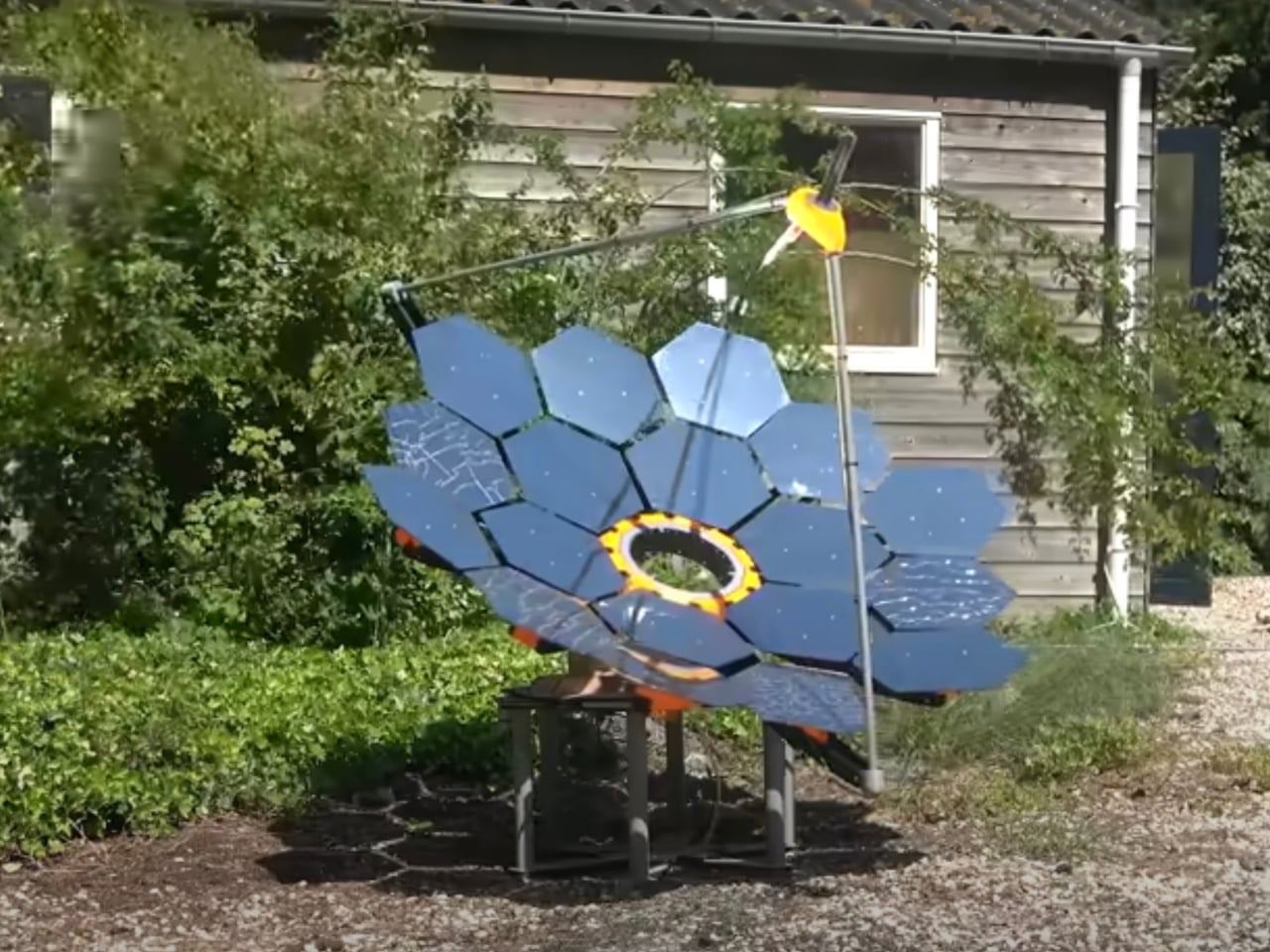
TP Solar’s production improves: TP Solar Limited, a subsidiary of TPREL, manufactured 2.8 GW of DCR solar cells and 2.9 GW of solar modules during April 2025 to December 2025. Out of the 2.9 GW total, 2.4 GW were DCR modules, while the remaining 500 MW were Approved List of Models and Manufacturers (ALMM) listed modules. This includes 940 MW cells produced in Q3 FY26, compared to 196 MW the company produced in the corresponding period last year, while module production improved from 927 MW to 990 MW.  
Solar energy JV: Danish institutional fund manager A.P. Moller Capital, through A.P. Moller Capital—Emerging Markets Infrastructure Fund II, has announced a joint venture (JV) with Rays Power Infra Limited, a solar EPC. The JV will develop large-scale renewable energy projects across India. Initial projects currently under development have a combined capacity of around 900 MW. This is A.P. Moller Capital Funds’ maiden investment in India. The transaction is expected to close in H1 2026.  
3 GW orders for LEAPTING: Chinese robotic solar cleaning solutions provider Huzhou LEAPTING Technology has announced contracts for 3 GW capacity in India with various companies. It will supply G1 Automatic Solar Module Cleaning Robots to ReNew Power for a 609 MW DC/435 MW AC project in Andhra Pradesh’s Anantapur, and for a 420 MW DC/300 MW AC solar facility in Rajasthan’s Bhadla. Adani Solar has placed an order for its G1 robots for its 2 GW solar PV project. LEAPTING says it has already deployed its cleaning robot solutions for Adani in 7 GW of PV projects. In June 2025, LEAPTING and ReNew announced a collaboration to explore local manufacturing of solar panel cleaning robots in India (see India Solar PV News Snippets). 
300 MW changes hands: Sembcorp Industries of Singapore has announced the acquisition of ReNew Sun Bright Private Limited from ReNew Private Limited. ReNew Sun Bright owns and operates a 300 MW solar project in Rajasthan’s Fatehgarh. Sembcorp completed the acquisition through its wholly-owned subsidiary Sembcorp Green Infra Private Limited. It expands the company’s India renewable energy portfolio to over 7.6 GW, comprising installed facilities and those under development. 
TaiyangNews is bringing together the Indian solar PV manufacturing industry for the Solar Technology Conference India 2026 (STC.I 2026). To be held on February 5 and 6 in Aerocity, New Delhi, this 2nd edition of the TaiyangNews physical conference will also have banks, investors, and policymakers in attendance. Register for the event here. 
TaiyangNews 2024

source

Posted in Renewables | Leave a comment

First Solar Stock Sinks on Downgrade. Why Investors Should Temper Expectations. – Barron's

First Solar Stock Sinks on Downgrade. Why Investors Should Temper Expectations.  Barron’s
source

Posted in Renewables | Leave a comment

Consumers Energy opens Michigan’s largest solar farm in Muskegon County – Spectrum News

Get the best experience and stay connected to your community with our Spectrum News app. Learn More
Continue in Browser
Get hyperlocal forecasts, radar and weather alerts.
Please enter a valid zipcode.
Save
MUSKEGON COUNTY, Mich. — Consumers Energy has officially launched its largest solar project to date in Muskegon County.
The new solar farm, described as the company’s first “utility-scale” solar array, features more than 500,000 solar panels and is expected to generate enough electricity to power more than 40,000 homes across Michigan.
According to Brian Wheeler, media relations specialist with Consumers Energy, the Muskegon Solar project is part of Consumers Energy’s broader strategy to diversify its energy sources and meet the needs of nearly 2 million homes and businesses statewide.
The company already operates three other solar arrays at Western Michigan, Grand Valley State University and Cadillac, as well as five wind projects, three natural gas plants and the Campbell coal plant.
“This project is a powerful tool that will help us provide reliable, dependable and cost-effective energy for our customers,” said Wheeler. “As technology advances, solar has become more efficient and affordable, making it a key part of our long-term energy supply plan.”
Wheeler said the Muskegon Solar project brought economic benefits to the local community, creating 200 construction jobs and increasing tax revenue for the county. The solar farm is located on land owned by the county’s Resource Recovery Center.
Consumers Energy says it will continue to invest in renewable energy projects as Michigan’s population and business sector grow, with plans to file a new long-term energy supply blueprint later this year.

source

Posted in Renewables | Leave a comment

Germany Floating Solar Panels Market Size 2032 | Industry Developments, Future Growth, Share & Industry Insights – openPR.com

Germany Floating Solar Panels Market Size 2025
Permanent link to this press release:

All 5 Releases

source

Posted in Renewables | Leave a comment

Companies turn to agrivoltaics to differentiate their products – pv magazine USA

CleanCounts says environmental attribute tracking helps show solar value to customers.
Image: pv magazine
One aspect of agrivoltaics, the incorporation of photovoltaic generation into productive agricultural land, is to improve solar energy’s acceptance by skeptics in the community. Another, perhaps more ambitious goal, is for producers of agricultural products to make solar a positive part of their marketing to consumers.
For example, Minnesota-based honey producer Bare Honey trademarks its SolarGrown Honey products and Solar Based Beekeeping processing techniques, promoting them as sustainers of pollinators. The company works with solar energy developers to create “pollinator oases” where beehives are placed around the PV arrays.
Downstream, another firm pursuing this approach is We Are Nuts, which has a honey peanut product that features honey bees and solar array on the label. The nuts are described as using Bare Honey’s “harvested from Minnesota’s own flowering solar fields, for a fresh, local touch.”
Ultimately, advocates want to stress the idea that solar power is a net positive for the agricultural community in particular and society in general by reducing the need for polluting fossil fuels while retaining agricultural land for productive use. For these notions to take root in people’s minds – and consumer preferences – companies need verifiable facts to make their arguments.
One of the challenges in doing this is quantifying the societal benefits of renewable energy over and above typical calculations of levelized cost of energy and dollars per kWh. Supporters of carbon accounting methods and the development of renewable energy credits (RECs), carbon taxes and markets, and other policies struggle with the scientific bases for their proposals.
“This goes to the heart of an issue we’ve been trying to solve for decades,” Ben Gerber, president and CEO of CleanCounts, a non-profit validator of environmental attributes in energy, told pv magazine USA. “RECs evolved in the early 2000s to be a compliance instrument to account for renewable consumption. It was not a decarbonization instrument.”
Policy makers asserted that renewable energy was beneficial, subsequently taking the form of form of mandates for specific forms of electricity generation, primarily wind and solar. While RECs evolved as a means of accounting for compliance with policies and mandates, advocates of more extensive carbon-based metrics for measuring renewables’ quality of life benefits were dissatisfied with them.
“The carbon benefit was embedded in the REC,” Gerber said. “But you couldn’t sell a carbon offset in it. That wasn’t its purpose. You can’t ask a spoon to be a knife.”
According to Gerber, RECs were too established and valuable to dismiss entirely with billions of dollars invested in them already. At the same time, advocates of institutionalizing the positive social effects of solar need to trade on more than good feelings.
Fortunately, software has improved significantly from when CleanCounts was administering regional REC markets and certifying compliance. The company now is capable of tracking the environmental aspects of generation sources on an hourly basis through its M-RETS platform. What started as a regional system (The “M” used to stand for Midwest) is now tracking generators throughout North America.
Agrivoltaics, and pollinator-friendly designators in particular, is just one avenue for expressing solar value and engendering consumer preferences. Gerber cited the benefits of solar in underserved communities, on tribal lands, on conservation land and other beneficial deployments as having the potential to expand energy attribute certificates (EACs), of which RECs are but one element. The challenge is defining those benefits and quantifying them in a scientific way.
“We’re not going to go in and say, ‘The direct benefits of this solar installation went to a specific community of concern,’” Gerber said.
“That’s not our role. But there are groups that focus on that. And there’s data available.”
CleanCounts sees its role as verifying that RECs and EACs are sound as reported on a MWh basis as established by specific third-party marketplaces. The M-RETS platform also provides an interface between compatible marketplaces. The reason this sort of auditing and certification isn’t done universally is that there is no one standard for defining environmental attributes.
There could be, and Gerber says the industry would benefit from a standards body to establish and update EACs and to regulate criteria and means of data collection.
“What you don’t want is like 15 different data points from different models,” he said. “Because then if you’re saying this is a science -based data point and it’s 15 different metrics in every model it’s not science -based. It becomes very political.”
With a rigorous environmental attribute standard in place along with trusted methods of verification and certification, Gerber concludes, companies will have a more powerful and convincing message to bring to their customers about how solar adds value.
This content is protected by copyright and may not be reused. If you want to cooperate with us and would like to reuse some of our content, please contact: editors@pv-magazine.com.
More articles from Michael Puttré
Please be mindful of our community standards.
Your email address will not be published. Required fields are marked *


By submitting this form you agree to pv magazine using your data for the purposes of publishing your comment.
Your personal data will only be disclosed or otherwise transmitted to third parties for the purposes of spam filtering or if this is necessary for technical maintenance of the website. Any other transfer to third parties will not take place unless this is justified on the basis of applicable data protection regulations or if pv magazine is legally obliged to do so.
You may revoke this consent at any time with effect for the future, in which case your personal data will be deleted immediately. Otherwise, your data will be deleted if pv magazine has processed your request or the purpose of data storage is fulfilled.
Further information on data privacy can be found in our Data Protection Policy.
pv magazine USA offers daily updates of the latest photovoltaics news. We also offer comprehensive global coverage of the most important solar markets worldwide. Select one or more editions for targeted, up to date information delivered straight to your inbox.

Legal Notice Terms and Conditions Privacy Policy © pv magazine 2026

Welcome to pv magazine USA. This site uses cookies. Read our policy.
The cookie settings on this website are set to “allow cookies” to give you the best browsing experience possible. If you continue to use this website without changing your cookie settings or you click “Accept” below then you are consenting to this.
Close

source

Posted in Renewables | Leave a comment

International firms after Guyana distributed generation study – BNamericas

Bnamericas Published: Wednesday, January 07, 2026

11,000+ projects in Latin America.
24,000+ global companies doing business in the region.
83,000+ key contacts related to companies and projects
Analysis, reports, news and interviews about your industry in English, Spanish and Portuguese.

source

Posted in Renewables | Leave a comment

ENGIE and Ampion Partner to Bring Clean Energy to Illinois Homes – Yahoo

ENGIE and Ampion Partner to Bring Clean Energy to Illinois Homes  Yahoo
source

Posted in Renewables | Leave a comment

Consumers Energy's Muskegon solar facility begins operations – WZZM13.com

MUSKEGON, Michigan — A massive, 1,900-acre, solar project in Muskegon started operations Monday, generating electricity to power thousands of homes and businesses.
Muskegon Solar, run by Consumers Energy, is spread across 1,900 acres of land at the Muskegon Resource Recovery Center. The solar array is expected to generate 250 megawatts of electricity, enough to power 40,000 homes and businesses in the state. Consumers Energy says this is their largest solar project in Michigan.
“Consumers Energy is building the electric grid of the future to serve Michigan homes and businesses. Muskegon Solar provides an example of the reliable, cost-effective projects we’re creating to make sure we continue to meet our customers’ needs,” said Sri Maddipati, Consumers Energy’s president of electric supply.
Consumers Energy provides electricity and/or natural gas to about 6.8 million Michiganders. The utility company also has solar projects at Western Michigan University, Grand Valley State University and in Cadillac.
Muskegon Solar consists of over 550,000 solar panels arranged in 5,200 rows that rotate to follow the sun’s path. The arrays are designed to generate energy from sunrise to sunset, Consumers Energy said in a release.
“This project is a testament to the skill and dedication of the local men and women building it, and we’re proud to partner with Consumers Energy on such a landmark project for the region,’ says Chad Cotter, a vice president in the construction group at Burns & McDonnell.
“We are grateful for the support of Moorland Township and Muskegon County, and are excited to produce more energy here in Michigan for our friends and neighbors,” Maddipati said.
To stream 13OYS on your phone, you need the 13OYS app.
Next up in 5
Example video title will go here for this video
Next up in 5
Example video title will go here for this video

In Other News

source

Posted in Renewables | Leave a comment

N2OFF Advances German Solar Portfolio Through Partnership with Solterra – SolarQuarter

N2OFF Advances German Solar Portfolio Through Partnership with Solterra  SolarQuarter
source

Posted in Renewables | Leave a comment

TP Solar Q3 Production: 940 MW Cell, 990 MW Module – Rediff MoneyWiz

Jan 07, 2026 19:24
Read More On:
See More >
See More »
Stocks
Mutual Funds
Investment tracking
Home
Market News
Latest News
International Markets
Economy
Industries
Mutual Fund News
IPO News
Search News
My Portfolio
My Watchlist
Gainers
Losers
Sectors
Indices
Forex
Mutual Funds
Feedback

source

Posted in Renewables | Leave a comment

Pattern Energy acquires Cordelio Power’s 1.5GW renewables portfolio – PV Tech

Renewables firm Pattern Energy has entered into a definitive agreement to acquire independent power producer (IPP) Cordelio Power.
The acquisition of Cordelio Power includes a portfolio of 1.5GW of operational and under-construction projects across the US and Canada, comprising 16 solar, wind and energy storage power plants. Pattern will also acquire the majority of the IPP’s wind and energy storage projects under development in the US, as well as the Cordelio team.

Cordelio currently has operational assets in six US states, including Arizona, Arkansas, Colorado, Illinois, Missouri and Nevada, with other projects in development in other states, including 17 solar PV projects in the state of New York. Some of these projects secured a contract with the state of New York in 2024.
“Pattern’s acquisition of Cordelio represents a logical next step in strengthening a leading clean energy business, bringing together more resources and solutions to meet the growing energy demand across North America,” said Bill Rogers, managing director and the head of sustainable energies for Canada Pension Plan Investment Board (CPP Investments).
Cordelio Power is wholly owned by CPP Investments, which is also a majority shareholder of Pattern Energy. According to the companies, this share-based transaction will increase CPP Investments’ ownership stake in Pattern Energy upon closing.
The transaction is expected to close in the first quarter of 2026, subject to customary regulatory approvals.

source

Posted in Renewables | Leave a comment

Over capacity crowd forces adjournment of Fayette Twp. solar meeting – Hillsdale Daily News

JONESVILLE — Dozens of Hillsdale County residents concerned about a newly proposed solar farm packed into Fayette Township Hall on Jan. 5, hoping to weigh in on the project.
But the meeting ended before it began. With the building over capacity and standing room only, the Fayette Township Planning Commission agreed to adjourn and find a larger venue that could safely accommodate the crowd and allow everyone to be heard.

source

Posted in Renewables | Leave a comment

Illumination Annealing Boosts Selenium Solar Efficiency Over 10% – Bioengineer.org

In a remarkable stride toward advancing solar technology, researchers have unveiled a groundbreaking illumination-assisted annealing technique that revitalizes the performance potential of selenium (Se) solar cells. Selenium, known historically as the earliest photovoltaic material, has long been overshadowed by newer compounds despite possessing an inherently advantageous wide bandgap of approximately 1.9 eV. This intrinsic property makes Se an exceptionally promising candidate for use as a top-cell absorber in tandem solar cell assemblies and indoor photovoltaic applications. Nonetheless, the broader exploitation of selenium in solar cells has been hindered due to significant non-radiative recombination losses, largely attributed to the small grain size (~500 nm) typical of Se films produced by traditional thermal annealing methods.
The new illumination-assisted annealing process represents a paradigm shift by enabling photo-induced crystallization of Se films at ambient temperatures, effectively suppressing the detrimental dewetting phenomenon that previously limited film quality. By initially irradiating the selenium film under carefully controlled light exposure, the researchers facilitate the growth of substantially larger crystalline grains, achieving an average grain size of approximately 2.7 μm—over five times larger than conventional films. This enhancement in grain structure translates directly into fewer trap states where charge carriers could recombine non-radiatively, a chief mechanism that undercuts cell efficiency.
Following this photo-induced crystallization, the films undergo a subsequent thermal annealing step to consolidate their enhanced microstructural and electronic properties. The collaborative effect of these sequential processes results in selenium films with remarkably reduced trap-state density, measured to be on the order of 6.9 × 10¹⁴ cm⁻³, and notably extended carrier lifetimes reaching 22.9 nanoseconds. These metrics signify a substantial reduction in recombination centers and improved charge transport, both critical factors in lifting the limiting efficiency barriers that have stalled selenium photovoltaics for decades.
Harnessing these advanced films, the research team has demonstrated certified power conversion efficiencies in selenium solar cells exceeding 10%, with a record-setting open-circuit voltage of 1.03 V. This represents a historic milestone for Se photovoltaics, positioning them competitively not only as candidates for tandem solar cells but also in emerging applications under indoor light environments where wide bandgap materials excel. The open-circuit voltage figure is particularly noteworthy as it surpasses 1 volt, an indicator of photovoltaic quality previously unattainable for selenium-based devices.
Additionally, the durability of the fabricated selenium solar cells is equally impressive. Under rigorous operational conditions—sustained maximum power point tracking for 1,000 hours in ambient air without any encapsulation—the devices showed negligible performance degradation. This robustness highlights selenium’s intrinsic material stability advantage, promising long-term reliability and cost-effective deployment in real-world environments where encapsulation can add complexity and expense.
The illumination-assisted crystallization technique addresses one of the long-standing material synthesis challenges in selenium photovoltaics. Conventional thermal annealing methods often promote rapid dewetting of selenium films, resulting in discontinuous, polycrystalline layers with defective interfaces and small grain sizes. By contrast, light irradiation triggers localized heating and photo-chemical effects while maintaining a controlled ambient temperature, allowing selenium atoms to rearrange into larger, well-oriented crystalline domains. This nuanced control over the microstructure is what underlies the substantial improvements in electronic properties and device performance.
This breakthrough holds particularly exciting implications for tandem solar cells, where wide bandgap absorbers are employed to capture the high-energy portion of the solar spectrum while lower bandgap materials capture the remainder, maximizing the overall efficiency beyond single-junction limits. Selenium’s bandgap near 1.9 eV matches the ideal top-cell absorber bandgap that can be paired with silicon or other narrow-gap materials in tandem architectures. With this renewed processing approach, selenium’s historical photovoltaic legacy is revitalized with cutting-edge performance metrics suitable for modern sustainable energy solutions.
The researchers also highlight selenium’s potential in indoor photovoltaic applications, where illumination conditions differ significantly from sunlight. The wide bandgap and high open-circuit voltage enable selenium cells to operate efficiently under artificial light sources, expanding their utility in powering low-consumption electronics, Internet of Things (IoT) devices, and other ambient-light energy harvesting scenarios. The film stability and low trap density evident under these ambient conditions underscore selenium’s versatility as a solar material adaptable to diverse technological needs.
Scientifically, this work reveals new fundamental insights into crystallization dynamics under photo-assisted annealing conditions. The interplay between photon-induced atomic mobility and minimal thermal input fosters a unique material evolution pathway unprecedented in conventional semiconductor manufacturing. This discovery paves the way for further exploration of light-assisted processing in other semiconductor systems, which may yield similarly transformative material and device advancements.
Beyond efficiency gains, the simplicity and scalability of the illumination-assisted annealing technique also bear significant technological promise. The ambient temperature crystallization step reduces energy input requirements compared to high-temperature processes, making it more environmentally friendly and cost-effective. These attributes satisfy critical criteria for industrial viability, potentially facilitating the widespread commercial adoption of selenium-based photovoltaics, which have historically faced integration challenges despite selenium’s advantageous optoelectronic properties.
In summary, this research heralds a new era for selenium photovoltaics by merging time-honored material qualities with innovative light-driven processing techniques. By surpassing the 10% efficiency threshold and delivering a high open-circuit voltage alongside enduring device stability, selenium is repositioned from an early photovoltaic relic to a state-of-the-art contender. This advancement promises to enrich the portfolio of wide bandgap materials accessible for next-generation solar energy harvesting, offering pathways to both enhanced performance tandem configurations and resilient indoor power sources.
As the global race to harness renewable energy intensifies, breakthroughs like this underscore the value of revisiting and revitalizing classic materials with modern scientific ingenuity. Selenium’s transformation through illumination-assisted annealing demonstrates that old photovoltaic champions still have untapped potential to shape the future landscape of sustainable energy technology.
The implications for the photovoltaic industry are profound, as improving cell efficiency while reducing processing temperatures and costs aligns with market demands for competitive, scalable solutions. Moreover, the long-term stability shown by these selenium solar cells under ambient conditions bodes well for their deployment in diverse environmental settings, from urban rooftops to remote indoor applications.
Future research directions spurred by these findings may include detailed exploration of the photo-induced crystallization mechanism at atomic scales, optimization of annealing parameters for maximum grain size control, and integration of selenium films into tandem devices with complementary absorbers. Researchers may also investigate encapsulation strategies tailored to selenium’s unique chemistry to extend operational lifetimes even further.
This novel annealing strategy revitalizes selenium’s photovoltaic prospects by harnessing the synergistic effects of light and heat, setting a new benchmark in the field. The seamless combination of fundamental material science with innovative process engineering exemplifies how interdisciplinary approaches continue to drive solar cell technologies toward ever higher efficiencies, sustainability, and commercial viability.
With certified efficiencies exceeding 10% and a robust open-circuit voltage above 1 V, selenium solar cells leap into practical relevance for the first time in decades. As the sunlight-harvesting power of this ancient semiconductor is rekindled via illumination-assisted annealing, the door opens for new photovoltaic architectures and applications that could accelerate the global transition to clean energy.
Subject of Research: Selenium solar cells and photo-assisted annealing techniques for efficiency and stability enhancement.
Article Title: Illumination-assisted annealing enables selenium solar cells with open-circuit voltage over 1 V and efficiency exceeding 10%.
Article References: Wen, X., Li, Z., Lu, W. et al. Illumination-assisted annealing enables selenium solar cells with open-circuit voltage over 1 V and efficiency exceeding 10%. Nat Energy (2026). https://doi.org/10.1038/s41560-025-01939-x
Image Credits: AI Generated
DOI: https://doi.org/10.1038/s41560-025-01939-x
Keywords: Selenium photovoltaics, illumination-assisted annealing, photo-induced crystallization, wide bandgap solar cells, tandem solar cells, indoor photovoltaics, power conversion efficiency, open-circuit voltage, carrier lifetime, trap state density, solar cell stability
Tags: ambient temperature annealingcrystalline grain size improvementgrain structure optimization in solar filmsillumination-assisted annealingnon-radiative recombination lossesphoto-induced crystallizationphotovoltaic technology advancementsrenewable energy innovationsselenium as a top-cell absorberselenium solar cellssolar energy efficiency enhancementtandem solar cell applications
We bring you the latest biotechnology news from best research centers and universities around the world. Check our website.
Enter your email address to subscribe to this blog and receive notifications of new posts by email.


Bioengineer.org © Copyright 2023 All Rights Reserved.
Login to your account below


Please enter your username or email address to reset your password.


Bioengineer.org © Copyright 2023 All Rights Reserved.

source

Posted in Renewables | Leave a comment