The White Cliffs Solar Power Station, the first commercially operated solar thermal power station in New South Wales (NSW) and one of the earliest of its kind in the world, has been listed on the State Heritage Register. Built in 1981, the White Cliffs power station was the first full-scale demonstration of solar thermal technology put to commercial use in NSW. Developed through a collaboration between the NSW government and the Australian National University, the system used 14 sun-tracking parabolic dishes to produce power for the remote opal mining town, about 250 kilometres northeast of Broken Hill in the state’s west. The five-metre dishes were used to concentrate sunlight, heat water and produce steam to drive a single phase 37 KVA alternator. The generator produced up to 25 kW of electricity to power the off-grid community, with some energy stored in batteries for use at night. Electricity from the station supplied the local hospital, school, post office and 12 homes in the remote town. A back-up diesel generator ensured supply during extended cloudy periods. The facility was adapted to PV technology in 1997 with the dishes resurfaced with new mirror panels and the thermal absorbers replaced by a cluster of 16 PV cells that were more than 22% efficient in converting solar radiation directly into electricity. The facility continued operating until 2005. NSW Environement and Heritage said the White Cliff power station had played an important role in proving the effectiveness and practicality of solar energy production beyond the laboratory. The department said the facility helped prove solar power could reliably supply electricity for everyday use long before renewable energy became an established part of the state’s energy grid, adding that the “lessons learnt from this ambitious engineering innovation have, and continue, to play a key role in the development of renewable energy technologies.” Heritage NSW Executive Director Sam Kidman said the heritage listing honours what is one of the world’s few intact examples of early solar technology. “White Cliffs Solar Power Station tells an important story about the ingenuity that helped prove renewable energy could power homes and essential services in remote NSW,” he said. “This remarkable engineering achievement put solar technology into practical use decades before renewable energy became part of everyday life.” The White Cliffs Solar Power Station now operates as a tourism attraction and is also used periodically for scientific research. This content is protected by copyright and may not be reused. If you want to cooperate with us and would like to reuse some of our content, please contact: [email protected]. Comments Please login to comment The new issue of pv magazine Global is out now! Available in print and digital – get your copy today!
Sorry! Your browser is not supported. To view this site you can download a newer version of Internet Explorer. Share this Long Beach, California. Sept. 8, 2026 – Rocket Lab Corporation (Nasdaq: RKLB), a global leader in launch services and space systems, today announced the production release of Inverted Metamorphic (IMM) Apex, the latest iteration of its next-generation solar cell designed to deliver exceptional efficiency and reliability for space applications. IMM Apex boasts a Beginning of Life solar conversion efficiency of 31.5% and 40% lower cell mass, giving it best-in-class specific power (watts per kilogram) while maintaining excellent radiation hardness and performance over temperature. IMM Apex is free of the germanium substrates used for conventional, multi-junction solar cells produced for the last three decades. By eliminating reliance on this critical mineral, IMM Apex mitigates rising costs and supply chain constraints currently facing the space power industry. Crucially, IMM Apex is a mechanical and electrical drop-in replacement for heritage solar cell products on germanium, meaning customers can integrate it into existing systems without major investments to re-tool for new cell technology. IMM Apex builds on the proven success of Rocket Lab’s IMM cell technology, which powered NASA’s Ingenuity Mars Helicopter during its historic mission and has been powering satellites on orbit for more than a decade. In addition to being free from germanium supply constraints, optimized manufacturing processes and targeted capital investments have enabled efficient manufacturing in multi-100-kilowatt volumes to meet growing demand. “Rocket Lab is excited to bring this cutting-edge solar solution to market. IMM Apex delivers exceptional performance while addressing real-world challenges like rising material costs and supply chain constraints,” said Brad Clevenger, President of Rocket Lab USA. “With IMM Apex, customers gain access to a high-efficiency, lightweight, germanium-free product that combines proven reliability with faster production times. IMM Apex is designed to more cost-effectively power the most ambitious missions without compromising performance.” IMM technology has undergone more than a decade of rigorous testing and qualification, ensuring its readiness for a wide range of customer needs and mission requirements. IMM Apex is available now, with ongoing advancements to support future applications. IMM Apex adds to Rocket Lab’s long history of delivering reliable, high-efficiency solar solutions for critical missions. The company has provided space-grade solar technology to critical civil, national security and commercial space programs including the James Webb Space Telescope, NASA’s Artemis lunar explorations, and other interplanetary science missions. More than 1,100 satellites on orbit are powered by Rocket Lab solar products. More information about Rocket Lab’s Space Solar solutions is available here. ENDS Rocket Lab Media Matt McKinney media@rocketlabusa.com About Rocket Lab Rocket Lab is a leading space company that provides launch services, spacecraft,payloadsand satellite components serving commercial, government, and national security markets. Rocket Lab’s Electron rocket is the world’s most frequently launched orbital small rocket; its HASTE rocket provides hypersonic test launch capability for the U.S. government and allied nations; and its Neutron launch vehicle in development will unlock medium launch for constellation deployment, national security and exploration missions. Rocket Lab’s spacecraft and satellite components have enabled more than 1,700 missions spanning commercial, defense and national security missions including GPS, constellations, and exploration missions to the Moon, Mars, and Venus.Rocket Lab is a publicly listed company on the Nasdaq stock exchange (RKLB).Learn more atwww.rocketlabcorp.com. Forward-Looking Statements This press releasecontainsforward-looking statements within the meaning of the Private Securities Litigation Reform Act of 1995. We intend such forward-looking statements to be covered by the safe harbor provisions for forward-looking statements contained in Section 27A of the Securities Act of 1933, as amended (the “Securities Act”) and Section 21E of the Securities Exchange Act of 1934, as amended (the “Exchange Act”). All statements contained in this press release other than statements of historical fact, including, without limitation, statementsregardingour launch and space systems operations, launch schedule and window, safe and repeatable access to space, Neutron development, operational expansion and business strategy,and statements regarding our satellite capabilities, manufacturing scale, and constellation supportare forward-looking statements. The words “believe,”“may,”“will,”“estimate,”“potential,”“continue,”“anticipate,”“intend,”“expect,”“strategy,”“future,”“could,”“would,”“project,”“plan,”“target,” and similar expressions are intended to identify forward-looking statements, though not all forward-looking statements use these words or expressions. These statements are neither promises nor guarantees, but involve known and unknown risks, uncertainties and other important factors that may cause our actual results, performance or achievements to be materially different from any future results, performance or achievements expressed or implied by the forward-looking statements, including but not limited to the factors, risks and uncertainties included in our Annual Report on Form 10-K for the fiscal year ended December 31, 2025, as such factors may be updated from time to time in our other filings with the Securities and Exchange Commission (the “SEC”), accessible on the SEC’s website atwww.sec.govand the Investor Relations section of our website athttps://investors.rocketlabcorp.comwhich could cause our actual results to differ materially from those indicated by the forward-looking statements made in this press release. Any such forward-looking statements represent management’s estimates as of the date of this press release. While we mayelectto update such forward-looking statements at some point in the future, wedisclaimany obligation to do so, even ifsubsequentevents cause our views to change. Share this
Renewables Now is a leading business news source for renewable energy professionals globally. Trust us for comprehensive coverage of major deals, projects and industry trends. We’ve done this since 2009. Stay on top of sector news with with Renewables Now. Get access to extra articles and insights with our subscription plans and set up your own focused newsletters and alerts.
A research group led by scientists from Qatar University has proposed a new design for a semi-transparent photovoltaic (STPV) greenhouse. The researchers optimized the greenhouse geometry to increase electricity generation while maintaining constraints such as total floor area and STPV coverage. “This study introduces a novel greenhouse design that focuses on maximizing solar energy capture on the south-facing sections and wall surfaces, specifically tailored for the climatic conditions of Qatar,” the researchers said. “The new design is evaluated and compared with common greenhouse configurations, while maintaining constraints such as equal total floor space and STPV area. This ensures that the proposed design effectively optimizes solar energy reception without compromising space requirements.” The scientists assessed the energy performance of five greenhouse geometries: even-span, uneven-span, vinery, modified-arch, and their proposed design, which assigns a larger share of the STPV surface to south-facing roof sections and vertical walls. They modeled all five configurations using the same 280 W p-type bifacial, double-glass semi-transparent PV modules. Each greenhouse had a floor area of 24 m² and an effective installed STPV area of 71 m². The researchers assessed the four conventional greenhouse designs using fixed, non-optimized geometries and compared their performance with that of the proposed configuration. They then optimized the new design using an improved mean-variance mapping optimization (IMVMO) algorithm, a metaheuristic optimization method. The algorithm varied the greenhouse length, width, maximum height, and roof and wall tilt angles, with the objective of maximizing annual electricity generation. “This study advances the mean-variance mapping optimization (MVMO) algorithm by developing an improved version (IMVMO),” the researchers explained. “The enhanced algorithm introduces mechanisms to avoid premature convergence and falling into local optima, a common limitation in many metaheuristic methods. This improvement makes IMVMO more robust and efficient in solving complex optimization problems, ensuring superior performance in optimizing greenhouse designs.” In terms of total energy production, the proposed design consistently outperformed the four conventional greenhouse configurations with the same structural dimensions. Compared with the vinery design, it achieved an energy gain of 56.86%. The gains over the even-span and modified-arch designs were 25.14% and 24.60%, respectively, while the improvement over the uneven-span configuration was 6.03%. The researchers said the walls played a significant role in electricity generation under the new design, contributing 7,518.3 kWh, compared with 5,493.5 kWh from the roof. The non-optimized configuration measured 6 m long and 4 m wide, with a maximum height of 3 m and a roof tilt angle of 50 degrees. Following optimization, the dimensions changed to 4 m by 6 m, with a maximum height of 2.5 m and a roof tilt angle of 26 degrees. The optimized geometry increased annual energy output by 20.1%. “This optimization approach emphasizes the importance of strategic parameter selection in achieving energy-efficient greenhouse designs,” the team concluded. “Overall, this study highlights the possibility of design optimization to significantly improve greenhouse energy efficiency, offering practical insights for integrating renewable energy solutions into modern agriculture.” The researchers presented their findings in “Optimizing semi-transparent PV-integrated greenhouse: A novel design for enhanced solar energy harvesting,” published in Energy Reports. The research team included scientists from Qatar University, BRAC University in Bangladesh, and Shanghai Maritime University in China.
This content is protected by copyright and may not be reused. If you want to cooperate with us and would like to reuse some of our content, please contact: [email protected]. Comments Please login to comment The new issue of pv magazine Global is out now! Available in print and digital – get your copy today! Monday, October 26, 2026 10:30 am – 11:30 am CEST, Berlin, Paris, Madrid Thursday, September 10, 2026 2:00 pm – 3:00 pm CEST, Berlin, Paris, Madrid Tuesday, September 15, 2026 5:00 pm – 6:00 pm CEST, Berlin, Paris, Madrid A two-day conference in Austin, Texas, bringing together leaders in US solar manufacturing, equipment specification, and factory execution. Thursday, October 7, 2026 11:00 am – 12:30 pm CEST, Berlin, Paris, Madrid pv magazine USA hosts its multi-day virtual event on U.S. solar and energy storage, covering domestic manufacturing, distributed energy and the growing role of solar-plus-storage in meeting AI-driven power demand.
Luis Reyes Sep 8, at 3:30pm ET Every time somebody proposes putting solar panels on farmland, the same objection shows up: you can’t eat electricity. Take a field out of production, swap food for kilowatts, and the food loses. A 2.2-acre field in North Hadley, Massachusetts spent this summer doing both, and it’s finally put a number on the trade. The sweet corn grown underneath the panels came in at about 80 percent of what the open rows next door gave. Same quality ears, according to the farmer. Just fewer of them. That’s the whole idea behind what the industry calls dual-use, or agrivoltaics if you want the longer word. You raise the panels high enough for a tractor to fit underneath, space the rows out so light still reaches the dirt, and you farm the same ground you’re generating on. Massachusetts has been at this longer than most states, with a dual-use category written into its solar incentive program back in 2018. The Hadley array belongs to Joe Czajkowski, a third-generation farmer working around 400 acres, and Hyperion Systems out of Belchertown finished building it in July 2023, according to the Energy Department. It runs 832 modules rated at 535 watts apiece. The Energy Department rounds that to a 450-kilowatt array; the farm’s own figure is 445 kilowatts of direct current, off 2.2 acres, or roughly enough for 30 homes. The rows sit 26 feet apart. Twenty-eight tracker motors tilt the panels through the day to follow the sun, and when they’re lying flat they clear the ground by 10 feet. The money’s coming from four directions at once, which is what makes any of this pencil out. Czajkowski collects lease payments. The town gets about $15,000 in personal property taxes on the hardware. The farm’s electric bill dropped roughly 15 percent. And he still sells the corn. He’s also charging an electric van off the same panels to run produce over to UMass and its dining halls, which is a pretty tidy loop once you think about where that corn ends up. It is, and here’s why. Nobody’s building one of these expecting the crop to match an open field. UMass Extension’s guidance for farmers says so plainly: you should expect crop yield per acre or electricity per acre to come in lower than if you’d done just one of them on that land, and the point is for the two together to beat either alone. Giving up a fifth of the corn to pick up 445 kilowatts, a rent check and a cheaper power bill is that trade landing on the right side. What makes Hadley worth your attention is that it’s a measured number off a working field in its fourth season, not a projection in a slide deck. That’s rarer than it ought to be. We’ve written up a lot of these arrays this year and the harvest figure’s almost always the piece nobody has yet. The Spanish olive grove putting 5,150 panels over its trees hasn’t been through a full harvest underneath them. The German orchard that ripens its apples 10 to 12 days late has five years of data and still hasn’t published a yield. Here’s where it gets less comfortable, and Massachusetts happens to hold the best measurement of the cost that anyone’s published. No spam. Unsubscribe anytime. Privacy policy (opens in new window) A UMass Amherst team spent the 2024 season on a commercial bog in Plymouth, roughly 100 miles east of Hadley, watching Howes cranberries grow under fixed panels set 9.8 feet above the vines. Three row spacings produced 30, 35 and 37 percent shade, with an uncovered patch as the control. Sensors went in on June 25 and came out before the bog was harvested on October 3. Two things happened at once. The vines got more comfortable, holding more water in their leaves as the shade went up and leaking less out of their cell membranes. Electrolyte leakage is basically a measure of how beaten up a plant’s cells are, and it fell as shade increased. But the plants also did less work. Photosynthesis dropped at every shade level, including the lightest, and fell by as much as 47 percent at the full-red fruit stage under the heaviest. Starch in the vines went from 41.8 milligrams per gram of dry weight in the control to 35.1 at 37 percent shade. Total sugars slid from 66.5 to 63.0. Phenolics, flavonoids and antioxidant activity in the fruit all came down too. So the vines were less stressed and less productive at the same time, and the authors settled on around 35 percent shade as the workable compromise. They were blunt that one season isn’t enough, and asked for two or three more before anybody starts talking about yield. Then there’s my favorite detail in the whole paper. Those panels weren’t tracking the sun and weren’t hooked up to the grid yet. The one bog where somebody has carefully measured what shade does to a cranberry was sitting under an array that wasn’t producing a watt. A social post doing the rounds this summer claimed a Massachusetts farm had raised 832 solar panels 10 feet above its fields and was pulling bigger, juicier, sweeter berries out from underneath. You already know where 832 came from. It’s the Hadley array, it’s a good 100 miles from cranberry country, and there’s sweet corn under it. Broccoli, lettuce and cilantro have all had turns in that field. Nobody’s measured whether shade sweetens a cranberry. The Plymouth team tracked sugar and starch in the vines, not sweetness in the berries, and didn’t weigh the harvest at all. A 2026 review of earlier cranberry work found the reverse of what the post claimed, with lower soluble solids and higher acidity under shade. Ring Road runs across Kingston and Plympton on the south shore, built over working bogs by a developer called Distributed Energy. A presentation the company gave to New Jersey’s Pinelands Commission last year lists 4,433 kilowatts of DC capacity against 2,000 kilowatts AC, a 13,500 kilowatt-hour battery wired on the DC side, and modules standing 10 feet up so the bogs stay workable underneath. It was named a finalist in the 2025 North American Agrivoltaics Awards, and the same presentation says the company is working with UMass on yield, soil compaction and plant biomass. I can’t find a published harvest number from those bogs, which is the same gap the Plymouth researchers want two more seasons to close. If you want to build one of these in Massachusetts, you go through the university first. Developers chasing the state’s dual-use designation have to consult UMass Extension before they file with the Department of Energy Resources. That’s an unusual amount of agronomy homework for a power project, and it’s arguably why anybody has crop numbers out of this state at all. Other growers around the valley aren’t waiting for the research to finish. Sidney Chang of Chang Farms in Whately, which grows bean sprouts indoors year round, spends $15,000 to $18,000 a month on electricity and is moving ahead with an array of his own, on leased ground where other farmers will grow strawberries and asparagus underneath. Jake Marley, who runs Hyperion Systems and built the Hadley array, told the Daily Hampshire Gazette that sweet corn growing under it was “exceeding my wildest expectations”. Czajkowski’s next crop under the panels is asparagus, which is what Hadley’s known for and which he figures will take to the shade. He laid it all out on August 19 at his own farm, in front of state agriculture and energy staff and a room of other growers, and then everybody ate the sweet corn from under the array, boiled in water heated by the array. Did we nail it or blow it? Olivia Richman · Aug 27, 2026 Luis Reyes · Sep 8, 2026 Luis Reyes · Sep 4, 2026 Luis Reyes · Aug 21, 2026 Luis Reyes · Aug 31, 2026 Luis Reyes · Sep 6, 2026 Luis Reyes · Sep 8, 2026 Chema Bonilla Díaz · Sep 8, 2026 Luis Reyes · Sep 8, 2026 Luis Reyes · Sep 8, 2026 Luis Reyes · Sep 8, 2026 Autonotion is the English-language automotive editorial by Autonocion.com — car news, reviews, and industry analysis for American readers. Other links Company Subscribe Get the latest car news in your inbox: By submitting your email you allow autonocion.com to send you news or promotions. More info
09 Sep, 2026, 11:10 CST Share this article TASHKENT, Uzbekistan, Sept. 9, 2026 /PRNewswire/ — Trinasolar, a global leader in smart photovoltaic (PV) and energy storage solutions, has supplied 184,328 Vertex N 695W modules to the 126 MW Sarimay Solar PV power plant in Uzbekistan’s Khorezm region. Now fully commissioned, Sarimay Solar is delivering renewable electricity to the country’s national grid. Uzbekistan is expanding large-scale solar and wind generation as it works toward its goal for renewable sources to account for 40% of electricity generation by 2030. Sarimay Solar turns that national ambition into operating capacity.
Construction of Sarimay Solar began in May 2024, with the plant delivering its first megawatt-hours in November 2025 before completing commissioning. A three-kilometre transmission line connects the facility to Uzbekistan’s national grid, enabling it to supply electricity to JSC National Electric Grid of Uzbekistan. Spread across about 180 hectares, Sarimay Solar is expected to generate approximately 252 gigawatt-hours of renewable electricity each year, equivalent to the electricity needs of around 60,000 residents. The solar farm will offset more than 140,000 tonnes of carbon dioxide emissions annually. These outcomes show the contribution a single utility-scale project can make as Uzbekistan adds renewable generation to its power system. The utility-scale Sarimay project is powered by Trinasolar’s Vertex N 695W (NEG21C.20) modules, which combine n-type i-TOPCon advanced cell technology with bifacial dual-glass construction. The modules are well suited to Uzbekistan’s arid continental climate, where hot, dry summers, wide seasonal temperature variations and exposure to sand and dust create demanding operating conditions. A low temperature coefficient helps limit power loss in high temperatures, while tested resistance to sand and potential-induced degradation supports long-term durability. The modules are also backed by a 30-year power warranty, providing performance assurance for a project operating under a 25-year framework. “Sarimay shows how Uzbekistan’s renewable energy ambition is becoming operating infrastructure. At this scale, module performance is a system-level consideration: high output, bifacial generation and long-term reliability all contribute to how a solar plant is designed to generate over decades,” said Elva Wang, Group Director of Southeast, South and Central Asia, Trinasolar Asia Pacific. “We are proud that Vertex N is supporting this project, and we will continue working with partners to advance utility-scale solar across Uzbekistan and Central Asia.” SOURCE Trina Solar Energy Development Pte. Ltd. Trinasolar, a global leader in smart PV and energy storage solutions, has supplied 200 Trinasolar Vertex S+ 500W (NEG18R.28) solar modules for a new… Trinasolar ผู้นำระดับโลกด้านโซลูชันพลังงานแสงอาทิตย์อัจฉริยะและระบบกักเก็บพลังงาน ได้จัดหาแผงเซลล์แสงอาทิตย์รุ่น Vertex N 725W (NEG21C.20) ขนาด 3MWp… Alternative Energies Electrical Utilities Utilities Green Technology Do not sell or share my personal information:
Qualitas Energy has signed a definitive agreement to acquire Cero Generation’s core European platform from Macquarie Group, adding a 5.8 GW portfolio of solar photovoltaic and battery energy storage projects across the U.K., Italy and Spain. The transaction includes more than 2 GW of assets that are operational, under construction or ready to build, along with an additional 3.8 GW development pipeline. Financial terms were not disclosed. Cero Generation is an independent power producer focused on developing, constructing and operating solar PV and battery energy storage system projects. The business was established by Macquarie Group in 2021 and has operated as a standalone Macquarie portfolio company. The acquisition includes Cero Generation’s local teams and offices in London, Milan and Madrid, strengthening Qualitas Energy’s presence in three markets where it already operates. Cero has built an integrated model covering the full project lifecycle from development and construction through operations. Qualitas Energy said those capabilities align closely with its vertically integrated industrial investment approach. Following completion, the acquired business will continue operating under the Cero Generation brand as an independent portfolio company of Qualitas Energy. The acquisition is being made through Qualitas Energy Fund VI, the firm’s latest flagship vehicle. The deal reflects one of the fund’s core investment strategies, focused on using larger corporate and platform-level transactions to accelerate growth. The addition will substantially increase Qualitas Energy’s renewable energy pipeline and operating footprint across Europe. Qualitas Energy’s existing portfolio includes approximately 11 GW of operational and development-stage renewable energy assets spanning solar PV, concentrated solar power, wind, energy storage, hydroelectric power and renewable natural gas. The firm’s portfolio extends across Spain, Germany, the U.K., Italy, Poland, Chile and the U.S. Since 2006, the Qualitas Energy team has committed more than €14 billion to the global energy transition through multiple investment vehicles. The company has more than 500 professionals across 15 offices. The transaction is expected to close in the coming months, subject to customary closing conditions. Nomura served as M&A advisor to Qualitas Energy, while Herbert Smith Freehills Kramer advised on legal matters. DNV and Kiwa Moroni provided technical advice, and KPMG advised on financial, tax and labor matters. KEY QUOTE: “Cero Generation is a natural strategic fit for Qualitas Energy’s European portfolio and a compelling example of Qualitas Energy Fund VI’s platform-led growth strategy. Macquarie Group and the Cero Generation team have built a strong business, with a sizeable portfolio, deep local capabilities, and established positions across three of our core markets. We look forward to building on these foundations to support Cero Generation’s next phase of growth.” Daniel Parejo, Managing Partner and Chief Investment Officer of Qualitas Energy Thank you for visiting Pulse 2.0. We work hard every day to bring leaders and decision makers like you the latest intelligence on business, finance, capital markets, deal flow, law, tech, and AI. Click here to subscribe to the Pulse 2.0 Newsletter. Stay informed with the day's intelligence on business, finance, capital markets, deal flow, law, tech, and AI delivered to your inbox each evening at 6pm ET.
Opacity El Algarrobo Solar Park in Guantanamo. X/@leonelef1.
September 8, 2026 Hour: 3:24 pm 🔗 Comparte este artículo On Monday, Cuba inaugurated the El Algarrobo photovoltaic solar park in Guantanamo, with an installed capacity of 21,875 MWp, connected to the National Electric System (SEN). RELATED: Cuba Opens Ultra-Fast Solar Charging Station for Electric Vehicles
The project was completed in 18 months by Brigade 3 of the Ministry of Construction (Micons), with an investment of approximately US$58 million. The electricity generated is destined directly for the province of Guantanamo. The project is part of the national plan to reach approximately 2 GW of solar power by 2028. El Algarrobo is the first park whose synchronization with the SEN was carried out entirely by Cuban technicians, following the unexpected departure of the Chinese specialists. The commissioning process took about a month to synchronize the first inverter. The plant has seven inverters, and the technicians made successive software adjustments until achieving a stable connection with the national electricity grid. 🇨🇺☀️⛽️ ¿Cómo la energía solar sirve para aliviar la escasez de combustible en Cuba?
📍 Cerca de una playa en el municipio Habana del Este hay una solinera que sirve para que vehículos eléctricos puedan ser recargados. La estación funciona, desde comienzos de agosto pasado, en un… pic.twitter.com/imUqcEPugb The text reads, “How does solar energy help alleviate the fuel shortage in Cuba? Near a beach in the Habana del Este municipality, there is a solar charging station that serves to recharge electric vehicles.” The project is part of Project B, a cooperation program with China to incorporate approximately 1,000 MW of photovoltaic capacity. El Algarrobo was identified as site number 37 of the 46 planned within this scheme. In March 2024, it was reported that the first phase would include 55 plants of approximately 21.8 MW each, such as the one at the School of Nursing in Havana, inaugurated in 2025. According to official data, by March 2026, Cuba had completed the construction of 52 solar parks, contributing more than 1,000 MW and covering up to 38% of daytime electricity demand during peak solar generation. Solidarity groups MediCuba and SODEPAZ have begun loading a shipping container with essential supplies at an industrial park east of Madrid, Spain, for delivery to Cuba.
The joint initiative aims to support the Cuban population by delivering vital materials and medical supplies,… pic.twitter.com/1NOB4GwbO2 teleSUR: JP Source: PV Magazine IN THIS ARTICLE El Algarrobo National Electric System solar park
La Nueva Televisión del Sur.(T.V. SUR) C.A RIF: G-20004500-0 This website uses cookies to improve your experience. We will assume you agree to this, but you can opt out if you wish. Find out more in our Privacy Policy. This website uses cookies to improve your experience while you navigate through the website. Out of these, the cookies that are categorized as necessary are stored on your browser, as they are essential for the working of basic functionalities of the website. We also use third-party cookies that help us analyze and understand how you use this website. These cookies will be stored in your browser only with your consent. You also have the option to opt out of these cookies. However, opting out of some of these cookies may affect your browsing experience. Necessary cookies are absolutely essential for the website to function properly. This category only includes cookies that ensure basic functionalities and security features of the website. These cookies do not store any personal information. Analytical cookies help us understand how visitors interact with the website by collecting information anonymously (pages visited, time spent, etc.). Advertising cookies are used to display relevant ads and personalized marketing campaigns, and to measure advertising effectiveness.
Zambia is rapidly expanding its power system to support economic growth, with government and private investors driving a diversified generation mix that reduces reliance on hydropower. During a press briefing on the electricity sector, the ministry said solar power has grown remarkably from only 88 MW in 2021 to approximately 841 MW in 2026, placing the country firmly on course to achieve the target of 1 000 MW of solar generation by the end of this year. Utility scale solar accounts for a significant share of this expansion, representing approximately 584 MW of capacity within the overall PV fleet. Over the last five years, installed electricity generation capacity has increased from about 3 100 MW in 2021 to 4 576 MW in 2026. This 1 476 MW increase is changing how Zambia approaches electricity: power is increasingly treated as an economic resource to support mining, agriculture, manufacturing, irrigation, agro processing and other productive activities. Related news: Zambia’s grid expansion imperative ahead of rapid renewable energy growth Government has taken note of continued concerns over water levels at Kariba, given the country’s historical dependence on hydropower. The response has been to build a more diversified electricity system that combines hydro with solar, thermal, wind, geothermal and other sources, while attracting independent power producers and private capital. Several major projects in Southern Province illustrate the scale of the expansion: These developments underscore a strategic shift: the central question is no longer only whether Zambia has enough power for today’s consumption, but how much electricity will be needed to support expanded production across the economy. Government’s electricity strategy is now built around expansion rather than simply managing shortages. The Presidential Constituency Energy Initiative plans 2 MW of solar generation for each of the country’s 156 constituencies, giving a potential 312 MW of additional distributed generation to support local supply and productive activities. The wider objective is to ensure electricity reaches places where it can support economic activity: irrigation schemes, agro processing, milling, refrigeration, workshops, small businesses and other enterprises that can create jobs and generate income. Progress in solar is particularly important because it demonstrates that Zambia’s electricity system is moving away from a model where hydropower carried most of the burden and low water levels could quickly translate into a national electricity problem. Diversification and investment are now the core of the approach, with government creating the policy and regulatory environment for independent power producers to enter the market while continuing to invest in public infrastructure and grid expansion. The goal is to move electricity from being viewed mainly through the experience of load shedding to being understood as one of the foundations of Zambia’s growth. For the Grow Zambia agenda to succeed, the country will need more power than it has today, and the economy cannot expand significantly while generation remains tied to the limitations of a single major source. Read more Zambia therefore has to build ahead of demand. The 1 000 MW solar target for end 2026, the increase in installed generation from 3 100 MW to 4 576 MW over five years, and the major projects under construction across Southern Province are all part of that shift. The focus is increasingly on what electricity can produce, how much economic activity it can support and, ultimately, how much value Zambia can create from having more power available. Author: Bryan Groenendaal
Clear skies. Low 48F. Winds light and variable.. Clear skies. Low 48F. Winds light and variable. Updated: September 8, 2026 @ 7:21 pm
NonStop Local Digital Content Producer The plan involves burying irrigation pipes underground and installing solar panels over the disturbed land, with the potential to boost energy production, improve water quality, and address safety concerns with open irrigation canals. YAKAMA NATION, Wash. — The Yakama Nation presented a new energy idea to federal officials that paired irrigation upgrades with solar development. NonStop Local Digital Content Producer {{description}} Email notifications are only sent once a day, and only if there are new matching items. Currently in Kennewick Your browser is out of date and potentially vulnerable to security risks. We recommend switching to one of the following browsers: Get up-to-the-minute news sent straight to your device.
A new study titled ‘Lifetime modelling of photovoltaic degradation under imperfect monitoring,’ provides a practical new approach to modelling photovoltaic degradation is giving asset owners and planners a clearer view of how long utility scale solar plants will perform before hitting defined loss thresholds, even when monitoring data are patchy. The method treats degradation as a time to event problem and uses survival style statistics to handle the reality of field data that often arrive with gaps, irregular sampling and short observation windows. The framework builds on maximum likelihood estimation as the primary engine for inference, with density power divergence weighting used as a scenario-based check on robustness. In tests using multi-year records from two crystalline silicon utility scale systems, the generalized Lindley distribution provided the strongest in sample fit for the more complete dataset, while its edge over the Weibull model narrowed for the more intermittent record. Rolling origin validation indicated similar short horizon prediction performance across candidate models, underscoring that the main gain lies in how the method represents incomplete observations rather than in raw forecasting power. Why this matters for African solar portfolios Many African solar assets operate with limited telemetry, seasonal data gaps and maintenance driven outages that break continuous time series. The hybrid censoring structure is designed for exactly these conditions. Threshold defined lifetime metrics such as T90 give investors and operators a probabilistic estimate of when a plant will reach a specified performance loss, supporting warranty claims, refinancing and repowering decisions. By downweighting outliers and transient disturbances, the approach reduces the risk that a few bad data points distort long term degradation estimates used in bankability models. How the method works in practice The approach discretizes field monitoring data into stage level pseudo units and applies hybrid censoring to reflect that some systems never reach the degradation threshold within the available record. This contrasts with conventional performance ratio trend methods that output an annual slope but do not directly model the distribution of time to a defined loss level. The generalized Lindley family adds flexibility in hazard shape, which can be useful when degradation shows early life adjustments followed by slower aging. For the more complete system record, the three-parameter generalized Lindley fit was informative but weakly identified with only seven stage level units, so the authors treat parameter level and extrapolated threshold time results as descriptive rather than precise. Environmental associations are likewise interpreted as exploratory and specific to each system, pointing to the need for larger fleets and longer records to draw general conclusions. Implications for developers, lenders and O&M teams: The study does not introduce entirely new statistical machinery but integrates existing reliability tools with photovoltaic performance analysis in a way that matches how solar plants are actually monitored in the field. For African markets where data gaps and operational disturbances are common, that operational reliability perspective could help close the gap between academic degradation studies and the practical needs of project finance and portfolio management.
Statkraft has installed the first panels at its 49.9MW Soay Solar Farm in East Yorkshire, its first UK solar scheme to begin construction. The company said the project, located east of Thornton, will generate enough renewable electricity to power the equivalent of 21,700 homes once operational during 2027. Statkraft added that around a third of the site will be dedicated to habitat enhancement and new planting, improving biodiversity by over 130% compared with the previous land use. The company has been working with the Bumblebee Conservation Trust, which provides specialist advice on habitat design, suitable plant species and long-term management practices. Soay Solar Farm is located adjacent to Thornton Greener Grid Park, where the first phase consists of a 200MW two-hour battery energy storage system that is in the final stages of commissioning. Statkraft has an investment pipeline in the UK exceeding £3 billion and around 20 projects with planning consent across a range of technologies. “It’s very exciting to see Soay Solar Farm beginning to take shape, with the first panels now in place, and work about to conclude on the final structural site works,” said Statkraft head of solar Charlotte Healey. “Solar is one of the key renewable technologies we need to deliver stable bills and greater energy security, in an environmentally-friendly way, and Soay is one step closer to playing its part in transforming the way we generate electricity in Great Britain.”
Type above and press Enter to search. Press Esc to cancel.
Waste, energy and water How a clean power switch is still paying off 6 years later. A power purchase agreement (PPA) is a long-term contract to buy electricity directly from a renewable energy generator at an agreed price, rather than buying on the open market. The 10-year deal has proven more beneficial than we anticipated. From 2020 to 2026, we’ve saved around $8 million in electricity costs compared to a traditional electricity contract.
Cumulative savings from our renewable power purchase agreement
Opting for a long-term deal – 10 years – helped us save substantially in a volatile electricity market. And the price certainty helps us manage our cash flow better. We also save money through load matching – timing our purchases to match supply. We buy most of our electricity from our wind farm partner, since we use the most power at night, when wind generation is highest. Pricing depends on 2 things: the spot price (the price of electricity on the open market at that moment) and a ceiling price (the maximum we'll pay, even if the spot price goes higher). Here's how it works:
Woolly lawnmowers and guard alpacas – KillerWatt and TerrorWatt – at Shoalhaven Community Solar Farm. Photo supplied by Flow Power
Our electricity retailer sources renewable electricity from 3 different generators, all based in regional NSW: Sapphire Wind Farm near Glen Innes, Bomen Solar Farm near Wagga Wagga and Shoalhaven Community Solar Farm. Even though we’re not physically getting renewable electricity from the generators, the electricity market works like we are. Some organisations setting up PPAs choose to deal directly with renewable electricity generators instead of a broker or retailer. But we chose to work with an electricity retailer because of its expertise in the field and it looks after many of the technical (and riskier) details on our behalf. Street lights. Even though we’ve switched to LEDs and considerably reduced energy use, street lighting is still our single biggest category user.
Breakdown of our energy use
We’re exploring ways to use less energy through new technologies, monitoring and equipment upgrades. We’re also looking at: Published 8 September 2026, updated 9 September 2026 Get the latest news Stay in touch The City of Sydney acknowledges the Gadigal of the Eora nation as the Traditional Custodians of our local area See how we are taking action to support and recognise Sydney’s First Nations communities.
On July 28, 2026, the U.S. Federal Communications Commission’s (FCC) Public Safety and Homeland Security Bureau added foreign-produced power inverters to its official covered list of equipment and services. This amounted to an immediate ban on new inverter equipment authorizations for unapproved foreign models, with regulators citing national security and digital espionage concerns. The directive distinguishes between products seeking approval and authorized inverters that have already been deployed. New restrictions only apply to inverters with next-generation hardware designs. Existing inverter models that already hold valid FCC equipment credentials are unaffected – they can still be imported, sold and deployed. The vast majority of commercial, industrial and utility-scale installations scheduled for construction over the next 12 to 18 months will experience little disruption, as they will be using already approved hardware. For new unproved foreign-produced inverters, the approval gate has closed. Long-term plans to introduce new technology have been frozen. The inverter ban initially targeted bidirectional wireless connectivity in modern smart inverters on the grounds they represent an unacceptable security risk. This was despite a January 2026 Department of Energy analysis that inspected 30 Chinese inverters and found zero evidence of malicious hardware tampering. Market observers at Intertek CEA said the original rules apply to inverters containing components that enable remote communication, control, sensing, data collection, or monitoring through wifi, cellular, Bluetooth, or similar wireless connections. [Updated Aug 20, 2026]: The FCC clarified and expanded this scope to explicitly include both wired connections (such as Ethernet) and wireless connections. Furthermore, the restriction strictly applies to utility-interactive inverters (UL 1741 compliant); off-grid, non-utility-interactive inverters and standalone AC-to-DC rectifiers are excluded. The language of the ban creates near-term ambiguity for hardwired utility-scale inverters, but Wood Mackenzie noted that leading manufacturers are notifying clients that they believe their products do not fall under the scope of the ban. In the short term, the ban creates a severe supply imbalance, exposing a vulnerability in current procurement strategies. A forecast published by Intertek CEA said that US manufacturing will likely only meet 40% of combined solar and battery storage demand through 2027. While more than 90% of inverters installed in the United States in the last decade were imported, Wood Mackenzie reported that total domestic inverter manufacturing capacity is expected to exceed 100 GW by late 2027, driven by federal incentives. Despite this optimistic mid-term outlook, changes to hardware selection in the short term could see projects lose their grid interconnection spots, as this could be viewed as a material modification. Overseas suppliers can seek a conditional approval from the Department of Homeland Security or Department of Defense by Jan. 1, 2028. This process requires rigorous supply chain audits, similar to those for imports subject to Foreign Entity of Concern (FEOC) requirements. The FCC defines foreign hardware using the Buy American standard. This allows for potential exemptions for foreign-owned vendors that complete final assembly in US factories. Similar to previous FCC router restrictions, these waivers might be achievable, though Intertek CEA noted that past approvals included no Chinese-headquartered manufacturers. [Updated Aug 20, 2026]: The FCC added an explicit compliance exemption for inverters that qualify for the Section 45X Advanced Manufacturing Production Credit under 26 U.S.C. § 45X. Equipment meeting these domestic production credit requirements will not be classified as “foreign-produced” on the Covered List. For compliant inverters, developers must manage financial risks associated with safe-harbored equipment that has not yet been delivered. Short-term costs are expected to rise due to inverter supply constraints, but Wood Mackenzie’s reporting indicates that increasing domestic capacity should help moderate prices by late 2027. The industry must now transition from a focus on low hardware costs toward a strategy that prioritizes national security compliance and long-term supply chain certainty. The regulatory environment requires buyers and asset managers to scrutinize the bill of materials for every inverter. Analysts at Intertek CEA pointed out that historic equipment filings often cover internal wireless communication chips rather than whole inverter enclosures. If federal authorities apply restrictions broadly, the legal standing of many current product series could face sudden challenges. Switching component vendors is complex, requiring updated short circuit models, new thermal calculations, and revised protection settings. Again, submitting updated engineering files to regional grid operators routinely triggers material modification clauses, which can lead to long delays and even strip a project of its position in the interconnection queue. The sector needs to operate within two realities. Projects using pre-approved models can proceed without regulatory friction, while next-generation pipelines remain frozen. The regulations are complex for global manufacturers that want to retain access to the US market. Seeking a conditional exemption requires providing full transparency into corporate capitalization and ownership networks, mirroring the strict framework used under the FEOC guidelines for battery material sourcing. Beyond corporate transparency, the introduction of the Buy American statute shifts financial accounting standards by requiring detailed direct materials cost tracking across the entire procurement footprint. Because a single unverified sub-component from an unapproved region can invalidate an entire product line’s compliance status, several non-Chinese manufacturers are actively establishing isolated, dedicated manufacturing lines specifically designed to meet the strict component tracing rules of the US market. Some suppliers were exploring “dumb boxes” by removing all internal wireless communication modules at the overseas factory. The responsibility for communication, data logging, and grid interactions then shifts to external systems added after import, creating a clear distinction between power conversion and system telemetry. While this technical workaround allows developers to continue using reliable power electronics, it introduces new system risks and requires custom firmware layers along with extensive field validation. In the residential solar sector, where simple “plug-and-play” installation is vital for profitability, the added cost and labor of installing external communication boxes could significantly reduce project margins. For utility scale applications, centralized external controllers must manage real-time active and reactive power adjustments across hundreds of unnetworked string units, which increases operational liability if these integrated control layers fail during a grid event. [Updated Aug 20, 2026]: The FCC explicitly closed the “dumb box” workaround. Under the August 20 revision, an inverter is subject to the ban if it contains—or is designed, equipped, or configured to accept—a remote communication component. Removing modules at the factory no longer bypasses the rule if the hardware architecture accommodates remote communication units. The mid-term outlook for the US inverter market depends heavily on how quickly announced factory capacity can scale up. Wood Mackenzie data shows that announced domestic solar and energy storage inverter manufacturing capacity is on track to surpass 100 GW by the end of 2027. However, setting up advanced automated electronics manufacturing facilities requires highly specialized automated surface mount technology machinery, which currently faces long global delivery times. Intertek CEA’s research suggests that fully operational domestic manufacturing capacity may lag behind corporate announcements, indicating that domestic supply might only cover about 40% of total US solar and storage demand in the near term. This potential 60% supply gap could create intense competition among developers for compliant domestic hardware, likely driving up procurement costs across the industry and favoring large, well-capitalized development firms. The federal government’s focus on digital vulnerabilities over physical tampering is forcing the solar industry to rapidly mature its code maintenance protocols. Developers are adopting robust software supply chain protections that mature sectors like finance, banking, and healthcare have spent years refining. This transition is occurring as artificial intelligence radically alters threat logistics. A solar industry cybersecurity expert anonymously told pv magazine that artificial intelligence tools have compressed attack timelines: vulnerabilities that historically required weeks of manual research can now be mapped and exploited in hours or days. To counter these automated tools, energy security frameworks must prioritize speed, complete software visibility, and the capacity to push immediate remote patches out to users. Developing end-to-end repeatability in software deployments is essential to ensure critical grid-tied operations remain protected from automated discovery and other cybersecurity threats. The need for rapid software remediation introduces significant operational friction for PV asset managers. The FCC restrictions mandate a new administrative approval step before executing firmware updates on existing equipment lines. A standard remediation cycle must already clear several tiers of an organization, such as software developers, original equipment manufacturers, asset owners and field operators. Adding federal approval check-gates risks creating bureaucratic bottlenecks that paralyze defensive response times, said the cybersecurity expert. Administrative delays conflict with the need to act quickly to counter cyberattacks, particularly given how AI has compressed attack timelines. To prevent widespread grid exposure, the solar industry should advocate for automated and repeatable approval processes that eliminate administrative overhead. To navigate tighter regulations without halting product development, hardware suppliers are shifting toward localized data security architectures, said the cybersecurity expert. Top international manufacturers are onshoring software validation platforms and placing comprehensive security at local trust boundaries. Before any firmware bundle or system patch reaches an active installation site, file hashes are manually re-tested and verified by domestic cybersecurity teams. This posture reflects a philosophical shift toward an “assumed breach” methodology, said the industry expert. Engineers no longer design equipment under the assumption that external firewalls will block all intrusions. Assuming an asset will eventually be penetrated shifts the design focus toward strict containment, continuous telemetry monitoring for abnormal signatures, and rapid system isolation to prevent a single compromised device from disrupting broader distribution grids. The FCC’s ban on new foreign-made wireless inverters is rapidly reshaping US solar and energy storage procurement. Ultimately, the US solar industry is shifting focus from global sourcing toward national security compliance, localized control, and striving for long-term supply chain certainty. Amendment Note (August 20, 2026): On August 20, 2026, the FCC Public Safety and Homeland Security Bureau published a Public Notice clarifying and updating the Covered List restrictions enacted on July 28, 2026. The August 20 modifications:
This content is protected by copyright and may not be reused. If you want to cooperate with us and would like to reuse some of our content, please contact: [email protected]. Comments Please login to comment In the residential solar we have always demanded for local control, and our inverters and chargers should be looked at as appliances, external cloud based was always looked down upon… WHAT WHAT ABOUT THE WHOLE SMART HOME INDUSTRY???? SADLY, TOO MUCH CLOUD RELIANCE…. The new issue of pv magazine Global is out now! Available in print and digital – get your copy today! Monday, October 26, 2026 10:30 am – 11:30 am CEST, Berlin, Paris, Madrid Thursday, September 10, 2026 2:00 pm – 3:00 pm CEST, Berlin, Paris, Madrid Tuesday, September 15, 2026 5:00 pm – 6:00 pm CEST, Berlin, Paris, Madrid A two-day conference in Austin, Texas, bringing together leaders in US solar manufacturing, equipment specification, and factory execution. Thursday, October 7, 2026 11:00 am – 12:30 pm CEST, Berlin, Paris, Madrid pv magazine USA hosts its multi-day virtual event on U.S. solar and energy storage, covering domestic manufacturing, distributed energy and the growing role of solar-plus-storage in meeting AI-driven power demand.
Sign up for TPR Today, Texas Public Radio’s newsletter that brings our top stories to your inbox each morning. Gillespie County and AMPYR Energy USA will soon be back in court in Fredericksburg in a legal battle over development of the 1,100-acre Marshall Springs solar farm and battery energy storage system (BESS) in the heart of the scenic Texas Hill Country. It’s a battle over green energy in one of the greenest-looking parts of Texas. The county has taken legal steps against the Long Beach, California-based company over alleged fire and environmental risks at the planned facility, north of Fredericksburg and about an hour’s drive northwest of San Antonio. The two sides are scheduled to be back in state district court in Fredericksburg on Sept. 29 for a hearing over the county’s request for a temporary injunction, which, if granted, would stop the project until a lawsuit over it could be heard. A group and website opposed to the project — fightFBGsolar.com — has been working to educate the community about the alleged risks associated with it. Opponent David Baker said while there is only a slim chance of a battery fire, explosions, and a runaway thermal event, just one could be dangerous. “When that happens, they are burning toxic metals, releasing toxic metals and also gases, such as hydrogen fluoride, which is the worst gas is released,” he said. “And hydrogen fluoride is very toxic. Can be deadly.” Baker also said much of the private property leased by AMPYR Energy USA for the solar farm and battery storage will have to be cleared for installation, creating runoff issues and possible ground contamination. The Fredericksburg City Council passed a resolution to come out formally against the project. Gillespie County commissioners passed a resolution to proactively mitigate “safety and environmental risks” associated with the project. And the Gillespie County Economic Development Commission passed a resolution too—against all utility scale solar and wind projects. Its resolution read the majority of those projects are not really green or environmentally friendly, harm property values, and “generally thwart smart economic growth.” Opponents claim the project does not belong in the scenic area, known for its wine, peaches, bed and breakfast industry and day road trippers, up from San Antonio or over from Austin. The Fredericksburg Standard-Radio Post reported AMPYR Energy USA sought to dismiss the case during a hearing in July before State District Judge Pat Patillo, arguing the county’s claims are premature and hypothetical since the project has yet to be built. But Patillo ruled against dismissal after the county argued the company is actively developing the site and pursuing interconnecting the project with the Lower Colorado River Authority, a power provider. The county also argued the project sits near a school, residences, and water sources. Texas Public Radio (TPR) reached out to Fredericksburg Mayor Randy Briley, Gillespie County Judge Daniel Jones, County Attorney Sara Neel, and representatives of AMPYR Energy USA, but all declined or did not respond as the matter moves forward in court. The City of Fredericksburg did respond to a request for comment about the city’s ability to respond to a fire at the solar farm and BESS. “Battery energy storage facilities and large-scale solar farms present unique challenges for the fire service and are relatively new territory for departments across the country,” said Fredericksburg Fire and EMS Chief Lynn Bizzell. “Our personnel are actively pursuing the latest training and following current industry guidelines to ensure we are prepared to respond safely and effectively.” He also added there are fire protection costs to consider with such a project planned in the county. “As these technologies become more common, there will be costs associated with specialized equipment, protective gear, and training needed to support emergency response operations,” he said. “In the event of a significant incident, we would also rely on the expertise and assistance of our regional and state partners, as complex emergencies often require a coordinated response. The solar industry also responded to requests for comment about the project. Daniel Giese, Texas state director for the Solar Energy Industries Association (SEIA), sent a statement to TPR. “Solar and storage are a safe, clean, affordable and reliable way to meet Texas’ energy needs, and properly installed, code-compliant systems are not just safe but a practical solution to meeting demand. That’s why we supported HB 3824 last year, which is now state law, to require developers to adhere to statewide fire safety standards, testing requirements, and institute emergency operation plans for their projects.” SEIA also directed TPR to a link at its website on the dramatic drop in BESS safety failures between 2018 and 2024. The state’s growing population has steadily encroached on the Hill Country and community leaders across the region have grown more alert to what is moving in. Data centers, massive power line projects, quarries, and the summer camp industry have all drawn scrutiny in recent years over issues such as safety, environmental impact, or as a blight on the scenery.
India’s rapid solar expansion has firmly established the country as an installation powerhouse. Having passed 164 GW of capacity, the sector has mastered the mechanics of low-cost engineering, procurement, and construction (EPC), competitive reverse auctions, and high-volume deployment. Yet, as this buildout matures, a fundamental question emerges: Will India remain an importer and routine operator of foreign hardware, or can this vast generation fleet serve as the proving ground for domestic clean-tech intellectual property? Today, virtually every utility-scale solar plant operates under a single mandate: maximise kilowatt-hour generation to service a long-term Power Purchase Agreement (PPA). That commercial caution makes solar parks exceptionally risk-averse. Demanding bankability requirements, cautious lenders, and strict performance ratio guarantees mean asset operators cannot take risks on unvetted domestic hardware. This creates an enduring bottleneck. Indian startups and university laboratories develop promising clean-energy technologies, but stall before reaching commercial adoption because they cannot produce multi-year, multi-megawatt operational data from active field sites. India can resolve this impasse by treating solar plants not merely as generation assets, but as living testbeds for clean-tech engineering. The fundamental barrier to on-site testing is operational risk. Independent Power Producers (IPPs) cannot compromise PPA obligations, and project lenders will not allow unproven hardware on commercial generation circuits. A clean physical boundary resolves that conflict: the 0.5% Innovation Carve-Out. This 5 MW block offers the operating exposure required to validate: Perovskite and Silicon Tandem Architectures: Real-world thermal coefficients and degradation curves under intense solar radiation. Next-Gen Power Electronics: Silicon carbide (SiC) and gallium nitride (GaN) string inverters, alongside grid-forming control algorithms. Autonomous O&M: Waterless robotic cleaning systems, drone-based aerial thermography, and vibration analysis for predictive maintenance. Climate-Tailored Materials: Anti-soiling and hydrophobic surface coatings formulated specifically for local dust and humidity regimes. Agrivoltaics & Energy Storage: Crop yields under panel microclimates and co-located Battery Energy Storage Systems (BESS) buffering peak irradiance. Accelerated environmental chambers in European or East Asian facilities cannot replicate the compounding operating stresses of the Indian subcontinent. A module or inverter running reliably for three years in Rajasthan or coastal Gujarat carries field-proven bankability that laboratory simulations cannot match. Plant telemetry remains an underused asset across the renewable fleet. Hundreds of gigawatts of generation produce continuous operational data through string combiners, maximum power point tracking (MPPT) units, pyranometers, and SCADA systems, yet this data remains locked within proprietary operator silos. India should establish a secure Solar Data Commons: an anonymised, encrypted data repository curated for domestic clean-tech research. By sanitising commercial pricing and project yields, this operating pool could be opened to algorithm developers and academic institutions. Access to multi-gigawatt operating records would accelerate: Scaling this platform does not require new bureaucracy. The Indian Science, Technology and Engineering Facilities Map (I-STEM) already connects researchers to specialised scientific equipment nationwide. Under its REACH Labs (Research & Equipment Access Collaborative Hub) initiative, I-STEM is onboarding high-reliability laboratories across both the private and government sectors into a unified national grid. By collaborating directly with the National Accreditation Board for Testing and Calibration Laboratories (NABL), the initiative brings certified testing and calibration facilities under a single operational umbrella. This accredited infrastructure can expand beyond indoor characterisation to catalogue utility-scale field testbeds. Rather than an academic researcher or hardware founder asking: ‘Where can I find an accredited environmental testing chamber?’ They can use the integrated REACH Labs framework to ask: ‘Where can I access a 500 kW tracker-mounted circuit block under high-dust arid conditions for a 12-month accredited pilot?’ A power-electronics designer in Bengaluru or an IIT Madras energy storage team could identify verified testing capacity, confirm interconnection parameters, and book field slots backed by standardised safety, insurance, and NABL-recognised certification. Pairing I-STEM’s booking architecture with accredited field nodes creates a direct off-ramp from laboratory characterisation to bankable utility deployment. The living-laboratory model remains unworkable unless developers and lenders are protected against risk. Implementation requires strict operational boundaries: Galvanic and Electrical Separation: The testbed must feature independent sub-combiners, dedicated inverters, or a distinct low-voltage winding on the transformer. This ensures harmonic anomalies, high-voltage ride-through tests, or inverter cut-offs do not trip the main export breaker. Contractual Ring-Fencing: Startups and research entities must carry comprehensive testbed liability and equipment damage coverage. The asset owner must bear no liability for experimental equipment burn-out or underperformance. PPA Neutrality: Electricity generated by the carve-out can be injected at the park’s standard feed-in tariff, with testbed downtime backed by innovation grants or industry consortium underwriting. Testing-as-a-Service (TaaS): Rather than treating the carve-out as an operational burden, developers can monetise test infrastructure through access fees, while gaining first-look procurement and equity rights for successfully validated technologies. Validation has little value without a clear off-ramp into procurement. India’s clean-tech hardware sector struggles not because its engineers fail to innovate, but because utility procurement frameworks demand two to three years of bankable field track records. By linking I-STEM testing certifications directly with public procurement channels—such as Solar Energy Corporation of India (SECI) and NTPC tenders—a verified run within an Indian living laboratory can fast-track domestic hardware through the Approved List of Models and Manufacturers (ALMM) and standard utility vendor lists. Deploying gigawatts of solar power is essential, but it remains an exercise in civil works and capital allocation if the core hardware is solely imported. To build an enduring clean-tech industry, India must build technological competence alongside generation capacity. A structured 0.5% Innovation Carve-Out transforms utility-scale solar parks into active, distributed technology engines—converting passive real estate into genuine industrial capability.
The views and opinions expressed in this article are the author’s own, and do not necessarily reflect those held by pv magazine. This content is protected by copyright and may not be reused. If you want to cooperate with us and would like to reuse some of our content, please contact: [email protected]. Comments Please login to comment The new issue of pv magazine Global is out now! Available in print and digital – get your copy today!
Critical information about the power grid: For utilities, by utilities FlexEnergi has announced the field deployment of its next-generation Ora Edge Distributed Energy Resource Management System (DERMS), which the company says has been adopted by utility partners. The platform is designed to help utilities manage flexible load at the feeder and substation levels. It can be used for targeted congestion relief, load shaping, load building and dispatchable capacity across residential, small and medium business, agricultural and large commercial customer segments. FlexEnergi combines the DERMS platform with a performance-based Capacity-as-a-Service (CaaS) model. Under the model, utilities can procure flexible capacity in defined megawatt blocks, while FlexEnergi is compensated based on delivered capacity performance. The platform provides managed applications for utility operators, program managers and participating customers. Moving Beyond Event-Based Demand Response Traditional demand response programs have often centered on periodic events intended to reduce system-wide peak demand. FlexEnergi’s Ora Edge DERMS is designed for continuous, locational optimization, allowing utilities to manage flexible demand based on conditions on specific parts of the distribution system. The platform can orchestrate behind-the-meter resources across homes, apartments, commercial buildings and facilities, agricultural operations, batteries and electric vehicles. Dispatch can be triggered by wholesale price signals, weather events or directly by utility SCADA or ADMS systems in response to grid constraints. The system also can manage electric vehicle charging and batteries, shifting or shaping load to provide a dispatchable resource. In addition to reducing load, the platform can be used to build load. FlexEnergi says this capability can help balance sudden changes in demand, including fluctuations associated with large loads, as well as absorb surplus generation from wind and solar resources. Under the company’s CaaS model, FlexEnergi manages elements of program delivery, including program design, customer recruitment, settlements, participant support and payments. The model is intended to shift some of the financial and operational responsibilities associated with developing flexible capacity from utilities to the service provider. The platform also supports Bring Your Own Capacity (BYOC) arrangements for data centers and other large loads. Under these arrangements, data center operators and developers can work with their local utility to use flexible capacity through the Ora platform. “Whether the grid needs load reduced, increased, or shifted, utilities can continuously dispatch behind-the-meter resources in response to real-time grid and or market conditions,” said Farshid Arman, president of FlexEnergi. The platform is designed to support dispatch across multiple customer segments through a unified architecture and can target flexible capacity to individual feeders, transformers or substations rather than relying solely on system-level dispatch.
Level Up, the Swiss manufacturer’s roof-integrated photovoltaic system, now comes with the ZRM+ module surface across the board, fully integrated and certified to a strict luminance threshold. ZRM+ was previously available in the M450 on-roof module and, since November 2025, has also been offered as an option for Level Up. The technology stands for Zero Reflect Matt+ and comprises a microstructured glass surface. According to the manufacturer, luminance remains between roughly 3,000 and 18,000 cd/m² even under steep irradiation, comparable to clay tiles. At an angle of incidence of 70 degrees, luminance reaches 29,000 cd/m², still well below the 50,000 cd/m² threshold. A glare assessment by Bern University of Applied Sciences confirms that the legally relevant luminance of 20,000 cd/m² is not exceeded at any measured sun angle. The frameless glass-glass modules offer an efficiency of over 200 W/m², hail resistance class 5 and rain tightness in accordance with CEN/TR 15601. The system is intended to serve as an alternative to traditional roof coverings such as tiles or slate. (nhp) Learn more at megasol With the subscription to this newsletter, I agree to be informed about interesting publishing and online offers of Alfons W. Gentner Verlag GmbH & Co. KG. I can revoke this agreement and unsubscribe at any time. Further information on the handling of data can also be found in our privacy policy. You’re looking for something else? Then read one of our other pv europe newsletters! – special newsletter for investors (monthly) – special newsletter PV for farmers (monthly)
Download solar irradiation data for your region. A free service from pv Europe and meteotest. Looking to stay on top of all relevant industry and business news? Register here for free event updates. A podcast for investors on the opportunities and risks of the solar market. The pv Europe editorial team offers their own analysis and discusses current topics with experts.
Renewables Now is a leading business news source for renewable energy professionals globally. Trust us for comprehensive coverage of major deals, projects and industry trends. We’ve done this since 2009. Stay on top of sector news with with Renewables Now. Get access to extra articles and insights with our subscription plans and set up your own focused newsletters and alerts.
Browse topics Explore articles Our Projects We encourage you to republish Dialogue Earth articles, online or in print, under the Creative Commons license. Please read our republishing guidelines to get started. A solar panel cleaner at work in Moers, western Germany (Image: Frank Augstein / Associated Press / Alamy) Safina Nabi, Sawant Nimish
Four years ago, Akshay Kadam walked into Enviria, a clean energy company specialising in commercial rooftop solar systems based in Frankfurt, Germany. He became “the first brown-skinned person” in a workforce of fewer than 50. The 31-year-old mechanical engineer had already spent two and a half years as a project engineer at Waaree Energies, headquartered in Mumbai, India. His job was to manage solar photovoltaic installations for residential and commercial clients, experience that was not immediately enough to secure a job within Germany’s solar industry. First, he had to get a master’s in engineering and industrial management from a private German university. He footed the tuition fee, prepared for interviews using broken German and eventually accepted an internship at Enviria. Three months later, he got the job. “My bosses here found my Indian experience a bit strange, as in Germany, every employee is assigned clearly defined tasks,” he tells Dialogue Earth. “In India, my day to day responsibilities gave me exposure to both the solar energy generation or DC [direct current] infrastructure side and to the AC [alternating current] grid connection side. Work-wise, the concepts were the same in both countries, but the norms and protocols in Germany are different and I had to educate myself about those.” Kadam is one of more than 10,000 Indian solar and renewable energy professionals currently working on international projects or being employed by overseas organisations, as estimated by the recruitment services company Prism. India is currently building one of the world’s largest renewables workforces. The Council on Energy, Environment and Water estimates that India’s clean energy transition could generate more than 4.4 million jobs by 2030. As Prism’s co-founder Nikhil Vaidya tells Dialogue Earth: “India has quickly become one of the world’s largest renewable energy talent hubs.” Germany needs more skilled workers as it races to expand its installed solar capacity: the country aims to reach 215 GW by 2030. Germany’s Institute for Employment Research estimates that the wind power and photovoltaics sectors alone will need around 160,000 additional workers by 2030. Though Kadam found his own way to this job, India and Germany have been attempting to build a formal skills exchange channel for the renewables sector. The Germany Solar Association (BSW) and India’s Skill Council for Green Jobs signed a memorandum of understanding in 2023 that envisaged placing at least 20 Indian Suryamitra (trained solar technicians and electricians) in Germany’s solar sector. As of July 2026, however, not one Suryamitra placement had been verified via this framework. In the meantime, private recruiters have started building their own pipelines to connect Indian renewables professionals with overseas projects. Reporting from both India and Germany, Dialogue Earth investigates this case study of international recruitment for the energy transition. A 2025 study by the NewClimate Institute, a German research body, predicted labour shortages could soon become a constraint on the energy transition globally. To triple renewable power capacity by 2030, the number of workers in power generation worldwide may need to rise from 12.5 million (as of 2021) to 47 million, with much of the growth concentrated in manufacturing, installation and operations. “Emerging economies benefit from younger populations and wage incentives in the energy transition sectors, but face education gaps and outflows of skilled workers,” the study noted. This goal came to prominence during COP28, the UN Framework Convention on Climate Change’s annual negotiations held in 2023. At the summit, hosted by the UAE, 123 countries endorsed a pledge to both triple global renewable energy capacity and double the global average annual rate of energy efficiency improvements by 2030. The initiative was packaged by the COP28 presidency with a voluntary initiative to reduce carbon dioxide and methane emissions, which was signed by 50 oil and gas companies. According to the International Renewable Energy Agency, India’s renewables sector already supports nearly one million jobs, with photovoltaics accounting for the largest share. As India works towards its target of 500 GW of non-fossil-fuel capacity by 2030, demand for skilled workers is only expected to grow. Germany has been lowering its formal barriers to skilled migration – at least on paper. Legislation active since 2023 enables an experience-based pathway for qualified workers to join one of Germany’s non-regulated professions, without the need for qualifications that formally match German standards. These workers generally need at least two years of relevant professional experience from within the previous five years, a qualification recognised by the state in which it was issued, and a job offer meeting the applicable salary threshold of EUR 3,800 (USD 4,400) per month. German language proficiency is not a statutory requirement, although employers can impose their own language requirements. “Technically, this makes it possible for millions of workers from India to come here,” says Moritz von Recklinghausen, founder and managing director of Green Professionals. His company, based in Berlin, recruits technicians and electricians from non-European Union countries, particularly India, and connects them directly with German renewable energy companies. The idea won Green Professionals a EUR 150,000 grant from 10,000 Tage. Launched in 2023, this programme creates pathways into green jobs using funds from Germany’s federal education and research ministry. Green Professionals spent a year identifying and preparing Indian candidates, including helping them navigate German language training and skills recognition. As it turned out, finding workers was not the problem. Green Professionals ran into administrative hurdles following changes to labour regulations and, more significantly, reluctance among German employers to hire non-German speakers. Lakshey Sehgal runs Climate Trainers, a company training professionals in India and Germany for the solar sector. It also advises Green Professionals on candidate selections. He calls this German language expectation from employers “unrealistic”. “They are also not paying the top-grade German salaries for such technicians, either,” Sehgal tells Dialogue Earth. According to Sehgal, German solar and electrical firms offer Indian technicians around EUR 2,800 gross a month, or roughly EUR 1,750 after deductions. That may be enough for a single worker to relocate, he says, but difficult to support a family with. “They are better off working in the Middle East, where they can make better savings.” Due to this recurring language hurdle, Green Professionals eventually changed its business model. Instead of recruiting Indian workers for other German companies, it has set up a company of its own, specialising in power lines, and began hiring workers directly. The company expects to bring 6-12 Indian workers to Germany this year. Their primary working language, according to Von Recklinghausen, will be Hindi. “I had interviewed around 2,000 people, from which Green Professionals scouted 25-30 people who were rock star electricians in their own way,” says Sehgal. “Only two of them got placed in a German company.” Sehgal wishes to bring the rest to Germany, designing a six-month course to bridge the differences between Indian and German electrician training; Green Professionals planned to provide German-language modules and help candidates navigate other practical requirements. For example, obtaining German driving licences, which the company considers essential for many electrician jobs. Green Professionals’ training programme, financed by 10,000 Tage, had a cohort of 25 participants. But differences between Indian and German qualification and certification systems made it difficult to assemble a sufficiently large group of candidates to progress through the programme. Germany’s new skilled immigration legislation has hit a fundamental stumbling block: the infrastructure needed to turn entry into employment remains difficult to navigate. Still, some private recruitment companies are actively placing Indian renewables workers abroad. Dynamic Staffing Services, a Delhi-based recruiter with particular expertise in the German market, says it has placed more than 500 skilled Indian solar installers with German projects. The company provides employers with recruitment, training, visa and compliance support. Other Indian renewable energy companies, as well as recruitment and training firms, are building international pathways for solar workers. Sterling and Wilson Renewable Energy, for example, which recruits Indian professionals for international solar projects, operates across 28 countries. Meanwhile, companies such as Waaree have developed formal training and certification programmes for solar installers. Another way German companies are partially filling their worker gap is through subcontracting. Sehgal says some of this labour is sourced through companies based in countries including Croatia and Bulgaria, which then deploy workers to Germany. This labour includes Indian workers who, according to Sehgal, can end up getting paid wages well below Germany’s standard minimum for the trade. Beyond numbers shared by recruitment companies, there is no publicly available central database of Indian renewable energy professionals currently working overseas. In India, much of the renewables work remains informal. “If you look at rooftop solar, you need three or four people to set up the structure, and one electrician can manage multiple sites,” explains Sehgal. “Informal labourers are not on payrolls; companies call them as needed. Many companies don’t even hire electricians full-time. They keep them as per the site requirements.” Kadam is keen to underline that the need to be adaptable makes India’s renewables workforce well-prepared for international opportunities: “In India, one does multiple things in the solar sector. My designation was that of project engineer, but I also handled sales and marketing. There are multiple challenges in India: the space to work is limited; you have to ensure load is sustained properly; and because of the high-rise buildings in India, you need to be very careful with load management.” India’s renewables sector also struggles to attract talent, notes Sehgal. The country’s expanding gig economy, for example food delivery and quick-commerce companies, can offer an immediate source of income – zero years of prerequisite training. And in Germany, adds Kadam, the renewables market is harder for new companies to enter, which limits the potential for competition. For Indian renewables workers who aspire to move to Germany, Kadam says it helps to study in the country first: “If you come here as a student, you have time to integrate and familiarise with the culture here but when you come here for jobs, the pressure to earn is quite high.” In Kadam’s direct experience, this sector is doggedly diversifying, in spite of all the barriers: four years since he joined Enviria, he is now one of eight Indian engineers at the company. We encourage you to republish Dialogue Earth articles, online or in print, under the Creative Commons license. Please read our republishing guidelines to get started. Safina Nabi Safina Nabi is an independent multimedia journalist covering South Asia and Indian-administered Kashmir. She writes on subjects including gender, social justice, human rights and climate change for publications such as the Foreign Policy, Christian Science Monitor, Nikkei Asia and Al Jazeera. Sawant Nimish Nimish Sawant is a Berlin-based independent journalist who reports on issues that connect India and Germany. He writes for the Indian newspaper The Hindu and German publications including Table.Media, Deutschlandfunk and Deutsche Welle. Select from our bespoke newsletters for news best suited to you. Please enter an email address We’ve sent you an email with a confirmation link. Click it to be added to the list. If you can’t see the message, please check your junk mail. 我们向您的邮箱发送了一封确认邮件,请点击邮件中的确认链接。如果您未收到该邮件,请查看垃圾邮件。 If you would like more information about the terms of our republication policy or permission to use content, please write to us: [email protected] We use cookies to ensure that we give you the best experience on our website. By continuing to use our site, you are agreeing to our use of cookies. Read our privacy and cookies policy for further information. Dialogue Earth uses cookies to provide you with the best user experience possible. Cookie information is stored in your browser. It allows us to recognise you when you return to Dialogue Earth and helps us to understand which sections of the website you find useful. Required Cookies should be enabled at all times so that we can save your preferences for cookie settings. Dialogue Earth – Dialogue Earth is an independent organisation dedicated to promoting a common understanding of the world’s urgent environmental challenges. Read our privacy policy. Cloudflare – Cloudflare is a service used for the purposes of increasing the security and performance of web sites and services. Read Cloudflare’s privacy policy and terms of service. Dialogue Earth uses several functional cookies to collect anonymous information such as the number of site visitors and the most popular pages. Keeping these cookies enabled helps us to improve our website. Google Analytics – The Google Analytics cookies are used to gather anonymous information about how you use our websites. We use this information to improve our sites and report on the reach of our content. Read Google’s privacy policy and terms of service. This website uses the following additional cookies: Google Inc. – Google operates Google Ads, Display & Video 360, and Google Ad Manager. These services allow advertisers to plan, execute and analyze marketing programs with greater ease and efficiency, while enabling publishers to maximize their returns from online advertising. Note that you may see cookies placed by Google for advertising, including the opt out cookie, under the Google.com or DoubleClick.net domains. Twitter – Twitter is a real-time information network that connects you to the latest stories, ideas, opinions and news about what you find interesting. Simply find the accounts you find compelling and follow the conversations. Facebook Inc. – Facebook is an online social networking service. China Dialogue aims to help guide our readers to content that they are interested in, so they can continue to read more of what they enjoy. If you are a social media user, then we are able to do this through a pixel provided by Facebook, which allows Facebook to place cookies on your web browser. For example, when a Facebook user returns to Facebook from our site, Facebook can identify them as part of a group of China Dialogue readers, and deliver them marketing messages from us, i.e. more of our content on biodiversity. Data that can be obtained through this is limited to the URL of the pages that have been visited and the limited information a browser might pass on, such as its IP address. In addition to the cookie controls that we mentioned above, if you are a Facebook user you can opt out by following this link. Linkedin – LinkedIn is a business- and employment-oriented social networking service that operates via websites and mobile apps.
Award-winning project demonstrates how local investment and clean energy can create lasting community impact ROCHESTE R, N.Y. — GreenSpark Solar, Foodlink, and local entrepreneur Bob Bechtold have been recognized with a 2026 Rochester Business Journal Top Projects Award for the Foodlink Solar PV Project, a rooftop solar installation that demonstrates how local investment, clean energy, and mission-driven organizations can work together to create long-term community impact. The Rochester Business Journal’s Top Projects Awards honor the most notable building and construction projects completed across the Rochester region during the past year. Selected by the publication’s editorial staff, the Foodlink x GreenSpark Solar PV Project was recognized as one of just 10 projects named a 2026 Top Projects winner. Installed atop Foodlink’s headquarters and distribution center on Mt. Read Boulevard, the project includes a 679-kilowatt rooftop solar array featuring more than 1,100 solar panels. The system required no upfront capital investment from Foodlink and is expected to generate approximately $200,000 in electricity savings over the next 25 years. Made possible through a Power Purchase Agreement (PPA), Bechtold financed and owns the system and GreenSpark served as developer, installer, providing ongoing operations and maintenance for the life of the system. “This project represents the best of what community partnerships can achieve,” said Kevin Schulte, CEO of GreenSpark Solar. “It’s a privilege to be part of a story where a local entrepreneur is using the success of a mission-driven business to invest in clean energy for a food bank that serves our most vulnerable neighbors. It’s a full-circle moment that reflects the power of local action driving lasting impact.” This project serves as a model for how nonprofits can transform underutilized rooftop space into a long-term asset through innovative solar financing. By eliminating upfront costs and delivering decades of energy savings, the project demonstrates how clean energy can help mission-driven organizations maximize their impact while advancing sustainability goals. Visit the Foodlink solar project case study to learn more about this award-winning project. About GreenSpark Solar GreenSpark Solar is a nationally recognized renewable energy leader with nearly 25 years of experience providing accessible solar and battery storage solutions to businesses, homeowners, and communities throughout the Northeast and beyond. Ranked New York State’s #1 solar installer by Solar Power World, GreenSpark has helped thousands of customers take control of their energy future through innovative, high-quality renewable energy solutions. 585.244.1800 250 Clinton Square, Rochester NY, 14604 Privacy Policy Click here to opt-in to receive Greater Rochester Chamber communications. Partnerships
Indian renewable energy developer Torrent Green Energy has commissioned 322MWp of ground-mounted, decentralised solar projects across Nashik district, Maharashtra. The portfolio spans 50 locations across 14 talukas in Nashik district, making it one of the largest geographically distributed agricultural feeder solarisation projects developed under the MSKVY framework, according to Torrent Green Energy. The company is the project development subsidiary of Torrent Power., Get Premium Subscription Electricity generated by the projects will be supplied to Maharashtra State Electricity Distribution Company Limited (MSEDCL) under 25-year power purchase agreements. The projects were developed under the Mukhyamantri Saur Krushi Vahini Yojana (MSKVY) 2.0, a Maharashtra state programme that supports the solarisation of agricultural electricity feeders under Component C of the Indian government’s Pradhan Mantri Kisan Urja Suraksha evam Utthan Mahabhiyan (PM-KUSUM) scheme. Component C specifically focuses on solarising grid-connected agricultural feeders, allowing decentralised solar plants to supply electricity directly to rural distribution networks serving farms. PM-KUSUM was launched in 2019 to expand solar power in agriculture, reduce farmers’ reliance on conventional electricity and support higher farm incomes. The projects are designed to bring solar generation closer to agricultural demand centres, with local plants supplying rural electricity feeders. Torrent said this will support daytime power supply for farmers, improve grid efficiency and reduce distribution losses. The company said project execution involved land development, grid connectivity, local approvals and concurrent construction activities across multiple sites. Torrent Power has 6.66GW of operational generation capacity, including 2.2GW of renewable capacity, with a further 4.56GW of renewable projects under construction across India. The company also operates electricity distribution businesses in Gujarat, Maharashtra, Uttar Pradesh and the Union territories of Dadra and Nagar Haveli and Daman and Diu, serving around 4.3 million customers.
Earlier today, the New City Fire Department responded to a fire involving solar panels on the roof of a home at 15 Duane Avenue. Firefighters quickly extinguished the fire.
New research shows who benefits most from the federal solar sharer plans Follow our Australia news live blog for latest updates Get our breaking news email, free app or daily news podcast Electric car owners could have a new way to save money under a federal government scheme that promises three hours of free electricity. Since the solar sharer plans became available in July, many Australians have been asking – is it possible to save money by switching, and how? New research reveals who could save hundreds of dollars by taking advantage of the regulated energy offer – and its free power period – and who risks paying more due to higher peak and supply charges. Households with one electric vehicle could save up to $800 a year on the government’s solar sharer plan, while some with two vehicles could save as much as $1900, according to new modelling by the Institute for Energy Economics and Financial Analysis (IEEFA). Jay Gordon, an energy analyst at IEEFA, says EVs already cost less to run than petrol or diesel cars. With solar sharer, “if you’re able to charge that EV in the middle of the day – you can take advantage of the free power period and lower the running costs even more,” Gordon says. “And if, of course you’re a larger household that had two EVs – and we know the majority of Australian homes do have more than one vehicle – you could be seeing double those savings, so you’re easily exceeding $1,000 a year just on that regulated solar sharer offer.” Gordon calculated the potential savings using IEEFA’s household energy model, comparing the total energy bill for a home on solar sharer to the same home on a standard electricity plan, with an average amount of driving. This modelling came after EV sales outpaced petrol cars for the first time in Australia in August. The chief executive of the Electric Vehicle Council, Julie Delvecchio, says many Australians were already saving thousands of dollars each year by switching to an electric car. “If you start to build in things like solar and make use of the best time of the day to charge, you can save a whole lot more.” The EV Council’s research shows the vast majority of people charge their vehicles at home, with 80% using solar panels. There are now more than 200 EV models available in Australia, with some under $25,000, Delvecchio says. “When you think about the opportunity to couple that with solar, and with charging at different times of the day. I think it’s one of the single biggest cost of living measures available to Australian households today.” About 40% of Australian households have an electric hot water system. Those homes could save between $400 and $800 by switching to the regulated energy plan, Gordon says, by programming their water heating to run during the free power period. “If you don’t have an electric hot water system, you most likely have a gas hot water system. Now, we know there’s already savings to be had from switching the gas system to something efficient and electric. What the solar sharer tariff can do is deepen those savings a bit.” For homes with solar panels and a battery, the results were mixed, Gordon says. “If you’ve already got more than enough rooftop solar to meet your home’s needs and to charge your battery, a solar sharer free period doesn’t necessarily add value.” Some customers might see moderate savings, while others could end up paying more. Solar sharer was not necessarily the best or cheapest plan available. “What we know about those default offers is they are almost never the best available option on the market,” Gordon says. “This is definitely the case for solar sharer tariffs. We found that when you looked at other offers on the markets, there is almost always a more competitive option.” Potential energy bill savings for households on a market offer with a free power period – who were able to shift their car charging or water heating – were even higher. Many other types of households, including renters, apartment dwellers and those with gas appliances, wouldn’t be able to shift enough of their energy use to benefit from the regulated solar sharer plan. “Households that can’t flex their demand are unlikely to benefit,” he said. Both the federal and Victorian governments provide comparison sites to help people compare plans and find the cheapest deal.
The controversial Fearing Hill solar farm project is going ahead. The Planning Board will hold a public information session about the project at its Sept. 14 meeting. The meeting will not include time for public comment, according to Planning Board member Sam Corbitt. “We can’t change anything at this point,” he said. The developer behind the project, Wareham MA 3, LLC., sued the town over the project earlier this year. After arbitration and a court hearing, the developer and the town settled. The town received a set of concessions to ease some of residents’ worries about the project. These include fewer solar panels and no direct street access to the farm. Corbitt said the town actually received more concessions than it went in with. Residents have fiercely criticized the planned 20-acre solar farm for years. They have cited concerns about tree removal, chemical runoff from the solar panels, increased amount of stormwater runoff in the surrounding area and effects on endangered turtle species and archaeological resources in the area. Wareham MA 3, LLC., first proposed the solar farm, which would be located at 90 and 101 Fearing Hill Road, in 2021. Residents immediately pushed back. The ground around the farm is made of glacial till sediment, which does not hold water well. Residents feared that removing trees, which hold water, from 20 acres of land would lead to more water flowing downhill and flooding and damaging homes. Kathy Pappalardo, a member of the Wareham Land Trust board of directors, said removing trees defeated the purpose of green energy. “Solar is wonderful if you put it in the right place. Destroying the forest in the name of green energy is not green energy, other than the almighty dollar,” she said at a 2021 Planning Board meeting. Along with flooding, residents worried that runoff during storms would introduce dangerous chemicals coated on the solar panels into the Weweantic River and wells. Joseph Shanahan, who works for the solar panel manufacturer Con Edison, said that the company would cover damage to properties through its insurance policy. Neal Price, a hydrogeologist the town hired to study the project, said in a 2022 report that the project would have a minimal effect on stormwater runoff and groundwater pollution. Price said that an updated plan with fewer solar panels would cause less runoff. The Conservation Commission voted against the plan in November 2022. However, the Planning Board continued hearings for the project into March 2023. Over a year would pass until the project resumed hearings in June 2024. The Planning Board said it has to act on this project according to the law, although it values residents’ opinions. “It can’t be a matter of, ‘It’s the right thing to do.’ That’s not how we’re able to proceed. We have to proceed based on the law,” said former Planning Board Chair Michael King. View the discussion thread.
Energies Media Floating solar has a quiet limitation most people never notice: it only works where the water stays calm. Reservoirs, sheltered lakes, protected bays — these have defined the boundaries of an industry that has otherwise grown steadily for years. A Norwegian company called Fred. Olsen 1848 has now built something designed to work beyond those boundaries. Its Brizo floating solar system has just received independent verification from DNV, confirming it can operate in wave heights that would render conventional floating panels useless. Floating photovoltaic power has traveled a long road from curiosity to near-mainstream energy technology. Over the past decade, installations have multiplied across reservoirs, irrigation ponds, and protected bays. Growth has been real and consistent. That growth, though, has rested on a quiet assumption: the water beneath the panels must stay calm. Conventional floating solar systems are engineered for sheltered conditions, and that constraint has quietly shaped the entire industry’s geography. Exposed coastlines, wave-prone inland lakes, and open reservoirs subject to wind fetch have all been effectively off-limits. This isn’t a minor gap. It excludes vast surface areas that could otherwise contribute to renewable generation — and for many countries, those excluded environments are precisely the ones with the most available space. The industry is now entering a phase where engineers and developers recognize that overcoming this limitation, not just optimizing within it, is the key to meaningful scale. Fred. Olsen 1848 developed Brizo specifically to operate where conventional floating solar cannot. The design centers on a flexible rope-mesh and tensioning system — an approach that absorbs and manages wave energy rather than resisting it with rigid structure. The result is a system rated to handle significant wave heights up to 3.5 meters. That figure, expressed as Hs in engineering terms, represents conditions that would leave standard floating panels inoperable or structurally compromised. Norway’s engineering heritage is visible throughout the design philosophy. The country has decades of hard-won expertise in offshore structures — oil platforms, subsea systems, cold-climate infrastructure — built around the idea that harsh marine environments demand flexibility and load management, not brute resistance. Fred. Olsen 1848 applied that same thinking to solar. The company also joins a small cluster of Norwegian firms pushing specialized floating solar innovation, including cold-climate designs suited to freezing conditions. DNV, one of the world’s leading independent technical assurance organizations, conducted a comprehensive review of Brizo under its DNV-RP-0584 standard — a recognized framework for floating solar systems. The review wasn’t a simple checklist. It covered design methodologies, hydrodynamic load assessment based on physical model testing, structural behavior, and testing procedures. Fred. Olsen 1848 describes the outcome as “an important validation of the solution’s readiness for project deployment.” That language matters. In the energy industry, independent third-party verification is the threshold between a promising prototype and a deployable technology. The concept at stake is bankability. Project developers, investors, and lenders need confidence that a system will perform as claimed over its full operational lifetime before they commit capital. DNV’s verification directly addresses that need. As the company states, the review “supports the BRIZO bankability and commercial deployment at scale” by reducing technology risk and building stakeholder confidence — marking the transition from demonstration stage to commercial readiness that the broader FPV industry has been waiting for this class of technology to make. The case for wave-tolerant floating solar isn’t abstract. Many regions face real constraints on where they can build renewable generation. Flat land suitable for ground-mounted solar is often scarce, contested by agriculture, or simply unavailable near population centers and grid infrastructure. Rooftop solar helps, but it doesn’t close the gap on its own. Nearshore and wave-prone inland environments represent a largely untapped surface area. For countries with dense coastlines, large but exposed lakes, or limited flat terrain, these environments could become significant contributors to the renewable energy mix. Prajeev Rasiah, Senior Vice President and Regional Director for Northern Europe Energy Systems at DNV, frames it directly: “Floating solar is entering a new phase of maturity, where the industry must move beyond sheltered waters to unlock meaningful scale.” He points specifically to regions facing land constraints, competing land use, or growing grid infrastructure pressure as the places where wave-capable FPV could matter most. The technology doesn’t need to replace conventional floating solar — it needs to expand the map. DNV’s verification positions Brizo for the next concrete step: commercial pilot projects. Fred. Olsen 1848 has signaled that pilots are the near-term priority, and the independent validation gives developers and investors the technical foundation they need to move forward with confidence. Pilot performance will be the proving ground. Success at that scale — demonstrating real-world operation in exposed conditions over time — would open a credible pathway to large-scale commercial deployment in environments that have never hosted floating solar before. Brizo doesn’t exist in isolation, either. It’s part of a broader wave of specialized FPV innovation, alongside cold-climate designs and other adaptations for challenging environments. Taken together, these developments suggest the technology is genuinely maturing — moving from a single-use-case solution toward a family of tools suited to different geographies and conditions. The coastlines and exposed waters that have long sat outside the industry’s reach are starting to look like the next frontier. Daniel García is an Editor-in-Chief with strong expertise in structural work and engineering principles. He combines this technical foundation with deep knowledge of energy, spatial design, and emerging technologies, bringing a forward-thinking and analytical approach to editorial leadership. Daniel García is an Editor-in-Chief with strong expertise in structural work and engineering principles. He combines this technical foundation with deep knowledge of energy, spatial design, and emerging technologies, bringing a forward-thinking and analytical approach to editorial leadership. Daniel García is an Editor-in-Chief with strong expertise in structural work and engineering principles. He combines this technical foundation with deep knowledge of energy, spatial design, and emerging technologies, bringing a forward-thinking and analytical approach to editorial leadership.
Ark Energy, a Queensland-headquartered renewable energy developer and subsidiary of Korean metals company Korea Zinc, has secured a financial investment decision (FID) for its AU$1.3 billion (US$855 million) Richmond Valley solar-plus-storage project in Australia. The FID was approved at an Extraordinary Board Meeting of Korea Zinc in Seoul on 21 July 2026. The financing package comprises AU$586 million in equity and AU$716 million in debt. Get Premium Subscription It covers the project’s priority stage: a 200MWac solar PV power plant co-located with a 275MW/2,200MWh lithium iron phosphate (LFP) battery energy storage system (BESS), located approximately 25km south of Casino in New South Wales’ northern rivers region. Financial close is targeted for September 2026, with construction expected to begin in October 2026 and operations targeted for January 2029. The project is the first build-to-own development in Ark Energy’s portfolio to reach FID. The milestone follows a development timeline that Ark Energy completed in four years. New South Wales planning approval was granted in October 2025, federal environmental clearance under the EPBC Act followed in December 2025, and grid connection approval from AEMO and transmission network provider Transgrid was secured in June 2026. Richmond Valley was also highlighted at the time as among the first hybrid solar-plus-storage projects in the National Electricity Market (NEM) to operate through a single point of connection using grid-forming inverter technology. The full approved configuration extends to 435MW of solar and a 475MW/3,148MWh BESS. The project holds a Long-Term Energy Service Agreement (LTESA) under the NSW Electricity Infrastructure Roadmap and is listed on the Australian government’s National Renewable Energy Priority List. South Korean energy company Hanwha Energy is supplying the BESS, with Elecnor Australia engaged as early contractor for engineering and design. Ark Energy CEO Michael Choi said the decision reflected strong backing from Korea Zinc. “This approval represents a strong endorsement from Korea Zinc and confirms its continued commitment to supporting the Richmond Valley project and Ark Energy’s growth ambitions,” he said. The project is expected to support more than 850 direct and indirect jobs during peak construction and generate approximately AU$180 million in local expenditure. Australian infrastructure investor Quinbrook Infrastructure Partners (QIP) has submitted a 150MW solar PV power plant in Queensland for assessment under Australia’s Environment Protection and Biodiversity Conservation (EPBC) Act. The referral, to be developed by Brisbane-based renewable energy developer Private Energy Partners, covers the Lansdown Solar West project, which is approximately 4-6km south-west of Woodstock and 40km south of Townsville. Construction is targeted to begin in January 2028, with operations planned through to 2060. The project includes a solar array of up to 150MWac, a co-located BESS with a power output of 250MWp and an 8-hour storage duration, a 33/275kV substation, and a 30-metre wide transmission line connecting to Powerlink Queensland’s existing double circuit 275kV Strathmore to Ross line, which runs adjacent to the site. The total area spans approximately 534 hectares, with the physical disturbance footprint covering 155 hectares. The land has historically been used for cattle grazing and is characterised by cleared and modified vegetation, with patches of remnant woodland and riparian corridors along Lansdowne Creek. The project’s stated purpose is to supply renewable energy to the Northern Quartz Campus within the Lansdown Eco-Industrial Precinct (LEIP), a development also being advanced by Private Energy Partners that aims to convert Queensland-mined quartz into high-purity silicon for solar modules and semiconductors. The solar farm would supplement available network capacity and provide baseload and firming electricity to the campus. It is located between the Lansdown Solar North development, which proposes up to 400MW of generation, and the Northern Quartz Campus itself. The Lansdown Solar West referral adds to a growing queue of Queensland solar and storage projects working through federal environmental assessment at a time when the EPBC Act framework itself is in transition. The Environment Protection Reform Act 2025, passed by the Commonwealth Parliament in November 2025, introduced a new streamlined 30-business-day assessment pathway for non-fossil-fuel projects and replaced the previous “no net loss” offsets standard with a “net gain” requirement. The Clean Energy Investor Group has since called on the federal government to prioritise consistent and timely implementation of the reformed framework, warning that several critical regulatory instruments, including National Environmental Standards and the definition of “net gain,” remain under development ahead of a December 2026 full commencement deadline. The pace at which projects are being processed under the current framework varies. Tonic Group obtained federal environmental clearance for a 75MW solar-plus-storage project in Western Australia within four weeks of submission in early 2026, with the department determining the Binningup Solar Facility would not be a controlled action due to the predominantly cleared and degraded condition of the site. At the larger end of the scale, Wooderson Solar Development Co secured EPBC Act clearance for a 450MW solar project with 3,600MWh of co-located battery storage in Queensland in February 2026, also classified as not a controlled action, clearing a key regulatory hurdle for that project’s development.
Rocket Lab Introduces High-Efficiency Solar Cell to Reduce Reliance on Supply-Constrained Critical Minerals.
IMM Apex is free of the germanium substrates used for conventional, multi-junction solar cells produced for the last three decades. By eliminating reliance on this critical mineral, IMM Apex mitigates rising costs and supply chain constraints currently facing the space power industry. Crucially, IMM Apex is a mechanical and electrical drop-in replacement for heritage solar cell products on germanium, meaning customers can integrate it into existing systems without major investments to re-tool for new cell technology. IMM Apex builds on the proven success of Rocket Lab’s IMM cell technology, which powered NASA’s Ingenuity Mars Helicopter during its historic mission and has been powering satellites on orbit for more than a decade. In addition to being free from germanium supply constraints, optimized manufacturing processes and targeted capital investments have enabled efficient manufacturing in multi-100-kilowatt volumes to meet growing demand. “Rocket Lab is excited to bring this cutting-edge solar solution to market. IMM Apex delivers exceptional performance while addressing real-world challenges like rising material costs and supply chain constraints,” said Brad Clevenger, President of Rocket Lab USA. “With IMM Apex, customers gain access to a high-efficiency, lightweight, germanium-free product that combines proven reliability with faster production times. IMM Apex is designed to more cost-effectively power the most ambitious missions without compromising performance.” IMM technology has undergone more than a decade of rigorous testing and qualification, ensuring its readiness for a wide range of customer needs and mission requirements. IMM Apex is available now, with ongoing advancements to support future applications. IMM Apex adds to Rocket Lab’s long history of delivering reliable, high-efficiency solar solutions for critical missions. The company has provided space-grade solar technology to critical civil, national security and commercial space programs including the James Webb Space Telescope, NASA’s Artemis lunar explorations, and other interplanetary science missions. More than 1,100 satellites on orbit are powered by Rocket Lab solar products. More information about Rocket Lab’s Space Solar solutions is available here. Rocket Lab Media Matt McKinney [email protected] About Rocket Lab Rocket Lab is a leading space company that provides launch services, spacecraft, payloads and satellite components serving commercial, government, and national security markets. Rocket Lab’s Electron rocket is the world’s most frequently launched orbital small rocket; its HASTE rocket provides hypersonic test launch capability for the U.S. government and allied nations; and its Neutron launch vehicle in development will unlock medium launch for constellation deployment, national security and exploration missions. Rocket Lab’s spacecraft and satellite components have enabled more than 1,700 missions spanning commercial, defense and national security missions including GPS, constellations, and exploration missions to the Moon, Mars, and Venus. Rocket Lab is a publicly listed company on the Nasdaq stock exchange (RKLB). Learn more at www.rocketlabcorp.com. Forward-Looking Statements This press release contains forward-looking statements within the meaning of the Private Securities Litigation Reform Act of 1995. We intend such forward-looking statements to be covered by the safe harbor provisions for forward-looking statements contained in Section 27A of the Securities Act of 1933, as amended (the “Securities Act”) and Section 21E of the Securities Exchange Act of 1934, as amended (the “Exchange Act”). All statements contained in this press release other than statements of historical fact, including, without limitation, statements regarding our launch and space systems operations, launch schedule and window, safe and repeatable access to space, Neutron development, operational expansion and business strategy, and statements regarding our satellite capabilities, manufacturing scale, and constellation support are forward-looking statements. The words “believe,” “may,” “will,” “estimate,” “potential,” ”continue,” “anticipate,” “intend,” “expect,” “strategy,” “future,” “could,” “would,” “project,” “plan,” “target,” and similar expressions are intended to identify forward-looking statements, though not all forward-looking statements use these words or expressions. These statements are neither promises nor guarantees, but involve known and unknown risks, uncertainties and other important factors that may cause our actual results, performance or achievements to be materially different from any future results, performance or achievements expressed or implied by the forward-looking statements, including but not limited to the factors, risks and uncertainties included in our Annual Report on Form 10-K for the fiscal year ended December 31, 2025, as such factors may be updated from time to time in our other filings with the Securities and Exchange Commission (the “SEC”), accessible on the SEC’s website at www.sec.gov and the Investor Relations section of our website at https://investors.rocketlabcorp.com which could cause our actual results to differ materially from those indicated by the forward-looking statements made in this press release. Any such forward-looking statements represent management’s estimates as of the date of this press release. While we may elect to update such forward-looking statements at some point in the future, we disclaim any obligation to do so, even if subsequent events cause our views to change. A photo accompanying this announcement is available at https://www.globenewswire.com/NewsRoom/AttachmentNg/f82e86ee-aef3-4cfb-bb0b-118b5ca41bea

 August 10, 2026


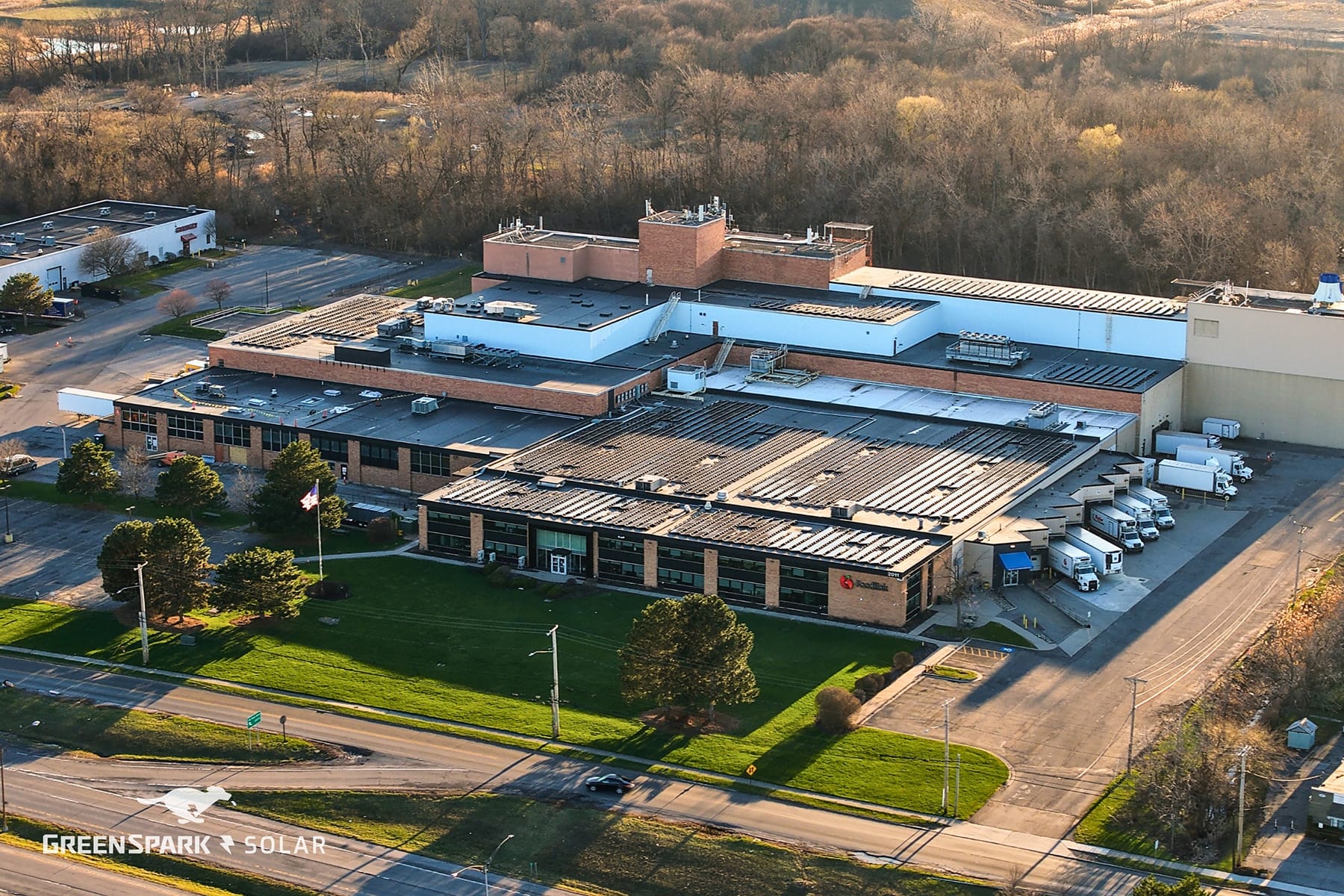 Award-winning project demonstrates how local investment and clean energy can create lasting community impact


You must be logged in to post a comment.