Renewables Now is a leading business news source for renewable energy professionals globally. Trust us for comprehensive coverage of major deals, projects and industry trends. We’ve done this since 2009. Stay on top of sector news with with Renewables Now. Get access to extra articles and insights with our subscription plans and set up your own focused newsletters and alerts.
Sponsored By ADVERTISEMENT ADVERTISEMENT CLEAR LAKE — Xcel Energy on Tuesday, July 21, announced the completion of Sherco Solar Phase 3, marking a milestone in the company’s transformation of a retiring coal plant into a renewable energy hub. Located near the existing Sherco plant in Becker, Sherco Solar is the largest solar facility in Minnesota and one of the biggest in the Upper Midwest. With the first three phases online, the site now produces 710 megawatts of electricity powered by 1.7 million solar panels. ADVERTISEMENT A proposed fourth phase would bring Sherco Solar’s total generating capacity to 910 megawatts — capable of powering more than 190,000 homes, according to Xcel — by 2029. The expansion also would create an estimated 300 union construction jobs and $90 million in local economic benefits, according to information from the utility company. “Completing Sherco Solar Phase 3 is a significant step in our efforts to deliver the reliable, affordable and increasingly clean energy our customers expect,” Bria Shea, president of Xcel Energy–Minnesota, North Dakota and South Dakota said in a statement. “This project demonstrates how we can build upon existing infrastructure and workforce expertise to meet growing energy needs, create economic opportunities for Minnesota communities and continue advancing our renewable energy transition.” Sherco Solar is an effort by Xcel to maintain reliability while expanding renewable energy resources and keeping costs down. Luke Molus, senior operations manager for Xcel Energy’s solar and storage sites, coincidentally grew up in the area. “For decades, the Sherco plant has helped power our region, and today Sherco Solar is continuing that legacy,” Molus said in a statement.
Renewables Now is a leading business news source for renewable energy professionals globally. Trust us for comprehensive coverage of major deals, projects and industry trends. We’ve done this since 2009. Stay on top of sector news with with Renewables Now. Get access to extra articles and insights with our subscription plans and set up your own focused newsletters and alerts.
By: Luis Reyes Published: Jul 22, at 9:00am ET Most fights over a wind farm sound the same. Neighbors object to the look of the towers on a ridgeline, or the low hum, or the aircraft lights blinking after dark. The row now building around a wind farm near Yass, in southern New South Wales, is not that one. Over 18 months, its turbines killed 20 wedge-tailed eagles, the largest bird of prey in Australia, and the number has pulled a question back into the open that the clean-energy build-out keeps trying to walk past: what a turbine is allowed to kill, and who gets to decide. The farm is Rye Park, run by Tilt Renewables. At 396 megawatts and 66 turbines, it is one of the biggest onshore wind farms in the state. It is also, by the company’s own account, the deadliest for eagles that Tilt operates anywhere. Tilt disclosed the toll at a meeting of the project’s community committee this month. Within days it had hardened into a fresh demand for national rules on how wind farms are built around wildlife. Tilt did not bury the figure. A spokesperson said the company takes bird strikes seriously and has monitored them since the farm switched on, using trained detection dogs to search the ground around each turbine and reporting every eagle death to the NSW Department of Planning, Housing and Infrastructure. What the monitoring turned up was the uncomfortable part. The wedge-tailed eagle deaths, the spokesperson said, were running higher than expected at Rye Park compared with the rest of the company’s fleet, and it was acting on it. This is not a problem that surfaced last week. Tilt has told RenewEconomy it has been consulting ecologists and government agencies about the eagle deaths for more than a year. The count and the pace of the strikes crossed the reporting threshold written into the project’s approval long ago. That threshold is specific. Under the farm’s bird and bat plan, two or more eagle carcasses or injured birds found near the same turbines inside any two-month window forces Tilt to notify the state’s conservation regulator within one working day, then file a full report within 15 working days. The system is built to catch a cluster, and it did. No spam. Unsubscribe anytime. Privacy policy (opens in new window) At the community meeting, local representatives wanted more than reassurance. The committee formally asked Tilt to hand over a detailed report in October covering every recorded bird and bat strike at the site, the measures already in place, and whatever else it intends to try. Yass Valley Councillor Alvaro Charry, who sits on the committee, called the deaths “deeply saddening and concerning.” He noted that the wedge-tailed eagle is a sacred totem of the Ngunnawal people, and argued that clean energy and wildlife protection cannot be run as an either-or. This is where it splits. On the mainland, the wedge-tailed eagle is common. The IUCN lists the species as Least Concern, and it soars over farmland across most of the continent, with a wingspan that can reach 9 feet 4 inches (2.84 m). In New South Wales it is not listed as a threatened species. It is, though, a fully protected native animal, which means killing one is never a free action, even when the bird is abundant. That gap between “protected” and “endangered” is exactly what people are fighting over. To one camp, 20 deaths across 18 months is a small number against a healthy population, and a thin reason to bolt costly gear onto a working power station. To the other, an apex predator that breeds slowly and patrols a wide territory is worth defending well before the numbers turn bad, and the tools to do it already exist. The distinction changes what Tilt is actually required to do. Under the farm’s management plan, the automatic shutdown of turbines is reserved for the genuinely endangered species on site: the superb parrot, the large bentwing bat, the white-throated needletail. For the wedge-tailed eagle, the plan leans on other measures instead of stopping the blades. The math looks different in Tasmania, where the local subspecies of wedge-tailed eagle is endangered and thought to number in the low thousands. There, a run of deaths like this one would land far harder. Tilt’s opening moves are cheap and low-tech. The company has started clearing dead sheep and cattle and collapsing rabbit warrens across the site, on the logic that removing carrion and prey stops drawing eagles down into the rows of spinning blades in the first place. The heavier tools are the ones conservation and farming groups keep pointing at. Cameras wired to software that halts a blade when an eagle approaches. Radar that tracks birds in flight. And painting one of the three blades black, so the rotor stops smearing into an invisible disc at speed. That last one has real evidence behind it, though not the kind that ends the debate. In a Norwegian trial at Smøla, painting a single blade black cut the annual death rate at the treated turbines by nearly 72 percent. But the birds saved there were white-tailed eagles, and nobody has shown the trick still works on the far larger rotors going up today. Farmers for Climate Action, a pro-renewables group, points to Tasmania as proof the camera approach delivers. It says the two farms that fitted AI cameras there, Woolnorth and Cattle Hill, effectively stopped killing eagles without a meaningful hit to output. Its spokesperson, Peter Holding, argued that a wind farm should not clear planning at all unless the mitigation goes in first, and the group put it plainly: the time for consideration is over. There is a catch that slows every one of these down. Bolting cameras onto turbines or repainting blades counts as a material change to an approved project, which means Tilt cannot simply do it. Each fix has to clear planning on its own. Some of the industry’s answers run further out, chasing turbine designs that barely sweep any air at all. Those are years away from a ridgeline in Yass, and they do nothing for the eagles dying now. The reason Rye Park’s eagles became a national argument is that Australia has no single rulebook for this. Every project negotiates its own bird-and-bat plan through its own approval, and the conditions drift from farm to farm. That patchwork is drawing scrutiny at an awkward moment for the industry. The Australian Financial Review reported that the NSW government has floated a crackdown on so-called ghost projects clogging the planning queue, with the Yass Valley, thick with proposals, squarely in frame. The same reporting quoted Goulburn MP Wendy Tuckerman blaming the eagle deaths on rushed planning approvals, and a federal environment spokesperson calling the toll concerning while noting Canberra’s role is limited to nationally protected species. None of this is unique to wind, or to Australia. The friction between building clean power fast and protecting the wildlife already living where you build keeps turning up wherever the turbines go. Offshore, scientists have tracked seals hunting the exact rows of North Sea foundations, a reminder that these machines reshape the ecosystem around them whether anyone planned for it or not. What Rye Park adds is a stark version of the trade-off on land, with a bird most Australians recognize on the losing side of it. The pressure sits on one report. When Tilt returns to the community committee in October with its full strike record and its list of fixes, the argument stops being about a single number and starts being about whether the measures actually move it. The harder question outlasts that meeting. A wind farm that offsets a lot of carbon is also killing a protected bird faster than its operator expected, and the country still hasn’t decided whether “common but protected” is worth the cameras, the radar, and the black paint. Rye Park just made everyone answer it out loud. Did we nail it or blow it? Luis Reyes · Jun 23, 2026 Luis Reyes · Jul 5, 2026 Luis Reyes · Jul 7, 2026 Luis Reyes · Jul 4, 2026 Luis Reyes · Jul 6, 2026 Luis Reyes · Jun 29, 2026 Luis Reyes · Jul 22, 2026 Luis Reyes · Jul 22, 2026 Luis Reyes · Jul 21, 2026 Luis Reyes · Jul 21, 2026 Luis Reyes · Jul 21, 2026 Autonotion is the English-language automotive editorial by Autonocion.com — car news, reviews, and industry analysis for American readers. Other links Company Subscribe Get the latest car news in your inbox: By submitting your email you allow autonocion.com to send you news or promotions. More info
Long waits for domestic solar cells have forced many Indian panel factories to pause production. The disruption could imperil thousands of jobs and billions in investment. As informed by Reuters Indian solar panel manufacturers are being forced to idle factories due to long queues for domestic components needed to replace imports from China as part of government efforts to boost local production, according to industry sources. Disruptions caused by the enforcement of the relevant rules on June 1 threaten thousands of jobs and about $4 billion in investments, according to manufacturers and analysts, while jeopardizing India’s 2030 target to increase solar power capacity. “We have faced significant difficulties due to the lack of domestic solar cells over the past three months.” – Shailendra Shukla Nearly a third of the 140 small and medium solar module manufacturers, which account for 60% of capacity, have halted production, while others have shortened cycles to three-to-four days, according to the All India Solar Module Manufacturers Association. Manufacturers without their own cell-fabrication capacity report waits of six to eight months for domestic cells, causing the cost of panels manufactured domestically [sic] to rise almost twice as much as those using Chinese cells. The Ministry of Energy in the Clean Energy sector said it had not received official notices of production stoppages from independent module manufacturers, but is watching prices and expects to secure adequate cell production within six months. However, India faces challenges in ramping up supply as building high-tech cell-manufacturing plants takes time, and China restricts export of technology, equipment, and technical support for the solar industry, industry sources say. Supply disruptions would push back solar projects and raise costs, potentially slowing India’s plan to reach 500 GW of renewable energy capacity by 2030, industry sources and analysts warn, given that it currently stands at around 288 GW. Rising demand for electricity means that slower deployment of solar energy will have to be offset by greater use of fossil fuels, primarily coal, delaying the transition to cleaner energy. Solar energy accounts for about 29% of India’s current non-fossil capacity and is forecast to grow to over 292 GW by 2030 from 162 GW today, according to the Central Electricity Authority. Although India has built around 200 GW of panel manufacturing capacity, the actual output of solar cells is only about 27 GW, government estimates show. The real-world picture reveals an even bigger gap: the effective cell production capacity stands at roughly 16–18 GW, according to EUPD Research and the industry. According to experts, the official figures reflect installed or nominal capacity, much of which is not yet commissioned or operates well below nominal. “India is facing a significant shortfall in cell supply, and closing this gap is likely to take three to five years.” – Ryan Kalsotra “Over time, China may seek to maintain dominance in the solar industry, where it already wields strong influence in nearly all manufacturing segments,” said Cosimo Ries, an analyst at the consulting firm Trivium China. The Chinese Ministry of Commerce did not respond to requests for comment. Industry estimates say China controls about 95% of India’s solar cell imports, and imports from China rose about 37% in the last financial year to around $1.86 billion. At least three module manufacturers Reuters spoke to have temporarily halted production due to a lack of domestic cells, and another four have cut capacity to about a third. Building new cell manufacturing capacity takes significantly longer than the government expects, manufacturers say. “It is not possible to start cell production with only an 18-month lead time due to the complexity of the technology and the needs for land and raw materials.” – Chetan Shah He was referring to the government deadline for using domestic solar cells, which had been set for June 2026 and had previously been slated for December 2024. India pushed the date to December 2026 for certain projects amid concerns about shortages and the need to safeguard manufacturers’ investments. The manufacturers association said such concessions would provide limited help if they do not apply to the entire industry. Standalone module manufacturers without cell fabrication capacity employ about 75,000 people, of which 45,000 are in Gujarat, where a number of plants are located, according to the state industry group. Energy leaders forecast that near-term capital costs could rise by about 35% before domestic cell manufacturing capacity reaches the required scale, said Pinaki Bhattacharya, executive director of AMPIN Energy Transition. Despite all the problems, government efforts to support domestic production continue to shape the new value chain in India’s solar sector, while underscoring the need for long-term solutions to ensure stable and affordable supply as the transition to cleaner energy proceeds.
The Indianapolis International Airport is installing 10,701 solar panels to help power the terminal, airfield and parking garage. The solar panels are being installed through three projects, said Todd Cavender, Indianapolis Airport Authority Director of Environment and Sustainability. The Terminal Energy Resilience project consists of installing canopy covers with solar panels at the airport’s surface parking. Energy captured through the solar panels will be stored in a battery and utilized to power about 10 percent of the airport terminal, Cavender said. The Parking Garage Resilience Project is similar to the Terminal Energy Resilience project. It will have solar canopy with battery storage to power about 90 percent of the parking garage. “The existing parking garage did not have a cover on top,” Cavender said. “ Do you just build a roof or do you utilize and provide added value by utilizing solar as the roof and providing energy through that through that capability.” Read more:Study shows regulations on renewables harm local economies The third project has two components: a microgrid for the airport’s Aircraft Rescue and Firefighting Facility No. 2 and a microgrid on the airfield’s electrical vault which will power 50 percent of the airfield. Cavender said installing a microgrid in the airfield area was rooted in taking steps to ensure the airport is prepared for an emergency in Indianapolis. “We have to be able to stay operational,” Cavender said. “And having a functioning airfield is critical to bringing disaster relief in, bringing the critical emergency aircraft in that would need to serve the community.” The Aircraft Rescue and Firefighting Facility No. 2 project will be complete by October, the parking garage project will be finished by the of December, and the terminal energy project will be done in April or May. “Our number one goal is to ensure we can be a resilient airport,” Cavender said. “We want to stay operational. We want to make sure we have clean power for the airport. We have redundant power.” WFIU/WTIU News is an independent newsroom rooted in public service. “Act Independently” is one of the basic creeds of journalism ethics, and we claim it proudly. The WFIU/WTIU News facilities are located on the campus of Indiana University, which does hold our broadcast license and contribute funding to our organization. However, our journalists and senior news leaders have full authority over journalistic decisions — what we decide to cover and how we tell our stories. We observe a clear boundary: Indiana University and RTVS administrators focus on running a strong and secure organization; WFIU/WTIU journalists focus on bringing you independent news you can trust.
SINGAPORE/SYDNEY —For 64-year-old transport worker Paul Tyler, who lives 160 km (100 miles) north of Sydney, installing solar panels had long been financially out of reach. Australia’s federal battery subsidy changed that, helping him cut upfront costs by 30% and install 18 solar panels and a 28-kilowatt-hour battery this year for A$9,000 ($6,247.80). “I would never have afforded it if not for the subsidies,” he said, adding that his monthly power bill dropped to around A$50 from A$275. Tyler is one of the hundreds of thousands of Australians driving a battery rush that is boosting new solar connections and upgrades to larger panels to store more power. The rooftop solar boom shows how countries stifled by transmission line logjams can continue reducing emissions, analysts say. Australians spent a collective A$8.69 billion on home batteries in the five months through May, according to a Reuters calculation based on average prices on the Solar Choice website and installations data from consultancy SunWiz. The splurge followed the government’s decision in December to more than triple the value of its Cheaper Home Batteries Program announced last July to A$7.2 billion over four years. The 7.7 gigawatt-hours in home installations between January and May exceeded uptake in the previous six years combined, SunWiz data showed, benefiting battery makers including Tesla TSLA.O, BYD 002594.SZ, Sungrow 300274.SZ and Fox ESS. Future “Lightweight” regulations reduced installation costs to a third of U.S. levels, helping one in three Australian homes adopt rooftop solar – the highest penetration in the world, according to a report by the CHARGED initiative. Now, batteries are driving rooftop solar installations even higher, with SunWiz forecasting 2026 additions to surpass a 2021 peak and surge 41% to a record 4 GW – equivalent to more than two-thirds of the country’s large renewable additions in 2025. “It’s a sign of what the future can look like. The solution we need most is already above people’s heads, on their roofs,” said SunWiz Managing Director Warwick Johnston. Australia’s coal-fired output, its main power source, has declined for 10 straight months amid the solar resurgence, according to monthly National Electricity Market data through June from the OpenElectricity platform. Lifestyle choice Stored power is increasingly meeting evening demand and reducing the case for some new transmission lines, said Commonwealth Bank of Australia energy economist John Oh. Australia’s energy market operator expects pooled home batteries to eliminate A$5 billion in grid-scale battery investments. “Distributed energy driven by batteries is a great alternative to circumvent delays in grid transmission buildout, and this can be replicated across the Asia-Pacific,” said Climate Energy Finance Director Tim Buckley. Higher evening supply from home batteries to the grid is also helping lower wholesale prices, said Brian Spak, general manager of advocacy and policy at Energy Consumers Australia (ECA). “Even people who don’t have batteries receive benefits from their neighbours taking up the program,” he said. Still, nearly half of Australian households cannot access solar or batteries because they rent, live in apartments or earn less than A$50,000 a year, according to ECA. “Seeing all the houses around you with solar panels, but not having access to solar panels on yours is a bit annoying,” said Dale Best, a 25-year-old engineer who rents a house with three others in southern Sydney. But for homes with solar, storage is giving occupants more control over costs as they choose when to use and export power instead of paying rigid retail tariffs, said Geoff Eldridge, principal adviser at energy consultancy Global Power Energy. “The battery is not the revolution by itself. The revolution is that electricity is moving into everyday household decisions.” —Reuters
Looking to shoot remotely, like really remote, but worried about power? This new foldable solar panel from CAME-TV could be the solution you’re looking for. CAME-TV VOLTRABLE 30W Foldable Solar Panel Well, this is pretty cool. The other day, we covered an inflatable light mat that could double as a water raft for navigating a river, and today we have a foldable solar panel that can be carried like a backpack to power your remote shoots. And for remote shoots, we mean like very, very remote. Introduced by CAME-TV, this new VOLTRABLE Foldable Solar Panel V30A aims to be the ultimate power solution for explorers, adventurous filmmakers, and content creators. Here’s what you need to know about this new remote power solution.
CAME-TV VOLTRABLE 30W Foldable Solar Panel
Credit: CAME-TV
Tailored for the adventurous outdoorsy type of explorers and possible content creators, this foldable solar power solution is quite unique—as far as portable solar panels go. Capable of being folded down to a quite compact size, this solution from CAME-TV fits in your backpack and can be folded or unfolded to capture the sun’s energy when you’re out on your adventures.
Ideally designed for camping, hiking, RV trips, or other remote adventures, the solution isn’t conceived specifically for filmmaking or hybrid content creation, but it could be used for these purposes quite easily.
The CAME-TV VOLTRABLE 30W Foldable Solar Panel weighs just over 2 lb and can be folded to a compact size of 21.3 x 30.3 x 2.2 cm. When unfolded and unfurled, it will be a 64.2 x 30.3 cm panel, which should help maximize its sun exposure.
Price and Availability
Credit: CAME-TV
Overall, while not a solution for bigger projects or—honestly—most projects, if you are an outdoor and adventure type, this might be an interesting option for small DIY projects and an investment for your own travels.
The panel features multiple smart output ports to power all your gear simultaneously, including USB-A, Type-C, and DC outputs for charging 12V batteries or portable power stations.
If you’d like to find out more, the CAME-TV VOLTRABLE 30W Foldable Solar Panel is available on the company’s website here, where it currently retails for $68.
Credit: CAME-TV Tailored for the adventurous outdoorsy type of explorers and possible content creators, this foldable solar power solution is quite unique—as far as portable solar panels go. Capable of being folded down to a quite compact size, this solution from CAME-TV fits in your backpack and can be folded or unfolded to capture the sun’s energy when you’re out on your adventures. Ideally designed for camping, hiking, RV trips, or other remote adventures, the solution isn’t conceived specifically for filmmaking or hybrid content creation, but it could be used for these purposes quite easily. The CAME-TV VOLTRABLE 30W Foldable Solar Panel weighs just over 2 lb and can be folded to a compact size of 21.3 x 30.3 x 2.2 cm. When unfolded and unfurled, it will be a 64.2 x 30.3 cm panel, which should help maximize its sun exposure. Credit: CAME-TV Overall, while not a solution for bigger projects or—honestly—most projects, if you are an outdoor and adventure type, this might be an interesting option for small DIY projects and an investment for your own travels. The panel features multiple smart output ports to power all your gear simultaneously, including USB-A, Type-C, and DC outputs for charging 12V batteries or portable power stations. If you’d like to find out more, the CAME-TV VOLTRABLE 30W Foldable Solar Panel is available on the company’s website here, where it currently retails for $68.
Your complete guide to the emerging economies of Southeast Europe. From latest news to bespoke research – the big picture at the tip of your fingers. SeeNews is your complete guide to the emerging economies of Southeast Europe. Latest news, market intelligence, industry analyses, on-demand research – the big picture at the tip of your fingers. Get ahead of the competition with SeeNews Premium Access. Unlimited news and objective analysis you can trust, company data and more. Subscribe now and start making agile business decisions.
Samsung C&T Renewable Energy Australia has submitted the 1,000MWh Boro solar-plus-storage project in New South Wales to Australia’s Environment Protection and Biodiversity Conservation (EPBC) Act. The project combines a 150MW solar PV plant with a 250MW/1,000MWh, 4-hour duration battery energy storage system (BESS). Samsung C&T Renewable Energy Australia is the local development arm of Samsung C&T Corporation, the South Korean conglomerate’s construction and trading division. The project is proposed on a 410-hectare site approximately 40km south of Goulburn and 200km south-west of Sydney, across land within both the Goulburn Mulwaree Council and Queanbeyan-Palerang Regional Council local government areas. Get Premium Subscription The construction disturbance footprint covers approximately 266 hectares, with the remainder of the site retained or used for access and ancillary infrastructure. The solar PV power plant will use modules mounted on single-axis tracking systems, connected via underground cables to a central substation that will step up electricity to 330 kilovolts for export to a Transgrid 330kV overhead transmission line located to the south of the project. The 1,000MWh battery storage system will be co-located with the solar PV plant and will connect via the same substation, with a new 330kV switching station linking to the Transgrid transmission infrastructure. It will connect to the wider National Electricity Market (NEM). The project is classified as State Significant Development under the New South Wales Environmental Planning and Assessment Act, meaning the EPBC referral runs in parallel with a separate New South Wales state planning assessment. Biodiversity surveys conducted across 2024 and 2025 identified no EPBC-listed species within the project area, and the referral concludes that no Matters of National Environmental Significance are likely to be directly or indirectly affected by the development. Samsung C&T states in the referral that it currently has at least five development projects at various stages in New South Wales and two in Victoria, as well as two projects in Queensland, either under development or under technical study. The Boro project’s capital investment cost is estimated at more than AU$30 million (US$21 million), though the referral does not provide a full project cost figure. The Boro referral is the latest in a rapid sequence of EPBC submissions from Samsung C&T Renewable Energy Australia across multiple states. Earlier this month, the company submitted the 150MW/600MWh Comet Park BESS near Leeton in the New South Wales Riverina for EPBC assessment, a standalone battery project connecting to the existing Yanco Substation and also progressing through the New South Wales State Significant Development pathway simultaneously. In October 2025, Samsung C&T proposed the 200MW Block BESS near Townsville in Queensland, a modular battery system comprising 192 battery modules arranged in a grid configuration adjacent to the Ross River Substation, with operations planned through to 2059. Never miss an Australian energy storage story. Sign up for our Australia newsletter and get the latest project announcements, policy updates and market analysis delivered directly to you. Our publisher, Solar Media (part of Informa Group), will host the Battery Asset Management Summit Australia 2026 on 25-26 August at Amora Hotel Jamison in Sydney. You can find out more about the Summit on the official website.
Thursday July 23, 2026 Highlights It was a quiet monsoon night in Narsingdi, sometime in the mid-1990s, when a handful of tin-roofed homes lit up without a single wire running to them. There was no grid connection for kilometres. No transformer humming somewhere down the road, no pole carrying current from a distant power station. Just a panel bolted to a rooftop, a car battery wired into a back room, and a bulb that stayed on long after the sun went down. For families who had spent their evenings under the weak orange flicker of a kerosene lamp, it must have looked like something closer to a magic trick than a technology. It wasn’t magic. It was the first real test of an idea that would, over the next two decades, reach into roughly four million rural homes. It begins with two separate, uncoordinated attempts to solve the same problem, both converging — almost by accident — on the same stretch of central Bangladesh. In 1996, a Grameen Bank engineer named Dipal C. Barua began experimenting with low-cost solar panels for rural households, riding on the microfinance network Grameen Bank had already spent two decades building. There was no financing model yet, no trained technicians, no supply chain. Panels were expensive, imported, and nobody in the village knew how to fix one when it broke. Barua was, in effect, building the plane while flying it. A year later, the state-run Bangladesh Rural Electrification Board ran its own experiment a few unions over — a formal pilot that put solar panels on roughly 850 homes in Narsingdi district. The same year, BRAC entered the picture too, launching its own solar energy programme. By the early 2000s, roughly three-quarters of rural Bangladesh still had no electricity of any kind — the World Bank’s own account puts the rural electrification rate at under 27% when the national programme launched, with about 15 million rural households still unelectrified at that point. Instead of importing a financing model that had worked in Sri Lanka, as originally planned, the newly formed Infrastructure Development Company Limited built the national programme around Grameen Shakti’s existing network of rural vendors and microcredit relationships — leveraging, as the World Bank later described it, the domestic microfinance capacity and NGO/private-sector distribution Bangladesh already had, rather than building new institutions from scratch. IDCOL launched the Solar Home System programme in January 2003. The target was modest by later standards: 50,000 households in five years. It took three. The decade of the rooftop panel What followed was less a programme than a wave. By 2013, IDCOL and its network of partner organisations — 56 of them by then — were installing tens of thousands of new systems every month, at one point crossing 80,000 units in a single month, with nearly two million systems on rooftops nationwide by January of that year. By 2018, IDCOL’s own figures — later confirmed in the World Bank’s 15-year retrospective — put the total at just over 4.1 million systems sold, bringing electricity to about 14% of the national population per the 2011 Census, or roughly 20 million people. The report notes this let a quarter of the rural population that was unelectrified in 2003 get power far sooner than grid expansion alone would have allowed. Systems were used mainly for lighting, mobile-phone charging, and running TVs and radios, and also powered about 200,000 rural businesses and religious facilities. A separate 2025 academic study on the programme’s socio-economic impact adds a geographic layer to the numbers: penetration was highest in Barisal division, at 39% of households, followed by Sylhet at 30%, with Chittagong also among the leaders — a pattern consistent with these being the divisions furthest from reliable grid coverage. The World Bank separately estimated that between 2003 and 2018 the programme cut greenhouse gas emissions by roughly 9.6 million tonnes of CO2 equivalent and avoided the consumption of 4.4 billion litres of kerosene for household lighting. A lot of people were helped by the solar panels. Among them was Kusum, a 10-year-old student in a solar-electrified household, who told the World Bank that her lighting made a direct difference in her schoolwork: “We can study much better now. The solar lights have helped us a lot with our education.” What the grid did to the story The same national ambition that made solar necessary — universal electricity access — eventually became the thing that undercut it. As Bangladesh’s conventional grid expanded aggressively through the 2010s, reaching 97% of the country by 2020, the very isolation that had made off-grid solar essential began to disappear. In some areas, the government began distributing solar systems for free under separate safety-net programmes, undercutting the loan-based model IDCOL and its partners had built their business around. Grameen Shakti, still the largest partner organisation in the network, later described the programme as having entered a state of virtual closure from 2014 onward, as households increasingly stopped repaying loans on systems competing with a free, wired alternative next door. By 2023, IDCOL’s board had approved writing off or waiving roughly Tk691 crore in bad loans across 44 partner organisations, while Grameen Shakti itself sought a waiver of half its outstanding Tk420 crore balance.
The Solar Dividend While most comments will be posted if they are on-topic and not abusive, moderation decisions are subjective. Published comments are readers’ own views and The Business Standard does not endorse any of the readers’ comments. The Business Standard Main Office -4/A, Eskaton Garden, Dhaka- 1000 Phone: +8801847 416158 – 59 Send Opinion articles to – [email protected] For advertisement- [email protected]
Enter で検索 · Esc で閉じる · ↑↓ で移動 Translated from the Japanese original A single autumn leaf drifts down onto a solar panel. Or a bird casts a small shadow across it. These are trivial scenes from our everyday lives, yet for next-generation energy technology, they can deliver a fatal blow. A tiny area blocked from light can rob an entire panel of its power-generating capacity—and in the worst case, irreversibly destroy the material itself. AD Ever since the practical solar cell was invented at Bell Labs in 1954, the world’s solar power generation has been supported by heavy, black silicon panels. Silicon, an inorganic crystal, is robust and can endure decades of operation. In the process of absorbing light energy to generate electrons and holes and sending them out to an external circuit, silicon’s crystal structure remains extremely stable. Even when continuously exposed to intense ultraviolet light and harsh weather, its fundamental power-generation performance is not easily degraded. However, because of its weight and rigidity, installation sites are limited to flat roofs and vast tracts of land. Panels rigidly protected by glass and metal frames place a heavy structural load on buildings. Furthermore, manufacturing high-purity silicon ingots requires operating furnaces at temperatures exceeding 1,000 degrees Celsius for extended periods. Silicon panels, produced with enormous energy consumption, take years to achieve energy payback. Faced with these physical and economic limits, researchers have continued searching for new solar cell materials that are lighter and cheaper to manufacture. Thin-film solar cells emerged as a technology to break through these constraints. Using perovskite crystals with extremely high light-absorption rates, or flexible organic semiconductors, this technology achieves thicknesses less than one-hundredth that of silicon. These materials dissolve in solvents like ink, enabling continuous printing onto roll-shaped film via roll-to-roll manufacturing. Much like newspapers being printed from giant presses, a future of mass-producing solar cells is becoming a reality. This dramatically lowers manufacturing costs and the energy consumed during production. Lightweight, bendable film-shaped solar cells hold the potential to transform virtually any surface—building walls, curved surfaces, tent fabric, even clothing—into a small power plant. Efforts to convert the very landscape of cities into an energy source are being researched worldwide as a crucial step toward a sustainable society. In recent years, research institutions around the world have been racing to develop tandem solar cells that stack thin-film materials with different properties. Sunlight contains light of various wavelengths, from ultraviolet to infrared. It is physically almost impossible for a single material to convert all of this light into electricity without waste, because each material has a limited range of wavelengths it can absorb. To address this, a structure was devised in which the perovskite material efficiently absorbs short-wavelength light such as blue and green to generate high voltage, while the underlying organic semiconductor captures the longer red and near-infrared wavelengths that the perovskite misses. By splitting the solar spectrum between two layers and having each material make full use of the wavelength range in which it excels, this approach achieves higher energy conversion efficiency than any single material could reach on its own. This layered structure is becoming a de facto standard in the design of next-generation solar cells. Behind the brilliant conversion efficiencies, thin-film solar cells faced an enormous barrier to practical use: an abnormal vulnerability to localized shading. Solar cell modules are constructed by connecting numerous small cells in series to raise the voltage to a practical level. Just as water flows through a single long pipe, the current generated by one cell is passed on to the next in sequence. When a shadow falls on part of this series circuit, the cell deprived of light stops generating power. A cell that has stopped generating power turns into a massive resistor blocking the flow of current. The other cells, still generating power normally under sunlight, then try to force the current through anyway, applying a voltage in the opposite direction to what is normal onto the shaded cell. This phenomenon is called reverse bias. Just one fallen leaf sticking to a panel under strong sunlight is enough for the energy of the entire module to begin concentrating in that tiny shaded area. In the case of silicon panels, this problem has been avoided because the thick crystal structure effectively disperses heat, and bypass diodes are attached to each cell to serve as a detour route. The moment a particular cell becomes a resistor, the diode opens and redirects the current onto a different, safe path. This prevents the entire panel from being destroyed even if part of it is shaded. However, in thin-film devices continuously printed onto roll-shaped film, embedding countless microscopic diodes would enormously complicate the manufacturing process. Since this would undermine the greatest advantage of thin-film solar cells—low-cost mass production—adding physical circuitry is not a realistic option. When reverse bias is applied to a thin-film solar cell lacking a bypass circuit, charges with nowhere to go concentrate at microscopic defect sites in the material. The localized heat generated there has nowhere to escape within the thin film, instantly burning through the bonds of organic molecules. After being covered by the shadow of a fallen leaf for just a few minutes, part of the panel scorches, permanently losing its power-generating capability. AD A research team led by Professor Li Gang at The Hong Kong Polytechnic University elucidated the mechanism of this reverse-bias-induced destruction at the atomic level and reported their findings in the journal Nature Materials. What they captured under the microscope was the internal structure of the bulk heterojunction, the heart of an organic solar cell. A bulk heterojunction refers to a blended layer in which a donor material that releases electrons upon receiving light and an acceptor material that receives those electrons are intricately intertwined at the nanoscale. When two different materials are mixed together in a solvent and applied as a coating, a fine network forms through self-organization. Under ideal conditions, the two materials link together like a three-dimensional mesh, providing pathways for light-generated charges to flow smoothly to the electrodes. Within this vast network, electrons and holes head toward their respective exits without getting lost. However, the research team discovered that slight non-uniformities arising during the manufacturing process cause the acceptor material to form “isolated clusters” cut off from the surrounding network. It is a state analogous to a vast road network dotted with dead-end paths that connect to nowhere. During normal power generation, when electricity flows in the forward direction, these small isolated sections do not pose much of a problem, since many other correct pathways for charge flow exist. But when reverse bias is applied, the situation changes completely. These isolated clumps of material act like deep valleys, creating deep traps that capture charge and never let it escape. The reverse-flowing charges fall into this trap one after another, becoming stranded in an extremely small region with nowhere to go. There, electrical energy accumulates beyond its limit, triggering irreversible dielectric breakdown of the material accompanied by intense heat generation. This trap causing current congestion was, in fact, the shadowy culprit that was killing thin-film solar cells. Once the cause was identified, a path to a solution opened up. The research team precisely controlled the material mixing ratio and the post-coating processing temperature, thoroughly suppressing the formation of isolated clusters in the mixed region of donor and acceptor. By intervening in the process of molecular self-organization, they guided network formation so as not to create dead-end paths. With the traps sealed off, charges flowing in under reverse bias no longer accumulate in one location. Charges that avoid accumulation instead pass safely through the material layer via quantum mechanical tunneling. The tunneling effect is a phenomenon in which particles pass through an energy barrier that they would ordinarily be unable to overcome. The team achieved a reversible reverse-tunneling phenomenon that lets current pass straight through without locally storing destructive energy. They effectively built into the material’s own structure the same function as a Zener diode, which protects a circuit by letting current escape once a certain reverse voltage is exceeded. The team went further, building a tandem device with an n-i-p structure that stacked this toughened organic solar cell on top of an inorganic perovskite solar cell. In this configuration, the upper organic layer both absorbs light and serves as a physical breakwater protecting the fragile perovskite layer below from reverse-voltage stress. In perovskite material alone, charge tends to concentrate at the fine grain boundaries of the crystals, making it extremely vulnerable to reverse bias. By stacking an optimized organic layer on top of it, a safe path for discharging charge is secured for the system as a whole. The organic layer controls and diverts the reverse-flowing current, preventing fatal damage to the perovskite layer. The two different materials compensate for each other’s weaknesses in two respects—improved power-generation efficiency and structural protection—creating a perfect synergy. Rigorous laboratory testing proved the overwhelming durability of this structure. Whereas conventional thin-film materials completely lost function at a reverse voltage of around -10 V to -15 V, the new tandem solar cell does not undergo irreversible destruction even under a reverse bias as high as -35 V. In tests probing the absolute limits, the cell retained over 90% of its initial power-generation efficiency even after being subjected to an extreme reverse-bias load of -40 V. Long-term stability testing was also conducted. To simulate real-world conditions in which a panel is shaded for an extended period, a stress endurance test was carried out applying a continuous reverse voltage of -4.5 V for 2,000 hours (approximately 83 days). Even at the end of this period, the cell retained 97% of its initial efficiency. At the same time, the power conversion efficiency itself was recorded at over 26%. These results completely rewrite the durability limits of existing thin-film solar cells. AD Through fine-grained control of nanoscale structure, tolerance to electrical stress under stable laboratory conditions has been clearly demonstrated. However, real outdoor environments are not so simple. A concern remains as to whether repeated thermal cycling—extreme heat from direct summer sunlight followed by freezing winter nights—might promote phase separation in the material over time. It cannot be ruled out that isolated clusters, once suppressed, could re-form due to the cumulative effect of temperature fluctuations over several years. Verification is also needed on how well the reverse-tunneling phenomenon can keep up, without delay, with irregular shadow fluctuations caused by leaves swaying in the wind, where light and dark switch on a scale of seconds. Furthermore, the effect of humidity changes on the crystal structure of the perovskite layer is another factor that must be considered. Whether the practical application of this technology succeeds also depends on establishing manufacturing techniques that can uniformly apply the precise mixing-process control achieved in a prototype of just a few square centimeters to an entire giant module measuring several meters on a side. This is because even slight temperature unevenness or differences in drying speed during the coating process could once again give rise to nanoscale traps. How can the uniformity achieved on a small glass substrate in the laboratory be reproduced on a massive film being wound up at high speed? The greatest hurdle toward commercialization lies in scaling up the manufacturing process. The stage for this research is shifting from the atomic world under the microscope to outdoor test fields governed by complex weather conditions. Sources:nature.com | polyu.edu.hk AD Get the latest updates by email
Loading article… A rendition of a renewable energy plant in Barbados by a subsidiary of France based HDF Energy (Contributed) French renewable-energy company HDF Energy said it has secured land in Jamaica for a proposed utility-scale solar, hydrogen and battery storage project, and wants investors, contractors, suppliers and operators to participate in its development. “HDF Caribbean invites expressions of interest from qualified organisations interested in participating in the developments, financing, construction, operation and/or equity of a utility-scale solar plus hydrogen and battery storage project in Jamaica,” according to an advertisement placed in the Sunday Gleaner. HDF said its site could support solar panels with peak capacity of more than 160 megawatts, along with battery and hydrogen storage. It would form part of the latest entity vying to contribute to the island’s target of generating 50 per cent of its energy from renewable resources by 2030. If built, the project would rank among the larger renewable-energy developments proposed for Jamaica to date and could become part of the wider debate over power costs, grid reliability and the country’s shift away from fossil fuel. “In April 2026 HDF successfully procured a significant acreage of greenfield property suitable for PV project development in Jamaica,” the company said in its Jamaica Expression of Interest, dated June 26, using the industry term for solar photovoltaic power. The Jamaica project is being advanced by HDF Energy Caribbean Holdings Ltd, the Barbados-based Caribbean arm of Hydrogène de France SA, a French hydrogen infrastructure company listed on the Euronext Paris stock exchange. HDF’s figure refers to peak solar capacity, not continuous power delivered to the grid. HDF said a preliminary environmental and social assessment has started, and a grid study is planned to test whether the plant can be safely connected to Jamaica’s electricity network. The company has not disclosed the parish or community where the land is located. The company invites contractors, suppliers, operators, funds and investors to indicate their interest in participating. HDF said the information will be used to identify potential partners and pre-screen entities for later project-development steps. The company cautions, however, that the notice is preliminary. “This expression of interest does not constitute a procurement process, request for proposal, offer, commitment or obligation of any kind,” HDF stated. The model aims to combine solar power, hydrogen and battery storage to supply electricity beyond daylight hours. HDF says the plant’s output could support “a highly predictable revenue stream under a capacity-based, long-term power purchase agreement.” A power purchase agreement, or PPA, is a contract to sell electricity from a generating plant to the grid controlled by the utility provider, Jamaica Public Service. RENEWABLE PUSH Separately, the Generation Procurement Entity, or GPE, has gone to the market for information on up to 220 megawatts of renewable energy generation and 110 megawatts/220 megawatt-hours of battery storage. It is not yet clear whether HDF’s proposal aims to bid on the tender. Although the EOI is the clearest public disclosure yet of HDF’s proposed Jamaican project, the company has had visible contact with Jamaica’s energy and investment sectors since at least 2022. JIS records show that HDF representatives met then Energy Minister Vaz in Kingston in September 2022, and later met Matthew Samuda, then minister without portfolio in the Ministry of Economic Growth and Job Creation, in New Kingston in July 2024. HDF also participated in the Caribbean Sustainable Energy Forum in Kingston in November 2023. In 2025, HDF Caribbean said it attended the Caribbean Investment Forum in Montego Bay, where it engaged with Jamaican and regional finance, infrastructure and investment interests. REGIONAL FOOTPRINT HDF’s closest regional comparison is Renewstable Barbados, a solar, hydrogen and battery storage project designed to supply firm renewable electricity. The Barbados project has secured up to US$41 million in Green Climate Fund financing, while the Green Climate Fund lists its total project value at US$169 million. In Trinidad and Tobago, HDF acquired a 70 per cent majority stake in the NewGen hydrogen project, led by local developer Kenesjay Green Ltd. That project targets lower-carbon hydrogen for an existing ammonia plant in the Point Lisas petrochemical hub. FINANCIAL BACKDROP HDF’s Jamaica move comes as the French-listed group remains in project-development and investment mode. Consolidated revenue fell to €998,000 in 2025 from €11.1 million in 2024. The prior year’s figure included a one-off €9.7-million sale of first-generation fuel cells for the CEOG power project in French Guiana. HDF posted a consolidated net loss of €5.75 million in 2025, compared with a loss of €10.86 million in 2024. The group held cash of €33.5 million at year end, down from €39.2 million a year earlier. The annual report focused its Caribbean disclosures on Barbados and Trinidad and Tobago. carolyn.guniss@rjrgleaner.com Please enter a valid email address. Please enter a valid email address.
As the U.S. continues to rise in the global solar manufacturing rankings, both physical security and cybersecurity measures are becoming top priorities for the American sector of the industry. Most crucially, U.S. inverter manufactured has nearly tripled since the end of 2024. In response to this rising demand for cybersecurity, the Solar Energy Industries Association (SEIA) has released a new report, outlining industry priorities with regard to security measures. With a new inverter manufacturing facility opening for business this summer, the U.S. has fortified its solar production lines nationwide, SEIA says. Association president and CEO Tim Pawlenty stressed the importance of increased security measures as the industry moves into 2027 and beyond. “As solar and storage continue to lead the way in adding new power capacity to the grid, cybersecurity must remain front and center,” he says. “From secure and resilient systems to expanding domestic manufacturing, this report lays out the actions our industry is taking to strengthen U.S. energy security, protect critical infrastructure, and stay ahead of emerging threats.” The new report, “Cybersecurity Priorities for America’s Solar & Storage Industry,” says that the trade association is working with partners throughout the industry and the U.S. government to advance cybersecurity protocols for solar. The company has outlined three key priorities for the solar and storage industry’s security strengthening process, including support of supply chain security, enhancing risk reduction, and strengthening baseline practices. Attacks on critical infrastructure have risen in recent years, according to SEIA representatives, with even more of an outsized percentage of security risk going to the energy sector. These threats are “critical to national security,” the association adds, and are spiking in frequency as solar and other renewable energy sources continue to blossom on American shores. “Cyberattacks on the solar and storage industry have not been nearly as frequent or severe as other areas of the energy sector or other critical infrastructure,” SEIA officials say. “However, as solar and storage continue to grow, cybersecurity protections become increasingly important to support grid reliability and resilience. SEIA is supporting the industry to proactively implement strong cybersecurity defenses as their importance on the grid increases.” The associated cited Russian attacks on Ukrainian energy infrastructure in 2015, 2016, and 2022, as well as attacks on American power producer sPower in 2019. However, perhaps the most vulnerable and at-risk sectors are utility-scale solar installation thanks to their connection to the wider grid. Another potential problem area the association outlines is distributed energy generation resources across the U.S., serving commercial, industrial, and residential customers near the physical area of consumption. “Unlike utility-scale installations, smaller-scale solar and storage systems fall outside of NERC-CIP jurisdiction, leading to inconsistent baseline protections across the ecosystem,” the association says. “Additionally, unlike most utility-scale installations, many distributed systems rely on connections to the internet to connect to the grid and for monitoring and control functions. Internet-connected devices have been and continue to be attractive targets for attackers.” SEIA says that emerging technologies like AI models have created new cybersecurity risks. If compromised by a cybersecurity attack, AI deployment could potentially cause full grid component failure.
The state of things in the U.S.
SEIA says it will dedicate its efforts to “advancing pragmatic cybersecurity policies,” and creating consequence-drive and established, grounded standards to improve security. The association says it is actively supporting the solar and storage industry to comply with modern regulations for their sector of the industry. The association already serves as an industry advisory board member for the Department of Energy’sSecuring Solar for the Grid program. “While every part of the energy sector faces cybersecurity challenges, the solar and storage industry increasingly provides reliability services to the grid,” SEIA says. “Proactively addressing cybersecurity challenges in the industry is essential to supporting its continued growth.”
Bilanol/iStock via Getty Images Citi analysts upgraded three storage-focused stocks on Wednesday—Fluence Energy (FLNC) to Buy/High Risk with a $24 price target, Energy Vault (NRGV) to Buy/High Risk with a $5 price target, and Canadian Solar (CSIQ) to Neutral/High
Sign up for email newsletters Don't miss: Copyright 2026 Baltimore Sun. All rights reserved. The use of any content on this website for the purpose of training artificial intelligence systems, algorithms, machine learning models, text and data mining, or similar use is strictly prohibited without explicit written consent.
Renewables Now is a leading business news source for renewable energy professionals globally. Trust us for comprehensive coverage of major deals, projects and industry trends. We’ve done this since 2009. Stay on top of sector news with with Renewables Now. Get access to extra articles and insights with our subscription plans and set up your own focused newsletters and alerts.
Australia’s Clean Energy Regulator (CER), the federal body responsible for administering the country’s clean energy schemes, has suspended 21 companies from the Small-scale Renewable Energy Scheme (SRES) during the April to June 2026 quarter. The organisation cited failures to meet the fit-and-proper person requirements in its latest quarterly compliance update. Get Premium Subscription The suspensions form part of a broader enforcement push the regulator describes as a compliance crackdown targeting incomplete and incorrectly declared solar installations. Among those named, Asun Solar Pty Ltd, an Australian rooftop solar retailer and installer, was suspended for failing to meet ongoing obligations under the scheme. A separate company was suspended for providing false or misleading statements, declaring solar systems to be complete and capable of generating electricity when they were not. CER Acting Chair Carl Binning said the regulator would not tolerate substandard work. “False statements and incomplete work will not be tolerated,” he said. “We’re warning installers that we will fail their applications and send them back to site if things aren’t done properly the first time.” Under the SRES, consumers are entitled to small-scale technology certificates when they install eligible rooftop solar or battery systems, which can be sold to offset part of the installation cost. Retailers and installers must meet fit and proper person requirements as an ongoing condition of participation, demonstrating compliance with the law alongside the integrity, capability and competence to fulfil their role as scheme providers. To help strengthen compliance checks, the CER has introduced an AI tool to support officers conducting solar battery labelling assessments. The tool assists in identifying issues with required labels and evaluating the accuracy of metadata that must accompany each image submitted with an application. The enforcement action arrives as Australia’s rooftop solar sector continues to expand, placing greater pressure on the quality of installer compliance. Australia surpassed 20GW of installed rooftop solar capacity in 2023, a milestone underpinned by the financial incentive the SRES provides to households. In 2024, the Clean Energy Council, Australia’s renewable energy industry body, was nominated by the CER to continue as the solar module and inverter product assurance body under the scheme, reaffirming its role in approving products eligible for small-scale technology certificates. In contrast with strong household uptake, the commercial and industrial (C&I) segment remains underdeveloped. A report published in June 2026 by the Institute for Energy Economics and Financial Analysis (IEEFA), a global energy finance think tank, found that Australian businesses have deployed only 5.6GW of rooftop solar, against a technical potential that could reach between 17GW and 31GW by 2050, describing the sector as a “missing middle” caught between residential incentive frameworks and utility-scale support mechanisms. The compliance crackdown also comes at a time when rooftop solar’s contribution to the National Electricity Market is under closer scrutiny. As PV Tech reported, combined solar generation fell 21% in June as an end-of-month pricing spike pushed wholesale prices above AU$120/MWh (US$84/MWh), underscoring how the reliability of declared generating capacity directly affects grid outcomes. Looking further ahead, the scale of Australia’s rooftop solar buildout also carries significant implications for the materials supply chain. Researchers at the University of New South Wales (UNSW) have warned that accelerating solar deployment raises pressure on silver supply chains, with current consumption rates raising questions about material availability within years if module recycling rates remain low. Beyond the SRES suspensions, the CER’s quarterly update covers activity across several other schemes. On the Australian Carbon Credit Unit (ACCU) Scheme, the federal government’s primary carbon crediting mechanism, the regulator says improving audit quality remains a priority, with independent audits providing assurance that participants are correctly applying the relevant method and accurately reporting carbon abatement.
Clean energy platform Aquila Clean Energy APAC has energised the 38MW Omeheu solar PV power plant in Edgecumbe, in New Zealand’s Bay of Plenty region, with the plant now exporting to the national grid. The facility will generate approximately 49.7GWh of renewable energy per year. The energisation marks a step towards full commercial operations for the project, which was delivered with Greek energy company Metlen Energy and Metals as a key contractor, alongside civil, mechanical and electrical teams. Get Premium Subscription Māori iwi tribe Ngati Awa gifted the solar PV plant its name as part of the project’s engagement with the local people. The plant is the second operational solar asset for Aquila Clean Energy in New Zealand, following the 20.8MWp Pukenui solar PV plant in Northland, which was commissioned in October 2025. Aquila Clean Energy, a Singapore-headquartered clean energy developer and independent power producer, took sole ownership of both projects in January 2026 after concluding a joint venture with Auckland-based renewable energy developer Far North Solar Farm, through which the projects were originally developed. The company is part of Aquila Group, an asset development and alternative investment company headquartered in Hamburg, Germany, and holds a 1.6GW portfolio of projects across development, construction and operations in the Asia Pacific region. The Omeheu energisation arrives as New Zealand’s utility-scale solar pipeline advances across several developers simultaneously. Harmony Energy New Zealand and Igneo Infrastructure Partners energised the 202MWp Tauhei Solar Farm near Te Aroha in the Waikato region earlier this month, now the country’s largest solar installation, with full commercial operations targeted for September to October 2026 following a testing and commissioning period. All output from the first 10 years of operation has been contracted to gentailer Meridian Energy under a power purchase agreement. At the smaller end of the scale, Lodestone Energy and local lines company Centralines broke ground on the 31.5MWp Central Hawke’s Bay solar PV plant in Ongaonga this month, structured as a 50:50 joint venture and targeting operations by autumn 2027. The plant will feature 49,000 high-efficiency 640W modules from Trina Solar and will connect directly to Centralines’ distribution network, increasing locally produced generation for a region that has historically relied on power from distant parts of the national grid. Larger-scale financing activity has also been advancing. In June 2026, Lightsource bp and Contact Energy reached financial close on the 171MWdc Glorit solar PV plant north of Auckland, developed through a 50:50 joint venture, with construction set to begin imminently and commercial operations targeted for the second half of 2028. Contact Energy’s documentation described the project as expected to cost NZ$305 million (US$179 million), with the plant to be more than 70% project-financed. As of the end of January 2026, New Zealand had 247MW of grid-connected solar PV plants in operation, a figure that is rising steadily as projects now in commissioning and construction reach operational dates. Aquila Clean Energy’s wider New Zealand portfolio extends beyond its two mentioned projects. The company holds three further solar PV developments at late-stage development, including the 40.6MWp Marton Solar Farm, the 39.4MWp Foxton Solar Farm and the 42MWp Waiotahe Solar Farm, alongside onshore wind and battery storage assets within a 580MW pipeline across the country.
A research team led by scientists from French energy company EDF has examined the impact of agrivoltaic system configurations on crop temperature responses under different weather-related stress scenarios and has found that elevated systems offer the best protection against white frost and heat. “Our goal was to understand the underlying mechanisms and identify which agrivoltaic systems are most effective at protecting crops,” corresponding author Joseph Vernier told pv magazine. “We leveraged numerical modeling tools to predict the agrivoltaic microclimate and compute the resulting plant-air energy, water, and gas exchanges for three weather scenarios – heat-wave, windy spring, white frost – and for six agrivoltaic geometrical designs. We then compared the computed plant temperature beneath the panels and at a control zone without panels to assess which agrivoltaic systems most efficiently protect the plants against the considered extreme weathers.” In the paper “Designing agrivoltaic systems for plant protection,” published in Agricultural and Forest Methodology, the researchers explained that their analysis explored sensitivity to weather conditions, system parameters, and design choices, highlighting trade-offs between crop protection and energy production. The research group used the open-source computational fluid dynamics (CFD) software code_saturne to simulate how agrivoltaic system designs influence local microclimate conditions and plant responses. The model combines a PV panel representation with a Soil–Plant–Atmosphere Continuum (SPAC) model, which simulates energy, water, and heat exchanges between soil, vegetation, and the atmosphere to assess plant responses to environmental conditions. Validated against wind tunnel experiments and field measurements, the approach estimates key microclimate parameters, including wind speed, air temperature, humidity, turbulence, and radiation. PV panels are represented implicitly through source and sink terms that account for their effects on airflow, turbulence, and radiative exchanges, avoiding the need for detailed panel meshing. Plant temperature and water exchanges are calculated through coupled energy and water balance equations within the soil–plant system. The methodology was tested at EDF R&D’s pilot-scale agrivoltaic power plant, built in 2019 at EDF Lab Les Renardières near Écuelles, in France’s Seine-et-Marne department. The site includes an annual crop rotation field and a grassland field equipped with sensors. The agrivoltaic structure consists of three rows of 16 PV assemblies, each measuring 25 m × 4 m and installed 4.5 m above ground level. Each assembly contains eight 300 W bifacial modules supplied by EDF’s Photowatt unit, providing a total installed capacity of 115 kW. The ground cover ratio (GCR), defined as the ratio of PV panel area to ground area, is 0.37 for horizontal panels. Radiation sensors, infrared thermometers, weather stations, and soil probes were used to collect data on radiation, plant temperature, meteorological conditions, and soil properties. Transient CFD simulations were then performed to reproduce the experimental APV configuration and evaluate plant responses under frost, warm-weather, and heat-wave scenarios. The results showed that low-mounted PV systems were more effective at reducing convective stresses, while elevated systems provided greater protection against radiation-related stresses. Elevated configurations were particularly effective in mitigating frost and heat stress by enhancing infrared exchanges and limiting excessive plant temperatures. Vertical PV designs also reduced wind speed and turbulence, potentially decreasing lodging risks and improving photosynthesis during windy conditions. “Overall, mitigating plant stress may become as critical as increasing photosynthetically active radiation for promoting plant growth, underscoring the need to integrate detailed stress-mitigation analyses into future agrivoltaic research,” the researchers said. “The presented approach demonstrates strong predictive performance, with plant temperature errors below 1 C during freezing nights and 3 C during hot days, making it a promising tool for identifying where and with which designs agrivoltaic systems can enhance plant growth.” Looking ahead, the scientists aim to integrate the CFD framework with crop growth models through efficient surrogate approaches to enable long-term simulations. Future developments will also focus on improving the representation of complex crop structures, rainfall redistribution, PV heat exchanges, and structural effects.
This content is protected by copyright and may not be reused. If you want to cooperate with us and would like to reuse some of our content, please contact: [email protected]. This content is protected by copyright and may not be reused. If you want to cooperate with us and would like to reuse some of our content, please contact: [email protected]. Comments Please login to comment Tuesday, August 11, 2026 3:00 pm – 4:00 pm CEST, Berlin, Paris, Madrid Thursday, July 30, 2026 4:00 pm – 5:00 pm CEST, Berlin, Paris, Madrid The June issue of pv magazine Global is out now! Available in print and digital – get your copy today! Thursday, October 7, 2026 11:00 am – 12:30 pm CEST, Berlin, Paris, Madrid pv magazine USA hosts its third multi-day virtual event on advancing U.S. solar and energy storage markets, covering financing, supply chains, and distributed energy’s role in grid resilience. Entries open in seven categories: Modules, Inverters, BoS, BESS, Manufacturing, Sustainability, Projects. April 01 – August 31, 2026 A two-day conference in Austin, Texas, bringing together leaders in US solar manufacturing, equipment specification, and factory execution. Saudi Arabia is accelerating its clean energy transition—join the SunRise Arabia Clean Energy Conference 2026 in Riyadh to explore how solar PV and energy storage are powering its digital economy. Showcase your brand across all our platforms: from 13 websites in 7 languages to our magazines, daily newsletters, industry events and more. Reach your audience the right way!
0 Powered by : The European Commission, which serves as the EU’s executive arm, has introduced an Electrification Action Plan for Europe. Its approach places increased electricity use alongside faster growth in renewable energy, including wind and solar. The document reports that 260 GW of additional solar and wind capacity installed after 2021 avoided 14 bcm of gas consumption in 2025. Member States are advised to lower VAT rates on solar modules, home battery systems and other electrification solutions. The Commission further plans to reinforce implementation of the Renewable Energy Directive to advance new renewable capacity. The roadmap sets a storage objective of 200 GW for 2030, compared with nearly 55 GW available in 2026. Expanded storage, network restructuring and greater flexibility are designed to improve renewable integration and contain electricity-system expenses. SOLARbytes brings you the latest news in solar world in bite size; essentially a gist of important solar news in few sentences. Subscribe to our Newsletter!
Clear skies. Low 74F. Winds E at 10 to 15 mph.. Clear skies. Low 74F. Winds E at 10 to 15 mph. Updated: July 22, 2026 @ 8:23 pm
From the left, Sterling resident Lane Bridges and his grandfather, Billy Bridges, read a sign concerning a proposed solar farm and battery storage facility during a public open house event Tuesday in Elgin. The renewable-energy developer Desri hosted the event to educate people about the project, which will be located between Elgin and Lawton. {{description}} Email notifications are only sent once a day, and only if there are new matching items. Success! An email has been sent to with a link to confirm list signup. Error! There was an error processing your request. Would you like to receive our daily news from The Lawton Constitution? Sign up today! Receive the most recent obituaries from The Lawton Constitution every Morning in you E-mail. Sign up today! Would you like to receive our daily sports from The Lawton Constitution? Sign up today! Get the latest breaking news from The Lawton Constitution. Sign up today! Your browser is out of date and potentially vulnerable to security risks. We recommend switching to one of the following browsers: Sorry, an error occurred.
Already Subscribed!
Cancel anytime Account processing issue – the email address may already exist Must be at least 8 characters, not contain repeating characters (e.g., 111), and not contain sequential numbers (e.g., 123). Would you like to receive our daily news from The Lawton Constitution? Sign up today! Receive the most recent obituaries from The Lawton Constitution every Morning in you E-mail. Sign up today! Would you like to receive our daily sports from The Lawton Constitution? Sign up today! Get the latest breaking news from The Lawton Constitution. Sign up today!
Thank you . Your account has been registered, and you are now logged in. Check your email for details. Invalid password or account does not exist Submitting this form below will send a message to your email with a link to change your password. An email message containing instructions on how to reset your password has been sent to the email address listed on your account. No promotional rates found.
Secure & Encrypted Must be at least 8 characters, not contain repeating characters (e.g., 111), and not contain sequential numbers (e.g., 123). Secure transaction.Secure transaction. Cancel anytime.
Thank you. Your gift purchase was successful!Your purchase was successful, and you are now logged in. A receipt was sent to your email.
M. Charles Gould<gouldm@msu.edu>, Michigan State University Extension – Increasing community support for agrivoltaics, the practice of farming in and around solar projects, provides an opportunity for solar developers and the Michigan sheep industry to collaboratively meet the market demand for a steady supply of quality lamb. Livestock are a very effective vegetative management tool for community and utility solar energy systems. Cattle are grazed in some solar projects, but typically it is sheep that are used to control vegetation growth because they can easily maneuver underneath and around solar arrays. While sheep will happily eat many types of weeds and invasive plant species, weeds do not produce the type of pasture that sheep producers need to produce a marketable lamb in a reasonable time period. A solar site planted with a pasture mix and designed to allow for creep feeding produces what the market wants: a 130-pound lamb that will yield grade 2-3. The question now is what human, knowledge and financial resources do we need to get there? Just as community support is vital to the success of a solar project, so too is community support for integrating agriculture into a solar project. This dual use practice is known as agrivoltaics. Figure 1 provides a visual perspective of scale, array type, and challenges and advantages for various agrivoltaic configurations. Communities best suited to agrivoltaics have zoning ordinances in place that provide clear guidance for incorporating agricultural production in and around solar sites. One study assessed public support for solar development and found that 81.8% of the survey respondents would be more likely to support solar development in their community if it integrated agricultural production. Agrivoltaics is not a panacea for all farmland conservation or solar development needs, but it is a potential tool in the toolbox for meeting climate goals, supporting farmers by keeping farmland in production, and supporting the economies of rural communities. Solar developers who understand the value of solar grazing and are willing to fairly compensate farmers for their expert services are the second ingredient vital to agrivoltaic implementation. Many solar companies such as Silicon Ranch, Lightsource bp, Pivot Energy and Lightstar Renewables are experiencing the benefits that grazing sheep can offer their solar projects. Referencing these companies should not be construed as an endorsement by Michigan State University Extension but rather an invitation to other solar developers across the industry to examine the positive role agriculture might play in their own solar projects. The final component is a shepherd who can competently and confidently manage sheep grazing in a solar project. While grazing sheep in a solar project is not overly onerous, it does require planning and skillsets beyond simply putting up temporary fencing and moving sheep around the site. Shepherds interested in gaining the skills necessary to realize the promise of solar grazing can take a course to receive the American Solar Grazing Association Certification for Solar Grazing. Efforts are underway by Michigan State University Extension and United Agrivoltaics Heartland Alliance (UAHA) to offer a course this winter. For more information about the certification program, contact UAHA Executive Director Samantha Craig at 269-528-1409 or info@uaheartland.org. Agrivoltaics offers an opportunity for solar developers, communities and shepherds to work together in ways that provide environmental, food security and economic benefits across sectors. Solar grazing, as a dual land-use, allows the Michigan sheep industry to meet the market demand for lamb, support rural economies, and keep farmland in production all while supporting the production of green energy. No one loses in this arrangement. If you have questions about solar grazing opportunities, please contact Charles Gould, Michigan State University Extension bioenergy educator, at 616-834-2812 or gouldm@msu.edu. The Michigan State University Extension Agricultural Bioenergy and Energy Conservation website has additional information on renewable energy. This article was published by Michigan State University Extension. For more information, visit https://extension.msu.edu. To have a digest of information delivered straight to your email inbox, visit https://extension.msu.edu/newsletters. To contact an expert in your area, visit https://extension.msu.edu/experts, or call 888-MSUE4MI (888-678-3464). Haul manure? Check out the Michigan Manure Hauler Certification Program! Published on February 12, 2025 Published on July 6, 2026 Published on June 30, 2023 Published on June 30, 2023 Published on February 11, 2025 Issued in furtherance of MSU Extension work, acts of May 8 and June 30, 1914, in cooperation with the U.S. Department of Agriculture. Quentin Tyler, Director, MSU Extension, East Lansing, MI 48824. This information is for educational purposes only. Reference to commercial products or trade names does not imply endorsement by MSU Extension or bias against those not mentioned. The 4-H Name and Emblem have special protections from Congress, protected by code 18 USC 707. We comply with the Federal Trade Commission 1998 Children’s Online Privacy Protection Act (COPPA).
The Salt Lake City, Utah-based developer has officially commissioned the 125 MWac Pleasant Valley Solar 2 project and commenced construction on the 400 MWac Blacks Creek Energy Center, located in Ada County. The dual milestones represent a capital investment exceeding $750 million and push rPlus Energies’ total footprint of operational, under-construction, or contracted solar and storage assets in Idaho past the 1 GW threshold. The massive capacity injection arrives as Idaho’s broader solar footprint scales up. According to the latest state data from the Solar Energy Industries Association (SEIA), Idaho has reached 1,301 MWdc of installed solar capacity, ranking 34th nationally and drawing more than $2 billion in total investment to date. The state currently derives roughly 9% of its electricity from solar energy, a figure poised to rise as SEIA forecasts 2,740 MW of new solar installations over the next five years, ranking Idaho 29th for growth outlook. Both rPlus projects will supply power to regional utility Idaho Power under long-term agreements. “As Idaho’s energy needs continue to increase, we need a balanced portfolio of energy resources,” said Lisa Grow, President and CEO of Idaho Power, noting that the capacity will help the utility meet growing regional demand. The utility’s focus on resource expansion aligns with a broader regional push for grid reliability. While Idaho’s current energy storage capacity sits at 1,721 MWh (ranking 9th nationally), utility procurement is driving a substantial pipeline. Idaho Power has targeted short-term goals for a 300 MW storage project slated for late 2026, alongside a long-term resource planning goal of 1,685 MW of storage by 2040. The rPlus developments are also expected to generate substantial local economic yields, driven in part by Idaho’s 3.5% solar energy tax on gross earnings. According to rPlus Energies, the developments will generate hundreds of construction jobs alongside long-term tax revenues for state and local entities. As part of the workforce pipeline initiative for the Pleasant Valley Solar 2 facility, project partners contributed $375,000 in workforce development scholarships targeted at students attending Boise State University and the College of Western Idaho. “Pleasant Valley Solar 2 and Blacks Creek Energy Center are critical for supporting Idaho’s continued economic growth,” said Luigi Resta, President and CEO of rPlus Energies. Backed by institutional investors Sandbrook Capital and Gardner Group, rPlus Energies focuses on utility-scale solar, wind, battery storage, and pumped-hydro assets across the United States. This content is protected by copyright and may not be reused. If you want to cooperate with us and would like to reuse some of our content, please contact: [email protected]. Comments Please login to comment Tuesday, August 11, 2026 3:00 pm – 4:00 pm CEST, Berlin, Paris, Madrid Thursday, July 30, 2026 4:00 pm – 5:00 pm CEST, Berlin, Paris, Madrid Thursday, July 16, 2026 4:00 pm – 5:00 pm CEST, Berlin, Paris, Madrid The June issue of pv magazine Global is out now! Available in print and digital – get your copy today! Thursday, October 7, 2026 11:00 am – 12:30 pm CEST, Berlin, Paris, Madrid A two-day conference in Austin, Texas, bringing together leaders in US solar manufacturing, equipment specification, and factory execution. Entries open in seven categories: Modules, Inverters, BoS, BESS, Manufacturing, Sustainability, Projects. April 01 – August 31, 2026 pv magazine USA hosts its third multi-day virtual event on advancing U.S. solar and energy storage markets, covering financing, supply chains, and distributed energy’s role in grid resilience.
Rooftop solar saved New England ratepayers more than $130 million in electricity costs during the region’s early July heat wave, according to a report from the Acadia Center. Jamie Dickerson, one of the report’s authors and senior director of climate and clean energy programs for the environmental nonprofit, said it’s a clear economic case for the benefits of solar power. “If we hadn’t invested in these resources, we would have been even more exposed and overexposed to the fuel sources that are more volatile and more subject to the dramatic swings in prices during peak periods,” he said. The Acadia Center’s Grid Action Report looked at the heat wave that hit New England in early July, and estimated that during the week of June 28 through July 4, distributed solar projects contributed more than six gigawatts in electricity, saving New England ratepayers $130-149 million. On July 2 alone, the report found that solar arrays saved $39 million to $54 million. Distributed solar includes projects connected to the electric grid ranging from household rooftop solar to community solar arrays up to 5 megawatts. Those solar panels offset a household’s electrical use and inject any surplus energy production into the grid, Dickerson said. “Like if someone has a house and is using air conditioning, their solar is feeding the air conditioning and reducing demand before any surplus is being sent back to the grid,” Dickerson said. “The grid soaks it up,” he said, and that means “other resources don’t have to burn during those hours of production,” saving other ratepayers money because they don’t have to buy those other fuel sources. The solar production also reduces the overall demand for other fuel sources, keeping prices lower. The analysis found that at times, solar power was feeding about 25% of the grid’s total electric demand. The afternoon of July 2, solar contributed more power to the grid than the region’s nuclear fleet. Dickerson said the benefits of solar are not confined to heat waves like the one seen in New England this month. In fact, the Acadia Center found that last year solar energy saved $1.26 billion to $1.37 billion. “These are resources that we’ve invested in that are there and will show up on the grid during these types of hotter summers and El Niño summers,” Dickerson said. “We’re going to see savings year-round, but especially in the summer with higher temperatures that we’re seeing.” Dickerson said that other energy efficiency improvements in the region, like better insulation, weatherization, and more efficient appliances, also helped ratepayers save on energy costs during the heatwave. The report estimated that those passive resources saved ratepayers $94 million to $97 million during the week. That includes an estimated savings of $29 million on July 2. Dickerson said these savings can be hard to show, because it requires calculating what costs would have been without solar power. But he hopes the report can highlight the impact of solar and refute the narrative that clean energy is driving prices up. Especially as the Trump administration pulls back support for clean energy, and state and local leaders must consider the future of those investments. “This is hopefully helping to make the argument that these are not only good for all of our public policies around emissions reductions, but also good economic energy affordability policies too,” Dickerson said. This article was written by Kaitlyn Budion and was originally published by Maine Morning Star. Featured Image: Budget Bizar/Pexels Negativity is everywhere — but you can choose a different story. The Goodnewspaper brings a monthly dose of hope, delivered straight to your door. Your first issue is free.


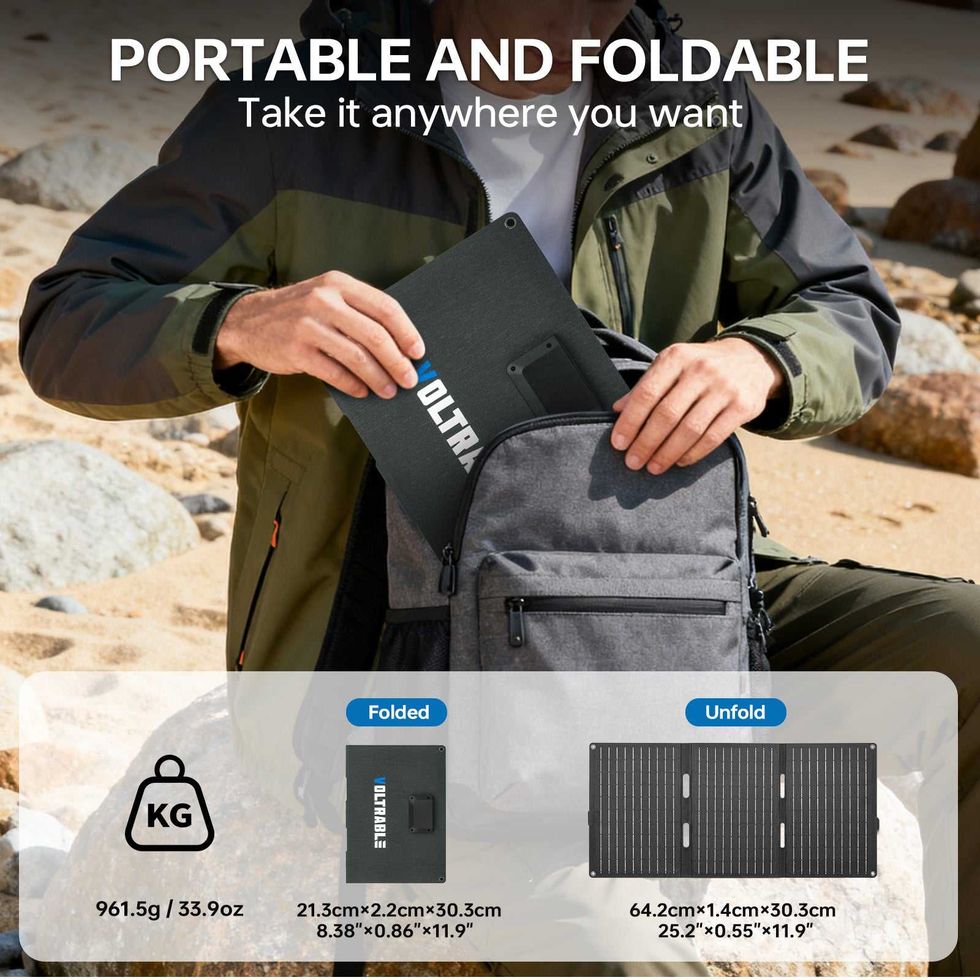



You must be logged in to post a comment.