Trump Must Absolutely Love Solar Panels, Because They Help Farmers – CleanTechnica


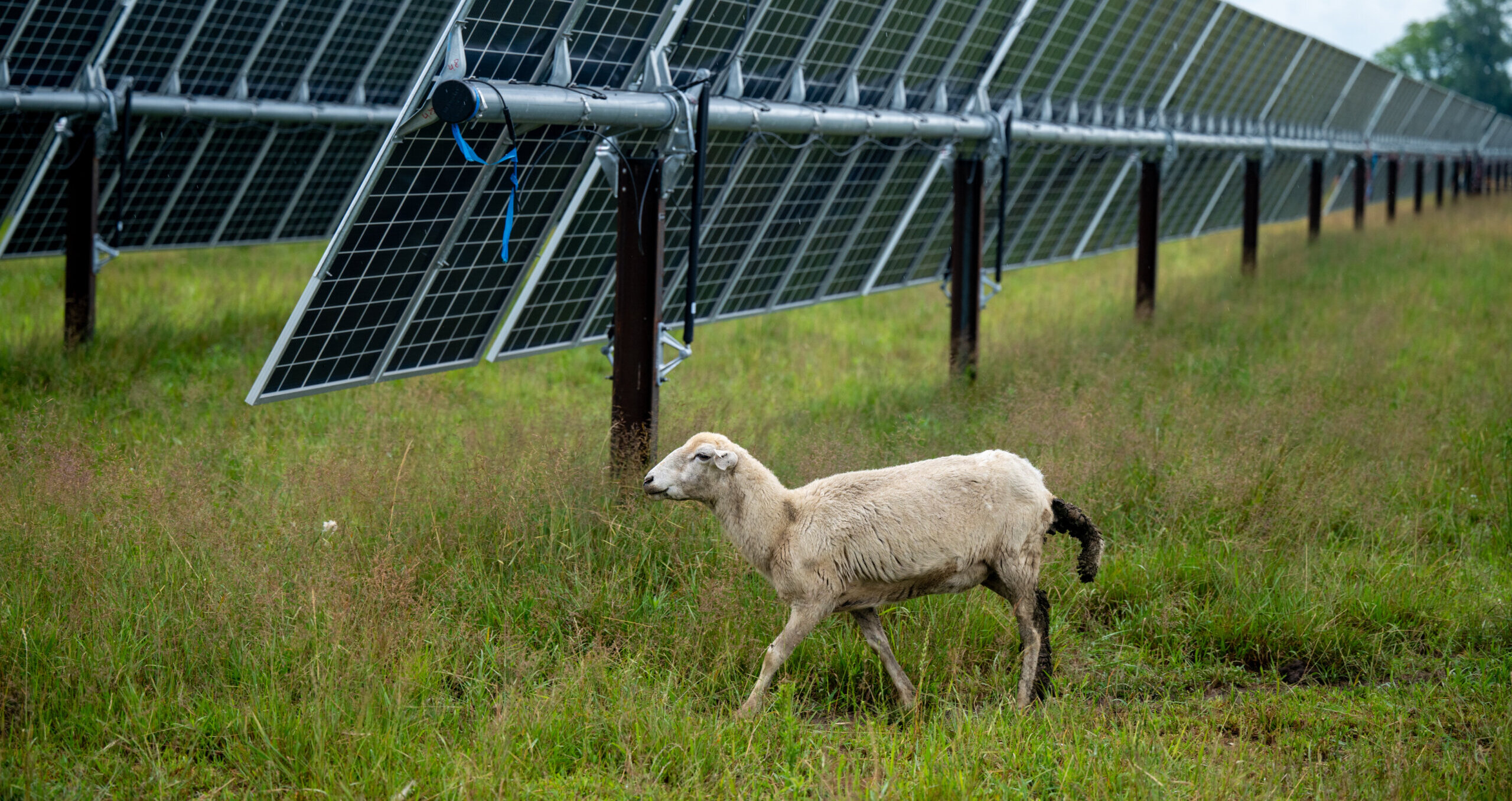
US President Donald Trump is pulling out all the stops in a supposed attempt to save farmers from the high cost of fuel, but he’s shooting at the wrong target. Instead of wheedling a measly few shiploads of diesel from Russia he should be working to help farmers take advantage of new cash crop opportunities in the agrivoltaic movement. Agrivoltaics is where farmers get solar panels and — oops! We lost him at solar panels. Oh, well…maybe Trump doesn’t like farmers after all…
CleanTechnica has been following the agrivoltaic movement since 2017, when researchers began to compile evidence that arrays of solar panels can be designed to make room for grazing animals and crops, enabling farmers to continue using the land for agriculture. Scaleup has been slow, but indications of a breakthrough began to surface in 2022 when the firm Doral Renewables broke ground on the 1.3 gigawatt Mammoth solar power plant spread among land leased from more than 65 families in Starke and Pulaski counties, in the northwest region of Indiana (see more agrivoltaic background here).
The project was constructed in phases. With the final 900 megawatts taking just 18 months to build, Mammoth checks the speed-to-power box demanded of today’s surging thirst for more electricity.
“In the world of economic development right now, every project is looking for speed to electrons. With demand for electricity skyrocketing, we need every electron we can get on the grid,” Indiana Secretary of Energy Suzanne Jaworowski enthused in a press statement marking the start of commercial operations for the 900-megawatt phase on October 7.
While solar panels take some space from agriculture, other opportunites emerge. By the time the first 400 megawatts were commissioned, Mammoth was playing host to 2,000 head of grazing livestock including sheep, donkeys, alpacas, and small pigs called kunekunes. The grazers serve as natural vegetation managers, keeping plants from overgrowing the solar panels while paring down the use of diesel equipment needed for mowing.
Jaworowski was also among those emphasizing that solar power is a land preserver. Unlike other forms of real estate development, solar power plants require minimal surface disruption. Once the solar panels are removed, the land can be returned to farming if desired. “We want to create an energy infrastructure that will draw economic development and do it in a way that preserves our way of life and our agricultural environment. This project is a great example of that,” Jaworowski emphasized.
Perhaps Jaworowski could have a conversation about that with US Secretary of Agriculture Brooke L. Rollins, who somehow got the notion into her head that solar power plants are destroying farmland.
On the other hand, never mind. In addition to preserving land in northwest Indiana from destructive forms of real estate development, the Mammoth project has also made a major contribution to the state’s manufacturing sector. Solar panels require racking systems and other hardware, and the Indiana steel industry produced 20,000 tons of steel for these elements of the project.
Doral has stated that it will continue exploring agrivoltaic opportunities in the Mammoth project, “Among others, the company is exploring specialty crops, sheep and cattle grazing,” the firm notes.
Doral is also informed by another subset of the agrivoltaic field, in which solar power plants double as native plant restoration and habitat conservation projects. The firm’s 1.3 gigawatt Vista Sands solar power plant in Wisconsin, for example, received support from conservation groups including the Audubon Society for partnering in a connected grasslands conservation project on private lands.
Conservation groups have also pointed out that the Vista Sands project will enable more than 50 wells to shut down, conserving water in a stressed area while sharply reducing the chemicals leached from fertilizers and insecticides. Doral additionally cited an engineering report indicating that Vista Sands would contribute public health and ecosystem benefits of $630 million in its first year of operation alone.
Work on Vista Sands will reportedly commence now-ish, if it hasn’t done so already. Meanwhile, back in Indiana, Doral has joined an agrivoltaic partnership led by Purdue University aimed at making the case for solar panels on farmland even better.
Under the umbrella of the newly formed Midwest Agrivoltaics for Resilient Communities, the partners are focusing on the energy security angle. “MARC is focused on the transformative potential of agrivoltaics – harvesting food and energy on the same land – to enhance the economic resilience and power security of rural Midwestern communities in the face of severe weather,” Purdue summarizes.
“Producing both food and energy locally can help diversify and stabilize landowner income, reduce power outages, and ultimately create a more prosperous rural Midwest,” the school adds.
“When hail ruins a harvest, heat strains livestock, or windstorms cut electricity, farmers and their communities are hit hard. Our goal is to understand how agrivoltaics can make our nation’s rural communities more resilient and prosperous,” explains Dr. Dan Chavas of Purdue, who holds the post of principal investigator on the project.
For its contribution to MARC, Mammoth has staked out a demonstration zone for the exclusive use of research activities, including robotics testing and advanced monitoring systems as well as crop trials. The project also engages the solar tracker firm Nextpower  (formerly Nextracker) and the utility NiSource.
Somehow the MARC project escaped the Trump chopper, having received funding from the National Science Foundation at its launch. Other federal support for farm-based solar power practically vanished, though, when Secretary Rollins wrote new rules practically shutting farmers out of the low-cost loans and grants that used to support rural solar projects under the longstanding REAP (Rural Energy for America) program.
Or not, as the case may be. Last month two environmental organizations, the Environmental Law & Policy Center and Earthjustice, sued Rollins and the Agriculture Department over the new rules. In addition to shutting down the future solar pipeline, the new rules also retroactively deny payment to existing loan and grant recipients.
“USDA has imposed unlawful anti-solar eligibility criteria on REAP while abruptly changing the rules of the program such that farmers and rural small businesses across the country have been individually stuck with tens of thousands of dollars of unexpected expenses,” the two organizations charged.
Will Rollins back down? Stay tuned…
Photo: The agrivoltaic movement combines solar panels with agriculture, providing farmers with new opportunities to improve their financial situation at a time of skyrocketing fuel costs (cropped, courtesy of Doral Renewables).
CleanTechnica’s Comment Policy
Tina has been covering advanced energy technology, military sustainability, emerging materials, biofuels, ESG and related policy and political matters for CleanTechnica since 2009. Follow her @tinamcasey on LinkedIn, Mastodon or Bluesky.
Tina Casey has 4334 posts and counting. See all posts by Tina Casey

source

Posted in Renewables | Leave a comment

SolaX Power targets lower electricity costs for African businesses with integrated energy solutions – Green Building Africa


Commercial and industrial businesses can use solar and battery storage to manage electricity costs while maintaining reliable operations, according to SolaX Power.
Electricity bills can reflect not only the amount of energy a facility consumes, but also its highest demand during measured intervals and the time of day that power is used. For sites with sharp demand peaks, time based tariffs, limited solar exports or growing electric vehicle charging loads, these factors can make costs difficult to control.
Related news: SolaX Power wins TÜV Rheinland “All Quality Matters” award for excellence in utility string inverters
SolaX says its integrated commercial and industrial offering brings together photovoltaic systems, energy storage, hybrid inverters, energy management and electric vehicle charging. The combination is designed to help businesses control when electricity is generated, stored and consumed.
Storage for demand and tariffs
Battery storage can discharge during periods of high demand to reduce the amount of power a site draws from the grid. It can also store electricity when prices are lower or solar generation is abundant, then supply power when it is more valuable.
The company’s ESS TRENE liquid cooled system is specified with 261 kWh of storage and 125 kW of output, with peak output of 137.5 kW. SolaX says the system uses lithium iron phosphate cells and liquid thermal management, with cell temperature differences controlled below 3°C.
For sites seeking an air cooled option, SolaX lists an ESS TRENE configuration rated at 100 kW and 215 kWh. The company says the system includes an IP55 rated cabinet, modular architecture and support for time of use scheduling.
The appropriate system depends on a facility’s load profile and electricity tariff. Businesses need to assess both the power required to manage short demand peaks and the energy needed to sustain discharge for the duration of those peaks.
Using more onsite solar
Where grid export is restricted or poorly compensated, storing excess midday solar generation can help businesses use more of the electricity they produce. The stored energy can then be used later, reducing purchases from the grid.
SolaX’s X3 AELIO hybrid inverter is designed to coordinate solar generation and battery storage across different operating modes, including self-consumption and peak shaving. The company says the inverter is ready for virtual power plant applications and can switch between on grid and off grid operation in less than 10 milliseconds.
Its 49.9 kW model is specified with up to 200% PV input, a maximum power point tracking voltage range of 160 to 950 V, and multiple trackers. These features are intended to accommodate commercial rooftops with different orientations or partial shading.
Coordinating electric vehicle charging
Electric vehicle charging can add to a site’s peak demand, particularly when several vehicles charge at the same time. SolaX says coordinated charging can prioritise available solar power, use batteries to smooth short term demand and schedule grid charging for lower cost periods.
The company presents its solar, storage and charging technologies as an integrated system, rather than separate assets. Actual savings will depend on each site’s load profile, tariff, export arrangements, equipment configuration and control settings.
SolaX recommends assessing interval electricity data and tariff rules before sizing a system. Businesses should also plan for export limits, backup requirements and possible future additions such as more solar capacity, production equipment or vehicle chargers.
Author: Bryan Groenendaal
For enquiries on the African continent, contact Kendall at SolaX Power South Africa: 


October 7, 2026
September 5, 2026
September 21, 2026
September 23, 2026
September 3, 2026
September 25, 2026
Disclaimer | Privacy Policy | Terms & Conditions | Returns Policy | Intellectual Property | Cookie Policy
© 2019 – 2026 GBA Digital Media Group. All Rights Reserved
Website Design | Website Maintenance
Copyright Green Building Africa 2026.

Subscribe to our weekly Top 5 Stories
"*" indicates required fields

source

Posted in Renewables | Leave a comment

Colorado researchers grew the world's most expensive spice on rooftop solar panels; harvested twice the o – The Times of India

source

Posted in Renewables | Leave a comment

Enel Group Tokenizes Solar Panels on Algorand, Boosting – Cryptonews.net

Enel Group, one of the largest energy companies globally, has announced plans to tokenize solar panels using Algorand’s blockchain. This partnership, highlighted by the CryptoTwitter commentator @Algorand, emphasizes the growing role of blockchain in sustainable energy solutions. The initiative aims to enhance Algorand’s ecosystem over the next five years, focusing on sustainability and scalability.
The broader crypto market is currently displaying mixed signals, with various assets showing fluctuating momentum. Algorand’s collaboration with Enel Group could signify a pivotal shift in how energy companies utilize blockchain technology for sustainability. This move not only showcases Algorand’s capabilities but also positions it as a key player in the green energy sector, potentially attracting more institutional interest.
Currently, Algorand’s trading volume remains at 0, indicating a lack of immediate market activity surrounding this announcement. However, the excitement generated by Enel Group’s tokenization initiative could lead to increased engagement in the near future. As the project develops, traders will be keen to monitor any shifts in market dynamics that may arise from this partnership.
Algorand serves as a high-performance blockchain designed for decentralized applications and financial products. Enel Group, a multinational energy company, is leveraging this technology to enhance the efficiency and transparency of solar energy initiatives, falling under Algorand’s jurisdiction for innovative energy solutions.
Traders should keep an eye on how this partnership unfolds, particularly regarding Algorand’s adoption in the energy sector. Potential follow-through could include increased trading volume and interest from other enterprises looking to utilize blockchain for sustainability. Risks may arise if the market response does not meet expectations, but the long-term implications for Algorand’s ecosystem remain promising.

source

Posted in Renewables | Leave a comment

Darlington County changes solar, wind rules amid Hartsville concerns – WPDE

Now
68°
Mon
82°
Tue
83°
by Alexis Cooper
Darlington County leaders have voted to amend the county’s ordinance regulating solar energy systems and wind farm facilities as a proposed 417-acre solar farm draws opposition from nearby Hartsville residents.
Residents in the Deer Run and Clyde Road areas have spoken out against Palladium Energy’s proposed Stripe Solar project, raising concerns about its potential impact on their rural community, including the landscape, wildlife and property values.
“County, you have been chosen for such a time as this. Will you protect our families, our homes, our neighborhood? Or will you protect the profits of an outside developer?” one Hartsville resident asked.
Another resident questioned whether the potential tax revenue from the project would outweigh its impact on the surrounding neighborhood.
“We must look beyond the immediate tax revenue and ask the ultimate question. Is it really worth it to the county to place an industrial site in the middle of an established neighborhood instead of perhaps a more appropriate location,” the resident said.
READ MORE: SC Senate candidates to face off in debate as early voting nears
The ordinance amendment increases setback requirements and changes screening standards for solar energy developments. It also establishes financial requirements intended to help cover the cost of removing facilities at the end of their useful lives.
Under the amendment:
The setback and screening provisions are intended to establish greater separation and visual barriers between solar facilities and surrounding properties.
While nearby residents hope the revised requirements will provide additional protections, some landowners involved in the proposed solar project argue that changing the rules could jeopardize investments and commitments made under the previous ordinance.
One proposed solar site lessor said the project has been in development for more than two years.
“As a landowner, we have certain rights to do with our property what is lawfully allowed. This ordinance change is threatening that ability,” the landowner said, adding that changing the requirements could jeopardize the project.
Another landowner also questioned whether it would be fair to apply the new requirements to projects already in development.
“Switching the rules mid game is hardly fair to those already in the process,” the landowner said.
The landowner argued that the county should maintain the previous rules for projects initiated under those requirements and apply the new ordinance to future developments.
Questions remain about how the amendments will affect solar and wind projects already in the planning or negotiation stages.
ABC 15 reached out to Darlington County leaders for clarification on how the changes could apply to those projects. A response was pending at the time of publication.
Meanwhile, residents in the Deer Run and Clyde Road areas say they hope the revised requirements will offer greater protection for their neighborhood.
Last month, county leaders also rejected a proposed nine-month moratorium on new solar and wind energy projects.
ABC 15 will continue to follow developments involving solar energy and wind projects in Darlington County.
2026 Sinclair, Inc.

source

Posted in Renewables | Leave a comment

Waterless solar cleaning robots tackle panel maintenance challenges in India – Mjengo Hub

India’s rapidly expanding solar energy sector, which now exceeds 168 gigawatts of installed capacity, faces a persistent environmental challenge: keeping panels free of dust in arid regions.
Accumulated grime on photovoltaic cells creates a physical barrier to sunlight, causing power generation to drop by 20 to 30 percent if panels are left uncleaned.
Maintaining these installations through traditional manual washing requires huge quantities of water, consuming up to 24,000 liters per megawatt for a single wash cycle.
Across India’s vast solar footprint, a single nation-wide water cleaning cycle could use over 4 billion liters of water, an amount equivalent to the combined daily water needs of major metropolitan areas like Delhi and Bengaluru.
To eliminate this reliance on water, Coimbatore based startup Solavio has engineered autonomous robotic cleaning devices.
Models such as the Ecobot traverse solar module arrays directly, using an anti-static microfiber cleaning system powered by friction and targeted airflow to remove surface dust.
Operating on onboard lithium batteries, the portable units travel across panels at speeds up to 0.3 meters per second, adjusting velocity based on dust density.
Third-party testing across 10,000 cleaning cycles confirmed that repeated robotic sweeping does not cause surface abrasion or damage photovoltaic modules.
With nearly one thousand units deployed across India and the Middle East, waterless automation offers a sustainable pathway to optimize solar output while conserving vital water resources.
Stay up to date on the editors’ picks of the week.
Posts from the Mjengo Hub community
Mjengo Hub is Kenya and East Africa's premier built environment information network, tracking infrastructure projects, private developments, construction technology, site safety, built history, industry insights, and news. From Africa to the World
Get weekly project information and industry updates directly in your inbox.
© 2026 Mjengo Networks. All rights reserved.
We would like to send you breaking news, alerts, latest updates and expert insights.

source

Posted in Renewables | Leave a comment

A French company raised 5,184 solar panels 16 feet over a Normandy dairy pasture, and when the open field nearby dried out in July, the grass underneath stayed green and on hot days the cows in their shade grazed until noon while the herd in the sun head – Autonocion.com

Luis Reyes
Oct 11, at 8:00am ET
If you’re American, the word Normandy probably makes you think of D-Day. In France, the region’s arguably just as famous for its cows. Normandy butter, cream and Camembert all start out as grass, and that grass stays green because, well, it rains a lot in Normandy.
So it’s a bit of a jolt to hear that a pasture down in the hedgerow country south of the D-Day beaches went brown and stopped growing this summer. TSE, a French solar company, built a canopy of solar panels over part of a farm in Souleuvre-en-Bocage. In results published on September 17, the company says the 14.8-acre open pasture it uses for comparison was “completely unproductive and dried out” from July on. The 7.4 acres under its 5,184 panels kept growing and were still green at the end of August.
The cows noticed too. From the first heat waves in May, the company says, the herd in the open field showed signs of stress while the herd under the canopy lay around calmly. On hot days, the open-field cows start heading back to the barn at 9:30 a.m. The shaded ones stay out until noon, their usual time to come in. So the cows in the shade get a normal morning, and the ones in the sun give up as much as two and a half hours of grazing.
To me, that barn schedule is the most interesting thing in the whole release, because it’s basically the cows voting with their feet.
Yoann Bizet, the farmer who works the land under the canopy, has a pretty simple answer. Once it gets past 68 degrees, he says, the herd in the open field just stands at the gate waiting to be let back into the barn, while the cows under the panels handle the heat a lot better. The company ran an almost word-for-word version of that line from him last fall, so I’d treat it as something he’s seen over more than one summer.
If you’re thinking 68 degrees sounds like a perfectly nice day, you’re right. For you, anyway. A cow runs a lot hotter. Its digestive system is basically a big fermentation tank, and the University of Minnesota Extension points out that digestion and milk production both throw off heat, so a cow’s already warm before the sun gets involved. The extension service says mild heat stress generally kicks in for dairy cows around 72°F at 50 percent humidity, and high-producing cows can start feeling it at 65°F, even in a well-ventilated barn. Humidity drags that line lower, and Normandy isn’t exactly short on humidity.
These are dairy cows, too, and that raises the stakes. Back when TSE was raising money from local residents to build the canopy, it said the farmer had stopped putting his 130 milk cows out to pasture at all, because heat and long dry spells were hurting the grass, the cows’ comfort and how much milk they gave. The canopy was pitched as a way to get them back out on grass.
Now, before you picture some kind of magic grass machine, the company’s results from the previous two seasons say the shaded pasture and the open one grew roughly equal amounts of grass over a full year. The gap opens up when it gets dry. Shade cuts how much sun hits the ground and how much water bakes out of the soil, so the grass under the panels doesn’t brown out as fast. It’s why the strip of lawn in the shade of your house stays green in August after the rest of the yard has gone crispy.
No spam. Unsubscribe anytime. Privacy policy (opens in new window)
The September release also covered a cornfield in eastern France we wrote about last month, where corn under a canopy like this one got through the drought with 19.6 percent more dry matter than the open control plot.
Bizet’s said that during hot spells he was harvesting close to twice as much dry forage under the canopy as in the open, but I haven’t seen any tonnage published to back that up. The company’s put out a quality number, though. Forage cut under the canopy last year came in with 15 to 47 percent more protein than forage from the control pasture, with the gap depending on the time of year. More protein in the grass generally means less of it a dairy farmer has to buy in a bag. Oregon State saw something similar with sheep, where the grass under its panels came in thinner but richer and the lambs put on just as much weight.
All the while, the canopy’s making electricity. Its panels add up to 2.9 megawatts, but that’s peak capacity, meaning what they can put out in full sun. Once you factor in nights and Normandy’s clouds, the company puts the site’s output at about 3.59 million kilowatt-hours a year, roughly a seventh of what it’d make running flat out around the clock. By the U.S. Energy Information Administration’s figure for what an average American household uses, that’s still enough for about 330 homes.
The panels sit on motorized mounts that tilt them through the day, and they’re steered depending on the weather. So the shade doesn’t sit in fixed stripes from morning to night. It drifts across the pasture as the panels turn.
The lowest point of the structure is 16.4 feet off the ground, and each row is about 89 feet wide, so most farm machinery on the market can get underneath. That’s frankly a lot more headroom than any cow needs, but the haying equipment has to fit under there too. TSE says the posts holding it all up take about 0.5 percent of the ground, so nearly all of those 7.4 acres are still pasture.
It’s a very different kind of shade from what you get with the vertical panels Rutgers is using in a New Jersey cattle pasture. Panels standing on edge throw long shadows early and late in the day and hardly any around lunchtime. A hot cow wants pretty much the opposite. A roof more than 16 feet up puts its shade more or less straight down at midday, and if I were a cow, I know which one I’d pick.
I’d love to tell you.
But behavior notes are all the release has on the cows. TSE hasn’t put out milk figures from Souleuvre-en-Bocage, at least none I can find. Herd sizes are missing too, and for a release built around heat, it’s a little strange that it skips how hot it actually got on those mornings.
As for who logged the barn times, France’s livestock institute (Idele), the Normandy chamber of agriculture and the national agricultural research institute (INRAE) are all listed as partners on this site, but the release doesn’t credit any of them with the cow observations.
Keep in mind who’s doing the reporting, too. TSE built this canopy, it wants more farmers to sign up for ones like it, and it wrote the release. So I’d want to see the final forage numbers before calling the grass a clear win.
Luckily, that wait’s almost over. TSE says it’ll publish this year’s final forage results from Souleuvre-en-Bocage in October, same as every year.
Did we nail it or blow it?
Luis Reyes · Oct 7, 2026
Luis Reyes · Oct 1, 2026
Luis Reyes · Sep 23, 2026
Dave McQuilling · Oct 8, 2026
Luis Reyes · Sep 24, 2026
Olivia Richman · Sep 25, 2026
Luis Reyes · Oct 11, 2026
Olivia Richman · Oct 10, 2026
Luis Reyes · Oct 10, 2026
Autonotion is the English-language automotive editorial by Autonocion.com — car news, reviews, and industry analysis for American readers.
Other links
Company
Subscribe
Get the latest car news in your inbox:
By submitting your email you allow autonocion.com to send you news or promotions. More info

source

Posted in Renewables | Leave a comment

Research on a fault diagnosis method for photovoltaic power plants based on a dual-channel 1D-2D-CNN-BiLSTM spatiotemporal feature fusion network | Scientific Reports – Nature

Please enable JavaScript to proceed.

source

Posted in Renewables | Leave a comment

How To Properly Clean Your Solar Panels (And Why It's Important) – Yahoo Tech

How To Properly Clean Your Solar Panels (And Why It’s Important)  Yahoo Tech
source

Posted in Renewables | Leave a comment

Daviess County limits solar farm expansion with new regulations – Spectrum News

Get the best experience and stay connected to your community with our Spectrum News app. Learn More
Continue in Browser
Get hyperlocal forecasts, radar and weather alerts.
Please enter a valid zipcode.
Save
OWENSBORO, Ky. — Daviess County Fiscal Court approved two ordinances Thursday that place new limits on utility-scale solar projects, capping acreage, requiring setbacks from homes and other sensitive sites, and mandating financial guarantees for cleanup and road repairs.
The zoning text amendment to Articles 8 and 14 of the Owensboro Metropolitan Zoning Ordinance passed 3-1. Commissioner Chris Castlen voted no. The companion county ordinance creating a new chapter under business regulations for renewable energy and energy storage facilities passed unanimously. Both take effect upon publication.
Judge-Executive Charlie Castlen said residents had asked the court early in the process to ban industrial solar farms outright. He said an absolute ban is not an option under state law, so the ordinances instead establish restrictions intended to protect neighbors and public funds.
“We were asked at the very beginning to just ban industrial solar farms,” Castlen said. “We cannot do an absolute ban. What we can do is put in restrictions that are protective of our community, and that’s what we’ve tried to do.”
Under the zoning changes, which the Owensboro Metropolitan Planning Commission recommended Aug. 13, a single project’s development area cannot exceed 300 acres. Required buffer areas are excluded from that figure. No more than 1,200 acres of farmland countywide can be used for the facilities. Projects must be at least three miles apart. Equipment must stay at least 1,000 feet from residential neighborhoods, schools, places of worship, hospitals, nursing homes, county parks and public rights-of-way. Project entrances and exits must also meet a 1,000-foot setback from residential property lines. Maximum panel height drops from 20 feet to 15 feet. An 8-foot solid black fence and required landscaping must be installed before construction begins. Developers must provide an irrevocable letter of credit or escrow account for screening and decommissioning.
The separate county ordinance addresses construction, operations, environmental protections and removal. It requires transportation plans, road-use agreements, stormwater controls and a letter of credit or escrow, sized by the county engineer, to cover potential road damage during construction, operation and decommissioning. Projects must include plans to limit soil compaction, control erosion and restore agricultural land. Water quality testing is required quarterly at applicable discharge points. Fire prevention and emergency response plans must be developed with local agencies, with the developer responsible for necessary equipment and annual training for responders. Decommissioning plans must be updated every three years.
Rod Kuegel, a western Daviess County farmer who is the Democratic candidate for judge-executive against Castlen in the November election, addressed the court on the cleanup provisions. He said solar projects frequently change ownership and that a letter of credit or bond may not be sufficient if the company responsible for removal is not the original developer.
“The company that builds this, even under these restrictions, may or may not be the company you’re dealing with in the end that has to clean this mess up,” Kuegel said. “These solar fields trade like commodities. And I would recommend that you look at cash in the bank on the cleanup.”
Planning staff said both ordinances contain decommissioning requirements. The new language increases the amount that must be posted and requires a letter of credit or escrow account payable to the county, with updates every three years rather than every five. The ordinances do not specify that the escrow account must be held at a local bank.
Commissioner Janie Marksberry suggested requiring any new or assigned lease to be recorded at the county clerk’s office within seven to 10 days so ownership changes are publicly documented. County counsel indicated the court could impose such a requirement, but it was not added to either ordinance Thursday.
Kimberly Demarest, who has researched solar regulations in other communities, urged the court to pass the zoning amendment now and make further changes later. She cited a national average property-value decline of about 7 percent associated with proximity to solar projects and described a home near the Haycraft solar project surrounded on four sides by panels. She also said large-scale solar removes productive farmland and affects related agricultural businesses.
Chris Castlen, the west district commissioner and Castlen’s nephew, supported the county ordinance but opposed the zoning text amendment. He said the rules should protect both property owners who host projects and neighboring landowners, as well as the character of the county’s farmland, but that additional work is needed on the zoning changes before he can support them.
“I think that what we have put together is a very good start,” he said. “But there is some more that needs to be done before I can support the changes on this second reading.”
Castlen said after the votes that the court may still revise the rules if needed. He rejected suggestions that a prior solar moratorium was timed to the election and said it was enacted once projects were under active consideration.

source

Posted in Renewables | Leave a comment

A Wyoming idea became a lifeline in Ukraine – Casper Star-Tribune

Since 2023, 268 solar panels — many hand-decorated by local students and artists – have traveled thousands of miles from Lander to Ukraine.
A group of Ukrainian children pose with a solar panel decorated by volunteers in Lander. The panel features messages – in both English and Ukrainian – that offer support to those living in a war-torn country. 

A young Ukrainian girl poses with a solar panel decorated by volunteers in Lander. The panel features messages of support like “Love and Peace” and “Glory to Ukraine.”
A group of Ukrainian residents pose with a solar panel decorated by Lander Rotary Club volunteers. The panel features messages of support in both English and Ukrainian.

Get local news delivered to your inbox!
A federal operation brought more agents and investigators to the Wind River Indian Reservation, producing a long list of charges, seizures and…
From Wyofile: ‘We are particularly disappointed by the process,’ board of commissioners writes to Burgum.
With drought straining Wyoming agriculture and fuel prices hitting consumers, the governor has temporarily loosened some rules governing what …
Seven people have been sentenced in a federal investigation that prosecutors say moved large quantities of methamphetamine from Colorado into …
Gas prices are falling nationally, but not in Wyoming. Meanwhile, oil prices have climbed back above $90 a barrel.
A group of Ukrainian children pose with a solar panel decorated by volunteers in Lander. The panel features messages – in both English and Ukrainian – that offer support to those living in a war-torn country. 
A young Ukrainian girl poses with a solar panel decorated by volunteers in Lander. The panel features messages of support like “Love and Peace” and “Glory to Ukraine.”
A group of Ukrainian residents pose with a solar panel decorated by Lander Rotary Club volunteers. The panel features messages of support in both English and Ukrainian.
© Copyright 2026 Casper Star-Tribune, 100 N. Ash Street Casper, WY 82604-2883
A Lee Enterprises, Incorporated newspaper. Majority shareholder: David Hoffmann, Hoffmann Media Group.
Terms of Use | Privacy Policy | Advertising Terms of Use | Privacy Choices | Cookie Preferences
Powered by BLOX Content Management System from bloxdigital.com.
Get up-to-the-minute news sent straight to your device.
Sorry, an error occurred.

Already Subscribed!

Cancel anytime
Account processing issue – the email address may already exist
Must be at least 8 characters, not contain repeating characters (e.g., 111), and not contain sequential numbers (e.g., 123).
Sign up with

Thank you .
Your account has been registered, and you are now logged in.
Check your email for details.
Invalid password or account does not exist
Sign in with
Submitting this form below will send a message to your email with a link to change your password.
An email message containing instructions on how to reset your password has been sent to the email address listed on your account.
No promotional rates found.

Secure & Encrypted
Must be at least 8 characters, not contain repeating characters (e.g., 111), and not contain sequential numbers (e.g., 123).
Secure transaction. Secure transaction. Cancel anytime.

Thank you.
Your gift purchase was successful! Your purchase was successful, and you are now logged in.
A receipt was sent to your email.

source

Posted in Renewables | Leave a comment

MIT Study Pushes Back On One Of The Biggest Solar Energy Myths – SlashGear

Renewable energy is a greener alternative to using fossil fuels, but it still only accounts for a small percentage of U.S. energy consumption. Solar power is itself a small fraction of that: Out of the total amount of renewable energy consumption in 2023, solar power made up only 11 percent, according to EIA data. One long-standing argument against increasing national solar capacity is that building large-scale solar farms will result in higher bills for customers, but a recent study from MIT’s CEEPR (Center for Energy and Environmental Policy Research) proved that argument wasn’t backed up by the latest data.
The study evaluated how much energy bills actually went up for consumers after different types of renewable energy were connected to state energy grids. It found that large-scale solar farms (which the study called “utility-scale”) did not increase bills, and in fact decreased them slightly on average.
Researchers argued that the decrease in costs could be put down to the fact that solar farms don’t need to have fuel piped or transported to their location, which reduces their input costs to effectively zero. This helps reduce the total operation and maintenance costs that energy providers pay, which is subsequently passed on to customers in the form of lower bills.
There are, of course, still some operation and maintenance costs to consider. There are many different ways that solar panels can break, and they’ll also need to be cleaned occasionally to keep them operating efficiently. Nonetheless, the study found that building large-scale solar farms generally resulted in lower bills for customers, and that states with the largest large-scale solar deployment saw the most pronounced drop in electricity costs.
While America’s largest solar farms lowered prices for buyers, rooftop solar panels did not have the same effect. In fact, the MIT study found that the opposite was true, and that states with higher rates of rooftop solar generation actually saw prices rise slightly.
The authors suggested that there were several reasons for this. One was that homeowners with solar panels paid very little for their electricity; in some cases, they ended up exporting more electricity to the grid than they used. This led to energy companies having to pay homeowners with solar for the power they generated, with that cost being paid for by homeowners who did not have solar panels.
Widespread rooftop solar was also associated with higher operation and maintenance costs for energy distributors, which the authors said was down to the high cost of modernizing the grid to support two-way power distribution. A large-scale solar farm can be connected to the grid in a similarly straightforward fashion to a new fossil fuel-powered plant, but rooftop solar requires operators to invest both upfront and over time to maintain a more complex system.
Aside from the potential cost benefits, there are also other benefits that utility-scale solar farms can bring. A study involving China’s largest solar farm found that soil quality improved in the immediately surrounding area, which in turn boosted the presence of plants and microbial life.

source

Posted in Renewables | Leave a comment

Floating solar panels moored for eighteen months on a reservoir in Chiba broke loose in a typhoon, piled up and caught fire that burned about 50 of its 50,904 panels – EcoPortal.net

The Pulse
Typhoon Faxai came ashore over Chiba in the dark.
Beneath the wind, more than fifty thousand solar panels lay moored flat on a reservoir.
They had floated there without trouble for eighteen months.
By daylight, the outer edge of the array had torn free.
By afternoon, black smoke was rising off the surface of the water.
What let a single torn row drag two thirds of a floating power plant down with it?
The array’s outer row sat closest to the open stretch of reservoir, where incoming gusts hit hardest. Engineers had built in resin bolt connections linking float to float, each one carrying a small share of the load the whole chain needed to resist. The ministry investigating the failure concluded that the leading cause was anchor failure, with seven anchors coming loose on the central southern end of the array during the storm.
That single failure did not stay contained. Anyone picturing a static plant should instead picture a chain reaction, because the load the lost anchors had carried did not vanish. It simply shifted to the next connection down the line.
So the bolts next in sequence took on force they were never sized for, and they failed too. After the anchors failed, the resin bolts began to collapse because the wind loads were now dissipated more unevenly, and after each collapsed bolt the loads on the adjacent ones increased, carrying the chain reaction through the array.
Once the outer row ripped loose, it lost the ballast weight that had kept it pressed flat against the water and resistant to wind uplift. With the wind-facing edge no longer ballasted against uplift, modules and floaters began to curl upward, catching more wind and drifting toward the panels still moored behind them.
Loose floats and anchored ones met and jammed together. Japanese media reported that the wind tore several modules off the project and stacked them, and firefighters said contact between loose panels and those still moored to their mounting structures overheated the modules and created the conditions for a fire. The ignition itself was never pinned down as precisely as the structural failure was.
Reports at the time described crews struggling to contain a blaze on open water, one involving electrical components rather than a building or a brush line. The fire involved around 50 panels out of the 50,904 modules covering about 44 acres of water, a small fraction of an array that had already been pulled apart by the wind.
Japan’s Ministry of Economy, Trade and Industry opened a formal investigation into the exact failure mode behind the destruction at the Yamakura Dam floating installation once the fire was out. Investigators traced the collapse to the shape of the floating island and the uneven anchor arrangement, since mooring wires connected only to the outermost floats around the perimeter, while the floats behind that fixed row were linked to each other only by resin bolts.
Because the plant had been built as one continuous raft rather than smaller linked sections, a failure anywhere could travel everywhere. The array had 112 anchors on the northern end, 107 on the western side and 133 on the eastern edge, but only 68 on the southern perimeter, where the anchors gave way. The array was ultimately ripped into three parts, with the southern sections staying roughly in place while the northern half was blown clear.
No injuries were reported from the fire or the storm that caused it. A Kyocera spokesperson said the fire was extinguished at around 5.20pm local time, hours after the typhoon itself had passed through Chiba.
Chiba was not an isolated case. Only two weeks later, a typhoon hit the Kyushu region at an average wind speed of about 90 miles per hour, destroying the 2.4 MW Shintaku Tameike floating installation, reinforcing the idea that a single continuous float was a liability in high wind. Elsewhere, floating platforms have faced gentler but still measurable pressure from the water itself, including sites where floating platforms sharply reduced light reaching the water below without raising its temperature.
Anchoring has become its own specialty since. Some newer floating platforms lean on multiple independent anchor points rather than one shared frame, the same logic behind designs where nine separate anchors spread load across a turbine instead of concentrating it.
By early 2021, roughly 16 months after the storm, the Chiba plant was being rebuilt into smaller floating islands. One island with a complex outline became several smaller ones with square shapes, which the platform supplier said avoided stress concentration and increased safety factors, though the reconstructed portion had not resumed commercial operation at that point.
The wider lesson drawn afterward was about redundancy. A working group reviewing the failure concluded that design standards should build in fail-safe margins, since the loss of only a few anchors was enough to set off a failure chain through an entire floating system.
What the Chiba fire mostly proved is less dramatic than it sounds. A plant built from thousands of small parts is only as strong as whichever connection has the least margin left, and on one September day in 2019, the reservoir found it first.
Read the whole thing?
Our sharpest reporting on energy, climate and nature — free, once a week.
By subscribing you accept our privacy policy. You can unsubscribe at any time.

The Pulse Newsletter
Once a week we send our best reporting on energy, climate and nature. No spam, unsubscribe anytime.
By subscribing you accept our privacy policy. You can unsubscribe at any time.

source

Posted in Renewables | Leave a comment

Homeowner runs two-thirds of the house on a Guardian 6000, then 2 weak spots emerge – The Cool Down

© 2025 THE COOL DOWN COMPANY. All Rights Reserved. Do not sell or share my personal information. Reach us at hello@thecooldown.com.
They said the unit has been running “full time since July.”
Photo Credit: Reddit
A homeowner’s test of using an Oupes Guardian 6000 as a daily power source has delivered an encouraging result. On sunny days, the system can keep one side of the house running around the clock.
The trial has also exposed some weaknesses. Dust has been collecting at the air intakes, and the wireless connection has been unreliable, though the homeowner said the system itself has continued supplying power.
According to a Reddit post in r/SolarDIY, the setup centers on a permitted transfer switch installed in July and 2,400 watts of solar wired in a series/parallel configuration. The Guardian 6000 has been running “full time since July” and is handling about two-thirds of the house rather than the entire home.
Instead of covering every circuit, the system serves six 20-amp, 120-volt circuits along with two 240-volt lines for mini-split heating and cooling. The homeowner wrote, “on a sunny day the Guardian is charged by noon,” and added, “I can run my side of the house off solar 24/7 as long as the sun stays out.”
Want to go solar but not sure who to trust? EnergySage has your back with free and transparent quotes from fully vetted providers in your area.
To get started, just answer a few questions about your home — no phone number required. Within a day or two, EnergySage will email you the best options for your needs, and their expert advisers can help you compare quotes and pick a winner.
After dark, heating and cooling remain a key constraint. If you need air conditioning or heat at night, the battery lasts only part of the evening before the AC units and kitchen switch back to grid power. Going solar is one of the best ways to save money on home energy, and homeowners who want to compare a setup like this with professionally installed systems can use EnergySage to get free solar installation estimates and compare quotes.
Budget has shaped the project from the start. The homeowner said the system is being built “a little at a time as funds allow,” and they expanded the solar array two panels at a time instead of buying it all at once.
Two issues became more noticeable over time. Because the fans run whenever solar input is active, the air intakes “get a bit dusty,” which raised concerns about dirt accumulating inside the unit over time. Bluetooth and wireless connections were also inconsistent, and one outage was fixed only after a brief shutdown and full disconnect.
The display problem did not stop the electricity supply, the homeowner said, and power kept flowing. In the comments, the original poster also praised the transfer switch, writing, “It’s been solid and reliable. Seems really well made,” while another commenter, discussing a different home backup setup, said, “EG4 has a great ecosystem and very nearly went with it.”
FROM OUR PARTNER
Want to go solar but not sure who to trust? EnergySage has your back with free and transparent quotes from fully vetted providers that can help you save as much as $10k on installation.
To get started, just answer a few questions about your home — no phone number required. Within a day or two, EnergySage will email you the best local options for your needs, and their expert advisers can help you compare quotes and pick a winner.
Rather than try to run the whole house at once, the homeowner focused on the most-used areas, added selected circuits to the system, and used “night mode” to shift heavier loads back to the grid.
For people considering a similar route, EnergySage can help simplify the cost comparison. With EnergySage’s help, the average person can save up to $10,000 on solar purchases and installations. EnergySage’s solar map shows the average cost of a home solar panel system by state, along with details on solar panel incentives in each state; together, these tools help homeowners get the best price for rooftop solar panels and access available incentives.
Adding battery storage to a solar setup is also one of the best ways to protect your home during outages, save money on energy, and go off-grid. Homeowners who want to compare battery options and get competitive installation estimates can explore EnergySage for information about home battery storage.
After running it full time since July, the homeowner summed up the experience, writing, “If you need occasional whole-house backup to run a few critical circuits, it’s freaking awesome. Whether it’s something you can count on as a daily driver remains to be seen.”
💡Go deep on the latest news and trends shaping the residential solar landscape
For a sense of how other solar-and-battery setups perform in real homes, these stories offer a few useful comparisons. They show homeowners using rooftop solar and batteries to get through blackouts, cut bills, and expand their backup power.
• In Australia, a homeowner said 20kW solar made blackouts invisible and produced a $545 monthly credit.
• During 90-degree summer heat, one homeowner found rooftop solar powers whole-house AC with energy left for two EVs.
• In Tennessee, an off-grid family said they secured their energy independence for decades and barely need a generator.
• Across the home battery market, next-gen alternatives can save families from blackouts without relying on Tesla.
Get TCD’s free newsletters for easy tips, smart advice, and a chance to earn $5,000 toward home upgrades. To see more stories like this one, change your Google preferences here.
© 2025 THE COOL DOWN COMPANY. All Rights Reserved. Do not sell or share my personal information. Reach us at hello@thecooldown.com.

source

Posted in Renewables | Leave a comment

More than 70% of announced U.S. solar manufacturing expansion plans yet to be financed – pv magazine Global

In the final part of the special Austin-debrief series of articles this week in pv magazine, I review the outlook for U.S. solar manufacturing capital expenditure (capex) by quarter to the end of 2027.
For reference, Part 1 of the series addressed domestic U.S. module production forecasting, capturing themes covered at the recent Solar Manufacturing USA 2026 event in Austin, Texas on 22-23 September, with Part 2 looking at cell production by quarter to the end of 2027.
The analysis underpinning the data and conclusions within each of the articles is taken directly from the new Solar Manufacturing USA Quarterly report.
The bottom-up analysis from more than 50 companies in the U.S. manufacturing space for 2027 shows that solar PV manufacturing capex is forecast to see a year-on-year decline compared to the final numbers expected for 2026 (circa. $3 billion).
U.S. solar manufacturing capex peaked in 2024 (almost $4 billion), with more than half this spending coming from just two companies; First Solar and Qcells.
The forecast for 2027 solar manufacturing capex reveals that more than 70% of the announcements made by companies over the past 12-18 months (that would have necessitated spending in 2027) are either unfunded or stranded.
Waiting in the wings however is potentially the most disruptive play ever to be seen in the history of U.S. solar PV manufacturing; Tesla’s mega-sized ingot-to-module manufacturing plans.
It is getting close to factoring in Tesla’s manufacturing capex plans to the analysis that forms the basis of the new Solar Manufacturing USA Quarterly report and indeed using the capex phasing to drive the incremental production volumes across the silicon-based value-chain in the United States.
This would appear to be the missing link in forming a credible 2030 capex and production forecast – something that the downstream buying community and the upstream equipment/materials supply side is badly in need of. Many have spent the past few years looking at interactive pins-on-maps, a trend that was started back in 2022 by U.S. trade associations and government-based portals (once the IRA was introduced) and has no shortage of variants these days.
The financing details and phasing of solar manufacturing capital expenditure ultimately hold the key to forecasting domestic U.S. productivity out to 2030 and beyond. I will return to 2030 production forecasting in the coming days, pending the ‘Tesla’ question.
Those who heard my talk at the recent Solar Manufacturing USA 2026 event in Austin, Texas on 22-23 September will recall me stating that capex is the most important aspect of solar market research and part of understanding this relates to spending cycles.
End-markets can grow during capex downturns, but a capex downturn is likely a symptom of other industry factors that could have longer-term implications.
Figure 1 Excluding Tesla and other upside PV manufacturing capex in 2027, investments in domestic U.S. PV manufacturing are still adapting to the initial post-IRA flurry that was loaded into 2024 as First Solar and Qcells committed record levels of capex to the U.S. sector.
Since 2025, solar manufacturing capex in the United States has been going through a minor downturn cycle. This is a consequence of two factors.
First, the capex by First Solar and Qcells, that was loaded mostly into 2024, was significant in comparison to the overall spending trends of the 20-30 companies that were investing in the U.S. manufacturing space at this point. The loading into 2024 can therefore be regarded as a one-time hit, or an annual outlier. Had the spending phases from either or both companies been spread more into 2023 or 2025, the peak seen in Figure 1 for 2024 would not have been so pronounced.
Second, outside the capex from First Solar and Qcells, there is no other ‘major spender’ at the billion-dollar annual level. Therefore, although the number of manufacturing sites associated with solar manufacturing capex in the United States in the past few years now exceeds 60, the total capex figures for 2025, 2026 and 2027 are all well below the peak seen in 2024.
But the big issue for 2027 is not the specific capex number being forecast. It is driven by Tesla. When will spending start for real? How long does the company plan to keep Chinese equipment in warehouses?
No longer ‘if’, the changes are coming soon. Forecasting U.S. solar capex and production is set to move into unchartered territory
To register your interest in the Solar Manufacturing USA Quarterly report, please send an email to: [email protected]
This content is protected by copyright and may not be reused. If you want to cooperate with us and would like to reuse some of our content, please contact: [email protected].
Comments
Please login to comment
The new issue of pv magazine Global is out now!
Available in print and digital – get your copy today!
Monday, October 12, 2026
10:00 am – 11:00 am CEST, Berlin, Paris, Madrid
pv magazine USA hosts its multi-day virtual event on U.S. solar and energy storage, covering domestic manufacturing, distributed energy and the growing role of solar-plus-storage in meeting AI-driven power demand.
pv magazine hosts its four-day virtual event on European solar and energy storage, exploring market opportunities, solar-plus-storage business cases, technical quality, and cybersecurity in the years ahead.
pv magazine Session returns to NetZero Milan as Knowledge Partner, organizing and moderating a two-hour conference on the evolving global solar supply chain.
Get your ticket at a discounted rate with pv magazine.
Join pv magazine for an expert session exploring quality, technology and the challenges of scaling India’s solar industry.
Lunes, 19 de octubre de 2026
16:00 – 17:00 CEST, Berlín, París, Madrid
Friday, October 23, 2026
11:00 am – 12:00 pm CEST, Berlin, Paris, Madrid
Monday, October 26, 2026
10:30 am – 11:30 am CEST, Berlin, Paris, Madrid

You have no items in your basket.

source

Posted in Renewables | Leave a comment

Student-built roof and local industry collaboration support solar training at Okanagan College – PentictonNow

Want to contribute?
Access PentictonNow using your Facebook account, or by entering your information below.

OR
Privacy Policy
A collaboration among Okanagan College (OC) students, instructors and local industry could be described as a “bright light” for the sector.
The OC-led partnership creates new hands-on learning opportunities for people preparing to work in the renewable energy sector, including preparing them with the advanced skills and knowledge to install solar systems.
Three students completing the College’s 30-week Carpenter Foundation program worked with their instructor to build an eight-by-12-foot mock roof capable of supporting four solar panels.
<who>Photo Credit: Contributed</who>An OC Carpenter Foundation student installing solar panel on mock-roof.
The new structure complements an asphalt-shingle mock roof built last year. Together, the two structures allow solar students to practice precision installation methods on both metal and asphalt-shingle roofing — surfaces they are likely to encounter on residential and commercial job sites.
Hometown Roofing Ltd. of Penticton contributed more than $500 in materials, labour and industry instruction over two phases of the project. The company previously donated asphalt shingles and provided staff to install them. This year, it supplied metal roofing and shared instructions with the carpentry students on proper installation methods so they could complete that section themselves.
“As a local company, we believe in supporting practical training that strengthens our community and helps prepare the next generation of skilled tradespeople,” said Robin Watson, owner of Hometown Roofing Ltd. “We’re proud to contribute materials that will give Okanagan College students specialized experience installing solar panels on different types of roofing.”
The project also gave the carpentry students an opportunity to learn about another part of the building industry while creating a training resource that will serve future solar students.
“The carpentry students learned that the trade involves more than working with wood,” said Nelson. “They also had an opportunity to try their hand at metal roofing. We appreciate Hometown Roofing for supplying both the materials and the knowledge needed to install it properly.”
The mock roof is being used for Okanagan College’s Solar Photovoltaic Systems Introduction and Installation microcredential, which began this month at the Penticton campus.
<who>Photo Credit: Contributed</who>The Okanagan College Penticton campus
The program combines instructor-led evening classes delivered online, self-paced study and in-person practical training. Its flexible format is intended to make the program accessible to working adults who want to build new skills without stepping away from full-time employment.
“Having a mock roof with both asphalt shingles and metal roofing makes the training much closer to what installers actually see in the field,” said Forrest Tymchuk, solar PV instructor at Okanagan College and project manager with Swiss Solar Tech Ltd., a locally owned solar energy company that has served the Okanagan for more than 25 years. “Students can practice safe, proper installation techniques in a controlled environment and build practical skills they can take directly to the job site.”
The introductory microcredential provides training in solar fundamentals and installation and is a prerequisite for the College’s Solar Photovoltaic Systems for Professionals microcredential. The professional program, intended specifically for Red Seal electricians, begins on the evening of Nov. 2, 2026, and is also delivered in a hybrid format.
“Okanagan College is providing students with comprehensive, up-to-date training in solar photovoltaic installation,” said Roger Huber, owner of Swiss Solar Tech Ltd. “Graduates understand current equipment, installation practices, safety requirements and industry terminology, and they have an opportunity to apply that knowledge through hands-on training. They still need to build field experience, as every new installer does, but they arrive with the knowledge and practical preparation to begin contributing on the job. For an employer, that makes hiring and initial workplace training considerably easier.”
There are funded seats still available for the Solar Photovoltaic Systems Introduction and Installation microcredential and latecomers are welcome. To find out more, contact Warren Edis at [email protected] or 250-460-0455.
For the professional program details and registration information, click here.

source

Posted in Renewables | Leave a comment

Australian homeowners ditch bottled gas for induction, and say they'll never go back – The Cool Down

© 2025 THE COOL DOWN COMPANY. All Rights Reserved. Do not sell or share my personal information. Reach us at hello@thecooldown.com.
“My chef husband, who used gas all his life, says he will never willingly go back to gas.”
Photo Credit: iStock
A homeowner in Victoria, Australia, had nearly finished switching everything from bottled gas to electric and solar, but their kitchen was the last holdout. 
The response was overwhelmingly in favor of the move — with the main caveat being a short adjustment period.
They wondered whether replacing the integrated gas stove and oven was worth it. “Are you happy with the change?” they asked on Reddit. 
The homeowner chose induction over a conventional electric stove. Induction is popular because it uses electromagnetism to heat pans, making it safer, more energy-efficient, and easier to clean when food sticks to a hot burner.
Want to go solar but not sure who to trust? EnergySage has your back with free and transparent quotes from fully vetted providers in your area.
To get started, just answer a few questions about your home — no phone number required. Within a day or two, EnergySage will email you the best options for your needs, and their expert advisers can help you compare quotes and pick a winner.
The reaction was largely enthusiastic. 
“There’s a learning curve, but it’s so good. My chef husband, who used gas all his life, says he will never willingly go back to gas,” one commenter wrote. 
Another person who had already moved off bottled gas said they were “kicking myself for not doing it earlier.” 
Others recommended trying the technology before committing fully. One suggested starting with a portable induction cooker.
FROM OUR PARTNER
Want to go solar but not sure who to trust? EnergySage has your back with free and transparent quotes from fully vetted providers that can help you save as much as $10k on installation.
To get started, just answer a few questions about your home — no phone number required. Within a day or two, EnergySage will email you the best local options for your needs, and their expert advisers can help you compare quotes and pick a winner.
Pairing electric appliances with solar panels is one of the best ways to save on home energy. For homeowners on a similar path, EnergySage can help you get free solar installation estimates and compare quotes.
One commenter said a portable induction plate plus an air-fryer oven had reduced their need for a conventional cooker so much that the full-sized stove sat unused “for six months” before they removed it.
A portable induction burner is a low-risk, cost-effective way to start testing the technology. One commenter said it helped them sort through their cookware, set aside pans that wouldn’t work, and replace one with a $20 wok-shaped pan from an op shop.
The replies also included practical tips: Induction can heat faster than people expect, and built-in units may run more quietly than portable ones.
💡Go deep on the latest news and trends shaping the residential solar landscape
For homeowners eyeing a broader solar path, EnergySage adds another money-saving step. With EnergySage’s help, the average person can save up to $10,000 on solar purchases and installations, and EnergySage’s solar map shows the average cost of a home solar panel system on a state-by-state level, along with details on solar panel incentives for each state. Together, these resources can help homeowners get the best price for rooftop solar panels and access available incentives. 
Adding battery storage to a solar setup is one of the best ways to protect your home during outages, save on energy costs, and go off-grid. Homeowners can explore EnergySage for information about home battery storage options, including competitive installation estimates.
As for induction, the overall verdict was simple: “Just do it. It’s great.”
These stories explore why many people are switching from gas to induction and other electric appliances. They cover real-world switchovers, how induction works, and the health concerns driving the change.
• One homeowner saw their gas bill disappear a month after switching to induction.
• How an induction stove works helps explain its speed and control.
• Concern over the health risks associated with gas stoves keeps driving more families to switch.
• For buyers comparing options, what an induction stove is often matters less than how efficiently it cooks.
Get TCD’s free newsletters for easy tips, smart advice, and a chance to earn $5,000 toward home upgrades. To see more stories like this one, change your Google preferences here.
© 2025 THE COOL DOWN COMPANY. All Rights Reserved. Do not sell or share my personal information. Reach us at hello@thecooldown.com.

source

Posted in Renewables | Leave a comment

F-150 Lightning owner says 9,000 miles of home charging cost the same as old monthly gas bill – The Cool Down

© 2025 THE COOL DOWN COMPANY. All Rights Reserved. Do not sell or share my personal information. Reach us at hello@thecooldown.com.
“$450 was my monthly gas bill, and I’ve stretched that into a full year’s worth of driving.”
Photo Credit: iStock
One Ford F-150 Lightning driver said the truck’s power costs over one year matched what gasoline used to cost for just one month.
Replies to the post on the r/F150Lightning subreddit showed that many electric vehicle owners have reaped similar savings.
“Had my home charger installed almost one year ago exactly. Roughly 9k miles of usage in that time, only ever fast-charged 1x since then,” the original poster said, sharing an image of their charging costs. “Coming from the Raptor I owned previously to this, $450 was my monthly gas bill, and I’ve stretched that into a full year’s worth of driving.”
Commenters shared their own experiences and noted that outcomes depend heavily on utility prices. “My monthly bill went up by roughly the cost to fill up the Prius I had before my Lightning…and I’d fill up twice a month,” one wrote.
Want to go solar but not sure who to trust? EnergySage has your back with free and transparent quotes from fully vetted providers in your area.
To get started, just answer a few questions about your home — no phone number required. Within a day or two, EnergySage will email you the best options for your needs, and their expert advisers can help you compare quotes and pick a winner.
Others said their savings were not nearly as dramatic. 
“Unfortunately where I live in Massachusetts that would be $1,500 for me and my electric rates,” someone else said. “But still cheaper than gas for an F-150.”
For drivers hoping to cut charging costs, going solar is one of the best ways to save money on home energy. Homeowners can use EnergySage to get free solar installation estimates and compare quotes.
“About 40 miles round trip cost me $0.97. In my previous ICE Ram, $8 with gas at $4 a gallon. Now…..” another user explained.
FROM OUR PARTNER
Want to go solar but not sure who to trust? EnergySage has your back with free and transparent quotes from fully vetted providers that can help you save as much as $10k on installation.
To get started, just answer a few questions about your home — no phone number required. Within a day or two, EnergySage will email you the best local options for your needs, and their expert advisers can help you compare quotes and pick a winner.
One person said they averaged 2,200 miles per month after installing a charger in mid-April, while another said their costs were $85.76 per month.
Someone else noted they paid 2.8 cents per kilowatt-hour for six months and 3.8 cents after that. A payout from a Canadian carbon credit program led them to conclude, “I’ve made money charging.”
The discussion also touched on ways to monitor charging, with one commenter saying an Emporia energy monitor system could track the usage of any charger. The consensus was that EV drivers save big.
“Electric haters are out there; they aren’t very bright,” one user wrote.
💡Go deep on the latest news and trends shaping the residential solar landscape
Solar energy at a good price can make the math even more favorable. With EnergySage’s help, the average person can save up to $10,000 on a solar purchase and installation. 
EnergySage’s solar map shows the average cost of a home solar panel system by state as well as details on solar panel incentives in each state. Together, those resources can help homeowners get the best price for rooftop solar panels and access available incentives.
Adding battery storage to a solar setup is one of the best ways to protect your home during outages, save money on energy, and go off-grid. Homeowners who want to pair backup power with a home charger can explore EnergySage for information about home battery storage options, including competitive installation estimates.
How EV charging and ownership costs compare with those of gas vehicles is a common area of observation and study.
• Across the U.S., drivers found home EV charging costs 5 to 6 cents per mile.
• In the Bay Area, one motorist found their EV cost 7.9 times less than a gas vehicle.
• For many households, the cost benefits of owning an EV extend far beyond fuel.
• After 10 years driving, owners found maintaining an EV costs far less than it does for a gas vehicle.
Get TCD’s free newsletters for easy tips, smart advice, and a chance to earn $5,000 toward home upgrades. To see more stories like this one, change your Google preferences here.
© 2025 THE COOL DOWN COMPANY. All Rights Reserved. Do not sell or share my personal information. Reach us at hello@thecooldown.com.

source

Posted in Renewables | Leave a comment

Blacksburg invests in clean energy with solar panel deal – Collegiate Times

Blacksburg invests in clean energy with solar panel deal  Collegiate Times
source

Posted in Renewables | Leave a comment

Solar panel researchers say cells could hit 43% efficiency by using this new approach to reducing infrared glow – TechRadar

Solar panel researchers say cells could hit 43% efficiency by using this new approach to reducing infrared glow  TechRadar
source

Posted in Renewables | Leave a comment

Here’s What California Is Learning From Solar Panels Built Over Irrigation Canals – KQED

Get informed in minutes with our Voter Guide for California’s November 3 election.
The story of Nancy Pelosi’s rise in American politics.
See TV Programming Manager Emma Casley’s recommendations from this month’s KQED 9, PLUS and Passport schedules.
Watch recordings of recent KQED Live events.
Support KQED by using your donor-advised fund to make a charitable gift.
This story is part of Flipping the Switch, KQED’s series about California’s transition to clean energy and what it means for you. What works? What doesn’t? And how much does it cost?
Driving from Los Angeles to San Francisco, Jordan Harris saw the concrete canals that transport water across the state slowly evaporating under the scorching West Coast sun.
Harris said he spent a lot of his life in France, where he noticed how trees lined the canals and protected their precious water from the wind and sun. “And so I started thinking, could we do something similar in California?”
California’s extensive network of canals and aqueducts is the lifeblood of the state, providing clean water to populous cities and expansive farms that wouldn’t otherwise have it. While the state has long struggled with evaporation, researchers at UC Davis estimate that California’s total water supply could shrink by up to 25% by 2050, the equivalent of two Lake Shastas. They attribute the decline, in part, to hotter temperatures caused by climate change. 
In an effort to limit warming poised to dry out the state, California pledged to shift to 100% clean electricity by 2045. 
The state currently generates 62% of its electricity from renewable and zero-carbon sources, with the largest percentage of that coming from solar. But meeting California’s energy demand will require an unprecedented expansion of solar and storage capacity.
Thinking back to the baking concrete canals, Harris pitched an “obvious” solution to his friend Robin Raj: Why not build solar panels on top of California’s 4,000 miles of open canals that transport water across the state? The panels would produce clean energy while limiting evaporation by shading the canal — a win-win. 
The duo went on to start Solar Aquagrid, an advocacy firm dedicated to reimagining aging canals, and partnered with the Turlock Irrigation District, UC Merced and the California Department of Water Resources to cover small sections of Turlock’s canals with solar panels. The new “solar canal” provides shade to limit evaporation and generates power all in one neat package. They call it Project Nexus, and it operates at the intersection of the state’s need for clean water and energy.  
Project Nexus tests not one, but three different solar canal models. A wide-span canopy rises over one of Turlock’s 115-foot canals, resembling the top of a barn. A more classic set of slanting solar panels sits atop a 20-foot canal. And accordion-like retractable panels are positioned low across the narrow canal, ready to roll up at a moment’s notice. 
Raj affectionately called the wide-span canopy his “singular field of dream.”
Roger Bales, a professor at UC Merced who co-authored a 2021 study that helped convince the state to invest in this pilot, said his initial calculations indicate that putting panels over 100 miles of Turlock’s narrow canals could save enough water for 2,700 households annually.
If the state put panels over 100 miles of the wide canals, it could save 11,000 households’ worth.
He also estimates that the narrow and the wide canal could generate 330 to 1,400 megawatts per hundred miles respectively — enough to power 77,000 to 304,000 households.
The pilot was fully completed and energized last year. Earlier this month, Harris walked alongside the solar panels that arched over a 115-foot canal. 
“These are disturbed spaces,” Harris said, pointing to the concrete ditch filled with murky water. “So why not take advantage of the fact that we’ve already done that and help them work harder, be more efficient, produce more and protect what’s around us?”
The research team also found numerous “co-benefits,” or silver linings that make the project more valuable than the sum of its water and power. 
Bales said shading the canals led to less algal growth and less fixed aquatic weed growth — reducing maintenance and improving water quality.
Preventing new solar development on natural land benefits both people and planet, Bale added, emphasizing how preserving these lands is essential for maintaining life “as we know it on the Earth.”
Acquiring permits to build on undeveloped land can be a major bottleneck for developers, too. Building on open space takes 621 days on average, compared with 110 days for projects on developed land, according to a study from The Nature Conservancy.
Given the numerous benefits, Bales said the project “just makes sense.”  
But just because something makes sense does not mean it’s easy to implement. “We often talk about the challenges of getting to the obvious,” Harris said. 
Projects touching land, water and power often involve coordinating many stakeholders. California’s canals can be managed by state or federal water agencies, as well as municipal governments and local irrigation districts. These operators often do not own the land around the canal, let alone the infrastructure to transmit the power to utilities — one of the most expensive parts of renewable energy projects, according to Harris.  
Harris and Raj found their “ideal” partner in Turlock Irrigation District, a 139-year-old irrigation district operating 250 miles of canals that provides both water and power to nearly 5,000 farmers in the Central Valley growing everything from beans to peaches. 
It is one of four irrigation districts in California providing both water and retail power, noted Josh Weimer, a spokesperson for Turlock.
Weimer said that the project received little pushback from locals, in part because, while the Irrigation District used some staff time for the project, a $20 million state grant paid for both the research and the infrastructure. 
Weimer described the project as a “proof of concept” that generates just 1.7 megawatts of energy, a tiny fraction of the 56 megawatts that they generate with a solar farm in the desert. 
But the canal site hosts more than just panels. Bales said they “have instruments out there to measure temperature, relative humidity, wind speed, incoming radiation, outgoing radiation, and a prototype instrument to measure evaporation directly.” 
When it comes to algae, the panels helped. “Last year when we drained the canal at the end of the irrigation season, there was a physical line on the sun side of the canal that had algae growth and then not algae growth from where the shade was,” Weimer said. 
Turlock’s solar panels tower above the water because the irrigation district cleans the canals on a regular basis with equipment. 
“This isn’t gonna be the only way to do it,” Weimer said — describing how they drag a massive anchor chain through the water to rip out weeds. Similar panels in India and Arizona sit low over the canals, leaving little room for the kind of cleaning that Turlock needs to do. 
Over in Contra Costa County, the urban landscape makes any kind of solar canal project unrealistic, said Jennifer Allen, a spokesperson for the county’s water district.
The Contra Costa Water District manages 48 miles of canals winding from Knightsen to Martinez. The Bureau of Reclamation built the system back in the 1930s when the region was predominantly farmland — much like Turlock. 
Today, the canal system runs through backyards and public parks.
Something like Project Nexus wouldn’t work because maintenance workers need to access the canals and have limited space to work alongside them, Allen said. 
Even though the canal is fenced in, “we have instances where we have cars go into the canal — we’ll have people go into the canal, and animals go into the canal,” Allen said, describing some of the challenges they faced as an urban water district. 
“What Turlock is doing with their projects is very impressive, but we have a different-looking canal system going through our service area,” Allen said. They are looking to put their canals into pipes to avoid evaporation, instead. 
Andrew Schwarz, a spokesperson for the state’s Department of Water Resources, said that they are waiting to see the final report before deciding to invest in more projects. “These canals vary widely — from narrow, unlined dirt channels that deliver irrigation water to individual fields, to concrete-lined channels over a hundred feet wide that transport water across California,” Schwarz said.  
The state remains focused on “evaluation, continued study, potential scaling and lessons learned.” 
“Critical infrastructure change is really hard, and if you don’t have science behind it to justify the expense and be able to quantify the benefits, then you’re not gonna scale,” Harris said. 
“We are fortunate to live in California where this is a priority and where our state agencies are open to this level of examination and exploration,” Raj said. “That can’t be taken for granted.” 
The final report comes out later this year.

source

Posted in Renewables | Leave a comment

Solar panels have a surprising side effect: Stopping dust storm. – Anthropocene Magazine

Nonprofit journalism dedicated to creating a Human Age we actually want to live in.

and throw your support behind
science journalism
Join over 50,000 researchers, policymakers, designers, and educators who rely on Anthropocene to keep up to date on the latest sustainability and climate science and innovations.
Get it in your inbox every week for free.


Newsletters
Free Sign Up
Sign up for Anthropocene’s free newsletters

Sign Up
DAILY SCIENCE
Let the best of Anthropocene come to you.

Newsletters
Sign up
Solar farms in desert areas could reduce dust pollution in cities downwind, according to a new Chinese study. The findings reveal unexpected synergies between renewable energy development and cleaner air, suggesting that solar’s air quality benefits go beyond reduced pollution from fossil fuel burning.
During springtime in the Gobi Desert, strong winds pick up desert dust and transport it hundreds of kilometers to the east and southeast to some of China’s largest urban centers. As China cleans up its air quality by reducing fossil fuel use, dust is becoming a larger proportion of remaining air pollution, and one that is harder to address.
Solar development in the Gobi Desert—where 42 solar farms cover a total of more than 13,000 square kilometers—is already improving downwind air quality, with the potential for even greater future benefits, the new analysis suggests.
Scientists already suspected that solar farms could help dampen dust pollution, but no one had yet conducted a quantitative analysis using true-to-life assumptions incorporating all of the possible mechanisms that regulate desert dust emissions.
In the new study, a combination of satellite observations and computer modeling reveals that existing solar farms reduce springtime dust emissions from the Gobi Desert by 352,400 metric tons per month.
 
 
Several mechanisms contribute to this effect. Arrays of solar panels increase the roughness of the terrain, slowing wind speed near the ground so that the wind picks up less dust. The solar panels also stabilize the soil itself, in part by increasing vegetation cover.
Solar farms also act as windbreaks, shifting local wind patterns and resulting in less dust blown downwind—an estimated 131,400 metric tons less dust each month.
China aims to reach net-zero carbon emissions by the 2060, a target that would require increasing the area covered by solar farms in the Gobi Desert by eleven-fold. With 140,000 square kilometers of the desert covered by solar panels, dust emissions from the Gobi Desert would fall by 12% and transport downwind by 21% compared to a scenario without solar farms, the researchers calculated. That’s an order of magnitude greater benefit than today’s solar farms yield.
What’s more, climate change is likely to make dust pollution worse by increasing wind speeds.Without the additional solar farms, springtime dust emissions form the Gobi Desert are likely to increase by 13%, and downwind transport by 27%. So the dampening effect of solar farms is likely to be even more sorely needed in the future.
Less dust in the air would be especially noticeable in big cities downwind. With future solar development, average springtime concentrations of larger dust particles could fall across northern China by about 14%.
In turn, those improvements would bump most of China’s northern cities up a tier in the World Health Organization’s air quality rating system. What’s more, both today and under future solar development, solar panels would have their greatest effect on days when dust pollution is at its worst, underlining the unexpected contribution of solar energy to respiratory health, the researchers say.
Source: Hao Y. et al. “Dust Pollution Mitigation by Solar Farm Deployment in Northern China.” Geophysical Research Letters 2026.
Image: ©Anthropocene Magazine (AI-generated)
Share This Article
What to Read Next

HVAC systems burn energy pulling moisture out of the air. This wallpaper does the opposite: It cut humidity while generating electricity.

A study in Washington State found about nine times as many coyotes per area in Seattle as in remote forests.

The same proteins that keep a frozen pint smooth also make its fat hard to recover. A research team found an inexpensive way around the problem.


Content:
Archive by Topic
Print Editions
Newsletters
Idea Watch
Daily Science
Climate Parables
Fixing Carbon


Smart climate ideas delivered right to your inbox

Newsletters
Sign Up
©2026 Anthropocene Magazine  | All rights reserved

source
Posted in Renewables | Leave a comment

Billionaire wins approval for 40-acre solar farm at historic estate – SF Weekly

Billionaire wins approval for 40-acre solar farm at historic estate  SF Weekly
source

Posted in Renewables | Leave a comment

Federal judge restores $7B Solar for All program, says EPA illegally axed it – Utility Dive

Federal judge restores $7B Solar for All program, says EPA illegally axed it  Utility Dive
source

Posted in Renewables | Leave a comment

Solar power helps Amazon communities ditch diesel and prepare for El Niño drought – journal-news.net

Please log in, or sign up for a new account and purchase a subscription to continue reading.
Sorry, no promotional deals were found matching that code.
Promotional Rates were found for your code.
Sorry, an error occurred.

do not remove
Please log in, or sign up for a new account to continue reading.
Thank you for reading! We hope that you continue to enjoy our free content.
Cloudy with periods of rain. Low 59F. Winds E at 5 to 10 mph. Chance of rain 100%. Rainfall around a half an inch. Locally heavy rainfall possible..
Cloudy with periods of rain. Low 59F. Winds E at 5 to 10 mph. Chance of rain 100%. Rainfall around a half an inch. Locally heavy rainfall possible.
Updated: October 10, 2026 @ 11:02 pm
Men, who are part of the Arapium Indigenous group, carry boxes containing donated solar-power systems in the Nova Sociedade community near Santarem, Para state, Brazil, Thursday, Sept. 3, 2026. 

Men, who are part of the Arapium Indigenous group, carry boxes containing donated solar-power systems in the Nova Sociedade community near Santarem, Para state, Brazil, Thursday, Sept. 3, 2026. 
SANTAREM, Brazil (AP) — For the riverine community of Nova Sociedade, deep inside a protected area of Brazil’s Amazon rainforest, the Arapiuns River is the only route to the outside world.
The Arapiuns flows into the Tapajos, one of the Amazon River’s major tributaries, across waterways so vast that navigating them can feel like crossing the open sea. Yet during a historic drought in 2024, Nova Sociedade’s residents had to walk as far as 20 kilometers (12.4 miles) in search of water.
“At daybreak, our struggle would begin,” said Tiago Silva, an Arapium Indigenous community leader in Nova Sociedade. “Children carrying water, elderly people carrying water. We all suffered.”
Two years later, the community is better prepared for this year’s El Niño, the naturally occurring climate phenomenon that raises global temperatures and can worsen drought in the Amazon.
In June, Nova Sociedade installed solar panels to power water pumps that fill storage tanks and provide clean water to all 36 families in the village. The Amazon-based nonprofit Saude e Alegria provided the system and has equipped 29 other communities with similar technology ahead of another possible severe drought.
Before solar power arrived, Nova Sociedade relied on diesel generators for basic electricity. Fuel is costly and polluting, and the generators provide limited, unreliable power.
Across the Amazon, the spread of off-grid solar power, closed systems not connected to utility companies, is helping remote communities reduce their reliance on diesel while improving access to clean water and electricity in homes, schools and health centers.
Last month, each Nova Sociedade household received its own solar-power system donated by Schneider Electric through Saude e Alegria. The easy-to-install kits include batteries to power lights at night and enough electricity to charge phones and other small devices.
“This technology uses the power of the sun and can replace other ways of generating electricity that often require clearing the forest or burning fuel, the very practices driving global warming,” Caetano Scannavino, an environmentalist and manager of Saude e Alegria, told residents as they received the solar kits. Scannavino also warned of another severe drought likely coming in October and November.
As community leaders called chiefs of households, residents rose smiling to collect their kits.
Some described the technology as a blessing. Women artisans said better lighting would allow them to continue weaving traditional jewelry and baskets after sunset, extending the hours they can spend producing an important source of income.
Most of those still without power live in the Amazon
Nova Sociedade illustrates how off-grid solar power is changing daily life in isolated Amazon communities. Beyond providing water and household electricity, the technology is increasingly supporting schools, health centers and local businesses.
According to official data, the number of off-grid systems installed in remote areas of the Amazon rose from just 105 in 2020 to more than 11,000 in 2022. By 2026, it had exceeded 100,000.
“It’s fair to say that nearly all of these are solar installations,” said Fabio Galdino dos Santos, a researcher at the Institute for Energy and Environment, or IEMA, a Brazilian nonprofit focused on sustainable energy.
More than 99% of Brazil’s 214 million residents had electricity access as of the 2022 census. Most of those still without power live in the Amazon, where isolation and high infrastructure costs have hindered electrification. About 1 million people in the region still lack access to electricity, according to IEMA.
Many off-grid communities have long relied on costly, polluting diesel generators. In Nova Sociedade, buying fuel requires a nearly three-hour boat trip to Santarem, the nearest city.
Even when fuel is available, electricity is limited. Generators typically shut down shortly after 10 p.m. and often lack enough capacity to run refrigerators. Temperatures there regularly exceed 35 degrees Celsius (95 degrees Fahrenheit).
Better healthcare and quieter schools
Across the Amazon, government-backed and philanthropic initiatives are expanding access to electricity, often prioritizing infrastructure that serves entire communities.
At a public health clinic in Ana, another riverine community along the Arapiuns River, newly installed solar panels allow staff to refrigerate vaccines, conduct telemedicine appointments and operate basic medical equipment, including nebulizers, which are essential when wildfire smoke covers the region.
In Surucua, a community along the Tapajos River, the arrival of solar power is most noticeable in the silence.
Until last year, Sao Benedito School, which serves all 116 of the community’s students, relied solely on a noisy diesel generator.
“Today, all you hear are the children and the birds,” said Rosenilce Cruz, the school principal. “We couldn’t work outdoors because the generator was so loud. Now, the children can read outside. We can carry out projects there, and you can hear both the children and the teacher perfectly.”
The limited electricity supply also left classrooms dim and prevented the school from using refrigerators. Then the Santarem city government renovated the school and installed solar panels.
“Today, our children’s meals are no longer based on canned foods but on fresh sources of protein. We now have a place to store that food because electricity is available 24 hours a day,” Cruz added.
Solar power is also beginning to support local businesses. In neighboring Amazonas state, an acai processing facility in the Bela Conquista community, a remote village along the Solimoes River, recently shifted away from diesel-generated electricity.
Diesel power constrained production and left harvested fruit to spoil. The Foundation for Amazon Sustainability installed a solar-and-battery system in partnership with the Global Energy Alliance for People and Planet and Brazil’s Ministry of Mines and Energy. The partners plan to develop 20 pilot projects over the next two to three years, supporting sustainable fishing, agriculture and fruit-processing businesses.
The Amazon, the world’s largest rainforest, is vital to the global climate. It stores vast amounts of carbon, and moisture from its trees regulates temperatures and shapes weather across South America and beyond.
Protecting Indigenous and traditional territories is one of the most effective ways to preserve the rainforest. According to MapBiomas, an organization tracking land use, more than 80% of protected areas in the Brazilian Amazon — including 330 Indigenous territories — recorded no deforestation in the first half of this year.
Strengthening such traditional communities, including those now powered by solar energy, could help keep the forest standing, said Lázaro Silva, an engineering professor and coordinator of the renewable energy laboratory at the Federal University of Western Para, in Santarem.
Silva and his students have installed 40 solar systems across 27 remote communities in the Amazon since 2022.
“These communities have demonstrated a level of organization that makes them more resilient, helping them acknowledge their leading role in protecting the forest,” he said.
Local businesses ready to assist you!
Find the best that the Eastern Panhandle has to offer, as voted in the Journal’s Best of Awards, at Panhandle Hometown Guru.
No subscription is required to sign up for Journal newsletters. Some links may take you to stories that require a subscription after a few free views. Manage your newsletter subscriptions in your user dashboard.
Success! An email has been sent to with a link to confirm list signup.
Error! There was an error processing your request.
We’ll send alerts to you as news happens.
Have the latest local news delivered every day, fresh to your inbox.
Obituary notices, delivered daily.
Local sports roundup, Saturday mornings.
Most-read stories, delivered Sunday morning.
Get our expert short-term forecast, summary of the weather details and news of any severe weather. Delivered every morning.
Your browser is out of date and potentially vulnerable to security risks.
We recommend switching to one of the following browsers:

source

Posted in Renewables | Leave a comment

How Maria 'The Sun Queen' Telkes Powered Solar Energy Storage – Investor's Business Daily

BREAKING: Big Earnings, Economic Data Due With S&P 500, Nasdaq Near Highs
MarketSurge Earnings Season Sale
Maria Telkes (1900-1995) made solar-energy science her life’s work. (Album/Library of Congress/Newscom)
Maria Telkes showed a flair for chemistry at age 11 doing experiments in a lab in her parents’ garden house. Those early days inspired her to build a nearly 50-year career as a scientist and pioneer in solar energy. Well before the concept of “sustainable energy,” Telkes (1900-1995), a biophysicist and chemical engineer, developed groundbreaking devices by tapping the sun…
Copyright ©2026 Investor’s Business Daily, LLC. All rights reserved. 87990cbe856818d5eddac44c7b1cdeb8
Meta’s AI glasses are grappling with privacy worries and concerns about nonconsensual filming and surveillance, the same pushback that derailed category pioneer Google Glass. (© Jon Krause)
Get instant access to exclusive stock lists, expert market analysis and powerful tools with 2 months of IBD Digital for only $20!
Get market updates, educational videos, webinars, and stock analysis.
Learn how you can make more money with IBD’s investing tools, top-performing stock lists, and educational content.
Information in Investor’s Business Daily is for informational and educational purposes only and should not be construed as an offer, recommendation, solicitation, or rating to buy or sell securities. The information has been obtained from sources we believe to be reliable, but we make no guarantee as to its accuracy, timeliness, or suitability, including with respect to information that appears in closed captioning. Historical investment performances are no indication or guarantee of future success or performance. Authors/presenters may own the stocks they discuss. We make no representations or warranties regarding the advisability of investing in any particular securities or utilizing any specific investment strategies. Information is subject to change without notice. For information on use of our services, please see our Terms of Use.
*Real-time prices by Nasdaq Last Sale. Real-time quote and/or trade prices are not sourced from all markets. Ownership data provided by LSEG and Estimate data provided by FactSet.
IBD, IBD Digital, IBD Live, IBD Weekly, Investor’s Business Daily, Leaderboard, MarketDiem, MarketSurge and other marks are trademarks owned by Investor’s Business Daily, LLC.
©2026 Investor’s Business Daily, LLC. All Rights Reserved.

source

Posted in Renewables | Leave a comment

Green light for solar farm on billionaire Chris Rokos’s Wiltshire estate – The Times

source

Posted in Renewables | Leave a comment

Jackery steps into RVs with built-in 2 kW solar and 45 kWh storage – pv magazine Global

From ESS News
utdoor and home backup storage maker Jackery has announced it is entering the smart electric trailer market, partnering with California-based Pebble, which makes travel trailers.
Jackery will deliver new custom solar panels and connections that add power to the new 2027 Pebble Flow as an optional extra for buyers who want to add self-reliance through solar power. Together it’s dubbed an “all-new category of mobile off-grid energy”, while noting mobility freedom and power independence.
As for definitions, an RV is a recreational vehicle, a broad term for any motor vehicle or trailer equipped with a place to stay, cook, and live, usually for travel and camping. Defining it further, a trailer can be an RV, though not all RVs are trailers!
In the new Pebble Flow, when parked and deployed, the system delivers approximately 2 kW of additional solar input. The panels connect directly to Pebble Flow’s all-electric microgrid, which pairs a 45 kWh LFP battery with up to 4 kW of combined solar input and up to 12 kW of power export to a home, another RV or an electric tow vehicle.
In response to questions, Jackery confirmed to ESS News that it doesn’t supply the 45 kWh battery, but the new solar add-on setup.
“We didn’t want to just put two logos on a product,” said Bingrui Yang, CEO and founder of Pebble. “Jackery has spent years building portable power that people count on, both at home and outdoors. Their solar panels connect straight into Pebble Flow’s own energy system, so travelers get the same steady, easy-to-use power on the road that they have at home. That’s the idea behind Jackery’s ‘Home on the Road, Power on the Go.’”
Specs and options
In terms of the new Pebble, the Jackery-based add-in is a $4,000 extra for the 2027 Pebble Flow’s ‘Founder Edition’ of the trailer, and goes on top of a list price of $189,000.
The setup includes four high-efficiency 500W solar panels, four matching 3-meter solar extension cables and a four-in-one solar connection junction.
Other configurations are available.
Self-Powered Package hardware is expected to begin shipping in December 2026.
This content is protected by copyright and may not be reused. If you want to cooperate with us and would like to reuse some of our content, please contact: [email protected].
Comments
Please login to comment
The new issue of pv magazine Global is out now!
Available in print and digital – get your copy today!
Monday, October 12, 2026
10:00 am – 11:00 am CEST, Berlin, Paris, Madrid
pv magazine USA hosts its multi-day virtual event on U.S. solar and energy storage, covering domestic manufacturing, distributed energy and the growing role of solar-plus-storage in meeting AI-driven power demand.
pv magazine hosts its four-day virtual event on European solar and energy storage, exploring market opportunities, solar-plus-storage business cases, technical quality, and cybersecurity in the years ahead.
pv magazine Session returns to NetZero Milan as Knowledge Partner, organizing and moderating a two-hour conference on the evolving global solar supply chain.
Get your ticket at a discounted rate with pv magazine.
Join pv magazine for an expert session exploring quality, technology and the challenges of scaling India’s solar industry.
Lunes, 19 de octubre de 2026
16:00 – 17:00 CEST, Berlín, París, Madrid
Friday, October 23, 2026
11:00 am – 12:00 pm CEST, Berlin, Paris, Madrid
Monday, October 26, 2026
10:30 am – 11:30 am CEST, Berlin, Paris, Madrid

You have no items in your basket.

source

Posted in Renewables | Leave a comment

Second federal judge overturns $7B Solar for All cancellation – Utility Dive

Second federal judge overturns $7B Solar for All cancellation  Utility Dive
source

Posted in Renewables | Leave a comment

Connecticut’s solar ambitions hit skepticism from a major utility – Canary Media

This site is protected by reCAPTCHA and the Google Privacy Policy and Terms of Service apply.
This signup form requires necessary cookies.
Allow marketing cookies to load the newsletter signup form.
Next Upcoming
Virtual
By Canary Media

By Canary Media
Canary Media

Connecticut is trying to clean up its grid with more solar energy. But a major utility’s reluctance to commit to buying power from some projects is raising questions about the prospects for success.
Connecticut last month announced plans to secure 63.4 megawatts of new solar capacity from arrays to be built in New Hampshire and Maine, a move that the state says will help meet growing energy demand while lowering both greenhouse gas emissions and prices. First though, the developers have to negotiate with utilities and finalize the deal.
And that finalization isn’t always a sure thing: This latest procurement announcement comes as Eversource, the largest electric utility in Connecticut, continues to put off signing contracts for 54 MW of solar projects selected in a previous procurement in December 2025. In March, the utility sent a letter to state regulators saying that it would not enter into these agreements at that time, citing ​“over-market” prices and pointing to ​“unresolved decisions” in the state’s energy policy. Essentially, Eversource argued that it doesn’t want to pass too much cost on to customers when it feels the future of the state’s renewable energy plans is unclear.
With those deals still pending and Eversource’s concerns on the record, it remains unclear whether the utility will come to terms with the newly selected solar projects.
“There’s definitely still some concern about the willingness of the counterparties to sign the contract,” said Francis Pullaro, president of clean-energy industry association RENEW Northeast.
United Illuminating is the other Connecticut utility expected to negotiate solar contracts, albeit for much less capacity than the larger Eversource. Negotiations between United Illuminating and the project developers selected last year are still underway.
Like most of its Northeastern neighbors, Connecticut has ambitious emissions-reduction goals, with a target of achieving 100% clean energy by 2040. Solar is expected to be a major part of the strategy.
The state has had a hard time making inroads with large-scale solar purchases. Since 2022, 71 MW of solar capacity selected in procurement processes have come online. However, a planned procurement of 518 MW of solar capacity from projects in Connecticut and Maine announced in 2024 fizzled when developers and utilities failed to reach a deal.
This site is protected by reCAPTCHA and the Google Privacy Policy and Terms of Service apply.
This signup form requires necessary cookies.
Allow marketing cookies to load the newsletter signup form.
Eversource says it is still in discussions with the developers it rejected in March, though the utility has not committed to striking an agreement.
“We have made steady progress,” said Eversource spokesperson Tricia Modifica. ​“We’ll move forward with the two outstanding solar [power purchase agreements] and, if successfully finalized, will file” them with state regulators.
As outlined in Eversource’s letter, the utility is concerned about committing to the cost of the solar projects at a time when energy affordability is top of mind for many customers. It also claims that Connecticut has failed to create long-term clean energy strategies comparable to those in neighboring states, like Massachusetts. Without such plans as a ​“solid foundation” for renewable energy policy, Eversource and its customers would be too exposed to the volatile fluctuations of the wholesale energy markets, the utility argues.
As the utility attempts to resolve its concerns with the state and developers, the company behind at least one of the projects is strategizing how to adapt its plan given the unsure outcome.
“We are actively developing a new path forward for the project, which is currently under review by the Connecticut Siting Council,” said Jenna Dobbins, spokesperson for Verogy, the company behind Husky Solar, a project in eastern Connecticut that was selected to provide 12.5 MW for Connecticut. ​“We anticipate a decision in the first quarter of 2027.” Connecticut was never intended to be the only customer for Husky Solar; it is also slated to provide a total of 37.5 MW of power to Maine and Massachusetts as part of a multistate procurement.
At the same time, Connecticut’s Department of Energy and Environmental Protection has floated the idea of skipping over utility contracts entirely in future procurements, suggesting that ​“another entity” could be named as the buyer or that projects could be paid by an alternative contractual mechanism rather than a power purchase agreement.
There is some reason for optimism. Connecticut’s energy department works closely with utility regulators and utilities themselves to develop requests for proposals for renewable energy and to evaluate the bids. The state is ​“closely aligned” with utilities on their next steps, said state energy department spokesperson Bill Flood.
It seems unlikely the process on the latest round would have gotten to the selection stage if Eversource was being intransigent behind the scenes, Pullaro said. He also takes heart in the broader trend of multistate cooperation on renewable energy in New England. The 2025 procurement included four states agreeing to buy 173 MW of power from five different projects. The selection announced last month involved three states signing on for 102 MW. These collaborative efforts can send a message to investors that the region is worth spending their money on.
That same signaling ability, however, is precisely why it is important for Connecticut to make successful procurements happen, Pullaro said. 
“Developers want to go to the markets where they think they’ll be the most successful,” he said. ​“That’s why this one is so important.”

This site is protected by reCAPTCHA and the Google Privacy Policy and Terms of Service apply.
This signup form requires necessary cookies.
Allow marketing cookies to load the newsletter signup form.
Sarah Shemkus is a reporter at Canary Media who is based in Gloucester, Massachusetts, and covers New England.
Clean energy
Food and farms
Transmission
Electric vehicles
U.S. regions
This video requires marketing cookies.
Update your cookie preferences to watch the video.

source

Posted in Renewables | Leave a comment

State rep. raises new concerns about DCFS staffing – WCSJ News

STREAMING
STREAMING
State Rep. Jed Davis is again raising concerns about staffing at the Illinois Department of Children and Family Services.
Davis alleges the agency is facing shortages among frontline staff and that audits have produced inconsistent results regarding vacancies.
In DeKalb County, Davis says the agency lists 13 workers, with 14 needed, but three of those workers are interns.
Davis says the concern is not whether the interns are receiving proper training or supervision, but whether they are independently leading investigations and being counted toward staffing levels as if they were filling investigator positions.
Davis was scheduled to meet with the state’s auditor general this week to discuss the issue.
We’re always interested in hearing about news in our community. Let us know what’s going on!
Your browser is out of date and potentially vulnerable to security risks.
We recommend switching to one of the following browsers:

source

Posted in Renewables | Leave a comment

In Jamaica, one used solar panel shows 0 watts, and the closest replacement doesn't quite match – Yahoo Tech

In Jamaica, one used solar panel shows 0 watts, and the closest replacement doesn’t quite match  Yahoo Tech
source

Posted in Renewables | Leave a comment

Spoofed store discount ads on Facebook and TikTok can steal card details in real time, report warns – The Cool Down

© 2025 THE COOL DOWN COMPANY. All Rights Reserved. Do not sell or share my personal information. Reach us at hello@thecooldown.com.
Some of the fake storefronts are using AI-generated product listings to appear more credible.
Photo Credit: iStock
Elaborate phishing scams on social media are driving shoppers to fake online stores for discounted Legos, Calvin Kleins, and more, only to steal credit card details in real time.
According to Group-IB, the group it calls Milk Dragon has run its scam campaign for at least a year, creating lookalike e-commerce sites for familiar brands and retailers. Their bait is deep discounts on major brands, placed where deal hunters are likely to click, as TechRadar reports.
As email providers get better at detecting spam and phishing emails, scammers are now using social platforms to lure victims in, especially Facebook and TikTok groups and pages focused on bargains.
Shoppers who click through can land on spoofed stores that carry malware called BytePress, which sends checkout-form entries back to attackers. Group-IB said some fake storefronts use AI-generated product listings to look more credible.
What makes this scam unique is that submitting the purchase isn’t necessary for the theft to happen. BytePress can stream keystrokes in real time, so card details and other personal information may be exposed before the form is ever sent, if at all.
The tactic itself is familiar, but the losses remain enormous. TechRadar cited FTC Consumer Sentinel data showing 376,830 complaints in the “online shopping and negative reviews” category in 2023, totaling nearly $400 million in reported losses.
💡These best-sellers from Quince deliver affordable, sustainable luxury for all
Starting at $50
Starting at $99
Starting at $60
Starting at $80
The typical reported loss was $126, and most reports involved financial losses.
Scammers appear to exploit familiar shopping habits, targeting people who join Facebook deal groups or scroll TikTok for steep discounts.
They can also bypass protections shoppers often assume will keep them safe. Once submitted details pass through attacker-controlled systems to a legitimate website, attackers can also intercept prompts for one-time passwords or other multi-factor authentication checks sent back to the victim.
A one-time password prompt after clicking a social media deal does not mean the purchase is safe. In the Milk Dragon setup, attackers may route the transaction through real retailer infrastructure, so that extra code may not protect the purchase as shoppers expect.
Because BytePress can collect information as you type, recognizing a suspicious page before you enter anything is crucial.
Online shopping scams are showing up everywhere in many forms. These stories cover counterfeit marketplace goods, fake checkout experiences, relentless discount ads, and shady AI-using sellers.
• Amazon shoppers say counterfeit or mislabeled products can slip through routine purchases unnoticed.
• In South Korea, fake stores are hooking Gen Z shoppers with checkouts that never deliver.
• Parents say discount-saturated Temu ads can follow casual browsing long after interest fades.
• Shady online sellers sent shoppers AI-generated sweater listings that looked better than reality.
Get TCD’s free newsletters for easy tips, smart advice, and a chance to earn $5,000 toward home upgrades. To see more stories like this one, change your Google preferences here.
© 2025 THE COOL DOWN COMPANY. All Rights Reserved. Do not sell or share my personal information. Reach us at hello@thecooldown.com.

source

Posted in Renewables | Leave a comment

Enugu Backs $220m Solar Project to Deliver 100MW of Electricity – MSME Africa

Ibom Ignite Opens Applications for 2026 Entrepreneurship and Innovation Grant
FCCPC Proposes ₦100m Fine for Businesses Using AI in Marketing Breaches
Access Holdings Onboards 78,438 MSMEs, Provides ₦34.2bn to Women-Owned Businesses
Shettima Flags Off Business Grants for 40,000 Women in Katsina
Taraku Mills Resumes Test Production in Benue, Targets Soybean Farmers
Call for Applications: Federal Government ₦50,000 Conditional Grant Scheme via SMEDAN
Call for Applications: WIMBIZ 2026 Impact Investment Opportunity | Up to ₦6 Million in Grants
Call For Applications: Kaduna Agritech Bootcamp, Hackathon & Pitchathon 2026  
Call For Applications: WomanKind Creative Grant 2027 for Women’s Health Startups | US$15,000 in Design Support
Call For Applications: MENA Regenerative Agriculture Venture Programme 2026–2027
Ibom Ignite Opens Applications for 2026 Entrepreneurship and Innovation Grant
FCCPC Proposes ₦100m Fine for Businesses Using AI in Marketing Breaches
Access Holdings Onboards 78,438 MSMEs, Provides ₦34.2bn to Women-Owned Businesses
Shettima Flags Off Business Grants for 40,000 Women in Katsina
Taraku Mills Resumes Test Production in Benue, Targets Soybean Farmers
Tinubu, NASENI to Award ₦317.5m to Innovators in Three Competitions to Drive Business Growth
NITDA’s New Software Rules Put Quality, Compliance Under Scrutiny
Google Introduces New AI Max for Search Features to Help Nigerian Businesses Track Ad Performance
TTSWG Expands Innovation Challenge to Five Sectors, Awards N9.5m Seed Funding to Female-Led Startups
FG Seeks $1.2bn Private Capital for 90,000km Fibre Network
Nigeria’s Food Crisis Deepens as 36.3 Million Face Severe Food Insecurity
Fuel Subsidy Removal Enabled $500m Investment in Lagos Airport Reconstruction
FG Orders 14-Day Wait Before Public Procurement Contracts
NESG Calls for Cheaper, Long-Term Funding to Help Nigerian MSMEs Grow, Create Jobs
FG Seeks Fresh $1.5bn World Bank Loans
Published
on
By
The Enugu State Government has backed a proposed $220 million solar power project aimed at delivering 100 megawatts of electricity to households, businesses and communities across the state.
The project, known as Solar Hybrid Interconnected Networks for Enugu (SHINE), is being developed by Eauxwell Nigeria Limited and is expected to be implemented in phases over three years.
Governor Peter Mbah endorsed the proposal during a meeting with the company at the Government House in Enugu on October 5, 2026, while calling for affordable electricity tariffs and faster project delivery.
The initiative is the first major investment opportunity being pursued through the state’s Climate and Development Investment Platform (CDIP), which was established to connect investors with government institutions and accelerate climate-related development projects.
Under the proposal, Eauxwell plans to develop solar hybrid plants across the state, beginning with clusters in peri-urban areas connected to the existing electricity distribution network.

Advertisement

The first phase will focus on the Eha-Amufu and Owo cluster, where the company plans to construct a 10-megawatt solar plant equipped with battery storage. The facility is expected to supply electricity to about 30 communities along the two electricity feeders.
Eauxwell said the first plant had reached the pre-construction design stage and would require an estimated $22 million, equivalent to about ₦31 billion, to develop.
The financing model for each plant is expected to combine equity, loans and grant funding through the Rural Electrification Agency (REA).
Speaking during the meeting, Mbah said the state was committed to attracting private investment in the electricity sector but insisted that projects must provide reliable power at rates households and businesses could afford.
He added that the government would support efforts to resolve challenges that could delay implementation, while ensuring that investors could recover their costs within a competitive electricity market.

Advertisement

Affordability and tariff structures featured prominently in discussions, with the governor examining the company’s proposed pricing assumptions and financial model.
Eauxwell said final electricity tariffs would be determined in consultation with the relevant regulatory authorities.
The Head of the Nigeria Electrification Programme at the REA, Olufemi Akinyelure, also joined the meeting virtually to explain the structure and implementation process of the Distributed Access through Renewable Energy Scale-up (DARES) programme.
Discussions further covered regulatory approvals, commercial agreements, land requirements, financing arrangements and other conditions that must be met before construction can begin.
The proposed project is expected to use battery storage to improve the reliability of solar power supply and support electricity access for households, shops, agricultural processing businesses and other productive enterprises.

Advertisement

If implemented as planned, the 100MW programme could expand electricity supply across participating communities and create opportunities for businesses that depend on reliable power for production and daily operations.
The meeting also considered the separate Aninri electrification project, which the state government said it was working to advance towards construction.
The next stage of SHINE will involve concluding financing and commercial agreements, securing regulatory approvals and finalising land arrangements ahead of construction.

FG Empowers 700 Oyo Youths With Business Tools, Targets 5m Nigerians for Poverty Reduction
FG Targets ₦1,350 Petrol Cost Ceiling to Stabilize Pump Prices
Ibom Ignite Opens Applications for 2026 Entrepreneurship and Innovation Grant
FCCPC Proposes ₦100m Fine for Businesses Using AI in Marketing Breaches
Access Holdings Onboards 78,438 MSMEs, Provides ₦34.2bn to Women-Owned Businesses
FG Empowers 700 Oyo Youths With Business Tools, Targets 5m Nigerians for Poverty Reduction
Dangote Cement Empowers 40 Farmers, Market Women With Business Support, Awards Grants to 80 Students in Kogi
NSDC’s ₦2.2bn Investment in Oyo Sugar Factory Opens Opportunities for Small Businesses
Your email address will not be published. Required fields are marked *


Published
on
By
Applications have opened for the 2026 Ibom Ignite Entrepreneurship and Innovation Grant, an initiative aimed at supporting young entrepreneurs, startups and innovators seeking funding to develop or expand their ventures.
 
The grant is part of the 2026 Ibom Ignite Conference, themed “Reinvent: Rethink. Reimagine. Redesign. Become.” It is designed to support innovative business ideas and ventures with the potential for growth and scalability.
The opportunity targets young entrepreneurs with existing startups, innovators developing new business ideas and business owners seeking support to expand their operations.
However, the available programme information does not specify the grant amount, application deadline, age limit or detailed eligibility criteria. Interested applicants are advised to consult the official application portal for further requirements.

Advertisement

Applicants can apply by visiting the official Ibom Ignite Entrepreneurship and Innovation Grant 2026 application portal and completing the online form. They are encouraged to provide accurate information and review the application requirements before submission.
The initiative comes amid ongoing efforts to improve access to funding for entrepreneurs and startups, particularly those seeking to transform innovative ideas into sustainable businesses.
By supporting entrepreneurship and innovation, the grant aims to create opportunities for business development, expansion and potential job creation.
 

Advertisement

Published
on
By
The Federal Competition and Consumer Protection Commission (FCCPC) has proposed fines of up to ₦100 million for businesses that breach new rules governing the use of artificial intelligence (AI) in marketing and sales promotions.
The proposal is contained in the draft Sales Promotion Regulations, 2026, released by the commission on September 30, 2026.
Under the draft regulations, businesses using AI, machine learning or other automated technologies for sales promotions, marketing communications and consumer engagement targeting Nigerians would be required to register such use with the commission.
The proposed rules introduce a section on “Artificial Intelligence and Automated Marketing”, requiring businesses to clearly identify AI-generated content and ensure transparency in the use of AI chatbots, virtual influencers and automated messaging systems.
The draft also prohibits manipulative practices, misinformation and the exploitation of consumers’ personal data or behavioural tendencies. Businesses would be required to provide consumers with the option to opt out of automated or AI-driven marketing messages.

Advertisement

Under the proposed sanctions, a corporate body that violates the regulations could face an administrative penalty of up to ₦100 million or one per cent of its previous year’s turnover, whichever is higher. Individuals could face fines of up to ₦50 million.
The draft further provides for possible legal action against directors of companies that breach the regulations, including disqualification from serving as directors for up to five years.
Separate penalties of up to ₦10 million are proposed for specific offences, including failure to award a promised prize, non-compliance with promotion terms and making false statements in applications or undertakings.
The commission’s proposal also places responsibility on businesses for messages, claims and representations generated by the AI systems they deploy. Companies could therefore be held liable for misleading, discriminatory or harmful promotional outcomes produced by automated tools.
The proposed framework would require businesses to take responsibility for their AI-driven marketing activities rather than attribute misleading promotions to the technology they use.

Advertisement

Published
on
By
Access Holdings Plc onboarded 78,438 micro, small and medium enterprises (MSMEs) onto its financing platforms in 2025, while women-owned businesses received ₦34.2 billion in financing during the year.
The financial services group said its MSME strategy combines banking, digital payments, app-based lending and business advisory services to improve access to finance and support business growth across its operating markets.
Through its MSME Toolkit and related programmes, Access Holdings also provides training and advisory support to strengthen entrepreneurs’ financial management, cash flow planning and business operations.
The group delivers these services through its subsidiaries and business units. Access Bank provides banking, trade services and working capital financing, while Hydrogen Payment Services offers digital payment infrastructure for merchants.
Oxygen X Finance provides app-based credit to entrepreneurs, helping extend financing opportunities to businesses that may have limited access to traditional bank lending.

Advertisement

The integration of digital payments, credit and advisory services is designed to help businesses access financial tools while generating transaction records that could support future credit assessments.
Access Holdings’ approach also seeks to address longstanding barriers to MSME financing, including limited collateral, inadequate credit histories and the high cost of serving small businesses.
However, the long-term impact of the strategy will depend on loan repayment performance, sustained financing growth and the ability of supported businesses to expand and remain viable.
MSMEs remain important to employment generation and economic activity across Africa, but many continue to face challenges accessing formal credit and financial services.
By expanding digital financing channels, Access Holdings aims to reach more small businesses while supporting financial inclusion and diversifying its lending portfolio.

Advertisement


BREAKING: CBN announces New Withdrawal Policies, Pegs ATM Withdrawals Limit at N20,000 daily, N100,000 weekly
First Bank Nigeria Joins SME Finance Forum
FG Opens Application Portal for N75 Billion MSME Survival Fund 10pm Today, Releases Time-table for Payroll Support Scheme for different sectors
Call for Applications: MTN ICT and Business Skills Training (N90 Million Grant for 300 Participants)
How to apply and benefit from free CAC Business Name Registration for 250,000 MSMEs
Call for Applications: Rural Youth Skill Acquisition Programme for Nigerian Youths (receive N50,000 monthly stipend)
Sendbox raises $1.8 million in seed funding to digitize deliveries for African SMEs
How to put your house in order for tax purposes
Copyright © 2026 Msme Africa | All rights reserved

source

Posted in Renewables | Leave a comment

Australian couple weighs new providers after getting $225 power bill – The Cool Down

© 2025 THE COOL DOWN COMPANY. All Rights Reserved. Do not sell or share my personal information. Reach us at hello@thecooldown.com.
“Simply switching to a top-three provider will save you money.”
Photo Credit: iStock
After a month without air conditioning, a Reddit user living in a townhouse was stunned to receive a $225.62 electricity bill for 448 kilowatt-hours. 
“I’m finding it quite expensive…or is electric just expensive as with everything else currently? I would like to know if I should be switching providers or if this is pretty normal,” they wrote in r/AusFinance. 
The original poster said they were one of two people living in the townhouse and that they had a simple routine: evening TV, a work computer running during the day, lights kept to a minimum, a few loads of laundry each week, and a daily dishwasher cycle outside peak hours. 
They used a ceiling fan for a handful of nights, and when they ran their HVAC in November, December, and January, their monthly bill climbed to 380-450 Australian dollars. They had no solar panels. 
Want to go solar but not sure who to trust? EnergySage has your back with free and transparent quotes from fully vetted providers in your area.
To get started, just answer a few questions about your home — no phone number required. Within a day or two, EnergySage will email you the best options for your needs, and their expert advisers can help you compare quotes and pick a winner.
To put that bill in context, other users shared what they were paying. “448 kilowatt-hours would cost me $87” before a 90-cent daily supply charge, one person said. Another wrote that Lumo in Victoria had offered 21 cents per kWh with a $1 daily service charge.
“Simply switching to a top-three provider will save you money,” a third advised.  
For homeowners exploring energy providers, going solar is one of the best ways to save money on home energy. If rooftop panels are an option, EnergySage can help you get free solar installation estimates and compare quotes.
Switching retailers made a major difference for one Reddit user, who said they had been paying $600-$650 per quarter with AGL and got down to $129 per month with Kogan.
FROM OUR PARTNER
Want to go solar but not sure who to trust? EnergySage has your back with free and transparent quotes from fully vetted providers that can help you save as much as $10k on installation.
To get started, just answer a few questions about your home — no phone number required. Within a day or two, EnergySage will email you the best local options for your needs, and their expert advisers can help you compare quotes and pick a winner.
“In my case it definitely paid to switch,” they said. 
However, others questioned whether something in the townhome was using more electricity than expected. One pointed out that the OP didn’t list heating and cooling, which are typically major energy expenses for households. Another wrote, “How long do both of you spend in the shower with hot water cranking? Could only be that.” 
As a first step, commenters recommended comparing plans. “You’ll notice that there is a pretty big spread of daily service costs and per kilowatt of charges,” one said.
They also suggested looking closely at the bill itself, including the daily supply charge, the per-kWh rate, and whether the plan offers better value for usage moved outside peak hours. 
💡Go deep on the latest news and trends shaping the residential solar landscape
One person noted that “switching gives you $200 credit with many providers,” while another said many plans do not have lock-in terms, making it easy to leave an expensive deal.
Another solution could be generating electricity at home.
With EnergySage’s help, the average person can save up to $10,000 on a solar purchase and installation. EnergySage’s solar map shows the average cost of a home solar system by state along with the incentives available in each state, which together can help homeowners get the best price for rooftop solar panels.
“Get a battery and join Globird. Say goodbye to high bills,” one commenter added.
Pairing battery storage with a solar setup is one of the best ways to protect your home during outages, save money on energy, and go off-grid. Homeowners can also explore EnergySage for information about home battery storage options, including competitive installation estimates.
For anyone comparing plans or trying to figure out why an electricity bill is so high, these stories break down a few practical ways households are lowering costs. 
• With WattBuy, households can shop electricity rates faster than many utilities make possible.
• In Australia, homeowners can cut about $4,000 a year by sealing drafts and ditching gas.
• One homeowner said their bill was cut in half after they changed AC settings.
• Unplugging energy vampires can trim wasted power and lower fire risk.
• Across the U.S., community solar savings could lower bills for millions of households.
Get TCD’s free newsletters for easy tips, smart advice, and a chance to earn $5,000 toward home upgrades. To see more stories like this one, change your Google preferences here.
© 2025 THE COOL DOWN COMPANY. All Rights Reserved. Do not sell or share my personal information. Reach us at hello@thecooldown.com.

source

Posted in Renewables | Leave a comment

In Colorado, a new home's south wall is 'cooking' 2 bedrooms despite being well insulated – The Cool Down

© 2025 THE COOL DOWN COMPANY. All Rights Reserved. Do not sell or share my personal information. Reach us at hello@thecooldown.com.
The homeowner said an infrared thermometer was on the way.
Photo Credit: Reddit
A southern Colorado homeowner says a south-facing wall in a brand-new house is getting hot enough to overheat two bedrooms, even though the home is “very well insulated.”
They had been considering a removable awning, but the sloped area and strong winds around the house made that idea hard to execute.
The homeowner posted on Reddit‘s r/buildingscience forum, asking for advice. The homeowner described the root of the issue: “My south wall is cooking two bedrooms.”
One commenter explained the source of the indoor heat: “The heat you are getting is the sun shining directly on the wall, not really ambient heat, which is what the insulation mostly helps with.”
Want to go solar but not sure who to trust? EnergySage has your back with free and transparent quotes from fully vetted providers in your area.
To get started, just answer a few questions about your home — no phone number required. Within a day or two, EnergySage will email you the best options for your needs, and their expert advisers can help you compare quotes and pick a winner.
Commenters pointed to simple fixes first: “Paint the wall white. Or at least a lighter color.” People also suggested trees, vines, trellises, and sun shade fabric that could be removed in winter if needed.
Others focused on the wall finish itself, saying high-reflectance exterior paints and coatings can reflect more solar energy away from the surface, so less heat is absorbed.
One person who said they “wire” swimming pools recalled working next to “a black wall” on a new house and noticing heat “just radiating” from it by about 11 a.m.
For homeowners dealing with sun-exposed walls and rising utility bills, going solar is one of the best ways to save money on home energy. Try EnergySage to get free solar installation estimates and compare quotes.
FROM OUR PARTNER
Want to go solar but not sure who to trust? EnergySage has your back with free and transparent quotes from fully vetted providers that can help you save as much as $10k on installation.
To get started, just answer a few questions about your home — no phone number required. Within a day or two, EnergySage will email you the best local options for your needs, and their expert advisers can help you compare quotes and pick a winner.
The homeowner said an infrared thermometer was on the way, but added that the wall already felt hot to the touch.
A few commenters also brought up more involved building-science solutions. One solution was to build a rain screen with rigid insulation beneath furring strips to break the thermal bridge and create a vented outer layer.
Across the thread, the main theme was shade. They suggested whatever form of shade makes the most sense for the property. In this case, that included a fascia-mounted awning, a decorative pergola, a trellis, grapevines, and shade trees.
People also suggested making the wall absorb less heat. A lighter exterior color or a coating with higher solar reflectance could help, and one commenter said a tinted version that gives up some performance might still reflect infrared heat.
💡Go deep on the latest news and trends shaping the residential solar landscape
Some commenters suggested making the sunny wall useful instead of just trying to deflect the sunlight. One commenter proposed mounting solar panels there, while another wrote, “Solar panels + window unit heat pumps? 🙂 Your meter is right there and south is the best direction.” If homeowners want to compare that route, EnergySage’s solar map shows the average cost of a home solar panel system on a state-by-state level, along with solar incentives for each state. Together, those tools can help homeowners get the best price for rooftop solar panels and access available incentives. With EnergySage’s help, the average person can save up to $10,000 on solar purchases and installations.
Adding battery storage to a solar setup is one of the best ways to protect your home during outages, save money on energy, and go off-grid. Homeowners considering that option can explore EnergySage for information about home battery storage options, including competitive installation estimates.
One commenter summed up the core of the solution: “you just need shade of some sort. however you achieve that depends on what you want.”
For more ideas on handling heat, these stories look at how shade, airflow, and reflective surfaces can help. 
• During a U.K. heatwave, homes stay 6 degrees cooler when windows remain shut.
• In traditional buildings, natural ventilation cooling tricks kept indoor temperatures lower than expected.
Get TCD’s free newsletters for easy tips, smart advice, and a chance to earn $5,000 toward home upgrades. To see more stories like this one, change your Google preferences here.
© 2025 THE COOL DOWN COMPANY. All Rights Reserved. Do not sell or share my personal information. Reach us at hello@thecooldown.com.

source

Posted in Renewables | Leave a comment

Pennsylvania customer prepaid AmeriGas, then got a delivery billed 25% above the initial quote – The Cool Down

© 2025 THE COOL DOWN COMPANY. All Rights Reserved. Do not sell or share my personal information. Reach us at hello@thecooldown.com.
They said a receipt appeared in their online account, but it did not include the price they had negotiated.
Photo Credit: iStock
A Pennsylvania AmeriGas customer says they paid in advance to lock in a propane price over the phone, only to have their first delivery billed 25% higher. After 47 years with the company, they said customer service told them the agreement wasn’t on record.
In a Reddit post, the customer said it took weeks to reach the company before an agent called back and offered a supervisor-approved pre-buy over the phone.
According to the poster, they were then routed to a payment line and sent the money by ACH. They said a receipt appeared in their online account, but it didn’t include the price they negotiated.
They said the problem surfaced when the first delivery of the season arrived at a higher rate than expected. The poster wrote that the company said the deal wasn’t in its system and that they would have to pay “25% more than I had agreed to.”
A commenter said such pre-buy arrangements “generally requires you to sign an actual contract for pre buy,” often through email, suggesting the absence of written paperwork could be a key part of the dispute.
The OP said this was not how the process had worked for them. They wrote that for years they negotiated a propane price, paid upfront, and then saw that rate reflected in their account even without a signed contract.
💡These best-sellers from Quince deliver affordable, sustainable luxury for all
Starting at $50
Starting at $99
Starting at $60
Starting at $80
Describing that change, they said, “For years I signed a contract after negotiating a price.” They added, “I negotiated and the price appeared in my online account. No signed contract. Seemed flakey but it worked until this year.”
Several commenters said switching propane companies can be difficult once fuel is already in the tank. One warned that, unless state law says otherwise, companies often “WILL NOT refund a drop of propane” and may also bill customers for the labor required to pump it out.
Another user asked whether the transfer itself sounded suspicious, but the poster said it “did not seem phishy” because the money showed up right away in their online account.
The most concrete advice in the thread was to contact the company’s local office rather than end the effort with customer service.
One commenter suggested asking the delivery driver for help, saying local managers or office staff may have access to billing information that customer service couldn’t resolve.
That same commenter said local staff “can even pull up the previous phone conversations you had because they’re recorded.” The poster replied: “Good idea. The delivery drivers have always been great. And helpful.”
Commenters also stressed that any pre-buy arrangement’s full terms should be in writing before money is sent. They added that if the customer switches suppliers, it may be safer to wait until the current tank is nearly empty, since unused propane may not be refundable.
These articles provide a wider look at trust, billing, and customer-treatment disputes in the propane and utility industries.
• Leaked propane industry calls showed how some companies tried to soften messaging and avoid coal comparisons.
• Across the U.S., utilities used customer-funded profits to fight clean-energy rules and protect fossil assets.
• In Oregon, a gas utility was accused of deceiving lawmakers and residents about renewable natural gas.
Get TCD’s free newsletters for easy tips, smart advice, and a chance to earn $5,000 toward home upgrades. To see more stories like this one, change your Google preferences here.
© 2025 THE COOL DOWN COMPANY. All Rights Reserved. Do not sell or share my personal information. Reach us at hello@thecooldown.com.

source

Posted in Renewables | Leave a comment

UK homeowner wanted lower bills in retirement, then landed on solar and battery before a heat pump – The Cool Down

© 2025 THE COOL DOWN COMPANY. All Rights Reserved. Do not sell or share my personal information. Reach us at hello@thecooldown.com.
Several commenters treated the issue mainly as a cash-flow decision.
Photo Credit: iStock
A U.K. homeowner hoping to lock in lower utility bills before retirement turned to Reddit with a familiar question: Is it smarter to install solar panels, battery storage, and a heat pump in one project, or add those upgrades over time as an aging boiler and older petrol cars near replacement?
Because the boiler is about 10 years old and still working, when to replace it became a major part of the discussion based around the homeowner’s Reddit post. The homeowner said the house has an east/west-facing roof, uses 3,549 kilowatt-hours of electricity and 8,364 kWh of gas per year, and they expect to remain in the home for at least another 15 years.
Several replies focused on timing. Commenters said replacing a boiler that still works with a heat pump may not offer the best value, with one arguing that when replacement time does come, “it’s the difference you should be looking at, not the whole £7k,” since a new boiler would cost money anyway.
Another theme was that battery storage becomes far more attractive once more of the home’s energy demand runs on electricity and can be shifted onto off-peak rates. One commenter wrote, “At this rate even a poorly performing heatpump is 4x cheaper than gas and the payback can be as soon as 4-5 years,” though that estimate depended on access to a 7 pence overnight tariff.
Want to go solar but not sure who to trust? EnergySage has your back with free and transparent quotes from fully vetted providers in your area.
To get started, just answer a few questions about your home — no phone number required. Within a day or two, EnergySage will email you the best options for your needs, and their expert advisers can help you compare quotes and pick a winner.
If you’re weighing similar decisions, tools like EnergySage can help you get free solar installation estimates and compare quotes before signing a contract.
Several commenters treated the issue mainly as a cash-flow decision. In that framing, a functioning boiler may still be worth keeping, but grants and tariff savings also matter if the numbers favor switching sooner.
The thread also included firsthand examples from people who said battery-focused setups had already lowered their bills. One commenter estimated a payback of roughly eight to 10 years after installing solar with a 16-kWh battery and said electricity costs fell from about £150 (about $200) per month to £40 (over $50) per month. Another said charging battery storage overnight cut a monthly bill from roughly £100 (around $132) to £25 (around $33), plus around £25 per month from axle VPP.
Commenters praised the east/west orientation because it can spread electricity generation across more hours of the day.
FROM OUR PARTNER
Want to go solar but not sure who to trust? EnergySage has your back with free and transparent quotes from fully vetted providers that can help you save as much as $10k on installation.
To get started, just answer a few questions about your home — no phone number required. Within a day or two, EnergySage will email you the best local options for your needs, and their expert advisers can help you compare quotes and pick a winner.
The poster pointed to an Energy Saving Trust article and said they took it to mean that, in some cases, a heat pump-and-battery pairing can beat a solar-and-battery setup on cost-benefit timing.
The most common recommendation was to begin with solar and battery storage while making sure the battery is either large enough now — or expandable enough later — to support a future air-source heat pump. The homeowner appeared to be leaning that way, along with waiting to replace a car with an EV until that replacement becomes necessary.
For people comparing options, EnergySage’s solar map shows the average cost of a home solar panel system by state, along with solar incentives for each state. Together, those resources can help homeowners get the best price for rooftop solar panels and access available incentives.
EnergySage is also worth a look when it comes time to gather bids. With EnergySage’s help, the average person can save up to $10,000 on solar purchases and installations. That kind of savings can make a major difference for anyone trying to lower fixed expenses before retirement.
💡Go deep on the latest news and trends shaping the residential solar landscape
Adding battery storage to a solar setup is one of the best ways to protect your home during outages, save on energy costs, and go off-grid. Homeowners can explore EnergySage for information about home battery storage options, including competitive installation estimates.
The homeowner wrote: “But the replies have made me see that once heating is electrified, the whole house becomes one electricity system that can be optimised with cheap tariffs, battery and solar.”
For a closer look at the trade-offs homeowners are weighing, these articles break down how solar, batteries, heat pumps, and upgrade timing can affect long-term energy costs.
• Energy experts say smart retirement investment strategies can slash retirees’ monthly power bills.
• Across Europe, heat pumps plus EVs and rooftop solar could blunt energy shocks.
• Analysts say lasting financial relief starts when rooftop solar tames future electricity costs.
Get TCD’s free newsletters for easy tips, smart advice, and a chance to earn $5,000 toward home upgrades. To see more stories like this one, change your Google preferences here.
© 2025 THE COOL DOWN COMPANY. All Rights Reserved. Do not sell or share my personal information. Reach us at hello@thecooldown.com.

source

Posted in Renewables | Leave a comment

Solar and Storage Industry Research Data – Solar Energy Industries Association

At the federal, state, and local levels, SEIA works to advocate for an equitable transition to a clean energy economy.
SEIA produces variety of research and supporting resources for the solar industry, ranging from full reports to short factsheets.
Download the SEIA app
The Energy Storage Market Outlook (ESMO) is a quarterly publication produced by the Solar Energy Industries Association and Benchmark Mineral Intelligence. ESMO draws on Benchmark’s proprietary grid and behind the meter data on…
Download the SEIA app
Solar energy is an American success story. Since the creation of the first silicon solar cell 70 years ago, solar leaders have been innovating, improving efficiency, lowering costs, and growing this American-born technology…
Following statement on California legislative updates is attributable to Stephanie Doyle, California state affairs director for the Solar Energy Industries Association: “The solar and storage industry is pleased to see Governor Newsom sign…
Download the SEIA app
The Solar Energy Industries Association® (SEIA) is leading the transformation to a clean energy economy. SEIA works with its 1,200 member companies and other strategic partners to fight for policies that create jobs in every community and shape fair market rules that promote competition and the growth of reliable, low-cost solar power. Founded in 1974, SEIA is the national trade association for the solar and solar + storage industries, building a comprehensive vision for the Solar+ Decade through research, education and advocacy.
Download the SEIA app
 
Updated September 2026
 
Solar and storage in the United States is booming. Along with our partners at Wood Mackenzie Power & Renewables, SEIA tracks trends and trajectories in the solar industry that demonstrate the diverse and sustained growth of solar across the country. SEIA also collaborates with Benchmark Mineral Intelligence to follow the latest developments in the storage industry, showing storage’s rapid growth in recent years.
Below you will find charts and information summarizing the state of solar and storage in the U.S. If you’re looking for more data, explore our resources page. In addition, SEIA Members have access to presentation slide decks that contain this data and much more. Not a SEIA Member? Join today!

Solar has seen massive growth since 2010. There are now nearly 299 gigawatts direct-current of solar capacity installed nationwide, enough to power over 50 million homes. In the last decade, solar deployments have experienced an average annual growth rate of 26%. Strong federal policies like the solar Investment Tax Credit (ITC), rapidly declining installation costs, and increasing demand for clean electricity across the private and public sector have driven this growth.


The U.S. added a record 30 GWh of energy storage in the first half of 2026, largely due to an all time high 20.2 GWh added in Q2. This is a 23% year-over-year increase, demonstrating the strength of the storage market. Now, the U.S. has installed 195 GWh of energy storage, a 207% increase since the end of 2023. This is enough to power 5.9 million American homes for an entire day on a single charge. Falling costs for battery energy storage systems (BESS), increased demand for reliable electricity, and federal and state policy incentives have driven the increase.
The Interstate Renewable Energy Council (IREC) has reported that 280,000 Americans work in solar, as of 2023. Over 10,000 solar companies across U.S. states are responsible for this employment, with workers with a wide variety of backgrounds and job functions supporting the solar industry. In addition, the industry generated over $70 billion of private investment in the American economy in 2024. As solar deployment grows and advanced manufacturing facilities ramp up, more solar jobs will emerge across the U.S.


Solar and storage have become the backbone of new electricity infrastructure in the U.S. Combined, these technologies represented over 71% of new capacity added in H1 2026. Solar and storage’s increasing competitiveness against other technologies has allowed them to quickly increase its share of total U.S. electrical generation.
In addition to the direct employment of the industry, solar is responsible for additional employment in other industries as well. The University of Louisiana, Lafayette found that, in 2023, solar supported over 600,000 total jobs, when accounting for indirect jobs (created by business to business transactions with other industries) and induced jobs (created when workers spend their earnings).


Solar’s share of U.S. electricity generation has risen from less than 0.1% in 2010 to Over 8% in 2025. Solar has grown to play an increasing role in many states, now making up more than 20% of electricity production in four states. As electricity prices continue to rise and electricity demand continues to grow, states and utilities have turned to solar as the lowest cost option for meeting incremental demand quickly and affordably.
The majority of BESS on the grid can discharge at full power for two to four hours, but there has been a surge in batteries that are built to discharge for four or more hours. States like California and Arizona target longer duration storage for evening renewable energy shifting, while states like Texas prefer shorter duration batteries for energy arbitrage and responding to quick price spikes. Since Texas has rapidly increased its deployment of these shorter batteries since 2025, average duration of batteries deployed dropped slightly in the first half of 2026.


Solar’s growth has been enabled by the technology’s rapid cost declines since the early 2010s. Module prices are a fraction of what they once cost, but as the technology has matured, prices have now begun to fluctuate. Rapidly changing trade policy, the global pandemic, and inflation have impacted solar prices. While prices fluctuate quarter to quarter, solar remains a cost effective solution for all types of customers.
The residential solar market has gone through significant changes in recent years, and policy changes will force the market to continue to adapt. Changes to California’s net metering rules drove a spike and subsequent decline in deployment, high interest rates have hampered demand, and the repeal of the 25D tax credit is likely to hamper deployment through 2031. Still, increasing electricity bills and power outages have led to sustained interest in residential solar, and companies are expected to pursue new state markets and adapt their business models to offer solar leasing options, driving growth in later years.


The commercial solar market, which consists of on-site solar installations for businesses, non-profits and governments, has historically been dominated by a handful of markets: California, Massachusetts, New Jersey and New York. However, new state markets are emerging, with Pennsylvania and Illinois both overtaking Massachusetts and New Jersey. C&I installations reached a record high in 2025, and businesses are continuing to turn to solar to offset rising electricity costs.
While early growth for community solar installations was led primarily by three key markets – New York, Minnesota, and Massachusetts – a growing list of states with community solar programs have helped diversify the market. In Q1, Illinois and New York accounted for 31% and 25% of installations respectively. While the development of new markets has stalled, many states have proposed enabling legislation (states with yellow border) that could provide access to solar and savings for a wider segment of residential and commercial customers.


The passage of HR1 will negatively impact the utility scale segment, but developers have safe harbored 200+ GW of project volume before the July 2026 deadline passed. In H1 2026, 15.7 GW direct-current was installed signaling continued momentum despite some contraction of the interconnection queue. Over 200 GW of new utility solar capacity is expected to be installed through 2031, but uncertainty from federal tax and permitting policy present significant risk.
Lithium ion chemistry is and is likely to remain the dominant battery chemistry on the market. At the beginning of the 2020s, lithium iron phosphate (LFP) and nickel manganese cobalt (NMC) had a nearly even market share. Since then, LFP has taken the lion’s share of the market, with 77% of the storage currently deployed and 90% deployed so far in 2026. LFP will have a similar market share through 2030, but non lithium chemistries, such as sodium ion and flow batteries are expected to deploy at scale towards the end of the decade thanks in part to data centers signing offtake agreements with long duration energy storage (LDES) batteries that use these non-lithium ion chemistries.


Solar is expected to deploy significant volumes to the grid over the next five years, but policy changes have already hindered future deployment, and additional actions from the Trump administration pose a further threat to the industry. Deployments will average 40 GW annually over the next five years, but the risk posed by attacks on the permitting of solar projects, further treasury guidance, and uncertainty in the solar supply chain could further reduce deployment by over 20%.
While forecasts from early 2025 projected up to330 GW of new solar to be installed from 2025-2030, actions by the Trump administration threaten to cut that volume by up to 38%. Wood Mackenzie’s base case forecast for the industry fell in the immediate aftermath of OBBBA, but the past two quarters have seen significant upward revisions thanks to demand for cheap, reliable electricity generation.


Energy storage is expected to continue its exponential growth through the end of the decade and beyond. Storage will set new deployment records every year over the next five years, adding an additional 486 GWh by 2030. Increased demand from data centers and homeowners looking for reliable power could raise projections, while trade action and treasury guidance could lower them.
After years of flat electricity demand, forecasters project electricity demand will surge in the near future. Spurred by electrification of homes and businesses, the rapid growth of data centers, and increased buildout of U.S. manufacturing, rising electricity demand is the central challenge to the electricity sector, and solar will play a key role in meeting this demand. Without the benefits of solar’s speed and affordability, U.S. electricity customers will be forced to pay higher prices and face power outages.


The United States now has 75 gigawatts of operating PV module capacity, a 700% increase compared to August 2023. However, upstream PV manufacturing is taking longer to materialize. The first solar cell factories have begun to come online, and ingot and wafer manufacturing was reshored for the first time in 10 years in 2025, meaning all the main components of a c-Si module can now be made in the United States.
Prior to 2025, there was no battery cell capacity online. The first 22 GWh have come online, with another 133 GWh under active construction. Battery pack manufacturing has also grown, with over 60 GWh already online. If all factories proceed as planned, the United States will have enough battery cell and pack capacity to serve the whole market by the end of 2026.


Storage deployments since the beginning of 2025 have focused on improving grid reliability and firming renewable energy generation. By storing excess solar electricity produced during the day and discharging it in the evening, batteries help meet demand more efficiently while reducing reliance on expensive, high-emitting peaker plants.
The rise in storage deployment coincides with increases in solar deployment. Just over 48% of the storage on the grid today is paired with solar, allowing utility scale solar arrays to charge the onsite storage when there is excess capacity on the grid, preventing curtailment. Recent years have also seen a boom in standalone storage, as storage brings flexibility, reliability, and savings to electricity providers and can be deployed quickly anywhere, allowing storage to help serve growing electricity demand.

Sign up for the SEIA Weekly Array to get the latest solar and storage news straight to your inbox
 
Solar Energy Industries
Association
1425 K Street, NW,
Suite 1000
Washington, D.C. 20005
Phone 202-682-0556
Email [email protected]
SEIA’s weekly newsletter delivers all the most essential
industry news, policy insights, events, and more — directly to your inbox.

source

Posted in Renewables | Leave a comment

South Yorkshire Mayor Oliver Coppard talks about the major issues – BBC

The mayor of South Yorkshire has said he wants more power over major planning applications instead of Whitehall deciding on behalf of local residents.
Labour's Oliver Coppard has been answering questions on BBC Radio Sheffield's phone-in Call Coppard.
He also spoke about food banks, free bus passes, the budget and Sheffield FC.
Read our takeaways from the hour below or listen to the full interview here.
"Do I feel like Whitehall are letting go of power? Yes, bit by bit but I don't think it's completely even across government, there are certainly some departments where it's more difficult and can be more tricky.
"I think we are definitely getting to a point where the expectation is we are given the power, the responsibility and the control over issues rather than it being held on to by Whitehall.
"There's an argument we can now make with a department to say, you have to justify to me why you are holding on to that power rather than us making that decision here in South Yorkshire.
"A good example would be Whitestone Solar Farm which is huge, it would be 2,000 football pitches wide. I'm against it, it is prime farming territory in the green belt but the decision whether or not to let it go ahead will be made by the secretary of state for climate and net zero.
"I think that is the wrong way round – the bigger it is, the more important it is that local people have a say. I know the local community are against it on the whole and therefore I think it should come to us.
"I'm making that case to the secretary of state – why do you get to take that decision? And increasingly that's the argument I can make backed up by the prime minister."
"We have sent in a submission to government asking for a bunch of different things such as investment in high-growth areas around Doncaster Sheffield Airport and through the Don Valley corridor.
"There are some massive investments already but we want to do more, not least through Northern Powerhouse Rail where South Yorkshire is right at the front of the queue.
"We're about half the size of our peers in West Yorkshire and Greater Manchester so that needs to change.
"I speak to the Chancellor John Healey on the phone fairly frequently so it's good to have a local MP in that role. He used to be my boss so I know John fairly well and I have no doubt he's got his head in the books as we speak.
"I'm sure South Yorkshire will get a huge amount of attention from this government because we have three secretaries of state. I would very much like to think people will see this place matters to the government."
"In 2015 I was invited to St Thomas' Church in Crookes and went to see a food bank in the back room of the church. It was relatively small and was essentially running out of a cupboard.
"When I was running for mayor in 2022, I was invited back. I went to see the team running that food bank and this time it was in a warehouse.
"They told me a story about a young lad who had come in with his parents on his sixth birthday and his parents had brought him to the food bank because it was the closest they could get to a day out.
"If that doesn't make you stop and think about the challenges that some people face, the lives some people have in South Yorkshire, and what our priorities should be, I don't know what does.
"Food security has to be right up there in terms of how this government responds to the challenge. The very least anyone should expect is support to keep food on the table. The very basics of life should be there and I'll do everything I can to make sure of that."
"One of the ways government can help people is £2 bus fairs and we are bringing in free bus travel for kids right across South Yorkshire.
"We've already got it in Barnsley and we think it saves families about £500-£600 if they have two children which is a lot of money, that matters massively to families.
"Young people won't have the same time restrictions as senior citizens with free bus travel because it is to support kids who are going to school.
"There was a member of the public who said I shouldn't be funding free fares for young people as they could walk and I should instead take off the restrictions for older people.
"I want to do everything I can for older people but I also want to make sure families get the support that they need as well. Young people have had an incredibly tough time over the last few years and I want to do everything I can to support young people to thrive in South Yorkshire and if that means supporting them with free bus fares, I'm going to make that choice."
"I'm going to India, flying with all the other northern mayors and three secretaries of state.
"We're doing a trade mission as we have a free trade agreement with India and the Yorkshire mayors are going en masse to try and bring home jobs, growth, investment and to make sure we are taking advantage of that agreement.
"Sheffield FC will be coming with me on that trade mission as we want them to get that exposure – I've got my Sheffield FC shirt in the suitcase.
"I will also be talking to the prime minister as he is a big football fan and the club has massive ambitions.
"I doubt the new stadium will be Meadowhead as it doesn't work for that site. It's a traffic blackspot, there's a load of covenants on the land, it's not the right spot. There are other options on the table but that is for the club to announce."
The man was reported to have entered the tiger enclosure before he was attacked, police say.
A wedding album found dumped in Wakefield sparks an extraordinary family reunion.
Poet Ian McMillan talks Barnlsey, fat rascals and social media ahead of Ilkley Literature Festival.
This week's stories include a knighthood for Sir Kevin Sinfield and a dog's chance at a new life.
The attraction near Doncaster says emergency response procedures were "immediately activated".
Copyright 2026 BBC. All rights reserved. The BBC is not responsible for the content of external sites. Read about our approach to external linking.
 

source

Posted in Renewables | Leave a comment

Shaping the future: East Mountain residents to tackle Campbell Ranch, solar project at EMPAC forum – nm.news

nm.news
Because local democracy demands great local journalism.
By Rodd Cayton
Those interested in the straight dope about big happenings in the East Mountains might want to be in Sandia Park on Oct. 19. The East Mountains Protection Action Coalition (EMPAC) will host its second Community Gathering, with residents, community leaders and elected officials joining to discuss issues shaping the region’s future.
Organizers are promising updates concerning Campbell Ranch and the Diamond Tail Solar Project, as well as “a significant discussion about new opportunities for protecting the land, water and character of the East Mountains.”
Campbell Ranch is a controversial master plan near Edgewood that became the subject of a lawsuit after town commissioners denied the developer’s subdivision applications. Reboot Edgewood, a group seeking to disincorporate the town, cites the annexation of Campbell Ranch as one of the ways town leaders have failed residents. The Diamond Tail Solar Project is a proposed 220-megawatt installation that would go on about 1,830 acres east of State Route 14. Sandoval County Commissioner Commissioners in 2025 approved a zoning change that would allow the project to go forward, but it too is in court, as opponents have appealed that decision.
EMPAC has been involved in debates concerning both projects. “There are moments when a community has an opportunity not simply to react to change, but to help shape what comes next,” EMPAC Board President Dennis Kellogg said in a news release. “October 19 is about bringing our neighbors together, sharing where things stand, and talking about some very promising possibilities for the future of the East Mountains.” State Sen. Anthony Thornton, State Rep. Stefani Lord and Bernalillo County Commissioner Eric Olivas are expected to speak at the event, which takes place at 6 p.m. at Lantern Ridge Farm Market and Nursery, 12540 State Route 14 in Sandia Park.
“The strength of our East Mountains community has always been its people,” EMPAC Community Outreach leader Charlene Smith said. “When our neighbors become informed and work together, remarkable things can happen. There is a lot happening right now, and this is one evening you’re going to want to be in the room for.” 
Those wishing to attend are encouraged to RSVP by Oct. 12 by email to at info@TheEMPAC.org.
About the author
Subscribe today. Always free.
Invest in our next great story and the journalists who will write it.
Rodd Cayton is a senior reporter with nm.news covering local news and government as a local reporting fellow with NM Reports.

source

Posted in Renewables | Leave a comment

900-MW portion of Indiana’s Mammoth solar project coming online – Solar Power World

Solar Power World
|
Three phases of Doral Renewables‘ Mammoth Solar Project will soon start commercial operation in Pulaski County, Indiana. Mammoth South, Mammoth Central I and Mammoth Central II represent a combined capacity of 900 MWAC, and with the completion of the entire 1.3-GW Mammoth Solar complex one of the largest operational solar projects in the country.
Credit: Doral Renewables
“Today is the culmination of true partnership between the Pulaski County community and Doral”, said Nick Cohen, president and CEO of Doral Renewables. “We started this project as a vision to bring a major economic development project to the county and an energy project to the state, and it grew beyond our wildest dreams. We are hoping to make this one of the leading dual-use sites in the country and further grow the partnership between Doral and local farmers.”
These three phases were constructed over 18 months, employing approximately 1,800 workers at peak activity. At one point, 20,000 panels were installed in a single day. During operations, Doral Renewables is exploring integrating agrivoltaic practices on the site, such as specialty crops and sheep and cattle grazing.
“Mammoth Solar is a powerful example of what happens when we connect American manufacturing directly to American energy infrastructure — Indiana steel, made by Indiana local workers, built into an Indiana power plant and generating electricity for Indiana communities,” said Robert Vinje, COO of Nextpower. “We’re proud to partner with Doral and Bechtel on a project that delivers reliable, high-performance solar generation while creating lasting economic and agricultural value for the farmers, families, and communities that call Indiana home.”
News item from Doral Renewables
Billy Ludt is managing editor of Solar Power World and currently covers topics on mounting, inverters, installation and operations.


Copyright © 2026 Arrowfly LLC. All Rights Reserved. The material on this site may not be reproduced, distributed, transmitted, cached or otherwise used, except with the prior written permission of Arrowfly LLC
Privacy Policy | RSS

source

Posted in Renewables | Leave a comment

Rain wiped out a Powerwall's solar, then it started grid-charging before peak rates hit – The Cool Down

© 2025 THE COOL DOWN COMPANY. All Rights Reserved. Do not sell or share my personal information. Reach us at hello@thecooldown.com.
“Basically enough to ensure I got through the peak cost period.”
Photo Credit: iStock
With a 3 to 7 p.m. peak-rate window approaching, one Tesla Powerwall owner in Tucson, Arizona, saw the battery change tactics on a rainy afternoon. After relying on whatever sunlight was available, it began charging from the grid around 2:30 p.m.
That kind of behavior can make a major difference on cloudy or stormy days, when a system has to balance low solar output with high evening electricity costs.
According to a post in Reddit’s r/Powerwall forum, the homeowner had set the battery to Saving mode, entered the time for the peak period, and turned off Stormwatch. “Basically the Powerwall charged off solar when it could,” the original poster wrote. “Then around 2:30 it started grid charging.”
The sun came back briefly and contributed a little more power before the high-rate period began. The homeowner said it was “basically enough to ensure I got through the peak cost period.”
Battery storage can help homeowners protect their homes during outages, save money on electricity, and gain energy independence. Homeowners who want to compare battery options and competitive installation estimates can explore EnergySage.
EnergySage has teamed up with electrification brand Qmerit to help homeowners get the best price on home battery storage solutions. In a setup such as this one, storage can do more than hold excess solar energy — it can actively help a household avoid the most expensive hours on a utility’s time-of-use plan.
Because Stormwatch was off, the charging pattern did not seem to be about emergency backup preparation. Instead, it suggested the Powerwall may have been responding to economics rather than simply getting ready for a possible outage.
The homeowner said the batteries usually “drain by 10-12 p.m. depending on home energy usage” after being fully charged and that the system produced 135 kilowatt-hours on “a normal hot summer day.”
FROM OUR PARTNER
Want to go solar but not sure who to trust? EnergySage has your back with free and transparent quotes from fully vetted providers in your area.
To get started, just answer a few questions about your home — no phone number required. Within a day or two, EnergySage will email you the best options for your needs, and their expert advisers can help you compare quotes and pick a winner.
Solar panels can save you more than $50k over their 25-year lifespan, and EnergySage can help you save as much as $10k on installation. Which begs the question — isn’t that worth an email or two?
On a day with poor weather, however, the battery showed it can prioritize getting through the peak-price window.
Battery storage can help households deal with extreme heat, stormy afternoons, or variable utility pricing by building resilience and maintaining control over energy bills. A system that can shift between solar charging and grid charging may make home energy use easy to manage even when the weather does not cooperate.
By choosing Saving mode and marking the pricey period, the homeowner gave the Powerwall clear signals about when stored energy would matter most.
Utility pricing throughout the day is important for homeowners considering backup batteries, not just outage protection. Comparing systems through EnergySage and using the company’s Qmerit partnership can help shoppers evaluate which setups best match their rate plans, solar production, and household energy use.
For people who are not ready for a whole-home installation, Pila offers options. Pila’s plug-and-play batteries are priced at a fraction of what whole-home backup systems cost.
• In California, a Tesla owner saw a new Powerwall draw grid power before learning the system’s logic.
• An energy specialist found Tesla’s system could save your family from blackouts during worsening outages.
• Tesla’s home battery could make blackouts a thing of the past for some households.
• A California Tesla owner used a virtual power plant and earned $600 from the grid.
Get TCD’s free newsletters for easy tips, smart advice, and a chance to earn $5,000 toward home upgrades. To see more stories like this one, change your Google preferences here.
© 2025 THE COOL DOWN COMPANY. All Rights Reserved. Do not sell or share my personal information. Reach us at hello@thecooldown.com.

source

Posted in Renewables | Leave a comment

California just made it legal to turn balconies into tiny power plants – WSB-TV

WSB-TV

As free and abundant as sunlight may be, harnessing its power remains stubbornly difficult for homeowners. While the cost of solar energy has plummeted more than 90 percent in the last decade, panels remain a significant investment. And it’s not as easy as just slapping panels on a roof, as your home may need electrical upgrades too.
It doesn’t have to be this way, Grist reports. Countries like Germany have encouraged the proliferation of balcony solar, also known as plug-in solar: smaller, cheaper arrays that hook into a home’s electrical outlets. This offsets some of a residence’s energy use, saving users hundreds of dollars a year, and opens up solar energy to renters with balconies or backyards. As a bonus, the less power homes have to draw from the grid, the less stress they put on the system, especially during heat waves when everyone is running energy-hungry air conditioners.
On Sept. 30, California officially got in on the balcony-solar action as Governor Gavin Newsom signed a bill allowing residents of the nation’s most populous state to adopt the technology. It joins a handful of states, like Utah and Maine, in seeing the potential of the technology to generate clean electricity and save residents money as energy costs rise.
“This technology is very important and very powerful,” state Senator Scott Wiener, who authored the legislation, said during a press conference Oct. 1. “And what this bill does is eliminate the massive barrier to people using plug-in solar, which is that you’d have to go and negotiate an interconnection agreement with PG&E [Pacific Gas and Electric Company] or the other utility.”
The proliferation of plug-in solar marks a fundamental shift in how the electrical grid operates. Historically, utilities have generated electricity by burning fossil fuels like coal and natural gas. When demand rose, like when people returned home at the end of the day and switched on appliances, they’d just ramp up production. This kept the system in a sort of equilibrium, a constant balance of supply and demand.
That, though, doesn’t quite work the same with renewables like wind and solar. If demand is holding steady and the sun is setting, a utility isn’t generating as much electricity with its panels. Same with wind, if the skies suddenly calm. So in addition to building out wind and solar farms, utilities are deploying huge batteries to save that energy for later use. This creates a more flexible grid that can still hum with electricity when things are dark or calm.
This transformation is turning you, the consumer, into a more active participant in the grid. For years now, homes with solar have sent excess energy back to the grid. While plug-in solar might generate a fraction of what you’d get from a roof covered in panels, it can still help make the grid more flexible. Instead of feeding the system, it reduces the amount of electricity drawn from the grid. Scaled across a whole city, these small reductions can add up, offsetting some of the growth in demand from things like AI data centers and electrification. (Think induction stoves needing electricity instead of natural gas, and EVs charging instead of burning fuel.)
“This is one of the most immediate, concrete, tangible, real, and affordable things that we can do to start to get control of our high energy costs, but also save our planet,” Bernadette Del Chiaro, senior vice president for California at the nonprofit Environmental Working Group, said during the press conference. “So it’s really a twofer.”
Basically, plug-in solar could help reduce congestion in the system at peak times — when it’s hot out and everyone’s running their AC, there’s also plenty of sun to strike the panels. It’s turning homes and apartments into a distributed network of tiny power plants. “It’s really ideal to use renewable electricity exactly where it’s generated,” said Amanda Smith, a senior scientist focusing on the built environment at Project Drawdown, a climate solutions nonprofit.
This increased interactivity in the grid comes as utility bills continue to skyrocket. Basic plug-in solar systems will set you back a few hundred dollars, and you can potentially make back that money with energy savings in around four years. (The higher the energy costs in your state, the quicker you’d get that return on your investment.) Still, for a lot of households, that’s a major investment, so ideally a state also provides rebates for people to adopt the technology.
With California now aboard the plug-in solar train, your state may well follow. “The big reason this is a big deal really is because it’s the most affordable way for people to actually participate with solar PV,” Smith said. “Whatever happens in California is going to influence, I think, a lot of other future state markets. So it’s going to be a key one to watch.”
This story was produced by Grist and reviewed and distributed by Stacker.
© 2025 Cox Media Group. This station is part of Cox Media Group Television. Learn about careers at Cox Media Group. By using this website, you accept the terms of our Visitor Agreement and Privacy Policy, and understand your options regarding Ad Choices.

source

Posted in Renewables | Leave a comment

Beyond gigawatts: Why India’s clean energy future depends on storage intelligence – pv magazine Global

For decades, the success of India’s renewable energy transition has largely been measured in gigawatts. That indicator remains relevant, but it is no longer sufficient. The more important question today is how effectively the electricity system can accommodate, coordinate, and derive value from the renewable capacity being added.
The scale is significant. As of Sept. 30, 2026 data, India had 299 GW of renewable energy generation capacity, including 171 GW from solar and 59 GW wind. Total non-fossil capacity stood at 308 GW, according to the Ministry of New and Renewable Energy (MNRE). These numbers demonstrate the scale India has achieved. They also point to the operational challenge ahead.
Solar and wind cannot provide electricity on demand. Solar generation peaks during the day while electricity consumption can remain high in the evening. Wind generation varies with weather conditions and location. As variable renewable energy grows, the challenge is no longer only about expanding generation. It is about coordinating generation with consumption and making the power system increasingly responsive.
This challenge will become even more pronounced. The International Energy Agency sees India’s electricity demand increasing at an annual rate of 6.4% up to 2030, adding more than 570 TWh to annual electricity consumption. The agency also sees variable renewable energy accounting for 24% of India’s electricity generation in 2030, compared with 14% in 2025.
With demand growing alongside variable generation, flexibility becomes an imperative for India’s power grid, not just an option.
This is where Battery Energy Storage Systems (BESS) become critical. Yet conversations around BESS often begin and end with capacity. While capacity matters, it is far from the sole determinant of system value.
Consider a battery supporting a solar plant. Charging whenever excess solar is available may appear sensible. But what if a demand surge is anticipated later? What if the battery needs to maintain a minimum state of charge for ancillary services? What if committed schedules, market opportunities, or grid requirements change during the same operating period? What if aggressive cycling creates value today but reduces the battery’s useful life?
The value of storage therefore depends not only on how much energy a battery can store, but on the continuous decisions made around that stored energy.
This is where storage becomes an intelligence problem.
The magnitude of the requirement is evident in India’s planning documents. According to the Central Electricity Authority (CEA), integrating 364 GW of solar and 121 GW of wind up to 2031-32 would require 73.93 GW/411.4 GWh of energy storage capacity. Of this, 47.24 GW/236.22 GWh would be BESS. As per end-of-2024 figures, India’s energy storage capacity stood at just 4.86 GW, of which 0.11 GW was BESS.
This shifts the purpose of the Energy Management System
An EMS can no longer be treated merely as a tool for monitoring assets or following pre-programmed schedules. In a renewable dominated environment, it has to become the decision-making system connecting generation, storage and grid requirements.
This requires bringing together multiple real time inputs: forecasted generation, demand, state of charge, committed schedules, grid conditions, deviation risk, market signals, charging and discharging limitations, and battery degradation.
The objective is not simply to ensure that the battery is charged and ready. It is to continuously determine when that stored energy will be most valuable and how it should be deployed without compromising technical, operational, or economic requirements.
In other words, the system must be able to sense, predict, decide, and execute.
That intelligence cannot exist through EMS alone. As renewable plants become more complex, SCADA, Power Plant Controllers, forecasting, optimisation and Energy Management Systems increasingly need to operate as parts of a coordinated control architecture.
A renewable or hybrid plant may contain multiple assets and systems, but the grid ultimately needs the plant to behave as one coordinated, predictable, and responsive entity.
That requires reliable visibility into what is happening, the ability to anticipate what is likely to happen, intelligence to determine the appropriate response and control systems capable of executing it.
The February 2025 Advisory issued by the CEA demonstrates this change in system requirements. It recognised the significance of storage for grid stability, reliability and effective utilisation of energy and recommended that future solar tenders include at least two hours of storage located alongside the solar farm, equal to 10% of solar capacity.
This takes the conversation beyond batteries and into the technology that manages and coordinates them.
India’s cleantech opportunity, therefore, is not only about the mass production of solar panels, wind turbines and batteries. It is also about building the intelligence and control systems required to make these components work together.
Indigenous EMS, SCADA, PPC, forecasting and optimisation systems can acquire strategic significance as the grid becomes increasingly dynamic and storage assets are expected to perform multiple functions.
At Smart Grid Analytics, this is how we have approached the renewable energy control problem: not as a collection of isolated software systems, but as an intelligence layer connecting renewable generation, storage and the grid.
The underlying requirement is straightforward. The system needs to know what is happening across the plant, anticipate changing conditions, decide what should happen next, and translate that decision into coordinated action.
This becomes increasingly important as the number of assets, operating conditions, and decisions increases. Monitoring alone is no longer enough. A dashboard may show the state of charge, generation or grid condition, but creating value requires determining what action should follow from that information.
The opportunity for India is therefore larger than developing indigenous individual technologies. It is to build indigenous expertise in making sense of an increasingly complex flow of data about generation, storage and grid conditions, and turning that data into coordinated decisions.
This also indicates that the next wave of energy metrics needs to go beyond installed capacity numbers.
Gigawatts and gigawatt hours will continue to be important indicators of physical size, but they should increasingly be supplemented by utilisation, responsiveness, renewable energy accommodation, availability, provision of grid services and the value created from installed capacity.
India has proven that it can create renewable capacity at large volumes. The challenge ahead is determining whether that capacity can become increasingly responsive, coordinated, and efficient.
The next phase of the energy transition will therefore require more than generation and storage assets. It will require the intelligence layer that connects them.
The battery creates flexibility. The intelligence behind it determines how much of that flexibility the grid can harness.
The next clean energy benchmark for India, therefore, might not just be a new number of gigawatts.
It might be the ability to get the maximum out of every gigawatt.
Author: Kumar M.
The author is the Founder of Smart Grid Analytics

The views and opinions expressed in this article are the author’s own, and do not necessarily reflect those held by pv magazine.
This content is protected by copyright and may not be reused. If you want to cooperate with us and would like to reuse some of our content, please contact: [email protected].
Comments
Please login to comment
The new issue of pv magazine Global is out now!
Available in print and digital – get your copy today!
Monday, October 12, 2026
10:00 am – 11:00 am CEST, Berlin, Paris, Madrid
pv magazine USA hosts its multi-day virtual event on U.S. solar and energy storage, covering domestic manufacturing, distributed energy and the growing role of solar-plus-storage in meeting AI-driven power demand.
pv magazine hosts its four-day virtual event on European solar and energy storage, exploring market opportunities, solar-plus-storage business cases, technical quality, and cybersecurity in the years ahead.
pv magazine Session returns to NetZero Milan as Knowledge Partner, organizing and moderating a two-hour conference on the evolving global solar supply chain.
Get your ticket at a discounted rate with pv magazine.
Join pv magazine for an expert session exploring quality, technology and the challenges of scaling India’s solar industry.
Lunes, 19 de octubre de 2026
16:00 – 17:00 CEST, Berlín, París, Madrid
Friday, October 23, 2026
11:00 am – 12:00 pm CEST, Berlin, Paris, Madrid
Monday, October 26, 2026
10:30 am – 11:30 am CEST, Berlin, Paris, Madrid

You have no items in your basket.

source

Posted in Renewables | Leave a comment

Environmentalists sue Trump administration over changes to rural energy program – WPR

Environmental groups argue USDA's changes to the Rural Energy for America Program largely exclude solar energy
Environmental groups are suing the Trump administration over a decision to largely exclude solar technology from a federal program that helps fund rural energy projects.
The nonprofits Environmental Law & Policy Center and Earthjustice filed a lawsuit against the U.S. Department of Agriculture, or USDA, late last month on behalf of farmers, solar project developers and clean energy groups. 
One of those groups is RENEW Wisconsin, a nonprofit that promotes the renewable energy sector. Many of its members work in the industry installing solar power systems.
WPR’s “Wisconsin Today” newsletter keeps you connected to the state you love without feeling overwhelmed. No paywall. No agenda. No corporate filter.
The suit challenges the legality of changes made to the Renewable Energy for America Program, or REAP. Environmental groups say the changes have saddled farmers and small businesses with tens of thousands of dollars in unexpected expenses.
The program was created in 2002 to help farmers and rural business owners invest in renewable energy. Between 2011 and the early 2025, court documents say 68 percent of the program’s grant and loan awards went to solar projects.
From 2021 through 2024, the USDA estimated that more than $66.7 million was awarded to Wisconsin through the REAP program, helping rural businesses install renewable energy systems or become more energy efficient.
According to the lawsuit, the USDA changed the program in August 2025 to make “almost all solar projects ineligible for REAP funding.” The federal agency allegedly “immediately applied” that policy to loan applications and, in March 2026, indicated it would do the same for solar grant applications.
The Trump administration has framed the changes to the REAP program as being aimed at keeping more prime farmland engaged in food production.
“During the last administration we saw solar farms consume fertile farmland that should be feeding America,” a spokesperson for the USDA said in a statement. “Those days are over.  USDA will not actively participate in repurposing farmland historically used to sustain this country’s abundant food supply.”
The lawsuit states that the federal agency stopped processing REAP grant applications, including ones filed before the rule change, and required all applicants reapply under the new rules before funding would be released.
Because the program reimburses applicants for qualifying expenses after projects are constructed, the complaint says the refusal to process grant applications “has had especially stark consequences on program participants.”
For example, a farm in Illinois was selected to receive $446,000 in REAP funding in 2023 and 2024 for two solar arrays, but that funding was effectively canceled with the changes to the program, the lawsuit says.
Sherif Halaweish, an attorney for RENEW Wisconsin, said there are many rural farmers and businesses facing similar situations.
“There were many applicants to this grant that were given approval,” he said. “They went ahead and started construction, and then in the middle of that, the USDA announced that they were changing the criteria on eligibility and pausing processing of applications — even ones that were already approved.”
In Wisconsin, the lawsuit states one of RENEW’s members lost out on a solar installation contract worth $101,000 because the contract was contingent on REAP grant funds being awarded.
Other solar installers had to cancel, pare back or indefinitely delay solar installation contracts as a result of the anti-solar changes, according to the lawsuit.
“For our members who install those systems, that is a good chunk of several of our members’ revenue,” Halaweish said. “It is one of multiple things that have happened in the solar industry — in addition to tax credits being removed — that have severely impacted renewable energy installers and developers, and that is a huge industry in Wisconsin.”
The lawsuit asks the court to invalidate the USDA’s new solar policy and order the agency to process REAP applications under the rules that were in place when it received them.
Wisconsin Public Radio, © Copyright 2026, Board of Regents of the University of Wisconsin System and Wisconsin Educational Communications Board.
© 2026 by Wisconsin Public Radio, a service of the Wisconsin Educational Communications Board and the University of Wisconsin-Madison

source

Posted in Renewables | Leave a comment

Quanta Unit Blattner Starts Work on $1.5B Solar Project in Missouri – Engineering News-Record

Construction has started on the planned $1.5-billion, 650-MW Swan Energy Center in Bates County, Mo. Completion is expected in 2028. 
Construction has started on the $1.5-billion, 650-MW Swan Energy Center in Bates County, in west-central Missouri for developer Clearway Energy Group, while giant NextEra Energy is planning a separate solar project on at least 3,000 acres in nearby Amsterdam, Mo. 
Avon, Minn.-based Blattner Energy is contractor for the Swan Energy Center, expected to be built on portions of a former strip mine in Bates County to generate enough electricity to power the equivalent of 200,000 homes annually. The firm is a unit of Quanta Services, acquired for $2.7-billion in 2021.
The project, being developed by San Francisco-based Clearway, is the company’s first solar facility in Missouri. It is backed by a 20-year power purchase agreement and is part of a 1.2-GW portfolio of projects the developer announced earlier this year.
A banking consortium led by Canadian Imperial Bank of Commerce, DNB Bank ASA and National Australia Bank Ltd. Clearway Energy Inc. is investing in the project, which would begin commercial operation in 2028.
Construction is expected to create up to 500 jobs at peak activity, the company says.
Clearway says Swan Energy Center will use domestically manufacturer solar panels and other equipment, and it plans to maintain native grasses and flowering plants to support pollinators while improving soil drainage and soil health on the site. The company says the facility is expected to help meet the region’s growing electricity demand while providing a new source of carbon-free energy. 

NextEra, based in Juno Beach, Fla., aims to build a solar and battery storage project in Amsterdam, Mo., also in Bates County, but did not disclose the project’s final size, construction schedule, contractor, expected generation capacity or estimated cost.

Looking for quick answers on construction and engineering topics?
Try Ask ENR, our new smart AI search tool.
Ask ENR →
The company proposed a 510-MW solar facility but is considering expanding the development, according to minutes of a Sept. 21 Bates County Commission meeting. The company has approximately 3,000 acres available for the project and is looking at acquiring rights to additional land.
The development also would include battery energy storage and require construction of a new electrical substation, separate from infrastructure associated with Clearway Energy Group’s project.
County officials indicated that previously discussed tax-abatement agreements with NextEra would need to be renegotiated because of changes to the proposed development.
A Change.org online petition with 414 signatures as of Oct. 9 opposes construction of solar farms in the county, saying the facilities “will occupy vast acres of productive farmland, which will forever change the agricultural heritage of our region.”
It adds that industrial solar arrays threaten the livelihoods and legacies of farmers and have the potential to impact local food supplies and economic stability.
“Studies indicate that large-scale solar farms can lead to soil degradation and habitat disruption, affecting the local flora and fauna and reducing biodiversity. Bates County’s identities are deeply tied to its agricultural roots, and altering this could mean a loss of culture and heritage that cannot be measured,” the petition says.
No data centers are currently proposed in Bates County, county officials say. 
NextEra announced an estimated $67-million merger with Virginia utility Dominion in May, now under review by that state’s regulator with a decision set for January and final deal close by mid-2027.
Annemarie Mannion is editor of ENR Midwest, which covers 13 states. She joined ENR in 2022 and reports from Chicago.

Sponsored Content is a special paid section where industry companies provide high quality, objective, non-commercial content around topics of interest to the ENR audience. All Sponsored Content is supplied by the advertising company and any opinions expressed in this article are those of the author and not necessarily reflect the views of ENR or its parent company, BNP Media. Interested in participating in our Sponsored Content section? Contact your local rep!
Industry Jobs

Join ENR’s Seattle Infrastructure Forum on October 14 at the Westin Seattle to connect with key decision-makers from Sound Transit, WSDOT, and the Port of Seattle. Gain early insight into billions in capital projects and strategic opportunities across the Puget Sound region’s booming infrastructure market.
The ENR Regional Best Projects Awards is a series of events to honor innovative design and construction teams across the United States for delivering a best project of the year. The winners are selected by independent juries of industry leaders from ENR’s regional editions. ENR Texas & Southeast will celebrate the Southeast winners at an Orlando awards ceremony this October.
 A thoroughly updated edition of the classic guide to project management of construction projects
Special Ad Section
Spotlight on Concrete III
 SPOTLIGHT ON CONCRETE III
 View all Special Ad Sections
 Archives
 
Copyright ©2026. All Rights Reserved BNP Media, Inc. and BNP Media II, LLC.
Design, CMS, Hosting & Web Development :: ePublishing

source

Posted in Renewables | Leave a comment

Solar panels promise farmers a lifeline. But who gets the profits? – Euronews.com

Europe Today
Euronews' flagship morning TV show with the news and insights that drive Europe, live from Brussels every morning at 08.00. Also available as a newsletter and podcast.
The Ring
The Ring is Euronews’ weekly political showdown, where Europe’s toughest debates meet their boldest voices. In each episode, two political heavyweights from across the EU face off to propose a diversity of opinions and spark conversations around the most important issues of EU affairs and the wider European political life.
No Comment
No agenda, no argument, no bias, No Comment. Get the story without commentary.
My Wildest Prediction
Dare to imagine the future with business and tech visionaries
The Big Question
Deep dive conversations with business leaders
Euronews Tech Talks
Euronews Tech Talks goes beyond discussions to explore the impact of new technologies on our lives. With explanations, engaging Q&As, and lively conversations, the podcast provides valuable insights into the intersection of technology and society.
The Food Detectives
Europe's best food experts are joining forces to crack down on fraud. Euronews is following them in this special series: The Food Detectives
Water Matters
Europe's water is under increasing pressure. Pollution, droughts, floods are taking their toll on our drinking water, lakes, rivers and coastlines. Join us on a journey around Europe to see why protecting ecosystems matters, how our wastewater can be better managed, and to discover some of the best water solutions. Video reports, an animated explainer series and live debate – find out why Water Matters, from Euronews.
Climate Now
We give you the latest climate facts from the world’s leading source, analyse the trends and explain how our planet is changing. We meet the experts on the front line of climate change who explore new strategies to mitigate and adapt.
As the sun moves westward across the sky in Murcia, Spain, solar panels capture its rays while sheltering diverse crops, from bell peppers to wine grapes and dragon fruit.
Known for its agriculture and abundant sunshine, this southeastern region is exploring whether, rather than competing for land, farming and solar energy can coexist peacefully.
“Agrivoltaics is the integration of food production with renewable energy production,” explains Silvia Tomasi, Senior Researcher at Eurac Research. This entails installing photovoltaic panels above, in between or at the margins of agricultural production, she adds.
A 2023 study estimated that Europe has the potential to generate 25 times its current electricity demand via agrivoltaics, also known as agri-PV.
Yet solar power is fraught with its own environmental and social costs. Requiring more land than other energy sources to generate the same amount of electricity, it has sparked conflicts over land use, especially in rural areas.
“Agrivoltaics has great potential: both economic benefits and environmental ones,” Tomasi says. “But then it’s always a matter of how the technology is implemented and who really benefits.”
The idea of turning southern Europe into a solar powerhouse received a high-profile endorsement in January, when Elon Musk said sparsely populated areas of Spain and Sicily could theoretically generate enough solar power for all of Europe.
Big Tech has already caught on. In southern Italy, Amazon and Apple have signed contracts to purchase power from large-scale agrivoltaic projects with a combined capacity of over 150 megawatts – enough to meet the yearly needs of roughly 100,000 Italian households.
Europe is also funding the shift. The EU-funded AGRISOL project intends to invest €1.9 million in agrivoltaics projects, including in Italy and Spain, while Italy alone has secured €1.7 billion in state aid for the initiative.
“For now, [agrivoltaics] is just a minimal contribution,” says Angelo Gentili, national secretary of Legambiente, Italy’s largest environmental organisation. “But if it expands, it will represent a big impulse for decarbonisation goals.”
EU and national rules increasingly require agriculture to remain a meaningful part of land where solar panels are installed. In France, projects must maintain at least 90 per cent of crop production compared to locally determined reference yields. In Italy, at least 70 per cent of the area must remain dedicated to agriculture.
Experts say not just any combination of solar and agriculture should qualify. “More than a definition, what we really need is a classification,” says Pilar Flores, who coordinates an EU-funded agrivoltaics project at the Murcian Institute for Agricultural and Environmental Research and Development (IMIDA). She says protecting agriculture should drive all classifications: “The key is to ensure there’s minimal loss [of arable land].”
Why use farmland rather than empty or abandoned land in the first place? Flores says the requirements are similar: relatively flat and near the grid. Unused land may also hold ecological value. “It’s not just a simple calculation of how much free land is left,” she says.
In some cases, agrivoltaics have been found to improve water-use efficiency, protect crops from extreme weather and increase the productivity of land. Solar installations can also help farmers face climate change. “Excessive rainfall and heat have heavily damaged agricultural fields, pushing farmers to abandon farmland,” says Gentili. “Agrivoltaics represent a great instrument to avoid land abandonment and profit gaps for farmers.”
Panels cast shade that can reduce evaporation, help soil retain moisture and offer relief to farmworkers and grazing animals. They can also protect crops from hail. Farmers can use the energy to power their own operations and sell any excess to the grid, or rent the space above their fields to energy producers.
But the benefits are not guaranteed, Flores warns. “All these opportunities are sometimes discussed as if they always happened, but it depends on the agrivoltaic system used and the specific characteristics of the site.” In Murcia, her team found that water-stressed peppers grew better under solar panels than well-watered ones. “You have to analyse each case and each location,” she says.
Not all farmers are convinced. To Fabrizio Garbarino, president of the Italian farmers’ union Associazione Rurale Italiana, agrivoltaics fail to address the root problems farmers face. “Agrivoltaics are taking advantage of the farming sector crisis in Italy while we should actually focus on real solutions for preventing farmland abandonment,” he says. “To me, this just sounds like a shortcut.”
Startups representing larger companies, including data centre developers, are hounding farmers for their land, he says. “Even if the energy produced is good, we’re taking away [farmers’] land to support businesses that require a lot of energy.”
Big Tech firms say agrivoltaic power-purchase agreements help them reach net-zero targets. But a PPA does not necessarily mean that the electricity from a particular solar farm physically supplies a particular company facility, and the exact carbon footprints of AI data centres remain opaque.
A 2025 study co-authored by Tomasi, based on expert interviews across four European regions, found that the benefits of agrivoltaics can favour large-scale farmers, landowners and investors over smaller farmers and local communities. It also found that excluding residents and ecosystems from decision-making can deepen existing power imbalances.
High upfront costs and grid connection queues mean large projects backed by multinationals tend to dominate the sector. A 2025 review by the Italian newspaper Today.it found that about 86 per cent of the roughly €775 million in government funds for agrivoltaic projects went to large-scale projects, including ones owned by foreign multinationals.
In September, a new agrivoltaics project financed by an Israeli company in Tuscany sparked widespread outrage and raised concerns over who gets to profit.
Tomasi says local communities must have a voice to ensure a just transition. “Big investors going into places they really don’t know anything about, with a top-down approach… and getting the economic benefits from the renewable energy generation side of agrivoltaics… shouldn’t be labelled as agrivoltaics, from my point of view.”
Flores says administrations can help by offering farmers funding and giving agrivoltaic systems priority access to the grid.
There is also the question of what kind of agriculture the income supports. To live up to the environmental promise, one study has noted, “the type of agriculture funded by the rental income from agrivoltaics should not be a secondary concern”. Instead, the author argues, this rent could subsidise agroecological practices or help farmers transition away from industrial farming.
Agrivoltaics has the potential to be mutually beneficial to farmers and the renewable energy sector. It can help protect farmland, support farmers facing climate change and contribute to Europe’s decarbonisation goals. But it also risks becoming a greenwashing opportunity, a crutch for unsustainable farming practices, or a way of meeting growing corporate energy demand on arable land. On its own, it is not a silver bullet. Much depends on how the systems are designed, who owns them and, ultimately, who benefits.
“The goal of agrivoltaics is to protect farmland and the entire ecosystem; that’s the philosophy,” says Flores. “We have to be able to distinguish that from other interests.”
Reporting for this story was made possible by the Magma Environmental Reporting Fellowship.


Browse today's tags

source

Posted in Renewables | Leave a comment

Plug-in PV is growing – are regulations keeping pace? – pv magazine Global

Plug-in PV is making solar accessible to households that have traditionally had limited access to rooftop systems, including apartment residents, tenants and urban households. Combined with compact battery storage, these systems can offer a relatively simple way for more consumers to generate and use their own solar electricity.
But as the market develops, so do the questions around electrical and fire safety, product quality, certification, installation and consumer protection. And the answers vary considerably between countries.
To compare these approaches and share practical experience, IEA PVPS is hosting a two-part public online seminar series in October 2026: “Plug-in PV and Battery Storage: International Perspectives on Electrical and Fire Safety.”
Plug-in PV occupies an interesting space between conventional rooftop PV and consumer electrical products. Its appeal lies partly in its simplicity: smaller systems can reduce some of the practical barriers associated with conventional rooftop installations.
The addition of compact battery storage creates further opportunities, allowing households to store solar electricity and use it later. At the same time, integrating PV generation, power electronics and storage into household electrical systems introduces additional technical and safety considerations.
Regulatory responses differ between markets. Requirements can vary in terms of electrical connection, product certification, protection, registration, installation and building or fire safety. These differences can create uncertainty for consumers and present challenges for manufacturers developing products for multiple markets.
International exchange can therefore help identify where approaches share common principles, where national circumstances require different solutions and where greater alignment may be useful.
The IEA PVPS seminars on 19 and 28 October will bring together experts involved in standards development, regulation, certification, research and practical implementation.
Rather than promoting a single regulatory model, the discussions will compare how different jurisdictions are responding to plug-in PV and battery storage.
Topics will include standards and approval pathways, product certification and quality assurance, electrical connection and protection requirements, installation practices and consumer considerations. The seminars will also explore how regulatory frameworks can provide appropriate safeguards while allowing technically sound products and new business models to develop.
The discussions will contribute to future IEA PVPS activities and to the preparation of guidance on the safe deployment of plug-in PV and battery storage systems.
The seminars are open to industry, policymakers, regulators, utilities, manufacturers, installers, certification bodies, researchers, safety authorities and other stakeholders interested in distributed PV and storage.
Session 1: Monday, 19 October 2026 | 12:00–14:00 CEST
[Register for Session 1]
Session 2: Wednesday, 28 October 2026 | 11:00–13:00 CET
[Register for Session 2]
Both sessions will be held online and are free to attend.
As plug-in PV and compact battery storage become a more established part of distributed energy systems, sharing experience across markets can help ensure that regulatory frameworks develop alongside the technology.
This article is part of a monthly column by the IEA PVPS programme.
The views and opinions expressed in this article are the author’s own, and do not necessarily reflect those held by pv magazine.
This content is protected by copyright and may not be reused. If you want to cooperate with us and would like to reuse some of our content, please contact: [email protected].
Comments
Please login to comment
The new issue of pv magazine Global is out now!
Available in print and digital – get your copy today!
Monday, October 12, 2026
10:00 am – 11:00 am CEST, Berlin, Paris, Madrid
pv magazine USA hosts its multi-day virtual event on U.S. solar and energy storage, covering domestic manufacturing, distributed energy and the growing role of solar-plus-storage in meeting AI-driven power demand.
pv magazine hosts its four-day virtual event on European solar and energy storage, exploring market opportunities, solar-plus-storage business cases, technical quality, and cybersecurity in the years ahead.
pv magazine Session returns to NetZero Milan as Knowledge Partner, organizing and moderating a two-hour conference on the evolving global solar supply chain.
Get your ticket at a discounted rate with pv magazine.
Join pv magazine for an expert session exploring quality, technology and the challenges of scaling India’s solar industry.
Lunes, 19 de octubre de 2026
16:00 – 17:00 CEST, Berlín, París, Madrid
Friday, October 23, 2026
11:00 am – 12:00 pm CEST, Berlin, Paris, Madrid
Monday, October 26, 2026
10:30 am – 11:30 am CEST, Berlin, Paris, Madrid

You have no items in your basket.

source

Posted in Renewables | Leave a comment

How balcony solar panels work, under new California law allowing them – KTVU

Share
Californians who live in apartments and condos will soon be able to add solar power to their homes without a rooftop, thanks to a new law that takes effect in January.
The non-profit Environmental Working Group supported the bill allowing renters to set up pop-up solar panels. It goes into effect in January. A single, $270 panel is expected to off-set a tenant’s energy costs by $150 per year.
The Plug and Play Solar Act, SB 868 by Sen. Scott Weiner of San Francisco, was signed last month. It allows renters to buy lightweight solar panels, set them up on a balcony and plug them into a regular outlet to offset some of their energy costs.
"It’s really easy to use and you can just plug it in to any regular electrical outlet and it’ll immediately start to lower your utility bill," Bernadette Del Chiaro, senior vice president at the Environmental Working Group, told KTVU. The nonprofit was one of the bill’s sponsors.
A small inverter converts the direct current the panel produces into alternating current, the kind homes use. That power flows to whatever is running, from an air conditioner to a modem, which reduces how much electricity a household draws from PG&E.
Del Chiaro said the technology is the same as on rooftops, and do-it-yourselfers have used it for years. What is new is that the panels are portable and come with a simple plug-in inverter.
Until now, she said, California utilities stood in the way. She said they were "putting up a lot of red tape and barriers for people to be able to just do it legally without their permission." Applying for utility approval cost $150 up front, Del Chiaro said, and the interconnection agreements were hard to follow. The new law removes the requirement.
Starting in January, all of the devices, whether sold on Amazon, at Home Depot or at Ikea, must be "certified to the strictest safety standards," Del Chiaro said. That is meant to ease consumer concerns about fire risk.
California is the 10th state to legalize the technology, according to Del Chiaro. She said Germany has four million of the systems, and Great Britain is legalizing them.
One company currently sells a panel for about $270, Del Chiaro said. She expects prices to fall by about 50% within a couple of years as more people buy them. She said the panel would save the average California ratepayer $100 to $150 a year, roughly what a small window air conditioner costs to run. She said it would pay for itself in a year or two and is guaranteed to last at least 10 years.
The law expires in 2030. Del Chiaro said an amendment added late in the process puts the program on pause after a couple of years so lawmakers can review how it is working. She said the state’s utilities were the lone opponent.
"They were the one opponent," she said. Del Chiaro said she is not worried about the sunset. "I think this is gonna spread like, you know, hotcakes," she said, adding that by the time lawmakers revisit the law, "people are gonna be used to it."
The Source: KTVU interview with Bernadette Del Chiaro, senior vice president, Environmental Working Group.
All the news you need to know, every day
By clicking Sign Up, I confirm
that I have read and agree
to the Privacy Policy
and Terms of Service.
This material may not be published, broadcast, rewritten, or redistributed. ©2026 FOX Television Stations

source

Posted in Renewables | Leave a comment