Mickey Starling reporter3@greenepublishing.com Anyone driving in the Lee area will eventually come upon a field of solar panels that stretch as far as the eye can see. An area resident called Greene Publishing, Inc., with questions about the solar farms in their area. The first concern was about where the energy goes from all those panels. The electricity is transferred to the transmission grid and used wherever needed. Most, if not all, of Madison County’s solar farms are leased or owned by Duke Energy. “They don’t keep records on where the power goes, only how much enters and departs the grid,” according to Tri-County Electric Cooperative Vice President of Engineering and Technology Jeff Brewer. The next concern was about environmental impacts of solar farms, especially the metal poles that anchor the panels to the ground. Brewer states that all utility equipment is designed for environmental safety. “Environmentalists are supporters of solar farms,” said Brewer, who explained that all utility poles are safe for up to 50 years of use without fear of contamination. There also have been local comments about solar farms making our area a “target” for hurricanes. For that to be correct, much more heat would be needed from solar farms. Urban areas create far more heat from roads and sidewalks. Furthermore, solar farms do not attract lightning more so than anything else. Lightning looks for the shortest electrical path between a storm cloud and the ground. Solar farms are struck by lightning often simply because of the large area they cover. In short, solar farms do not contribute to the local economy or electrical supply, but at least they don’t contaminate the soil or harm the environment.
Plans for a major solar farm classed as "nationally significant infrastructure" has been approved by the government's Planning Inspectorate. The Great North Road Solar and Biodiversity Park, near Newark in Nottinghamshire, has the potential to power up to 400,000 homes – the equivalent of every home in the county – developers Elements Green previously said. The project would form a ring of "solar islands" roughly 6.2 miles (10km) from north to south around villages such as Caunton and Ossington, with the eastern edge alongside the A1. Final approval was given by Baroness Margaret Curran on behalf of the secretary of state for energy security and net-zero. Its nationally significant classification meant the applicant was required to apply for consent from the Planning Inspectorate rather than Newark and Sherwood District Council. Announcing the decision on Tuesday, the government said the application was for a solar photovoltaic array generating station, battery energy storage system and grid connection infrastructure, with a maximum generation capacity of 800MW. "The examining authority listened and gave full consideration to all local views and the evidence gathered during the examination before making its recommendation to the secretary of state," a government spokesperson added. People living nearby had raised concerns over the potential impact the scheme could have on the area, and the results of a consultation published in 2024 showed 54% of respondents opposed it. Robert Jenrick, Reform UK MP for Newark, said he was "appalled and devastated" by the news, and felt the views of local people had been ignored. "The whole area will now be subjected to acre upon acre of solar panels," he said. "More than 10% of my constituency will now be solar. Good farmland ruined. Years of mess and disruption. Views wrecked for generations." The government's decision can be challenged in the High Court, which would make a decision on whether there would be grounds for a judicial review. This process would have to happen within six weeks. Listen to BBC Radio Nottingham on Sounds and follow BBC Nottingham on Facebook, on X, or on Instagram. Send your story ideas to eastmidsnews@bbc.co.uk or via WhatsApp on 0808 100 2210. Police said the man was robbed after travelling to a meeting point to sell the motorcycle. Police were called to the scene after a lorry hit the central reservation. The council says the funds will allow works to open up "hidden" underground space to take place. Robert Henry Steele, who was a passenger on the motorbike, died at the scene. Sukhi Ghuman and his ex-wife Kiranjit Ghuman are being sought to stand trial in the US. Copyright 2026 BBC. All rights reserved. The BBC is not responsible for the content of external sites. Read about our approach to external linking.
The Maryland Energy Administration (MEA) has officially launched Megawatts for Maryland, a multi-phase competitive auction program aimed at expanding in-state renewable generation and energy storage capacity while putting downward pressure on regional electricity rates. Backed by up to $100 million for Fiscal Year 2027, with an additional $100 million anticipated for FY 2028, the initiative draws funding from the state’s Strategic Energy Investment Fund. The program targets grid-scale deployment to tackle climbing electricity demand and regional transmission cost pressures. The launch comes as state leadership works to expand a mid-Atlantic solar and storage footprint that currently stands at 3,440 MWdc of installed solar capacity across 119,137 individual installations, representing $7.7 billion in total investment and generating 8.77% of Maryland’s electricity. While solar currently powers over 408,000 homes, the state’s battery storage capacity remains modest at just 35 MWh, underscoring the need for near-term grid-scale storage incentives. With a robust local footprint of 200 solar companies including 17 manufacturers and 100 installers and developers supporting nearly 5,000 jobs, current market forecasts project Maryland will add 2,637 MW of solar capacity over the next five years. The initiative utilizes a strict two-stage competitive bidding process designed to weed out speculative proposals and back projects capable of reaching commercial operation. Developers must establish baseline eligibility by November 30, 2026, through a preliminary application where MEA will evaluate initial project parameters, real estate control, and interconnection standing. Applicants cleared in this first stage must then submit their final bid price per megawatt-hour alongside comprehensive financial models and documentation by January 22, 2027. MEA anticipates issuing grant decisions in Spring 2027, with selected projects required to achieve commercial operation within seven years of funding allocation. MEA is casting a wide net for asset classes, opening eligibility to Tier 1 renewable energy generation projects not participating in net energy metering, energy storage systems encompassing standalone battery energy storage systems as well as systems co-located with net-metered or non-net-metered Tier 1 renewables, and hybrid assets coupling generation and storage directly. Rather than relying on fixed incentives, MEA will award grants to eligible developers requesting the lowest price per megawatt-hour through the closed-bid auction format. Renewable energy and energy storage projects are the quickest, cleanest, lowest cost option to develop local energy supply, according to MEA Director Kelly Speakes-Backman. Developers can review the complete Funding Opportunity Announcement, financial model templates, and submit proposals through the online My MEA portal. This content is protected by copyright and may not be reused. If you want to cooperate with us and would like to reuse some of our content, please contact: [email protected]. Comments Please login to comment Monday, November 2, 2026 4:00 pm – 5:00 pm CEST, Berlin, Paris, Madrid Wednesday, October 28, 2026 7:00 pm – 8:00 pm CEST, Berlin, Paris, Madrid Thursday, November 5, 2026 10:00 am – 11:00 pm CEST, Berlin, Paris, Madrid Thursday, October 29, 2026 11:00 am – 12:00 pm CEST, Berlin, Paris, Madrid The new issue of pv magazine Global is out now! Available in print and digital – get your copy today! Missed pv magazine USA Week 2026? Catch up on three days of expert discussions on U.S. solar manufacturing, distributed energy, and solar-plus-storage.
Chinese manufacturer Sigenergy has unveiled a 401 kWh battery energy storage system for commercial and industrial (C&I) installations. The company said the SigenCube fully integrates the power conversion, energy management, and batteries in a single cabinet. The modular architecture has been engineered for high scalability and supports up to 100 units in parallel. Sigenergy, which has established itself as one of Australia’s most popular residential battery suppliers with more than 120,000 systems already installed here, said the product has been designed to satisfy expected growth in the C&I energy storage sector following the federal government’s recent expansion of the small-scale renewable energy scheme (SRES). The expansion, that took effect on 1 October, lifted the maximum size of solar systems covered under existing Small-scale Technology Certificate mechanism from 100 kW to 1 MW capacity, increasing demand for both solar panels and storage as C&I companies look to generate and store more of their own power. Will Hall, Managing Director of Sigenergy in Australia and New Zealand, said the changes dictate that the next wave of growth in storage will be commercial. “Home batteries have gone mainstream in Australia, and businesses now want the same control over their power costs and reliability,” he said. “SigenCube is our answer for the sites where space, noise and heavy loads have held storage back.” Sigenstore said the SigneCube is built to meet heavy industrial demands. Each ES401 cabinet holds 401 kWh in a 1,100 mm × 2,450 mm × 1,650 mm footprint, delivering an energy density of more than 220 kWh per square metre. The manufacturer said for a 4 MWh project, SigenCube needs 54.5 m², compared with more than 80 m² for traditional solutions, a saving of more than 30%. “Businesses are not only asking for more kWh. They want a system that fits on a tight site, runs quietly next to its neighbours and keeps the plant going when the grid does not,” Hall said. “That is what SigenCube is built to do.” Every cabinet has its own energy management system, and up to 100 units can run in parallel without an external data logger. Operating temperatures range from -30°C to 55°C. Units feature AI-assisted thermal management, active battery balancing, and declared sound level below 60 dB. Protection runs from the battery pack to the whole system, including a top explosion vent, smoke and heat detection, cabinet-level aerosol suppression, a water firefighting interface and multiple layers of overcurrent protection. Asealed cooling loop gives a 10-year coolant life. Sigenergy said grid-forming capability delivers 0 ms load-side disruption and MWh-level black start without grid support, with SigenCube capable of 150% overload for 10 seconds. Units are pre-commissioned at the factory, and basic setup and diagnostics take up to five minutes on site through the app. SigenCube will be available in Australia for off-grid projects and in New Zealand from January 2027. Grid-connected projects in Australia will follow Clean Energy Council listing. This content is protected by copyright and may not be reused. If you want to cooperate with us and would like to reuse some of our content, please contact: [email protected]. Comments Please login to comment Monday, November 23, 2026 11:00 am – 12:00 pm CEST, Berlin, Paris, Madrid Thursday, November 5, 2026 10:00 am – 11:00 pm CEST, Berlin, Paris, Madrid Thursday, October 29, 2026 11:00 am – 12:00 pm CEST, Berlin, Paris, Madrid The new issue of pv magazine Global is out now! Available in print and digital – get your copy today!
SustaiNation Thailand has launched a nationwide household solar programme offering subsidies of up to THB50,000 per home, with the government targeting one million households as part of efforts to cut electricity bills and reduce dependence on imported energy. Prime Minister and Interior Minister Anutin Charnvirakul officially launched the People’s Solar programme on Tuesday (October 27), describing it as part of the government’s push to strengthen energy security by allowing households to produce their own clean electricity. The scheme will cover households in all 76 provinces and Bangkok, with a total subsidy budget of THB50 billion. Deputy Prime Minister and Finance Minister Ekniti Nitithanprapas, Deputy Interior Minister Polapee Suwanchawee, Finance Ministry Permanent Secretary Lavaron Sangsnit and Interior Ministry Permanent Secretary Arsit Sampantharat joined the launch, alongside executives from the Metropolitan Electricity Authority (MEA), Provincial Electricity Authority (PEA), Cabinet members and representatives from the public and private sectors.Anutin said the programme was intended to turn sunlight into an economic opportunity for households by transforming homes into small-scale power producers. The government wants households to use the electricity they generate first, cutting their monthly bills, while allowing surplus power to be sold back to the grid under the programme’s rules. PEA confirmed ahead of the launch that participating households can receive support of up to THB50,000 towards solar equipment and installation, with registration opening on October 27. The government has previously said installations would not be limited to rooftops. Ground-mounted and floating solar systems can also be covered where homes are unsuitable for rooftop panels.The government estimates that the programme could reduce participating households’ combined electricity costs by more than THB24.5 billion a year. Total economic benefits over the life of the project are projected to exceed THB473 billion, according to figures presented at the launch. The government also expects the scheme to support local economies by generating work for solar installers, suppliers and related businesses while giving households an additional source of income through surplus electricity sales. Anutin said the policy was designed to “turn electricity bills into savings” while broadening public participation in Thailand’s clean-energy transition.The programme involves cooperation among the Interior, Finance, Energy and Labour ministries, together with the MEA, PEA and other relevant agencies. Anutin instructed agencies to put households at the centre of implementation, remove unnecessary administrative procedures and provide services quickly and transparently while maintaining electricity-system safety standards. The government has previously designated the MEA and PEA as one-stop service providers to help participants with installation, grid connection and related procedures. The programme is also designed to support households that may not have sufficient upfront capital. The government has been coordinating with state-owned financial institutions on low-interest financing, while participating electricity authorities are preparing smart-meter upgrades needed to measure electricity supplied back to the grid.At a broader level, the government expects increased household solar generation to reduce demand for imported fossil fuels, particularly fuels used in electricity generation. Anutin said keeping more energy spending within Thailand would strengthen long-term energy security while reducing exposure to volatile international fuel prices. The government also expects the programme to reduce carbon emissions and generate more carbon credits, while helping Thai businesses adjust to increasingly stringent environmental requirements in international markets. Officials have linked the clean-energy transition with Thailand’s wider effort to strengthen environmental and governance standards as it pursues accession to the Organisation for Economic Co-operation and Development (OECD). The government had spent nearly a year studying feasibility, installation costs and necessary improvements to electricity distribution systems before moving ahead with the first phase, Anutin said. He added that the government intends eventually to expand access further, with the longer-term goal of making clean energy available to more households at affordable prices while strengthening Thailand’s energy independence. The Nation Editorial Team Japan adopts framework for four potential secondary capitals China criticises Japan at UN exhibition on Tokyo Trial anniversary 10 Years On, Free and Open Indo-Pacific Continues to Evolve: Building Shared Prosperity Through Technology and Talent Singapore advances retirement age rise in wider senior jobs plan Thailand and Malaysia agree to improve security, travel and trade
This is read by an automated voice. Please report any issues or inconsistencies here. See more from the L.A. Times in Google Search. Set us as preferred Ever since Gov. Gavin Newsom signed the Plug and Play Solar Act last month and opened the door for Californians to plug small solar panels directly into wall outlets without utility permissions, people have been asking: Can renters use this technology? “It’s a bit of an open question,” said Joseph Kaatz, senior staff attorney at the Energy Policy Initiatives Center at the University of San Diego School of Law. “Seems my lease and many others often prohibit actually putting solar on your balcony,” one commenter wrote in an online forum celebrating the new law. Plug-in solar, also known as balcony solar, is often billed as solar for renters, since the panels don’t require access to the roof or costly installation and are lightweight and more portable than traditional solar systems. In Germany, they’re popular in apartment complexes, where people set them on their patios or hang them on balconies to save money on electric bills. Under the California law that goes into effect in January, residents can buy certified panels under 1200 watts and set them up without getting utility approval, which can be onerous. But renters may have to navigate another layer of permissions: landlords. Currently it’s unclear whether tenants have the right to set up the panels if property owners don’t want them. California has strong laws that prevent homeowner associations from blocking solar panels or imposing unreasonable restrictions on them, Kaatz said. The Solar Rights Act, established in the 1970s, was key to resolving conflicts between HOAs and their members and paving the way for solar installations as interest in rooftop panels surged in the 2000s. But the law was designed to apply to homeowners, not renters. It mainly bars rules around property sales and transfers that would restrict solar. “We’re in a new era of technology now that the Legislature never had to think about before,” Kaatz said. He thinks there’s a strong case to be made that the language in the Solar Rights Act applies to rental agreements, but it’s a matter of interpretation, he said, and it hasn’t come up yet since balcony solar is so new. A few states with new balcony solar bills have included clauses that protect renters. New Jersey’s law, also passed this year, bars landlords from prohibiting balcony solar while requiring tenants to provide notice and adhere to “reasonable restrictions” on panel size and placement. Laws in Colorado, Virginia and Vermont include similar provisions, and a bill recently introduced in Congress would require states to protect renters’ rights to use the systems. But California’s law doesn’t address them. Property owners say solar panels on balconies and fences could affect their insurance, while renters worry that landlords could set their insurance liability requirements so high it would make the panels cost prohibitive. “If a tenant of mine wanted a panel, I would deny it,” one landlord wrote in the comments of a recent L.A. Times story. “I would not want a miscalculation on their part to damage my property. I am not so sure my insurance would go for it either.” The Southern California Rental Housing Assn., which opposed the bill as it was moving through the Legislature on the grounds that it would allow tenants to connect devices without notifying landlords, said it is analyzing what it means for members. “The law doesn’t specifically address rental housing,” spokesperson Tanya Mannes Castaneda said. Daniel Yukelson, executive director of the Apartment Assn. of Greater Los Angeles, said he reads the bill as allowing tenants to install balcony solar and his group may seek an amendment next year. “There are literally no parameters in the law that we are aware of that would restrict the installation of these things,” Yukelson said. “Solar panels can be installed on the outside of a building, and wires can run everywhere, and those create trip hazards and panels can create fire hazards.” Advocates are also ready to seek amendments if need be. California has special laws on the books protecting the rights of renters to hang their laundry outside to dry, said Bernadette Del Chiaro, a senior vice president at the nonprofit Environmental Working Group, which co-sponsored the California bill. “If landlords start to restrict portable solar in California, we’ll simply have to go back to the Legislature and expand the state’s Solar Rights Act,” she said. “Since landlords don’t pay the utility bill for their tenants most of the time, it is unreasonable for them to place burdensome restrictions on their tenants.” Sen. Scott Wiener (D-San Francisco), who authored the bill, said in a statement that California’s solar laws aren’t specific to homeowners and “if a landlord wants to take their tenant to court to block them from installing a small affordable clean energy device, they can do that and lose.” Balcony solar manufacturers say the “solar for renters” moniker may be a bit of a misnomer at the moment, since the vast majority of people who have purchased the small, lightweight systems in the U.S. are still homeowners. “The reality of it is that it’s still very unbalanced,” Michael Scherer, co-founder of the Texas-based manufacturer Craftstrom, said, noting that 95% of its U.S. customers are homeowners. He said apartment dwellers, who may have space for only one 400-watt panel, may be less interested because they’ll save less than someone buying a larger system. A 400-watt panel could power a normal-size refrigerator, or most of the other appliances running in an apartment apart from a refrigerator, such as laptops, lamps and a television, Scherer said. But it would hardly make a dent in the cost of air conditioning, for which he recommends at least a 3,000- to 4,000-watt kit. (A home cooled by a heat pump probably would require a smaller setup, but still more than 1,500 watts, he said.) The energy nonprofit Bright Saver, which sells kits of two 180-watt panels for $414 with a $29 membership, has a calculator on its website that estimates savings for people by ZIP Code, taking into account their electrical utility. A 360-watt system would save someone in the Los Angeles Department of Water and Power’s East Hollywood territory between $113 and $142 in the first year, it estimates. That would cover the cost of a panel in three to four years and lead to $1,764 in savings over 10 years, assuming a 7% annual rate increase. Cora Stryker, co-founder of Bright Saver, said the biggest problem for California renters is that the main certification for plug-in systems in the U.S. requires an electrician to rewire power outlets to allow for a special plug. The goal, she said, is to make sure that panels connect to a circuit that can support them, but typically renters don’t hire electricians. Bright Saver is trying to get UL Solutions, the main certifier, to exempt solar kits under 360 watts, which many experts agree produce too little power to endanger the grid or overwhelm a home’s wiring. The testing body said it’s concerned that systems under 400 watts can still overheat electrical components in a home and create a fire risk. “Lower wattage alone does not eliminate those risks,” Colleen O’Brien, a principal engineer at UL Solutions, said in a statement. For balcony solar systems to be allowed under California’s new law, they have to meet the standards of a certifying body such as UL Solutions. At the moment, none have received approval, although advocates expect at least one panel kit to be cleared by the end of the year. Updates 11:45 a.m. Oct. 27, 2026: This story has been updated to include comment from Sen. Scott Wiener. Get Boiling Point, our newsletter exploring climate change, energy and the environment, and become part of the conversation — and the solution. By continuing, you agree to our Terms of Service, which include arbitration and a class action waiver. You agree that we and our third-party vendors may collect and use your information, including through cookies, pixels and similar technologies, for the purposes set forth in our Privacy Policy such as personalizing your experience and ads. Follow Us Blanca Begert is a climate and energy reporter for the Los Angeles Times. Climate & Environment World & Nation Climate & Environment World & Nation Artificial Intelligence or AI seems to be all around us. It’s part of every conversation, every news cycle, and in every product. Climate scientist Dr. Daniel Swain joins host Beth Ruyak to explain why this winter’s El Niño sharply raises California’s risk of heavy rain, flooding and coastal erosion this winter. As we hit the 21-month mark since the Palisades and Eaton fires ignited, we are wrapping up season two of Rebuilding L.A. with a return to a community that knows disaster all too well: Malibu. Subscribe for unlimited access Site Map Follow Us MORE FROM THE L.A. TIMES
Get the latest local stories in your inbox. A 12.5-acre stretch of land on NE 82nd Avenue that once served as a rock quarry and later a dumping ground for debris from the construction of Interstate 205 is being transformed into a community solar project, nature sanctuary and future wildlife hospital. Construction is already underway on the solar portion, an 800-kilowatt array expected to help up to 140 low-income East Portland households save money on their electricity bills. Bird Alliance of Oregon purchased the lot at 2800 NE 82nd Avenue, across the street from McDaniel High School, in 2024, according to OPB. The nonprofit, which advocates for birds, animals and projects that benefit the natural environment, planned the site for both an animal hospital and a nature sanctuary from the outset, according to the seed reporting from Axios. The solar array itself will occupy a two-acre section of that property, per KXL, which also confirmed the array’s 800 kW capacity. The project is being built through a partnership between Bird Alliance of Oregon, APANO and the Bonneville Environmental Foundation, the station’s report notes. Seven arrays of solar panels are planned for the site, and the system is scheduled to begin creating energy in February 2027, according to APANO. Eligible subscribers must be customers of Pacific Power and fall at or below 80% of the State Median Income, per the same APANO page. Enrolled households won’t pay anything out of pocket; instead, the array will feed power into the local grid while each subscription generates a financial credit that lowers that household’s bill, the KXL report explains. Those credits could add up. Bird Alliance of Oregon estimates the project could knock as much as 40% off eligible households’ electricity bills. Savings could reach around $300 a year, and APANO projects a combined $900,000 in savings over the array’s 20-year lifetime, OPB reported. APANO is holding workshops to walk applicants through eligibility, including one planned for Tuesday at Roseway Heights Middle School, 7334 NE Siskiyou St., starting at 6:30pm, according to Axios. The solar array is just one piece of a much larger vision for the site. Bird Alliance of Oregon plans to build a new Wildlife Care Center there that will more than double the size of its current facility and provide capacity to treat more than 6,000 animals a year, according to the Bird Alliance of Oregon. That hospital will relocate from Northwest Portland, while other operations at the organization’s existing sanctuary will continue as normal, the nonprofit says on its property FAQ page. The broader site is also planned to include an outdoor classroom and an eastside education hub, per Bird Alliance of Oregon. Once complete, the sanctuary is expected to include four acres of native habitat and walking trails, according to Axios‘s earlier reporting on the site. Community members have already pitched in: more than 100 volunteers helped plant 540 native trees and shrubs there, as reported by KATU. The project arrives as Portland pours more than $60 million into revitalizing the broader 82nd Avenue corridor through its Clean Energy Community Benefits Fund, OPB reported. It will be the seventh community solar site funded by that program, following projects like PDX Community Solar in the Cully neighborhood, which began delivering power to 150 homes last year in a collaboration between the Bonneville Environmental Foundation, the Port of Portland and Verde, according to Axios’s earlier coverage. That Cully project, built on a three-acre site with more than 2,200 panels, was designed to cut energy bills by 30% to 45% for about 150 qualified low-income residents, OPB reported. Statewide, Oregon’s Community Solar Program has grown steadily since launching in 2020. Its Low-Income Facilitator has verified and referred more than 2,400 low-income households to community solar projects, generating more than $250,000 in collective savings, according to the Oregon Public Utility Commission. Still, regulators have flagged ongoing project-development and interconnection delays as a concern for the program, the commission noted, even as the state’s Department of Energy awards grants for community solar projects. Weather & Environment in … About 4 hours ago Milwaukie Man Accused of Swiping $20K in Sunglasses From Pioneer Place About 4 hours ago Portland-Area Sting Nets 17 Arrests, 97 Guns and a Machine Gun About 2 hours ago Man Killed Crossing I-205 in Lents, Driver Stays Put as Freeway Shuts Down About 5 hours ago Portland's Oldest Dive Bar Reopens With Offices Upstairs, $750K Later Hoodline – In-depth reporting about your home area. Follow Us Connect But wait, there’s more… Cities Please enable JavaScript to select your regional newsletters and subscribe. Choose one or more regions. Get the latest local stories when there is news to share.
Select the local newsletters you’d like to receive, then subscribe. 0 regions selected No matching regions. Try another search. Free. Unsubscribe anytime. Daily when new stories are available. Open the standalone signup form Subscribe to Hoodline newsletters
Subscribe | Digital Edition Aerodynamic specs, solar panels, and driver incentives help GP Transco turn small efficiency gains into savings it can reinvest in its people. GP Transco makes aerodynamic equipment part of its standard truck and trailer specs, putting fuel-saving features to work as soon as new equipment hits the road. GP Transco *Summarized by AI A tenth of a mile per gallon in improved fuel efficiency may not sound like much. But Alex Gorno sees it as money GP Transco can put back into its people. The Joliet, Illinois-based fleet combines aerodynamic equipment, idle reduction technology, and driver coaching to chip away at fuel costs. Gorno, who is vice president of maintenance, says those savings help the company afford driver pay increases, office staff raises, and bonuses. It’s more than just choosing a fuel-saving device. GP Transco has made efficiency part of its equipment specifications, delivery process, driver orientation, and incentive program. Every fraction of a gallon layers on top of the others and can add up to something significant. For Gorno, fuel efficiency fits naturally into the maintenance department’s responsibility to control costs. An improvement of 0.1 or 0.2 mpg becomes much more meaningful when multiplied across tens of millions of miles. Who: GP Transco Where: Joliet, Illinois Fleet: 500–600 power units, almost exclusively Freightliner, plus 1,200-plus trailers. Operations: Hauls general dry-van freight across the lower 48 states and Canada. Fun Fact: The fleet offers an online 3D shop walkthrough where visitors can explore a truck and trailer and learn about their equipment features. Challenge: Saving fuel while keeping equipment practical to maintain and drivers comfortable. GP Transco’s tractor specifications include FlowBelow wheel covers and aerodynamic fairings around the drive axles. Trailers have Transtex Top Edge kits to reduce rear drag, along with trailer skirts. Rather than treating those devices as separate projects each time equipment arrives, the fleet has worked them into its purchasing and delivery process. The fleet handled earlier installations internally. Today, Gorno says, the aerodynamic equipment is specified through manufacturers or installed before delivery. Solar panels, for instance, are installed at the dealer during the pre-delivery inspection. This means equipment can start working without first coming through the company’s shop for those installations. Some trailers begin hauling freight before they ever return to headquarters, Gorno says. Standardization also helps. GP Transco previously operated a wider mix of makes and models but has consolidated primarily around Freightliner. That gives technicians a more familiar platform and simplifies parts inventory. “It's not a mystery every time we look at a new truck,” Gorno says. Fuel-saving equipment still has to survive daily operations. Fairings and wheel covers can get hit, just like other truck components. Gorno says GP Transco has not seen a recurring, systemic damage problem with its aerodynamic equipment. By standardizing the fleet aero specs and using products commonly used in the industry, they can be repaired over the road or the fleet can handle them in-house. “The parts are readily available and easily replaceable, because Some components are designed to break away when struck, helping limit damage to surrounding equipment and making replacement straightforward, he explains. “If the aero devices, if the wheel covers get hit, they come off. It’s kind of a break-free technology. So it's not going to take the wheel with it, it's not going to take the bumper with it.” GP Transco’s solar panel rollout illustrates how it moves from trying a technology to making it part of the spec. The fleet started a pilot program a couple of years ago, installing Merlin 500W solar kits on a limited number of trucks. The solar panels are mounted across the tractor’s roof fairing. The power generated by the solar panels helps maintain battery charge during a driver’s break, reducing the need to restart the engine overnight. Drivers reported that the panels reduced restarts. Gorno remembers individual examples of drivers reporting that overnight restarts fell from four to one, or from three to two. Those kinds of examples helped convince GP Transco to expand the installation. The rest of the fleet’s 2024 trucks and its 2025 trucks were equipped with the panels. This year, GP Transco also has been piloting lithium batteries to extend how long trucks can support hotel loads without restarting. The goal is to let drivers run heating and cooling, refrigerators, and other equipment during their breaks while burning less fuel. Equipment is only part of GP Transco’s approach. Fuel efficiency is a significant part of its two-day driver orientation, with instruction on idling, acceleration, and anticipating braking. Coaching continues after orientation. When a driver’s performance shows room for improvement, the company reviews the trends, discusses changes, and sets up a plan to monitor progress.
GP Transco also connects performance to pay through its Elite score, which combines multiple driver metrics. Fuel economy and idle percentage are major components, Gorno says. Drivers who meet the program’s criteria qualify for a bonus applied to the miles they drove during the previous month. Reducing idle percentage below a specified threshold can help drivers earn additional cents per mile. A leaderboard adds competition, but the financial incentive gives drivers a direct reason to participate. Gorno also connects the broader fuel-efficiency effort to a separate, fleetwide driver pay increase of 5 cents per mile. Savings across the operation help make investments like that possible, he says. GP Transco is willing to pilot technology, but Gorno advises fleets beginning their efficiency efforts to start with established equipment and proven approaches. “We've kind of set ourselves up in such a way that we're able to pilot new technologies and get new things into the fleet and we could be the guinea pig for other fleets,” Gorno says. But not every fleet has that ability. “If you're just getting into it, I would not pilot,” he says. “I'd go with the standard and see what has already worked and has been proven.” “And I wouldn't discount anything,” he advises. “You know, the little improvements … it might sound like a small number of 0.1 or 0.2 mpg improvement, but you annualize that across 40, 50, or 60 million miles, it allows for downstream effects in a positive way.” Higher diesel prices have shortened the payback period for GP Transco’s efficiency investments, Gorno says, but the fleet still sees value in them when fuel prices ease. Albert Transport Pushes Diesel Efficiency to the Limit
Business Lavaron Sangsnit, permanent secretary at the Ministry of Finance, said the Cabinet had formally approved a household solar programme targeting one million homes nationwide. The programme will support rooftop, ground-mounted and floating solar power systems, with a government subsidy of THB50,000 per household towards a standard THB140,000 package using equipment certified by the electricity utilities. Three state financial institutions will provide loans on the same terms: Government Savings Bank, Government Housing Bank (GHB) and the Bank for Agriculture and Agricultural Cooperatives (BAAC). The loans will carry an annual interest rate of 2.5%, with repayment over seven years. Subsidy cuts borrowing to THB90,000, with no upfront payment Lavaron said participants would not need to use their own cash on the first day of installation. Once the system begins operating, the banks will draw down the government’s THB50,000 subsidy in monthly rounds and use it to reduce outstanding loan balances, bringing each household’s actual borrowing down to THB90,000. Those who can afford to pay in cash may instead pay the installer the full package price and claim the THB50,000 subsidy directly from the government through PromptPay. Electricity sales to the state at THB2.20 per unit; THB700 in extra monthly incomeThe programme is assessed as suitable for households with average electricity bills of THB3,500–4,000 a month or more. For homes with lower bills, the investment may not be worthwhile. In an example involving a household normally paying THB4,000 a month, a five-kilowatt solar system would allow 40% of its electricity output to be used in the home during the day, saving approximately THB1,100–1,200 a month. The remaining 60% could be sold back to the electricity utility at THB2.20 per unit, generating additional income of more than THB700 a month. Combined savings and electricity sales revenue are estimated at about THB1,800 a month. After allowing for monthly loan instalments of approximately THB1,100, the household’s net electricity cost would fall to THB3,200–3,300 a month, providing an immediate saving of about THB700 a month throughout the repayment period. Once the seven-year loan has been repaid, instalments would end and households would retain the full benefit of monthly savings of approximately THB1,100 for the panels’ remaining service life of around 13 years, based on an average total lifespan of 20 years.The banks will relax their lending conditions by dispensing with credit bureau checks, as the solar systems themselves will serve as collateral. Lending risk is considered low because the electricity utilities will collect loan instalments through electricity bills. During the seven-year repayment period, the systems will also be guaranteed by the banks, with panel-cleaning services provided to maintain full generating efficiency. However, an exact level of electricity output cannot be guaranteed because generation depends on daily weather conditions and sunlight. One entitlement per meter; registration from Tuesday (October 27, 2026) to Sunday (January 31, 2027) Eligibility is limited to one entitlement per electricity meter, based primarily on the name of the utility’s contract holder or meter owner. Buyers of second-hand homes must first ensure that the meter is transferred into the correct owner’s name. People who own several meters may register more than one home, but the THB50,000 subsidy is limited to one entitlement per meter. A central database will be used to check for duplication. The government opened registration for expressions of interest in the programme on Tuesday (October 27, 2026) and will keep it open until Sunday (January 31, 2027). Applicants can register online through the Metropolitan Electricity Authority and Provincial Electricity Authority websites, or visit one-stop service points at the utilities, where participating financial institutions will also provide services. Teams from approximately 400 vendors accredited by the electricity utilities will then inspect sites for technical suitability, including roof strength and orientation towards sunlight. Surveys are due to be completed by Wednesday (June 30, 2027). The number of qualifying households will then be finalised to determine the actual loan funding required, based on the number of homes where installation is feasible. The programme’s estimated funding package, financed through an emergency borrowing decree, exceeds THB70 billion. It comprises THB50 billion in solar subsidies, more than THB10 billion each for smart meter upgrades at the Metropolitan Electricity Authority and Provincial Electricity Authority, and a further THB1 billion in borrowed funds for the Department of Skill Development to train unemployed workers to enter the labour market as solar panel installers.Nuttapakron Ngamsopa Nuttapakron is a Rewriter for Nation Group. He focuses on factual precision and clarity, striving to present updates that are both trustworthy and highly readable. Japan adopts framework for four potential secondary capitals China criticises Japan at UN exhibition on Tokyo Trial anniversary 10 Years On, Free and Open Indo-Pacific Continues to Evolve: Building Shared Prosperity Through Technology and Talent Singapore advances retirement age rise in wider senior jobs plan Thailand and Malaysia agree to improve security, travel and trade
Jakson Solar plans to invest up to Rs 5,000 crore to set up 3 GW each of solar cell and ingot-wafer manufacturing capacity, according to Managing Director Ivan Saha. He spoke on the sidelines of the Renewable Energy India Expo. Saha said the company aims to commission the 3 GW solar cell capacity by December 2027. The 3 GW ingot and wafer capacity is planned to be ready by the third quarter (Q3) of fiscal year 2028. The new facilities will primarily cater to the merchant market, he added. Jakson Solar already operates a 1.2 GW solar module-making plant. The planned cell and ingot-wafer lines would extend its manufacturing presence further up the solar value chain. Equipment procurement tie-ups for the manufacturing capacity have already been secured. The featured photograph is for representation only. Rajesh Power Services Limited has received two domestic orders worth a combined Rs 34.37 crore, including taxes, from state power utilities in Gujarat and Rajasthan, according to a regulatory filing. The contracts cover distribution infrastructure maintenance and transmission system modification works and are scheduled to be completed over the next nine to 12 months. PGVCL… Read More Rajesh Power Services secures Rs 34 crore utility orders INOX Air Products (INOXAP) has launched its first green hydrogen plant at Asahi India Glass’s (AIS) float glass facility in Soniyana, Chittorgarh, Rajasthan. The plant, powered by solar energy, will generate up to 190 tons of green hydrogen per year through electrolysis. This marks India’s first use of green hydrogen in float glass manufacturing, supporting… Read More INOX Air Products commissions green hydrogen plant in Rajasthan ACME Greentech Seventh Private Limited, a wholly owned subsidiary of ACME Solar Holdings Limited, has signed two Power Purchase Agreements (PPAs) with SJVN Limited for a total capacity of 450 MW under a Firm and Dispatchable Renewable Energy (FDRE) project. The agreements cover contract capacities of 300 MW and 150 MW. The execution of these… Read More ACME arm signs 450 MW FDRE PPAs with SJVN The Ministry of New and Renewable Energy (MNRE) has issued an Office Memorandum clarifying the applicability of the Approved List of Models and Manufacturers (ALMM) for projects under its Strategic Interventions for Green Hydrogen Transition (SIGHT) Programme. The memorandum, dated December 19, 2025, responds to industry representations seeking clarity on procurement requirements for renewable power… Read More MNRE clarifies ALMM exemption for early SIGHT green hydrogen bids The North Eastern Regional Power Committee (NERPC) is finalising a National Power Committee (NPC)-approved Standard Operating Procedure (SOP) for the diversion of regional spare transformers and reactors, with private transmission service providers (TSPs) seeking formal participation in the framework. The revised draft SOP was discussed during the recent Operation Coordination Sub-Committee (OCC) meeting. Framework for… Read More NERPC finalising SOP for regional spare transformers, private TSPs seek role The Telangana government has signed a memorandum of understanding (MoU) with Akshat Greentech, a subsidiary of Mytrah Energy, to establish a solar cells and modules manufacturing facility in Hyderabad. The agreement was finalized during the World Economic Forum 2025 in Davos. The facility will have a production capacity of 6.9 GW each for solar cells… Read More Akshat Greentech to set up solar manufacturing facility in Hyderabad Your email address will not be published.Required fields are marked *
Sophia University and others have replaced lead with tin, simultaneously improving the durability and conversion efficiency of perovskite solar cells. This achievement is expected to advance the practical application of perovskite cells with lower environmental burden and high safety. Perovskite cells absorb light through layers formed by atoms such as iodine and lead that create a special crystal structure. Since the lead contained in this structure is a toxic substance, researchers have been working on replacing lead with tin, which has similar properties. However, tin is prone to oxidation, which disrupts the crystal structure, so balancing conversion efficiency and durability has remained a challenge to be solved. The research team designed the perovskite layer as a structure in which conductive layers composed of tin and iodine alternate with non-conductive organic molecular layers. By introducing organic molecular layers, the ingress of water and oxygen can be blocked, thereby improving durability. Although the method of introducing organic molecular layers improves durability, it increases electrical resistance and tends to cause a decline in conversion efficiency. To address this, the research team suppressed the efficiency decline by adding additives. According to reports, this method prevents tin oxidation and maintains approximately 85% of the initial performance even after 100 days. Data Source Statement: Except for publicly available information, all other data are processed by SMM based on publicly available information, market communication, and relying on SMM's internal database model. They are for reference only and do not constitute decision-making recommendations. Notice: By accessing this site you agree that you will not copy or reproduce any part of its contents (including, but not limited to, single prices, graphs or news content) in any form or for any purpose whatsoever without the prior written consent of the publisher.
Global map showing practical solar energy potential after excluding for physical, environmental and other factors The potential for electricity generation from solar photovoltaic sources in most countries dwarfs their current electricity demand. Policymakers and investors often wonder whether the PV power potential in a specific country or region is good enough to take advantage of and if so, on what scale. Until now, a global and harmonized assessment of country-level PV potential has not existed. A new World Bank report – “Solar Photovoltaic Power Potential by Country” – attempts to fill this gap by evaluating the theoretical potential (the general solar resource), the practical potential (accounting for additional factors affecting PV conversion efficiency and basic land use constraints), and the economic potential of PV power generation, considering a simplified evaluation of electricity production costs. The report is based on data provided by the World Bank through the Global Solar Atlas, a free, web-based tool providing the latest data on solar resource potential globally. It is accompanied by country factsheets, downloadable from the Global Solar Atlas, that provide a summary of the resource potential and how it compares to other countries. The data make it possible to evaluate or compare virtually any site, region, or country. Perhaps surprisingly, the difference in average practical potential between countries with the highest potential (e.g. Namibia) and the lowest (e.g. Ireland) is slightly less than a factor of two. In total, 93% of the global population lives in countries that have an average daily solar PV potential between 3.0 and 5.0 kWh/kWp. Around 70 countries boast excellent conditions for solar PV, where average daily output exceeds 4.5 kilowatt hours per installed kilowatt of capacity (kWh/kWp) – enough to boil around 25 liters of water. Countries in the Middle East, North Africa, and Sub-Saharan Africa regions dominate this category, accompanied by Afghanistan, Argentina, Australia, Chile, Iran, Mexico, Mongolia, Pakistan, Peru, and many nations of the Pacific and Atlantic islands. High-potential countries tend to have low seasonality in solar photovoltaic output, meaning that the resource is relatively constant between different months of the year. In total, 86% of the global population lives in 150 countries where the difference between the maximum and the minimum output between different seasons is below a factor of two, and average daily output is above 3.5 kWh/kWp. Alongside solar resource, the potential for growth in the solar industry is determined by electricity needs; supportive or restrictive policies; costs and payback time; weather-related risks; stability of electricity grids; predictability of solar power supply; interconnection of grids enabling transmission and distribution; and other technical, social, and economic factors. Hence solar PV may still be economically attractive in countries with relatively low solar resource potential due to the prevalence of high electricity prices, or a high daytime peak load from industry or air conditioning. This report aims to provide findings for high-level comparisons between countries and regions on their solar energy potential and is intended to raise awareness, stimulate investment interest, and inform public debate. Many less-developed countries—in terms of the human development index, reliability of electricity supply, and access to electricity—tend to have very high practical solar photovoltaic potential, so far untapped. In Ethiopia just 0.005% of the country’s land area could generate sufficient power to cover existing needs, and in Mexico that figure is just 0.1%. The World Bank is committed to supporting such countries in harnessing the opportunity for low-cost, clean solar power in a way that supports economic development and job creation – for example through the Energy Sector Management Assistance Program’s Solar Risk Mitigation Initiative. Our support extends from the expansion of markets for distribution of solar home systems through our Lighting Global initiative, to establishment of Green Mini-Grids, to investment in utility-scale solar parks and shared infrastructure in support of private sector development. The report and the Global Solar Atlas were developed by Solargis for the World Bank’s Energy Sector Management Assistance Program (ESMAP) Example of a country factsheet, available from https://globalsolaratlas.info/global-pv-potential-study:
This site uses cookies to optimize functionality and give you the best possible experience. If you continue to navigate this website beyond this page, cookies will be placed on your browser. To learn more about cookies, click here.
Australia is portrayed as a solar success story, and on two fronts it has earned that reputation. More than 4 million households have rooftop solar, while large-scale solar and wind continue to grow under state and federal schemes. Between these two extremes lies a forgotten market – C&I solar and storage. Systems sized between 100 … Wednesday, October 28, 2026 7:00 pm – 8:00 pm CEST, Berlin, Paris, Madrid Thursday, October 29, 2026 11:00 am – 12:00 pm CEST, Berlin, Paris, Madrid Monday, November 2, 2026 4:00 pm – 5:00 pm CEST, Berlin, Paris, Madrid Missed pv magazine USA Week 2026? Catch up on three days of expert discussions on U.S. solar manufacturing, distributed energy, and solar-plus-storage. Thursday, November 5, 2026 10:00 am – 11:00 pm CEST, Berlin, Paris, Madrid Monday, November 23, 2026 11:00 am – 12:00 pm CEST, Berlin, Paris, Madrid The new issue of pv magazine Global is out now! Available in print and digital – get your copy today! pv magazine hosts its four-day virtual event on European solar and energy storage, exploring market opportunities, solar-plus-storage business cases, technical quality, and cybersecurity in the years ahead.
As part of the Government’s social housing reform, by April 2030 every council home will need to reach an energy performance certificate (EPC) rating of C. Residents of homes with a lower rating of E, F or G might experience colder homes in the winter and higher energy bills. Did you know with a Digital subscription to Yorkshire Post, you can get access to all of our premium content, as well as benefiting from fewer ads, loyalty rewards and much more. Sheffield City Council estimatesthere are projected to be 9,852 council homes requiring improvements to achieve a C rating before the deadline. At recent council committee meetings, plans were revealed about how to upgrade the councils housing stock, of almost 38,000 homes in total. These include upgrades to insulation in 4,001 homes, and up to 5,257 homes “renting out roof space” for solar panels and batteries. The approach would see businesses investing to put solar panels on household roofs, a service that Councillor Douglas Johnson, chair of the housing policy committee, says already exists in the private sector. He said: “The technology is there. We could put more solar panels on roofs if we had loads of money. But, of course, we don’t have loads of money, at least not without taking away from other essential stuff. “This is a creative way of looking at how we can leverage all their external investment into council housing, without the council actually spending its own money.” Around 200 council homes in Sheffield already have solar panels, and on October 19 the finance and performance policy committee approved funding for 212 more to get both panels and battery storage, at a cost of £1.67m. £1m is set to come from the Sheffield climate investment bonds, with the remaining £671,500 from the councils housing revenue account. Coun Johnsonexplained that because of capacity issues in the “creaky” national electricity grid, it’s most efficient to use power on-site, which the batteries make possible. “You can generate power in the daytime and use it at night when you need more power. That means you don’t have to have a big flow of energy going into the grid or out again,” he said. As well as bringing up EPC bands to meet the 2030 target, Coun Johnson said core aims were to benefit tenants electricity bills, and to decarbonise and move closer to the city’s net zero targets. “Electricity is still much more expensive than gas. Solar panels provide a ready supply of electricity,” he said. “It’s foundational to install solar panels because you can mitigate some of those risks of higher electricity costs, by generating your own electricity. “One of the biggest emissions from all the council estate by far, is from council housing domestic boilers. “Sheffield is pushing at some more new innovative boundaries of funding models for solar panels. This concept of ‘energy as a service’ and the market is early and developing rapidly.” Click here to signup to our Lifestyle newsletter He also hopes the initiative could increase jobs and skills in that sector to fit solar panels to a good quality. What can council housing tenants expect? With only three years to improve EPC ratings, Coun Johnson said tenants can expect to be contacted if their house is suitable. He said information from council house condition surveys from last year should identify homes with a low EPC and where the panels are possible. The proposals include a “tenant liaison officer” to talk to residents and help them understand the offer and how they benefit. Coun Johnson said: “We appreciate that if you’re doing solar panels on housing, that necessarily involves people coming and working on your house, and people always find that stressful. “But it’s good to encourage that take up, really, because actually it’s a really good offer for tenants. “The people who are being offered that are the people who are in colder homes. They’re the ones who stand to benefit most from it.” More from us Did you know with a Digital subscription to Yorkshire Post, you can get access to all of our premium content, as well as benefiting from fewer ads, loyalty rewards and much more.
Home > Mains Article > Agrivoltaics in India Agrivoltaics in India combines farming and solar power generation on the same land, offering farmers additional income while raising concerns about crop yields, costs, and agricultural livelihoods. By Vajiram Mains Team – Oct 26, 2026, 11:51 IST Source:IE | DTE Last updated on Oct, 2026 → UPSC 2027 Notification will be released on 13 January 2027 at upsconline.nic.in. → Check Nobel Prize 2026 Winners List here. → Download PIB PRiSM Monthly Magazine 2026 here. → Check UPSC Monthly Current Affairs Magazine The Recitals here. → Check out the latest UPSC Syllabus here. → Download UPSC Model Answers for Mains 2026 → UPSC Mains Question Paper 2026 is out now for Essay & GS Paper 1, 2, 3 & 4. → UPSC Calendar 2027 has been released. → Enroll in Vajiram & Ravi’s UPSC Mains Test Series 2027 for structured answer writing practice, expert evaluation, and exam-oriented feedback. → Join Vajiram & Ravi’s UPSC Mentorship Program 2027 for personalized guidance, strategy planning, and one-to-one support from experienced mentors. → Go through the UPSC Mains Previous Year Papers to enhance your preparation. → UPSC has released UPSC Toppers List 2025 with the Civil Services final result on its official website. → Also check Best UPSC Coaching in India Q1. What is agrivoltaics in India? + Ans. Agrivoltaics in India involves installing elevated solar panels over agricultural land, allowing farmers to cultivate suitable crops underneath while generating electricity from the same plot. Q2. What are the benefits of agrivoltaics in India? + Ans. Agrivoltaics in India can reduce competition for land, expand renewable energy capacity, support continued cultivation, and provide farmers with an additional source of income. Q3. Which crops are suitable for agrivoltaics in India? + Ans. Agrivoltaics in India is considered suitable for fruits and leafy vegetables, while government assessments have not found it suitable for crops such as rice and sugarcane. Q4. How much does agrivoltaics in India cost? + Ans. Agrivoltaics in India costs approximately 25–30% more than conventional ground-mounted solar projects because elevated panels require additional civil works and structural infrastructure. Q5. What are the major challenges of agrivoltaics in India? + Ans. Agrivoltaics in India faces higher installation costs, limited crop suitability, uncertain effects on yields and soil health, and concerns about protecting small farmers’ land rights and livelihoods. Tags: Agrivoltaics in Indiamains articlesupsc current affairsupsc mains current affairs Climate Justice Special Executive Magistrates Private Citizens for Census Duty
Archives by Date
Recent Post UPSC Exam 2027 UPSC Courses UPSC Notes About Vajiram & Ravi About UPSC Exam UPSC Courses Install App Connect on Social Media Want to Enroll for UPSC CSE Courses ? Get all your questions answered with our expert counselling!
In a press release published on October 27, 2026, EDP announced that it would design, build, operate and test a photovoltaic installation with a capacity of up to 455 kWc on an industrial site belonging to JTC Corporation, a statutory board under the Singapore Ministry of Energy, Commerce and Industry. The project is presented by both partners as the country’s first overhead solar system. The panels will be installed on a structure stretched between multi-level industrial buildings, which should transform approximately 4,300 m² of previously unused space into an electricity generation surface. Once operational, during the first half of 2028, the installation will feed its production into the Singaporean national grid for a period of 10 years.
The press release places this project within Singapore’s objective to achieve 3 GWc of installed solar capacity by 2030. This type of installation is presented as a complement to conventional installations on rooftops, vacant land and water surfaces, in a country where available surface area is limited.
“The next phase of growth requires looking beyond conventional spaces and finding new ways to integrate solar into the urban environment,” said Vera Pinto Pereira, member of EDP’s executive board, according to whom this pilot demonstrates how underutilized spaces can become productive clean energy assets. The pilot must validate the engineering approach adopted and address technical difficulties related to integrating a solar infrastructure between existing buildings. The lessons learned will help determine whether similar systems can be replicated on other industrial sites without requiring additional land.
“Every surface is a potential source of energy, including the spaces between our buildings,” said Finn Tay, director of sustainable development at JTC, adding that these lessons will guide the deployment of such solutions on a larger scale in the establishment’s industrial zones.
Singapore is EDP’s first market in distributed solar in the Asia-Pacific region and hosts its regional operations center. The project extends a partnership engaged with JTC: in 2020, EDP won the SolarLand Phase 3 program, of which 51.2 MWc are already in service. The information presented in this article is provided for informational purposes only and does not constitute an investment recommendation, an incentive to buy or sell a financial asset, or investment advice. Readers are invited to conduct their own research before making any decision.
Investments in the stock market involve risks, including the risk of capital loss. Past performance of an asset or market is no guarantee of future results. Any investment decision should be made taking into account your personal financial situation, objectives and risk tolerance. Disclaimer: the financial information published on this website is provided for informational purposes only. It may contain errors or be incomplete and does not constitute investment advice. Past performance is not indicative of future performance. Any investment involves a risk of capital loss.
Luis Reyes Oct 27, at 12:00pm ET Floating solar has been around for the better part of two decades, and almost all of it sits on water that behaves itself. Reservoirs, irrigation ponds, flooded quarries, the occasional Bavarian lake. Fresh water, barely a ripple, and usually a shoreline close enough to run a cable to. The ocean is a different animal. Salt eats everything, the swell never stops, and anything you moor out there has to survive the one bad storm a year that nobody put in the brochure. So the interesting part of the news out of Valencia isn’t the megawatt. It’s where they put it. A Spanish startup called BlueNewables, with backing from the utility Naturgy, has parked two 500-kilowatt solar platforms on the seaward side of the Port of Valencia’s southern breakwater. The Port Authority announced on October 1 that the second one was in place and the whole 1-megawatt setup had moved into its testing phase. Both platforms were built at a shipyard in Vigo, on the opposite corner of Spain, and towed around the Iberian Peninsula to get there. Which is a long way to drag a solar farm, but you’ll see why in a minute. Spanish port officials call it “offshore” solar. I’d call it “just past the rocks” solar, but it’s still salt water, it still moves, and that’s the whole point of the exercise. Each platform is a steel catamaran with a deck about 210 feet long and 135 feet wide, which works out to a little over 28,000 square feet of surface per unit. The deck carries 600 solar panels, so 1,200 across the pair, and a technical area with the inverters and transformers that turn what the panels make into something the port’s grid can take. Reporting from the Vigo shipyard put the weight of the second platform at a bit over 220 tons, and the two are built to the same design. The catamaran shape isn’t a styling choice. Two hulls hold the deck up above the waterline, so the panels sit clear of the waves instead of bobbing in them, and a maintenance crew can walk around on a flat surface rather than a raft. No spam. Unsubscribe anytime. Privacy policy (opens in new window) BlueNewables also says the platform uses the seawater underneath as a natural coolant, which, if it holds up in practice, is pretty handy. The panels on your roof lose efficiency as they get hot, and the Mediterranean in August is hot. The panels themselves are bifacial. If you haven’t run into the term, it means they have cells on both faces, so the back of the panel picks up light bouncing off whatever is underneath it. On a roof that’s not much. On open water it’s a lot of glare, and the company is counting on that reflected light to bump the output. The two units are named Paiporta and Catarroja, after two towns outside Valencia that were hit hard by the floods that tore through the region two years ago this month. Paiporta went into the water at the San Enrique shipyard on May 18, according to BlueNewables, and the Port Authority logged its arrival in Valencia on July 13. Catarroja followed in early August, with the shipyard using two cranes and a rising tide at the same time to walk it off the slipway, and the yard formally handed it over on September 4. Getting a 220-ton object from a slipway into the water without a drydock apparently takes about 15 people and some patience, and you don’t get a second try at it. Fair question. Valencia is one of the busiest container ports in Europe, and every square foot of quay is already doing something that pays better than a solar panel, as you’d expect. The port already gets north of 20 percent of its electricity from renewables and has gone as far as bolting panels to the side of one of its buildings, but a working harbor doesn’t have a spare field lying around, and the land behind it is city. So BlueNewables’ pitch is basically that the water next to a port is a surface nobody’s fighting over. Same logic for islands, and for any coastline where the grid is weak and the land is spoken for. The company’s own description talks about places where land is scarce or expensive, grids are thin, or the power system is an island one, and a Spanish port with a city on one side and the sea on the other checks most of those boxes. We’ve seen this “put it somewhere weird” approach work before. A German operator stood 2,600 panels upright on a Bavarian lake because a law capped how much water they could shade, and a town utility hung 64 of them on a public pool fence facing the parking lot. Valencia is the same idea with a lot more salt and a lot more steel. Everyone involved is careful to call it a pre-commercial demonstrator, and you should read it that way too. The money comes through a program called RENMARINAS VALENCIAPORT, funded by Spain’s energy agency IDAE with European NextGenerationEU recovery cash. The Port Authority built the test area and the grid connection, and says that infrastructure will stay put for whatever marine energy demonstrator comes next. BlueNewables brought the platforms. Naturgy, through its innovation arm, is in for two years of shared data: how much the thing produces, what breaks, what maintenance costs, and what the port learns about plugging a floating generator into a harbor grid. That’s where the actual value of the project is, and you can’t see any of it from the beach. The budget for the two platforms was about €4 million, call it $4.5 million and change, according to Navalia, the Vigo shipbuilding trade show, and the shipyard’s owner Marina Meridional projected the pair would generate around 1,500 megawatt-hours a year, enough for about 500 Spanish households by its math. Is 1,500 megawatt-hours good? For a 1-megawatt plant, it’s fine. I ran the numbers, and it means the platforms would average about 17 percent of their nameplate output across every hour of the year, nights included, which is a normal figure for solar at that latitude. Frankly I’d expect the bifacial panels and the cooling to help a little, and the salt spray and the occasional seagull to hurt a little, and we’ll find out which wins. Quite a bit, and I looked. There’s no kilowatt-hour figure from the water yet, which is reasonable when you consider the second platform has only been in place since the start of October. The cost per kilowatt-hour hasn’t been published either, and for a demonstrator that’s the number that decides whether anyone builds a third one. I’d also like to see how the mooring handled the fall weather so far, since that’s arguably the thing you’d most want to know before buying one of these for a port in, say, Florida, and that data isn’t public. The Port Authority’s own release says the results will be collected as operation progresses, which is a polite way of saying check back in a year. That’s fair. A demonstrator that announced all its answers in month one is the kind I’d be skeptical of. Bernardino Couñago, BlueNewables’ co-founder and CEO, called the first launch in May “a very important milestone in the roadmap of our technology.” The company hasn’t named a second site, and I’d be a little surprised if it did before the Valencia numbers come in. The two platforms were shown to delegates of the ENERMAR marine energy conference, which the Port Authority hosted from September 30 to October 2, and Valenciaport declared the demonstrator fully installed and in testing on October 1, 2026. Did we nail it or blow it? Luis Reyes · Oct 8, 2026 Luis Reyes · Oct 13, 2026 Luis Reyes · Oct 5, 2026 Luis Reyes · Sep 27, 2026 Luis Reyes · Oct 27, 2026 Luis Reyes · Oct 18, 2026 Luis Reyes · Oct 27, 2026 Dave McQuilling · Oct 27, 2026 Luis Reyes · Oct 27, 2026 Luis Reyes · Oct 27, 2026 Chema Bonilla Díaz · Oct 27, 2026 Autonotion is the English-language automotive editorial by Autonocion.com — car news, reviews, and industry analysis for American readers. Other links Company Subscribe Get the latest car news in your inbox: By submitting your email you allow autonocion.com to send you news or promotions. More info
The selected developer will undertake the design, engineering, manufacture, supply, transportation, installation and commissioning of the solar PV projects. The scope also includes associated civil and structural works, along with identifying, acquiring and transferring encumbrance-free land for the solar plants and NTPC REL’s battery energy storage system (BESS) project. The contractor will be responsible for constructing and commissioning a new 400 kV terminal line bay and dedicated 400 kV transmission lines, including securing the required right-of-way, to the Kurnool project pooling substation. The work further covers telemetry, grid-compliance systems such as dynamic reactive power compensation, performance testing, mandatory spares, and operation and maintenance of the solar plant and switchyard for three years after commissioning. Under the technical eligibility requirements, bidders must have designed, supplied, erected and commissioned grid-connected solar PV plants with a cumulative installed capacity of at least 40 MWp. This must include at least one plant of 10 MWp or more that had been operational for at least six months before the bid opening. Financial eligibility requires an average annual turnover of at least Rs. 5.9 bn during the preceding three financial years and a net worth of at least 100 per cent of paid-up share capital at the end of the preceding financial year. Bidders must also submit bid security of Rs. 500 mn. The deadline for submissions is November 16, 2026. NTPC Renewable Energy (NTPC REL) has invited bids for an engineering, procurement and construction (EPC) package covering up to 900 MW of inter-state transmission system-connected, ground-mounted solar photovoltaic (PV) projects near its Kurnool solar project in Andhra Pradesh. The package includes land acquisition and is being tendered through a single-stage, two-envelope process covering techno-commercial and price bids. The selected developer will undertake the design, engineering, manufacture, supply, transportation, installation and commissioning of the solar PV projects. The scope also includes associated civil and structural works, along with identifying, acquiring and transferring encumbrance-free land for the solar plants and NTPC REL’s battery energy storage system (BESS) project. The contractor will be responsible for constructing and commissioning a new 400 kV terminal line bay and dedicated 400 kV transmission lines, including securing the required right-of-way, to the Kurnool project pooling substation. The work further covers telemetry, grid-compliance systems such as dynamic reactive power compensation, performance testing, mandatory spares, and operation and maintenance of the solar plant and switchyard for three years after commissioning. Under the technical eligibility requirements, bidders must have designed, supplied, erected and commissioned grid-connected solar PV plants with a cumulative installed capacity of at least 40 MWp. This must include at least one plant of 10 MWp or more that had been operational for at least six months before the bid opening. Financial eligibility requires an average annual turnover of at least Rs. 5.9 bn during the preceding three financial years and a net worth of at least 100 per cent of paid-up share capital at the end of the preceding financial year. Bidders must also submit bid security of Rs. 500 mn. The deadline for submissions is November 16, 2026. Enerpac has introduced two split-flow pump series for multi-point lifting and skidding applications, particularly at remote industrial sites and locations with limited access to conventional power sources.The new SFP-B Series is battery-powered, while the SFP-D Series runs on diesel. Both operate at pressures of up to 700 bar and are designed to simplify equipment setup and provide greater control during lifting operations.The SFP-B Series offers up to 75 minutes of runtime at full capacity and has four outlets for multi-point lifting. Its 150-litre oil reservoir supports demanding application.. Electromech Infraprojects has filed its Draft Red Herring Prospectus (DRHP) with the Securities and Exchange Board of India (SEBI) for a proposed initial public offering (IPO). The offering comprises a fresh issue of equity shares aggregating up to Rs 3.26 billion and an offer for sale of up to 1.89 million equity shares by existing shareholders. The shares have a face value of Rs 5 each.The Mumbai-based company provides mechanical, electrical and plumbing (MEP) solutions for data centres, Global Capability Centres (GCCs), and commercial and industrial projects. Its services cover technical de.. Dubai South recorded 12,428 residential property transactions between January and August 2026, surpassing the 9,788 transactions registered during the whole of 2025 by 27 per cent, according to Anarock Research’s Dubai South Residential Micro-Market Report. Residential sales value reached AED 15.9 billion during the eight-month period, representing 81 per cent of the AED 19.6 billion recorded in 2025.The report highlights significant growth in Dubai South’s residential market, with annual sales value increasing from AED 720 million in 2020 to AED 19.6 billion in 2025. Transaction volumes also .. Get daily newsletters around different themes from Construction world. Don’t miss out on valuable insights and opportunities to connect with like minded professionals A-303, Navbharat Estates, Zakaria Bunder Road, Sewri (West), Mumbai – 400 015, Maharashtra, India By creating an account, you agree to our Terms and Conditions and have read and acknowledge the Privacy Policy
test Don’t miss out on valuable insights and opportunities to connect with like minded professionals By creating an account, you agree to our Terms and Conditions and have read and acknowledge the Privacy Policy
Singapore has set a target of 4 GW of solar by 2035, alongside its existing goal of 3 GW by 2030. Minister of State for Foreign Affairs and for Energy, Trade and Industry Gan Siow Huang outlined measures this week to meet the new target at the Asia Clean Energy Summit. “We have just raised our ambition to 4 GWp by 2035,” Gan said. Singapore had 2.3 GW of solar installed as of October, she said, and the Energy Market Authority (EMA) has said the country is well on track for its 2030 target. Gan said solar will meet at most 10% of the city-state’s electricity needs in 2050. Gan said the EMA has launched a tender to aggregate solar demand across government agencies for public premises, including solar carports and building-integrated PV. The EMA is also working with the Sustainable Energy Association of Singapore on a portal to help homeowners adopt solar and find installers, with details to follow. Industrial agency JTC is piloting an “overhang” solar installation on a canopy between two buildings at Woodlands East Industrial Estate with EDP APAC, said Gan. JTC has also launched two innovation challenges, one for facade-mounted PV and another for containerized solar paired with mobile batteries to replace diesel generators at temporary worksites. In addition, the government is exploring a pilot of solar roof tiles on heritage state buildings with the Singapore Land Authority and Swiss research center CSEM. Singapore had around 350 MWh of energy storage and aims for just over 1 GWh by 2030, Gan said. She added that the EMA has granted a conditional approval to Sembcorp Utilities to import 1.3 GW of electricity from or through Peninsular Malaysia. Singapore raised its 2030 target to 3 GWp in March, after installing 504 MW of solar in 2025 to reach 2,093 MW at the end of that year. EMA estimates that rooftop systems make up more than 80% of the country’s capacity. Its largest ground-mounted plant is the 118 MW Sembcorp Jurong Island Solar Farm, unveiled in 2025. This content is protected by copyright and may not be reused. If you want to cooperate with us and would like to reuse some of our content, please contact: [email protected]. This content is protected by copyright and may not be reused. If you want to cooperate with us and would like to reuse some of our content, please contact: [email protected]. Comments Please login to comment Wednesday, October 28, 2026 7:00 pm – 8:00 pm CEST, Berlin, Paris, Madrid Thursday, October 29, 2026 11:00 am – 12:00 pm CEST, Berlin, Paris, Madrid Monday, November 2, 2026 4:00 pm – 5:00 pm CEST, Berlin, Paris, Madrid Missed pv magazine USA Week 2026? Catch up on three days of expert discussions on U.S. solar manufacturing, distributed energy, and solar-plus-storage. Thursday, November 5, 2026 10:00 am – 11:00 pm CEST, Berlin, Paris, Madrid Monday, November 23, 2026 11:00 am – 12:00 pm CEST, Berlin, Paris, Madrid The new issue of pv magazine Global is out now! Available in print and digital – get your copy today! pv magazine hosts its four-day virtual event on European solar and energy storage, exploring market opportunities, solar-plus-storage business cases, technical quality, and cybersecurity in the years ahead.
The UK government has approved Elements Green’s 800MW Great North Road solar farm in England. It is the second consent awarded to a large-scale solar scheme by energy department DESNZ today, with Cubico’s 150MW Frodsham also given the green light. Great North Road is cleared for construction at a site close to Newark in Nottinghamshire. It will connect to the grid at the Staythorpe substation, where network capacity has been freed up by the closure of fossil-fuelled power stations. At 800MW, it is among the largest solar projects approved in the UK to-date. UK energy minister Michael Shanks said: “Solar power is the cheapest generation we can build and is crucial to delivering energy security and tackling affordability for families and businesses. “More homegrown power that we control is a once in a generation opportunity to grow our economy and tackle the root cause of sky-high energy bills: our exposure to volatile global fossil fuel markets.” A Development Consent Order application for Great North Road was submitted to the UK Planning Inspectorate for examination in June 2025. The authority’s recommendation report was sent to DESNZ for determination in July this year. Type above and press Enter to search. Press Esc to cancel.
Government-backed Warm Home Loans scheme to help households cut energy bills by hundreds of pounds Households across the UK can now cut their energy bills by hundreds of pounds a year at no upfront cost by applying for interest-free or “low-interest” loans to fund upgrades such as heat pumps, batteries and solar panels. The government-backed Warm Home Loans scheme, which launched on Tuesday, could mean thousands more households are able to access low-carbon energy alternative technologies, thanks to loans ranging from £7,500 to up £35,000. Energy suppliers including British Gas and E.On have partnered with lenders from Tandem Bank and Homeserve respectively to offer the loans directly to customers at a discounted rate compared with those offered by high street lenders. People interested in swapping their gas boiler for an air-source or ground-source heat pump could secure loans of up to £10,000 or £35,000 respectively, while also drawing on the government’s existing scheme which offers grants of up to £9,000 a year for households installing the replacements for fossil fuel heating. Installing a heat pump, battery and solar panels could save households up to £550 a year on their energy bills, rising by a further £300 a year with a time-of-use tariff, according to the government. Soaring energy costs have led to record demand for low-carbon home energy upgrades over the last year, and the government believes the loan scheme means “thousands more households” will be able to cut their energy bills by fitting clean energy technology and spreading repayments over many years. Miatta Fahnbulleh, the energy secretary, said: “Energy is an everyday essential that must be affordable for everyone. These government-supported loans will help families across the UK upgrade their homes with no upfront costs to make them warmer and cheaper to run.” Chris Norbury, the chief executive of E.On UK, said that a recent trial showed that fuel-poor customers in Coventry were able to save more than £250 a year on average by combining a home battery with a time of use tariff that charges lower rates for using energy outside peak demand hours. He said the Warm Homes Loan scheme was “an opportunity to take that further” by “removing barriers to low-carbon technologies”. The government set out the terms of the new scheme a day before the chancellor, John Healey, delivers his first budget on Wednesday, which reportedly will include plans to scale back heat pump grants made through its boiler upgrade scheme. The scheme is not expected to be scrapped altogether, but sources say hundreds of millions of pounds will be cut from its £2.7bn five-year budget because Treasury officials consider it a subsidy used mainly by middle-class households. It has typically provided grants of up to £7,500 to help meet the £13,600 cost of installing a heat pump, meaning households have still required a significant outlay to make up the difference. The Guardian understands that grants of up to £9,000 a year are likely to remain available to households that are not connected to the gas grid and are forced to rely on high-cost heating oil. These grants could be used alongside the low-interest loans to cover the full cost of a heat pump. Other lenders taking part in the Warm Home Loans scheme include HTG Finance, Propensio, Secure Trust Bank, Selina Finance, South Manchester Credit Union, Sunsave, The Money Co-op and This Bank.
0 Powered by : Haryana Power Purchase Centre (HPPC) on behalf of the state discoms: Uttar Haryana Bijli Vitran Nigam Limited and Dakshin Haryana Bijli Vitran Nigam Limited, has invited bids for the selection of solar power developers to set up 500 MW of grid-connected solar photovoltaic (PV) projects integrated with 250 MW/1,000 MWh four-hour duration battery energy storage system (BESS) in Haryana. The tender will be conducted through a tariff-based competitive bidding process under a build-own-operate model. The selected developers will supply power under a 25-year power purchase agreement (PPA) with HPPC. The deadline for bid submission is November 17, 2026. According to the tender guidelines, the scope of work includes setting up the solar-plus-BESS project, including the transmission line up to the delivery/interconnection point, along with the associated line bays, at the developer’s own cost. Additionally, it includes the identification and acquisition of land, installation and ownership of solar PV projects and associated BESS. The selected developers will also be responsible for obtaining statutory approvals and grid connectivity, developing transmission lines and associated equipment up to the delivery point, and installing remote terminal units and supervisory control and data acquisition systems. The developers must install at least 0.5 MW/2 MWh of BESS capacity for every 1 MW of contracted solar project capacity. The projects are required to be commissioned within 24 months of signing the PPA. Additionally, the tender also requires bidders to comply with the applicable technical standards for solar PV modules and use modules and cells listed under the relevant Approved List of Models and Manufacturers. The minimum and maximum contracted capacity under a single bid are 5 MW and 250 MW, respectively. Furthermore, the bidders are required to submit an earnest money deposit of Rs 1.327 million per MW in the form of a bank guarantee, a document fee of Rs 50,000 plus GST, and a bid processing fee of Rs 10,000 per MW, plus GST. Under the financial eligibility criteria, the bidders must have a net worth of at least Rs 13.27 million per MW of quoted capacity, based on the last two financial years, or at least 7 days before bid submission. Additionally, they must have a minimum annual turnover of Rs 7.64 million per MW of quoted capacity, based on the last two financial years, at least 7 days before bid submission. Subscribe to our Newsletter!
Singapore has set a target of 4 GW of solar by 2035, alongside its existing goal of 3 GW by 2030. Minister of State for Foreign Affairs and for Energy, Trade and Industry Gan Siow Huang outlined measures this week to meet the new target at the Asia Clean Energy Summit. “We have just raised our ambition to 4 GWp by 2035,” Gan said. Singapore had 2.3 GW of solar installed as of October, she said, and the Energy Market Authority (EMA) has said the country is well on track for its 2030 target. Gan said solar will meet at most 10% of the city-state’s electricity needs in 2050. Gan said the EMA has launched a tender to aggregate solar demand across government agencies for public premises, including solar carports and building-integrated PV. The EMA is also working with the Sustainable Energy Association of Singapore on a portal to help homeowners adopt solar and find installers, with details to follow. Industrial agency JTC is piloting an “overhang” solar installation on a canopy between two buildings at Woodlands East Industrial Estate with EDP APAC, said Gan. JTC has also launched two innovation challenges, one for facade-mounted PV and another for containerized solar paired with mobile batteries to replace diesel generators at temporary worksites. In addition, the government is exploring a pilot of solar roof tiles on heritage state buildings with the Singapore Land Authority and Swiss research center CSEM. Singapore had around 350 MWh of energy storage and aims for just over 1 GWh by 2030, Gan said. She added that the EMA has granted a conditional approval to Sembcorp Utilities to import 1.3 GW of electricity from or through Peninsular Malaysia. Singapore raised its 2030 target to 3 GWp in March, after installing 504 MW of solar in 2025 to reach 2,093 MW at the end of that year. EMA estimates that rooftop systems make up more than 80% of the country’s capacity. Its largest ground-mounted plant is the 118 MW Sembcorp Jurong Island Solar Farm, unveiled in 2025. This content is protected by copyright and may not be reused. If you want to cooperate with us and would like to reuse some of our content, please contact: [email protected]. This content is protected by copyright and may not be reused. If you want to cooperate with us and would like to reuse some of our content, please contact: [email protected]. Comments Please login to comment Wednesday, October 28, 2026 7:00 pm – 8:00 pm CEST, Berlin, Paris, Madrid Thursday, October 29, 2026 11:00 am – 12:00 pm CEST, Berlin, Paris, Madrid Monday, November 2, 2026 4:00 pm – 5:00 pm CEST, Berlin, Paris, Madrid Missed pv magazine USA Week 2026? Catch up on three days of expert discussions on U.S. solar manufacturing, distributed energy, and solar-plus-storage. Thursday, November 5, 2026 10:00 am – 11:00 pm CEST, Berlin, Paris, Madrid Monday, November 23, 2026 11:00 am – 12:00 pm CEST, Berlin, Paris, Madrid The new issue of pv magazine Global is out now! Available in print and digital – get your copy today! pv magazine hosts its four-day virtual event on European solar and energy storage, exploring market opportunities, solar-plus-storage business cases, technical quality, and cybersecurity in the years ahead.
With Singapore’s new target of deploying 4 gigawatt-peak (GWp) of solar by 2035, the Energy Market Authority (EMA) is stepping up efforts to unlock more opportunities for solar deployment. This includes identifying new spaces and applications for solar, making it easier for private residential property owners to adopt solar, and ensuring the power grid remains ready to support the increased supply from solar, EMA said in a statement on Tuesday. To identify where and how Singapore can deploy more solar, EMA will collaborate with the Solar Energy Research Institute of Singapore (SERIS) to refresh the Solar Photovoltaic (PV) Roadmap for Singapore, building on the version last updated in 2020. The refreshed Roadmap will assess solar deployment opportunities across diverse types of surfaces and help chart the pathways towards maximising solar deployment over the medium to long term, in support of Singapore’s higher solar ambition. EMA is also taking steps to encourage greater solar adoption for private residential landed properties. EMA and the Sustainable Energy Association of Singapore (SEAS) have inked a Memorandum of Understanding to explore the development of a one-stop digital portal to make it easier for homeowners to adopt solar. The platform aims to aggregate solar-related information and services, helping homeowners understand their options, connect with solar installers, and explore group purchase opportunities. As solar adoption increases, the electricity grid will have to accommodate more electricity flowing from solar panels back to the grid. EMA will therefore embark on a research collaboration with the Energy Research Institute @ NTU (ERI@N) to study and map the capacity of local electricity networks, to accommodate more solar in landed residential estates. This will help EMA better understand grid conditions, anticipate future needs, and plan ahead to ensure that the grid can keep pace with growing solar adoption. “With Singapore’s land constraints, we need to make the most of every opportunity to harness solar energy. Strong partnerships will be key to unlocking more opportunities for solar, making adoption easier, and ensuring that our grid is ready to support its growth,” said Puah Kok Keong, Chief Executive, EMA. In a separate statement, EMA said it has also launched a Whole-of-Government Solar Demand Aggregation (DA) Framework to accelerate solar deployment across government-owned premises. By bringing together solar demand from across the public sector, the Framework aims to unlock more opportunities for solar deployment, including at sites with different tenures, operational needs and conditions. This supports Singapore’s target of achieving 4 gigawatt-peak (GWp) of solar deployment by 2035. Under the Framework, a panel of solar photovoltaic (PV) installers will be appointed to help government agencies assess the solar potential of their premises and develop tailored proposals for solar PV deployment. By aggregating demand across agencies, the framework aims to create greater economies of scale and opportunities for industry, while giving agencies more flexibility to pursue solar deployment at suitable sites. The framework also helps open opportunities to go beyond conventional rooftops and make better use of Singapore’s limited space. Agencies can explore innovative solar solutions such as solar carports, building-integrated photovoltaics (BIPV) and building-applied photovoltaics (BAPV), tapping on built environment spaces for clean energy generation opportunities. The Solar DA Framework complements existing programmes such as the Housing & Development Board’s SolarNova programme and JTC’s SolarRoof and SolarLand initiatives. Together, these efforts reflect Singapore’s commitment to maximise every suitable opportunity for solar deployment as we work towards a cleaner and more sustainable energy future. JTC to pilot innovative solar solutions in industrial estates in Singapore
We recently changed our Newsletter service, and you could be missing your current subscriptions. Instead of landing in your inbox, our messages might be falling into your spam or promotions folders. Good news — there is a fix for that!
Try one of these three options: 1. Mark us “not spam.” When you find a newsletter in your spam or junk folder, open it and click “Not spam” or “Report not junk”. 2. Drag us to your inbox. In Gmail, move the email from Promotions to your Primary tab. 3. Add us to your contacts. Save our sending address — newsletters@mail.pinalcentral.com — to your address book. The Town Council meets at Florence Town Hall.
The Town Council meets at Florence Town Hall. FLORENCE — The Florence Town Council was urged to get the best possible deal for residents before supporting a major annexation that could lead to a sea of solar panels east of the present town limits. Javascript is required for you to be able to read premium content. Please enable it in your browser settings.
Reported There was a problem reporting this. Log In Keep it Clean. Please avoid obscene, vulgar, lewd, racist or sexually-oriented language. PLEASE TURN OFF YOUR CAPS LOCK. Don't Threaten. Threats of harming another person will not be tolerated. Be Truthful. Don't knowingly lie about anyone or anything. Be Nice. No racism, sexism or any sort of -ism that is degrading to another person. Be Proactive. Use the 'Report' link on each comment to let us know of abusive posts. Share with Us. We'd love to hear eyewitness accounts, the history behind an article. CASA GRANDE — Ensuring that those who served their country are remembered and recognized has not always been an easy task for Casa Grande’s veterans, but after 20 years of determination and pe… Read moreCG Veterans Parade marks 20 years of perseverance and remembrance CASA GRANDE — Abbott Laboratories has announced plans to separate its global nutrition business into an independent, publicly traded company in a major corporate restructuring that will establ… Read moreNo change to CG operations as Abbott announces plans to separate nutrition business PHOENIX — A Casa Grande man was sentenced to more than three years in prison by a federal judge earlier this week for making threats against President Donald Trump and former Vice President Ka… Read moreCG man sentenced for threatening to kill Trump, Harris {{summary}} Your browser is out of date and potentially vulnerable to security risks. We recommend switching to one of the following browsers: Get up-to-the-minute news sent straight to your device. Sorry, an error occurred.
Already Subscribed!
Cancel anytime Account processing issue – the email address may already exist Must be at least 8 characters, not contain repeating characters (e.g., 111), and not contain sequential numbers (e.g., 123).
Thank you . Your account has been registered, and you are now logged in. Check your email for details. Invalid password or account does not exist Submitting this form below will send a message to your email with a link to change your password. An email message containing instructions on how to reset your password has been sent to the email address listed on your account. No promotional rates found.
Secure & Encrypted Must be at least 8 characters, not contain repeating characters (e.g., 111), and not contain sequential numbers (e.g., 123). Secure transaction.Secure transaction. Cancel anytime.
Thank you. Your gift purchase was successful!Your purchase was successful, and you are now logged in. A receipt was sent to your email.
INA Solar and Caelux plan to commercialize 3 GW of hybrid-tandem solar modules over five years The partnership will cover technology validation, manufacturing readiness, and regulatory requirements, including India’s ALMM Caelux says its contracted volume with module manufacturers globally now exceeds 25 GW Insolation Energy Limited (INA Solar) has entered into a partnership with US-based Caelux Corporation to commercialize 3 GW Hybrid-Tandem solar modules, targeting an efficiency of up to 29% by 2028. Under the agreement, INA Solar will use Caelux’s proprietary Energy Producing Glass technology by applying a Caelux-supplied perovskite-based power-generating glass layer on its TOPCon solar cells. The duo claims this integration will boost energy generation, increase energy density, and reduce the levelized cost of electricity (LCOE). INA Solar has entered the partnership through its subsidiary Insolation Green Energy Private Limited. Over their five-year partnership, the two companies will work on technology validation, manufacturing readiness, and applicable regulatory approvals, including Approved List of Models and Manufacturers (ALMM) requirements. Vikas Jain, Managing Director of Insolation Energy Limited, said this partnership strengthens its focus on building an integrated solar manufacturing ecosystem. Currently, Jaipur-headquartered INA Solar operates a combined annual module production capacity of 5.5 GW, producing modules ranging from 500 W to 635 W output with a focus on TOPCon and Mono PERC technologies. It is also developing a 4.5 GW TOPCon solar cell facility and an 18,000 MTA aluminum frame facility in Narmadapuram, Madhya Pradesh. Speaking with TaiyangNews at the recently concluded Renewable Energy India (REI) 2026, INA Solar’s Chief Business Officer (CBO) Abhishek Kaushal shared that the aluminum frame manufacturing facility will have sufficient capacity to cover 4.5 GW to 5.0 GW of its in-house needs (see Live Blog: October 22-24, 2026: Renewable Energy India Expo 2026). For Caelux, this is yet another partnership targeting the India market. Earlier this year, it entered similar partnerships with Rayzon Solar and Navitas Solar for 5 GW each, and with GREW Solar for 4 GW capacity (see GREW Solar Explores Perovskite-Tandem Market With 4 GW Deal). Caelux Corporation CEO Scott Graybeal said the company’s global contracted volume with module manufacturers now exceeds 25 GW. TaiyangNews 2024
ModuRack, LLC introduces eight standardized Mechanical System Kits designed to simplify solar installation and reduce deployment costs. Powered by patented MagicFrame clamp-free technology, the kits cover Residential Roof, Carport, Vertical/Fence, Ground Mount, Agrivoltaics, Flat Roof South, Flat Roof East/West, and Facade applications. Each kit integrates PV modules, structures, and connection hardware into factory-prepared installation units. One Kit. One $/W Price. Factory to Field. On October 8, 2026, UL Solutions issued a UL 2703 Certificate of Compliance covering six specified MagicFrame mounting system models. ModuRack welcomes U.S. pilot partners. RE+ 2026 | November 17–19 | Las Vegas | MagicGreen Booth N3345 SEE. TOUCH. DO. ModuRack | www.modurack.com
YouTube video of the Oct. 27, 2026 Ottawa County Board of Commissioners meeting courtesy Ottawa County, Michigan OLIVE TWP., MI (WHTC-AM/FM, Oct. 27, 2026) – Ottawa County will get involved in the ongoing dispute involving the Silver Maple Solar Project. During this morning’s monthly meeting of the Board of Commissioners, three items directly relating to the proposed 200-megawatt, utility-scale initiative which RWE Clean Energy wants to build over nearly 2,000 acres of farmland in Zeeland and Jamestown townships all passed. The $300 million-plus project is now before the Michigan Public Service Commission for approval under a state law that allows the PSC to overrule any local jurisdiction in such clean energy-related matters. Zeeland Township has already filed a lawsuit in 20th Circuit Court challenging the constitutionality of this legislation, with RWE asking that the matter be resolved in the federal court system instead. The township has asked the county to intervene with the PSC on this issue. On a 10-1 margin, commissioners authorized County Administrator Patrick Waterman to file a petition by the November 12th deadline making the county an intervener, as well as retaining legal counsel, and on an unanimous vote, authorized up to $50,000 for covering costs of such action. Board Chairman Josh Brugger of Grand Haven. The lone no vote on the first two items came from Holland Democrat Doug Zylstra. The 9 AM Ottawa County Board meeting was in the main meeting room at the County Administration Building in West Olive (12220 Fillmore St.). An online link to the agenda and supporting documents is here.
27 October 2026 In India, the programme has put productive solar assets in women’s names, supported rural enterprises and prepared plans for coal-dependent districts and future solar-panel waste. Its next test is whether these project-level efforts can be sustained and scaled SDG 5: Gender Equality | SDG 7: Affordable and Clean Energy | SDG 8: Decent Work and Economic Growth | SDG 12: Responsible Consumption and Production Ministry of New and Renewable Energy MNRE | Ministry of Environment, Forest and Climate Change MoEFCC UNDP’s Pathways to Climate Resilience reports results through August 2026 from nine countries supported by Japan’s FY2024 Supplementary Budget. India’s US$944,245 project combines clean-energy livelihoods with planning for industrial transition and solar waste. Area India Result/Plan Women’s ownership Productive solar assets were registered in the names of 60 women entrepreneurs. Skills and enterprises 1,165 farmers and agricultural entrepreneurs received support through training; 28 local youthtrained to maintain solar systems. Government capacity 135 government and financial-institution officials were trained to integrate decentralised renewable-energy livelihoods into programmes. Coal-dependent regions Odisha and Jharkhand prepared greenhouse-gas inventories for 2005–2023; Odisha developed a just-transition roadmap identifying district priorities and alternative livelihoods. Solar-panel waste Maharashtra’s recycling plan estimates 566 kilotonnes of end-of-life solar waste by 2050 and proposes 19 recycling facilities. These are plans, not facilities already built. Solar pumps and other small renewable-energy systems can power irrigation, processing and sewing close to where people work. Registering equipment in women’s names also gives them a recognised productive asset. The report describes an Odisha farmer whose solar pump, provided through earlier Japan-funded support and registered in her name in 2025, helped her grow crops beyond the monsoon season. Her reported annual income rose from roughly US$600 to US$1,050. This is an individual example, not an estimate of income gains for all participants. The current work connects equipment with skills and buyers. Solar-system maintenance training gives local youth a service role, while links to livelihood missions helped secure cloth-bag orders in Tamil Nadu and Nagaland. A separate analysis of decentralised renewable-energy solutions supported by previous Japan-funded projects estimated more than US$2.4 in social and environmental value per dollar invested; that valuation should not be read as a measured financial return from this year’s activities. The Odisha and Jharkhand emissions inventories establish a basis for identifying sectoral emissions and planning lower-carbon development. Odisha’s roadmap also considers livelihoods for workers and communities exposed to a coal transition, including opportunities in food processing and textiles. The work identifies possible directions; it does not yet show that replacement employment or incomes have been secured at scale. Maharashtra has mapped 966 solar installations and identified 182 potential recycling sites as inputs to its solar photovoltaic waste plan. The proposed facilities would need collection systems and a viable business model to operate. The plan therefore also considers producer take-back, deposit refunds and financial support — recognising that locating recycling sites alone will not ensure panels are recovered and processed. What Is Decentralised Renewable Energy? Decentralised renewable energy is generated near where it is used, rather than supplied solely by a large power plant through the grid. In this programme, examples include solar pumps for irrigation and solar-powered equipment for rural businesses. The India results point to three different tests for public policy: whether women retain control over productive assets and income; whether coal-district plans lead to durable livelihoods; and whether solar recycling becomes operational before waste volumes rise. Each requires more than installing equipment or publishing a plan. State Rural Livelihood Missions and financial institutions have a potential route to expand solar-powered enterprises through existing programmes. Evidence on equipment uptime, affordable finance, repeat orders and women’s control over business decisions would show whether the model remains useful after project support ends. For transition and recycling plans, the corresponding evidence is investment, functioning facilities and sustained employment—not proposed sites or identified opportunities alone. Relevant Question for Policy Stakeholders: Which parts of the solar-livelihood model can State programmes sustain, and what evidence would show that the plans for coal-dependent districts and solar-panel recycling are moving into operation? Follow the Full Report Here:UNDP, Pathways to Climate Resilience: From Local Action to Global Impact Opinion • Grassroots Voices • Policymakers Perspectives • Expert Analysis • Policy Briefs An independent institution that connects research and public policy through clear, evidence-based communication, guided by an apolitical, non-partisan ethos.
Bangladesh is renegotiating PPAs with solar developers that signed high tariffs years ago but never built their plants, prompting investor warnings about contract risk. A government committee formed in April has already held talks with several project owners and is scheduled to meet two more on Oct. 27 and Oct. 29, with the aim of lowering tariffs agreed when project and equipment costs were higher. The projects were approved under the Quick Enhancement of Electricity and Energy Supply (Special Provisions) Act, 2010, during the previous government’s tenure. Most were approved on the basis of unsolicited proposals from investors and have not been completed despite repeated extensions of their approvals. Government officials said the PPAs were signed at high tariffs that reflected project and financing costs at the time. Construction costs and solar equipment prices have since fallen significantly, they said, so the projects’ tariffs should be brought in line with current rates for other projects. Committee Chairman Mahfuzar Rahman, a joint secretary at the power division of Bangladesh’s Ministry of Power, Energy and Mineral Resources, said the government is revisiting existing contracts with projects that failed to come online on time. “Actually, we need to check the issues involving their power tariff and implementation delays and revisit them,” Rahman said. He said the government will act on the outcome of the review. Project owners and private investors have raised concerns about the renegotiation. They said the government’s concern over utility-scale solar projects that signed PPAs and implementation agreements several years ago but have made limited progress is understandable. However, they said projects should be held to their contractual milestones, and investors that fail to perform should face the remedies already set out in their project agreements rather than tariff changes. The investors said the tariff is a fundamental assumption behind an independent power producer’s financial model, debt sizing, lender due diligence and equity investment decision. If investors and lenders perceive that agreed tariffs can be revisited after signing, they said, it adds a further layer of contractual and regulatory risk to the market. For long-delayed or non-performing projects, they called for a transparent, project-specific review based on the obligations and remedies in each project’s agreements. Mostafa Al Mahmud, president of the Bangladesh Sustainable and Renewable Energy Association, said tariffs for projects that have failed to make progress can be renegotiated, but that renegotiating tariffs for projects at an advanced stage of construction is not acceptable. “Any such steps will lower the confidence of investors in Bangladesh which require substantial domestic and international investment to achieve renewable energy ambitions,” said Mahmud. This content is protected by copyright and may not be reused. If you want to cooperate with us and would like to reuse some of our content, please contact: [email protected]. This content is protected by copyright and may not be reused. If you want to cooperate with us and would like to reuse some of our content, please contact: [email protected]. Comments Please login to comment Wednesday, October 28, 2026 7:00 pm – 8:00 pm CEST, Berlin, Paris, Madrid Thursday, October 29, 2026 11:00 am – 12:00 pm CEST, Berlin, Paris, Madrid Monday, November 2, 2026 4:00 pm – 5:00 pm CEST, Berlin, Paris, Madrid Missed pv magazine USA Week 2026? Catch up on three days of expert discussions on U.S. solar manufacturing, distributed energy, and solar-plus-storage. Thursday, November 5, 2026 10:00 am – 11:00 pm CEST, Berlin, Paris, Madrid Monday, November 23, 2026 11:00 am – 12:00 pm CEST, Berlin, Paris, Madrid The new issue of pv magazine Global is out now! Available in print and digital – get your copy today! pv magazine hosts its four-day virtual event on European solar and energy storage, exploring market opportunities, solar-plus-storage business cases, technical quality, and cybersecurity in the years ahead.
As per the Ministry of New and Renewable Energy, India’s installed solar capacity reached 171.05 GW on 30 September 2026. As the country continues to scale its clean energy infrastructure, the next challenge will be to ensure that this capacity provides reliable power for decades to come. The industry’s success will gradually depend not just on how quickly solar projects are built, but on the quality of the assets being installed. For developers and investors, durability has direct financial implications. Since solar PV installations are generally designed to operate for 25 years, long-term reliability and warranty coverage are essential. Ensuring that modules are manufactured at the facilities declared by producers is equally important for verifying product authenticity, protecting consumer interests and safeguarding India’s energy security. While lower purchase prices can improve initial project economics, consistent quality and dependable performance remain critical to protecting returns over a plant’s operating life The real cost of a solar module A module’s purchase price represents only one part of its overall cost. Its long-term performance affects power generation, project income, and ROI. Over the lifetime of a solar power plant, cumulative generation can be impacted by slight variations in annual degradation, or a slow reduction in power output. Indian installations face diverse conditions, from intense summer heat and dust to humidity, heavy rainfall and strong winds. These constantly apply pressure on the glass, encapsulants, frames and electrical connections of the modules. If manufacturing processes or materials are modified to cut costs, failures may not appear for years after installation when repairs and replacements can be more expensive. Recent industry reporting has highlighted concerns about the mechanical durability of solar modules. In the second quarter of 2025, mechanical stress sequence testing detected glass breakage in around one-third of the modules that were tested. Even though these laboratory results did not represent failure rates across the wider market, they did stress upon structural reliability. Thinner glass, bigger module formats and minimised safety margins could increase durability risks, making material quality and component compatibility central considerations along with efficiency ratings. Quality begins on the production line The life of a module is affected by many elements such as the quality of the manufacturing, how it is transported, installed and used. But production is where the basis for long-term reliability is built. Consistent raw material quality, controlled lamination, reliable sealing and meticulous assembly provide structural integrity. Thus, quality control must be applied during the making process and not just at final inspection. High production standards can go hand-in-hand with competitive price. Manufacturers can control costs without sacrificing product quality by increasing production yields, minimising waste of materials, automating key operations and tightening supplier audits. Traceability also helps to identify defects before products reach customers. India’s regulatory system is a crucial basis for quality assurance. The Ministry of New and Renewable Energy’s Approved List of Models and Manufacturers (ALMM) specifies approved models and manufacturers for certain project categories. Applicable quality control criteria also help in conformity to Indian Standards. Compliance, however, is simply the beginning. Independent testing, documented quality checks and unambiguous certification records help to establish product reliability. Developers should evaluate long-term project risks by considering test reports, supplier credentials, warranty conditions and traceability. Efficiency must come together with reliability The adoption of advanced cell technologies such as N-type Tunnel Oxide Passivated Contact (TOPCon), is also adding another aspect to module selection. The higher conversion efficiency implies that more power can be generated from a given area, making the technology suited for large solar parks and installations where space is at a premium. It may also have benefits on temperature performance and degradation rates depending on the module design. However, higher efficiency at the time of purchase does not automatically translate into effective long-term returns. The extended value of TOPCon technology depends on how well a module maintains its power output over time. Developers should thus measure the expected energy yield and degradation alongside initial power ratings when estimating a project’s economics. For manufacturers, that means looking at technology not just for what the output will be when it’s new, but what value it can maintain over time. Improvements in cell architecture must translate into dependable generation under real operating conditions. Ultimately, efficiency creates lasting value when it helps a solar plant maintain higher energy output with consistent performance. A better way to measure value As India’s solar industry matures, manufacturing competitiveness will depend on consistent quality, sustained energy generation and competitive lifecycle costs, not just capacity additions and module prices. India’s Panchamrit commitments which include 500 GW of non-fossil fuel-based energy capacity by 2030 and net-zero emissions by 2070, point to the extent of its clean-energy ambitions. Simultaneously, the PM Surya Ghar: Muft Bijli Yojana is supporting wider rooftop solar adoption. Meeting these aspirations demand durable solar assets that keep performance losses down, manage maintenance costs and offer reliable power for decades. Long-term durability will be essential to making solar energy affordable and reliable. The views and opinions expressed in this article are the author’s own, and do not necessarily reflect those held by pv magazine. This content is protected by copyright and may not be reused. If you want to cooperate with us and would like to reuse some of our content, please contact: [email protected]. Comments Please login to comment Monday, November 23, 2026 11:00 am – 12:00 pm CEST, Berlin, Paris, Madrid Thursday, October 29, 2026 11:00 am – 12:00 pm CEST, Berlin, Paris, Madrid Thursday, November 5, 2026 10:00 am – 11:00 pm CEST, Berlin, Paris, Madrid The new issue of pv magazine Global is out now! Available in print and digital – get your copy today!
Chinese solar module manufacturer JinkoSolar has unveiled a 510 W all-black residential solar panel based on its newly introduced TOPCon-based Amorphous-Si Passivating Cell (TAC) technology, which combines TOPCon electron-selective contacts, amorphous silicon heterojunction passivation and a back-contact electrode architecture. The JKM485–510T series targets premium residential applications, including villas and homes with limited rooftop space, where power density, aesthetics and long-term reliability are key considerations. The company said the 48-cell Tiger Neo 5.0 module has a maximum power conversion efficiency of 25.52% and a monofacial, dual-glass design. It measures 1,762 mm × 1,134 mm × 30 mm, weighs 22 kg and offers a maximum power density of approximately 255 W/m². JinkoSolar said it has integrated several technologies to increase module power density and improve aesthetics. Its Gapless Cell Array (GCA) technology eliminates conventional gaps between cells, while concealed interconnections and busbars reduce inactive areas. According to the company, the design increases the effective light-receiving area by approximately 2%, resulting in an additional 10 W of module output. The module also features Uniform Matrix Interconnection (UMI) technology, which replaces conventional printed main busbars with distributed electrical connections. JinkoSolar said the architecture shortens current paths, reduces resistive losses and enables interconnection processes that place less mechanical stress on the cells. For improved aesthetics, the manufacturer has incorporated its All Consistent Color (ACC) technology, which combines precise control of coating thickness and refractive index with AI-assisted cell sorting. The process is designed to minimize visible color variations between cells, encapsulation materials and the frame, resulting in a more uniform black appearance. The panel also uses Full-Spectrum Light Trapping (FLT) technology, combining surface texturing, antireflective coatings and rear-side reflection to improve light utilization under oblique sunlight and low-irradiance conditions. The module features a power temperature coefficient of -0.24%/C, compared with approximately -0.26%/C for JinkoSolar’s previous TOPCon products. The manufacturer also claims the new panel delivers around 30 W more power than conventional back-contact modules of comparable dimensions. For reliability, JinkoSolar has integrated a Perimeter Moisture Barrier (PMB) featuring butyl-based edge sealing to reduce moisture ingress and the associated risk of corrosion. The module also incorporates an optimized current-shunting design intended to limit power losses and reduce hot-spot risks under partial shading. JinkoSolar offers a 40-year product warranty and a 40-year linear power output warranty for the module, according to its technical documentation. “Our vision for Tiger Neo 5.0 was to develop a panel tailored to premium residential rooftops,” said JinkoSolar CEO Charlie Cao. The new residential panel expands JinkoSolar’s Tiger Neo 5.0 portfolio, which includes larger-format TOPCon modules introduced in June 2026, with power outputs exceeding 700 W and efficiencies of up to 25.91%. JinkoSolar has identified Europe and Australia as target markets for residential applications. The company has not yet disclosed commercial availability, pricing or production volumes for the new TAC-based module. This content is protected by copyright and may not be reused. If you want to cooperate with us and would like to reuse some of our content, please contact: [email protected]. Comments Please login to comment Monday, November 23, 2026 11:00 am – 12:00 pm CEST, Berlin, Paris, Madrid Thursday, October 29, 2026 11:00 am – 12:00 pm CEST, Berlin, Paris, Madrid Thursday, November 5, 2026 10:00 am – 11:00 pm CEST, Berlin, Paris, Madrid The new issue of pv magazine Global is out now! Available in print and digital – get your copy today!


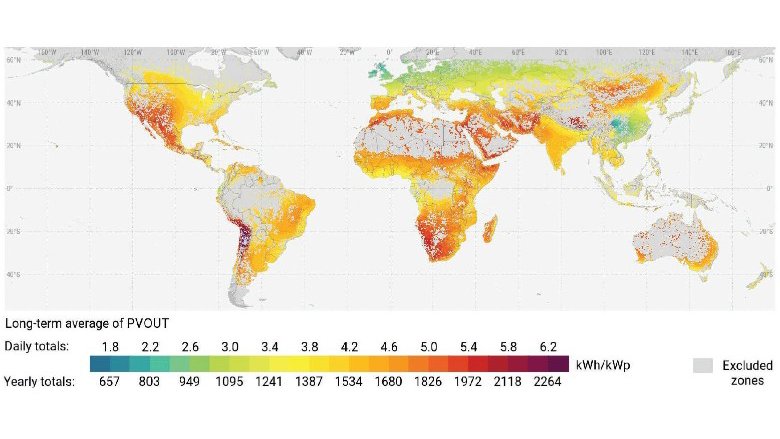

 Last updated on Oct, 2026


You must be logged in to post a comment.