Tunisian national utility Société tunisienne de l’électricité et du gaz (STEG) has launched a tender for the construction of a 50 MW solar PV plant linked with 10 MW/20 MWh of battery storage capacity. The selected developers will have to build the facility and the associated high-voltage grid infrastructure and transmission lines. The project will be located in Tataouine, in southern Tunisia. The deadline to submit project proposals is December 10. In March, Tunisia’s Ministry of Energy and Mines also launched a tender for the construction of a 300 MW solar farm and a 150MW/540MWh of battery storage system. The Africa Solar Industry Association’s (AFSIA) project database states Tunisia has 728.8 MW of operational solar capacity. With Amea Power’s plant now online, the country will be moving closer towards the 1 GW benchmark. In March, the Tunisian government granted licenses for four new utility-scale projects with a combined capacity of 500 MW. The projects were selected under a 1.7 GW renewable energy tender.
This content is protected by copyright and may not be reused. If you want to cooperate with us and would like to reuse some of our content, please contact: [email protected]. This content is protected by copyright and may not be reused. If you want to cooperate with us and would like to reuse some of our content, please contact: [email protected]. Comments Please login to comment Thursday, October 29, 2026 11:00 am – 12:00 pm CEST, Berlin, Paris, Madrid Thursday, November 5, 2026 10:00 am – 11:00 pm CEST, Berlin, Paris, Madrid The new issue of pv magazine Global is out now! Available in print and digital – get your copy today! pv magazine USA hosts its multi-day virtual event on U.S. solar and energy storage, covering domestic manufacturing, distributed energy and the growing role of solar-plus-storage in meeting AI-driven power demand. pv magazine hosts its four-day virtual event on European solar and energy storage, exploring market opportunities, solar-plus-storage business cases, technical quality, and cybersecurity in the years ahead. pv magazine Session returns to NetZero Milan as Knowledge Partner, organizing and moderating a two-hour conference on the evolving global solar supply chain. Get your ticket at a discounted rate with pv magazine. Join pv magazine for an expert session exploring quality, technology and the challenges of scaling India’s solar industry. Lunes, 19 de octubre de 2026 16:00 – 17:00 CEST, Berlín, París, Madrid Friday, October 23, 2026 11:00 am – 12:00 pm CEST, Berlin, Paris, Madrid Monday, October 26, 2026 10:30 am – 11:30 am CEST, Berlin, Paris, Madrid
A 295-kW rooftop solar system is now producing power at Adelphi University in Long Island, New York. Along with its commercial operation, the school announced a new solar energy initiative for its 75-acre main campus. This solar system was built on Adelphi’s LEED-certified Center for Recreation and Sports, offsetting a portion of the facility’s energy…
At the Oct. 8 Oswego Planning and Zoning Commission meeting, commissioners unanimously recommended approval of a proposal to build a community solar project on approximately 36 acres at the southern corner of Schlapp and Plainfield roads. (Photo provided by the village of Oswego) Plans for a community solar project on land in unincorporated Kendall County are progressing after Oswego plan commissioners recommended it for village approval. A community solar project allows nearby residents to share in the power generated by the project and receive direct utility bill credits without installing equipment on their own. The Oswego Planning and Zoning Commission on Oct. 8 unanimously recommended approval of a proposal to build a community solar project on approximately 36 acres at the southern corner of Schlapp and Plainfield roads that is currently being farmed. “The project reserves the northern corner of the site as open space, leaving room for a future roundabout planned by Kendall County at the intersection of Simons Road, Plainfield Road and Schlapp Road,” Oswego assistant development services director Rachel Riemenschneider told commissioners. One Energy Renewables, the developers for the project, has a long-term lease agreement with the landowner, Specialty Oswego LLC. The project is expected to take up about 30 acres. Plan Commissioners recommended approval of a special use permit for the project and rezoning the land from residential to agricultural use upon annexation to the village, subject to conditions, including that the project be set back 75 feet from nearby property lines. Village trustees will now review the proposal. The project is expected to serve more than 1,000 residents, Nora Landers of One Energy Renewables told commissioners. Residents and businesses in the village and the Kendall County area would be able to participate in the program. “As a community solar project, members of the ComEd utility territory can subscribe and receive a discount on their electricity bill, typically about 10%,” Landers said. Commissioner Rick Kuhn asked who would be able to participate in the community solar program. “This project will serve the residents that are most close to the project,” Landers said. “There will be an opportunity for those residents if they so choose to sign up for the project and receive that monetary benefit on their electricity bill. However, that’s up to their discretion.” Schools also would be able to sign up for the program. The project also would make an estimated $9,000 annual contribution to the village’s capital fund as part of the annexation agreement. That contribution would increase by 5% every five years. As proposed, the project would interconnect with ComEd’s local distribution grid and participate in the Illinois Shines community solar program. Construction of the solar project is expected to begin in spring 2028 and be operational by that fall. Landers told commissioners that during normal operating hours, the project will produce no odors and “minimal to no noise along with producing very little traffic.” In addition, she said the solar panels that will be used in the project mitigate glare. “They’re meant to absorb sunlight and not reflect it,” Landers said. “That’s because every electron lost would mean less energy to the grid and lost revenue.” Vegetative screening along South Schlapp Road, Plainfield Road and the southern parcel boundary would be installed to screen nearby residents from the project. Where there is existing screening along the southeastern portion of the property, One Energy Renewables will coordinate with neighbors to determine if additional vegetative buffer would improve visual screening. If the Village Board approves the plans, construction would begin in spring 2028 and be operational by that fall. The project would be decommissioned once it has reached the end of its life, which is typically 30 to 40 years, Landers said. The land would then be returned to agricultural use. One Energy Renewables has constructed 55 projects across Illinois, Wisconsin, Iowa and Minnesota. “In Illinois, we have eight operational community solar projects and an additional four are moving their way through construction,” Landers told planning and zoning commissioners during the meeting. Eric Schelkopf, who is a Kendall County resident, writes for the Record Newspapers/KendallCountyNow.com, covering Oswego and Plainfield. Schelkopf, who is a Kendall County resident, started with the Kane County Chronicle in December 1988 and appreciates everything the Fox Valley has to offer, including the majestic Fox River.
Sign up for email newsletters E-Edition Trending: By VICTORIA MILKO ISLAMABAD (AP) — Every day, Mohammed Saber places a single rectangular solar panel on the roof of the bamboo-and-tarpaulin shack that he and his family have called home for years, the last stop on their journey after fleeing the Myanmar military’s brutal crackdown on the Rohingya in 2017. The panel is part of a portable solar kit given to the Rohingya refugee family as humanitarian aid six years ago. It’s been the family’s primary source of electricity, making daily life so much easier in the camp for the displaced in Teknaf, Bangladesh. “We can now charge our phones, cook with light, children can study at night and use fans during the hot season,” said Saber, 35. From the flood zones of Nepal to refugee camps in Africa, experts say that solar energy is increasingly becoming part of disaster relief as technology improves, costs fall and humanitarian organizations recognize that having access to electricity is a fundamental need. Renewable energy solutions are needed more than ever, they say, as climate change drives and intensifies extreme weather while wars, sanctions and political upheavals keep fossil fuel prices volatile. When disasters strike and humanitarian needs surge, solar kits can become an invaluable resource, says Sarah Rosenberg-Jansen, a research fellow at the Stockholm Environment Institute, an independent research and policy institute specializing in sustainable development. These solar kits — all-in-one, compact units that use solar panels and are not reliant on utility companies — are easy to move and recharge, according to Rosenberg-Jansen. “In emergency situations, solar kits can be deployed immediately,” she said, adding that they are particularly useful in situations with rapidly rising floodwaters, changing front lines in a conflict, or for moving around in areas where damaged roads make it difficult to travel. In terms of function, the kits can be “anything from solar lanterns to solar home systems, solar torches, solar heating pads, to electric cook stoves that use solar as their energy source,” she said. Rosenberg-Jansen also pointed out that solar panels are not prone to price shocks like fossil fuels, which can be difficult and costly to transport to a disaster zone. Only a few decades ago, solar energy was a luxury, she added, but as technology evolved, mindsets and the price tag changed. Now it’s more affordable, thanks to the scaling up of mass manufacturing and technology advancement. It’s also so much easier to use, said Yuriy Boyechko, CEO of Hope For Ukraine, a nonprofit based in the United States that provides solar kits to families living in war-torn Ukraine. “We have grandmas and grandpas who are around 75-80 years old … receiving kits,” said Boyechko. “It’s just a matter of plug (in) and play.” Solar panels are becoming more common now. On the outskirts of Karachi, Pakistan’s economic hub, a tuberculosis clinic run by Doctors Without Borders uses solar energy. In South Sudan’s Renk county, the U.N. migration agency installed solar-powered water filtration systems for families displaced by the war in neighboring Sudan. And after Nepal’s massive floods in August that killed 1,455 people and left 5,285 missing — including hundreds of foreign nationals — solar kits were distributed by local and international organizations, including Australia-based charity SolarBuddy. Mark Gibson from Global Platform for Action, or GPA, which promotes affordable, reliable and clean energy access, said that integrating solar energy hasn’t come without difficulties. Aid agencies have had time-tested systems in place, which often include diesel generators as part of long-term leases and agreements. Switching to solar means having to trust new systems and setting up new distribution chains, sometimes in risky environments. Recent slashes in international donor funding have also undermined — or completely erased — new practices that were starting to take root, said Aimee Jenks, a program leader at GPA. “Much of the technical expertise in the humanitarian sector on energy has been cut,” she said. “That’s now retracting a lot of progress.” And while the cost of solar energy has decreased, it’s still prohibitive for many. Boyechko, of Hope For Ukraine, said that by the end of 2026, his nonprofit will have distributed over 3,200 kits. “But it took us two years to get to that number, because of funding needs,” he said. ”We have a waiting list of about 20,000 families. We just cannot keep up with demand.” While no energy source is perfect, the move towards renewable energies is likely to decrease reliance on polluting fossil fuels. For Saber, whose family is among more than 1 million refugees from Myanmar’s Rohingya ethnic and religious minority now living in Bangladesh, the kit means keeping the lights on. “It’s improved my family’s life,” he said. Freelancer photographer Ayub Khan Dkl in Teknaf, Bangaldesh, contributed to this report. The Associated Press’ climate and environmental coverage receives financial support from multiple private foundations. AP is solely responsible for all content. Find AP’s standards for working with philanthropies, a list of supporters and funded coverage areas at AP.org. Copyright 2026 Boston Herald. All rights reserved. The use of any content on this website for the purpose of training artificial intelligence systems, algorithms, machine learning models, text and data mining, or similar use is strictly prohibited without explicit written consent.
Published 8:49 am Wednesday, October 14, 2026 By beauregarddailynews By Ashlyn Little It was standing-room only at the Vernon Parish Police Jury’s regular session meeting as residents packed the room to debate a proposed solar farm ordinance. The jury ultimately tabled the vote to amend Ordinance No. 9, pushing the decision to a later date so they can further refine regulations — particularly regarding buffer zones between solar panels and neighboring properties. The proposed amendment seeks to tighten rules for constructing and operating solar farms in unincorporated areas of Vernon Parish. Under current rules, Ordinance No. 9 requires a setback of 150 feet from any residence, 50 feet from the front line of adjacent properties, and 25 feet from rear or side lines. “We put this back on the agenda because we heard from our citizens that we needed their input,” said Police Jury President James Tuck (District 1). “When we looked at our ordinance, we knew it needed to be more restrictive, especially on the buffer zone.” The police jury previously voted on Aug. 10 to place a temporary moratorium on solar farm development until the stricter guidelines are finalized. The tension stems from a project proposed by Treaty Oak Clean Energy. Dubbed “Sunstripe Solar,” the utility-scale project would span 7,000 acres — 4,000 in Vernon Parish and 3,000 in neighboring Rapides Parish — located roughly 20 miles east of Fort Polk. Nick Jasman, a developer for Treaty Oak, clarified that solar panels would not cover the entire 7,000 acres. “The balance of the project area consists of buffers, setbacks, environmental avoidance areas, and other undeveloped portions,” Jasman said, noting that final acreage numbers are still being designed. Jasman estimated the project would generate upwards of $30 million in sales and property taxes for Vernon Parish over its lifetime. District 3 Police Juror David Fox highlighted those financial benefits, noting the revenue would fund parish roads and the Vernon Parish School District. “We as jurors have to make a decision based on how it’s going to affect our people, and that’s the first priority,” Fox said. “But we have to look at all sides, taking care of their concerns while looking at the tax revenue it would generate.” Several local residents spoke out against the project, raising alarms about the environment, safety and infrastructure. Nancy Whitlock, a multigenerational Vernon farmer, presented a PowerPoint presentation detailing how local hilly terrain and soil differ fundamentally from south Louisiana. She questioned what soil testing had been done to prevent severe erosion. Whitlock also raised concerns about construction noise and heavy equipment damaging parish roads. Jasman replied that pile-driving steel into the ground would last only a couple of months and that Treaty Oak would work with the police jury and the DOTD on strict road agreements. He added that power converters would be designed away from property lines to mitigate long-term noise. Resident James Afeman voiced fears regarding fire safety during droughts, noting the closest volunteer fire department is in Pitkin, 12 miles away. “That buffer line would be our line of defense,” Afeman said, pushing for the largest buffer zone possible. Resident Julie Richmond Sauer argued the jury should demand at least a one-mile buffer zone with waivers. Resident Anja West added, “(Treaty Oak) is basically a private entity inserting themselves in business that should not be theirs.” Nich Gehrig, a resident of neighboring Beauregard Parish who lives four miles from the Singer Solar farm, warns jurors that initial promises do not always match reality. Gehrig testified that contracted workers speed down local roads, causing severe dust and traffic hazards that forced his wife to stop letting their children ride the school bus. More critically, Gehrig — who is in the cattle business — stated he lost six cows in a single week to respiratory failure caused by heavy construction dust. “Whenever their lungs fill up with dust, there is no drug to fix it,” Gehrig said, noting that proving the dust caused the deaths is nearly impossible, leaving him to absorb the financial loss. He also reported trespassing and property theft by contracted laborers. In response to the backlash, Jasman emphasized that Treaty Oak prides itself on transparency and long-term collaboration. “Because we expect to be part of the community for decades, we take seriously our responsibility to be a good neighbor,” Jasman said. Treaty Oak is currently building two other Louisiana projects: Beekman Solar in Morehouse Parish and Hollis Creek Solar in Sabine Parish, both slated for completion in early 2027. The Vernon Parish Police Jury will resume discussions at its next meeting at 10 a.m. Monday, Oct. 19.
WEATHER CHECK FREE FOR FARMERS 14th October 2026 13th October 2026 12th October 2026 12th October 2026 14th October 2026 14th October 2026 12th October 2026 9th October 2026 14th October 2026 13th October 2026 12th October 2026 12th October 2026 14th October 2026 14th October 2026 14th October 2026 13th October 2026 14th October 2026 14th October 2026 14th October 2026 12th October 2026 Farm Tech 14th October 2026 Author: Aleksandra Cupriak
We’ve now moved to our new office in Stowmarket. If you wish to contact us please use our new address: Unit 3-4 Boudicca Road, Suffolk Central Business Park, Stowmarket, IP14 1WF Thank you, The Farmers Guide Team
Posted on Oct 14, 2026 Link copied ! Revalue Energies S.p.A., an Italian company active in the development, financing, construction and operation of renewable energy plants (such as photovoltaic, wind and storage systems), has completed, through its subsidiary Mitra S.r.l., its first project financing transaction, with a total value of approximately €160 million. The transaction concerns a portfolio of 26 photovoltaic projects in Italy, with a total generating capacity of approximately 162 MW. The financing was granted by a pool of leading financial institutions made up of Bayerische Landesbank (BayernLB), ING Bank N.V. – Milan Branch and UniCredit S.p.A., which acted as Mandated Lead Arrangers, Original Lenders, Bookrunners and Global Coordinators of the transaction. ING Bank N.V., London Branch also acted as Agent, while ING Bank N.V. – Milan Branch also acted as Original Issuing Bank. The financing includes three main lines: a Senior Facility, a DSR Facility and a GSE Guarantee Facility. The structure also includes an accordion mechanism designed to support the potential future expansion of the financed portfolio. The lending banks and the hedging counterparties were assisted by BonelliErede with a multidisciplinary team, part of the Infrastructure, Energy and Ecological Transition Focus Team, led by Partner Gabriele Malgeri and made up, for the financial documentation and the structuring, preparation and negotiation of the project contracts, of Senior Associates Lisa Borelli and Luigi Mazzola and Denis Milan. Administrative law aspects were handled by Partner Giovanna Zagaria, assisted by Associates Elisa De Giuli and Silvia Jachia, while the due diligence on corporate profiles and land contracts was carried out by Associates Giorgia Racini, Camilla Orsi and Jasmine Proietti. Partner Riccardo Ubaldini, together with Senior Associates Matteo Polisicchio, Giovanni Bisleri and Matteo Sturla and Associate Martina La Palma, handled the tax aspects of the structuring of the corporate reorganization and of the financing, while Associate Alessandro Nicolini handled the preparation and negotiation of the hedging contracts. Revalue Energies handled the financial, legal and technical aspects of the transaction in-house with a team made up of Andrea Palin, Angela Caselli, Marta Mancina and Edoardo Bognanni, coordinated by Marco Corsetti and Luca Di Giacomo. Link copied ! Leaders League 88, boulevard de la Villette 75019 Paris, France Phone: +33 (0) 1 45 02 25 00 Email: [email protected] [email protected] [email protected] All rights reserved – Leaders League.
Renewables Now is a leading business news source for renewable energy professionals globally. Trust us for comprehensive coverage of major deals, projects and industry trends. We’ve done this since 2009. Stay on top of sector news with with Renewables Now. Get access to extra articles and insights with our subscription plans and set up your own focused newsletters and alerts.
EcoFlow is targeting the cost of home battery storage in the US with its new Titan series, offering three models that start at 5 kWh and expand to 30 kWh, along with a pre-wired home panel to cut installation work. The Titan range, which includes the Titan 5000 Classic, Titan 5000, and Titan 5000 Plus, joins EcoFlow’s existing Delta Pro Ultra and Ultra X systems. In launching, its new products, EcoFlow said it analyzed data from 100,000 households and found that 80% stayed below a rough power demand of 6.7 kW for some 99% of the time. In a standard day, that might be just 15 minutes of high-power draw. That informed the Titan’s design, with the company arguing that most homes do not need the output of its larger systems. That supports its output choice, although backup duration still depends on battery capacity and the loads being supplied. The standard Titan 5000 and flagship 5000 Plus match the original Ultra’s 7.2 kW output, but start with a smaller battery, at 5 kWh versus 6.144 kWh. The Titan 5000 Plus supplies 7.2 kW at 120/240 V, rising to 10 kW when hooked in to a solar supply, with the additional power contributed through a boost function. EcoFlow says it can run a 3-ton central air conditioner alongside a refrigerator, TV and lights, without a soft starter. On the input side, the Plus handles up to 8 kW of solar through two 4 kW MPPTs, compared with 5.6 kW for the original Delta Pro Ultra. The standard Titan 5000 takes up to 4 kW through one MPPT. The cheaper Titan 5000 Classic drops to 4 kW of output at 120 V, with 3.2 kW of solar input. The Plus weighs 55 kg and measures 623 mm × 336 mm × 428 mm. Both it and the expansion batteries carry an IP20 rating, requiring dry indoor placement. Charging is specified from 0 C to 45 C, with discharge from -10 C to 45 C. Warranty coverage is five years. EcoFlow said the new hardware uses a 200 V architecture, LFP cells and silicon carbide power electronics. EcoFlow noted the battery was powered by an “industry-first 40160 tabless 2C LFP cell.” A tabless cell design can effectively reduce heat generation by eliminating traditional narrow current tabs, lowering resistance. For home integration, the new Smart Home Panel 10 manages up to 10 circuits and supports 50 A, with automatic transfer to battery power in under 20 milliseconds. The company’s home energy management system, OASIS 3.0, manages charging and discharging against household demand, tariffs and weather forecasts. EcoFlow quotes around $1,200 in installation labor and about two hours on-site. Its seven-business-day installation service starts after permits and approvals are obtained, though this offer or similar was already available with the Ultra X. FCC authorization for all three Titan 5000 systems are dated July 20, before the FCC’s July 28 restrictions on foreign-produced inverters. EcoFlow Titan 5000 pricing and availability For now, pricing is being given in bands in a slightly unusual but welcome move for launch. The Titan 5000 and 5000 Plus will be in the $3,000 range standalone, or the $7,000 range including the home panel and installation. The Classic will be in the $2,000 range standalone, or the $5,000 range installed. EcoFlow announced availability from Oct. 13, with its product pages currently offer reservations including . Further pricing details are due Nov. 3. From ESS News This content is protected by copyright and may not be reused. If you want to cooperate with us and would like to reuse some of our content, please contact: [email protected]. Comments Please login to comment Thursday, November 5, 2026 10:00 am – 11:00 pm CEST, Berlin, Paris, Madrid Thursday, October 29, 2026 11:00 am – 12:00 pm CEST, Berlin, Paris, Madrid The new issue of pv magazine Global is out now! Available in print and digital – get your copy today! pv magazine USA hosts its multi-day virtual event on U.S. solar and energy storage, covering domestic manufacturing, distributed energy and the growing role of solar-plus-storage in meeting AI-driven power demand. Friday, October 23, 2026 11:00 am – 12:00 pm CEST, Berlin, Paris, Madrid Monday, October 26, 2026 10:30 am – 11:30 am CEST, Berlin, Paris, Madrid
(Singapore, 14.10.2026)Global demand for solar energy is growing as countries seek cleaner and more secure electricity supplies, but the industry’s biggest manufacturing hub is facing a deepening crisis, with China’s leading solar companies cutting tens of thousands of jobs amid persistent overcapacity and falling prices. Five of China’s largest solar manufacturers, Longi Green Energy, Trina Solar, Jinko Solar, JA Solar and Tongwei, reduced their combined workforce by 40,589 employees in 2025, according to company filings reviewed by Reuters. The companies employed 154,061 people at the end of last year, representing a 21% decline from 2024. This followed a 31% reduction the previous year, meaning the five manufacturers have collectively eliminated roughly half their workforce over two years. The cuts highlight a growing contradiction in the global renewable energy industry. Solar power is becoming increasingly important to energy security, particularly as the conflict involving Iran and disruptions around the Strait of Hormuz raise concerns about dependence on fossil fuels. Yet the companies supplying much of the world’s solar equipment are struggling to make money, despite record installations and growing demand for clean electricity. China has built enough solar manufacturing capacity to meet approximately twice the world’s demand, creating intense competition that has pushed prices below sustainable levels for many producers. According to the latest Report on China Energy Development 2026, China now supplies about 80% of the world’s solar photovoltaic modules and 70% of wind power equipment, demonstrating its dominance in global clean energy manufacturing. That manufacturing strength has helped lower the cost of renewable energy worldwide, but it has also left Chinese producers vulnerable to prolonged price wars. China’s renewable energy expansion reached another milestone in 2025, when the country’s combined installed wind and solar capacity surpassed coal-fired thermal power capacity for the first time. By the end of the year, wind and solar installations had reached 1.84 billion kilowatts, equivalent to 1,840 gigawatts (GW), according to the industry report. Renewable energy sources accounted for more than 60% of China’s total installed power generation capacity, while additional electricity generated from wind, solar and biomass met more than 90% of the country’s increase in electricity consumption. The expansion reflects China’s efforts to strengthen energy security, reduce dependence on fossil fuels and support growing electricity demand from advanced manufacturing and emerging technologies. However, the rapid increase in installations has not translated into stronger earnings for solar equipment manufacturers. According to energy research consultancy Thunder Said Energy, the average selling price of solar modules produced by China’s five leading manufacturers dropped to US$130 per kilowatt in 2025, compared with US$350 in 2019. Their average earnings before interest and taxes (EBIT) margin deteriorated to negative 13%, compared with negative 8% in 2024, indicating that operating losses have continued to widen. Although reducing headcount can help manufacturers control expenses, analysts warn that cost-cutting alone cannot restore profitability when products are being sold below production costs. Jefferies analyst Alan Lau told Reuters that companies would continue losing money unless the industry addresses its fundamental supply-demand imbalance. An earlier attempt by major polysilicon producers to consolidate production capacity and support prices failed to gain sufficient industry backing, leaving manufacturers without a clear solution to the oversupply problem. The workforce reductions have affected production, research and development, and administrative operations. Trina Solar reported voluntary employee turnover of between 18% and 19% in 2025, while Tongwei disclosed a 21% reduction in technical staff. Longi also reduced its research and development spending by 15%. None of the five manufacturers publicly announced layoffs during the period, and none responded to Reuters’ requests for comment. The outlook for solar manufacturers has become more challenging in 2026 as China’s domestic market slows following changes to renewable energy pricing policies. The government has replaced guaranteed returns for renewable energy projects with market-based electricity pricing mechanisms, making developers more cautious about new investments. Jefferies expects China to install between 150 GW and 200 GW of solar capacity this year, down sharply from the record 315 GW installed in 2025. International demand has also failed to absorb the industry’s excess production, with China’s exports of solar cells and panels falling 10% by volume during the first eight months of 2026 compared with the same period last year. Morningstar analyst Cheng Wang believes manufacturers have likely continued reducing their workforces this year as weaker demand adds to the pressure from excessive production capacity. However, the industry could be approaching a turning point as Beijing prepares to introduce stricter manufacturing standards. From January 1, 2027, new energy-intensity requirements for polysilicon and silicon wafer production, together with tougher efficiency standards for solar modules, will take effect. Manufacturing facilities that cannot meet the new requirements could be forced to close, potentially helping remove older and less efficient production capacity from the market. Wang expects overcapacity to persist into 2027 but believes the worst of the industry’s downturn may be over by then. For the wider solar industry, China’s manufacturing difficulties present both opportunities and risks. Lower equipment prices have made solar projects more affordable for countries expanding renewable electricity generation, supporting the global shift toward cleaner energy. However, continued financial losses and shrinking workforces could also place pressure on manufacturers’ ability to invest in new technologies and maintain production over the longer term. With China remaining the dominant supplier of solar equipment worldwide, the effectiveness of its upcoming manufacturing standards and efforts to reduce excess capacity will be closely watched by renewable energy developers and investors. The challenge is no longer simply how quickly solar power can expand, but whether the companies producing the technology can build a financially sustainable industry alongside that growth.
Tunisia’s state-owned National Electricity and Gas Company (STEG) has launched two tenders covering a 50 MW solar photovoltaic (PV) project paired with battery energy storage and the installation of 600 MWh of battery energy storage systems (BESS) across ten sites nationwide. The first tender concerns the Tataouine solar and battery storage project. It covers the installation of 50 MW of solar PV capacity, a battery storage system rated at 10 MW/20 MWh, as well as the associated high-voltage grid infrastructure and transmission lines, according to the site renewablesnow.com. The project is supported by the European Bank for Reconstruction and Development (EBRD), with bids due by December 10, 2026. The second tender, published on September 24, covers the deployment of battery energy storage systems across ten sites divided into three regional lots: 210 MWh in northern Tunisia, 180 MWh in the central region and 210 MWh in the south. The planned 600 MWh of storage capacity is intended to strengthen Tunisia’s electricity system by improving its ability to store and manage energy. Combined with the solar project, the investments form part of efforts to support renewable energy integration and enhance the flexibility of the national power grid.
Renewables Now is a leading business news source for renewable energy professionals globally. Trust us for comprehensive coverage of major deals, projects and industry trends. We’ve done this since 2009. Stay on top of sector news with with Renewables Now. Get access to extra articles and insights with our subscription plans and set up your own focused newsletters and alerts.
Europe has now lived through two energy crises in four years, and on the surface the second looks like a smaller copy of the first. In Spain, Germany and Greece, day-ahead prices rose in both, and in each case the shock followed a war that began in late February. Underneath, the two crises played out very differently across the day. In the months after the 2022 invasion of Ukraine, the cheapest hour of the average day still cost €149 ($165.6)/MWh in Spain, €193/MWh in Germany and €252/MWh in Greece. Between March and September 2026, front-month TTF averaged roughly €54/MWh, about half as much again as in the same months of 2025, which puts the fuel cost of a gas plant running at 55% efficiency near €97/MWh before carbon. Yet averaged over the 2026 window, the cheapest hour of the day fell to between €16/MWh and €25/MWh in all three markets, far below what any gas plant needed to run, while night prices rose by €36 to €51/MWh against the same dates in 2025. That difference is consistent with the much larger solar fleet that sits between the two shocks. Average output in the peak solar hour doubled in Spain and Greece between the 2022 and 2026 windows and rose by half in Germany, and prices in the hours that output covers moved far less with fuel prices than they did four years ago. This analysis asks what that larger fleet means for energy security: how much of the day now stays clear of crisis prices, why that stops at sunset, and how far battery storage could carry it into the evening and night. To answer it, the comparison uses two event windows of identical length. The first runs for 227 days from the invasion of Ukraine on 24 February 2022 to 8 October 2022, and the second for 227 days from the start of the war with Iran on 28 February 2026 to 12 October. Both open in late February, so day N of each crisis falls in nearly the same week of the year, and each contains 21,788 quarter-hour price intervals. The same calendar dates in 2025 serve as a reference without an energy crisis. Far more solar was running when the second shock arrived. Solar output reported to ENTSO-E over the 227-day window rose from 23.8 TWh in 2022 to 49.4 TWh in 2026 in Spain, from 48.5 TWh to 74.7 TWh in Germany and from 4.7 TWh to 10.0 TWh in Greece. In the average hour of peak output, Spanish solar delivered 21.2 GW against 10.8 GW in 2022, German solar 39.8 GW against 26.5 GW and Greek solar 5.2 GW against 2.7 GW. Figure 1. Average solar output by local hour over the first 227 days of each crisis and the same dates in 2025. Author’s aggregation from ENTSO-E data. That output arrives in a narrow band. In the 2026 window, 66% of Spanish solar energy and 75% of German and Greek solar energy was produced between 10:00 and 17:00. On a full-year basis, ENTSO-E solar output rose from 31.1 TWh in 2022 to 52.4 TWh in 2025 in Spain, from 55.7 TWh to 73.8 TWh in Germany and from 6.3 TWh to 11.5 TWh in Greece. In the 2022 window, prices were high in every hour. Front-month TTF averaged roughly €155/MWh between March and September 2022, and even the cheapest hour of the average day stayed at €149/MWh or more in all three markets. In the 2026 window the same markets produced a deep midday trough, and the average day stayed below €50/MWh from 10:00 to 18:00 in Spain, from 10:00 to 17:00 in Greece and from 11:00 to 16:00 in Germany. Figure 2. Average day-ahead price by local hour, first 227 days of each crisis and the same dates in 2025. Author’s aggregation from ENTSO-E data. Set against 2025, Spanish prices between 10:00 and 17:00 averaged €22/MWh, about €5 above the same hours a year earlier, while evening prices between 19:00 and 23:00 were €44/MWh higher and night prices between midnight and 06:00 about €50/MWh higher. The seven midday hours make up 29% of the day but contributed 4% of the rise in Spain’s baseload price and 13% in Germany. In Greece the midday block was €4/MWh cheaper than a year earlier, while night prices rose by €46/MWh. Figure 3. Change in average day-ahead price by local hour, 2026 crisis window minus the same dates in 2025. Author’s aggregation from ENTSO-E data. Gas prices are consistent with this shape. Monthly TTF closes rose from about €31/MWh in February 2026 to about €84/MWh by 12 October, and even the lowest price from March onwards, around €38/MWh in April, implies a fuel cost of roughly €70/MWh for a gas plant. The cheapest hours of the average day, at €16 to €25/MWh, and the 10:00 to 17:00 averages of €22 to €45/MWh sit well below that cost, so these hours show little sign of the fuel shock. The increase appeared instead in the hours solar cannot reach, where night and evening averages of €116 to €178/MWh sit above the €97/MWh average fuel cost of a gas plant. The ENTSO-E data do not name the price-setting plant in each interval, so this reading rests on price levels and timing. Negative prices show how far the midday has moved. The 2022 window had none in Spain or Greece and 32 hours in Germany. The 2026 window had 547 hours in Spain, 459 in Germany and 476 in Greece, and between 19% and 23% of solar output in each market was produced while prices were below zero. Capture prices in the 2026 window are 74% lower than in 2022 in Spain, 76% lower in Germany and 83% lower in Greece, and capture rates are between 36 and 48 percentage points lower. Both the level and the shape of prices changed. Splitting the fall in the capture price between the two on a logarithmic basis, the lower baseload accounts for 55% of the decline in Spain, 62% in Germany and 57% in Greece, and the weaker relative value of the solar profile accounts for the rest. Figure 4. Solar capture price and capture rate over the matched 227-day windows and the 2025 reference. Author’s aggregation from ENTSO-E data. The 2025 reference shows that most of the relative decline was already in place before the new crisis. Over the same dates last year, solar’s capture rate was already 52% in Spain, 47% in Germany and 52% in Greece. Against that reference, the 2026 window was 5.6 points lower in Spain and 9.4 points lower in Greece, and 2.7 points higher in Germany. On a full-year basis the decline is steady: Spain’s capture rate fell from 90% in 2022 to 55% in 2025, Germany’s from 94% to 51% and Greece’s from 94% to 58%. Another way to read the result is to ask how much of each euro added to the baseload price reached solar. Between the 2025 reference and the 2026 window, Spanish solar captured 37 cents of each extra euro and German solar 57 cents. Greek solar captured almost nothing over the full window: its capture price from March to June fell from €49/MWh to €33/MWh, in months with 285 negative-price hours against 12 a year earlier, which offset its summer gains. Monthly baseload prices stayed more than 10% above their 2025 levels in every month from May in Germany, July in Spain and August in Greece, while gas climbed from a monthly average of about €46/MWh in June to about €74/MWh in September. From July to 12 October, the costliest stretch of the window, solar captured 41 cents of each extra euro in Spain, 45 in Germany and 32 in Greece. Germany is the exception in the matched comparison. Its capture rate rose slightly against 2025 even though solar output in the window grew by 18%, and its negative-price hours fell from 548 to 459. In September, Spain’s day-ahead market averaged €143/MWh, slightly above the €141/MWh of September 2022, yet Spanish solar earned €66/MWh against €116/MWh four years earlier, and its capture rate fell from 82% to 46%. The obvious objection is that the second crisis is simply milder, and it is fair as far as it goes: TTF averaged roughly €54/MWh between March and September 2026 against roughly €155/MWh in the same months of 2022, baseload prices in the three markets are less than half their 2022 levels, and a smaller fuel shock leaves a smaller premium to spread across the day. The September comparison, however, holds the baseload almost constant and still shows solar earning 43% less than four years ago. With the baseload almost equal, the difference shows up in the shape of the day. Figure 5. Spain, monthly baseload and solar capture price, January 2022 to 12 October 2026. Author’s aggregation from ENTSO-E data. The same shape that cuts solar’s capture rate creates the trade for storage. On the average day of the 2026 window, a battery charging in Spain’s two cheapest consecutive hours would have paid about €16/MWh and one discharging in the two dearest would have sold at about €147/MWh, a spread of €131/MWh against €88/MWh over the same dates in 2025. In Germany the spread widened from €123/MWh to €161/MWh, while in Greece, where evening prices were already high in 2025, it moved from €150/MWh to €157/MWh. Figure 6. Spread between the two dearest and the two cheapest consecutive hours of the average day, by window. Illustrative, before losses. Author’s aggregation from ENTSO-E data. The volume waiting to be moved is large. Across the three markets, solar output produced while prices were negative in the 2026 window averaged about 128 GWh a day. Every megawatt-hour shifted from those hours into the evening would work on both sides of the problem: it would add demand in hours when prices are below zero, which would support the capture price, and it would add supply in the night and evening hours where the 2026 price rise was concentrated. The spreads above come from averaged profiles rather than a dispatch model, so they leave out round-trip losses and day-to-day variation, and each new battery narrows the spread the next one earns. For the energy trilemma, the data point the same way. In the hours solar covers, prices stayed far below the rest of the day through this gas shock, which serves decarbonisation and part of affordability. Extending that to the whole day, and reducing exposure to the next gas shock, would mean carrying part of that midday energy into the evening and the night, the hours where prices tracked the gas shock, and solar paired with storage is a direct way to do it. Contracts and support schemes that value the profile a plant delivers rather than its raw output, and grid connections shared between solar and batteries, could push investment that way. Four years ago, solar hedged its owner against a crisis that reached every hour of the day. In 2026 the hours the fleet covers stayed largely insulated from the gas shock, a protection the baseload average hides because it blends noon with midnight. The next step is to carry that protection past sunset. Author: Safa Sen, Market Engagement Lead For CWE at WSP. WSP Group unites engineering, advisory and science-based expertise to shape communities to advance humanity. From local beginnings to a globe-spanning presence today, it operates in over 50 countries and provides solutions and delivers innovative projects across sectors: Transport & Infrastructure, Property & Buildings, Earth & Environment, Water, Power & Energy and Mining & Metals. The views and opinions expressed in this article are the author’s own, and do not necessarily reflect those held by pv magazine. This content is protected by copyright and may not be reused. If you want to cooperate with us and would like to reuse some of our content, please contact: [email protected]. Comments Please login to comment Thursday, October 29, 2026 11:00 am – 12:00 pm CEST, Berlin, Paris, Madrid Thursday, November 5, 2026 10:00 am – 11:00 pm CEST, Berlin, Paris, Madrid The new issue of pv magazine Global is out now! Available in print and digital – get your copy today! pv magazine USA hosts its multi-day virtual event on U.S. solar and energy storage, covering domestic manufacturing, distributed energy and the growing role of solar-plus-storage in meeting AI-driven power demand. pv magazine hosts its four-day virtual event on European solar and energy storage, exploring market opportunities, solar-plus-storage business cases, technical quality, and cybersecurity in the years ahead. pv magazine Session returns to NetZero Milan as Knowledge Partner, organizing and moderating a two-hour conference on the evolving global solar supply chain. Get your ticket at a discounted rate with pv magazine. Join pv magazine for an expert session exploring quality, technology and the challenges of scaling India’s solar industry. Lunes, 19 de octubre de 2026 16:00 – 17:00 CEST, Berlín, París, Madrid Friday, October 23, 2026 11:00 am – 12:00 pm CEST, Berlin, Paris, Madrid Monday, October 26, 2026 10:30 am – 11:30 am CEST, Berlin, Paris, Madrid
Ameresco has completed a solar-plus-storage project at the main office of the Roseburg Urban Sanitary Authority (RUSA) in Oregon. The $1 million project is the beginning of a multi-phase transformative energy program aimed at enhancing the resilience, sustainability and cost-effectiveness of RUSA’s key facilities, which include its main office, wastewater treatment plant and natural treatment…
Published 1:30 am Wednesday, October 14, 2026 By Staff report Grace Episcopal Church courtesy photo The new solar panels on the roof of the church. Grace Episcopal Church of Bainbridge Island invites the community to a ribbon-cutting ceremony and solar energy workshop Oct. 17 from 9 -11 a.m. This event marks the completion of the solar installation at Grace, which reduces operating costs and generates clean electricity for the church. The endeavor has expanded the church’s ability to serve its congregation and the broader community for years to come, with the added benefit of reduced carbon emissions, a news release says. The solar project will reduce the church’s annual energy burden by an average of $10,470 per year over the 30-year lifespan. Over its lifetime, the installation is projected to produce 846 megawatt-hours of clean, renewable electricity. According to the Environmental Protection Agency’s greenhouse gas equivalencies, it will offset 28,891 pounds of CO2 emissions annually. That is equivalent to the amount of carbon captured by 13 acres of U.S. forest land every year, or 3 homes’ electricity use for one year, per the release. The project includes 73 solar panels across the church’s roof. Cascadia Solar designed and installed the system. Following the ribbon-cutting ceremony, project partners will provide a presentation featuring information about the project, how solar power works, and how people interested in solar can learn more. Light refreshments will be provided. The project is funded by a grant from the state Department of Commerce Clean Energy Community Grants program, which is supported with funding from Washington’s Climate Commitment Act. “Grace Episcopal Church is honored to join the solar energy community in Kitsap County. Caring for our earth has never been more important,” said The Reverend Eric Mason, Grace Episcopal Church.
Standard Solar has acquired two solar projects in Washington from OneEnergy Renewables, marking the companies’ first projects together in the state. The projects — Palouse Junction in Connell and Cunningham in Othello — will bring a combined 15.79 MW of new ground-mounted solar capacity to eastern Washington. The acquisitions reflect Standard Solar’s continued growth in distributed…
Renewables Now is a leading business news source for renewable energy professionals globally. Trust us for comprehensive coverage of major deals, projects and industry trends. We’ve done this since 2009. Stay on top of sector news with with Renewables Now. Get access to extra articles and insights with our subscription plans and set up your own focused newsletters and alerts.
WORK has been complete on the delivery of a 10MW solar PV plant at Glasgow Airport, led by Ikigai Group and Zestec Renewable Energy. Zestec funded, delivered, and energised the first phase, with RSK Group acting as contractor – with Zestec managing and optimising the infrastructure. AGS Airports has unveiled the completion of the solar farm as part of its Horizons sustainability programme, with the solar farm set to generate enough renewable electricity to meet around 25% of the airport’s on-site demand. Comprising more than 14,300 photovoltaic panels, the development generates renewable energy to help power airport operations and reduce reliance on energy from the grid. The infrastructure is tipped to play a key part in AGS Airports’ ambition to be net zero for its own emissions by 2035. Fiona Smith, executive director of ESG & sustainability at AGS Airports, said, “The launch of Horizons marks an important moment for AGS Airports as we set out a clear vision for building a more sustainable future for our airports. Looking ahead, acting together captures our belief that meaningful progress can only be achieved through collaboration. The solar farm is an example of that approach in action and a major milestone on our sustainability journey.” Toby Smith, chief operating officer at Zestec, added, “We’re proud to have delivered this significant renewable energy project for Glasgow Airport. With the solar farm now operational, we look forward to supporting the airport over the long term and helping maximise the benefits of the clean energy it generates.” Helena Anderson, chief operating officer at Ikigai, commented, “We supported Glasgow Airport from inception to energisation, jointly developing the onsite generation project and securing the most competitive investor. It is rewarding to see that collaboration now delivering clean, competitively priced electricity for the airport.” Both firms added that the success of the project has been underpinned by strong partnership with SP Energy Networks (SPEN). Martin Maxwell, SPEN’s district general manager for Ayrshire and Clyde south, commented, “It’s fantastic to see this new solar farm now up and running – powering a cleaner and greener future for AGS and Glasgow Airport and kickstarting a new era for this thriving transport hub. We’re proud to have played our part in bringing this project to life and working with AGS to ‘look ahead and act together.”
Market Research & Strategy Business & Plant Feasibility Studies Consumer Insights & Behavior Research Pricing & Procurement Services Greenfield and Brownfield Plant Setup & Operations Consulting
Every solar panel is connected by cables built to survive 25 years or more of sun, heat, rain, and high DC voltage. India added a record 44.6 GW of solar capacity in 2025-26, taking cumulative solar capacity past 150 GW, and rooftop programmes such as PM Surya Ghar are adding millions of smaller systems. Each of these projects needs DC string cables, AC cables, and earthing cables, and since 2024 solar DC cables sold in India must carry BIS certification. Together these trends make Solar Cables Manufacturing Plant Setup in India a timely, specialised opportunity within the wider cable industry, especially for producers who can meet strict quality and certification requirements. Investment depends above all on how much of the process the plant does in-house and on scale. A unit that buys tinned copper conductors, runs extrusion lines, and sends cable out for electron beam cross-linking is a modest project, while an integrated plant with wire drawing, tinning, bunching, dual-layer extrusion, its own electron beam accelerator, and a testing laboratory needs much more capital. The Solar Cables Manufacturing Plant Cost ranges from about INR 5–15 crore for an extrusion-focused unit to INR 40–100 crore for an integrated solar DC cable plant of 5,000 to 10,000 tonnes a year, and INR 150–300 crore for a plant that also makes AC power cables for utility-scale projects. Raw materials make up 68 to 75% of operating cost, with copper the largest item, so metal price management and yield shape profitability. A well-run plant typically earns a gross margin of 14 to 22% and a net margin of 5 to 10%. This guide is written for investors exploring how to start a Solar Cables manufacturing plant in India. It focuses on a plant making 1.5 kV DC photovoltaic cables with tinned copper conductors and electron beam cross-linked insulation, and also explains aluminium DC cables, AC cables for solar plants, and pre-assembled cable harnesses. It covers products and markets, the demand outlook, the production process flow, machinery and raw materials, location and infrastructure, a detailed cost and financial breakdown, approvals, and how a DPR and financial model turn all of this into a bankable plan. The snapshot shows a fast-growing global market and an Indian solar sector expanding at record pace, which translates directly into demand for DC and AC cables. Mandatory certification has raised entry barriers and pushed out low-quality imports and unbranded supply. The wide investment range reflects a real choice between an extrusion unit, an integrated DC cable plant, and a larger plant serving utility projects with both DC and AC cables. The sections below work through that choice. Indicative Project Cost in India (2026) These ranges provide a realistic frame for early planning, but actual returns depend on copper prices and pass-through, solar installation volumes, approvals from developers and EPC contractors, certification for export markets, competition from large cable brands, and payment terms on projects. A site-specific Solar Cables Feasibility Report narrows each of these assumptions to your chosen products, capacity, integration depth, location, and customers. Table of Contents Solar cables, also called photovoltaic or PV cables, carry direct current from solar panels to combiner boxes and inverters, and then alternating current from inverters to the grid. DC solar cables are single-core cables with fine, flexible tinned copper strands, insulated and sheathed with halogen-free, flame-retardant compounds that are cross-linked, usually by electron beam, so they resist heat, UV rays, ozone, moisture, and abrasion for decades. They are rated for 1.5 kV DC and typically come in sizes of 4, 6, and 10 sq mm, while larger aluminium DC cables and AC power cables connect inverters and substations in utility plants. Commercially, solar cables are sold to EPC contractors, solar developers, rooftop installers, module and inverter distributors, and through electrical distributors to smaller installers. A Solar Cables Manufacturing Plant can supply utility-scale solar parks, commercial and industrial rooftop projects, residential rooftop systems, solar pumps, floating solar plants, battery storage projects, and export markets. Buyers value certification, long life, consistent quality, on-time delivery, and competitive prices per metre. The Main Solar Cable Types and Applications Choosing the product range is the most important commercial decision, because it determines machinery, certifications, and customers: These choices shape the whole plant. DC PV cables need fine-wire drawing, tinning, dual-layer extrusion, and electron beam cross-linking, while aluminium DC and AC cables use heavier conductors, armouring, and larger extruders. Harnesses add connector crimping and testing. Most new entrants therefore start with certified DC PV cables for rooftop and C&I installers, build approvals with EPC contractors, and add aluminium DC, AC cables, and harnesses as their customer base grows. Key Growth Drivers in the Indian Market Demand is supported by record solar installations, rooftop programmes, storage growth, quality regulation, and exports: India-Specific Market Opportunity The strongest opportunity for new entrants lies in certified DC PV cables for the rooftop and C&I market, where demand is broad and distributor-led, and in supplying EPC contractors on mid-sized utility projects. Producers that secure BIS and international certifications, manage copper prices well, and deliver consistent quality on time will be best placed to win repeat orders. Understanding the process helps you plan equipment, layout, and where cost and quality are decided. Production runs from copper rod receipt through wire drawing, annealing and tinning, bunching, insulation and sheath extrusion, electron beam cross-linking, spark testing, routine and type testing, and coiling and packing. Tinning, extrusion, and cross-linking decide durability and certification, while copper yield and scrap are the largest controllable costs. The Solar Cables Manufacturing Process Flow The sequence below reflects an integrated DC PV cable plant with in-house electron beam cross-linking. Smaller units buy tinned conductors and send extruded cable to electron beam service centres for cross-linking. Two factors decide profitability across this flow. The first is copper efficiency: accurate conductor resistance, low drawing and bunching losses, and tight control of conductor size avoid giving away costly copper. The second is cross-linking and extrusion quality, because under-cured or uneven insulation fails heat, ozone, and long-term ageing tests, so controlled electron beam doses, clean compound handling, and regular testing keep rejection low and certification secure. The main inputs are copper rod, tin for coating, halogen-free cross-linkable polyolefin (XLPO) compounds for insulation and sheathing, aluminium rod for aluminium DC and AC cables, colourants and printing materials, and reels, drums, and packaging. Because copper makes up most of the cost and its price changes daily, metal purchasing and price pass-through are central to project planning. India has domestic copper and aluminium rod producers and a growing supply of cable compounds, though some specialty halogen-free compounds and tin are imported. Linking customer prices to copper exchange rates, hedging metal exposure, qualifying multiple compound suppliers, controlling scrap, and holding balanced inventory help manage cost and price risk. Site selection for a solar cable plant is shaped by proximity to solar project clusters and EPC contractors, access to copper and compound suppliers, availability of skilled cable operators, reliable power, and state industrial and renewable energy incentives. Choosing the Best Location for Solar Cables Manufacturing Plant Setup Gujarat and Rajasthan combine large solar parks with established cable and supplier bases, while Maharashtra and Silvassa host several of India's largest cable makers. Tamil Nadu and Karnataka sit close to southern solar and module manufacturing hubs, and Uttarakhand offers incentives and access to northern markets. The final choice should weigh project proximity, suppliers, skilled labour, power, and state incentives. Solar DC cables sold in India must conform to IS 17293:2020 and carry the BIS Standard Mark under the quality control order, while many developers and export buyers also require certification to IEC 62930 or EN 50618 from bodies such as TÜV. A credible plant needs ISO 9001 quality systems, a laboratory for conductor resistance, high-voltage, insulation resistance, hot set, and weathering tests, in-line diameter and spark testing, and batch traceability. Safety focuses on radiation shielding for the electron beam accelerator, high-voltage testing, and heavy drum handling, while environmental systems cover compound fumes, scrap recycling, and cooling water. An experienced Solar Cables Manufacturing Consultant in India can help plan product design, process selection, and certification so the plant meets customer and regulatory requirements from the start. Infrastructure Requirements (8,000 TPA Integrated DC Cable Plant) A properly shielded electron beam facility, or a reliable cross-linking service partner nearby, and a well-equipped testing laboratory are the most important infrastructure requirements, since they decide certification and product life. Reliable power, efficient extrusion halls, and good storage and dispatch for coils and drums complete the core needs. The equipment set covers wire drawing, annealing, tinning, bunching, extrusion, cross-linking, testing, and packing. The electron beam accelerator, extrusion lines, and drawing and tinning lines account for most of the machinery budget. The main items are summarised below. Machinery should follow the product and capacity plan. An extrusion-focused unit needs mainly bunchers, tandem extrusion lines, and testing equipment, while an integrated plant adds drawing, tinning, and an electron beam accelerator, which is the single largest equipment item. Plants making aluminium DC and AC cables add stranding, armouring, and larger extruders. The tables below break down capital and operating costs for an 8,000 tonne-per-year integrated DC PV cable plant in India. The final Solar Cables Investment Cost for your project will depend on capacity, product range, in-house cross-linking, drawing and tinning, testing facilities, and location. Capital Expenditure (CapEx) Cost Structure Machinery and the electron beam facility dominate the capital budget, while working capital is large because copper inventory is expensive and EPC customers often pay slowly. Because copper prices move daily and solar project orders arrive unevenly, a detailed Solar Cables Business Plan should model metal prices and pass-through, the mix of rooftop and utility sales, credit terms, cross-linking options, and certification timelines together, so that funding remains sound through price swings. Operating Expenditure (OpEx) Cost Structure With raw materials making up most of the cost, margins depend on copper pass-through, conversion efficiency, scrap, and product mix. A good operating model tracks copper yield, conversion cost per kilometre, cross-linking cost, rejection rates, and realised conversion margins by product and channel, and tests how profits respond when copper prices move sharply or solar installations slow. Based on analysis of an 8,000 tonne-per-year DC PV cable plant, the financial profile is solid, supported by strong solar installation growth and mandatory certification, but margins are thin relative to sales because copper forms most of the value. The profitability of Solar Cables manufacturing business in India improves markedly with good copper pass-through, high capacity utilisation, BIS and international certifications, approvals with EPC contractors and developers, and a balance of rooftop and utility customers. Certification and customer base decide where a plant lands within these ranges. Producers with BIS and TÜV approvals, EPC vendor status, and disciplined copper hedging earn steady margins, while those selling uncertified or commodity cables on price face pressure. Harnesses, floating solar cables, and export-certified products typically carry better margins than standard DC cables. Returns can be strengthened by bringing cross-linking in-house at scale, adding aluminium DC and AC cables, offering pre-assembled harnesses, building distributor networks for rooftop installers, and exporting certified products. Key Risks and Mitigation The main risks are copper price swings, slower solar installations or tender delays, intense competition from large cable brands, payment delays from EPC contractors, certification lapses, and quality failures in the field. Price risk is reduced through linked pricing and hedging; demand risk by balancing rooftop, C&I, utility, and export sales; competition risk by specialisation and service; payment risk by credit control; certification risk by strong quality systems; and quality risk by rigorous testing. Promoters often work with a Solar Cables Business Plan Consultant in India to test these scenarios before committing capital. Approvals for a solar cable plant combine product certification and radiation safety with industrial and environmental permits. Promoters setting up a Solar Cables Manufacturing Plant in India generally need the following: BIS certification and, for in-house cross-linking, radiation safety licensing are usually on the critical path, since certified cables cannot be sold without the Standard Mark and an accelerator cannot run without approval. Planning certification, accelerator licensing, and plant approvals in parallel shortens the time from investment decision to commercial production. Note: The exact approvals, registrations, licenses, and certification requirements may vary depending on factors such as plant location, capacity, cable types, cross-linking method, customer specifications, export markets, and applicable regulations. Businesses are advised to undertake a detailed regulatory assessment during the project planning stage to ensure full compliance and timely implementation. Several recent developments give useful context for investors considering this market: The common thread is booming solar demand, stricter quality rules, and heavy investment by large cable companies. New entrants who specialise in certified solar products, manage copper prices well, and build strong EPC and distributor relationships will be best placed to compete. A detailed DPR provides a structured roadmap for the venture, from market demand and product selection to plant design, machinery, copper sourcing, certification, approvals, and economics. It helps investors decide the right products, capacity, and integration depth, estimate capital and operating expenditure, assess profitability, and identify risks before committing funds. At its core is a detailed Solar Cables Financial Model covering revenue by product and channel, copper costs and pass-through, conversion and cross-linking costs, utilities and labour, working capital, debt servicing, cash flows, break-even, return on investment, and payback under different copper price and demand scenarios. Banks and investors rely on this model to judge long-term viability, which is why many promoters appoint a Solar Cables Plant Project Report Consultant in India to prepare the report and validate its assumptions against current market data. For a solar cable project, a strong DPR also clarifies the cross-linking strategy, the certification plan, EPC and distributor channels, and working capital needs, which together are the factors most likely to decide success. By testing margins against copper price swings, solar demand cycles, and competition, the report turns a fast-growing opportunity into a plan that lenders and partners can trust.
The project represents an investment of 335 million euros and will generate approximately 683,374 MWh of clean energy per year, equivalent to the average annual electricity consumption of around 196,000 homes. More than 2,100 professionals worked on its construction, around 600 of them from municipalities neighbouring the plant, while more than 80 SMEs from the surrounding area participated in the project. The inauguration ceremony, held at the plant site, was attended by X-ElioExecutive Chairman Lluís Noguera; X-ElioHead of Sustainability and Communications Isabel Ruiz; Mayor of Lorca Fulgencio Gil Jódar; Regional Minister for the Environment, Industry, Universities, Research and the Mar Menor of the Region of Murcia, Juan María Vázquez Rojas; and Government Delegate in the Region of Murcia Francisco Lucas Ayala, as well as representatives from public authorities, local organisations and project partners. A portion of Lorca Solar’s output is contracted under long-term power purchase agreements (PPAs) with Thermo Fisher Scientific, GSK, Haleon, Gilead Sciences, Inc. and The Sherwin-Williams Company. The project has also been financed by Banco Santander, the Instituto de Crédito Oficial (ICO) and Unicaja. Lorca Solar has been designed to integrate renewable energy generation with its natural and social surroundings. Of the project’s more than 760 hectares, 400 have been allocated to environmental measures aimed at restoring habitats, supporting biodiversity and preserving traditional land uses. These measures include the management of agricultural plots for steppe birds and birds of prey, the introduction of sheep grazing to control vegetation and reduce wildfire risk, and the installation of shelters and breeding areas for wildlife. Engagement with the local area is structured through the Sustainable Communities and Nature Plan, which adapts its initiatives to local needs in order to create opportunities for residents. Measures include certified training in photovoltaic project installation and occupational risk prevention, as well as the installation of solar self-consumption systems in schools and public buildings. During the event, X-Elio recognised the contribution of local associations and organisations that have collaborated with the company under this plan. With 18 years of activity in the Region, X-Elio has already brought 14 photovoltaic plants and 846 MW of capacity into operation in Murcia. Building on this track record, the company will continue to assess new photovoltaic and energy storage opportunities that respond to energy demand while maintaining its close ties with the local area. For additional information: X-Elio
Indian solar pump, module and electric motor manufacturer Oswal Pumps Ltd. has announced plans to establish a 1.2 GW solar cell manufacturing facility based on tunnel oxide passivated contact (TOPCon) technology, as part of its efforts to expand backward integration. The company’s board of directors has approved the proposed facility, which will be developed through its wholly owned subsidiary, Oswal Solar Energy Pvt. Ltd. (OSEPL). Oswal Pumps expects the facility to begin commercial production by April 2028. The company said the entire output will be used by OSEPL’s in-house solar module production lines, securing a steady supply of domestically manufactured cells under India’s domestic content requirement (DCR) rules while reducing exposure to spot-market price volatility and supplier pricing. The investment will also extend OSEPL’s operations from module assembly to cell manufacturing, potentially improving its cost structure, competitiveness in government-backed programs and long-term profitability. The project is expected to cost approximately INR 4.56 billion ($48.1 million), of which INR 2.96 billion will be financed through debt. The remaining INR 1.60 billion will come from unutilized proceeds of the company’s initial public offering (IPO), originally allocated to an aluminum frame facility and the remaining planned capacities of a 300 MW ethylene vinyl acetate (EVA) encapsulant facility and a 500 MW solar module facility. The company plans to deploy the IPO proceeds toward the solar cell project by fiscal 2028. Once operational, the 1.2 GW facility is expected to meet approximately 75% of OSEPL’s solar cell requirements, with the remainder sourced from external suppliers. It will be located in in Karnal, in the Indian state of Haryana. The company currently operates 570 MW of solar module manufacturing capacity, with an additional 1 GW under construction. “Bringing cell manufacturing in-house gives us greater control over quality, cost and timelines,” said Vivek Gupta, chairman and managing director of Oswal Pumps. “With ALMM List-II now in force, demand for domestically manufactured cells is set to rise sharply. We see this as the right opportunity to invest. Choosing TOPCon technology ensures we are building for the future, with higher efficiency and better long-term performance for our customers.” This content is protected by copyright and may not be reused. If you want to cooperate with us and would like to reuse some of our content, please contact: [email protected]. This content is protected by copyright and may not be reused. If you want to cooperate with us and would like to reuse some of our content, please contact: [email protected]. Comments Please login to comment Thursday, October 29, 2026 11:00 am – 12:00 pm CEST, Berlin, Paris, Madrid Thursday, November 5, 2026 10:00 am – 11:00 pm CEST, Berlin, Paris, Madrid The new issue of pv magazine Global is out now! Available in print and digital – get your copy today! pv magazine USA hosts its multi-day virtual event on U.S. solar and energy storage, covering domestic manufacturing, distributed energy and the growing role of solar-plus-storage in meeting AI-driven power demand. pv magazine hosts its four-day virtual event on European solar and energy storage, exploring market opportunities, solar-plus-storage business cases, technical quality, and cybersecurity in the years ahead. pv magazine Session returns to NetZero Milan as Knowledge Partner, organizing and moderating a two-hour conference on the evolving global solar supply chain. Get your ticket at a discounted rate with pv magazine. Join pv magazine for an expert session exploring quality, technology and the challenges of scaling India’s solar industry. Lunes, 19 de octubre de 2026 16:00 – 17:00 CEST, Berlín, París, Madrid Friday, October 23, 2026 11:00 am – 12:00 pm CEST, Berlin, Paris, Madrid Monday, October 26, 2026 10:30 am – 11:30 am CEST, Berlin, Paris, Madrid
You are using software which is blocking our advertisements (adblocker). As we provide the news for free, we are relying on revenues from our banners. So please disable your adblocker and reload the page to continue using this site. Thanks! Click here for a guide on disabling your adblocker. Sign up for our daily Newsletter and stay up to date with all the latest news! You are receiving this pop-up because this is the first time you are visiting our site. If you keep getting this message, please enable cookies in your browser. What if a piece of land could produce both electricity and food? As India expands its renewable energy capacity while confronting the pressures of agricultural productivity and resource use, the possibility of combining solar infrastructure with cultivation is attracting interest. One Delhi-based farming venture is now exploring how the two could work together.
After six years of experimenting with controlled-environment agriculture, 9Growers is turning its attention to agrivoltaics, an approach that combines agricultural production and solar power generation on the same land. For the company, the move represents a shift from growing crops inside carefully managed environments to understanding how food production might coexist with energy infrastructure. Founded by mother-and-son duo Pratibha Aggarwal and Himanshu Aggarwal, 9Growers began with experiments in urban farming. Its early hydroponic systems were designed around a practical challenge: how to grow fresh produce consistently under Indian conditions, where temperature, space, energy costs and access to resources can affect the economics of cultivation. Over time, its Delhi-based indoor farms became testing grounds for crop selection, nutrient management, lighting and climate control. Working with chefs, hotels and consumers also brought a commercial dimension to the experiments. The challenge was no longer simply whether a crop could grow successfully, but whether it could be produced consistently, delivered fresh and find a viable market.
As the solar industry pushes for higher output and leaner manufacturing, pushing performance limits requires more than cutting costs. True market success depends on ensuring that next-generation designs can endure decades of field operations without unexpected degradation. The TaiyangNews Reliable PV Module Design Online Conference, taking place on Thursday, October 15, 2026, from 09:30 to 13:00 CEST, will bring together leading module manufacturers, material and component suppliers, testing organizations, and other industry experts to discuss the latest module products and design concepts, material choices, quality considerations, and reliability challenges, from cells, glass, encapsulants, backsheets, and interconnection technologies to complete module architectures. Ralph Gottschalg, Head of the Fraunhofer Center for Silicon Photovoltaics CSP, will deliver the keynote at the conference. His presentation is titled Beyond the Broken Pane: What Glass Breakage Can Teach the PV Industry. Register for free here. Solar cell manufacturer Jietai Solar (JTPV) has secured silver-level certification under both the Solar Stewardship Initiative (SSI) ESG standard and its supply-chain traceability standard for its manufacturing bases in Chuzhou and Huai’an, China. TÜV Rheinland conducted on-site assessments of high-efficiency n-type solar cell production. The two facilities have a combined annual capacity of more than 40 GW. Under SSI rules, from January 1, 2027, at least 80% of the PV modules supplied by SSI members to the European Economic Area, Switzerland, and the UK must contain products from facilities certified to both SSI standards. The requirement will rise to 100% in 2028. According to an InfoLink Consulting report released in August, JTPV was ranked 4th among the leading cell suppliers globally (see InfoLink Consulting: Top 5 Cell Suppliers Ship 92 GW In H1 2026). China’s Ministry of Industry and Information Technology (MIIT) and six other government departments released the 15th Five-Year Plan for the advanced battery industry, targeting an innovation-led, safe, efficient, intelligent, and low-carbon industrial system. The plan calls for faster development of lithium-ion, sodium-ion, and flow batteries, with the industry expected to grow steadily by 2030. It also targets initial large-scale deployment of all-solid-state batteries, cycle lives of up to 15,000 cycles for long-life lithium batteries, and product defect rates at leading companies reaching the parts-per-billion level. For energy storage, the plan supports advanced batteries on the generation and grid sides, as well as in industrial parks and data centers. It also promotes high-safety, large-capacity, grid-forming, ultra-long-life storage batteries, along with integrated source-grid-load-storage systems, virtual power plants, and coordination between energy systems and computing power. The plan also calls for energy management systems that optimize the coordinated operation of solar, wind, energy storage, and power grids. Perovskite PV manufacturer GCL Perovskite has supplied customized modules for a 500-meter photovoltaic (PV) noise barrier at the Douzhuang service area on the Shanghai-Chengdu Expressway. The completed installation comprises 224 single-junction perovskite modules rated at 270 W each, providing 60.48 kWp of generation capacity. It also includes two inverters and an integrated energy storage charging unit connected to the service area’s PV carport system. The barrier combines a 0.4 m curved sound-absorbing section, a 1.1 m PV section, and a 2.9 m high sound-absorbing section. It achieves a noise reduction coefficient of at least 0.70 while integrating roadside power generation, on-site electricity consumption, and energy storage for peak shaving into a microgrid-based power supply system. Last month, GCL Perovskite reported that it had completed an end-to-end production run on its GW-scale perovskite module manufacturing line (see China Solar PV News Snippets). Tianjin’s Municipal Bureau of Industry and Information Technology has launched a trial hourly green power trading scheme, introducing a mechanism for renewable energy projects that receive no subsidies and are not covered by the renewable energy price mechanism. The scheme will remain in effect through December 31, 2027. Electricity will be traded hourly, with volumes submitted across 24 daily time slots. Annual, monthly, and intra-month transactions will be conducted through bilateral negotiations, while the energy price must remain within ±20% of Tianjin’s local coal-fired power benchmark price. Energy and environmental attributes will be settled separately. The volume eligible for environmental-value settlement will be based on the lowest of the contracted volume, actual grid-delivered power, and electricity consumption for each hour. Deviations will be subject to two-way compensation under the applicable environmental-value compensation standard. Power developer Longyuan Power has launched its first 2026 framework tender for PV modules, with estimated procurement of 6 GWp across seven lots. The tender covers 1 GWp for offshore projects and 5 GWp for onshore projects. All lots require n-type monocrystalline bifacial dual-glass modules. The 1 GWp offshore high-efficiency lot requires front-side conversion efficiency of at least 24.0%. The onshore high-efficiency lots cover 3.5 GWp under the same requirement. The remaining 1.5 GWp, split between two onshore medium-efficiency lots, must achieve front-side conversion efficiency of at least 23.2%. The framework agreement will remain valid for one year from the date the award notice is issued. Late last month, Longyuan Power announced that its 11 GW Badain Jaran Desert renewable energy project in Gansu has received internal project approval from its parent company, CHN Energy (see China Solar PV News Snippets). TaiyangNews 2024
Aresearch team in Indonesia has proposed a novel grounding strategy to mitigate lightning-induced overvoltage in PV systems by identifying optimal grounding-point locations and evaluating different grounding configurations. “Previous research has generally protected solar panels using a Lightning Protection System (LPS) with lightning rods connected to down conductors, such as Franklin rods,” the scientists said. “This study considers the possibility of direct lightning strikes on solar panels or their supports, even if an LPS is installed. This occurrence allows current to flow through the solar panels to the grounding point.” The researchers developed an equivalent electrical circuit model to investigate the transient overvoltage response of PV systems to lightning strikes. The simulated array comprised 10 solar panels, each rated at 200 W, representing a section of a larger PV installation. Using ATPDraw 7.2 software, they modelled the electrical characteristics of the PV frames, mounting structures, grounding conductors, and electrodes through equivalent resistance, inductance, capacitance, and mutual inductance parameters. Lightning strikes were simulated using a Heidler current source with a peak amplitude of 50 kA and an impulse waveform of 1.2/50 μs. Two configurations were investigated: direct grounding through the PV module frames and grounding through the mounting structures. The simulations assessed the effects of soil resistivity, grounding-point location, and the number of grounding connections on transient voltage distribution. The researchers varied grounding-point locations to determine how the electrical path between the lightning strike location and the grounding connection influences overvoltage levels. They also compared single- and dual-grounding arrangements to assess the benefits of additional connections. The model assumed electrically interconnected metallic PV frames and evaluated voltage differences relative to a reference potential, excluding physical damage mechanisms and potential differences involving PV power conductors and inverters. The results showed that increasing soil resistivity from 30 Ωm to 3,000 Ωm significantly raised transient voltage levels in both configurations. At lower resistivities, the highest voltages occurred near the lightning injection point, whereas at 3,000 Ωm, they shifted toward the grounding connection. Grounding through the mounting structures generally resulted in lower maximum voltages due to their lower electrical resistance. At a constant soil resistivity of 30 Ωm, maximum voltages ranged from 1.97 MV to 2.64 MV for frame grounding and from 2.14 MV to 2.43 MV for mounting-based grounding, depending on the connection location. In both cases, positioning the grounding point closest to the lightning injection point minimised peak voltages by shortening the current discharge path and reducing its impedance. Introducing a second grounding point further reduced transient voltages by 47.5% to 54.8% for frame grounding and by 43.2% to 50.7% for mounting-based grounding. The researchers attributed these improvements to lower grounding impedance and more efficient lightning current dissipation. The simulated peak current reached 48.78 kA, which the researchers described as being within the safety limits of IEEE Std 80, the IEEE Guide for Safety in AC Substation Grounding. The findings indicate that grounding-point location and the number of connections have a greater influence on transient voltage mitigation than the choice between frame- and mounting-based grounding. In particular, shorter discharge paths, lower grounding resistance, and multiple grounding connections can substantially improve grounding performance. Overall, the study highlights the importance of strategically positioned grounding points, low-resistivity soil conditions, and multipoint grounding in reducing lightning-induced overvoltage and improving the reliability of PV installations. The new methodology was presented in “Study of the selection of an individual grounding location point against direct lightning strikes on solar panel systems,” published in Results in Engineering. The research group comprised scientists from Indonesia’s Institut Teknologi Sepuluh Nopember and Universitas Hasanuddin. From pv magazine Global
This content is protected by copyright and may not be reused. If you want to cooperate with us and would like to reuse some of our content, please contact: [email protected]. Comments Please login to comment Thursday, November 5, 2026 10:00 am – 11:00 pm CEST, Berlin, Paris, Madrid Thursday, October 29, 2026 11:00 am – 12:00 pm CEST, Berlin, Paris, Madrid Friday, October 23, 2026 11:00 am – 12:00 pm CEST, Berlin, Paris, Madrid The new issue of pv magazine Global is out now! Available in print and digital – get your copy today!
Mid Sussex Times and Sussex Express reporter WDC said the works at Vicarage Lane Car Park will contribute towards the council offices’ sustainability while reducing carbon emissions and making productive use of an existing asset. The council said the scheme will see around 456 solar panels fitted above parking spaces. Did you know with an ad-lite subscription to SussexWorld, you get 70% fewer ads while viewing the news that matters to you. It said the solar car ports are expected to generate about 217,000 kWh of renewable electricity each year once they are operational, which will offset the energy used at the council offices and lower energy costs. WDC said the plan is also expected to deliver around £54,000 in annual energy savings, with any generated electricity that the council does not use exported back to the grid. Councillor Kelvin Williams, Alliance for Wealden (Liberal Democrat) and lead councillor for Public Health and Asset Management, said: “Investing in solar is not just about reducing carbon emissions. it is about making better use of the assets we already have to create a cleaner, more sustainable future for our residents. The feedback from residents has been very positive as the project uses a existing asset to meet environmental goals. The solar car port project demonstrates how we can generate renewable energy locally. Most importantly, it is an investment that benefits residents today while helping to build a greener and more resilient community for future generations.” The works are set to take place in the lower section of Vicarage Lane car park, which the council said will be closed in stages. WDC said the exact timing of the works is still to be confirmed, but said the works should take four months to complete. Construction is planned to start in November this year until March 2027 and is set to be phased to minimise disruption to residents, businesses and visitors. Leisure Energy is the contractor completing the works on behalf of the council. The council’s announcement about the works at www.wealden.gov.uk said: “Every effort will be made to keep as many parking spaces available as possible throughout the works. “During the construction period, motorists will be encouraged to use alternative car parks in Hailsham which include, South Road Car Park, a 23-hour car park, Vicarage Field East, which provides three-hour parking and Vicarage Field West which provides six-hour stay parking. Existing parking legislation and restrictions within Vicarage Lane car park will continue to apply during the works. “Once the solar car ports are complete, a height restriction barrier will be installed at the entrance to the bottom 23-hour car park which will mean that high-sided vehicles will no longer be able to utilise that area of the car park.” More from us Did you know with an ad-lite subscription to SussexWorld, you get 70% fewer ads while viewing the news that matters to you.
Anker and Jackery have introduced big discounts across their most popular portable power stations, with many deals that match – or beat – the prices we saw during Prime Day. We’re tracking Anker’s best deals at both its own website and on Amazon, while Jackery’s discounts can be found on the retailer’s website.
Note: MacRumors is an affiliate partner with Jackery and Anker. When you click a link and make a purchase, we may receive a small payment, which helps us keep the site running. Anker’s SOLIX brand is hosting a Prime Day Encore Sale with deals price matched from Prime Day, free gifts, and more. This sale is focused on Anker’s high-end SOLIX portable power stations, with options that range from 1-2 days of backup to 3-5 days of backup.
For cheaper options, Amazon has notable markdowns on lower-cost SOLIX batteries, like the popular SOLIX C300 Portable Power Station with Lantern for $199.99 ($50 off). If you’re shopping on Anker’s website, be sure to make your purchases before October 14, when the sale ends.
Over on Jackery’s website, you’ll find up to 65% off a wide array of portable power stations, solar generators, add-on batteries, and more. This is another Prime Day encore event, and is set to run through October 14.
If you’re on the hunt for more discounts, be sure to visit our Apple Deals roundup where we recap the best Apple-related bargains of the past week. Interested in hearing more about the best deals you can find as we head into the holidays? You can sign up for our Deals Newsletter and we’ll keep you updated so you don’t miss the biggest deals of the season!
Our comprehensive guide highlighting every major new addition in iOS 27, plus how-tos that walk you through using the new features. New features and lesser-known changes to check out if you’re upgrading. Time to upgrade? Here’s all of the improvements you’ll get if you’re moving up from an iPhone 16 Pro. Whether you’re upgrading from an older iPhone or completely new to Apple, this guide will help you get the most out your new device. Apple’s smart home hub with 7-inch square display, A18 chip with Siri AI support, and more. A19 chip, Siri AI support, and more. S10 chip, Sound Glow top, Siri AI, and more. Apple’s first foldable iPhone, with a book-style design featuring a 5.4-inch outer display and a 7.6-inch inner display with a minimal crease down the middle. 14 hours ago by Joe Rossignol 2 days ago by Joe Rossignol 2 days ago by Tim Hardwick 2 days ago by Tim Hardwick 5 days ago by Tim Hardwick
MacRumors attracts a broad audience of both consumers and professionals interested in the latest technologies and products. We also boast an active community focused on purchasing decisions and technical aspects of the iPhone, iPad, Mac, and other Apple platforms.


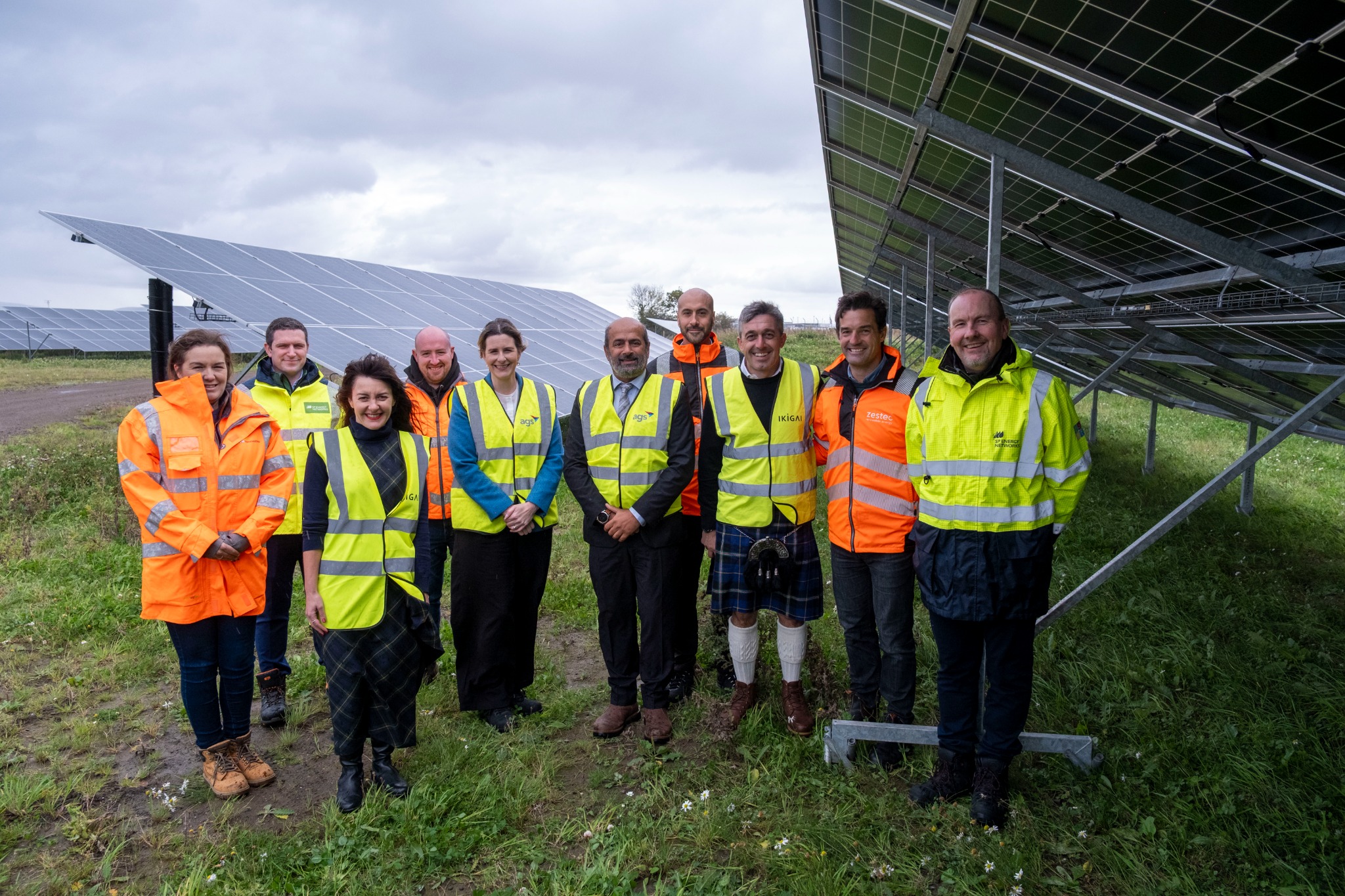
 United States
 United Kingdom
 India
India

 Note: MacRumors is an affiliate partner with Jackery and Anker. When you click a link and make a purchase, we may receive a small payment, which helps us keep the site running.


You must be logged in to post a comment.